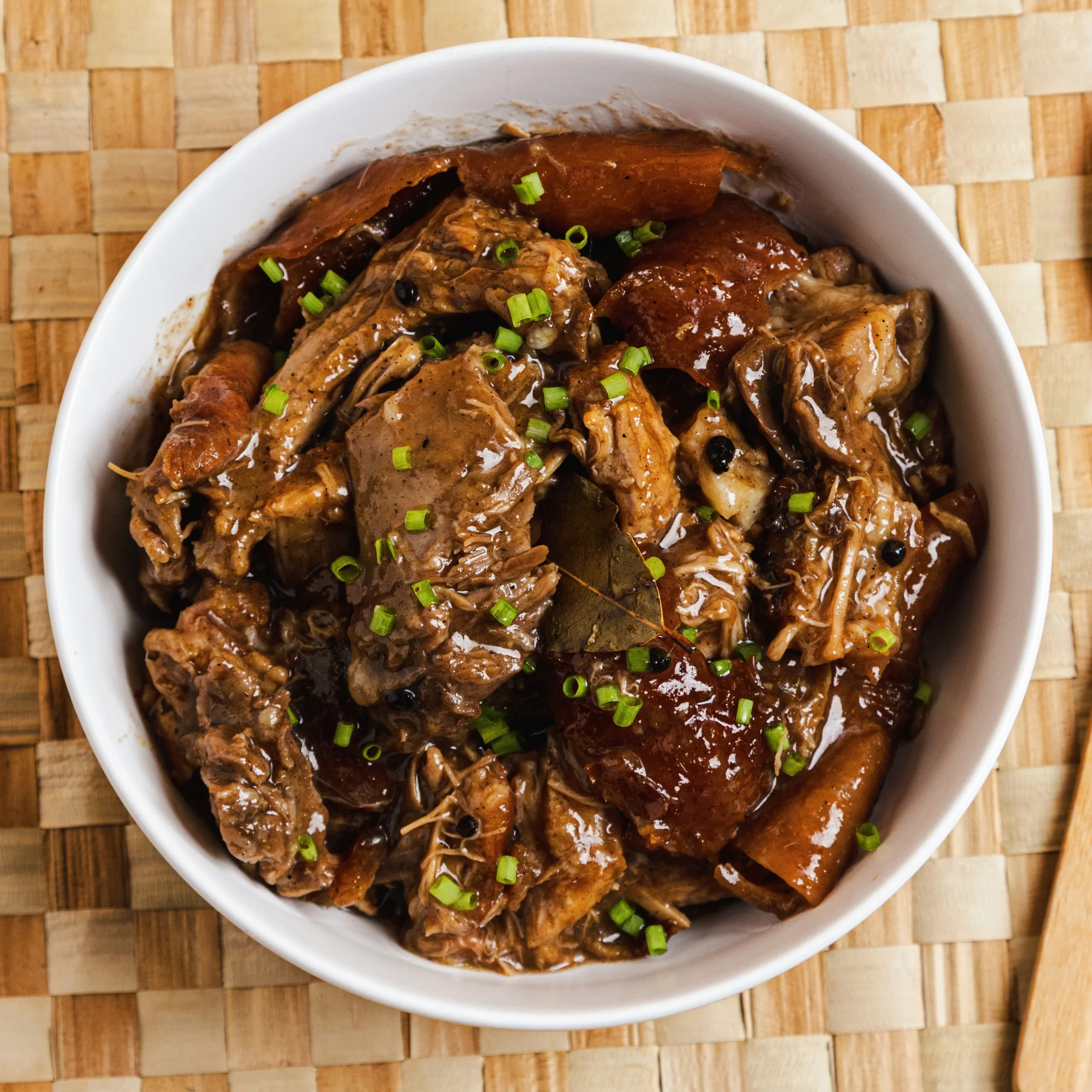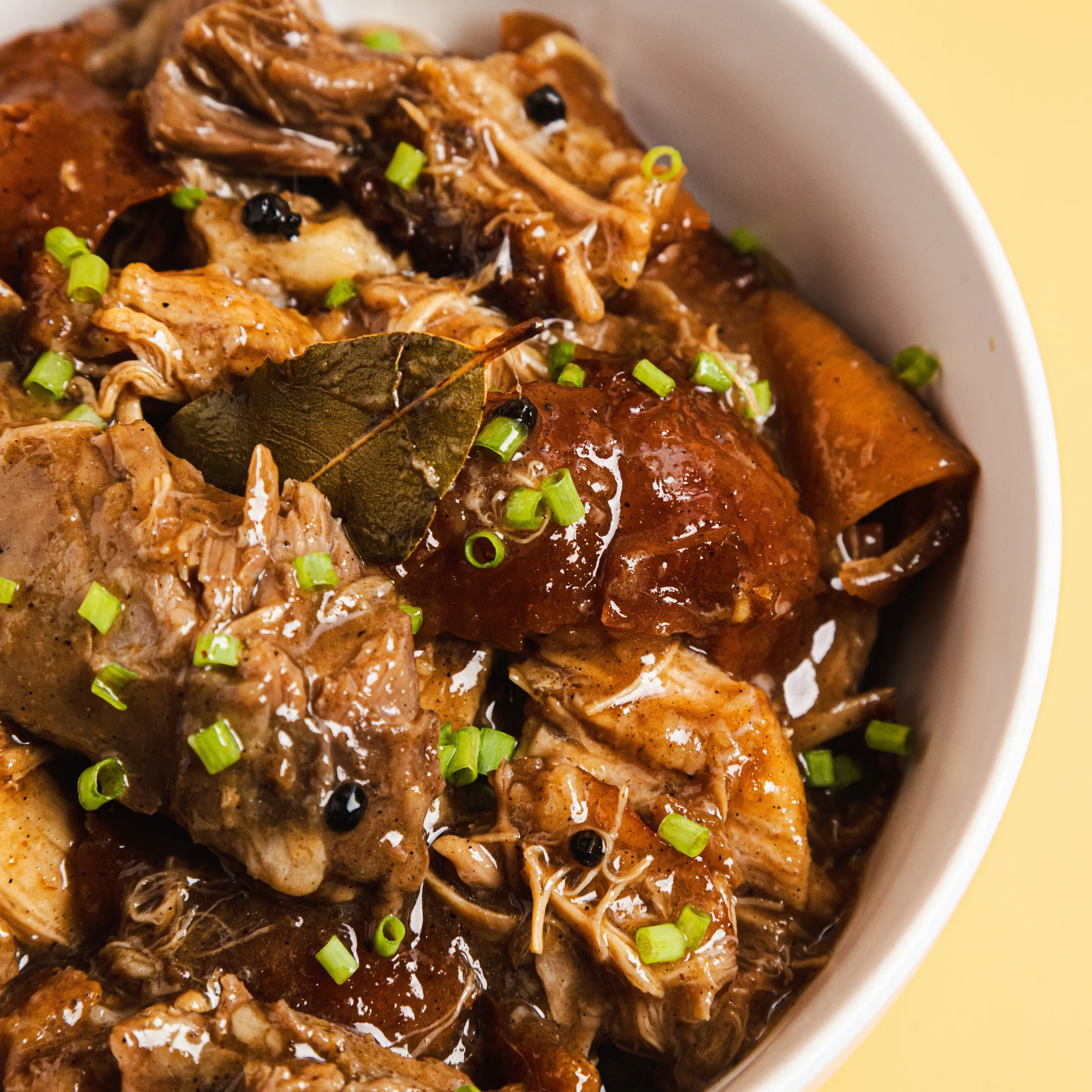
Lechon Paksiw is one of those Filipino dishes that feels like home cooking at its best. It takes something already special—leftover lechon—and transforms it into a completely different meal with a rich, savory, sweet, and slightly tangy flavor. Instead of allowing leftover roast pork to go to waste, Filipino cooks have long found a delicious way to give it new life by simmering it with vinegar, lechon sauce, garlic, onions, bay leaves, pepper, and sugar.
For many Filipino families, Lechon Paksiw is more than just a recipe. It can bring back memories of birthdays, fiestas, Christmas celebrations, weddings, reunions, and other occasions where a whole lechon takes center stage. The day after the celebration, when there are still pieces of crispy skin and tender meat left in the refrigerator, a pot of Lechon Paksiw can turn those leftovers into something warm, flavorful, and satisfying.
The beauty of this dish is its simplicity. You do not need complicated cooking techniques or expensive ingredients. With a few pantry staples and leftover lechon, you can create a dish that tastes even better after the flavors have had time to come together.
A Brief History of Lechon Paksiw
Lechon is deeply associated with Filipino celebrations. Whole roasted pig is commonly served during major gatherings because it is festive, generous, and meant to be shared. However, a large lechon can produce plenty of leftovers, particularly when it is served alongside many other dishes.
This is where dishes such as Lechon Paksiw become especially practical. Filipino cuisine has a long tradition of turning leftovers into new meals rather than wasting food. Paksiw is a cooking method generally associated with vinegar-based preparations. Vinegar is an important ingredient in many Filipino dishes because it adds acidity and helps create the distinctive sweet-and-sour or savory-tangy character found in different regional recipes.
Lechon Paksiw developed as a natural way to repurpose leftover lechon. Instead of simply reheating the pork, the meat is simmered in vinegar and lechon sauce, allowing it to absorb a new combination of flavors. Different households have their own versions. Some make the sauce sweeter, while others prefer a stronger vinegar flavor. Some add more garlic, while others include additional spices or ingredients depending on what is available in the kitchen.
This flexibility is part of what makes Filipino home cooking special: recipes are often passed from one generation to another while still leaving room for personal taste.
What Makes Lechon Paksiw Special?
The most appealing part of Lechon Paksiw is the contrast of flavors and textures.
The leftover lechon provides rich, roasted pork flavor and fatty, tender meat. The vinegar adds acidity that cuts through the richness. Lechon sauce contributes sweetness and depth, while brown sugar can intensify the caramelized flavor. Garlic and onion provide an aromatic foundation, and bay leaves and black pepper add subtle spice.
When cooked slowly, the sauce becomes thicker and more concentrated. The pork absorbs the flavors, making every bite savory, tangy, slightly sweet, and deeply satisfying.
Another interesting feature is that the texture changes during cooking. Freshly roasted lechon is known for its crisp skin, but simmering it in sauce softens the skin and allows it to soak up the flavorful liquid. The result is not meant to reproduce the original lechon’s crispness—it becomes a tender, saucy dish with its own identity.
Understanding the Ingredients
Leftover Lechon
Lechon is the star of the dish. You can use a mixture of meat, skin, and fatty pieces. Having different cuts can actually make the finished dish more enjoyable because each piece contributes a different texture.
If the lechon has already been refrigerated, remove it from the refrigerator shortly before cooking so you can separate large pieces easily.
Lechon Sauce
Lechon sauce gives the dish much of its signature character. It provides sweetness, richness, and body to the sauce.
Because commercial and homemade lechon sauces can differ in sweetness and thickness, taste the dish toward the end of cooking before adding additional sugar or salt.
Vinegar
Vinegar provides the characteristic acidity of paksiw. It also helps balance the richness of the pork.
Common Filipino vinegars such as cane vinegar work particularly well, but other mild vinegars can be used if necessary.
Garlic and Onion
Garlic gives the dish a strong savory aroma, while onion adds sweetness and depth. These ingredients may seem simple, but they help build the flavor base of the sauce.
Bay Leaves and Black Pepper
Bay leaves provide a subtle herbal aroma, while whole black pepper gives the sauce gentle warmth. Whole peppercorns are especially convenient because they can simmer for a long time without becoming overpowering as quickly as finely ground pepper.
Brown Sugar
Brown sugar adds sweetness and a slight caramel-like flavor. However, the amount can be adjusted depending on how sweet your lechon sauce already is.
Recipe Tips for Better Lechon Paksiw
1. Don’t rush the simmering process
A gentle simmer allows the pork to absorb the sauce without becoming unnecessarily tough or falling apart.
2. Adjust sweetness carefully
Some lechon sauces are already very sweet. Start with the recommended sugar amount, taste the sauce, and adjust from there.
3. Don’t overpower the pork
Lechon already has a strong roasted flavor. You do not need excessive spices to make the dish flavorful.
4. Let it rest
If you have time, allow the cooked Lechon Paksiw to rest for several minutes before serving. The flavors will continue to settle.
5. It can taste even better later
Like many saucy dishes, Lechon Paksiw can develop deeper flavors after resting and being reheated properly. This makes it particularly convenient for preparing ahead.
6. Keep some texture
If you enjoy the contrast between meat and skin, avoid cooking the pork until it completely breaks apart. Gentle simmering is enough.
Ingredient Substitutions
Cooking at home sometimes means working with whatever is available. Fortunately, this recipe is flexible.
No lechon sauce?
You can make a simple alternative using a combination of:
- Liver spread or liver pâté
- Soy sauce
- Vinegar
- Sugar
- Water
The exact combination will not taste identical to traditional lechon sauce, but it can provide a rich and savory base.
No cane vinegar?
You can substitute another mild vinegar, such as white vinegar or coconut vinegar. Keep in mind that different vinegars have different levels of acidity, so add gradually and adjust to taste.
No brown sugar?
White sugar can be used. However, brown sugar gives a slightly deeper flavor.
No fresh onion?
A small amount of onion powder can work in an emergency, although fresh onion provides a better aroma and texture.
No whole peppercorns?
Ground black pepper can be substituted. Start with a small amount because ground pepper disperses throughout the sauce and can produce a stronger pepper flavor.
Want less sweetness?
Reduce or omit some of the brown sugar, especially if your lechon sauce is already sweet.
Food Knowledge: What Does “Paksiw” Mean?
“Paksiw” refers to a Filipino style of cooking commonly associated with vinegar. There are many different dishes described as paksiw, and they do not all taste exactly the same.
The cooking method demonstrates an important characteristic of Filipino cuisine: the use of acidity to balance rich ingredients.
In Lechon Paksiw, this is particularly useful because roasted pork can be rich and fatty. Vinegar provides brightness and helps keep the finished dish from tasting overwhelmingly heavy.
The dish also demonstrates the Filipino tradition of transforming leftovers. Rather than treating leftover food as something inferior, cooks can combine it with new ingredients and cooking techniques to create a dish that feels completely different from the original meal.
Possible Health Benefits
Lechon Paksiw can be part of a balanced meal, but it is important to recognize that lechon is a rich pork dish and can be relatively high in fat, calories, and sodium depending on the cut of meat and the sauce used.
Some ingredients do provide nutritional value:
- Pork provides protein as well as nutrients such as vitamin B12, zinc, and iron.
- Garlic contains sulfur-containing compounds and is widely used as part of nutritious diets.
- Onion provides small amounts of vitamins, minerals, and plant compounds.
- Vinegar contributes acidity and flavor without adding much energy.
- Black pepper provides flavor while allowing you to rely less on additional seasoning.
For a lighter version, use more lean pork and less fatty skin, moderate the amount of sauce, and serve the dish with vegetables alongside rice.
Health benefits should not be interpreted as making the dish a health treatment or a substitute for a varied diet. The overall nutritional value depends heavily on portion size and the ingredients used.
How to Store Lechon Paksiw Properly
Because Lechon Paksiw contains cooked meat, proper storage is important.
Refrigeration
Allow the food to stop steaming heavily, then transfer it into a clean, shallow, airtight container. Refrigerate it promptly rather than leaving it at room temperature for a prolonged period.
As a general food-safety practice, cooked leftovers should be refrigerated within about two hours, or within one hour when the surrounding temperature is very hot.
Stored properly in the refrigerator, cooked pork leftovers are generally best consumed within 3–4 days.
Freezing
If you do not plan to eat the leftovers within a few days, Lechon Paksiw can be frozen.
Place it in a freezer-safe airtight container or sealed freezer bag. Remove as much excess air as practical and label the container with the date.
For the best quality, use frozen leftovers within a few months.
Reheating
Reheat only the amount you plan to eat. Warm the Lechon Paksiw thoroughly until it is steaming hot throughout.
If the sauce has become too thick after refrigeration, add a small amount of water while reheating.
Avoid repeatedly cooling and reheating the entire batch. Dividing the food into individual portions makes it easier to reheat safely.
Final Thoughts
Lechon Paksiw is a wonderful example of how Filipino cooking can turn simplicity into something memorable. What begins as leftover lechon becomes a deeply flavored dish through the addition of vinegar, lechon sauce, garlic, onions, sugar, and spices.
Its appeal is not only in its taste but also in the story behind it. It represents celebration, family meals, resourcefulness, and the Filipino habit of finding delicious ways to make food stretch further.
There is something comforting about opening the refrigerator the day after a big celebration and finding leftover lechon waiting to become something new. A little patience, a few familiar ingredients, and a gentle simmer can transform yesterday’s feast into today’s comforting meal.
Serve it with hot rice, spoon the rich sauce over the top, and enjoy it slowly. Whether prepared from leftovers after a special occasion or made simply because you are craving a classic Filipino dish, Lechon Paksiw proves that sometimes the second version of a meal can be just as memorable as the first.