
Advertisement

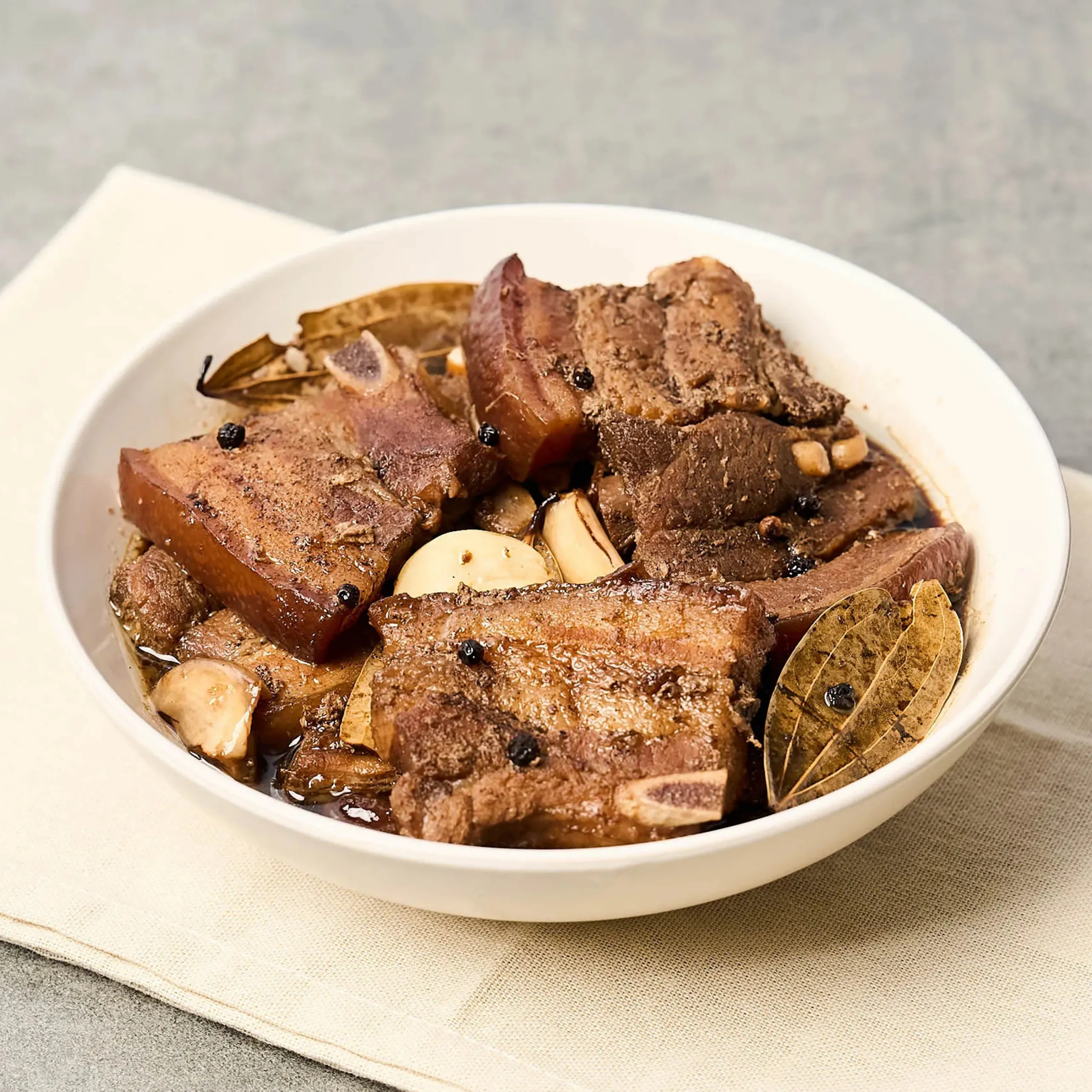
Pork Adobo Recipe

PHOTO: KIERAN PUNAY
YIELDS:
4 SERVING(S)
Prep Time:
10 MINS
Total Time:
1 HR
Cal/Serv:
258

Nutritional Information

Calories 1033 kcal
Fat 100 g
Saturated fat 34 g
Trans fat 0 g
Cholesterol 126 mg
Sodium 3560 mg
Carbohydrates 8 g
Fiber 1 g
Sugar 3 g
Protein 22 g
Vitamin D 0 µg
Calcium 54 mg
Iron 2 mg
Potassium 646 mg

Note: The information shown is Edamam's estimate based on available ingredients and preparation. It should not be considered a substitute for a professional nutritionist's advice.

Pork Adobo is widely recognized as one of the Philippines’ most iconic and beloved dishes. It is a staple in countless Filipino homes, appreciated for its rich combination of savory, tangy, and slightly garlicky flavors that only become better over time. Whether served during family dinners, holiday celebrations, potluck gatherings, or packed as a hearty meal for work or school, Pork Adobo has earned its place as a comforting classic that never goes out of style.

What makes Pork Adobo truly special is its simplicity. Despite using only a handful of pantry ingredients, the dish develops incredible depth of flavor through slow simmering. Soy sauce adds saltiness and umami, vinegar provides its signature tangy taste, garlic infuses the meat with aroma, while bay leaves and whole peppercorns contribute subtle earthy and peppery notes. As the pork cooks gently, it absorbs every bit of the flavorful sauce until each piece becomes tender and succulent.

Every Filipino family seems to have its own version of Pork Adobo. Some recipes are sweeter, while others are more sour or saltier. Some include coconut milk, potatoes, boiled eggs, or chili peppers, while others stay true to the traditional combination of pork, soy sauce, vinegar, garlic, and spices. Regardless of the variation, Pork Adobo remains a symbol of Filipino home cooking, bringing warmth, familiarity, and comfort to every table.

One of the reasons this dish has remained popular for generations is its practicality. Pork Adobo stores exceptionally well and often tastes even more flavorful the day after it’s cooked, making it perfect for meal preparation or leftovers. It is a recipe that combines affordability, simplicity, and unforgettable flavor in every bite.

A Brief History of Pork Adobo

The story of Pork Adobo dates back long before the arrival of Spanish colonizers in the Philippines. Early Filipinos had already developed methods of preserving meat by cooking it in vinegar and salt. Vinegar, made from coconut sap, sugarcane, nipa palm, or other local ingredients, acted as a natural preservative in the tropical climate, allowing cooked meat to last longer without refrigeration.

When the Spanish arrived in the 16th century, they noticed this cooking method and referred to it as adobo, derived from the Spanish word adobar, meaning “to marinate” or “to season.” Although Spanish adobo typically refers to a marinade made with herbs, spices, and paprika, the Filipino version evolved into a distinct dish with its own identity, centered around vinegar, soy sauce, garlic, bay leaves, and peppercorns.

Soy sauce became a common ingredient through trade with Chinese merchants, adding a savory richness that complemented the acidity of vinegar. Over time, the combination of these ingredients created the flavorful braising liquid that defines modern Pork Adobo.

As Filipino families passed recipes from one generation to the next, regional variations emerged across the country. Some provinces favor a more vinegary adobo, while others add coconut milk for a creamier version or include turmeric, annatto, or local spices for additional flavor. Despite these differences, the heart of the dish remains the same: slowly simmered meat in a well-balanced sauce that is both comforting and deeply satisfying.

Today, Pork Adobo is celebrated around the world as one of the Philippines’ national dishes. It is served in homes, restaurants, and Filipino communities across the globe, representing the country’s rich culinary heritage and the enduring tradition of sharing meals with family and friends.
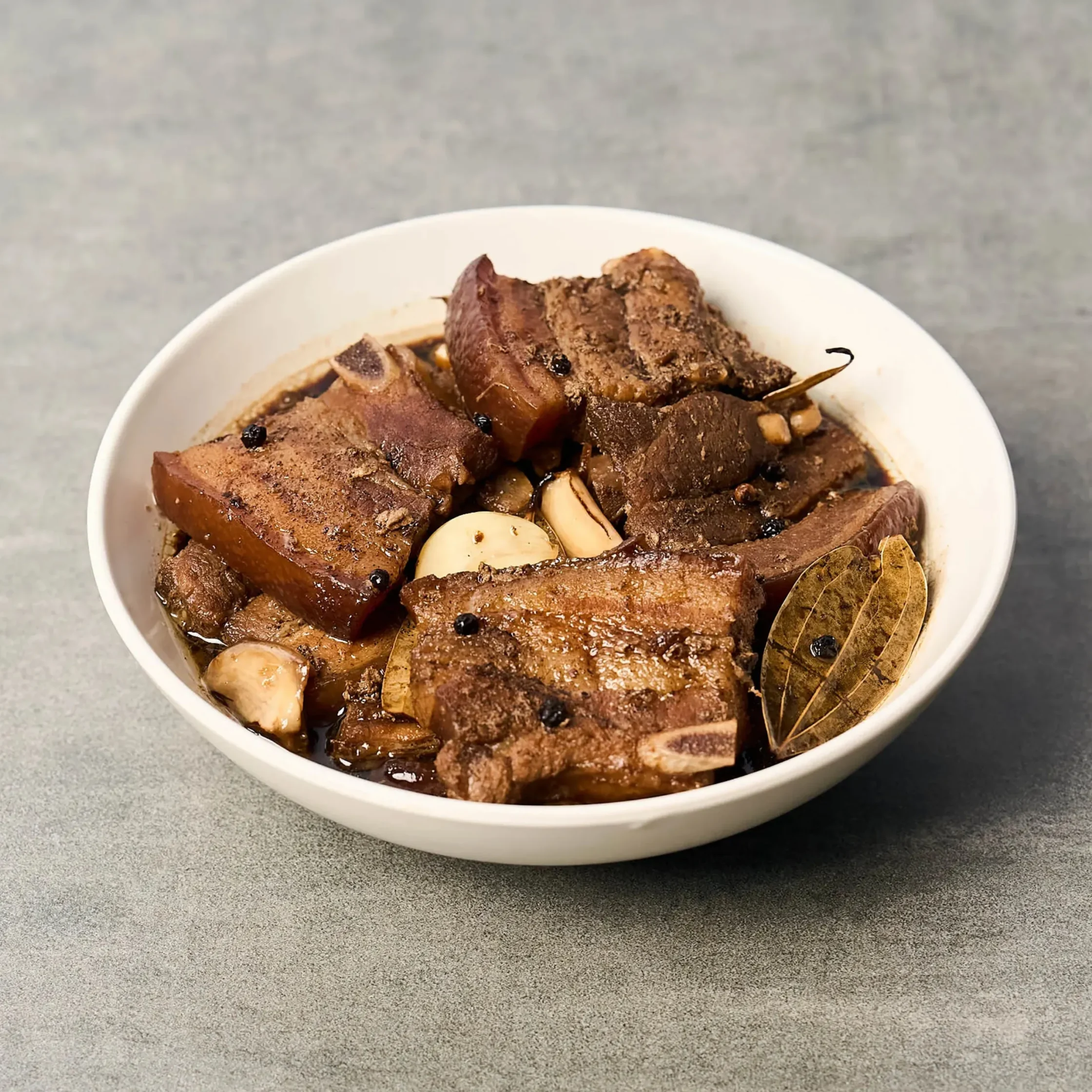
Close-up of a white bowl filled with braised beef slices, studded with peppercorns, with garlic and a bay leaf on the side.
PHOTO: KIERAN PUNAY

Recipe Tips

  • Pork belly creates a rich and tender adobo because of its balance of meat and fat, while pork shoulder offers a leaner but equally flavorful option.
  • Marinating the pork for several hours allows the flavors to penetrate the meat more deeply.
  • Browning the pork before simmering adds complexity and enhances the overall taste.
  • Avoid stirring immediately after adding the vinegar. Letting it boil first helps reduce its sharpness and results in a smoother flavor.
  • Simmer gently rather than boiling vigorously to keep the pork tender and juicy.
  • If the sauce becomes too salty, add a little more water and simmer for a few extra minutes.
  • Pork Adobo often tastes even better the next day as the flavors continue to develop during storage.
  • Store leftovers in the refrigerator for up to four days and reheat gently over low heat.

Ingredient Substitutions

Pork Belly

  • Pork shoulder
  • Pork ham
  • Pork loin (leaner option)
  • Boneless country-style ribs

Soy Sauce

  • Low-sodium soy sauce
  • Tamari for a gluten-free alternative
  • Coconut aminos for a slightly sweeter flavor

White Vinegar

  • Cane vinegar
  • Apple cider vinegar
  • Rice vinegar for a milder tang
  • Coconut vinegar for a more traditional Filipino flavor

Garlic

  • Roasted garlic for a sweeter taste
  • Garlic powder in a pinch, though fresh garlic is strongly recommended

Brown Sugar

  • White sugar
  • Honey
  • Coconut sugar
  • Palm sugar

Cooking Oil

  • Vegetable oil
  • Canola oil
  • Corn oil
  • Avocado oil

Bay Leaves

  • Dried oregano (small amount)
  • Thyme for a different herbal note, though bay leaves remain the classic choice
Ingredients

  • 2 Tablespoon cooking oil
  • 700 Gram pork belly, cut into bite-sized cubes
  • 1 Cup soy sauce
  • 1 Cup white vinegar
  • 5 Clove garlic, slightly crushed
  • 3 Piece bay leaves
  • 1 Tablespoon whole black peppercorns
  • 1 Tablespoon brown sugar (optional)
  • 0.5 Cup water (adjust to taste)
  • salt and pepper to taste
Keep screen awake

Directions

Step 1

Marinate the Pork

Place the pork cubes in a large bowl and pour in the soy sauce. Add the lightly crushed garlic, bay leaves, and whole black peppercorns. Toss everything together until the pork is evenly coated. Cover and marinate for at least 30 minutes, although allowing it to rest for several hours or overnight in the refrigerator will result in even deeper flavor.

Step 2

Brown the Pork

Heat the cooking oil in a large heavy-bottomed pot or deep skillet over medium heat. Remove the pork from the marinade, reserving the liquid for later use. Add the pork pieces to the hot oil and cook until lightly browned on all sides. Browning creates caramelized flavors that enhance the richness of the finished dish.

Step 3

Sauté the Garlic

Add the reserved garlic from the marinade to the same pot and cook until fragrant and lightly golden. Stir frequently to prevent burning, as burnt garlic may leave a bitter taste.

Step 4

Add the Marinade

Pour the reserved soy sauce marinade over the browned pork. Add the water and stir gently to combine all the ingredients. Bring the mixture to a gentle boil.

Step 5

Add the Vinegar

Carefully pour in the white vinegar without stirring immediately. Allow the vinegar to boil undisturbed for about 2 to 3 minutes. This traditional technique helps mellow the sharp acidity of the vinegar while preserving its bright flavor. Afterward, stir gently to combine everything.

Step 6

Simmer Until Tender

Reduce the heat to low, cover the pot, and let the pork simmer for approximately 45 to 60 minutes. Stir occasionally and ensure the pork remains mostly submerged in the liquid. As it cooks, the meat will become increasingly tender while absorbing the savory and tangy flavors of the sauce.

Step 7

Adjust the Flavor

Taste the sauce and add the optional brown sugar if you prefer a slight touch of sweetness to balance the acidity. Season with salt and freshly ground black pepper only if necessary, since the soy sauce already contributes saltiness.

Step 8

Reduce the Sauce

If you prefer a thicker, richer sauce, remove the lid during the last 10 to 15 minutes of cooking and allow the liquid to reduce naturally. The sauce should become glossy and coat the pork beautifully.

Step 9

Serve

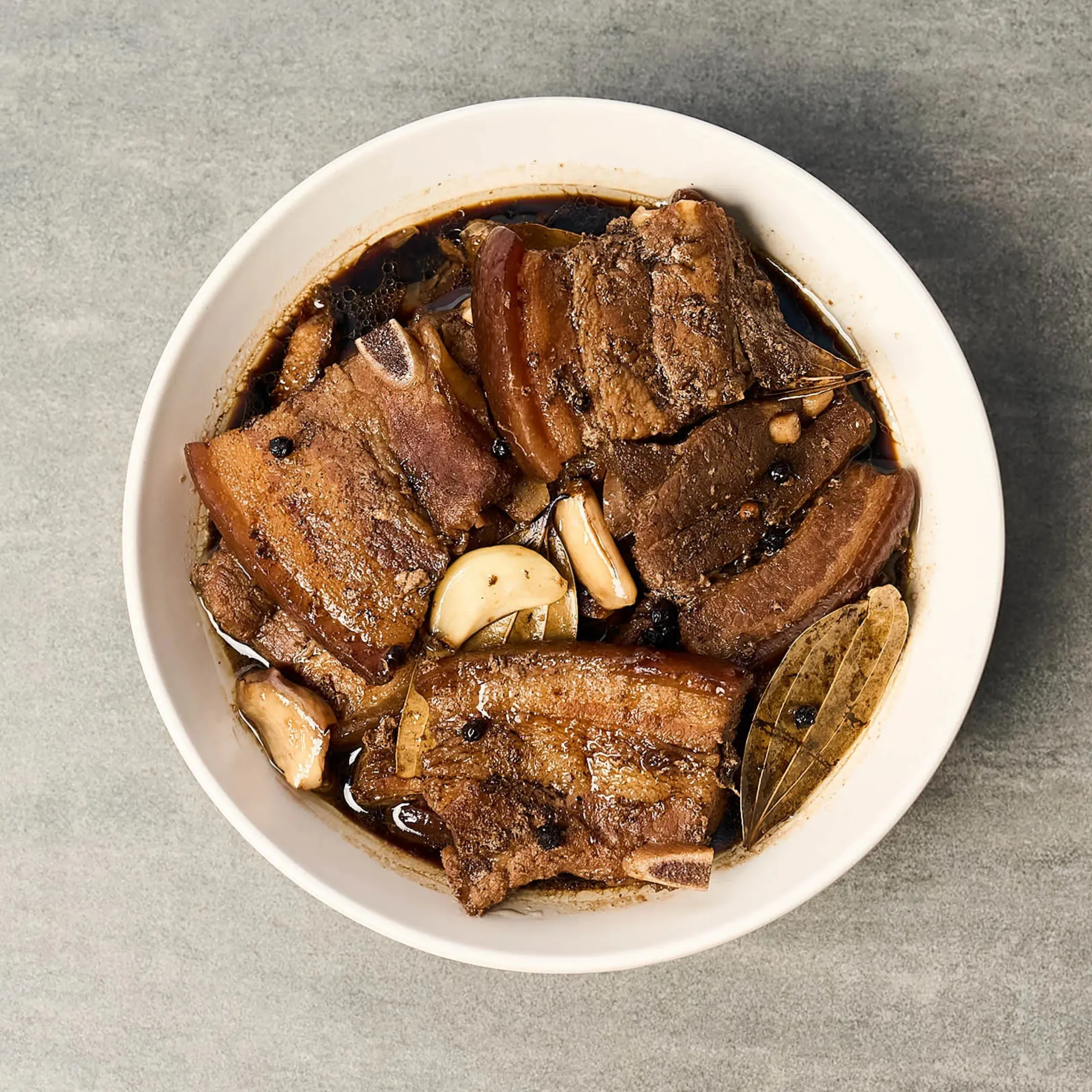
Remove the bay leaves before serving if desired. Spoon the Pork Adobo over hot steamed rice, making sure to drizzle plenty of the flavorful sauce over the top. Pair it with sautéed vegetables, pickled papaya, or a side of fresh tomatoes for a complete and satisfying meal.

PHOTO: KIERAN PUNAY

Alexander Villarante

Recipe Developer

Alexander Villarante is a passionate culinary professional with more than 15 years of experience in the hospitality industry, having built his career in prestigious five-star luxury hotels abroad. He studied Culinary Arts at the Singapore Boston Business School, where he developed a strong foundation in both classical and modern culinary techniques. Throughout his career, he has worked alongside talented chefs from diverse cultural backgrounds, refining his skills and gaining extensive experience in creating exceptional dining experiences. His dedication to excellence has earned him recognition in the competitive culinary scene. Alexander participated in the Philippine Culinary Cup, where he received several citations for his creativity, technical expertise, and commitment to his craft. These achievements reflect his passion for continuous learning and his pursuit of culinary excellence.


Frequently Asked Questions

Allowing the vinegar to boil undisturbed for a few minutes softens its sharp acidity and helps create the balanced flavor that traditional Pork Adobo is known for.

Pork belly is the most popular choice because it becomes exceptionally tender and flavorful. Pork shoulder is another excellent option for those who prefer a slightly leaner dish.

Yes. In fact, many people believe Pork Adobo tastes even better the next day because the meat has more time to absorb the sauce.

Absolutely. Cool the dish completely before transferring it to airtight containers. It can be frozen for up to three months. Thaw overnight in the refrigerator before reheating.

The soy sauce may have reduced too much during cooking. Add a little water, simmer briefly, and taste again before adjusting the seasoning.

Yes. Sugar is completely optional and is used only to gently balance the acidity. Traditional recipes often omit it altogether.

Yes. Potatoes, mushrooms, hard-boiled eggs, and green chili peppers are popular additions that complement the rich flavors of Pork Adobo.

Steamed white rice is the traditional accompaniment, but garlic fried rice, pickled vegetables, sautéed greens, or fresh sliced tomatoes also pair wonderfully with the dish.

0 0 votes
Total of Ratings
guest
Rating
Ratings for Article
0 Comments
Oldest
Newest Most Voted

To provide a customized ad experience, we need to know if you are of legal age in your region.

By making a selection, you agree to our Terms & Conditions.