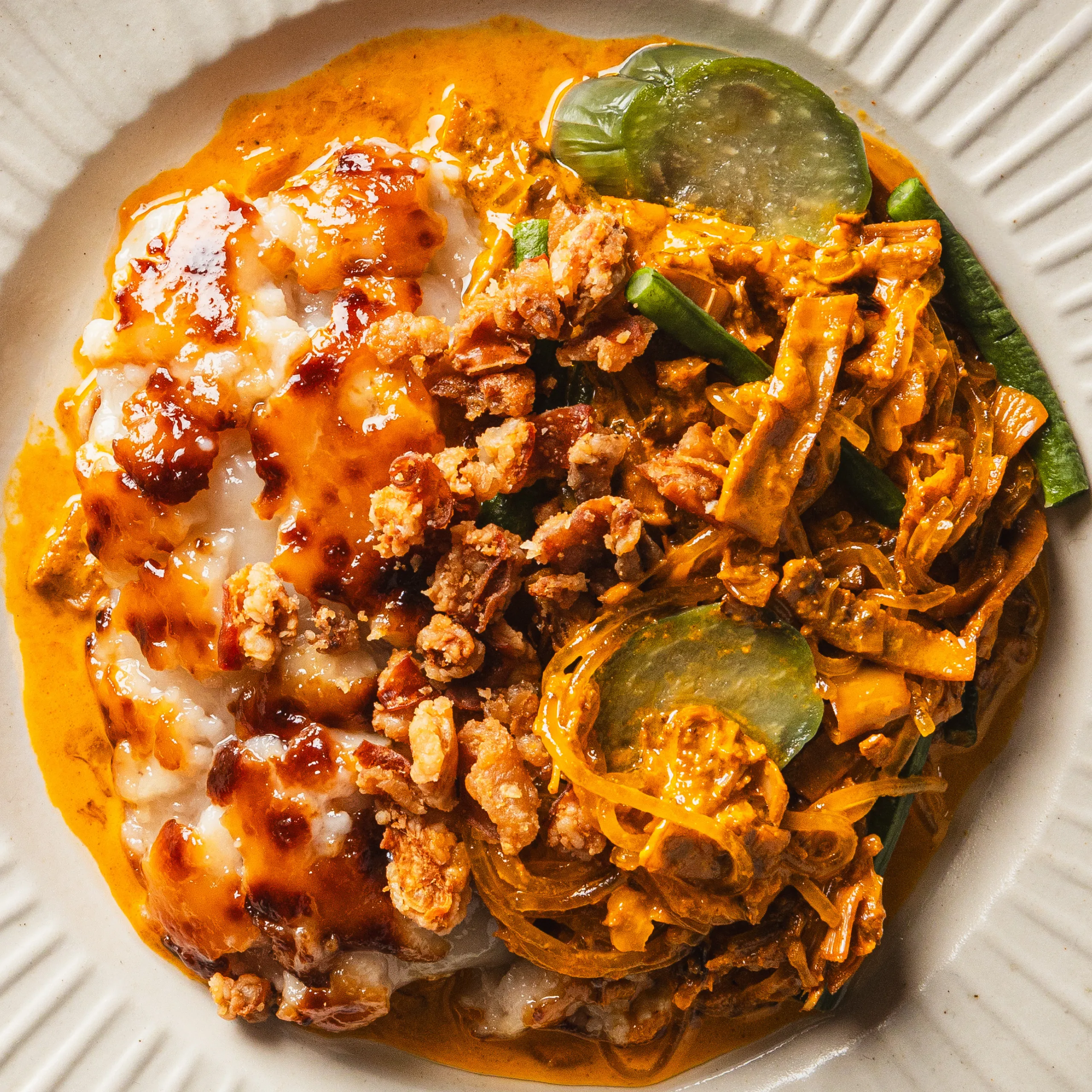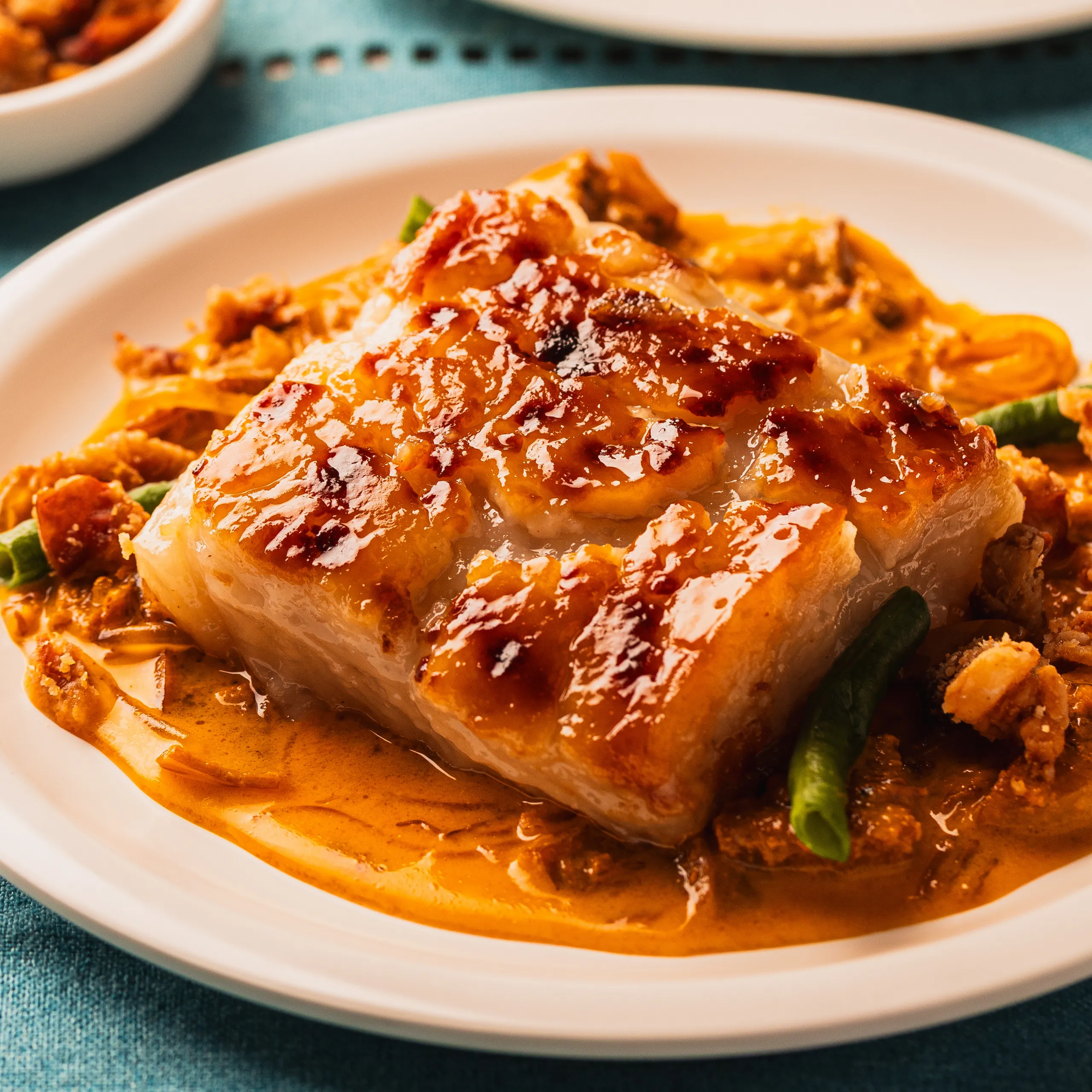
Food is often at its best when it tells a story. A recipe can remind us of home, introduce us to ingredients we have never tried before, or show us how different food traditions can come together in one kitchen. Puto Laksa is a beautiful example of this kind of creativity.
This recipe combines two comforting elements into one unique Filipino-inspired dish: a soft, mildly sweet coconut puto and a rich, savory laksa made with vegetables, sotanghon, bagoong, achuete, and coconut cream. At first, the combination may sound unexpected, but the flavors have a natural connection. Coconut is used throughout the recipe, while rice appears in different forms through the rice flour, glutinous rice flour, and sotanghon.
The puto provides a gentle sweetness and soft, slightly chewy texture, while the laksa brings a savory and creamy contrast. The vegetables add freshness, the bagoong gives the dish depth, and the crushed chicharon provides a satisfying crunch.
What makes Puto’t Laksa especially interesting is that it does not feel like a recipe that has to follow one strict rule. It allows the cook to adjust the vegetables, richness, sweetness, and seasoning depending on personal taste and what is available in the kitchen.
It is the kind of dish that can become a conversation starter at the table. People may first notice the colorful and creamy appearance, then discover the different textures and flavors as they eat. The combination of sweet coconut puto and savory vegetable laksa makes every bite a little different.
Whether prepared for a family meal, a special gathering, a school food project, or simply as an experiment in Filipino-inspired cooking, Puto Laksa is a dish that celebrates creativity while remaining connected to familiar ingredients.
The Story and History Behind Puto Laksa
To understand Puto Laksa, it helps to look at the food traditions represented by its two main components.
The tradition of puto
Puto is one of the most recognizable Filipino rice-based foods. It has been enjoyed for generations as merienda, breakfast, dessert, and food served during celebrations and gatherings.
Traditional puto is commonly associated with steamed rice cakes. However, Filipino cuisine has never had just one version of puto. Different communities and families have developed their own variations using different types of rice flour, flavors, colors, and toppings.
Some puto are soft and fluffy, while others are denser and chewier. Some are plain, while others contain cheese, ube, pandan, or coconut.
The version used in Puto’t Laksa is particularly rich because it uses coconut milk as a major ingredient. Instead of being shaped into small individual cakes, the mixture is cooked into a thick paste, placed in a baking pan, covered with a coconut topping, and baked until the surface becomes lightly brown.
The tradition of laksa
The word laksa is associated with a broad family of Southeast Asian noodle dishes. Different versions can be found throughout the region, with recipes varying in their use of noodles, coconut, spices, seafood, meat, vegetables, and fermented seasonings.
Filipino cuisine has developed through centuries of cultural exchange with neighboring Asian communities. At the same time, Filipino cooks have always adapted ingredients and cooking techniques to local tastes.
This Puto’t Laksa recipe reflects that creativity. Instead of copying one specific traditional laksa, it uses familiar Filipino ingredients such as bagoong, gata, achuete, puso ng saging, sitaw, talong, sotanghon, and chicharon.
The result is a creative Filipino-inspired dish that brings together familiar ingredients in a less familiar combination.
Getting to Know the Ingredients
One of the best ways to understand a recipe is to understand why each ingredient is there.
Glutinous Rice Flour
Glutinous rice flour gives the puto its slightly sticky and chewy texture. Despite the name, it does not contain gluten. The word “glutinous” describes the sticky quality of the cooked rice.
It is particularly useful in rice cakes because it creates a texture that is different from ordinary rice flour.
Rice Flour
Regular rice flour helps give the puto structure. When combined with glutinous rice flour, it helps create a balance between softness and chewiness.
Coconut Milk
Coconut milk is one of the ingredients that connects the entire recipe.
In the puto, it provides richness, moisture, and a fragrant coconut flavor.
In the laksa, coconut cream creates the rich sauce that coats the vegetables and noodles.
Sugar
Sugar gives the puto its sweetness. It also contributes to the browning of the coconut topping during baking.
Salt
Even though the puto is sweet, a small amount of salt is important. It balances the sweetness and makes the coconut flavor more noticeable.
Vanilla Extract
Vanilla adds a gentle aroma and gives the puto a more rounded dessert-like flavor.
Bagoong (Shrimp Paste)
Bagoong provides the savory depth of the laksa. Its fermented seafood flavor can be quite strong, so a small amount can go a long way.
Achuete (Annatto)
Achuete, also known as annatto, is widely used in Filipino cooking to give food a warm orange or reddish color. It also contributes a mild earthy flavor.
Puso ng Saging (Banana Blossom)
Puso ng saging is banana blossom. It has a slightly firm and fibrous texture and is commonly used in Filipino dishes, especially those cooked with coconut milk.
Sitaw (String Beans)
Sitaw, or string beans, add color, freshness, and a pleasant bite to the dish.
Talong (Eggplant)
Eggplant becomes soft as it cooks and absorbs the flavors of the coconut sauce.
Sotanghon (Glass Noodles)
Sotanghon gives the laksa body and makes it more filling. The noodles are especially good at absorbing flavorful sauces.
Chicharon (Pork Cracklings)
Crushed chicharon provides the final contrast. After the creamy and soft components are cooked, the crispy chicharon adds texture and saltiness.
Recipe Tips for Better Puto’t Laksa
Prepare Everything Before Cooking
This recipe has several ingredients that need to be added at different times. Preparing everything beforehand makes cooking much easier.
Do Not Stop Stirring the Puto
The rice flour mixture can stick quickly.
Constant stirring helps create a smooth texture and prevents burning.
Use Medium Heat
High heat may cause the outside or bottom to cook too quickly.
Medium heat gives you more control.
Do Not Overcook the Vegetables
Different vegetables have different cooking times. Add firmer vegetables first and softer vegetables later.
This helps maintain a variety of textures.
Add Sotanghon Near the End
Sotanghon cooks quickly and absorbs liquid.
Adding it too early can result in overly soft noodles and a sauce that becomes unnecessarily thick.
Taste Before Adding Salt
The chicharon can also add saltiness.
Bagoong is already salty.
Always taste first.
Keep the Chicharon Crunchy
Add it immediately before serving rather than cooking it in the sauce.
Let the Puto Cool
Allowing the puto to cool gives it a firmer and more manageable texture.
Ingredient Substitutions
One of the advantages of Puto Laksa is that many ingredients can be adjusted.
Coconut Milk
Fresh coconut milk can be used instead of canned coconut milk.
Full-fat coconut milk is recommended when you want a richer flavor.
Sugar
White sugar can be replaced with brown sugar, muscovado, or coconut sugar.
Darker sugars will make the puto darker and give it a deeper caramel-like flavor.
Vanilla
Vanilla extract can be replaced with pandan extract.
Pandan works especially well with coconut.
Bagoong (Shrimp Paste)
Another fermented seafood paste can be used if shrimp paste is unavailable.
For a vegetarian version, fermented bean paste or mushroom-based seasoning can provide savory depth.
Puso ng Saging (Banana Blossom)
If banana blossom is unavailable, possible substitutes include:
- Cabbage
- Young jackfruit
- Mushrooms
- Pechay
The texture will be different, but the dish will remain vegetable-rich.
Sitaw (String Beans)
Green beans are an easy substitute.
Talong (Eggplant)
Zucchini can replace eggplant, although it will not absorb the sauce in exactly the same way.
Sotanghon (Glass Noodles)
Rice vermicelli can be used instead.
Chicharon (Pork Cracklings)
Chicharon can be omitted for a lighter version.
For crunch, you can use toasted peanuts, crispy fried garlic, or fried onions.
Important Food Knowledge
Why Is Coconut Important?
Coconut is one of the most versatile ingredients in Filipino cooking.
It can be used in desserts, soups, stews, sauces, drinks, and many other preparations.
In Puto Laksa, coconut performs two different roles.
It gives the puto sweetness, moisture, and richness.
In the laksa, it creates a savory and creamy sauce.
This makes coconut the ingredient that connects the two sides of the dish.
What Is Gata?
“Gata” is the Filipino term commonly used for coconut milk or coconut cream.
It is a major ingredient in many Filipino dishes, especially in regions where coconuts are abundant.
Depending on how much water is used during extraction, coconut milk can range from thick and creamy to lighter and thinner.
What Is Puso ng Saging?
Puso ng saging literally means “banana heart” or “banana blossom.”
It is the flower of the banana plant.
The inner part can be prepared as a vegetable and has a slightly fibrous texture.
It is commonly used in Filipino cooking, especially in coconut-based dishes.
What Is Achuete?
Achuete is annatto.
It is commonly used in Filipino cuisine as a natural food coloring and seasoning.
It gives dishes an attractive orange-red color and contributes a subtle earthy flavor.
What Makes Bagoong Special?
Bagoong is a fermented condiment that gives Filipino food a strong savory and umami quality.
Its flavor can be intense, but when used in the right amount, it gives dishes considerable depth.
Because bagoong varies in saltiness, it is always best to add it gradually and taste the food before adding more seasoning.
Health Benefits and Nutritional Considerations
Puto Laksa contains several ingredients that contribute nutritional value, particularly the vegetables.
Vegetables
Puso ng saging, sitaw, and talong contribute dietary fiber and a variety of vitamins, minerals, and plant compounds.
Increasing the vegetable portion can make the dish more filling without relying entirely on noodles or rice.
Rice and Sotanghon
The rice flour, glutinous rice flour, and sotanghon provide carbohydrates, which are an important source of energy.
Coconut
Coconut milk and coconut cream provide fat and energy and contribute to the rich mouthfeel of the dish.
However, coconut products can be relatively high in saturated fat, so moderation is appropriate as part of a balanced diet.
Bagoong
Bagoong adds flavor and some protein but can also be high in sodium.
People who need to limit sodium may want to reduce the amount used.
Chicharon
Chicharon provides a delicious crunchy texture, but it is generally high in fat and sodium.
Using a smaller amount can preserve the crunch without making it the dominant ingredient.
Making the Dish More Balanced
To make Puto Laksa more balanced:
- Increase the amount of vegetables.
- Use a moderate amount of coconut cream.
- Keep the chicharon as a garnish.
- Avoid adding unnecessary salt.
- Serve an appropriate portion size.
How to Store Puto Laksa Properly
Proper storage is important because the recipe contains coconut milk, coconut cream, cooked vegetables, noodles, and a rice-based component.
Do not leave the finished dish sitting at room temperature for an extended period.
Once it has cooled reasonably, transfer it into clean, airtight containers and refrigerate it.
Storing the Puto
Place the cooled puto in an airtight container.
Refrigerate and use within approximately 3–4 days for best quality and food safety.
The puto can also be frozen in individual portions.
Wrap the portions well or place them in freezer-safe containers.
Storing the Laksa
Place leftover laksa in a separate airtight container.
Refrigerate and consume within approximately 3–4 days.
The sotanghon will continue absorbing the coconut sauce while refrigerated, so the dish may become thicker over time.
Freezing the Laksa
The laksa can be frozen, although the texture of the vegetables and noodles may change after thawing.
For the best texture, freeze the sauce and noodles separately if practical.
Reheating
Reheat the laksa gently on the stovetop.
Add a small amount of water or coconut milk if the sauce has become too thick.
Heat thoroughly before eating.
Reheat only the portion you plan to eat rather than repeatedly reheating the entire batch.
For the puto, gentle steaming or short microwave reheating can help restore softness.
Add fresh chicharon after reheating so that it remains crunchy.
Final Words
Puto Laksa is a dish that reminds us that cooking is not always about following a recipe exactly as it has been written. Sometimes, it is about taking familiar ingredients and allowing them to meet in a new way.
The soft coconut puto brings sweetness, warmth, and a pleasant chew. The savory laksa brings coconut cream, vegetables, noodles, and the deep flavor of bagoong. Achuete gives the dish its beautiful color, while crushed chicharon provides a final crispy contrast.
The dish is also a celebration of ingredients that are deeply familiar in Filipino cooking.
Rice becomes flour and noodles. Coconut becomes both a sweet and savory ingredient. Banana blossom becomes a vegetable. Bagoong provides depth. Achuete brings color. Chicharon adds texture.
Together, these ingredients create something that feels creative without losing its connection to Filipino flavors.
What makes Puto Laksa particularly enjoyable is the balance between opposites: sweet and savory, soft and crunchy, creamy and fresh, familiar and unexpected.
It is a recipe that can be changed according to the cook’s preference. You can make the puto sweeter or less sweet, add more vegetables to the laksa, adjust the amount of bagoong, add chili for heat, or replace ingredients that are difficult to find.
That flexibility is part of the beauty of home cooking.
In the end, Puto Laksa is more than just a combination of rice, coconut, noodles, and vegetables. It is an expression of creativity and the way food traditions can continue to grow.
It can be prepared for a family meal, a celebration, a food presentation, or simply a day when you want to try something different.
Serve it with an open mind, enjoy the contrast of flavors and textures, and make the recipe your own. That is what makes a dish truly memorable.