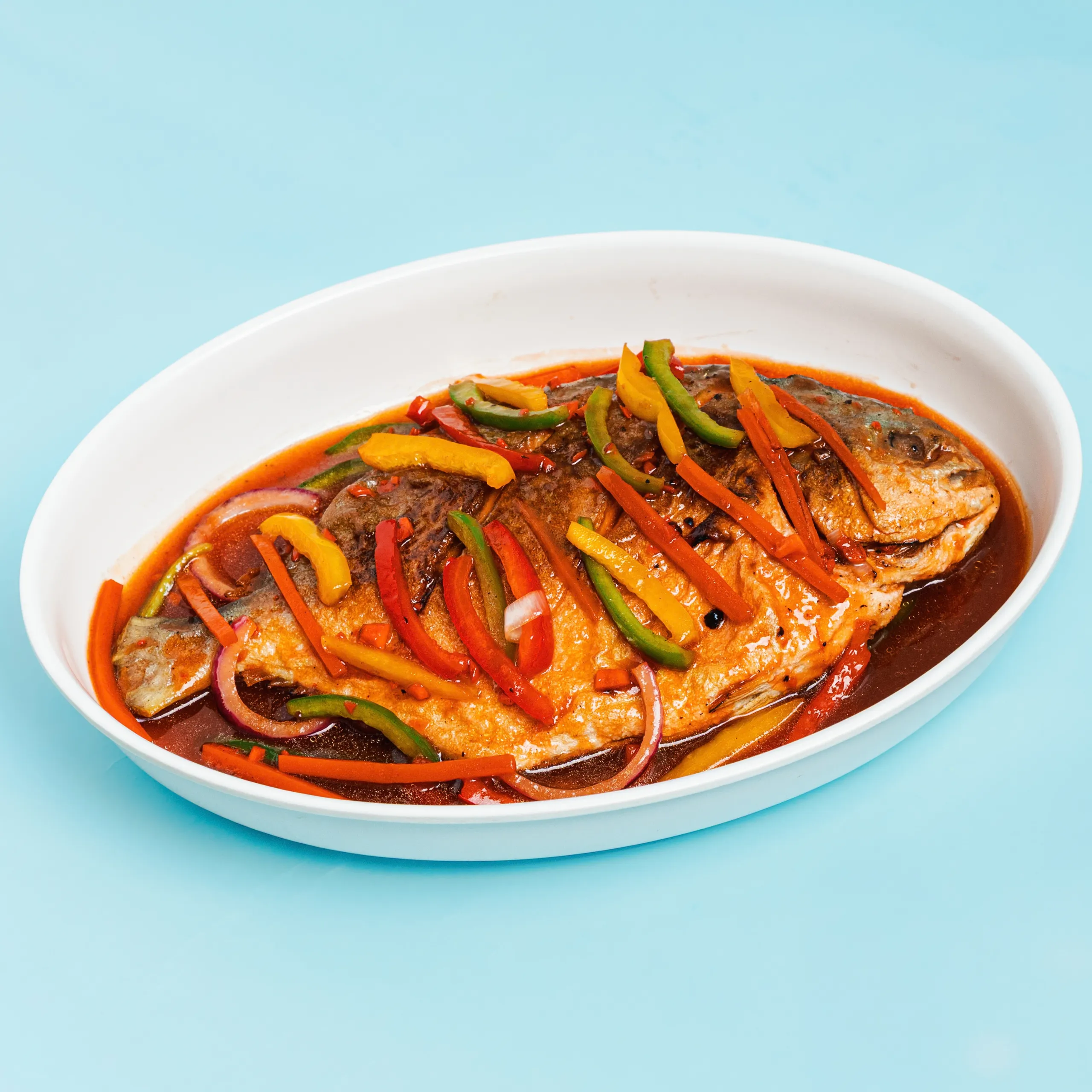


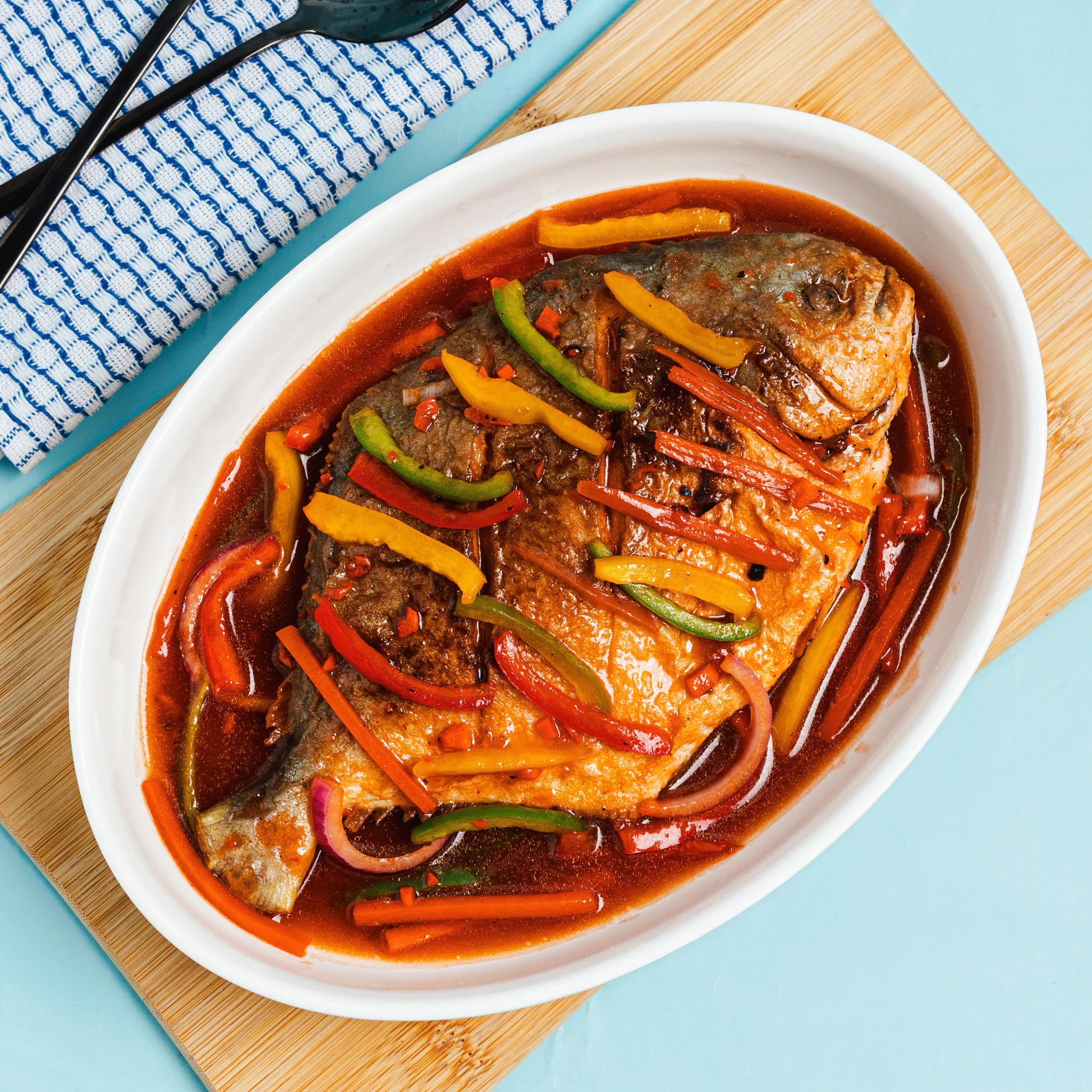
There is something especially satisfying about serving a beautifully fried fish covered with a colorful, sweet-and-sour sauce. Escabeche is one of those Filipino dishes that can turn an ordinary family meal into something that feels a little more special.
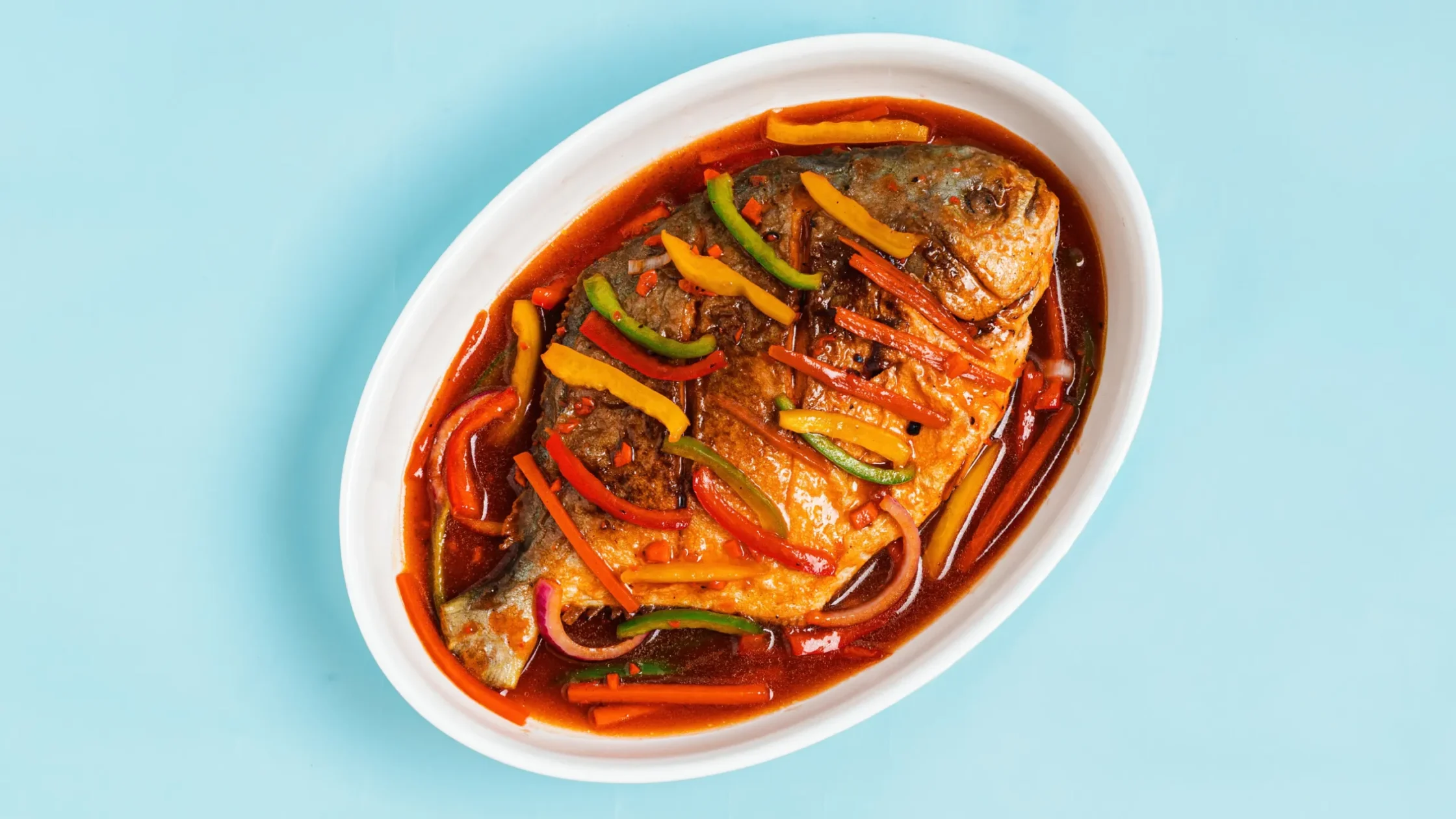
Imagine a whole fish fried until golden and crisp on the outside, then topped with a glossy sauce filled with tender carrots, bell peppers, onions, garlic, and ginger. The sauce has that familiar Filipino balance of sweet, sour, salty, and savory flavors. When poured over the fish, it softens some of the crisp exterior while adding plenty of flavor to every bite.
Escabeche is also a wonderful example of how Filipino cuisine has adapted outside culinary influences into something distinctly its own. While the name and general idea of escabeche have roots in Spanish and Mediterranean culinary traditions, Filipino escabeche developed its own character through local ingredients, cooking techniques, and flavor preferences.
It is commonly enjoyed during family gatherings, celebrations, birthdays, fiestas, and Sunday lunches, but there is no reason to wait for a special occasion. A simple fried fish can become a satisfying weeknight dinner with a flavorful escabeche sauce and a pot of freshly cooked rice.
This recipe uses tomato sauce or ketchup along with vinegar, sugar, soy sauce, and vegetables. The result is a rich, glossy, sweet-and-sour sauce that works beautifully with fried fish.
A Little History of Escabeche
The word escabeche is associated with a cooking and preservation tradition that traveled through Spanish culinary culture. In its broader historical sense, escabeche refers to foods, particularly fish, prepared with an acidic mixture often involving vinegar and aromatics.
The technique made practical sense in times when refrigeration was limited. Acidic ingredients such as vinegar could help create an environment less favorable to certain microorganisms, while cooking and seasoning gave the food additional flavor.
When the tradition reached the Philippines during the Spanish colonial period, Filipino cooks adapted it to local tastes and ingredients.
Filipino escabeche is now quite different from many versions found elsewhere. Instead of simply reproducing an older Spanish preparation, Filipino cooks incorporated ingredients and flavor combinations familiar to the local palate.
The sauce commonly combines vinegar and sugar, creating the characteristic sweet-and-sour contrast. Vegetables such as carrots and bell peppers add color, texture, and sweetness, while garlic and ginger provide fragrance. Soy sauce is sometimes included to give the sauce additional savory depth.
Different families prepare escabeche differently. Some make the sauce very sour, others prefer it sweeter, and some add tomato sauce or ketchup for a richer color and slightly sweeter flavor.
This flexibility is part of the story of Filipino food: dishes often evolve as ingredients, techniques, and family traditions come together.
Recipe Tips for Better Escabeche
Dry the fish thoroughly
This is one of the easiest ways to improve your fried fish. Moisture can cause dangerous oil splattering and makes it harder for the skin to become crisp.
Don’t overcrowd the frying pan
If you put too much fish into the pan at once, the temperature of the oil can drop significantly.
Fry in batches if necessary.
Don’t flip the fish too frequently
Allow the fish to form a crust before turning it.
Repeatedly moving it can cause it to break apart.
Don’t rush the sauce
The sauce needs time for the vinegar, sugar, soy sauce, and aromatics to come together.
A few minutes of gentle simmering can make a noticeable difference.
Adjust the sweet-and-sour balance gradually
There is no universal ratio that everyone prefers. Some people enjoy very tangy escabeche, while others prefer a sweeter sauce.
Start with the recipe measurements and adjust gradually.
Don’t overcook the vegetables
Carrots and bell peppers should ideally retain some texture.
Overcooking them can make the dish feel heavy and mushy.
Add the sauce close to serving time
If crisp fish is your goal, don’t let it sit submerged in the sauce for a long time.
The longer the fish sits in the sauce, the softer the fried exterior becomes.
Use a wide pan
A wide pan gives the vegetables and sauce enough room to cook evenly and makes it easier to stir without crushing the vegetables.
Ingredient Substitutions
Fish
Almost any firm fish that fries well can work.
Possible choices include:
- Tilapia
- Bangus or milkfish
- Lapu-lapu
- Maya-maya
- Galunggong
- Snapper
- Cod
- Haddock
- Other firm white fish
The flavor and texture will vary depending on the fish.
A whole fish is particularly attractive when serving escabeche to guests, while fillets are more convenient for everyday meals.
Tomato sauce or ketchup
You can use either tomato sauce or ketchup.
Ketchup generally creates a sweeter sauce, while tomato sauce produces a more tomato-forward flavor with less sweetness.
You can also reduce the sugar if using a particularly sweet ketchup.
Sugar
White sugar works well, but you can experiment with:
- Brown sugar
- Coconut sugar
- Other granulated sugars
Brown sugar can give the sauce a slightly deeper caramel-like flavor.
Soy sauce
If you don’t have soy sauce, you can use another savory seasoning, although the flavor will no longer be exactly the same.
For a lower-sodium preparation, use less soy sauce and adjust the rest of the seasoning carefully.
Cornstarch
Cornstarch can be replaced with another food starch such as potato starch, although the thickening behavior may differ slightly.
You can also leave out the starch if you prefer a thinner, more traditional-style sauce.
Red bell pepper
If red bell pepper isn’t available, you can use green, yellow, or orange bell pepper.
Each color brings a slightly different level of sweetness and visual appeal.
Carrot
Carrot can be replaced or supplemented with other crunchy vegetables, depending on your preference.
However, carrot is particularly useful because it adds sweetness, color, and texture.
Knowledge About Escabeche
Why is escabeche sweet and sour?
The characteristic flavor comes from balancing acid and sweetness.
Vinegar provides acidity, while sugar softens that sharpness.
Soy sauce adds saltiness and umami, while the vegetables and aromatics provide additional layers of flavor.
This combination is particularly effective with fried fish because the bright acidity helps balance the richness of the fried exterior.
Why fry the fish first?
Frying creates a flavorful browned crust.
That texture provides contrast with the soft sauce.
The fish can then absorb some of the sauce without becoming completely bland or falling apart.
Why is ginger commonly used?
Ginger adds fragrance and warmth. It also works particularly well with fish because its aromatic character complements the seafood.
Why use vinegar?
Besides providing the signature sour flavor, vinegar is historically connected to the preservation aspect of escabeche.
However, modern home cooking should not rely on the vinegar in a typical escabeche recipe as a substitute for proper refrigeration and food-safety practices.
Health Benefits and Nutritional Considerations
Escabeche can be a nutritious meal, particularly when prepared with a lean fish and plenty of vegetables.
Fish provides protein
Fish is a valuable source of protein, which is important for maintaining and repairing body tissues.
Depending on the type of fish used, it can also provide various vitamins and minerals.
Some fish are particularly good sources of omega-3 fatty acids.
Vegetables add nutrients
Carrots and bell peppers contribute vitamins, minerals, fiber, and naturally occurring plant compounds.
Bell peppers can provide vitamin C, while carrots are known for their beta-carotene content.
Garlic and ginger add plant compounds
Garlic and ginger contribute flavor while also containing naturally occurring bioactive compounds.
Vinegar provides acidity without many calories
Vinegar contributes strong flavor while adding relatively little energy to the dish.
Consider the frying method
The main nutritional consideration is the frying process.
Deep or generous frying adds fat and calories compared with baking, grilling, or air-frying the fish.
If you want a lighter version, you can bake, grill, or air-fry the fish before adding the escabeche sauce.
Watch the sugar and sodium
The sauce contains sugar and soy sauce, so the final nutritional profile can vary considerably depending on how much you use.
People who need to limit sodium or added sugars may wish to reduce the soy sauce and sugar.
How to Store Escabeche Properly
Because escabeche contains cooked fish, it should be handled like other perishable cooked foods.
After serving, refrigerate leftovers promptly rather than leaving them at room temperature for a prolonged period.
Place the fish and sauce in a clean, airtight container.
For best quality, refrigerated leftovers should generally be eaten within 3–4 days.
If possible, store the fish and sauce separately.
This has a major advantage: the fried fish won’t absorb as much sauce while sitting in the refrigerator, so you can reheat the fish separately and add the sauce afterward.
Can You Freeze Escabeche?
Yes, but there are some considerations.
The sauce generally freezes reasonably well, but the fried fish may lose some of its original crisp texture after freezing and thawing.
For the best result:
- Allow the cooked food to cool appropriately.
- Place it in a freezer-safe airtight container.
- If possible, store the fish and sauce separately.
- Label the container with the date.
- Thaw safely in the refrigerator.
- Reheat the fish thoroughly.
- Warm the sauce separately and pour it over the fish before serving.
If crispness is important, reheating the fish in an oven, toaster oven, or air fryer can work better than microwaving it.
Serving Suggestions
Escabeche is naturally suited to a simple Filipino meal.
Serve it with:
- Steamed white rice
- Garlic fried rice
- Brown rice
- Fresh vegetables
- Simple Filipino vegetable dishes
- A light soup
Because the sauce has a strong sweet-and-sour flavor, relatively simple side dishes often work best.
A bowl of steaming rice is particularly effective because it absorbs the sauce and balances the acidity.
Final Words
Escabeche is a beautiful example of how a dish can travel through history and still become something deeply connected to a new culture.
What may have begun as a broader Spanish-influenced method of preparing food with an acidic sauce became, in the Philippines, a familiar home-style dish with its own personality. Filipino escabeche brings together crispy fried fish, sweet and sour flavors, colorful vegetables, aromatic ginger and garlic, and the savory depth of soy sauce.
Perhaps the best thing about making escabeche at home is that you don’t have to treat the recipe as completely rigid. Some families like their sauce noticeably sweet. Others prefer a stronger vinegar flavor. Some use ketchup, while others prefer tomato sauce. Some serve the fish almost completely covered in sauce, while others keep the sauce on the side to protect the crispness.
The important thing is finding the balance you enjoy.
Take your time frying the fish, don’t rush the sauce, taste as you go, and adjust the sweet-and-sour flavors gradually. When everything comes together, place the golden fish on a serving platter, spoon the colorful sauce over it, and serve it with hot rice.
That’s when escabeche becomes more than just fried fish with sauce—it becomes the kind of comforting Filipino dish that feels right at the family table.