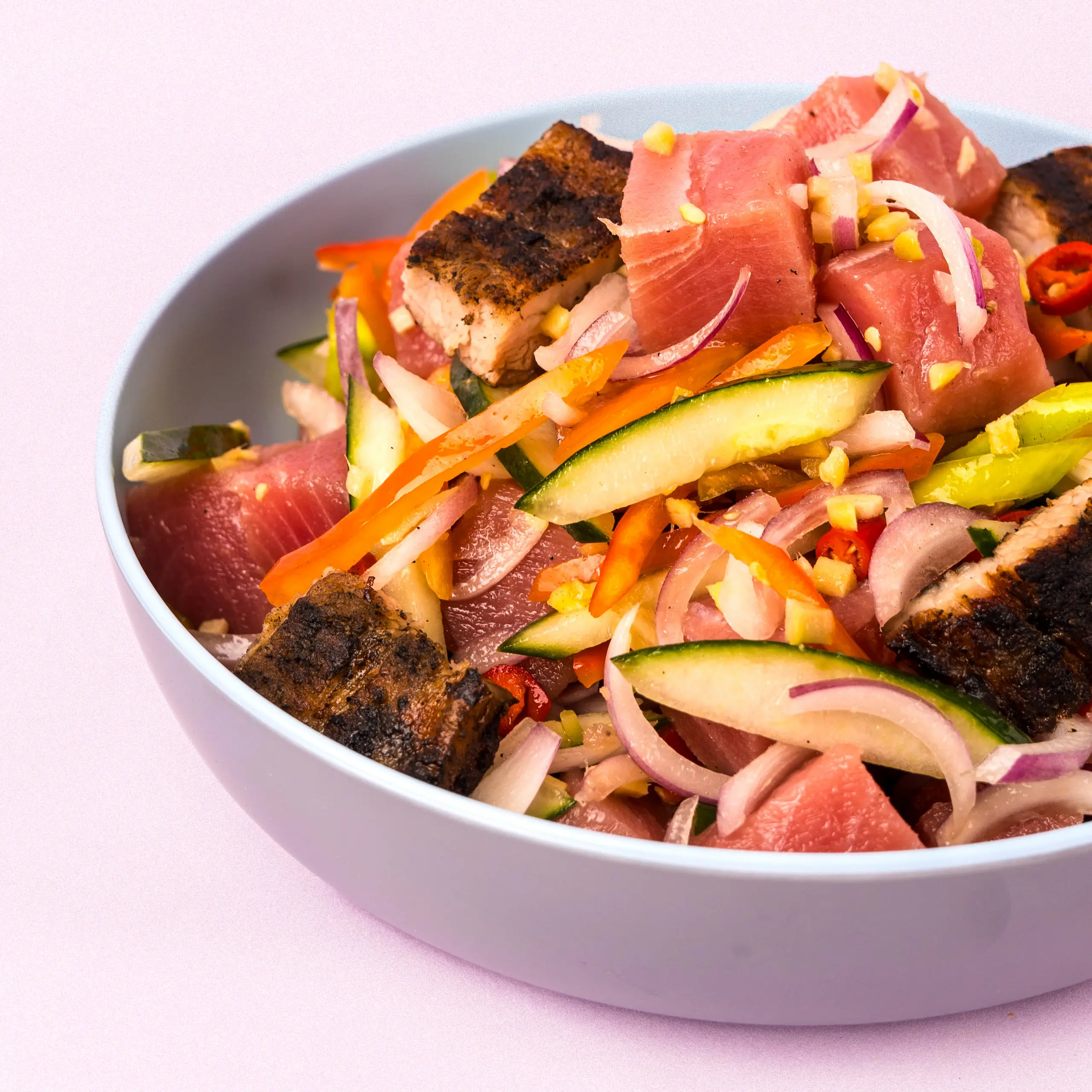


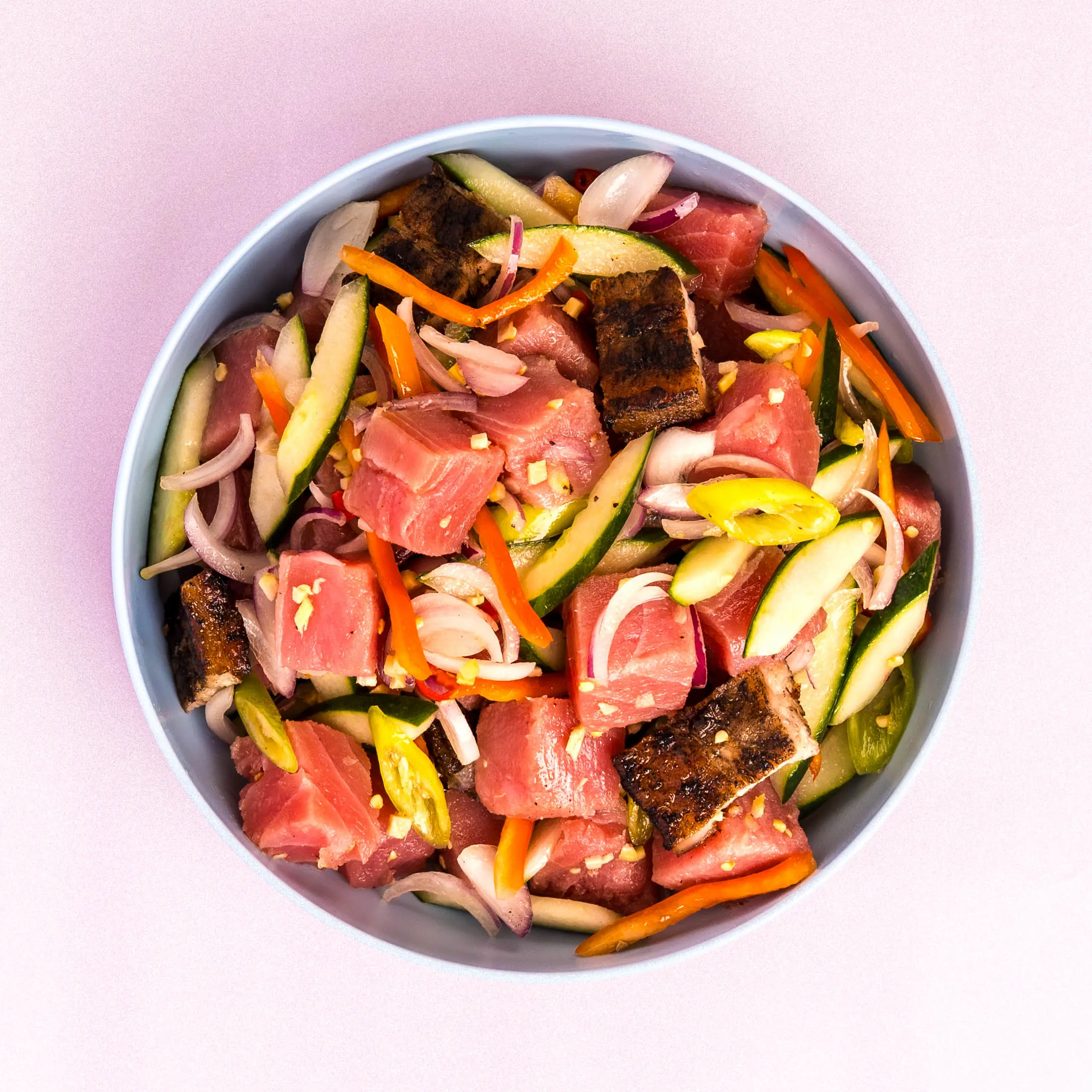
Sinuglaw is one of the most iconic dishes from Davao City and is widely loved throughout Mindanao. Its name is a combination of two Visayan words: “sinugba,” which means grilled, and “kinilaw,” a traditional Filipino dish made by curing fresh raw fish in vinegar and citrus juices. Together, these two cooking methods create a flavorful dish that perfectly balances smoky, savory grilled meat with the bright, tangy freshness of marinated seafood.
What makes Sinuglaw unique is its combination of contrasting textures and flavors. Tender, smoky grilled pork belly is mixed with cubes of fresh raw tuna that have been gently cured in vinegar and calamansi or citrus juice. The dish is then tossed with onions, ginger, chili peppers, and seasonings that enhance its freshness without overpowering the natural flavors of the ingredients. Every bite offers a delicious mix of rich, smoky meat and refreshing seafood, making Sinuglaw a favorite for both everyday meals and special gatherings.
A Brief History of Sinuglaw
Although Sinuglaw is now closely associated with Davao City, its roots come from two cooking traditions that have existed in the Philippines for centuries. Kinilaw is considered one of the country’s oldest culinary practices, dating back long before Spanish colonization. Early Filipinos preserved freshly caught fish by marinating it in vinegar and native citrus fruits, allowing the acidity to safely cure the fish while enhancing its natural flavor.
Meanwhile, sinugba, or grilling over hot charcoal, has always been a popular cooking method across the country. In Mindanao, where both fresh seafood and quality pork are abundant, locals began combining grilled pork with kinilaw-style fish, creating a dish that celebrates the region’s rich coastal resources and love for grilled food.
Over the years, Sinuglaw became a staple in restaurants, family celebrations, fiestas, and beach gatherings throughout Davao and neighboring provinces. Today, it is recognized as one of Mindanao’s signature dishes and is often recommended to visitors who want to experience authentic southern Filipino cuisine.
Why People Love Sinuglaw
One of the reasons Sinuglaw remains popular is because it delivers a perfect balance of flavors. The smoky richness of grilled pork complements the clean, citrusy taste of the cured fish, while onions, ginger, and chili add layers of freshness and gentle heat. Unlike heavier meat dishes, Sinuglaw feels light yet satisfying, making it enjoyable even during warm weather.
It is also incredibly versatile. Many Filipinos enjoy it as pulutan, served alongside cold drinks during gatherings with family and friends. At the same time, it can easily become a complete meal when paired with a generous serving of freshly steamed rice.
Health Benefits
Sinuglaw offers several nutritional benefits, especially when prepared with fresh, high-quality ingredients.
- High in protein: Both tuna and pork provide protein that supports muscle growth, tissue repair, and overall body function.
- Rich in Omega-3 fatty acids: Fresh tuna contains heart-healthy omega-3 fats that may help support brain function and cardiovascular health.
- Good source of vitamins and minerals: Ginger, onions, and chili peppers provide antioxidants, vitamin C, and beneficial plant compounds that support the immune system.
- Lower in carbohydrates: Since the dish is naturally low in carbohydrates, it can fit into a variety of balanced eating plans when enjoyed in moderation.
- Fresh ingredients: Using fresh seafood, herbs, and aromatics means the dish is packed with natural flavors without relying heavily on processed ingredients.
Because Sinuglaw contains raw fish, it is important to use only sashimi-grade or extremely fresh seafood from a trusted source and to practice proper food handling to reduce the risk of foodborne illness.
Recipe Tips
- Use very fresh fish. Yellowfin tuna is the traditional and most popular choice because of its firm texture and mild flavor. Since the fish is cured only by vinegar and citrus juice, freshness is essential.
- Cut the fish evenly. Dice the tuna into uniform bite-sized cubes so it cures evenly and has a consistent texture.
- Don’t over-marinate. Marinating the fish for too long can make it firm and slightly rubbery. About 10 to 15 minutes is usually enough.
- Grill the pork well. Cook the pork belly over charcoal if possible to achieve a smoky aroma that gives Sinuglaw its signature flavor.
- Mix just before serving. Combine the grilled pork with the cured fish only when ready to eat. This keeps the pork slightly crisp and the fish fresh.
- Adjust the acidity. Add more calamansi or vinegar depending on your preferred level of tanginess.
- Serve chilled. Slightly chilled Sinuglaw tastes even more refreshing, especially on hot days.
Substitutions
If yellowfin tuna is unavailable, you can use:
- Spanish mackerel
- Tanigue (Spanish mackerel)
- Mahi-mahi
- Fresh kingfish
- Fresh salmon (for a different but equally delicious variation)
For those who prefer fully cooked dishes, lightly seared or grilled fish can also be used instead of raw fish while still preserving the dish’s delicious flavor profile.
What to Serve with Sinuglaw
Sinuglaw is incredibly versatile and pairs well with many Filipino favorites.
- Freshly steamed white rice
- Garlic fried rice for a heartier meal
- Grilled vegetables
- Green mango salad
- Atchara (pickled papaya)
- Ice-cold beverages for gatherings and celebrations
And if you ask most Filipinos, there’s only one perfect answer—a big serving of hot, freshly steamed rice. The smoky grilled pork, tangy cured fish, and flavorful juices are simply too good not to pour over rice. It’s the kind of meal that brings people together around the table, whether it’s a simple family lunch, a weekend barbecue, or a festive celebration with friends.
Sinuglaw is more than just a delicious combination of grilled meat and fresh seafood. It tells the story of Mindanao’s rich culinary heritage, where local ingredients, traditional cooking techniques, and the warmth of Filipino hospitality come together in one unforgettable dish. Every bite captures the freshness of the sea, the smoky aroma of the grill, and the vibrant flavors that make Filipino cuisine truly one of a kind.