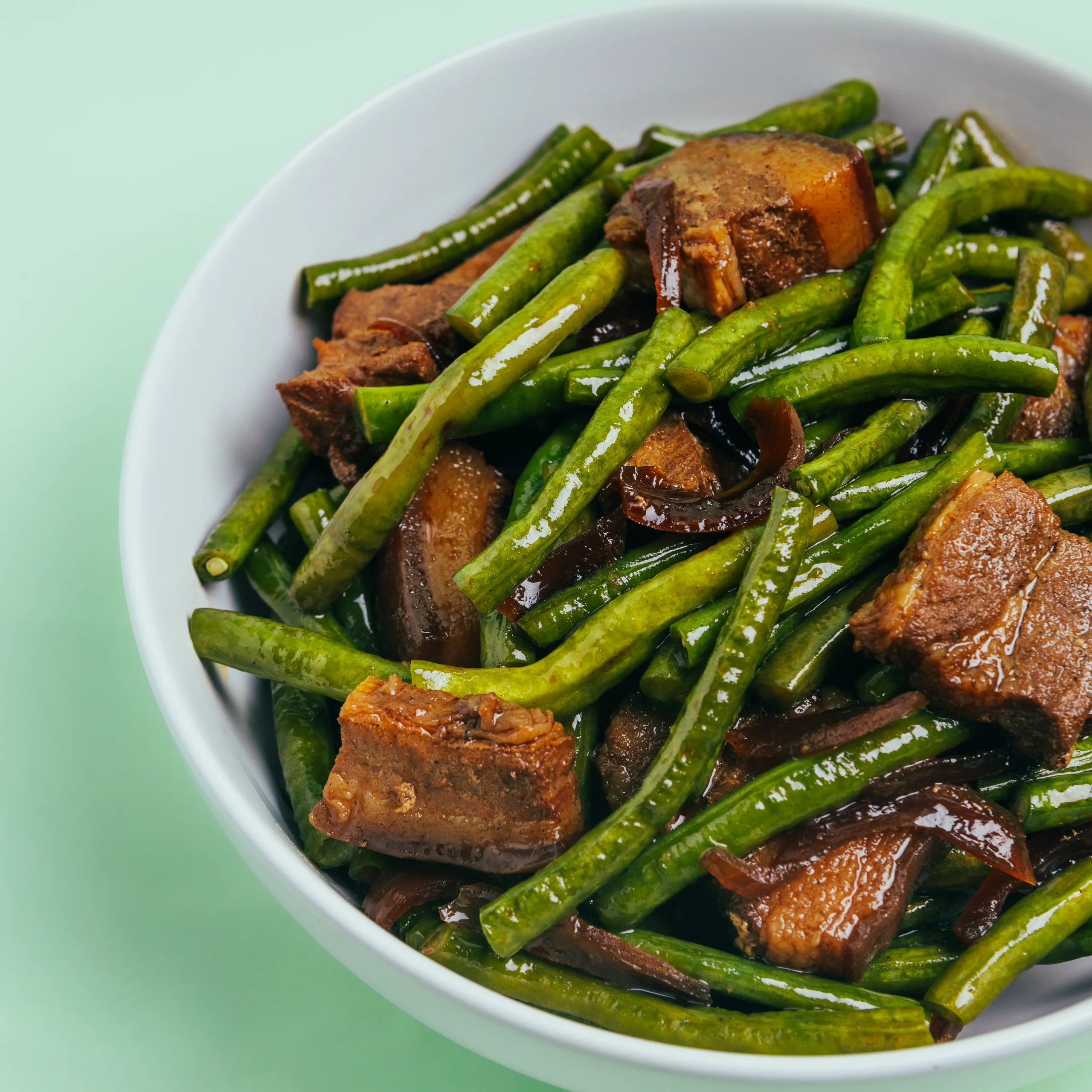
Adobong Sitaw with Pork is a hearty Filipino home-cooked dish that combines tender pork, crisp-tender string beans, and the bold, savory flavors of a classic adobo sauce. Made with soy sauce, vinegar, garlic, onions, and a touch of oyster sauce, this simple stir-fry is both comforting and satisfying, making it a popular choice for everyday family meals.
Unlike the traditional braised adobo, this version highlights fresh vegetables while still delivering the signature balance of salty, tangy, and savory flavors that Filipino cuisine is known for. The pork becomes tender as it simmers in the sauce, while the sitaw absorbs just enough of the flavorful broth without losing its pleasant crunch. Oyster sauce adds a subtle richness that enhances the overall taste without overpowering the classic adobo profile.
One of the reasons this dish is a staple in many Filipino households is its simplicity. It uses affordable ingredients that are easy to find, requires minimal preparation, and comes together in less than an hour. It’s perfect for busy weeknights, meal prepping, or whenever you’re looking for a wholesome dish that’s packed with protein and vegetables.
Serve Adobong Sitaw with Pork with plenty of hot steamed rice to soak up every drop of the savory adobo sauce. It’s a comforting meal that proves you don’t need complicated ingredients to create something truly delicious.
Recipe Tips
- Slice the pork thinly so it cooks quickly and stays tender.
- Let the pork brown slightly before adding the liquids to build deeper flavor.
- Avoid stirring the vinegar immediately after adding it. Allowing it to simmer undisturbed helps mellow its sharpness while maintaining the classic adobo taste.
- Cook the sitaw only until crisp-tender to preserve its vibrant color and fresh texture.
- If using older or tougher string beans, blanch them briefly before adding them to the sauce.
- Use freshly minced garlic for the most aromatic flavor.
- Simmer the pork over low heat to keep it juicy and allow the sauce to fully develop.
- If you enjoy a richer sauce, let it reduce uncovered during the last few minutes of cooking.
- Taste the sauce before adding salt since the soy sauce and oyster sauce already provide plenty of seasoning.
- Leftovers often taste even better the next day as the pork and vegetables continue to absorb the flavorful adobo sauce.
Ingredient Substitutions
Pork
Pork shoulder, pork belly, pork loin, or pork tenderloin all work well in this recipe. Chicken, beef, or even shrimp can also be used if you prefer a different protein.
Sitaw (String Beans)
If string beans aren’t available, substitute green beans, asparagus, snap peas, snow peas, broccoli, or even sliced okra. While the flavor will vary slightly, these vegetables pair well with the adobo sauce.
Soy Sauce
Low-sodium soy sauce may be used if you prefer a less salty dish. Tamari is also a suitable gluten-free alternative.
Vinegar
Cane vinegar is the traditional choice, but white vinegar, apple cider vinegar, or coconut vinegar all work well. Each variety adds its own subtle flavor to the adobo.
Oyster Sauce
If oyster sauce isn’t available, you can substitute hoisin sauce for a slightly sweeter flavor or use mushroom oyster sauce for a vegetarian-friendly alternative.
Onion
Red, white, or yellow onions can all be used depending on what’s available.
Garlic
Fresh garlic is highly recommended, but garlic paste or garlic powder may be used in a pinch, though the flavor won’t be quite as bold.