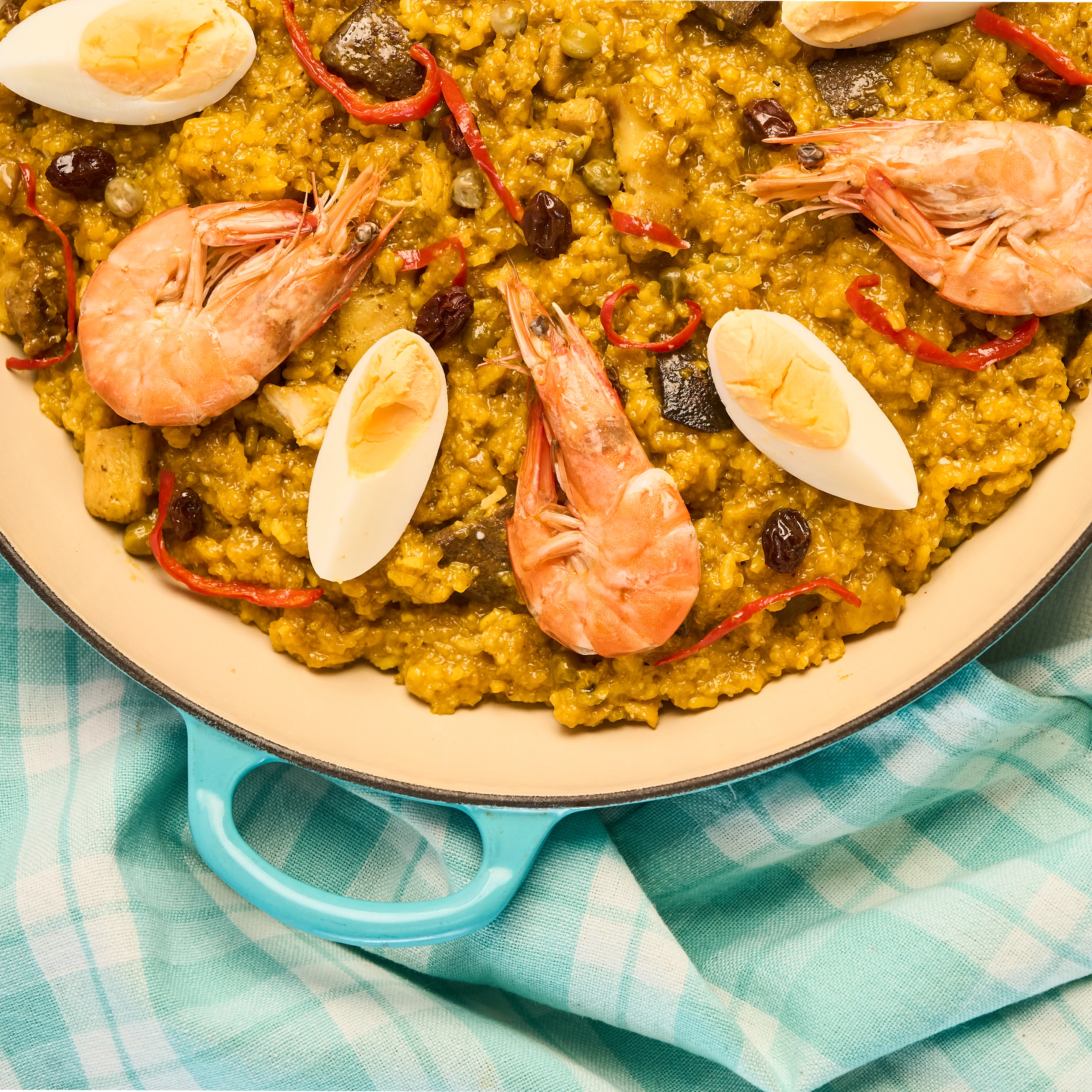


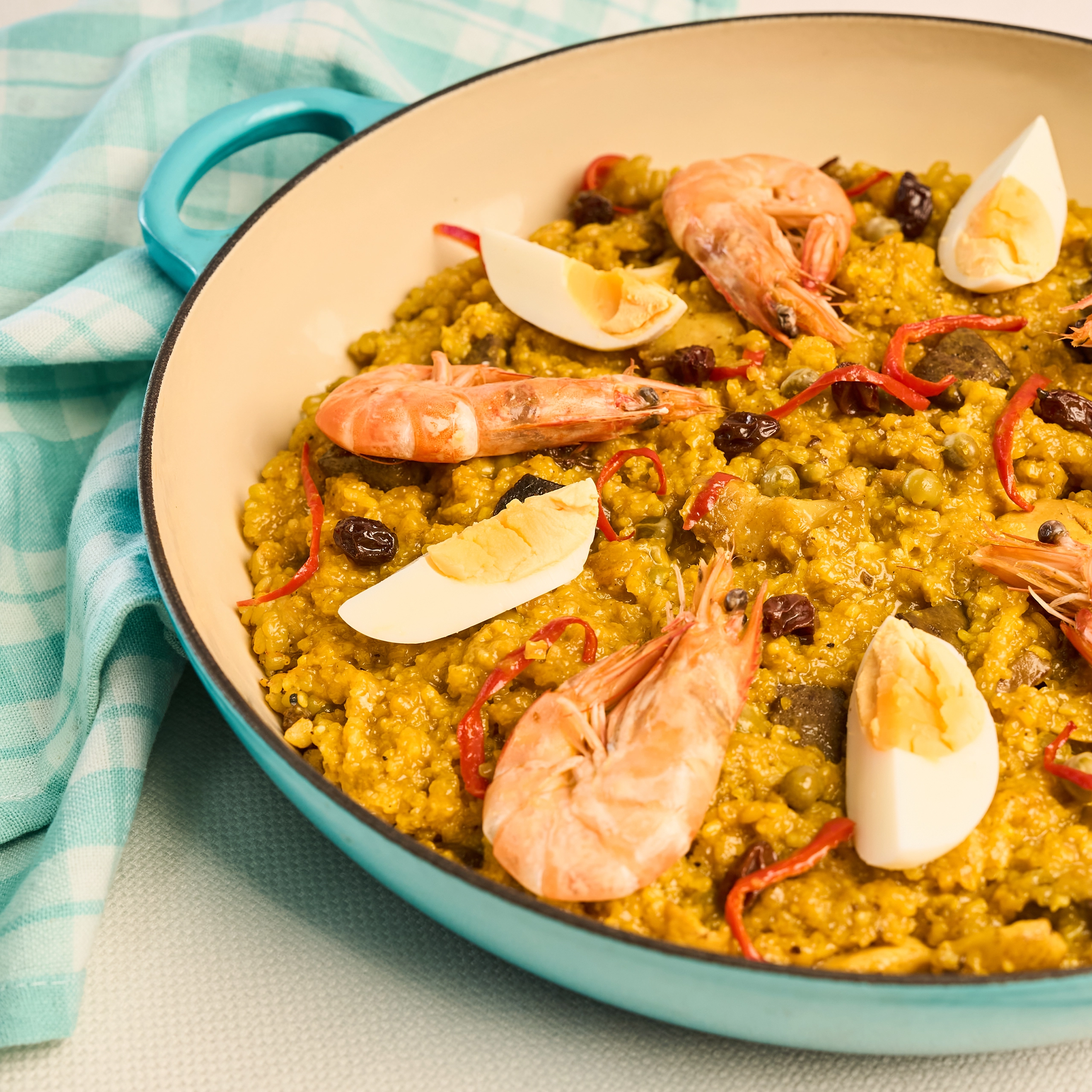
There are some Filipino dishes that feel like a celebration even before the first bite. Arroz Valenciana is one of them. With its golden grains of glutinous rice, colorful vegetables, tender meat, shrimp, raisins, and slices of hard-boiled egg, it naturally brings a festive feeling to the table.
In the Negros Island Region, dishes like Arroz Valenciana are especially fitting for family gatherings, fiestas, holidays, birthdays, and other occasions when people come together around a generous meal. It is the kind of food that can fill the dining table with color and aroma while giving everyone a little bit of everything—rice, meat, seafood, vegetables, and a touch of sweetness.
This version uses malagkit, or glutinous rice, which gives the dish its characteristic sticky and pleasantly chewy texture. Turmeric provides the beautiful yellow-golden color and a gentle earthy flavor, while garlic and onion form the savory foundation. Pork belly adds richness, chicken contributes tenderness, pork liver gives the dish a deeper savory character, and shrimp brings a natural sweetness from the sea.
The raisins may seem like a small addition, but they are important to the overall experience. Their sweetness provides a pleasant contrast to the salty and savory ingredients. Finally, the hard-boiled eggs add both color and a familiar Filipino touch.
More than simply a rice dish, Arroz Valenciana is a wonderful example of how Filipino cooking brings together different flavors, textures, and ingredients in one satisfying pot.
A Little History of Arroz Valenciana
Arroz Valenciana is commonly associated with Filipino festive cooking and is related to the Spanish-influenced tradition of preparing rice dishes with meat, seafood, vegetables, and spices. Its name reflects its connection to Valencian-style rice dishes, although the Filipino version has developed its own identity over generations.
Filipino Arroz Valenciana should not be thought of as simply a copy of Spanish paella. Filipino cooks have adapted the dish according to local ingredients, cooking habits, available produce, and family traditions. Instead of following one rigid formula, recipes can vary considerably from one household or region to another.
This flexibility is one of the things that makes Filipino cuisine so interesting. A dish can have a recognizable name and basic character while still tasting completely different depending on who prepares it.
In Filipino homes, festive rice dishes are often associated with abundance. Meat, seafood, vegetables, eggs, and other garnishes are combined with rice to create something substantial enough to feed a gathering. Arroz Valenciana fits naturally into this tradition.
In the Negros Island Region, where food traditions are deeply connected to family gatherings, celebrations, and local agricultural abundance, a dish like this makes perfect sense on a special table. The recipe can also be adjusted depending on what ingredients are available, making it practical as well as festive.
What Makes This Negros-Style Version Special?
This particular recipe has a generous combination of pork belly, chicken breast, pork liver, and shrimp. Rather than relying on just one protein, it builds several layers of flavor.
The glutinous rice is the heart of the dish. As it cooks, it absorbs the savory juices released by the pork, chicken, shrimp, garlic, onion, and liver.
The turmeric gives the rice its golden color. It also adds a subtle earthy note without overpowering the other ingredients.
The raisins provide little bursts of sweetness, while green peas and red bell pepper add freshness, color, and texture. Hard-boiled eggs complete the presentation and make the finished dish look particularly festive.
The result is hearty, colorful, savory, slightly sweet, and wonderfully filling.
Understanding the Ingredients
Glutinous Rice
Glutinous rice, commonly called malagkit in the Philippines, is what gives this Arroz Valenciana its distinctive sticky texture.
Despite its name, glutinous rice does not contain gluten. The word “glutinous” refers to its sticky quality after cooking.
Because malagkit behaves differently from ordinary long-grain or jasmine rice, the amount of liquid needs attention. Too much water can make the finished dish overly soft or mushy, while too little can leave the rice undercooked.
Turmeric
Turmeric is responsible for much of the dish’s golden color. It has an earthy, slightly peppery flavor and is commonly used in many Asian cuisines.
Turmeric contains curcumin, a compound that has been studied for its antioxidant and anti-inflammatory properties. However, the amount used in a serving of Arroz Valenciana is relatively small, so it should be viewed as a flavorful ingredient rather than a medicinal treatment.
Garlic
Garlic provides the aromatic foundation of the dish. Sautéing minced garlic in oil releases its fragrance and gives the entire pot a deeper savory character.
Garlic also contains sulfur-containing compounds and other plant compounds that have been studied for their potential health effects.
Onion
Onion brings sweetness and depth. When sautéed slowly, it becomes softer and sweeter, helping balance the richness of the pork and the savory flavor of the liver.
Pork Belly
Pork belly contributes fat and richness. Some of the fat renders during cooking, helping flavor the rice.
Because pork belly can be quite rich, you don’t need to use excessive amounts. Keeping the pieces relatively small allows the meat to distribute its flavor throughout the dish.
Chicken Breast
Chicken breast provides leaner protein and a mild flavor that works well with turmeric and the other ingredients.
You can also use boneless chicken thigh if you prefer darker meat. Thigh meat tends to stay juicier and more tender, particularly in longer cooking.
Pork Liver
Pork liver gives Arroz Valenciana a distinctive savory, almost mineral-like depth. It is an ingredient that some people love and others prefer to leave out.
Liver is particularly rich in nutrients such as vitamin A, vitamin B12, iron, and copper. However, liver is also very nutrient-dense, so it is best eaten in moderation rather than in large quantities.
Shrimp
Shrimp adds a naturally sweet, briny flavor that complements the savory pork and chicken.
For convenience, peeled shrimp can be used. If using shell-on shrimp, you can remove the shells before cooking or use them to add extra flavor to a homemade stock.
Green Peas
Green peas provide color, mild sweetness, fiber, and some plant-based protein.
Frozen peas are an excellent choice because they are convenient and usually retain good texture. They can generally be added directly to the dish without thawing.
Red Bell Pepper
Red bell pepper adds sweetness, color, and a slight crunch.
It is also a good source of vitamin C and various antioxidant plant compounds.
Raisins
Raisins are one of the ingredients that give Filipino-style festive rice dishes their distinctive sweet-and-savory character.
If you’re unsure about raisins, start with the recommended amount. You can always increase them next time, but too many can make the dish noticeably sweeter.
Eggs
Hard-boiled eggs add protein, richness, and visual appeal.
Slicing them and arranging them over the finished rice makes the dish look ready for a fiesta or family celebration.
Helpful Cooking Tips
Don’t rush the sautéing stage
The garlic, onion, and pork create much of the foundation for the dish. Give them enough time to develop flavor before adding the rice.
Brown the pork when possible
A little browning gives the pork a deeper flavor than simply boiling it.
Keep the rice from becoming mushy
The biggest challenge with glutinous rice is liquid control. Add water carefully and monitor the rice throughout cooking.
Cut the ingredients evenly
Small, uniform pieces make every spoonful more balanced and help the meats cook at similar rates.
Add shrimp later
Shrimp cooks quickly. Adding it too early can result in tough, rubbery seafood.
Taste before serving
Rice absorbs seasoning, so don’t rely only on measurements. Always taste the finished rice and adjust the salt and pepper.
Let the dish rest
After cooking, allow the Arroz Valenciana to rest for several minutes before serving. This gives the moisture and flavors time to settle.
Ingredient Substitutions
One of the best things about Filipino cooking is its flexibility. If you don’t have every ingredient, you can still make a delicious version.
No pork belly?
Use pork shoulder or another tender, moderately fatty cut of pork.
For a leaner dish, you can reduce the pork and increase the chicken.
Don’t like pork liver?
Simply leave it out.
You can compensate by adding a little more chicken or pork, although the finished dish will have a milder flavor.
Chicken breast substitution
Boneless chicken thighs are an excellent substitute and generally produce a juicier result.
No shrimp?
You can omit the shrimp or replace it with additional chicken or pork.
If seafood is part of what you enjoy about the dish, squid or another suitable seafood can also work, although it will change the character of the recipe.
Fresh peas vs. frozen peas
Both work well.
Frozen peas are particularly convenient and don’t need to be thawed beforehand.
No raisins?
You can leave them out if you prefer a purely savory dish.
Alternatively, a small amount of chopped dried fruit can provide a similar sweet contrast, although raisins are the most traditional-feeling choice for this style of recipe.
Can you use ordinary rice?
Yes, but the texture will be different.
If you substitute regular rice for malagkit, expect a less sticky and more separated rice dish. The water requirement and cooking time will also change.
Fresh turmeric instead of powder
Fresh turmeric can be used, although it may require peeling and finely grating. The flavor can be more pronounced and fresh.
Health Benefits of the Ingredients
Arroz Valenciana is a hearty celebration dish rather than a low-calorie meal, but many of its ingredients provide useful nutrients.
Glutinous rice supplies carbohydrates, which provide the body’s primary source of energy.
Chicken and shrimp provide protein, which is important for maintaining muscles and supporting many body functions.
Pork provides protein as well as nutrients such as thiamine and zinc. Pork belly, however, is relatively high in fat, so portion size matters.
Pork liver is exceptionally nutrient-dense and provides vitamin B12, iron, vitamin A, and other micronutrients. Because it is high in preformed vitamin A, frequent large servings aren’t advisable, particularly during pregnancy.
Green peas provide fiber, vitamin K, vitamin C, folate, and plant-based protein.
Red bell peppers are particularly rich in vitamin C and contain colorful antioxidant compounds.
Garlic and onion contain various sulfur-containing and antioxidant plant compounds and add significant flavor without requiring large quantities of salt.
Turmeric contains curcumin and other compounds with antioxidant properties. Culinary turmeric is best appreciated primarily for its flavor and color; it should not be treated as a substitute for medical treatment.
Raisins contribute carbohydrates, natural sugars, and some fiber, although they are also concentrated in calories and sugar.
Eggs provide high-quality protein along with nutrients such as choline, selenium, vitamin B12, and riboflavin.
Overall, the nutritional value of Arroz Valenciana comes from its combination of grains, proteins, vegetables, and aromatics. Because it is rich and substantial, it works particularly well when served with fresh vegetables or a light side dish.
How to Store Arroz Valenciana Properly
Because this dish contains cooked rice, pork, chicken, liver, shrimp, and eggs, proper storage is particularly important.
After cooking, don’t leave the finished dish sitting at room temperature for an extended period.
Transfer leftovers into shallow, airtight containers so they cool more quickly and evenly.
Refrigerate leftovers promptly.
Ideally, divide a large batch into smaller containers rather than placing one very large, steaming-hot pot directly into the refrigerator.
Keep the refrigerator at 4°C / 40°F or below.
When reheating, heat the portion thoroughly until steaming hot throughout. Avoid repeatedly reheating and cooling the entire batch; instead, reheat only the amount you plan to eat.
Can You Freeze Arroz Valenciana?
Yes.
If you know you will have leftovers, freezing can be a convenient option.
Allow the rice to cool appropriately, portion it into freezer-safe airtight containers or bags, and label each portion with the date.
For the best texture, consume frozen portions within about 1–2 months, although continuously frozen food can remain safe longer if kept at a proper freezer temperature; quality gradually declines.
The shrimp and vegetables may become slightly softer after freezing and reheating, but the dish can still be enjoyable.
Thaw frozen portions safely in the refrigerator or reheat them directly if your container and method allow it.
Shelf Life
For best quality and food safety:
- Room temperature: Don’t leave cooked Arroz Valenciana out for more than about 2 hours. If the surrounding temperature is above 32°C/90°F, limit this to about 1 hour.
- Refrigerator: Eat refrigerated leftovers within about 3–4 days.
- Freezer: For best quality, use within roughly 1–2 months.
When in doubt, discard leftovers that have an unusual smell, appearance, texture, or that were left unrefrigerated for too long. Don’t taste questionable food to determine whether it is safe.
Cooked rice deserves particular care because certain bacteria, including Bacillus cereus, can survive cooking and multiply if cooked rice is improperly cooled or stored.
How to Serve Arroz Valenciana
Arroz Valenciana is already a complete and filling dish, so it doesn’t need an elaborate collection of side dishes.
For a Filipino-style gathering, you can serve it alongside:
- Fresh tomato and onion salad
- Atchara
- Sliced cucumber
- Green salad
- Fresh fruit
- Grilled or roasted vegetables
- A light soup
The contrast between the rich, savory rice and something fresh or acidic can make the meal feel more balanced.
For special occasions, serve the Arroz Valenciana on a large platter and arrange the sliced eggs attractively over the top. The golden rice, red bell pepper, green peas, raisins, shrimp, and eggs naturally create a colorful centerpiece.
Final Thoughts
Arroz Valenciana is the kind of dish that tells a story through food.
It brings together ingredients that might seem very different on their own—glutinous rice, pork, chicken, liver, shrimp, vegetables, raisins, and eggs—and turns them into one harmonious dish.
Its golden color immediately makes it feel festive, while the combination of savory, sweet, rich, and slightly earthy flavors gives every bite something different. The malagkit makes it comforting and substantial, while the shrimp and vegetables keep it from feeling one-dimensional.
Perhaps the best part of Arroz Valenciana isn’t that there is only one “correct” way to make it. Like many beloved Filipino dishes, it can change from kitchen to kitchen. One family may add more meat, another may prefer extra shrimp, someone else may leave out the liver, and another cook may have a particular way of seasoning the rice that has been passed down through generations.
That adaptability is part of its charm.
Whether you’re preparing it for a fiesta in the Negros Island Region, a holiday meal, a birthday, or simply a Sunday gathering with family, Arroz Valenciana is more than a pot of rice. It is a dish made for sharing—generous, colorful, comforting, and unmistakably celebratory.