

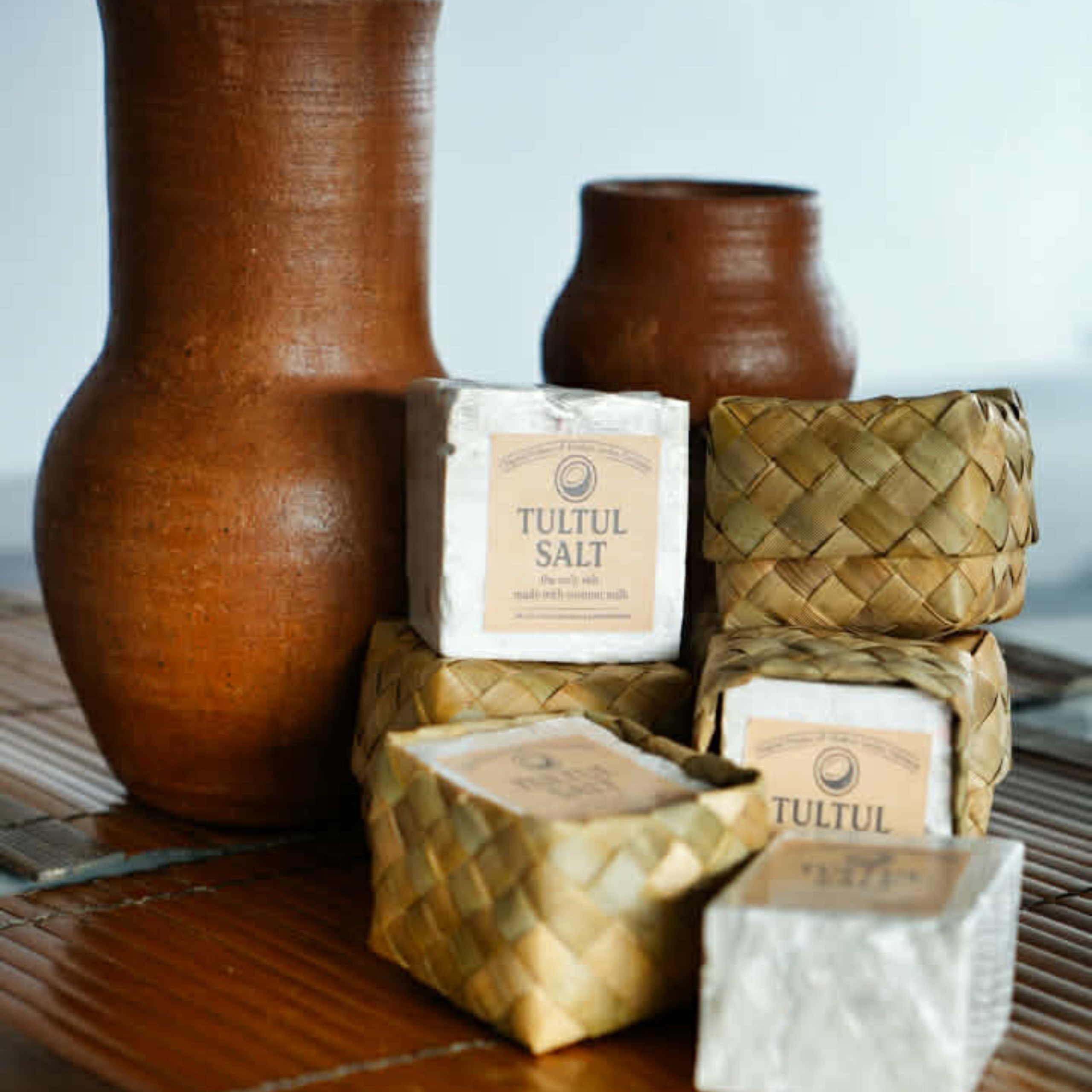
In Hoskyn, Jordan, Guimaras, salt is made differently.
Along the coast, a rare artisanal salt known as asin tultul is still produced through a painstaking process involving seawater, ash, fire, coconut milk, and days of patient work. More than a seasoning, however, each dense block carries with it a story—one that a family has spent generations refusing to let disappear.
Meet the Guimaras Family Keeping the Tradition of Asin Tultul Alive
For Joemar Ganila, a fifth-generation tultul maker, that story dates back nearly 90 years.
“Our family’s tradition of making tultul began in 1937, during the time of my ancestors,” he says. “Since then, each generation has continued cooking and producing it up to the present day.”
Joemar is the son of the late Serafin Ganila and Emma Ganila, who became among the most important caretaker of the tradition at a time when tultul was in danger of being neglected and forgotten. Growing up, Joemar understood early that making salt was not simply the family business. For him, it was also an inheritance and a duty.
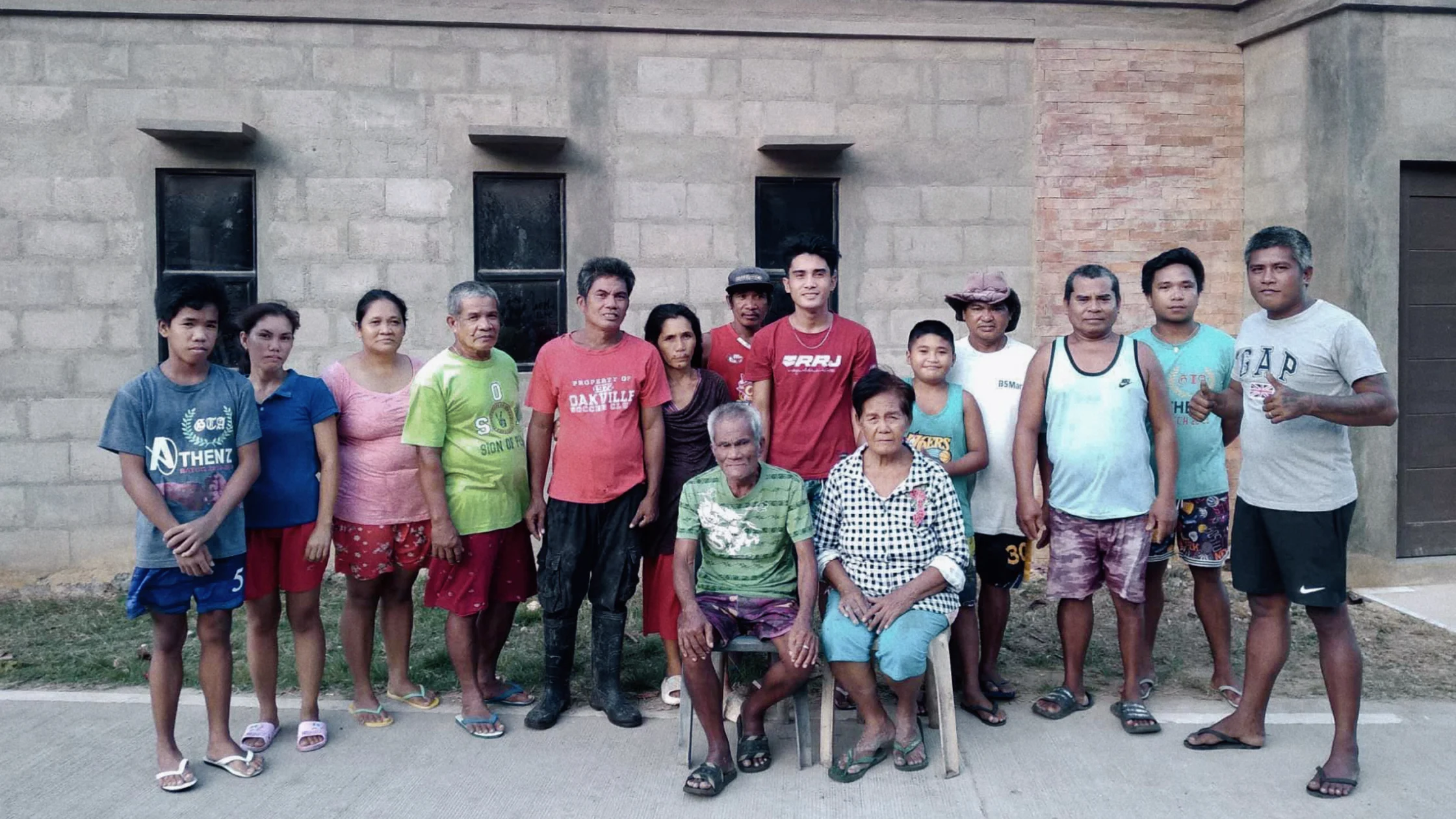
“One of my most meaningful memories is my father’s promise to our ancestors that tultul should never disappear. We have carried that promise with us ever since,” says Joemar. “Tultul also played an important role in our lives because it supported our education and became our family’s source of livelihood.”
He also remembers how it became a staple in their everyday meals. “When we were younger, we would eat tultul with freshly cooked rice,” he recalls. “We would dip the hot rice into it, and that alone was enough for a meal.”
From Sea to Salt: How Guimaras’ Asin Tultul Is Made
Making asin tultul is anything but simple. The process begins with the gathering of dagsa or materials washed ashore and weathered by the sea. These can include driftwood, coconut husks, tikbaw grass, and bamboo. They are burned for approximately seven days until they are reduced to ash. The ash is then taken to the production area and packed into woven baskets. Seawater is poured through it, filtering through the ash and producing a concentrated liquid called tuma.
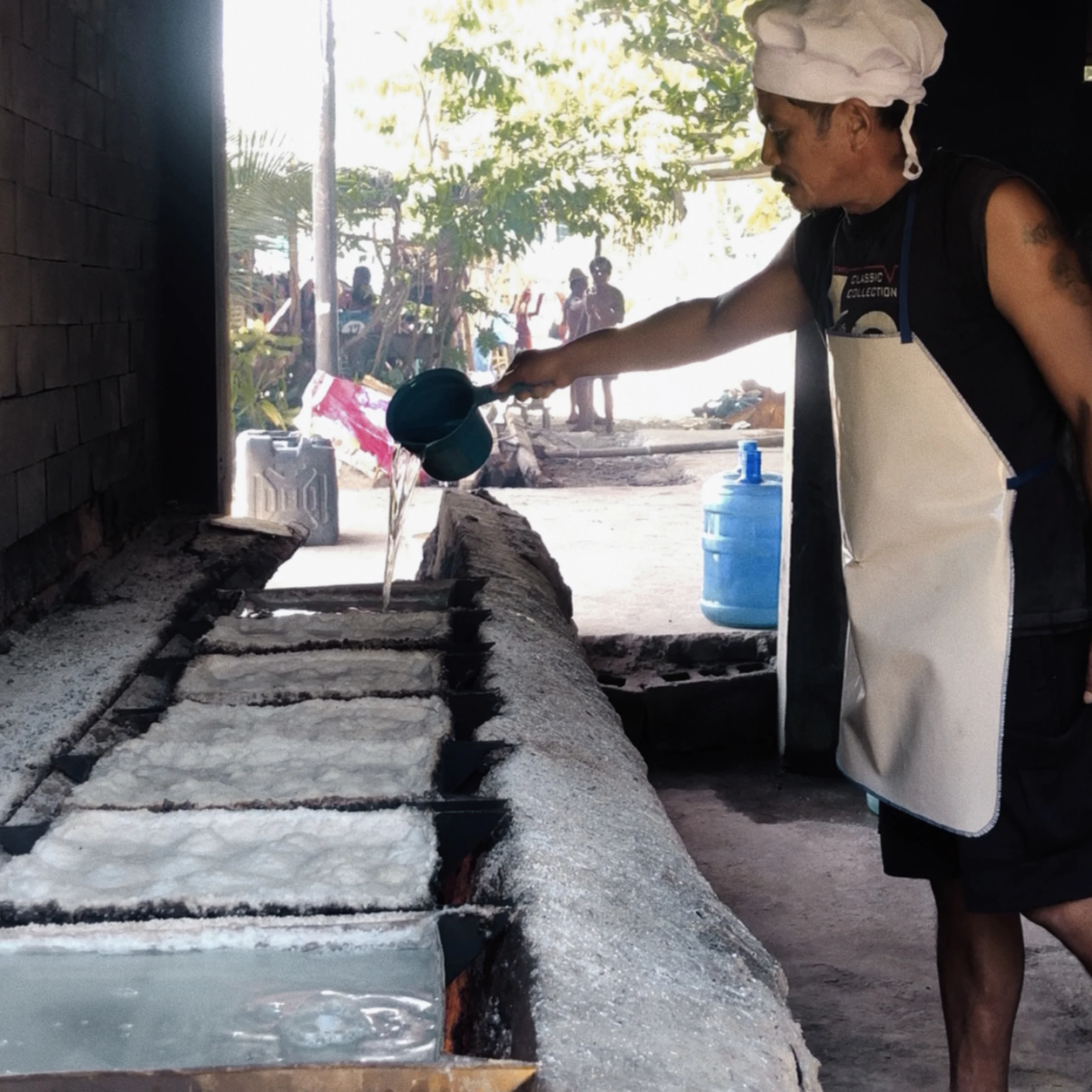
This liquid is then boiled for eight to ten hours. Coconut milk is added during the process, and the mixture is continuously cooked until it eventually hardens into blocks of tultul.
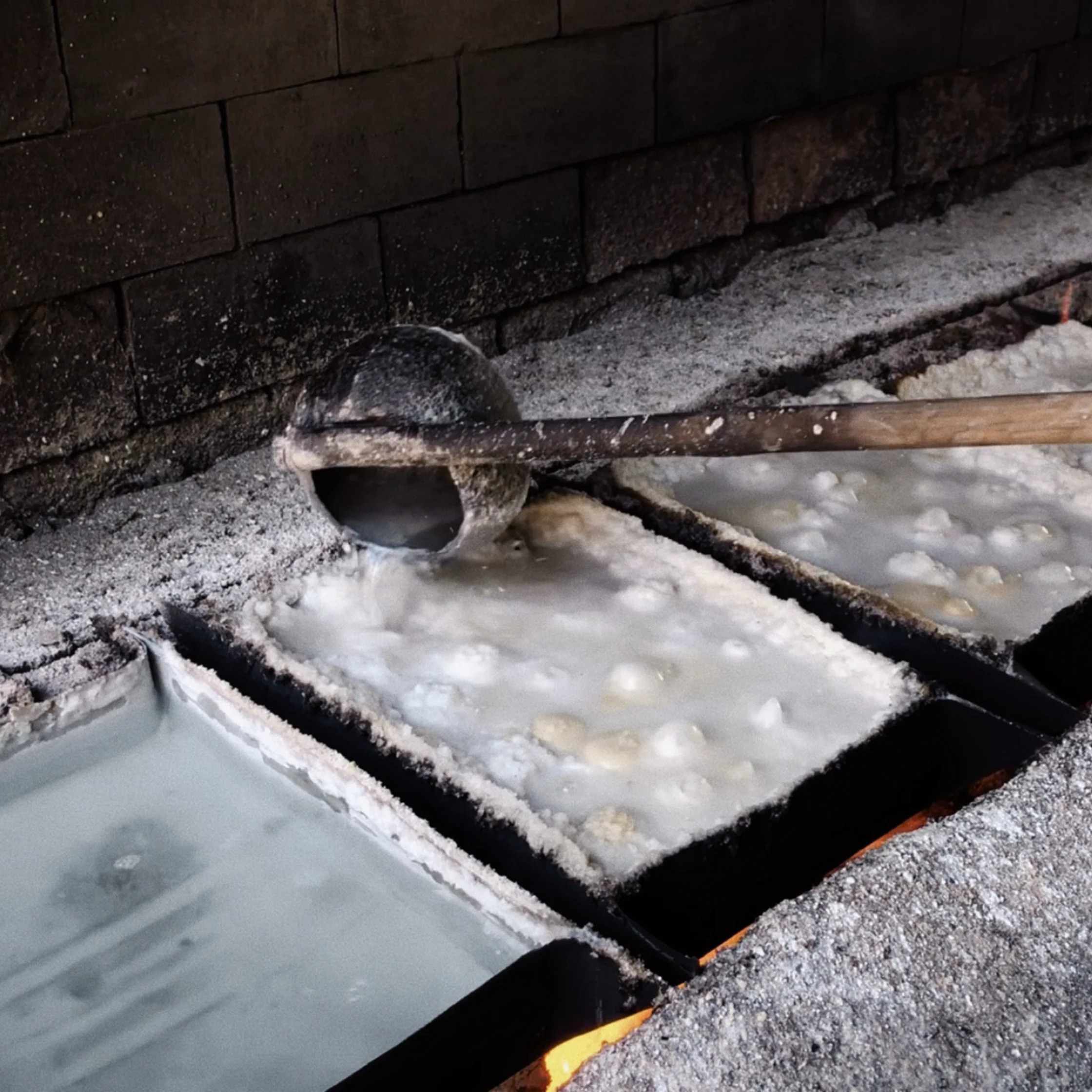
It is a laborious process that requires time, fuel, knowledge, and patience—qualities that become challenging to retain when the demand is low.
There was a time when the Ganilas experienced exactly that. Sales dropped signifantly, particularly following an oil spill, jeopardizing their livelihood. Yet the family persevered.
“Before our father passed away, he entrusted us with the responsibility of continuing this tradition and never allowing it to stop,” Joemar says.
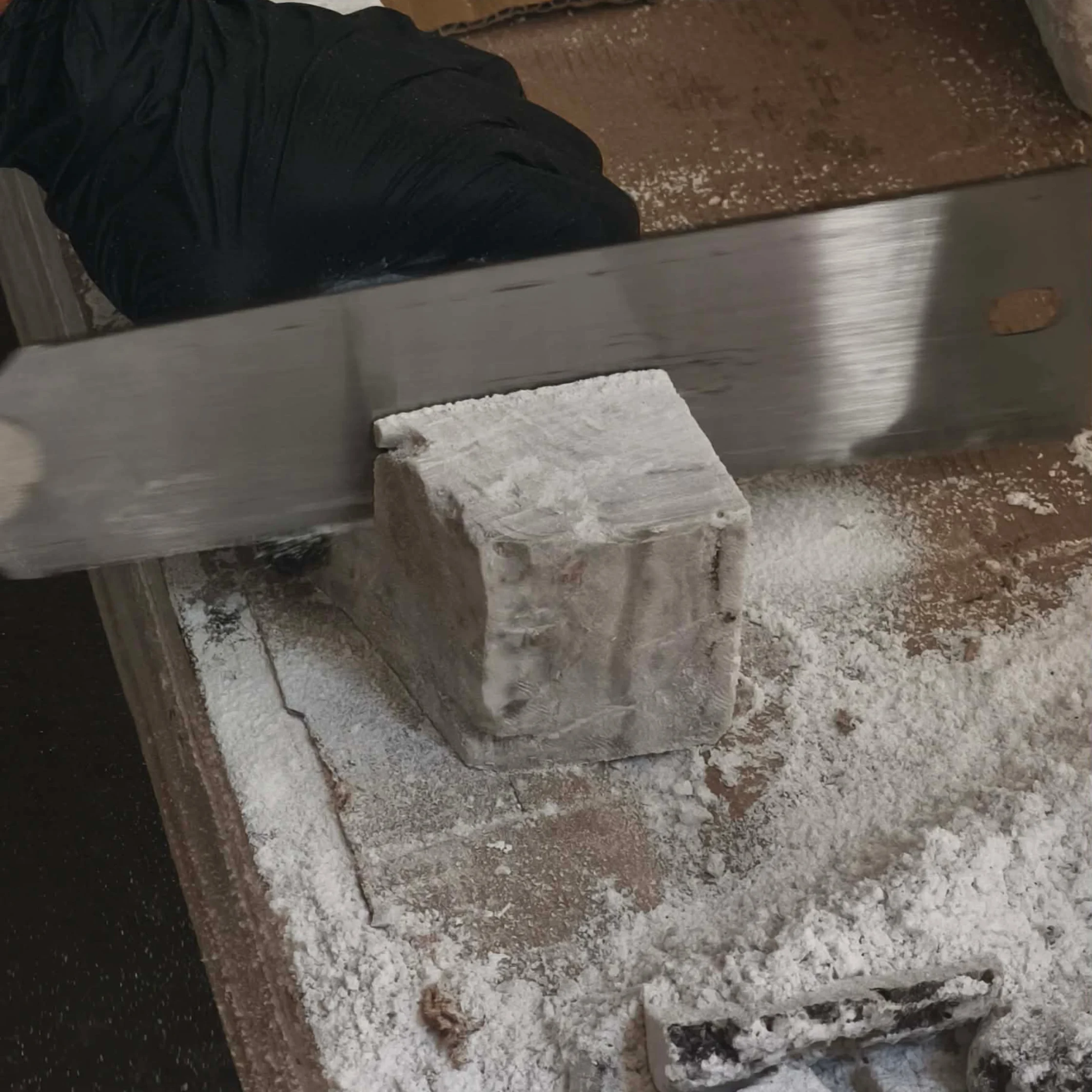
Today, he has taken his father’s place in keeping that promise. More importantly, another generation is already being taught the craft. “My own children are also learning to produce it.”
Giving Tultul a Future
Asin tultul’s survival also depends on people outside the family recognizing what could be lost. Among them is Alejo Vincent “Vinsoy” Abawan, who made it his mission to help revive the tradition after learning that its life is on the line.
“When I first learned that this tradition was slowly disappearing, I could not accept it,” he says. “I felt that if no one stepped up, future generations would only read about it in books instead of experiencing it.”
For Abawan, preserving tultul meant doing more than keeping an old production method alive. The salt needed to become relevant again. It needed people who are willing to make it as well as consumers who are willing to buy and use it.
“When I began helping revive the industry, only a few people still believed that making tultul was worth continuing, particularly Nanay Emma and Tatay Serafin,” he says.
Through his noble effort to increase promotion and awareness, demand gradually returned. Tultul began finding its way into restaurants, introducing the ingredient to diners beyond Guimaras. Consequently, more families and community members also became interested in its production as they saw the possibility of earning a livelihood while preserving something uniquely their own.
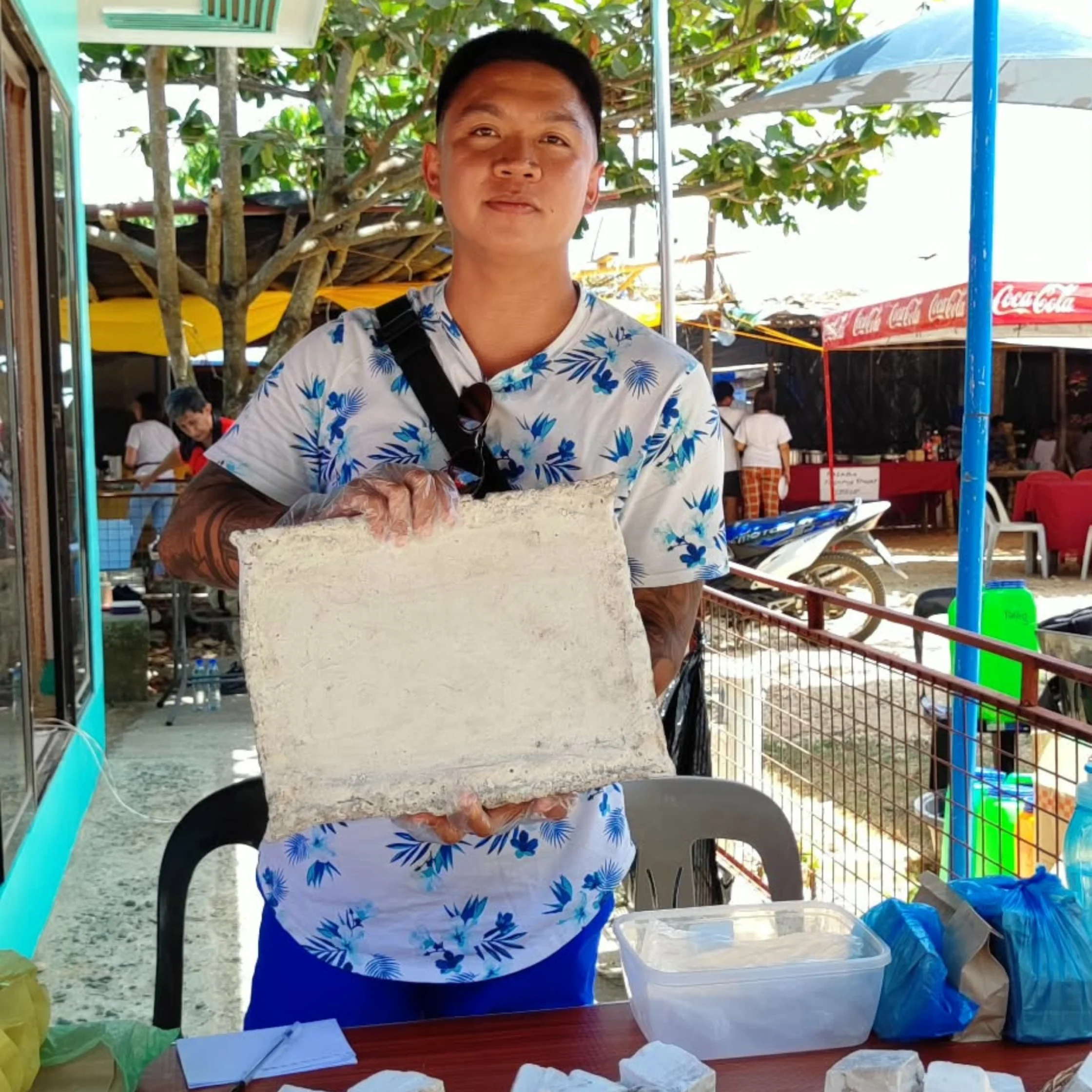
For the Ganila family, that renewed interest has brought much change.
“Tultul has greatly improved our lives,” Joemar says. “Because of the growing demand, we have been able to buy the things we need and repair our house.”
This healthy connection is exactly what Abawan is hoping for—where heritage preservation and livelihood are both achieved. Adding grease to the machinery, he works to ensure producers receive opportunities, training, and encouragement so that the people safeguarding the tradition can also benefit from its survival.
“I always tell them that we are not just making salt. We are preserving our identity. Every time someone buys our tultul, it is proof that our culture still has value.”
He adds, “My biggest wish is that asin tultul will continue to live long after all of us,” he says. “Sana dumating ang panahon na makilala ito hindi lang sa Pilipinas kundi sa buong mundo bilang isa sa ipinagmamalaking heritage food ng Guimaras.”
To order asin tultul, contact 0945-5460063 or message Tultul Salt Manufacturing in Facebook.

Frequently Asked Questions
Asin tultul is a traditional artisanal salt from Guimaras made by filtering seawater through ash and cooking the resulting concentrated liquid with coconut milk until it forms dense blocks.
Asin tultul is traditionally made in Hoskyn, Jordan, Guimaras.
The process involves burning driftwood, coconut husks, grass, bamboo, and other materials to produce ash. Seawater is filtered through the ash to create tuma, which is then boiled for eight to 10 hours with coconut milk until it hardens into salt blocks.
The Ganila family’s tultul-making tradition dates back to 1937, making it a nearly 90-year-old family tradition that has been passed down through five generations.
According to the article, asin tultul can be ordered by contacting 0945-5460063 or messaging Tultul Salt Manufacturing on Facebook.