


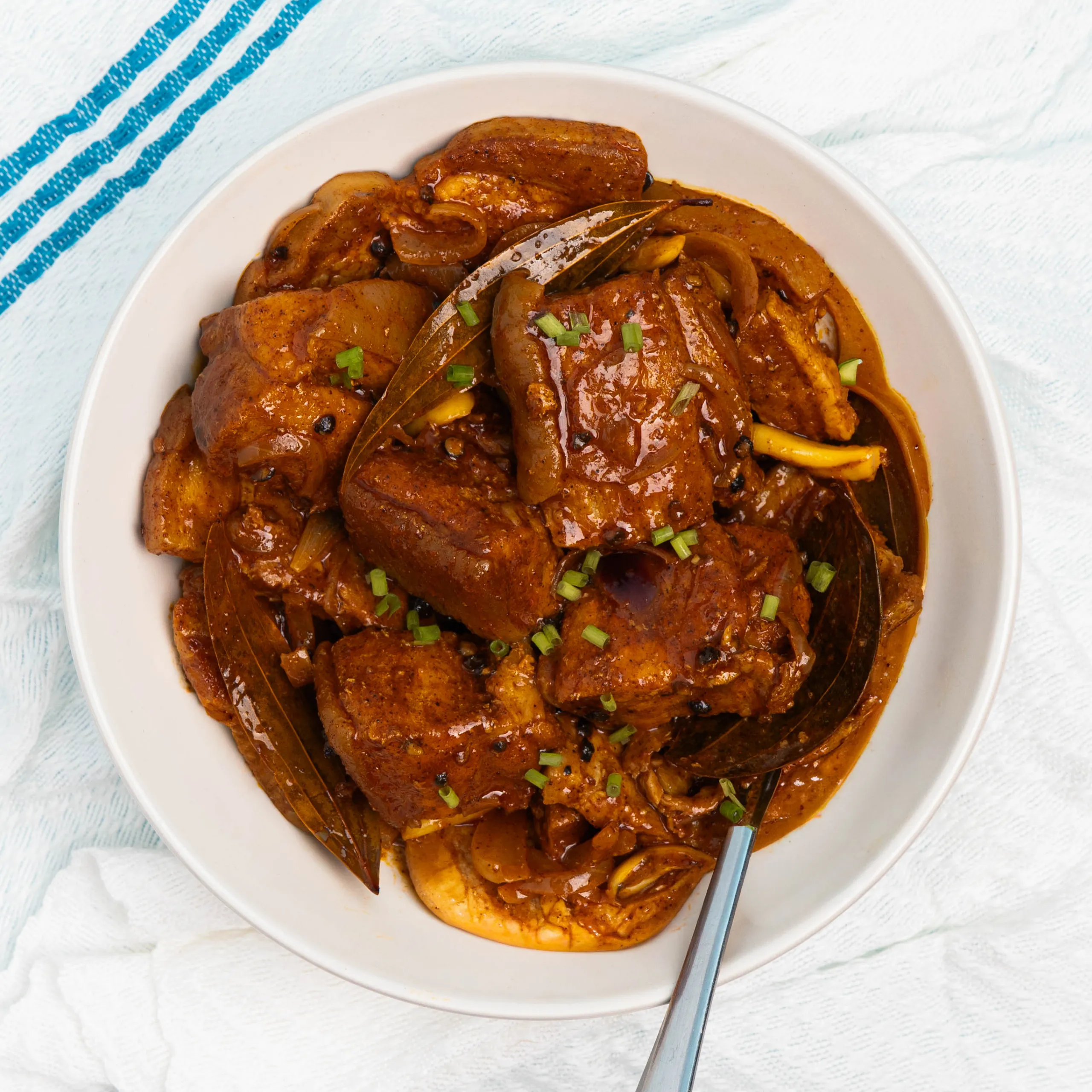
There is something wonderfully comforting about adobo, especially when it is cooked slowly until the sauce becomes concentrated and clings to every piece of meat. Adobo Seca, literally a “dry” style of adobo, takes that familiar Filipino cooking tradition and pushes it in a more intense direction.
Instead of leaving the pork swimming in a generous amount of sauce, the cooking liquid is gradually reduced until very little moisture remains. The pork becomes tender, browned, savory, and intensely flavorful, with the vinegar, garlic, bay leaves, and peppercorns coating the meat.
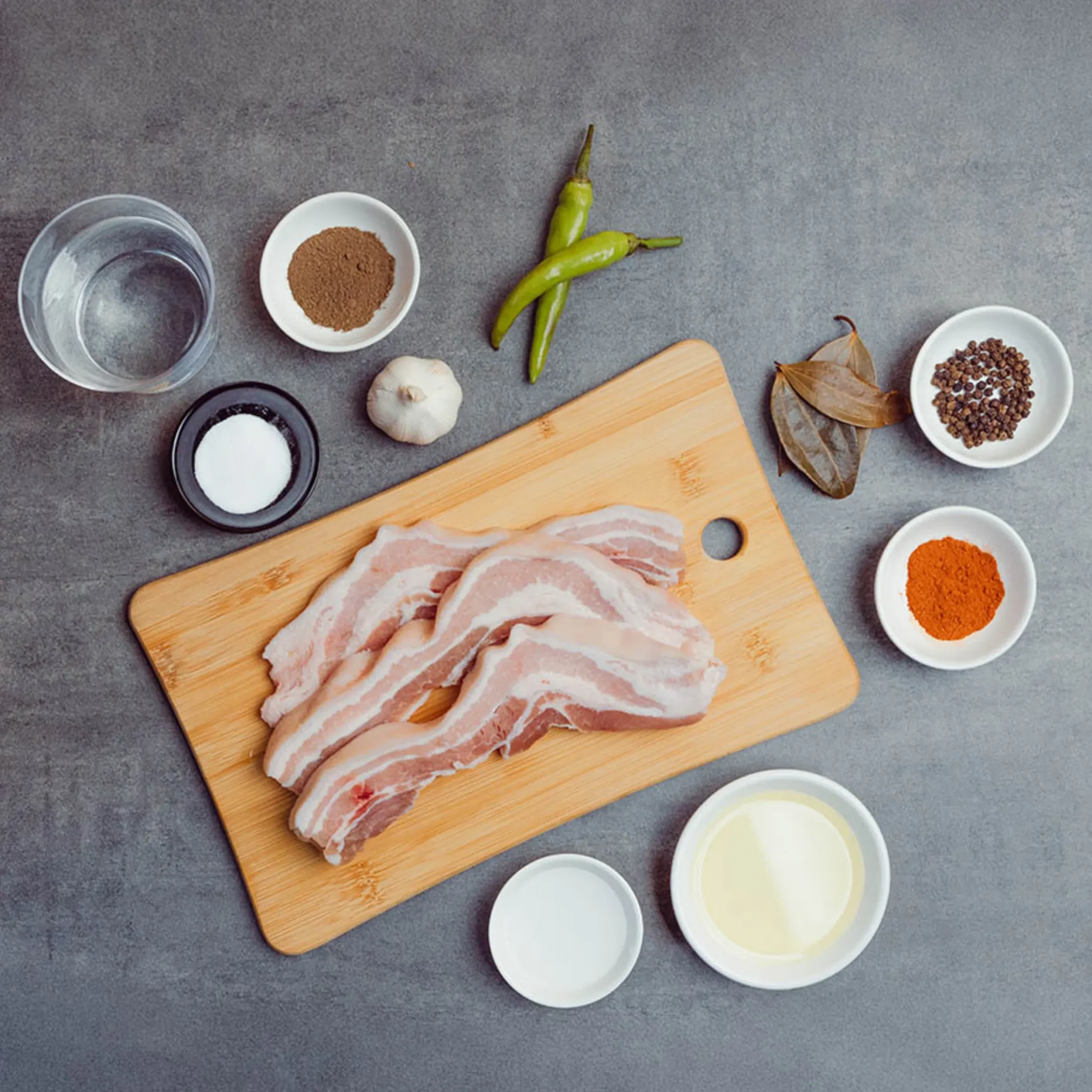
This version uses pork belly, vinegar, garlic, bay leaves, peppercorns, and annatto, with optional long green chilies for a little freshness and heat. It is simple food, but it rewards patience. The longer you allow the sauce to reduce and the pork to brown in its own flavorful fat, the more character the finished dish develops.
A Little History of Adobo Seca
The word adobo is strongly associated with Filipino cuisine today, but the cooking technique predates the Spanish colonial period. Long before the term adobo became established, Filipinos were already using vinegar and other acidic ingredients to help flavor and preserve food in the tropical climate.
Spanish colonizers later used the term adobo, derived from the Spanish adobar, broadly meaning to marinate or season food. The Filipino dish developed into something distinctly its own.
Unlike some Spanish dishes called adobo, Filipino adobo developed around ingredients that were readily available in the islands, particularly vinegar, garlic, peppercorns, and local aromatics.
And there isn’t just one Filipino adobo.
There are countless regional and family variations:
- Chicken adobo
- Pork adobo
- Adobong pusit
- Adobo sa gata
- Adobo sa dilaw
- Adobong kangkong
- Adobong matanda
- Adobo flakes
- And dry or reduced versions such as Adobo Seca
The word seca means dry, referring to the way the sauce is cooked down until the meat is no longer surrounded by a large amount of liquid.
This style is particularly appealing for people who enjoy the concentrated flavor of adobo. Rather than spooning a lot of sauce over rice, the flavor becomes almost embedded into the pork itself.
Understanding the Ingredients
Pork Belly
Pork belly is ideal for Adobo Seca because it contains enough fat to remain juicy during the long cooking and reduction process.
As the dish cooks, some of the pork fat renders into the pan. Toward the end, the pork can be fried gently in its own rendered fat, giving it beautifully browned edges.
If you prefer something leaner, pork shoulder can be used, although the final dish won’t be quite as rich.
Vinegar
Vinegar is the heart of Filipino adobo.
It provides acidity that balances the richness of pork while giving the dish its unmistakable adobo character.
For this recipe, cane vinegar is an excellent choice because it has a distinctly Filipino character. White vinegar can also be used if that is what you have available.
Garlic
Four cloves give the dish a strong aromatic foundation.
If you’re a garlic lover, there is absolutely nothing wrong with adding more. In many Filipino households, garlic is not something to be measured too strictly in adobo.
Bay Leaves
Bay leaves provide a subtle herbal aroma.
They shouldn’t dominate the dish. Their job is to sit quietly in the background and contribute another layer of fragrance.
Whole Peppercorns
Whole peppercorns give Adobo Seca little bursts of peppery heat.
They also stand up well to the long cooking process without becoming as harsh as some finely ground pepper can become.
Annatto Powder
Annatto gives the pork a warm reddish-orange color.
It contributes more color than strong flavor, although it can add a mild earthy note.
It is especially useful if you want the finished Adobo Seca to have an attractive reddish-golden appearance.
Hot Water
The water provides enough moisture for the pork to simmer and become tender before the sauce is reduced.
The important thing is to eventually cook away most of this liquid.
The Most Important Part: Reducing the Sauce
Once the pork is tender, remove the lid.
Now increase the heat to medium.
Allow the remaining vinegar mixture to gradually evaporate.
Stir occasionally so the pork doesn’t stick or burn.
As the liquid disappears, you’ll notice several things happening:
- The sauce becomes thicker.
- The pork becomes darker.
- The rendered pork fat becomes more visible.
- The garlic and spices begin coating the meat.
- The flavor becomes much more concentrated.
This is what turns ordinary adobo into Adobo Seca.
Don’t walk away during this stage.
The transition from beautifully reduced to burnt can happen surprisingly quickly.
Allow the Pork to Fry in Its Own Fat
Once most of the liquid has evaporated, lower the heat slightly.
Allow the pork pieces to cook in the rendered fat.
Turn them occasionally so different sides develop a deep golden-brown color.
This is where the dish becomes especially delicious.
The outside of the pork becomes slightly crisp and caramelized while the inside remains tender.
The concentrated vinegar, garlic, annatto, and pepper mixture clings to the meat.
Add the Green Chilies (Optional)
If using long green chilies, add them during the final few minutes.
You can leave them whole or cut them into large pieces.
Cooking them briefly preserves some of their fresh pepper aroma.
For a spicier dish, slice the chilies before adding them.
Taste and Season
Taste a small piece of pork.
Only add salt if necessary.
The vinegar itself doesn’t provide much salt, but depending on the pork and the exact preparation, you may need a little seasoning.
Don’t automatically add a large amount.
Adobo should have a beautiful balance between:
- Salty
- Sour
- Savory
- Aromatic
- Rich
If the vinegar seems too sharp, continue cooking gently. Reduction combined with the rendered pork fat should mellow the flavor.
How to Know When Adobo Seca Is Done
Your finished dish should have very little liquid.
The pork should look glossy from the rendered fat and concentrated sauce.
The pieces should be tender inside and browned around the edges.
There shouldn’t be a large pool of vinegar sauce at the bottom of the pan.
If you can pick up a piece of pork and see the seasoning clinging to its surface, you’re getting close to the ideal Adobo Seca consistency.
Recipe Tips
1. Don’t rush the reduction
The reduction is the soul of this dish.
Low and steady heat allows the flavors to concentrate without burning.
2. Use a heavy pot
A heavy-bottomed pan distributes heat more evenly and reduces the risk of scorching the pork.
3. Don’t stir constantly
Too much stirring can prevent the pork from developing browned surfaces.
Stir when necessary, especially once the liquid is nearly gone.
4. Watch the final stage carefully
The dish can go from nicely browned to burnt very quickly.
Once most of the liquid is gone, stay close to the stove.
5. Let the pork render
Pork belly already contains plenty of fat.
You don’t need to add excessive oil.
Allow the pork to slowly release some of its natural fat.
6. Taste before adding salt
This is particularly important because you want the vinegar flavor and pork richness to remain balanced.
7. Don’t discard all the rendered fat immediately
A little fat is useful because it helps brown the pork and carry the garlic and annatto flavors.
You can drain excess fat at the end if you prefer.
Ingredient Substitutions
Pork Belly
You can use:
- Pork shoulder
- Pork butt
- Pork ribs
- Chicken thighs
Pork shoulder is probably the best alternative if you want something less fatty but still tender.
Vinegar
Good choices include:
- Cane vinegar
- Coconut vinegar
- White vinegar
- Apple cider vinegar
Cane vinegar is particularly suitable for a Filipino-style adobo.
Apple cider vinegar will produce a slightly fruitier flavor.
Annatto Powder
If you don’t have annatto powder, you can use:
- Annatto seeds infused in oil
- Annatto oil
If you don’t care about the color, you can omit it completely.
The dish will still taste like adobo, but it won’t have the same reddish-orange appearance.
Bay Leaves
Fresh bay leaves can be used, although dried leaves are more commonly convenient for this type of dish.
Long Green Chilies (If using)
You can substitute:
- Jalapeño
- Serrano
- Banana pepper
- Bird’s-eye chili
If you want no heat, simply leave them out.
Whole Peppercorns
Crushed black pepper can be used, although whole peppercorns provide a different texture and gentler release of pepper flavor.
What Makes Adobo Seca Different?
The biggest difference is the amount of liquid left at the end.
Traditional wet adobo usually has a flavorful sauce that can be spooned over rice.
Adobo Seca goes further.
The liquid is cooked down until the meat is practically coated in the concentrated seasoning.
The result is closer to a braised-and-finished-in-its-own-fat preparation.
This also makes it particularly convenient for serving with rice because you don’t need a separate bowl of sauce. Every piece of pork carries the flavor itself.
The Flavor Profile
A good Adobo Seca should have several flavors working together.
Sour
Vinegar gives the dish its unmistakable adobo character.
Savory
Pork and garlic provide the deep savory foundation.
Peppery
Whole peppercorns give occasional bursts of warmth.
Herbal
Bay leaves add subtle aromatic depth.
Rich
Pork belly provides fat and tenderness.
Earthy
Annatto adds color and a mild earthy quality.
Health and Nutritional Considerations
Adobo Seca is a rich dish, particularly because this version uses pork belly.
That doesn’t mean it can’t be enjoyed as part of a balanced diet. It simply means portion size and the rest of the meal matter.
Pork
Pork provides high-quality protein as well as nutrients such as vitamin B1 (thiamine), selenium, zinc, and other B vitamins.
However, pork belly contains substantial amounts of fat, including saturated fat.
Garlic
Garlic contributes sulfur-containing plant compounds and allows you to build a lot of flavor without relying solely on additional salt.
Vinegar
Vinegar provides acidity without adding significant calories. Its main culinary benefit here is flavor and balance.
Bay Leaves
Bay leaves contribute aromatic plant compounds, although they’re generally removed before eating rather than consumed whole.
Black Pepper
Black pepper contains piperine, the compound responsible for its characteristic pungency.
It also contributes flavor without requiring additional calories or sugar.
Annatto
Annatto is primarily valuable in this recipe for its color. It contains naturally occurring carotenoid pigments that give it its characteristic orange-red appearance.
How to Make Adobo Seca a Little Lighter
If you want to enjoy the dish while reducing some of its richness, consider:
- Using pork shoulder instead of pork belly.
- Trimming some visible fat.
- Draining excess rendered fat before the final browning stage.
- Increasing the amount of green chili or vegetables served alongside it.
- Serving a smaller portion of pork with plenty of vegetables.
- Pairing it with steamed vegetables rather than a very rich side dish.
You can still achieve a deeply flavorful adobo without making the entire meal heavy.
What to Serve With Adobo Seca
The classic answer is simple:
Steaming white rice.
The slightly crisp, intensely seasoned pork works beautifully with plain rice.
You can also serve it with:
- Atchara
- Tomato and salted egg salad
- Ensaladang talong
- Steamed kangkong
- Sautéed pechay
- Fresh cucumber
- Pickled vegetables
- Fried egg
The acidity of atchara or a fresh vegetable salad is especially good because it cuts through the richness of pork belly.
For breakfast, Adobo Seca can even be served with garlic rice and a fried egg.
Final Words
Adobo Seca is proof that Filipino food doesn’t need to be complicated to be deeply satisfying.
A handful of ingredients—pork, vinegar, garlic, bay leaves, peppercorns, annatto, and a little chili—can become something incredibly flavorful when given enough time and attention.
The real secret isn’t a complicated technique. It is patience.
First, you allow the pork to simmer until tender. Then you wait as the vinegar mixture slowly disappears. Finally, you let the meat brown in its own rendered fat until the seasoning clings tightly to every piece.
That final transformation is what makes Adobo Seca special.
Instead of a bowl of pork covered in sauce, you get intensely seasoned pieces with browned edges, tender centers, a subtle tang from vinegar, fragrant garlic, peppery warmth, and a beautiful annatto-colored finish.
And when you place that pork beside a mound of freshly cooked rice, perhaps with a little atchara or a fried egg on the side, you have the kind of meal that feels unmistakably Filipino—simple, generous, flavorful, and satisfying.
Adobo Seca may be called “dry,” but there is nothing dry about its character. It is concentrated, bold, comforting, and full of the familiar flavors that have made Filipino adobo a beloved dish across generations.