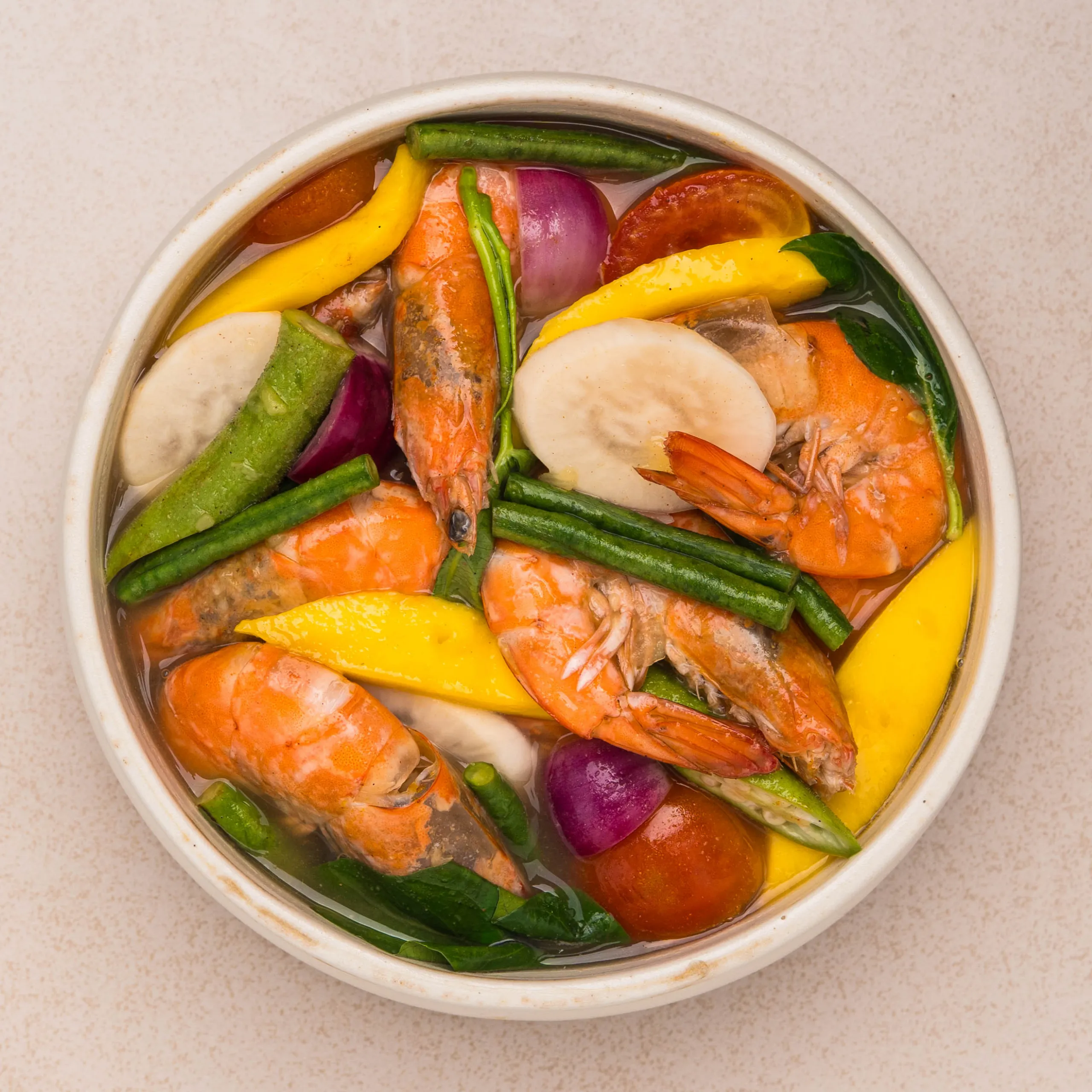


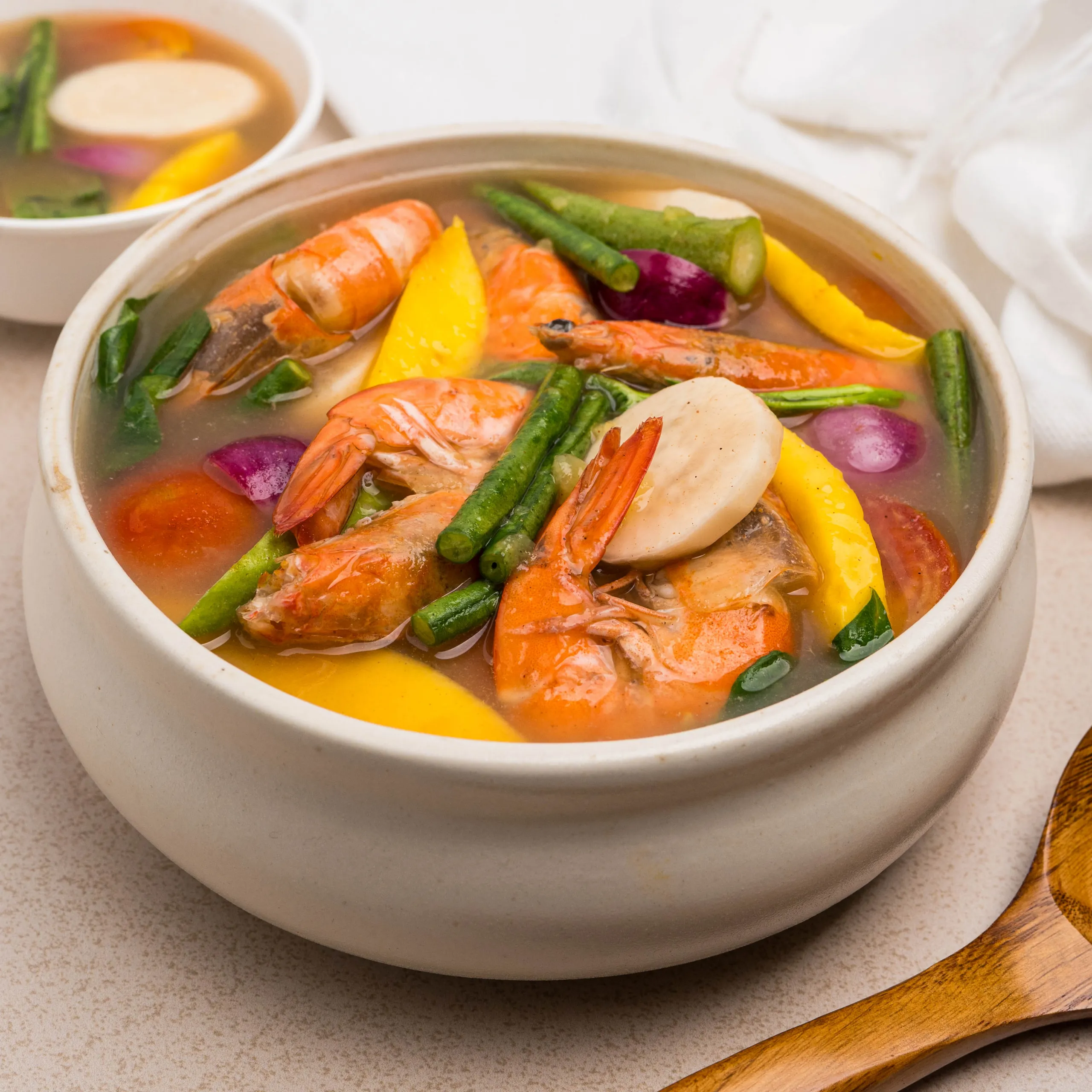
There is something wonderfully comforting about a steaming bowl of sinigang. It is the kind of Filipino dish that can instantly make a simple meal feel complete. The warm broth, tender vegetables, fragrant tomatoes, and unmistakable sourness are especially satisfying when served with freshly cooked rice.
Sinigang na Hipon sa Mangga gives the familiar Filipino sour soup a particularly interesting twist by using green mangoes as the souring ingredient. Instead of relying on tamarind, this version gets its tartness from young, unripe mangoes. The mango contributes a bright, fruity acidity that works beautifully with sweet, delicate shrimp.
The result is a broth that is sour, savory, slightly fruity, and refreshing, with vegetables adding texture and color. Long green chilies provide a gentle peppery aroma without necessarily making the soup very spicy.
This is also one of those recipes where the exact measurements don’t have to be treated like strict rules. Filipino home cooking often involves tasting the broth and adjusting it until the sourness and saltiness feel just right.
A Little History of Sinigang
Sinigang is one of the Philippines’ most recognizable sour soups. Rather than being defined by a single ingredient, it is better understood as a cooking tradition built around a sour broth, usually combined with meat, seafood, vegetables, and an aromatic base.
The souring ingredient varies considerably throughout the country.
Tamarind is perhaps the best-known souring ingredient, but Filipino cooks have traditionally used many other sour fruits and plants, including:
- Green mango
- Calamansi
- Kamias
- Guava
- Santol
- Green tomatoes
- Other locally available souring ingredients
This flexibility is part of what makes sinigang so interesting. The basic idea remains recognizable, but the flavor changes depending on what grows locally and what happens to be available in the kitchen.
Using green mango gives the soup a particularly fruity, fresh sourness. It is less earthy than some tamarind preparations and can have a pleasantly sharp, almost citrus-like character.
Shrimp is another popular choice for sinigang. Compared with pork or beef versions, sinigang na hipon cooks relatively quickly, making it suitable for a weekday family meal.
Understanding the Ingredients
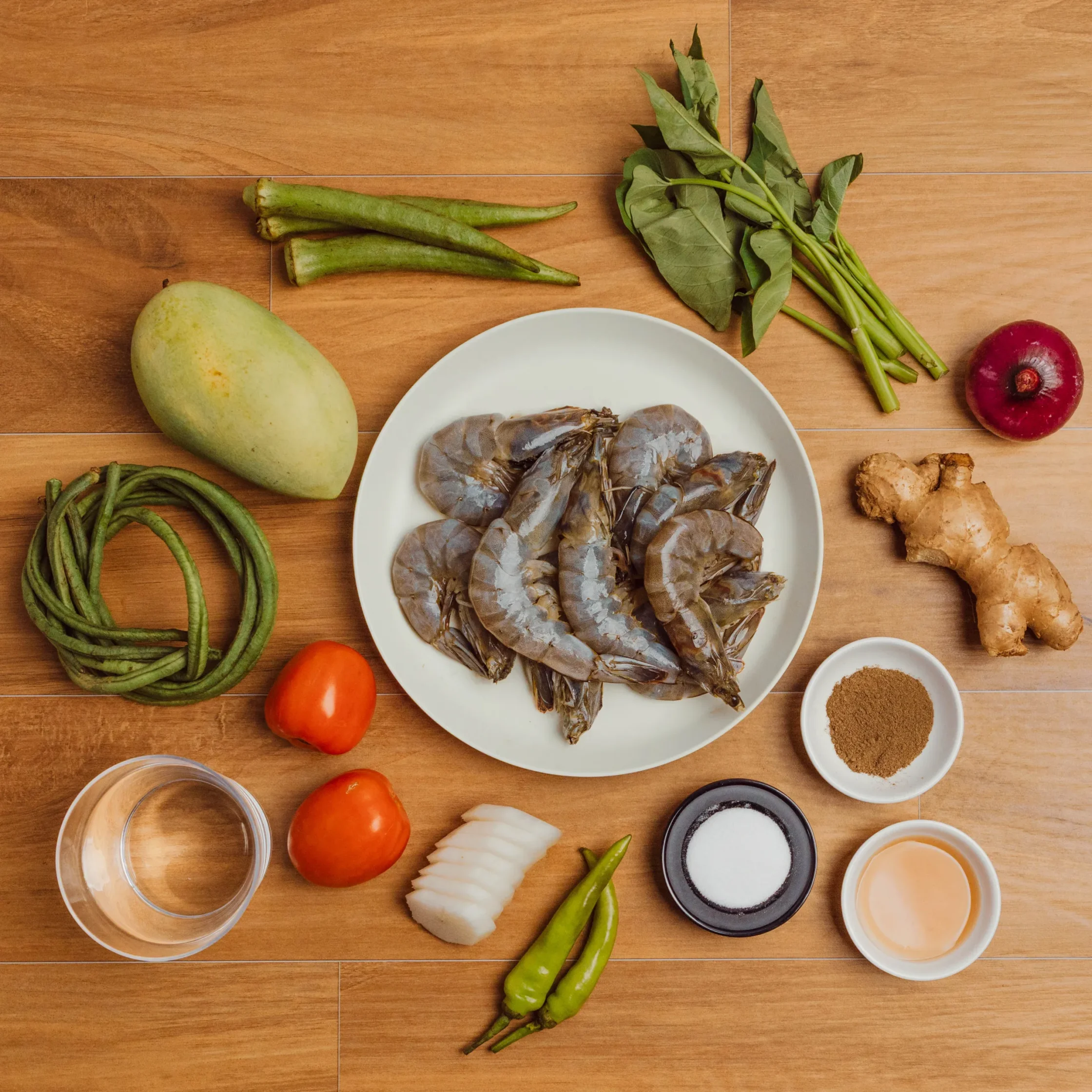
Shrimp
Shrimp is the star of the dish.
It cooks quickly and contributes a naturally sweet, ocean-like flavor to the broth.
Because shrimp can become rubbery when overcooked, it is important to add it relatively late in the cooking process.
For the best texture, choose shrimp that are fresh and firm.
Green Mango
This is the ingredient that gives the recipe its personality.
Green mango is naturally tart, and the amount of sourness varies considerably depending on the variety and maturity of the fruit.
If your mangoes are extremely sour, you may need fewer slices. If they are relatively mild, you may need more.
This is one reason why tasting the broth is so important.
Onion
Onion gives the broth a savory sweetness and aromatic foundation.
Cutting the onions into wedges rather than finely chopping them also makes them pleasant to eat in the finished soup.
Tomatoes
Tomatoes contribute acidity, sweetness, and umami.
They also soften during cooking and help give the broth more body.
Long Green Chilies
Siling haba provides fragrance and a gentle peppery flavor.
You can leave the chilies whole for a milder dish or slice them if you want more heat.
Fish Sauce
Fish sauce seasons the broth and contributes savory depth.
Because the amount of saltiness varies between brands, add it gradually and taste as you go.
String Beans
String beans add a fresh, slightly crunchy texture.
They also make the soup more substantial without overpowering the shrimp or sour broth.
Kangkong
Kangkong is a classic Filipino soup vegetable.
The tender stems remain slightly crisp while the leaves become soft and silky.
Okra
Okra adds another texture and contributes a little natural thickness to the broth.
If you aren’t fond of its characteristic slippery texture, you can reduce the amount or substitute another vegetable.
White Radish
Radish absorbs the sour broth beautifully.
After simmering, it becomes tender while retaining a mild earthy sweetness.
Recipe Tips for Better Sinigang na Hipon
1. Taste the mango first
Not all green mangoes are equally sour.
Some can be extremely tart, while others have a surprisingly mild acidity.
This affects the entire soup.
Start conservatively and add more mango if necessary.
2. Don’t overcook the shrimp
This is probably the most important tip.
Add shrimp near the end and cook only until just done.
3. Add vegetables according to cooking time
Hard vegetables should go in first.
A useful order is:
Mango and aromatics → radish → okra and string beans → shrimp → kangkong.
This helps prevent some vegetables from becoming mushy while others remain raw.
4. Keep the broth clear
You don’t need to stir the soup aggressively.
Gentle cooking helps keep the broth relatively clean and allows the ingredients to maintain their shape.
5. Use the shrimp shells if you have them
If you prefer a stronger seafood flavor, simmering shrimp heads and shells in the water first can create a richer broth.
Strain the broth before continuing with the recipe.
6. Don’t drown the soup in fish sauce
Fish sauce should support the sourness, not overpower it.
Add it gradually.
7. Serve it hot
Sinigang is at its most comforting when served immediately after cooking.
The aroma of the sour broth is part of the experience.
Ingredient Substitutions
Shrimp
You can substitute shrimp with:
- Fish
- Salmon
- Milkfish
- Mussels
- Squid
Cooking times will vary depending on the seafood.
Green Mango
If green mango isn’t available, you can use other souring ingredients such as:
- Tamarind
- Kamias
- Calamansi
- Green tomatoes
- Guava
The flavor will no longer be exactly the same, but the basic sinigang concept remains.
Kangkong
You can substitute:
- Mustard greens
- Pechay
- Bok choy
- Spinach
Kangkong is ideal, but other leafy greens work well.
String Beans
Possible alternatives include:
- Snow peas
- Green beans
- Chayote
- Eggplant
White Radish
You can replace radish with:
- Turnip
- Chayote
- Gabi
- Additional green mango
Fish Sauce
You can use salt if necessary.
However, fish sauce provides more than salt—it contributes savory umami—so the flavor will be slightly different.
How to Make a Richer Shrimp Broth
If you want to take this recipe to the next level, don’t throw away the shrimp heads and shells.
After cleaning the shrimp, reserve the shells and heads.
Place them in a pot with water and simmer gently for approximately 10–15 minutes.
You can lightly crush the shrimp heads with a spoon while they cook to release more flavor.
Strain the broth carefully.
Use this shrimp broth instead of plain water in the recipe.
The resulting sinigang will have a much deeper seafood flavor.
This is especially useful when using peeled shrimp, because removing the shells also removes some of the natural flavor they would otherwise contribute.
What Makes Green Mango Sinigang Different?
The sourness of green mango has a character of its own.
Tamarind-based sinigang often has a deep, rounded tartness.
Green mango can taste brighter, fruitier, and sharper.
That makes it particularly good with shrimp.
Shrimp has a naturally delicate sweetness, and the acidity of green mango prevents that sweetness from becoming heavy.
The result is a soup that feels refreshing even though it is served hot.
Understanding the Health Benefits
Sinigang na Hipon sa Mangga can be a nutritious meal because it combines seafood with several vegetables in a flavorful broth.
Shrimp
Shrimp is a good source of protein and provides nutrients such as selenium, vitamin B12, iodine, and other micronutrients.
It is relatively low in calories compared with many fatty meats.
However, shrimp is naturally high in dietary cholesterol, which is not necessarily a problem for everyone but may be relevant for people who have been advised to monitor their cholesterol intake.
Green Mango
Green mango contributes vitamin C, fiber, and various plant compounds.
Because it is unripe, it has a much more tart flavor and less sweetness than ripe mango.
Tomatoes
Tomatoes provide vitamin C, potassium, folate, and carotenoids such as lycopene.
Cooking tomatoes also changes the availability of some of their plant compounds.
Onion
Onions provide antioxidants and sulfur-containing plant compounds while contributing flavor without many calories.
String Beans
String beans provide fiber, vitamins, minerals, and plant compounds.
Kangkong
Kangkong contributes vitamins, minerals, fiber, and leafy-green nutrients.
Okra
Okra provides fiber and vitamin C and adds texture to the soup.
White Radish
Radish is relatively low in calories and contributes water, fiber, vitamin C, and various plant compounds.
Green Chili
Long green chilies can provide vitamin C and other beneficial plant compounds while adding flavor without significant calories.
Is Sinigang Healthy?
It certainly can be part of a healthy diet.
One of its biggest advantages is that you can get protein and several servings of vegetables in a single bowl.
The main ingredient to watch is fish sauce, because it can contribute a substantial amount of sodium.
The amount of salt in the final dish depends on how much fish sauce you add.
If you’re trying to reduce sodium, use less fish sauce and rely more on the sourness of the mango, the natural flavor of the shrimp, and aromatics such as onion and tomato.
Ways to Customize the Dish
For extra sourness
Add additional green mango or a small amount of calamansi.
For a richer broth
Use shrimp heads and shells to make homemade seafood stock.
For a heartier meal
Add gabi or more vegetables.
For more heat
Add sliced siling labuyo.
For a milder version
Use fewer green mango slices and keep the chilies whole.
For more vegetables
Increase the string beans, kangkong, okra, and radish.
For a lighter meal
Use plenty of vegetables and shrimp while keeping the fish sauce moderate.
A Traditional-Style Serving Idea
Serve the sinigang in a large communal bowl.
Arrange the shrimp so that they remain visible above the vegetables, then let the green mango, radish, okra, string beans, and kangkong fill the spaces around them.
Pour some of the hot broth into individual bowls and serve plenty of rice alongside it.
A small plate of additional green chilies and fish sauce can be placed on the table for people who want more heat or seasoning.
For many Filipino meals, sinigang isn’t meant to be eaten in isolation. It becomes part of a shared table, with everyone reaching for their favorite vegetables and spooning the sour broth over rice.
Final Words
Sinigang na Hipon sa Mangga is a beautiful example of Filipino cooking’s love for sour flavors and fresh ingredients.
Instead of tamarind, green mango gives the broth its character. Instead of heavy sauces, the dish relies on a clear, flavorful soup. And instead of complicated seasoning, it allows shrimp, vegetables, tomatoes, onions, fish sauce, and sour mango to do most of the work.
The beauty of the recipe is its flexibility. You can make the broth intensely sour or gently tart. You can add more vegetables, increase the chilies, use shrimp heads for a richer stock, or substitute whatever vegetables are available.
Most importantly, don’t be afraid to taste as you cook. Sinigang is one of those Filipino dishes where your palate should be the final measuring cup.
When the shrimp are just tender, the vegetables are cooked but still vibrant, and the mango has infused the broth with a bright sourness, you know you’ve reached the sweet spot.
Serve it piping hot with rice, gather everyone around the table, and enjoy the contrast of delicate shrimp, crisp-tender vegetables, fruity green mango, and a wonderfully sour broth.
That combination is what makes Sinigang na Hipon sa Mangga so memorable—and why a simple pot of sour soup can feel like such a comforting taste of home.