


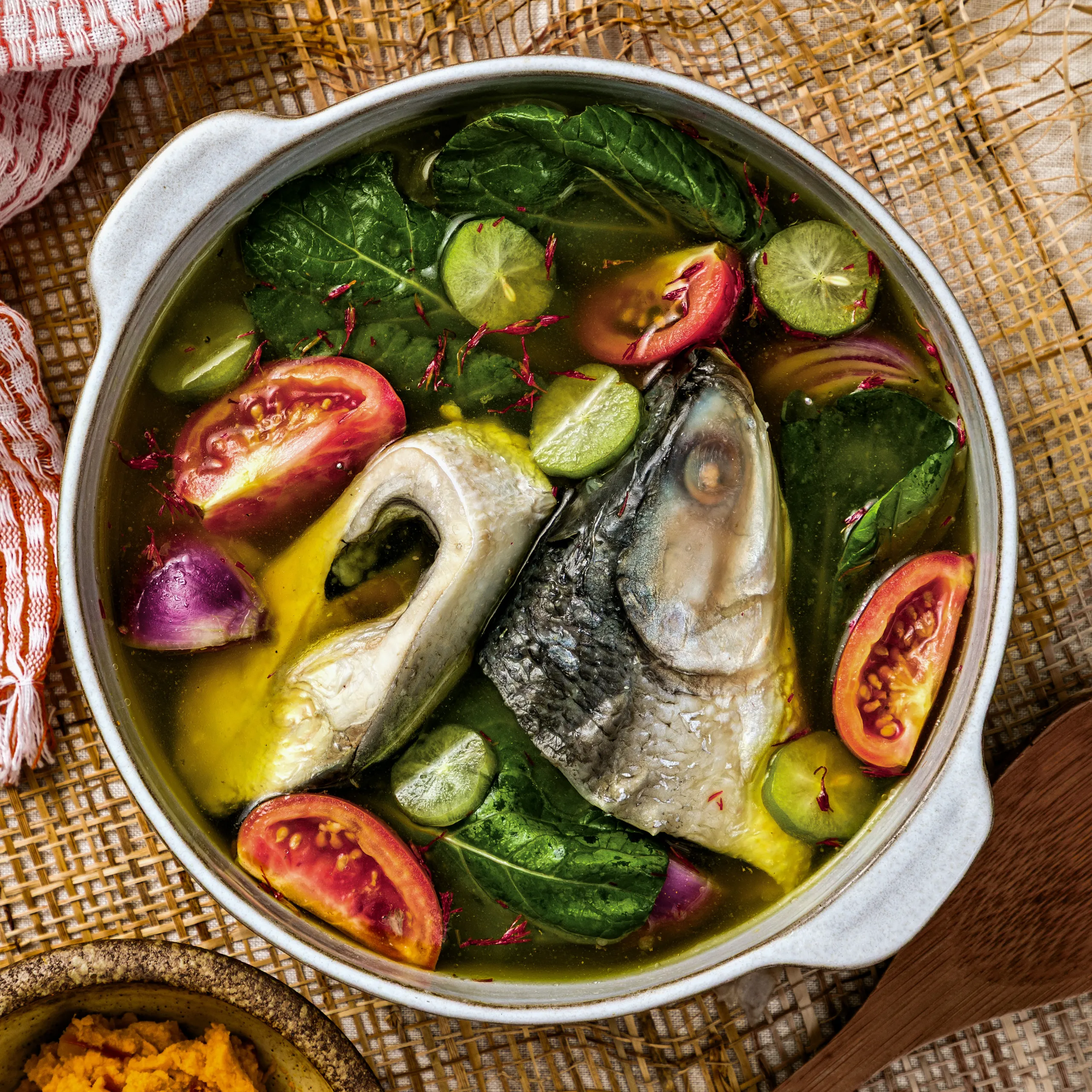
A comforting bowl of sour, savory Filipino goodness
There are Filipino dishes that immediately feel like home, and Cachuela is the kind of dish that belongs in that category. It is simple, rustic, deeply savory, and built around ingredients that Filipinos have been using in their kitchens for generations: fresh fish, kamias, tomatoes, onions, garlic, leafy greens, and rice-washing water.
What makes this dish especially memorable is the combination of sour kamias and savory miso. The broth is light but flavorful, with the natural sweetness of fish balancing the sharp acidity of the kamias. The addition of kasubha gives the soup a beautiful golden hue, while mustasa contributes a pleasant peppery bite toward the end.
Served hot with plenty of steamed rice, Cachuela is the kind of meal that doesn’t need complicated techniques or expensive ingredients. It is home cooking in the best sense—straightforward, comforting, and full of character.
The recipe can be prepared with bangus, hito, dalag, kanduli, or other suitable local fish, making it wonderfully adaptable to whatever is fresh or available at the market.
A Little History and Culinary Background
The exact historical origin of the name Cachuela and this particular preparation is not well documented in widely available culinary sources, so it is better not to assign it a definite birthplace or a specific historical inventor without stronger evidence. What we can say with confidence is that the dish reflects several characteristics of traditional Filipino cooking.
Filipino cuisine has long made use of local souring ingredients, including kamias, tamarind, calamansi, guava, and other fruits. Sourness is an important part of Filipino flavor building, particularly in soups and fish preparations. Kamias, also called bilimbi, is particularly useful because its intense acidity can transform a simple fish broth into something bright and refreshing.
The combination of fish, sour fruit, leafy vegetables, aromatics, and rice-washing water also fits naturally into the broader Filipino tradition of making flavorful meals from accessible ingredients. Rice is central to the Filipino table, and the water from washing rice—hugas bigas—has traditionally been useful in soups and stews, giving them a slightly cloudy appearance and a fuller mouthfeel.
The use of miso adds another interesting layer. Miso is a fermented soy-based seasoning that is associated strongly with Japanese cuisine, but Filipino cooking has embraced it in dishes such as sinigang sa miso and other fish-based preparations. Fermented ingredients such as miso, fish sauce, and other savory condiments have long played important roles in Philippine food culture because they add concentrated savory flavor to otherwise simple ingredients.
In that sense, Cachuela represents something wonderful about Filipino cooking: it does not have to be complicated to be deeply flavorful.
What Does Cachuela Taste Like?
If you have never tried Cachuela before, imagine a broth that sits somewhere between a light fish soup and a sour Filipino stew.
The first flavor you’ll notice is the sourness of kamias. It isn’t exactly the same as tamarind or calamansi. Kamias has a distinctive clean, sharp acidity that works beautifully with fish.
Then comes the savory character of the fish, followed by the sweetness of cooked tomatoes and onions. The patis brings saltiness and umami, while the miso served alongside provides a deeper fermented savoriness.
The mustasa is added at the very end so that it remains green and retains some of its characteristic peppery flavor.
The result is:
- Sour but not overwhelmingly acidic
- Savory and naturally umami-rich
- Light enough for everyday eating
- Aromatic from garlic, onion, and tomato
- Slightly peppery from mustasa
- Richer and deeper when paired with the miso paste
And, of course, it becomes even better with hot steamed rice.
Why Each Ingredient Matters
Bangus
Bangus, or milkfish, is an excellent choice because it has a naturally rich, slightly sweet flavor that works well with sour broths. According to the Philippine Food Composition Table from DOST-FNRI, raw milkfish provides about 19.8 grams of protein and 137 calories per 100 grams of edible portion, along with phosphorus and other nutrients. The downside is the famous bangus bone problem. Because milkfish has many fine bones, eat carefully and consider using boneless bangus if serving the dish to children or anyone who has difficulty dealing with fish bones.
Kamias
Kamias is the ingredient that gives the soup its personality. It provides a powerful natural acidity that cuts through the richness of fish and makes the broth refreshing rather than heavy. You can use fresh kamias, dried kamias, or a combination of both. Dried kamias generally provides a somewhat deeper, more concentrated sourness, while fresh kamias gives the broth a brighter fruitiness.
Kasubha
Kasubha, or safflower, is primarily used here for color and subtle aromatic character. It gives the broth an attractive golden-yellow appearance. It should not be confused with turmeric, although turmeric can be used as a visual substitute when kasubha is unavailable.
Mustasa
Mustasa, or mustard greens, gives the dish a slightly peppery and earthy finish. The important thing is not to overcook it. Adding it just before turning off the heat allows the leaves to wilt while maintaining their color, texture, and distinctive flavor.
Miso
Miso is what gives the accompanying paste its deep savory quality. Miso is a fermented soy food, and soy foods provide protein and various nutrients. Harvard’s Nutrition Source notes that soy foods contain nutrients such as protein, B vitamins, fiber, potassium, magnesium, and isoflavones. However, miso can also be quite salty, so it is best to taste the broth before adding too much patis.
Patis
Patis supplies salt and umami. Because the miso is also salty, season gradually. It’s much easier to add another teaspoon of patis than to rescue an overly salty soup.
Hugas Bigas
Rice-washing water is commonly used in Filipino soups because it gives the broth a slightly fuller body compared with plain water. If you don’t have properly collected rice-washing water, don’t worry. Plain water works perfectly well.
How to Serve Cachuela
Ladle the hot fish soup into individual bowls.
Make sure each serving gets some fish, kamias, tomatoes, and broth.
Place the ginisang miso in a small serving bowl on the side.
Some people may want only a spoonful of miso, while others may want considerably more.
Serve immediately with:
- Hot steamed white rice
- Extra mustasa
- Fresh kamias
- Calamansi, if desired
- Additional patis for those who prefer a saltier flavor
- Chili peppers for a spicy version
The contrast between the sour broth and the salty, savory miso is one of the best parts of the dish.
Recipe Tips for Better Cachuela
1. Don’t boil the fish aggressively
A hard rolling boil can break delicate fish pieces apart. Keep the soup at a gentle simmer.
2. Taste before adding more patis
Both fish sauce and miso are salty. Season conservatively and adjust at the end.
3. Don’t be afraid of the sourness
The kamias is supposed to be noticeable. However, the final soup should taste balanced rather than painfully sour.
4. Add the mustasa last
This preserves its color and gives the soup a fresher finish.
5. Let the aromatics soften properly
Don’t simply throw everything into the pot at once. Sautéing the onion, garlic, and tomato first develops a much better base.
6. Use fresh fish whenever possible
Because this is a relatively simple soup, the flavor of the fish matters. Fresh fish will give you a naturally sweeter and cleaner broth.
7. Don’t overwork the fish
Once the fish enters the pot, minimize stirring. Instead, gently shake the pot from side to side if you need to redistribute the broth.
8. Adjust the kamias according to your fruit
Not all kamias are equally sour. If yours is exceptionally tart, begin with less and add more if needed.
Ingredient Substitutions
Fish substitutions
You don’t have to use bangus. Good alternatives include:
- Hito
- Dalag
- Kanduli
- Tilapia
- Maya-maya
- Talakitok
- Other firm-fleshed local fish
For a less bony meal, boneless bangus is particularly convenient.
Kamias substitutions
If kamias is unavailable, you can use another Filipino souring ingredient. Possible alternatives include:
- Sampalok
- Calamansi
- Guava
- Sinigang mix, as a last-resort convenience option
However, these will change the character of the dish. Kamias is the best choice if you want to preserve its distinctive flavor.
Mustasa substitutions
If mustasa isn’t available, try:
- Pechay
- Kangkong
- Spinach
- Bok choy
- Malunggay leaves
Mustasa is preferable if you want that characteristic peppery finish.
Kasubha substitutions
You may use:
- A small amount of turmeric for color
- Saffron, if available, although this is unnecessary and much more expensive
Remember that kasubha is not the main flavor component, so the dish will still work without it.
Miso substitutions
If you don’t have miso, the dish can still be served without the paste. You could prepare a simple savory condiment using:
- Patis
- Soy sauce
- Fermented bean paste
- A little bagoong, depending on your preference
However, these will create a different flavor profile.
Can You Use Plain Water Instead of Hugas Bigas?
Yes. Hugas bigas is traditional and gives the broth a slightly fuller character, but it isn’t essential. If you don’t have rice-washing water, simply use 1 liter of clean water. You can also slightly reduce the amount of water if you prefer a stronger, more concentrated broth.
Can You Make It Less Sour?
Definitely. Start with less fresh kamias and add more only after tasting the broth. You can also dilute the soup with a little additional water if the sourness becomes too intense. Because different kamias fruits vary considerably in acidity, the exact amount should always be adjusted according to taste.
Can You Make Cachuela Spicy?
Yes. For a spicy version, add:
- Siling haba
- Siling labuyo
- Red chili flakes
You can simmer whole siling haba with the broth or serve sliced chili on the side. A little heat works particularly well with the sour kamias and savory miso.
Can You Make It Ahead of Time?
You can prepare the broth and miso separately ahead of time, but fish soups are generally best when freshly cooked. If storing leftovers, cool them promptly and refrigerate them in a covered container. Reheat gently rather than boiling aggressively, especially if the fish pieces are delicate.
Health Benefits and Nutritional Value
Cachuela can be a nutritious meal because its main components include fish, vegetables, aromatics, and a fermented soy product. Of course, the overall nutritional profile depends on the exact quantities used and what the dish is served with.
Fish provides protein
Bangus is a good source of protein. The DOST-FNRI Philippine Food Composition Table lists approximately 19.8 g of protein per 100 g edible portion of milkfish. Protein helps support normal muscle maintenance and many other functions in the body.
Fish provides important minerals
Milkfish also contains phosphorus, calcium, iron, and other nutrients. DOST-FNRI data lists approximately 194 mg phosphorus and 44 mg calcium per 100 g edible portion.
Mustasa contributes vegetables to the meal
Mustard greens add plant-based nutrients and fiber while also contributing flavor without requiring a heavy sauce. Adding leafy vegetables is an easy way to make a traditional soup more vegetable-forward.
Tomatoes contribute nutrients and antioxidants
Tomatoes provide vitamin C and carotenoid compounds, including lycopene. Cooking tomatoes also helps develop their flavor and makes them an excellent component of soups and stews.
Garlic and onions contribute flavor without requiring heavy seasoning
Garlic and onions are classic Filipino aromatics. They allow you to build complexity before adding large amounts of salt.
Miso provides fermented soy
Miso is made from fermented soy and contributes protein and other nutrients associated with soy foods. Soy foods also contain isoflavones. Because miso is salty, however, portion size matters.
Kamias adds acidity without needing vinegar
One of the advantages of using kamias is that you can achieve a pronounced sour flavor naturally without relying on large quantities of vinegar.
A Note About Sodium
One thing to watch is the combination of patis and miso. Both are flavorful, but both can contain considerable sodium. If you’re watching your sodium intake, consider:
- Using less patis
- Choosing a lower-sodium miso
- Adding more vegetables
- Using more kamias for flavor
- Avoiding additional salty condiments at the table
The nutritional benefits of the ingredients don’t mean the finished dish is automatically suitable for every diet, so portion sizes and individual dietary needs still matter.
What Makes This Dish Special?
Perhaps the most interesting thing about Cachuela is that it doesn’t depend on one expensive or exotic ingredient.
Its character comes from balance.
The fish provides richness.
The kamias provides acidity.
The tomato provides sweetness and depth.
The onion and garlic create aroma.
The kasubha gives color.
The mustasa gives freshness and gentle bitterness.
The patis provides salt and umami.
And the miso adds another layer of fermented savoriness.
This is exactly the kind of balance that makes Filipino food so satisfying. Filipino cuisine frequently works with contrasts—salty and sour, rich and fresh, savory and acidic. Souring ingredients such as kamias are particularly important in this culinary tradition.
Final Words
Cachuela is a beautiful example of how a humble pot of fish can become a memorable family meal.
There is something wonderfully Filipino about putting fresh fish into a pot with kamias, tomatoes, onions, garlic, and rice-washing water, letting everything simmer gently, then finishing it with leafy mustard greens. Nothing needs to be overly complicated. The ingredients are allowed to speak for themselves.
The ginisang miso is what makes this version especially fun. Instead of making the entire soup taste strongly of miso, the savory paste is served on the side, giving everyone the freedom to create their preferred balance of sour, salty, and umami flavors.
For some, a spoonful will be enough. For others, they’ll want a generous amount mixed into the broth.
And that’s part of the charm of Filipino food: the table becomes part of the cooking experience.
Serve the Cachuela piping hot, bring out a pot of freshly steamed rice, put the miso on the table, and let everyone help themselves.
It is the sort of dish that feels uncomplicated when you’re cooking it—but once you sit down with a bowl of hot, sour broth and tender fish, you understand why these simple combinations endure.
Cachuela is not just a fish soup. It is a celebration of Filipino flavors: sour kamias, savory fish, fragrant aromatics, fresh greens, fermented miso, and plenty of rice to bring everything together.