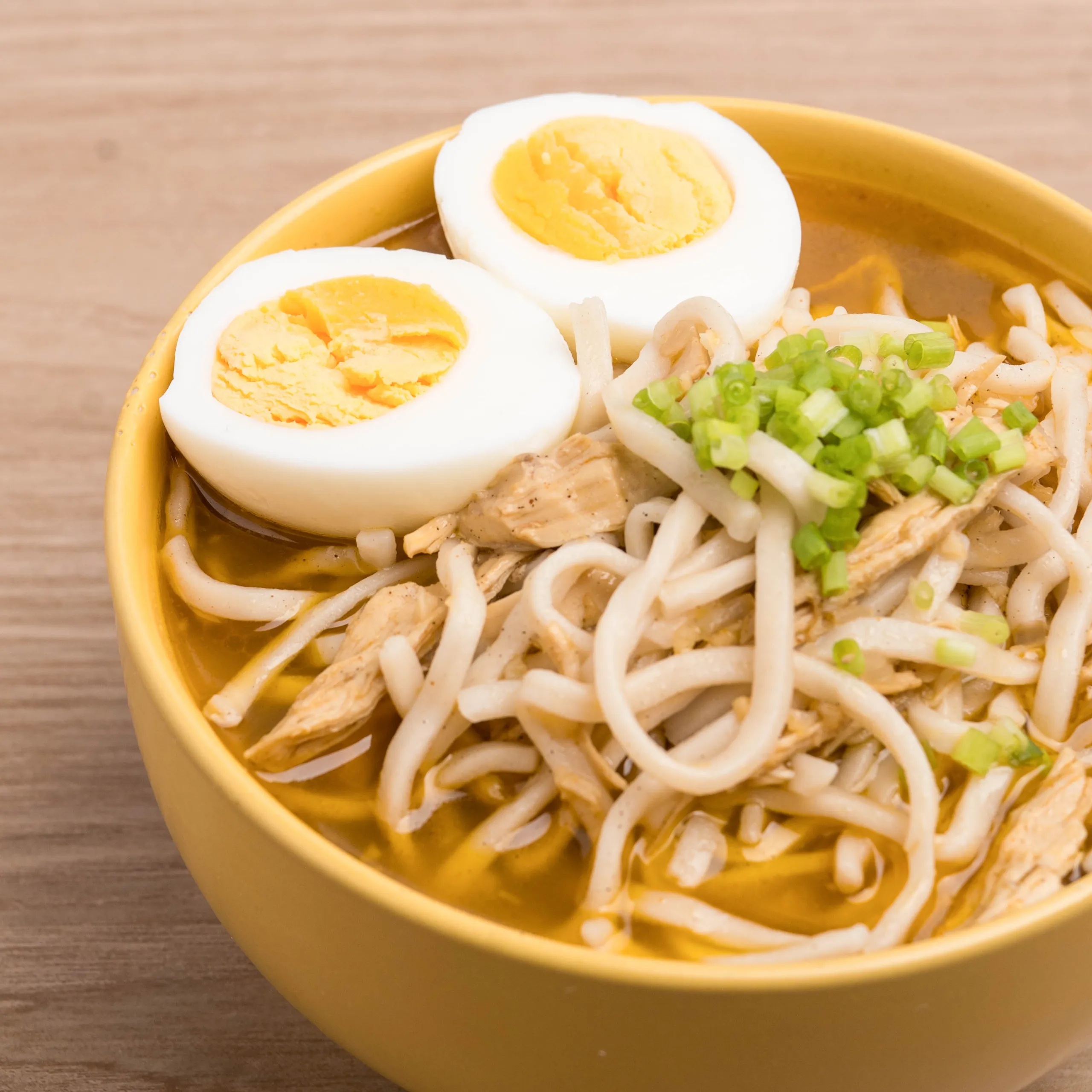


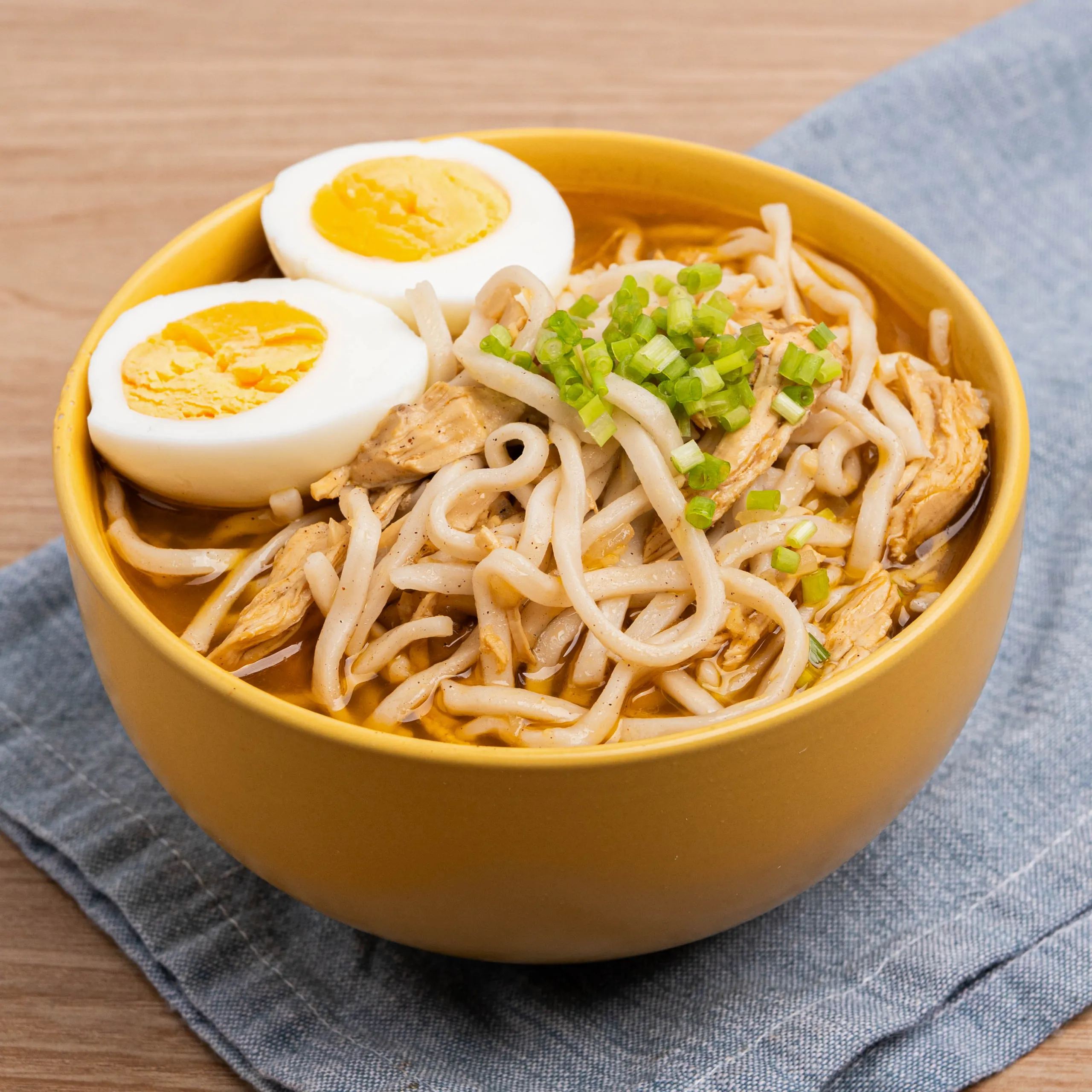
Miki is a comforting noodle soup closely associated with Batac and the wider Ilocos Norte food tradition. It is the kind of dish that feels immediately familiar once you sit down with a warm bowl in front of you: soft noodles swimming in a savory broth, the aroma of garlic and onion rising from the surface, and simple toppings that add crunch, freshness, and extra flavor.
What makes Batac-style miki particularly appealing is its simplicity. The recipe does not depend on a long list of expensive ingredients. Instead, it builds its flavor from chicken broth, garlic, onion, fish sauce, and annatto, with the noodles serving as the heart of the dish. Shredded chicken can make it more substantial, while fried garlic, spring onions, and optional chicharron give every bowl a little more texture and personality.
For many Filipinos, noodle dishes are associated with comfort, celebration, and family. Miki fits naturally into that tradition, but it also has its own strong regional identity. A bowl of Batac miki is not simply “Filipino noodle soup”; it is part of the culinary character of northern Luzon, where local ingredients, practical cooking methods, and strong savory flavors have shaped generations of home cooking.
The beauty of miki is that it can be enjoyed as an ordinary breakfast, a filling merienda, a quick lunch, or a comforting meal on a rainy day. It is also easy to personalize. Some people prefer more broth, others want a thicker and more noodle-heavy bowl, while some enjoy generous amounts of fried garlic and chicharron on top.
History and Cultural Background
Miki has a long association with Ilocano food culture, particularly in places such as Batac in Ilocos Norte. Like many regional Filipino dishes, its history is connected not to one single documented invention but to the development of local food traditions, noodle-making practices, and household cooking.
The Philippines has a long history of culinary exchange with neighboring Asian cultures, and noodles are an important example of this interaction. Noodle dishes became firmly established in Filipino cuisine and eventually developed into numerous regional forms. Over time, Filipino cooks adapted noodles to local ingredients and tastes, pairing them with familiar aromatics, meat, seafood, vegetables, and broths.
In Ilocos Norte, miki developed its own identity. The dish is especially associated with Batac and is commonly recognized for its flavorful broth and substantial noodles. The use of garlic and fish sauce fits naturally into the broader flavor profile of Filipino and Ilocano cooking, while annatto gives the broth an attractive golden-orange color.
Miki also reflects the practicality of regional food. A bowl does not require an elaborate assortment of ingredients to be satisfying. A well-made broth, noodles, aromatics, and a few toppings can provide a complete-feeling meal that is affordable and easy to adapt.
The dish is also part of a larger Ilocano tradition of food that emphasizes strong, straightforward flavors. Ilocano cuisine is often associated with ingredients such as fermented fish products, vegetables, pork, seafood, garlic, and other locally available foods. While miki itself is relatively mild compared with some intensely flavored Ilocano dishes, it shares the same appreciation for savory depth and practical ingredients.
In Batac, miki is more than a recipe—it is part of local food identity. Like many regional specialties, the exact preparation can vary between households and eateries. One cook may make the broth richer, another may add more garlic, while another may use different toppings or meat. These differences are part of what makes regional food traditions alive rather than rigid.
Understanding the Ingredients
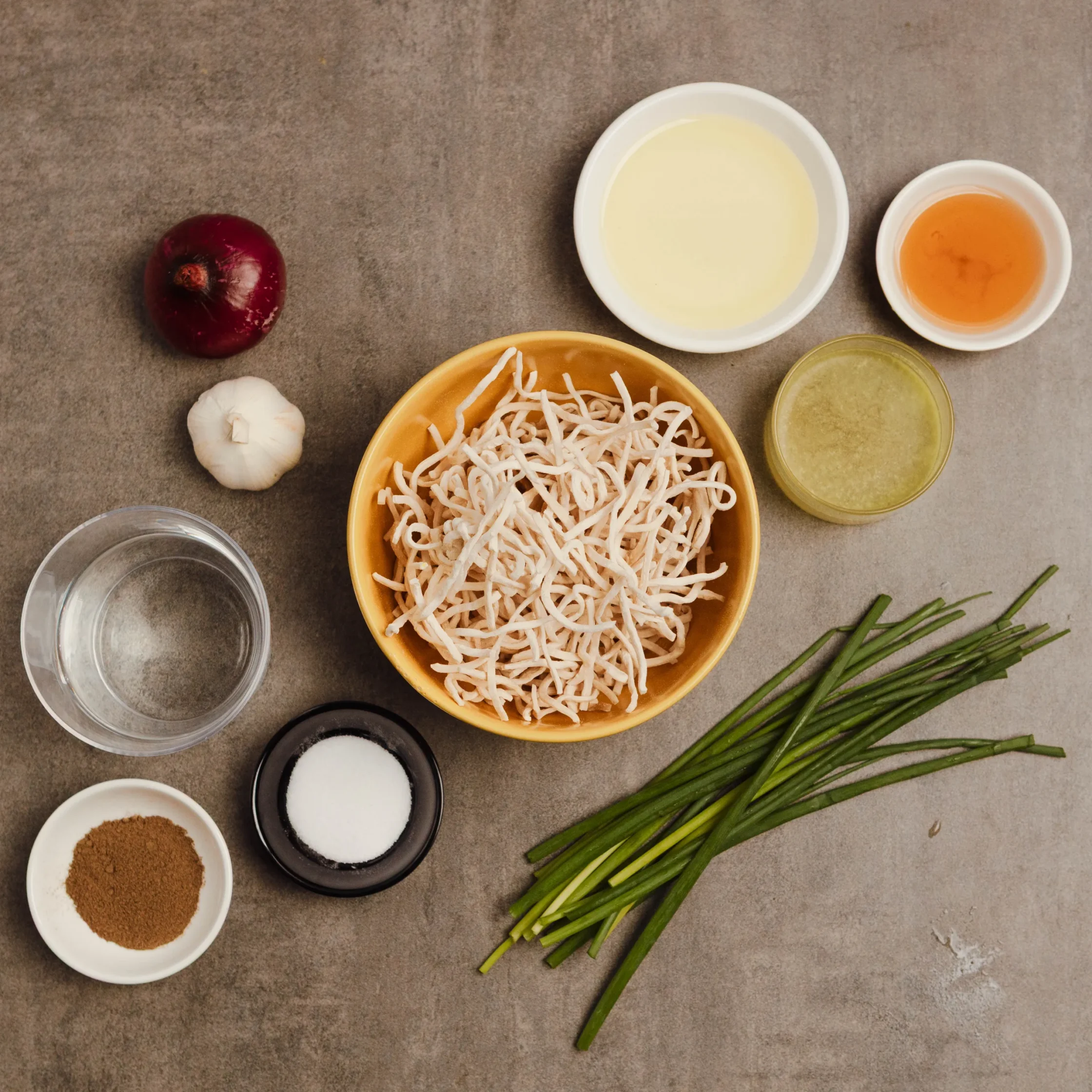
Miki noodles
The noodles are obviously the centerpiece of the dish. Miki noodles provide the body and substance that turn an ordinary broth into a satisfying meal.
Depending on the type of dried miki noodles you purchase, cooking time can vary. Some noodles are thicker and more substantial, while others cook more quickly. Always check the package instructions, but also rely on texture rather than time alone.
The ideal noodle should be tender but not mushy. Since noodles continue absorbing liquid after being cooked, it is particularly important not to overcook them.
Garlic
Garlic is one of the most important flavoring ingredients in miki. Using an entire head may seem like a lot, but garlic is central to the savory character of the soup.
Some of the garlic can also be fried separately to create a crispy topping. This gives you two different expressions of garlic: soft, aromatic garlic in the broth and crunchy, intensely fragrant garlic on top.
Onion
Onion provides sweetness and depth to the broth. When cooked slowly with garlic, it creates a mellow foundation that helps balance the salty fish sauce.
Chicken breast
Chicken is optional in this version, but it makes the soup more substantial and provides additional protein.
Shredded chicken is particularly convenient because it distributes throughout the noodles and broth, ensuring that almost every spoonful contains a little meat.
You can also use leftover cooked chicken, making miki an excellent way to transform leftovers into another meal.
Chicken broth
The broth is the foundation of the soup, so its quality matters. Homemade chicken broth can provide a deeper flavor, while good-quality prepared broth is a convenient alternative.
If using store-bought broth, taste it before adding fish sauce because some commercial broths are already quite salty.
Annatto powder
Annatto provides the characteristic warm golden-orange color of the broth. It also contributes a mild earthy quality, although its primary role in this recipe is visual.
Annatto is widely used in Filipino cooking as a natural coloring ingredient and is particularly useful when you want a dish to have an inviting golden appearance.
Fish sauce
Fish sauce gives the broth umami and saltiness. Because it is fermented, even a relatively small amount can add considerable depth.
Add it gradually and taste as you go. The amount needed can vary depending on the brand and salt concentration.
Fried garlic
Fried garlic is more than decoration. Its crunchy texture contrasts beautifully with the soft noodles and broth, while its concentrated flavor reinforces the garlic already present in the soup.
Spring onion
Spring onion provides freshness and color. Its mild onion flavor helps lighten the richness of the broth and gives the bowl a fresh finish.
Chicharron
Chicharron is optional, but it adds a wonderful contrast in texture. The crispy pork provides richness and crunch against the soft noodles and broth.
Because chicharron can already be salty, use it sparingly if the broth is strongly seasoned.
Recipe Tips
- Do not overcook the noodles. Soft, mushy noodles can make the entire bowl feel heavy.
- Cook noodles separately for better control. This is especially useful if you expect leftovers.
- Taste your broth before adding salt. Chicken broth and fish sauce can already contain substantial sodium.
- Use fresh garlic. Since garlic is one of the primary flavors, fresh garlic makes a noticeable difference.
- Fry the garlic slowly. High heat can burn minced garlic very quickly.
- Add chicharron at the last moment. This prevents it from becoming soggy in the broth.
- Use good chicken broth. The broth is the foundation of the dish, so a weak broth will result in a weak-tasting soup.
- Do not overdo the annatto. Its main purpose is to provide color, and excessive amounts can make the broth taste unnecessarily earthy.
- Adjust the broth-to-noodle ratio. Some people love a bowl packed with noodles, while others prefer plenty of soup.
- Use leftover chicken. Cooked chicken from another meal can make this recipe much quicker.
- Serve immediately. Miki tastes best when the noodles are fresh and the toppings retain their texture.
- Keep the fried garlic separate if storing leftovers. This keeps it crunchy instead of allowing it to absorb moisture from the broth.
Ingredient Substitutions
Miki noodles
If dried miki noodles are unavailable, you can use other wheat-based egg noodles, fresh miki noodles, or another Filipino-style noodle suitable for soup.
The texture will not be exactly the same, but the broth and toppings will still create a recognizable noodle soup.
Chicken breast
Chicken breast can be replaced with boneless chicken thigh, which tends to be juicier and more forgiving during cooking.
You can also use leftover roasted chicken, boiled chicken, or shredded rotisserie-style chicken.
For a meat-free variation, mushrooms, tofu, or shredded vegetables can provide additional substance, although the result will no longer be the traditional chicken version.
Chicken broth
Homemade chicken broth is excellent, but vegetable broth can be used if chicken is omitted.
For a richer flavor, you can use broth made from chicken bones and aromatics.
Annatto powder
If annatto powder is unavailable, annatto seeds can be gently infused in oil and then strained. This takes a little more preparation but provides the same characteristic coloring.
Paprika can provide some color as an emergency substitute, but it will taste different and should not be considered an exact replacement.
Fish sauce
If you cannot use fish sauce, a small amount of soy sauce can provide saltiness and umami. However, the flavor will be different because soy sauce lacks the fermented fish character of traditional fish sauce.
For a seafood-free version, mushroom seasoning or another umami-rich seasoning can also be considered.
Chicharron
Chicharron is completely optional. You can omit it or replace it with crispy fried tofu, toasted garlic, fried shallots, or another crunchy topping.
Spring onion
Chopped chives or finely sliced onion greens can be used instead.
Knowledge About Miki and Ilocano Food
Miki is a wonderful example of how noodle dishes become regional expressions of local food culture. Noodles themselves have traveled widely across Asia and eventually became deeply integrated into Filipino cooking, but different communities developed their own interpretations.
What makes Batac miki distinctive is the combination of noodles with a simple but deeply savory broth and characteristic toppings. The dish is not trying to overwhelm the palate. Instead, it allows the broth, noodles, garlic, and seasoning to work together.
The role of garlic is particularly interesting. Garlic is an important flavoring ingredient throughout Filipino cooking, but in a dish like miki, it becomes one of the dominant aromas. The fried garlic topping takes this even further by concentrating the flavor and adding crunch.
Annatto also tells us something about Filipino culinary practices. The seed of the annatto plant has traditionally been used as a natural food coloring, particularly in dishes where cooks want a warm yellow or orange-red hue. It allows a relatively simple broth to look more inviting without relying on artificial food coloring.
Fish sauce contributes another important layer. Fermented fish products have a long history in Philippine food culture and provide concentrated umami that can make a simple broth taste much more complex.
Miki also illustrates the importance of texture. A good bowl contains multiple contrasting sensations: tender noodles, smooth broth, soft chicken, crisp garlic, fresh spring onion, and—if included—crunchy chicharron.
That contrast is part of what makes the dish satisfying.
Health Benefits and Nutritional Information
Miki can be a satisfying meal, particularly when prepared with chicken and garnished with fresh aromatics. Its nutritional profile depends on the portion of noodles, chicken, broth, fish sauce, and toppings used.
Chicken
Chicken provides high-quality protein, which supports muscle maintenance, tissue repair, and normal immune function.
Chicken breast is relatively lean, making it a convenient protein source for a lighter version of miki. Chicken thigh can provide more flavor but generally contains somewhat more fat.
Garlic
Garlic contributes several sulfur-containing plant compounds and adds considerable flavor without requiring large quantities of additional fat or sugar.
Because garlic is used both in the broth and as a topping, it becomes one of the most prominent ingredients in the dish.
Onion
Onions provide small amounts of vitamin C, fiber, and various plant compounds. More importantly from a culinary perspective, they provide natural sweetness and depth to the broth.
Spring onions
Spring onions provide freshness and small amounts of vitamins and antioxidants. Their bright flavor also helps balance the richness of toppings such as chicharron.
Annatto
Annatto is primarily used as a coloring and flavoring ingredient. It contains naturally occurring carotenoid compounds that give it its characteristic color.
Because only a small amount is used, it should not be considered a major nutritional component of the meal.
Chicken broth
Chicken broth contributes fluid and can provide small amounts of protein and minerals, depending on how it is prepared.
A homemade broth made from bones and meat can have a richer nutritional profile than a very diluted commercial broth, although the exact composition varies considerably.
Noodles
Miki noodles provide carbohydrates, which are the body’s primary readily available source of energy.
The nutritional quality varies according to the type of noodle. Some may contain eggs or additional nutrients, while others are primarily refined wheat products.
Chicharron
Chicharron adds protein and fat but can also be high in sodium and saturated fat. It is best treated as an optional garnish rather than the main component of the meal.
Sodium considerations
Fish sauce, commercial chicken broth, and chicharron can all contribute significant amounts of sodium. If you are watching your sodium intake, use unsalted or low-sodium broth, reduce the fish sauce, and keep the chicharron portion small.
You can compensate for lower salt by using plenty of garlic, onion, spring onion, black pepper, and other aromatic ingredients.
Final Words
Batac miki is a beautiful example of how a simple bowl of noodles can carry a strong sense of place. Its ingredients are straightforward—noodles, chicken broth, garlic, onion, fish sauce, annatto, and a few toppings—but when they are prepared carefully, they create something much more satisfying than the individual ingredients might suggest.
The dish’s greatest strength is its balance. The broth is savory without needing to be overwhelmingly salty, the noodles provide substance, the chicken adds protein and texture, and the garlic and spring onion brighten the bowl. Chicharron, when included, brings an indulgent crunch that makes each spoonful more interesting.
There is also a wonderful practicality to miki. It can be adapted to whatever a household has available without losing its basic identity. Leftover chicken can be transformed into a new meal, the toppings can be adjusted according to preference, and the broth can be prepared ahead of time. This flexibility is one of the enduring strengths of Filipino home cooking.
At the same time, the dish deserves appreciation as a regional specialty rather than simply another noodle soup. Batac miki reflects the culinary traditions of Ilocos Norte, where food is closely connected to local identity, family habits, and regional ingredients.
When served piping hot, topped with crisp fried garlic, bright spring onions, and perhaps a few pieces of chicharron, miki becomes the kind of meal that is difficult to eat hurriedly. It invites you to enjoy the warmth of the broth, the softness of the noodles, and the contrasting textures of the toppings.
Ultimately, Batac miki is comforting precisely because it does not try too hard. It is honest, practical, flavorful food—food that can be enjoyed on an ordinary day and still feel special. For anyone exploring the diverse culinary traditions of the Philippines, a bowl of miki offers a delicious introduction to the food culture of Batac and the wider Ilocos Norte region.