Advertisement

5 Interesting Pancit Varieties Beyond Your Bihon and Canton

From noodles with cow’s brain gravy to ones turned black with squid ink, these lesser-known Filipino specialties prove there’s a lot more to pancit than the usual bihon and canton.

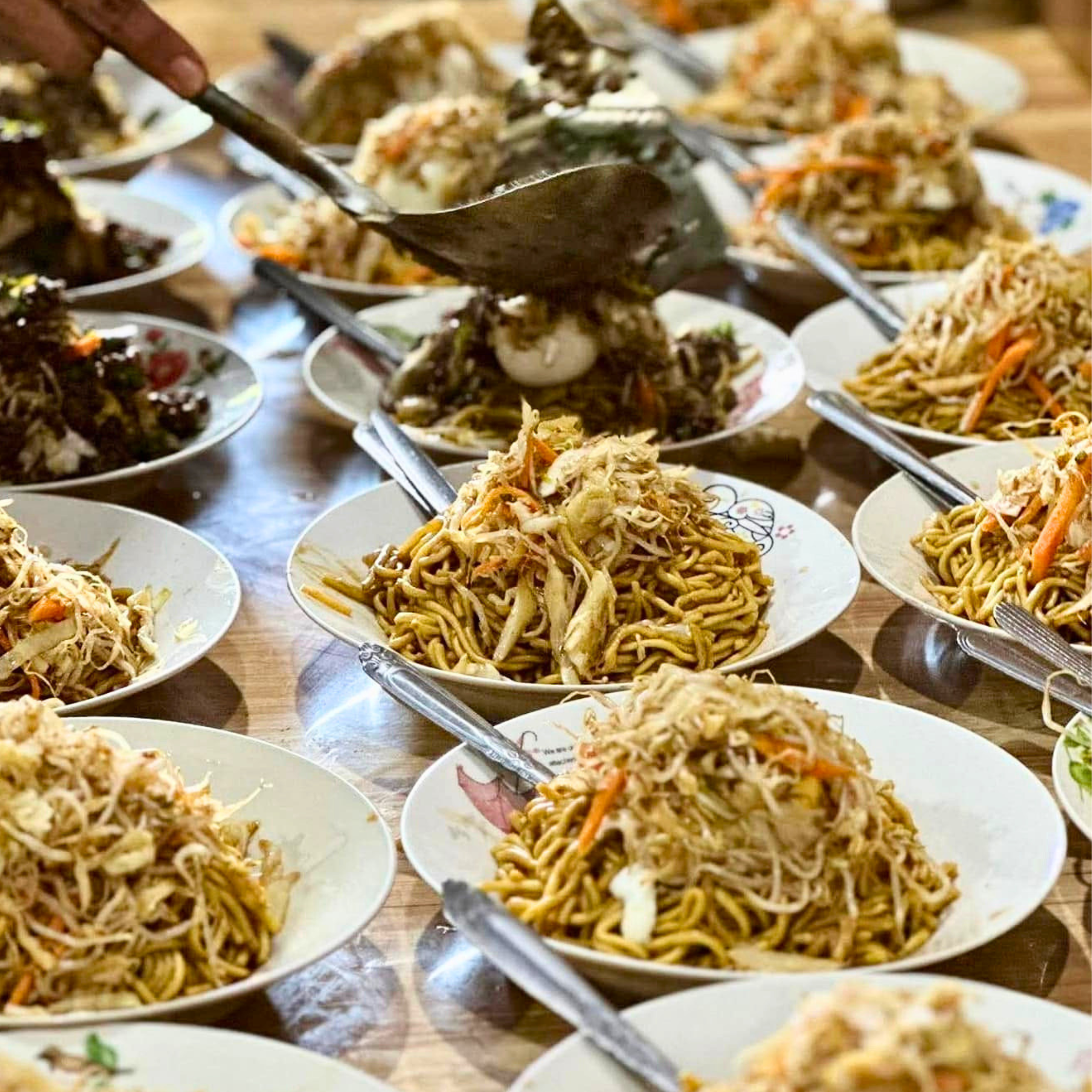
Pancit Batil Patong from cagayan made with carabao meat eggs
There’s more to pancit than the bilaos you know!  [PHOTO COURTESY OF Cagayans Best Pancit Batil Patong on Facebook]

The Philippines has more pancit varieties than there are reasons to celebrate with a big ol’ bilao.

While the usual bihon, canton, and palabok get their fair share of attention, there are a bunch of regional specialties from around the country that bring their own set of unique flavors and traditions to the table. Here are five pancit varieties worth adding to your plate!

1. Pancit Habhab (Quezon)

You know something’s good when you’re willing to slurp the noodles off a leaf! In Lucban, that something is Pancit Habhab. This local favorite, typically served on a banana leaf without any utensils, gets its name from the peculiar sound that’s produced when it goes straight into your mouth.
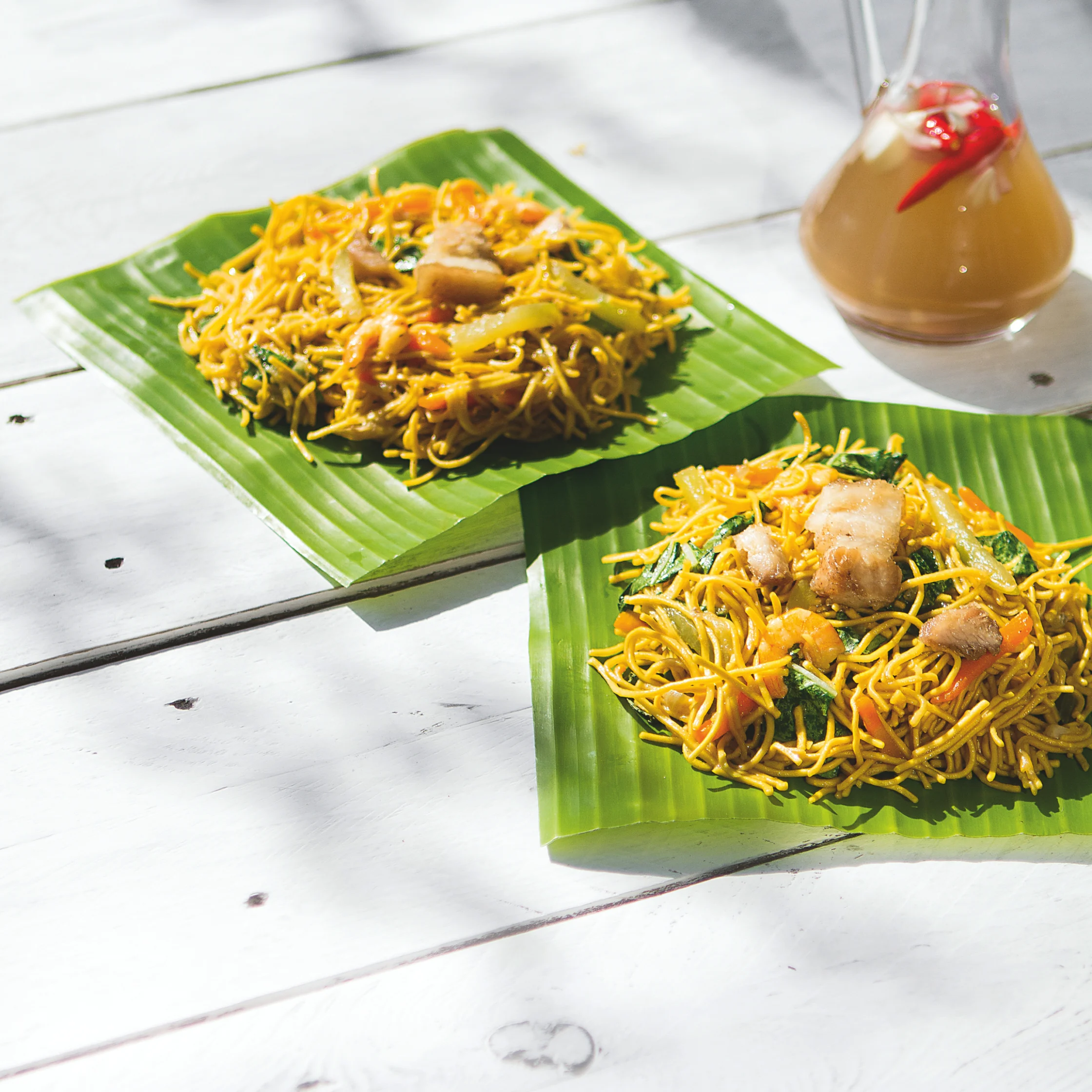
pancit habhab from quezon
Pancit Habhab [PHOTO: Krizia Cruz]

Made with springy miki noodles, pork, shrimp, and vegetables, it’s savory, satisfying, and served with a splash of vinegar—proof that sometimes, the best way to eat pancit is to get right in there.

2. Pancit Efuven (Iloilo)

Many know Iloilo for the warm and delicious La Paz Batchoy, but they also have a lesser-known plate of pancit worth getting to know in Pancit Efuven. Unlike usual pancit varieties that rely on rice or egg noodles, Efuven makes use of thin, flat wheat noodles that look almost like the Ilonggo version of linguine.
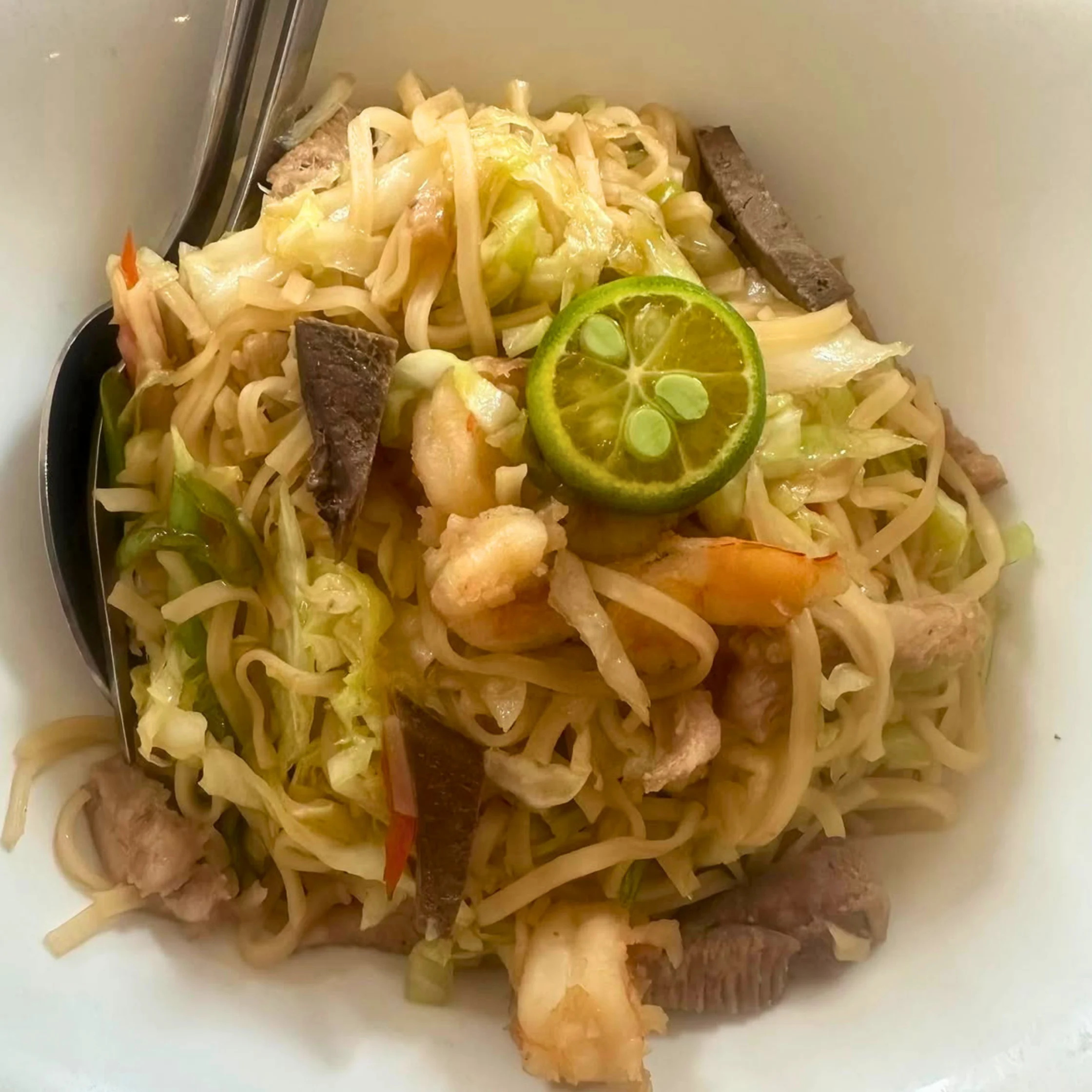
Pancit Efuven from iloilo flat wheat noodles guisado toppings
Pancit Efuven [PHOTO COURTESY OF @jewelbalbuena on Instagram]

While much of the dish’s history is shrouded in mystery, it’s clear that it’s usually cooked guisado-style with meat, vegetables, and a savory sauce tossed into a thick nest of noodles that are especially good at soaking up all that flavor.

3. Pancit Pusit (Cavite)

Cavite’s Pancit Pusit is proof that you can’t really judge a book, or a pancit in this case, by its color. Also known as Pancit Choca or Pancit Negra, this distinctly dark dish gets its striking color from squid ink, which usually coats stringy sotanghon noodles.
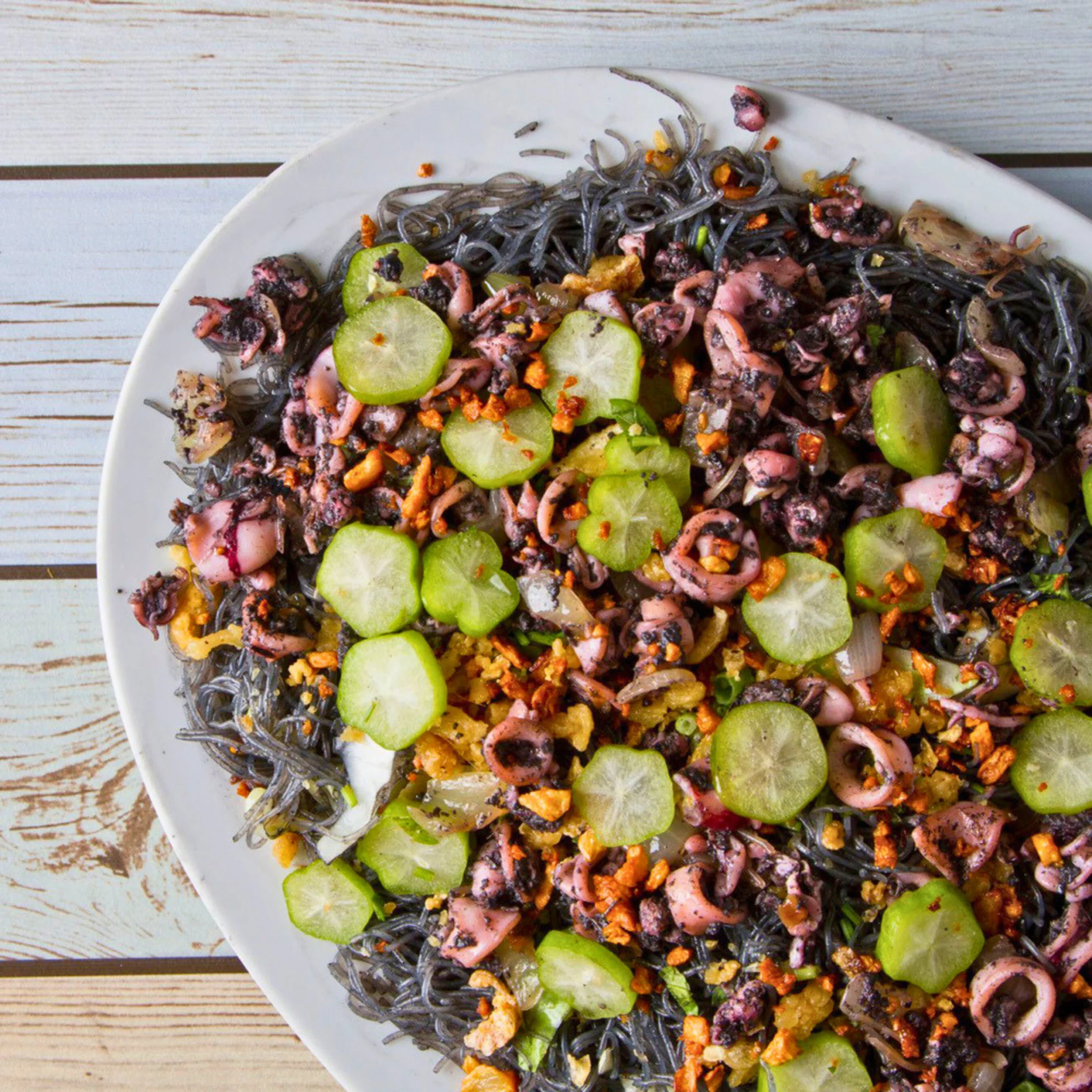
Pancit Pusit pancit with squid ink and seafood topppngs
Pancit Pusit [PHOTO: Stanley Ong; COURTESY OF Positively Filipino]

And when topped with a flavorful roster of seafood which includes shrimp, mussels, or squid, the result is a rich, briny plate of pancit that’s every bit as bold as it looks. Add some toasted garlic, kinchay, green onions, and labuyo to the mix, and you’ve got a seafood-packed dish that might just convince you to switch to the dark side.

4. Pancit Marilao (Bulacan)

Palabok may already be a Pinoy-party favorite, but Marilao’s version comes with a few unexpected extras. Pancit Marilao starts with bihon coated in a bright orange annatto sauce, then gets piled with the usual savory suspects like shrimp, tinapa, fried garlic, and egg.
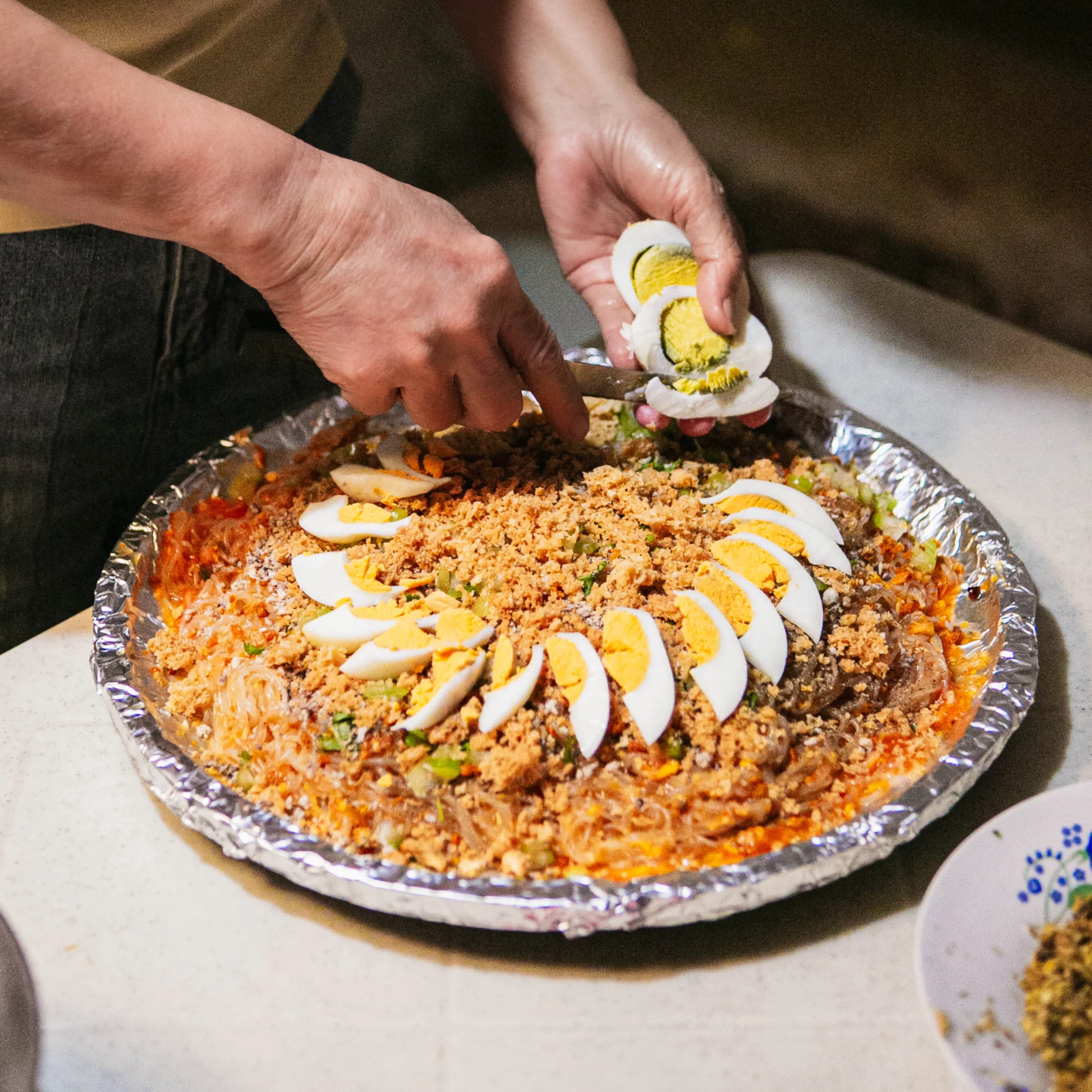
Pancit Marilao with palabok with eggs orange sauce okoy and kamias
Pancit Marilao [PHOTO: Pat Mateo]

The fun starts with the okoy. Instead of the typical shrimp-and-vegetable fritter, Marilao uses a crispy, rice-based okoy that gets broken into crunchy pieces and scattered over the noodles. Add chopped kamias for a little sourness, and suddenly you have a plate of pancit that feels familiar and completely different at the same time.

Interested in Pancit Marilao? Click here to learn more about its rich history and the sisters keeping the recipe alive!

5. Pancit Batil Patong (Cagayan)

Looking for a dish that really puts its toppings on top? Head north. Pancit Batil Patong is a Tuguegarao favorite made with springy miki noodles and a generous pile of lean carabao meat, beef liver, vegetables, and a poached egg.
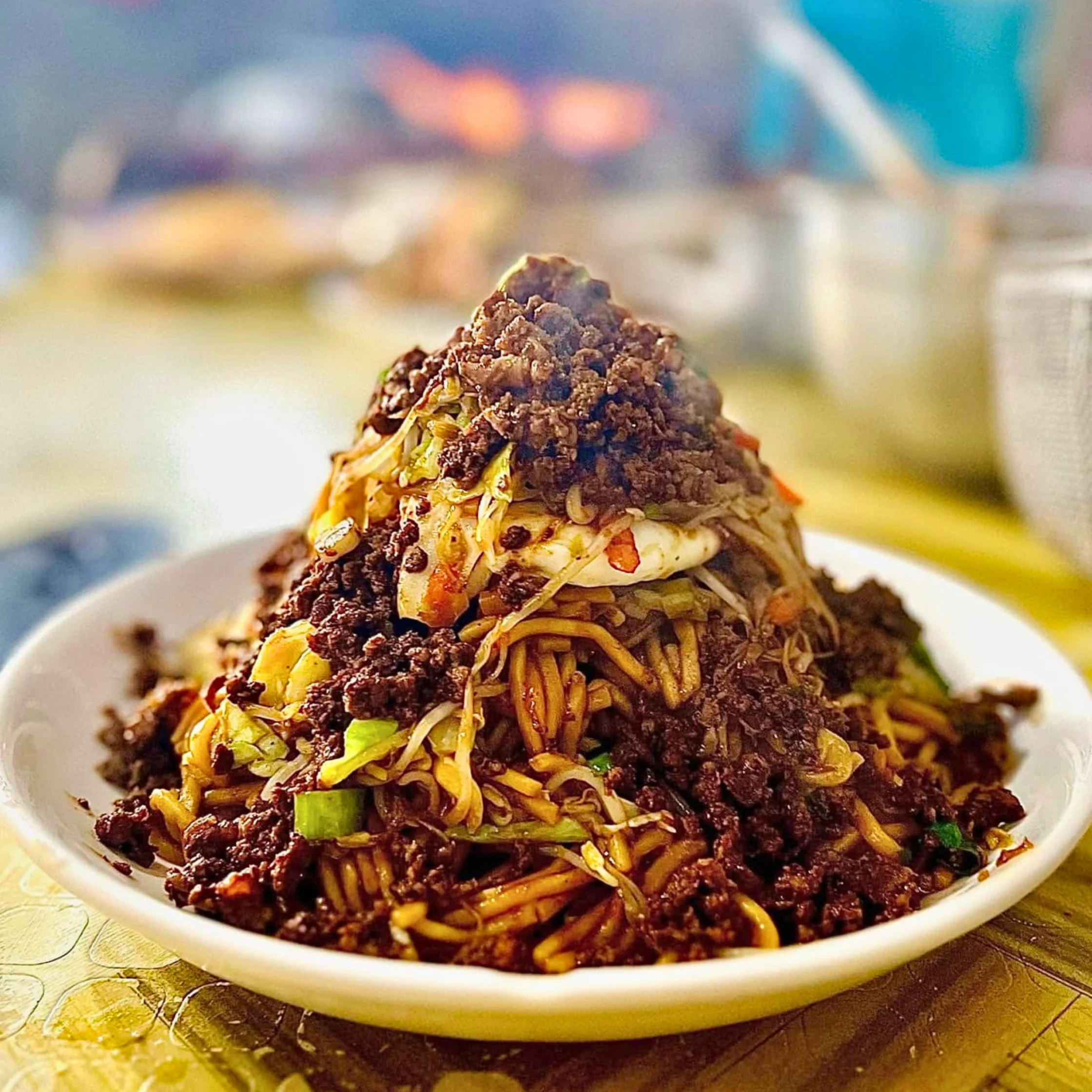
Pancit Batil Patong from cagayan made with carabao meat eggs
Pancit Batil Patong [PHOTO COURTESY OF Cagayans Best Pancit Batil Patong on Facebook]

The patong in its name literally means “to put on top,” which makes perfect sense once you see the dish. It’s a little bit of everything on one plate, and that’s exactly what makes it Cagayan classic.

From noodles with cow’s brain to ones turned midnight-black with squid ink, Filipino pancit clearly doesn’t believe in playing it safe. So grab a fork and start twirling beyond the usual bilao. Bihon and canton will always have their place, but these regional favorites deserve a turn in the spotlight—and on your plate.
author avatar
Paolo Elwick
Paolo is a food writer and storyteller exploring the intersections of food, culture, and identity through thoughtful, people-centered storytelling. He believes that, second only to language, food is one of humanity's most powerful expressions of culture—a medium for preserving history, expressing identity, and coming to understand ourselves and connect with others. Drawn to the histories, traditions, and personal experiences behind every dish, his writing combines curiosity with emotional honesty, highlighting diverse voices and celebrating the communities that shape our food landscape. Influenced by writers and artists who embrace vulnerability and introspection, Paolo uses a reflective, metaphor-rich approach to uncover the deeper meanings found in everyday meals and shared tables. He is passionate about creating stories that foster empathy, preserve cultural narratives, and invite readers to see food as more than sustenance—as memory, identity, and belonging. Through his work, Paolo hopes to amplify underrepresented perspectives and spark meaningful conversations that extend far beyond the plate.

Frequently Asked Questions

Some lesser-known regional pancit varieties include Bicol’s Kinalas, Iloilo’s Pancit Efuven, Cavite’s Pancit Pusit, Bulacan’s Pancit Marilao, and Cagayan’s Pancit Batil Patong.

author avatar
Paolo Elwick
Paolo is a food writer and storyteller exploring the intersections of food, culture, and identity through thoughtful, people-centered storytelling. He believes that, second only to language, food is one of humanity's most powerful expressions of culture—a medium for preserving history, expressing identity, and coming to understand ourselves and connect with others. Drawn to the histories, traditions, and personal experiences behind every dish, his writing combines curiosity with emotional honesty, highlighting diverse voices and celebrating the communities that shape our food landscape. Influenced by writers and artists who embrace vulnerability and introspection, Paolo uses a reflective, metaphor-rich approach to uncover the deeper meanings found in everyday meals and shared tables. He is passionate about creating stories that foster empathy, preserve cultural narratives, and invite readers to see food as more than sustenance—as memory, identity, and belonging. Through his work, Paolo hopes to amplify underrepresented perspectives and spark meaningful conversations that extend far beyond the plate.

Pancit Pusit, also known as Pancit Choca or Pancit Negra, is a Caviteño noodle dish made dark with squid ink and typically served with seafood and seasonings such as garlic, kinchay, green onions, and chili.

author avatar
Paolo Elwick
Paolo is a food writer and storyteller exploring the intersections of food, culture, and identity through thoughtful, people-centered storytelling. He believes that, second only to language, food is one of humanity's most powerful expressions of culture—a medium for preserving history, expressing identity, and coming to understand ourselves and connect with others. Drawn to the histories, traditions, and personal experiences behind every dish, his writing combines curiosity with emotional honesty, highlighting diverse voices and celebrating the communities that shape our food landscape. Influenced by writers and artists who embrace vulnerability and introspection, Paolo uses a reflective, metaphor-rich approach to uncover the deeper meanings found in everyday meals and shared tables. He is passionate about creating stories that foster empathy, preserve cultural narratives, and invite readers to see food as more than sustenance—as memory, identity, and belonging. Through his work, Paolo hopes to amplify underrepresented perspectives and spark meaningful conversations that extend far beyond the plate.

Pancit Batil Patong is a noodle dish associated with Tuguegarao and Cagayan. It features springy miki noodles topped with meat, vegetables, and a poached egg. The name patong refers to the toppings being placed on top.

author avatar
Paolo Elwick
Paolo is a food writer and storyteller exploring the intersections of food, culture, and identity through thoughtful, people-centered storytelling. He believes that, second only to language, food is one of humanity's most powerful expressions of culture—a medium for preserving history, expressing identity, and coming to understand ourselves and connect with others. Drawn to the histories, traditions, and personal experiences behind every dish, his writing combines curiosity with emotional honesty, highlighting diverse voices and celebrating the communities that shape our food landscape. Influenced by writers and artists who embrace vulnerability and introspection, Paolo uses a reflective, metaphor-rich approach to uncover the deeper meanings found in everyday meals and shared tables. He is passionate about creating stories that foster empathy, preserve cultural narratives, and invite readers to see food as more than sustenance—as memory, identity, and belonging. Through his work, Paolo hopes to amplify underrepresented perspectives and spark meaningful conversations that extend far beyond the plate.

Pancit Marilao is a regional pancit from Bulacan made with bihon and an orange annatto sauce, then topped with ingredients such as shrimp, tinapa, fried garlic, egg, and crunchy pieces of rice-based okoy.

author avatar
Paolo Elwick
Paolo is a food writer and storyteller exploring the intersections of food, culture, and identity through thoughtful, people-centered storytelling. He believes that, second only to language, food is one of humanity's most powerful expressions of culture—a medium for preserving history, expressing identity, and coming to understand ourselves and connect with others. Drawn to the histories, traditions, and personal experiences behind every dish, his writing combines curiosity with emotional honesty, highlighting diverse voices and celebrating the communities that shape our food landscape. Influenced by writers and artists who embrace vulnerability and introspection, Paolo uses a reflective, metaphor-rich approach to uncover the deeper meanings found in everyday meals and shared tables. He is passionate about creating stories that foster empathy, preserve cultural narratives, and invite readers to see food as more than sustenance—as memory, identity, and belonging. Through his work, Paolo hopes to amplify underrepresented perspectives and spark meaningful conversations that extend far beyond the plate.

Pancit Efuven is a lesser-known Ilonggo noodle dish made with thin, flat wheat noodles. It is typically prepared guisado-style with meat, vegetables, and a savory sauce.
author avatar
Paolo Elwick
Paolo is a food writer and storyteller exploring the intersections of food, culture, and identity through thoughtful, people-centered storytelling. He believes that, second only to language, food is one of humanity's most powerful expressions of culture—a medium for preserving history, expressing identity, and coming to understand ourselves and connect with others. Drawn to the histories, traditions, and personal experiences behind every dish, his writing combines curiosity with emotional honesty, highlighting diverse voices and celebrating the communities that shape our food landscape. Influenced by writers and artists who embrace vulnerability and introspection, Paolo uses a reflective, metaphor-rich approach to uncover the deeper meanings found in everyday meals and shared tables. He is passionate about creating stories that foster empathy, preserve cultural narratives, and invite readers to see food as more than sustenance—as memory, identity, and belonging. Through his work, Paolo hopes to amplify underrepresented perspectives and spark meaningful conversations that extend far beyond the plate.
paolo elwick delish ph food writer

Paolo Elwick

Writer

Paolo is a food writer and storyteller exploring the intersections of food, culture, and identity through thoughtful, people-centered storytelling. He believes that, second only to language, food is one of humanity's most powerful expressions of culture—a medium for preserving history, expressing identity, and coming to understand ourselves and connect with others. Drawn to the histories, traditions, and personal experiences behind every dish, his writing combines curiosity with emotional honesty, highlighting diverse voices and celebrating the communities that shape our food landscape. Influenced by writers and artists who embrace vulnerability and introspection, Paolo uses a reflective, metaphor-rich approach to uncover the deeper meanings found in everyday meals and shared tables. He is passionate about creating stories that foster empathy, preserve cultural narratives, and invite readers to see food as more than sustenance—as memory, identity, and belonging. Through his work, Paolo hopes to amplify underrepresented perspectives and spark meaningful conversations that extend far beyond the plate.

0 0 votes
Total of Ratings
guest
Rating
Ratings for Article
0 Comments
Oldest
Newest Most Voted

To provide a customized ad experience, we need to know if you are of legal age in your region.

By making a selection, you agree to our Terms & Conditions.