

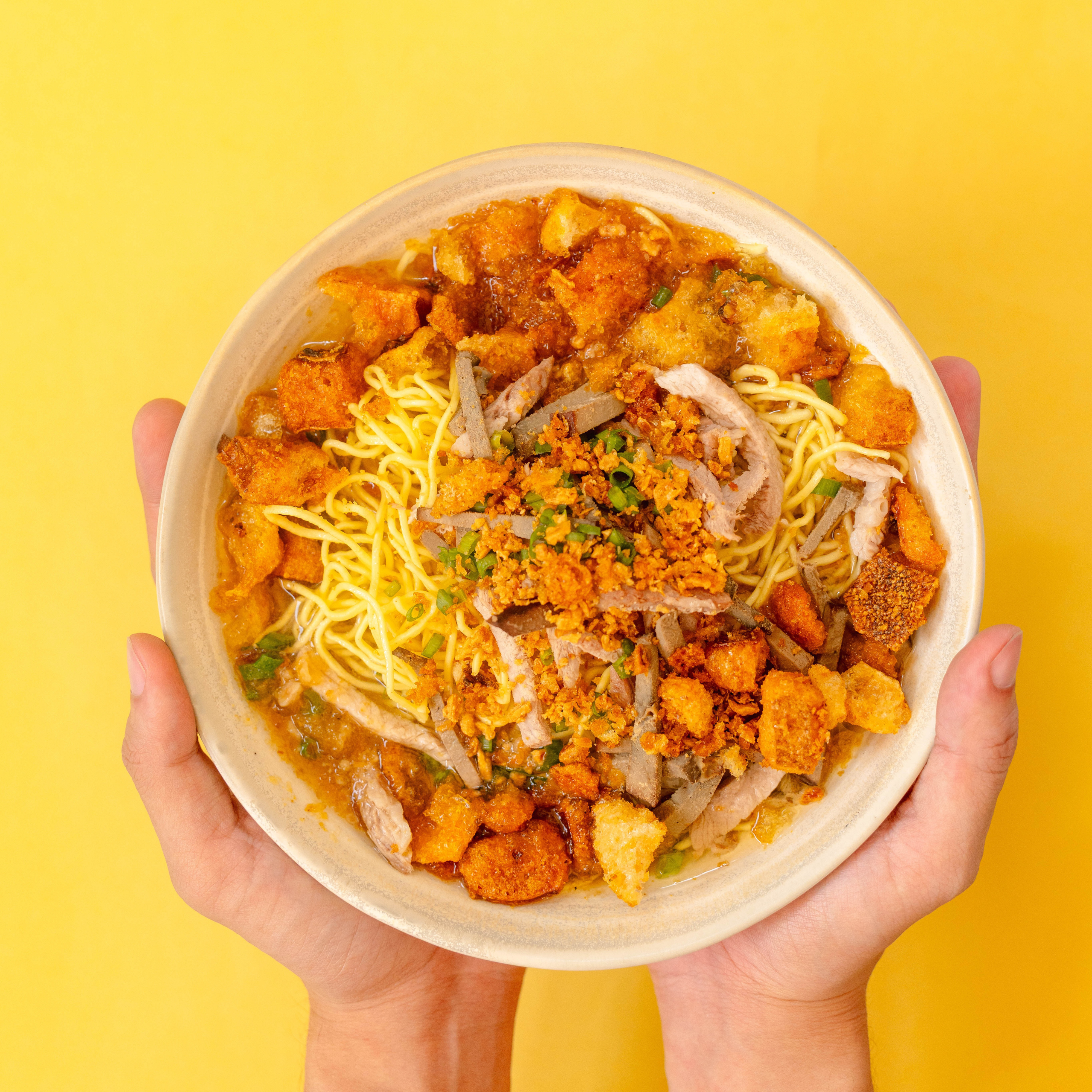
In Iloilo City, the real invitation is rarely loud. It arrives the way a good broth does: slowly, then all at once. You step into La Paz District or drift toward the Iloilo Sports Complex, and someone will say, with the easy certainty of a place that has fed strangers for generations, “Mag-batchoy ta.” (Let’s have batchoy). Not as a checklist item, not as a dare, but as a way of settling you into the city’s rhythm, as if your body has to understand Iloilo before your head can.
The world has plenty of noodle soups. What Iloilo City has is a bowl that behaves like a conversation. It does not overwhelm you on the first sip. It warms, it gathers, it builds.
“I want my batchoy when I eat it; it is simple and then it builds up the flavor,” Ilonggo chef Rafael “Tibong” Jardeleza Jr. tells me in an interview, insisting that the best bowl is not the one that shouts, but the one that deepens, spoon after spoon, until you realize you have stopped looking for spectacle and started paying attention. He says he eats it as is, no pepper, no patisPatisFilipino fish sauce, made from fermented fish and salt, with a deep umami character and a briny, savory aroma. Used both in cooking and as a table seasoning, patis roundsGo to Patis Glossary (Filipino fish sauce made from fermented fish), because the point is to taste the dish, not your own edits. “It’s our heritage food. We have to give respect to the dish, not to the person making it.”
What makes a bowl of batchoy
That respect begins in the origin story, which in Iloilo is treated with the tenderness of family lore, repeated because repetition is how food survives. A framed history from Inggo’s Original La Paz Batchoy, one of the city’s most enduring names, traces the beginnings to 1921, when Domingo “Inggo” Lozada from Negros Occidental, then 21, took inspiration from bas-oy, described as meat balls dipped in homemade sauce, and began shaping what would become a hot noodle soup sold on the sidewalk of Luna Street in La Paz. From there, the story moves through wartime persistence and market evolution. Lozada kept the batchoy going during World War II, later moving to the La Paz Market, refining quality and taste until “La Paz batchoy” stopped being just a dish and became a phrase people said across the Philippines as if it were a place you could taste. The same account notes a 1984 recognition from the Iloilo Chamber of Commerce and Industry and allied groups, honoring Lozada as an “Outstanding Pioneer in Batchoy-Food Products,” a civic nod that feels uniquely Ilonggo: food here is not only eaten, it is archived.
If batchoy has a backbone, it is not only pork bones. It is the city’s market intelligence. Ask a batchoy maker what matters most and you will hear a quiet litany of essentials that sound deceptively simple until you watch how fiercely each detail is protected. In a separate interview, Reynold Guillergan, a great grandchild of Inggo’s tells me nothing has fundamentally changed: “Wala, amo man giyapon ang ingredients ya (The ingredients have not changed; they are basically the same).” The old ginamos is still there. When I press him about it, he confirms it with the matter-of-factness of someone who knows that authenticity is not a marketing adjective but an ingredient you have to buy, choose, and handle correctly. Tibong cuts in, as if to underline the point for anyone tempted to romanticize it: the ginamos has to be good.
Ginamos, the local fermented shrimp paste, is where outsiders often get lost. They expect funk, they expect a loud, fermented punch. What they do not expect is restraint, technique, and clarity. Reynold explains the method like he is teaching a family member, not performing for a camera. The Gina’s is simmered briefly, “mga 30 minutes to 1 hour,” then allowed to settle so the solids sink. What they use is not the mash itself but the clear, top portion, the tin-aw. He explains that if you dump everything in, the smell of the ginamos in the batchoy will be overpowering and the broth becomes crude instead of clean. The surprise, if you have only ever tasted ginamos as a condiment, is that in batchoy it can be present without announcing itself. Reynold laughs with the others at the paradox: Even if you do not detect it directly, it is there, doing the work of depth while keeping the broth bright.
Preserving the heritage
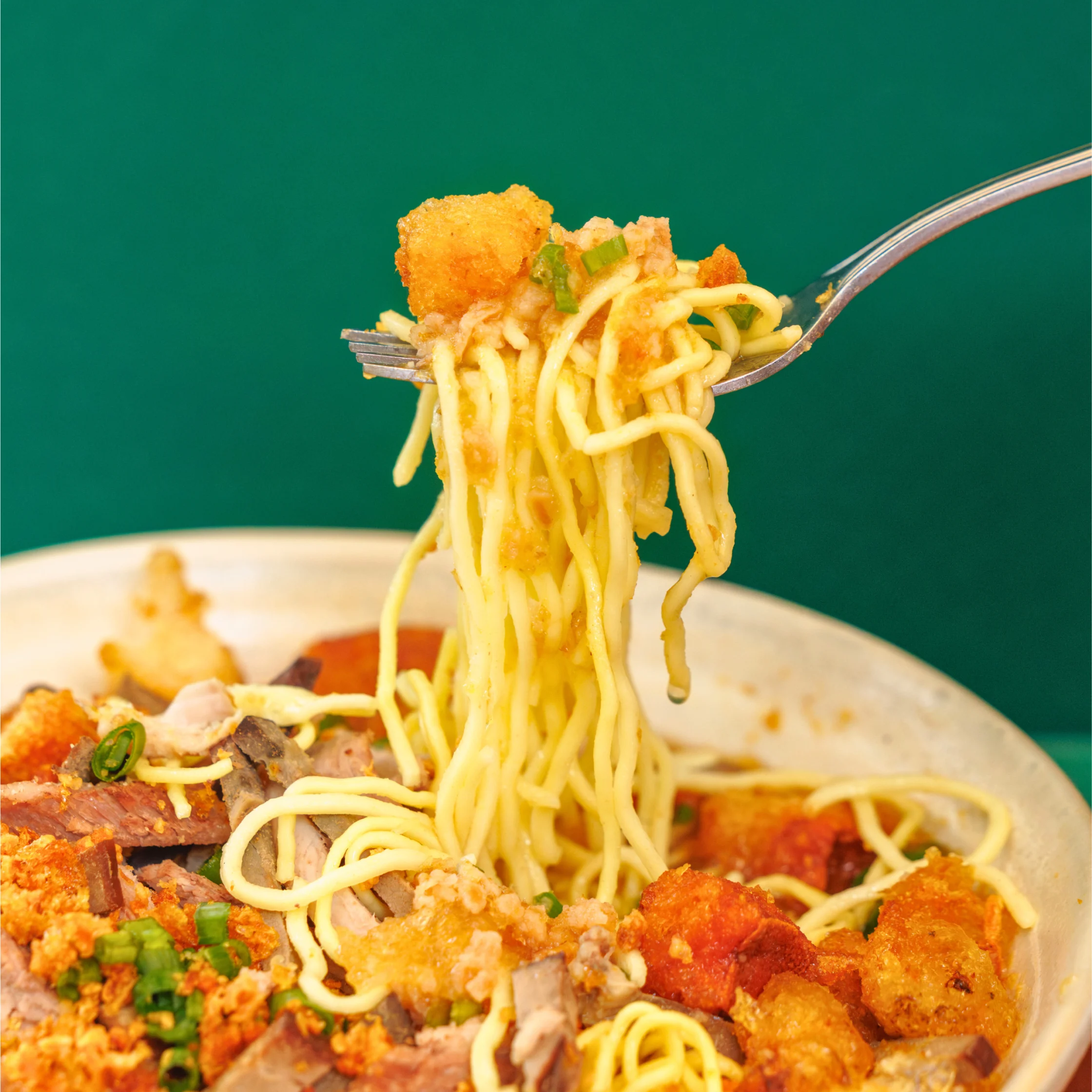
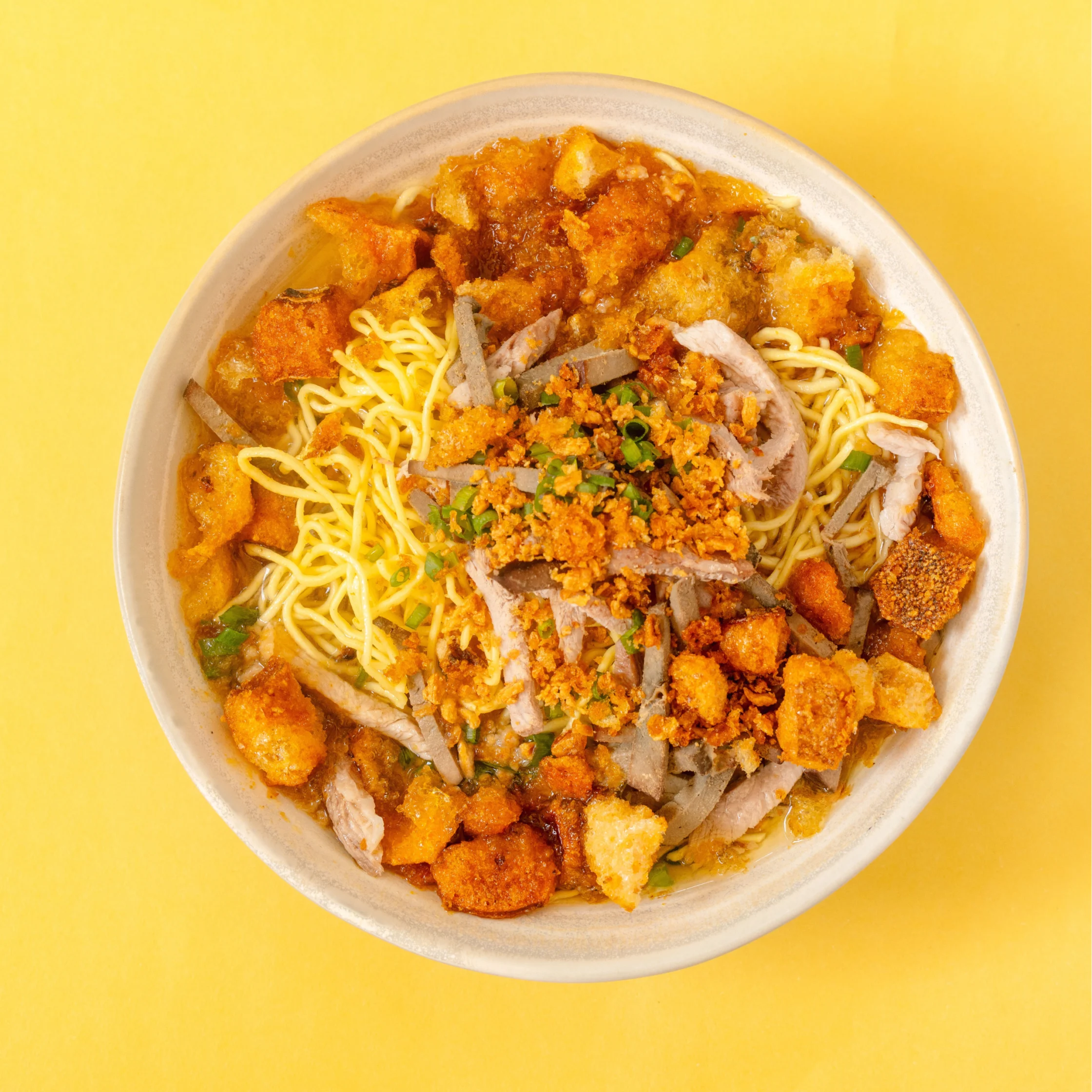
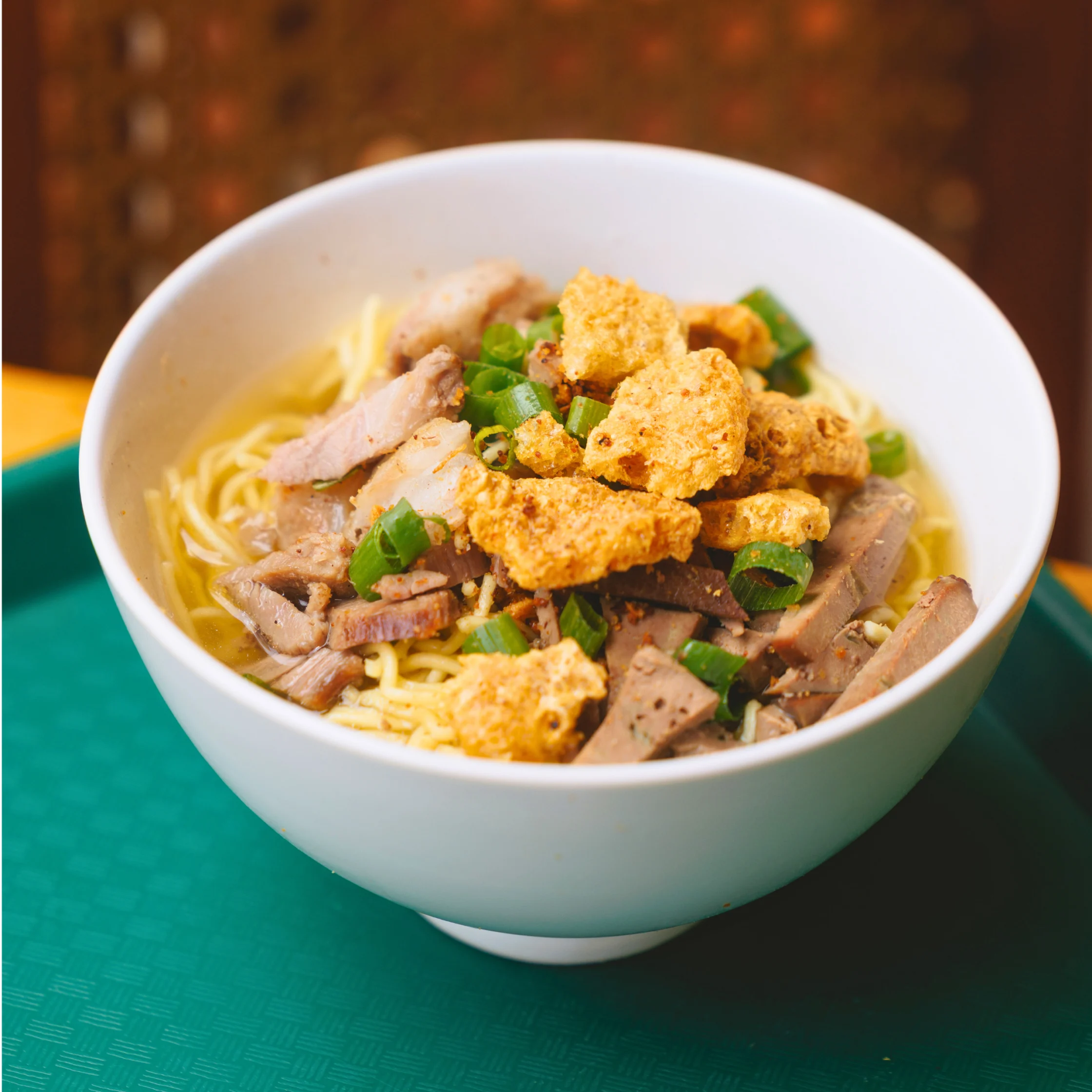
This is the clear-broth doctrine that Iloilo rarely spells out in tourism copy. The city loves batchoy not because it is maximalist, but because it can be both generous and controlled. The bowl typically arrives with wheat noodles, often miki or what the Inggo’s history calls “meke,” then chopped pork and sometimes beef, plus liver and other cuts that remind you this is also a dish born from practical market life. Garlic, spring onions, and chicharon (pork cracklings) are not decoration; they are punctuation. The crunch is the city’s way of making sure you stay awake. You think you are ordering comfort, but you are being taught attention.
Outside Iloilo City, the word “batchoy” travels and changes grammar the way borrowed words do. In parts of Luzon, Batchoy Tagalog is often documented as heavier on ginger and greens, with pork blood and miswa, closer to the logic of restorative soups than to Iloilo’s clear-broth build. Meanwhile, Visayan and Mindanao adaptations sometimes lean toward seafood and mixed broths, proof that “batchoy” has become a flexible Filipino category rather than a single recipe. But Iloilo’s own version stays distinct not only for ingredients, but for a philosophy: the broth must be clean enough to carry complexity, not blur it.
Even within Iloilo, the bowl refuses to be standardized into one “correct” taste, and chef Tibong is almost protective about this. He questions the impulse to compete a heritage dish, recalling a batchoy competition. His discomfort is not about fun; it is about what contests do to heritage. “Why compete a heritage dish?” he asks, comparing it to the impossibility of staging a KBL or tinu-om competition with any meaningful fairness. Each has its own preparation, its own passed-down instincts. He refuses to crown a single bowl because the consequence of ranking, he says, is conflict that turns families into rivals and heritage into ego. His advocacy is simpler: do not tell people how to cook what they have been cooking for centuries. Support them. Enjoy. Let preference remain preference, not a weapon.
Catching up with the times
Modern batchoy, of course, has stepped into spaces that older Ilonggos would have found strange. Inggo’s itself has expanded beyond the market narrative into branches, including food court settings, reflecting what every heritage food must negotiate now: you either adapt, or you become a story people tell in the past tense. The Inggo’s account notes the move from the Iloilo Central Market era into its location near the Sports Complex, and later to branches in Atrium Mall in downtown Iloilo City, proof that the bowl has learned to commute with modern life.
The modern takes are not only about airconditioning or mall lighting. They are also about format and speed. Batchoy has become something you can pack, reheat, and carry across time zones, because Ilonggo nostalgia has become global. Social media has also remapped the battleground. “Batchoy wars” now unfold in comment sections, vlogs, and food reels that declare winners with the confidence of algorithms. But what gets lost online is what Tibong keeps returning to: the point is not to pick a champion. The point is to keep the dish alive without turning it into a petty feud.
This is where batchoy’s role in putting Iloilo on the map becomes more interesting than the usual story of “famous local food.” The bowl has moved from taste to identity, and from identity to policy. Iloilo’s national and international food profile has been repeatedly described through its emblematic dishes, batchoy among them, in public narratives tied to the city’s gastronomic reputation and tourism positioning. In broader reporting around Iloilo’s recognition as a UNESCO Creative City of Gastronomy, batchoy appears as one of the dishes that helps explain why the city is legible to the world as a food place, not just a pretty place. Festivals staged around batchoy further signal that the dish is not only a meal but an event, a tourism object meant to gather crowds and cameras.
Then, in a move that many casual food writers still have not caught up with, batchoy entered the conversation of protection. A policy brief by the University of the Philippines Center for Integrative and Development Studies (UP CIDS) has explored the prospects of registering a Geographical Indication for La Paz batchoy, the same global framework used to protect place-based products whose names carry economic and cultural value.
A bowl of cultural infrastructure
That is the uncommon angle worth putting on a cover: batchoy did not only make Iloilo famous because it is delicious. It made Iloilo City legible to the world because Iloilo City treated it as cultural infrastructure. The bowl became an edible passport, then a branding anchor, then something serious enough to talk about in policy rooms. It is rare for a noodle soup to be discussed in the language of protection, ownership, and cultural governance, but that is where Iloilo City is quietly headed.
And yet, the homey truth remains stubbornly ordinary. The heart of batchoy is still the market, still the choosing of ginamos by color and age, still the decision to use only the clear portion so the broth stays clean, still the daily reality that a dish survives because someone wakes up and makes it again. When Reynold says the ingredients are the same, he is not resisting change. He is describing continuity as labor. When Tibong argues against competition, he is not being sentimental. He is protecting a community from the kind of fame that makes people forget what they are supposed to preserve.
So if you land in Iloilo City and you are told to eat batchoy first, take it as the city’s gentle way of telling you how it wants to be read. Start with a bowl that builds, not a bowl that performs. Listen for the quiet umami you cannot quite name. Notice how the broth stays clear even as the flavors deepen. Then look up from your spoon and realize the real story is not only what is in the bowl, but what the bowl has taught a city to do: remember, argue, adapt, protect, and still make room at the table for you.

Frequently Asked Questions
La Paz Batchoy is a Filipino noodle soup associated with La Paz District in Iloilo City. It typically combines wheat noodles, pork, liver, garlic, spring onions, chicharon, and a flavorful clear broth.
The dish is named after La Paz District in Iloilo City, where its history is traditionally traced. One account dates its beginnings to 1921, when Domingo “Inggo” Lozada began selling his version in the area.
Its clear but deeply savory broth, combination of pork and organ meats, wheat noodles, and use of ginamos help distinguish La Paz Batchoy from other Filipino noodle soups.
Ginamos is a fermented shrimp paste commonly used in Visayan cooking. In La Paz Batchoy, some makers use the clear liquid that rises after the ginamos is simmered and allowed to settle, adding depth to the broth without an overpowering fermented flavor.
One historical account from Inggo’s Original La Paz Batchoy traces the dish to 1921, when Domingo “Inggo” Lozada began selling his version in La Paz.
No. While both are Filipino dishes called batchoy, they are distinct preparations. Batchoy Tagalog is generally associated with ingredients such as pork blood, ginger, and miswa, while Iloilo’s La Paz Batchoy is known for its clear broth, wheat noodles, pork, liver, and chicharon.