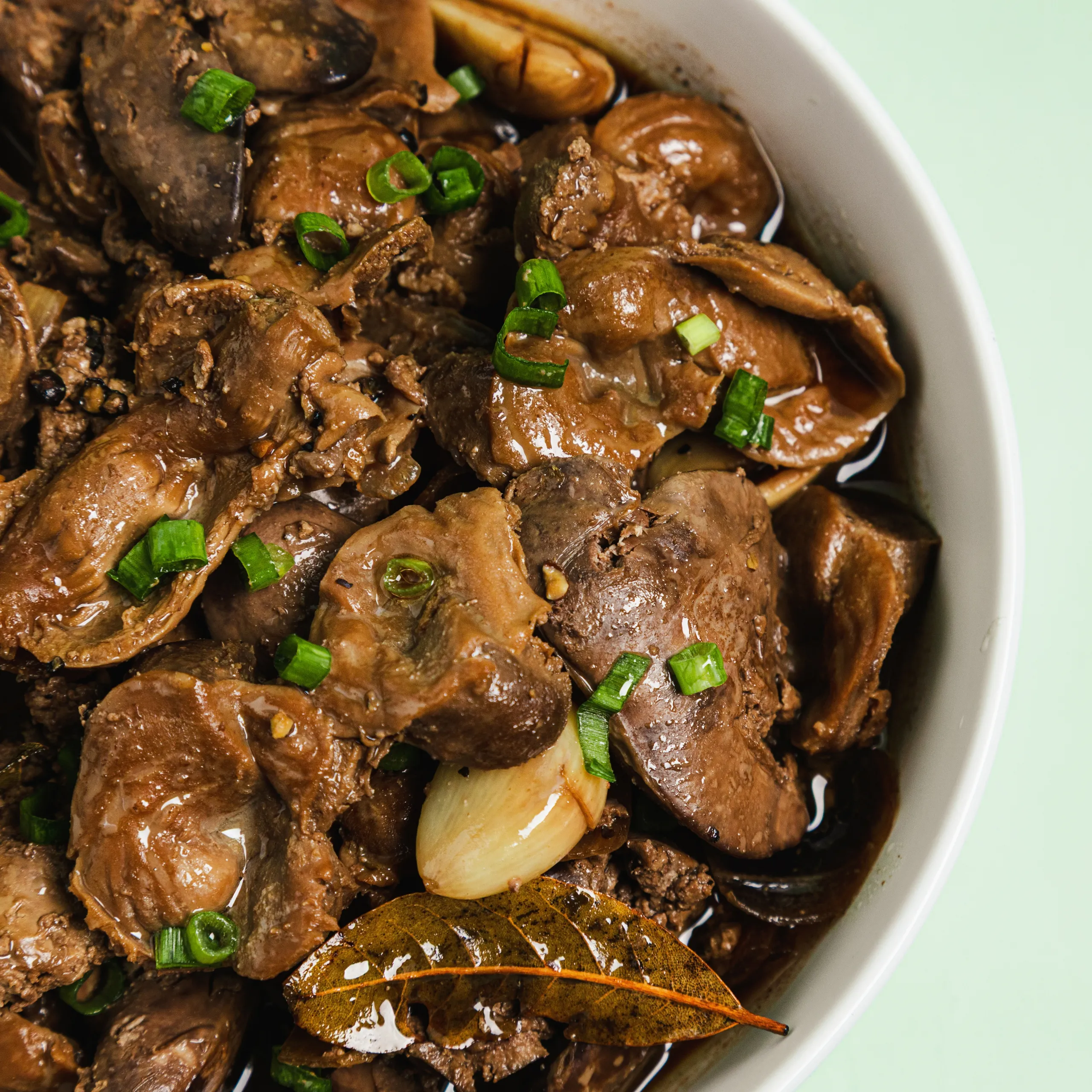


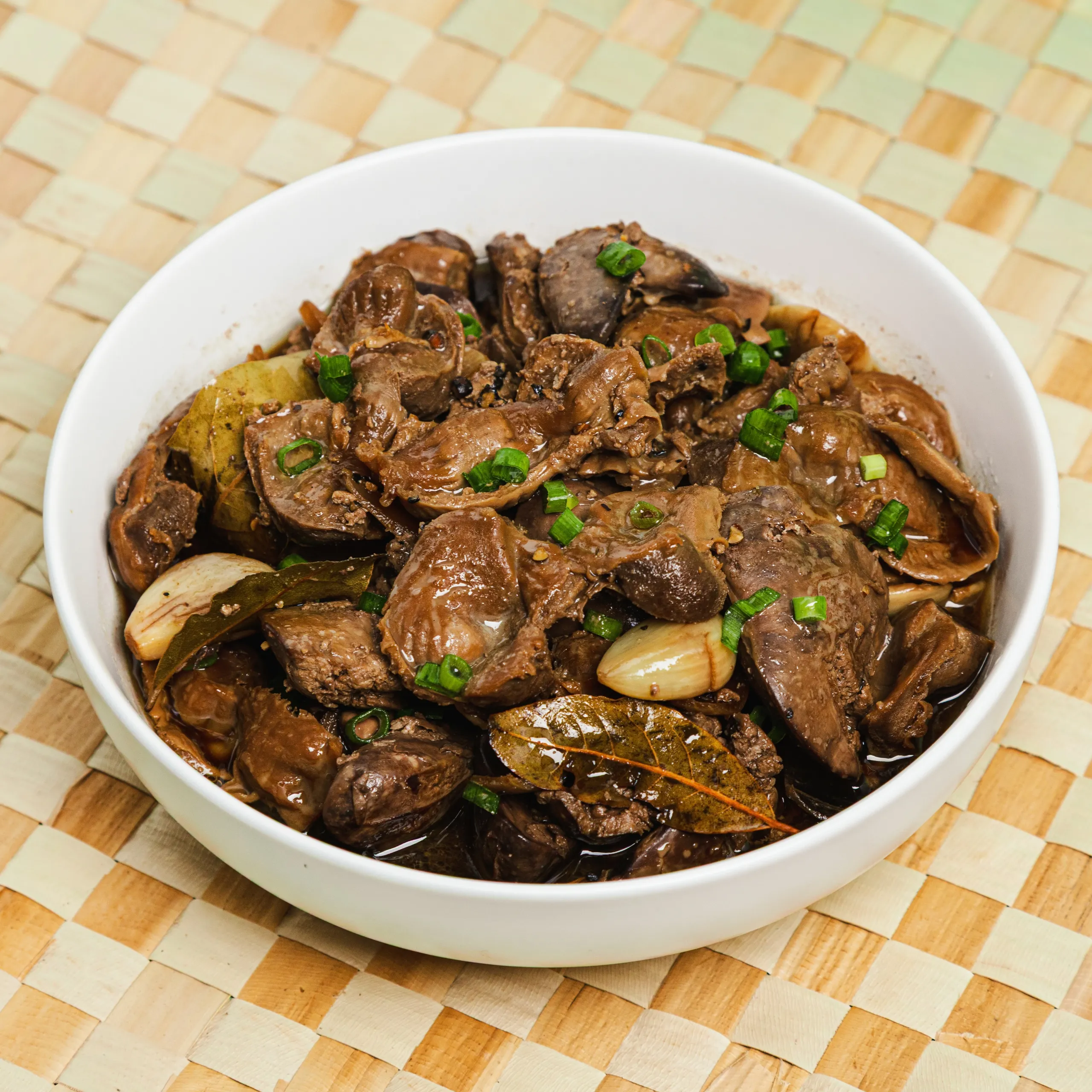
Adobong Atay at Balunbalunan is a comforting Filipino dish that brings together two very different chicken parts: atay, or liver, and balunbalunan, or gizzard. They are cooked in the familiar Filipino adobo combination of vinegar, soy sauce, garlic, bay leaves, and black pepper until the flavors become savory, tangy, garlicky, and deeply satisfying.
What makes this dish special is its contrast in texture. The liver becomes tender and rich, while the gizzard develops a pleasantly firm, chewy bite when cooked properly. It is an affordable dish, but it doesn’t feel ordinary when served with a generous helping of steaming rice.
A Little History of Adobo
Adobo is one of the most recognizable cooking traditions in the Philippines. The word adobo comes from the Spanish word adobar, meaning to marinate or season, but the cooking method itself predates Spanish colonization. Long before Spanish influence, Filipinos were already using ingredients such as vinegar and salt to preserve and flavor meat and seafood.
When soy sauce became widely incorporated into Filipino cooking, it became another common component of many adobo preparations. Over time, Filipino families developed countless versions depending on their region, available ingredients, and personal preferences.
Adobo isn’t one single fixed recipe. You can make it with chicken, pork, seafood, vegetables, or combinations of different ingredients. Some versions are dark and soy-heavy, while others emphasize vinegar and garlic. Some contain coconut milk, potatoes, chili peppers, or sugar.
Adobong Atay at Balunbalunan is one of the many home-style variations that makes use of chicken giblets. These ingredients have traditionally been valued because they are inexpensive, flavorful, and nutritious when properly prepared.
Recipe Tips for Better Adobong Atay at Balunbalunan
Cook the gizzard before the liver. This is probably the most important technique in the recipe. Gizzards require significantly more time to become tender, while liver can become dry when overcooked.
Don’t cut the liver too small. Medium-sized pieces retain their moisture better and are less likely to crumble.
Don’t rush the simmering process. A gentle simmer gives the gizzards time to soften while allowing the vinegar, soy sauce, garlic, and pepper to develop a deeper flavor.
Taste before adding extra salt. Soy sauce already contributes considerable saltiness, so additional salt may not be necessary.
Use good-quality vinegar. Since vinegar is one of the main flavors in adobo, its character can noticeably affect the finished dish. Cane vinegar is an especially natural choice for a Filipino-style version.
Let the sauce reduce at the end. If you prefer a thicker and more concentrated sauce, remove the lid during the final few minutes and let some of the liquid evaporate.
Be gentle with the liver. Stir carefully once it has been added so the pieces stay intact.
Ingredient Substitutions
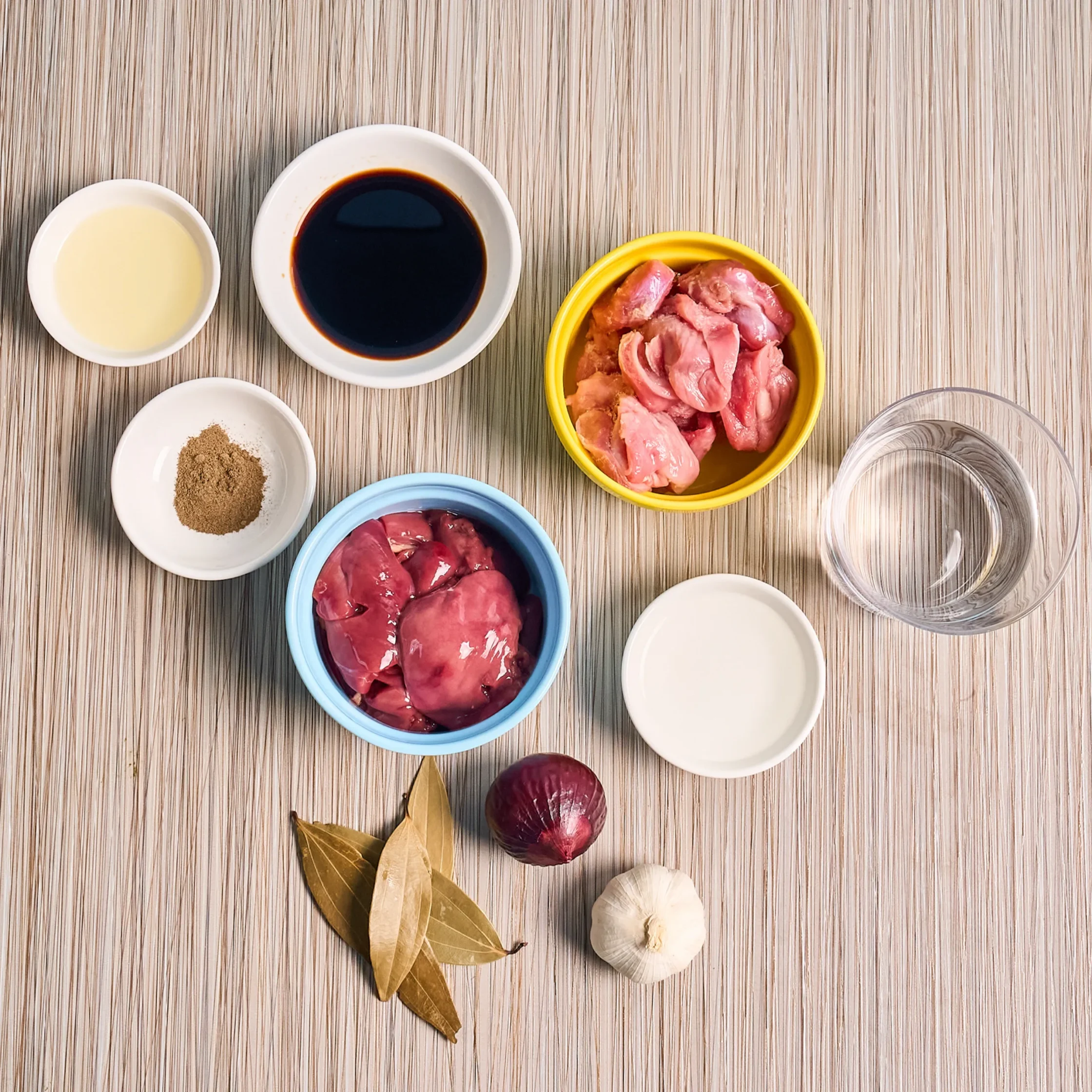
Chicken liver
If chicken liver isn’t available, you can use another poultry liver, although the flavor and texture will differ.
You can also make the recipe with gizzards alone if you prefer to avoid liver.
Chicken gizzards
Chicken hearts can be used as an alternative. Hearts have a firmer, meatier texture and generally cook differently from gizzards, so adjust the cooking time accordingly.
Soy sauce
For a less salty version, use a reduced-sodium soy sauce. Filipino-style soy sauce can vary considerably in saltiness, so adjust according to the brand you use.
Vinegar
Cane vinegar is ideal, but white vinegar can work as well. Coconut vinegar or other mild vinegars can also provide interesting variations.
Sugar
Sugar is completely optional. If you prefer a more traditional savory and tangy profile, leave it out. If you enjoy a slightly sweeter sauce, add the teaspoon provided in the recipe.
Cooking oil
Canola, vegetable, sunflower, or other neutral cooking oils can be used.
What Makes This Dish Interesting?
One of the most interesting aspects of Adobong Atay at Balunbalunan is that it demonstrates how Filipino cuisine can turn inexpensive ingredients into a flavorful and satisfying meal.
Atay, or liver, has a rich, distinctive flavor and soft texture. It is considerably more delicate than ordinary chicken meat.
Balunbalunan, commonly referring to the chicken gizzard, is part of the bird’s digestive system. Because the gizzard is a muscular organ, it naturally has a dense, chewy texture. Proper cooking is therefore important if you want it tender rather than excessively tough.
The combination creates a dish with two contrasting textures: soft and rich liver alongside firm, chewy gizzard.
Health Benefits and Nutritional Notes
Chicken liver is particularly nutrient-dense. It provides protein as well as nutrients such as iron, vitamin A, vitamin B12, folate, and other B vitamins.
Chicken gizzards also provide protein, iron, zinc, selenium, and several B vitamins.
However, there are a few things to keep in mind.
Because liver is exceptionally rich in vitamin A, it is better consumed as part of a varied diet rather than in very large quantities or extremely frequently. People who have specific dietary restrictions or medical conditions should follow advice from their healthcare professional.
The soy sauce also makes this dish relatively high in sodium. If you’re watching your sodium intake, consider using less soy sauce or a reduced-sodium variety.
The overall nutritional profile will also depend on the amount of oil, soy sauce, sugar, and rice served with the dish.
How to Store It Properly
Because this dish contains cooked poultry organs, proper storage is important.
After cooking, don’t leave the dish at room temperature for an extended period. Transfer leftovers into a clean, shallow, airtight container and refrigerate them promptly.
For best quality, consume refrigerated leftovers within 3–4 days.
If you want to keep the dish longer, you can freeze it in an airtight, freezer-safe container. Divide it into meal-sized portions so you don’t have to repeatedly thaw and re-freeze the entire batch.
When reheating, heat the food thoroughly until it is steaming hot throughout. Add a small splash of water if the sauce has become too thick during refrigeration.
Avoid repeatedly reheating the same portion. Reheat only the amount you plan to eat.
Serving Suggestions
The simplest and perhaps most satisfying way to serve Adobong Atay at Balunbalunan is with hot steamed rice.
For a more complete meal, serve it alongside:
- Steamed pechay or kangkong
- Sautéed vegetables
- Fresh tomato and onion salad
- Sliced cucumber
- Atchara
- A simple vegetable soup
The acidity of pickled vegetables or fresh vegetables can also provide a refreshing contrast to the rich, salty adobo.
Final Words
Adobong Atay at Balunbalunan is a wonderful example of the resourceful and comforting character of Filipino home cooking. It takes humble chicken parts and transforms them with a handful of familiar ingredients—vinegar, soy sauce, garlic, onion, bay leaves, and pepper—into something deeply flavorful.
The secret isn’t complicated. Give the gizzards enough time to become tender, add the liver later so it stays soft, and allow the adobo sauce to simmer until the flavors come together.
Served over warm rice, this dish is the kind of food that feels especially at home around a Filipino family table: simple, economical, flavorful, and satisfying.