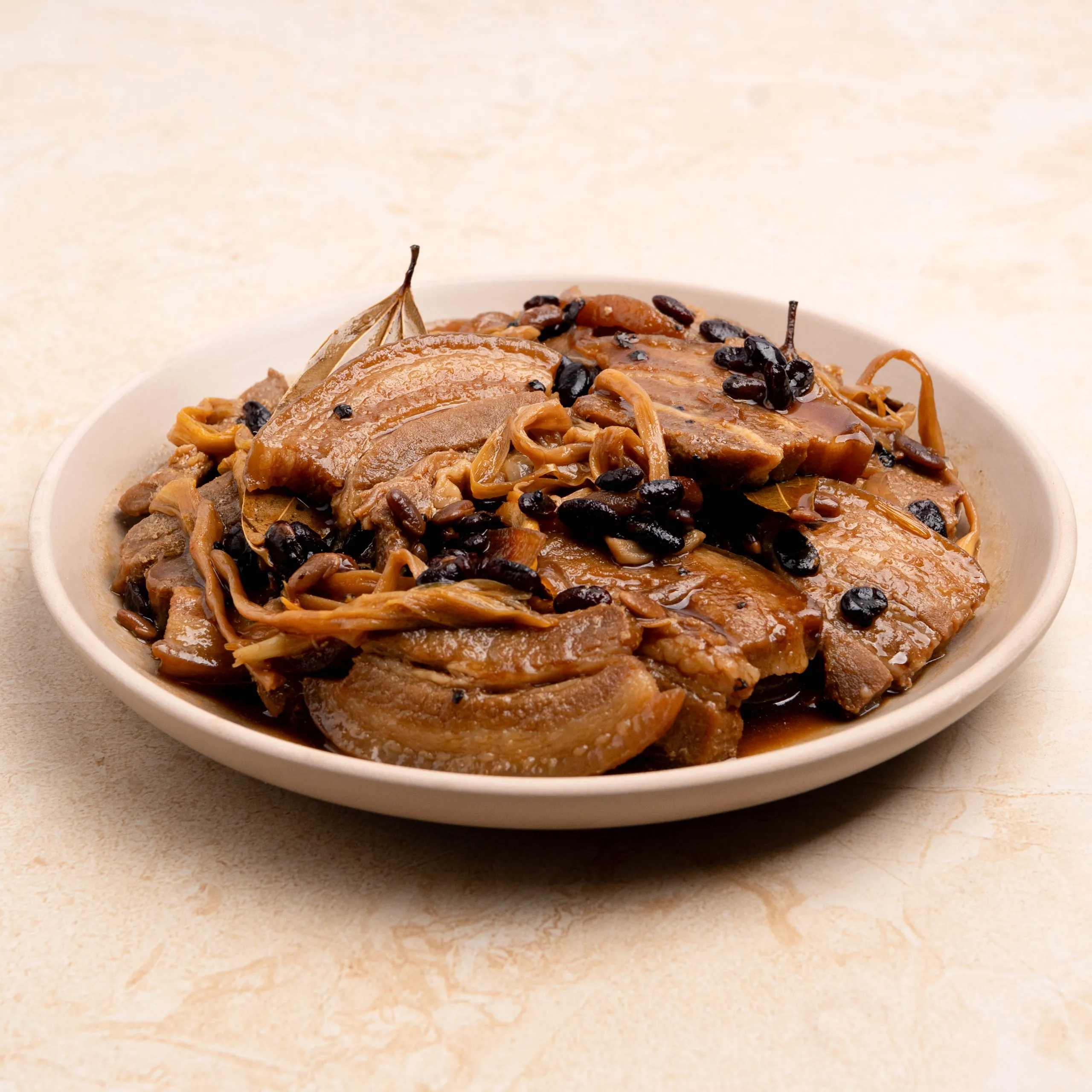


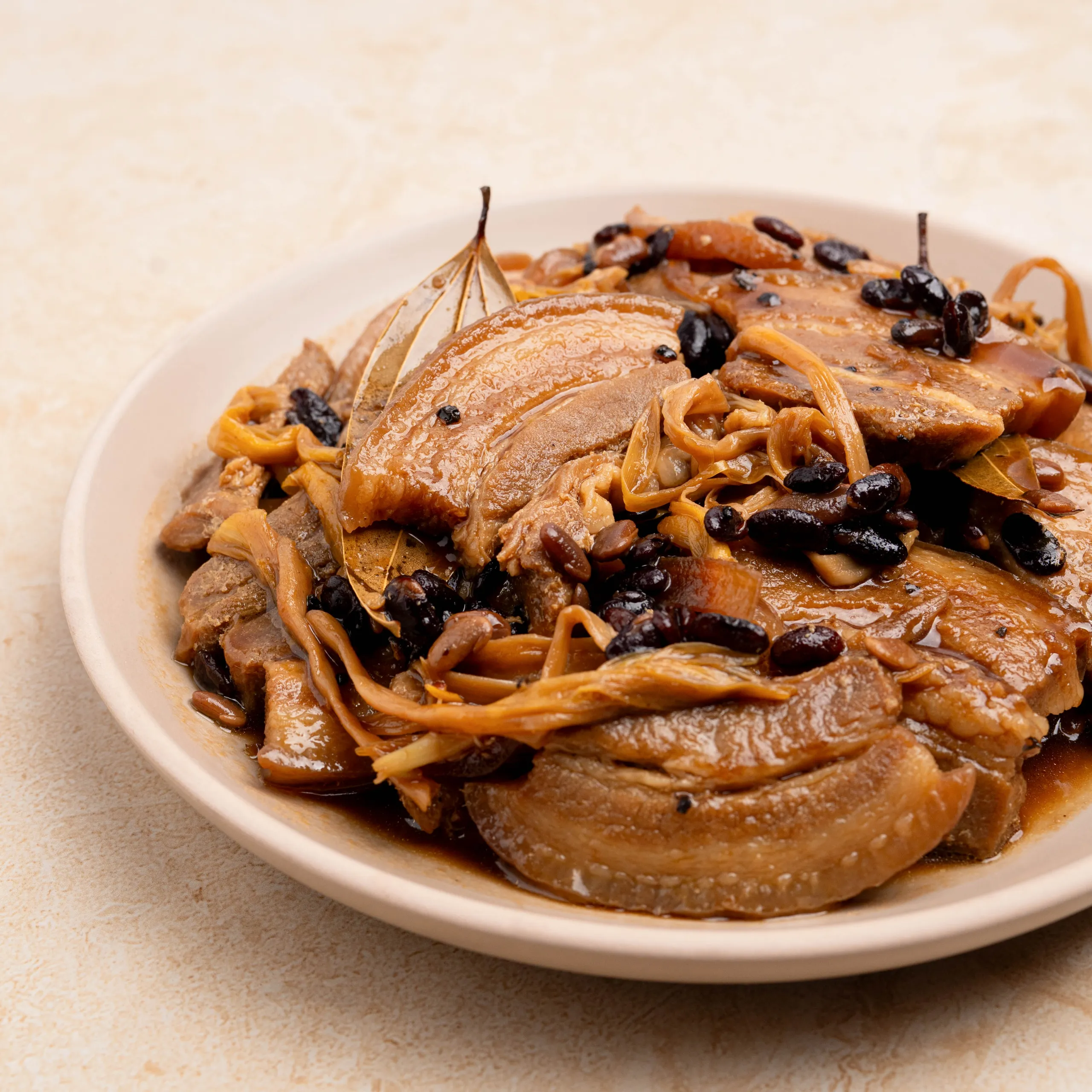
Visayan Humba: Sweet, Savory, Tender Pork with Tausi and Banana Blossoms
The kitchen slowly fills with the aroma of garlic, vinegar, soy sauce, pineapple, and caramelized pork, while the sauce becomes darker and richer as it cooks. It is the kind of Filipino dish that feels right at a family lunch, a fiesta, or simply on an ordinary weekend when you want something hearty and satisfying.
Humba is a beloved braised pork dish associated with the Visayas. It resembles adobo because both rely on familiar Filipino flavors such as vinegar, soy sauce, garlic, bay leaves, and peppercorns. But humba has a personality of its own: it is generally sweeter, richer, and more deeply savory, particularly because of tausi, or fermented black beans. Banana blossoms and pineapple are also commonly associated with Visayan versions.
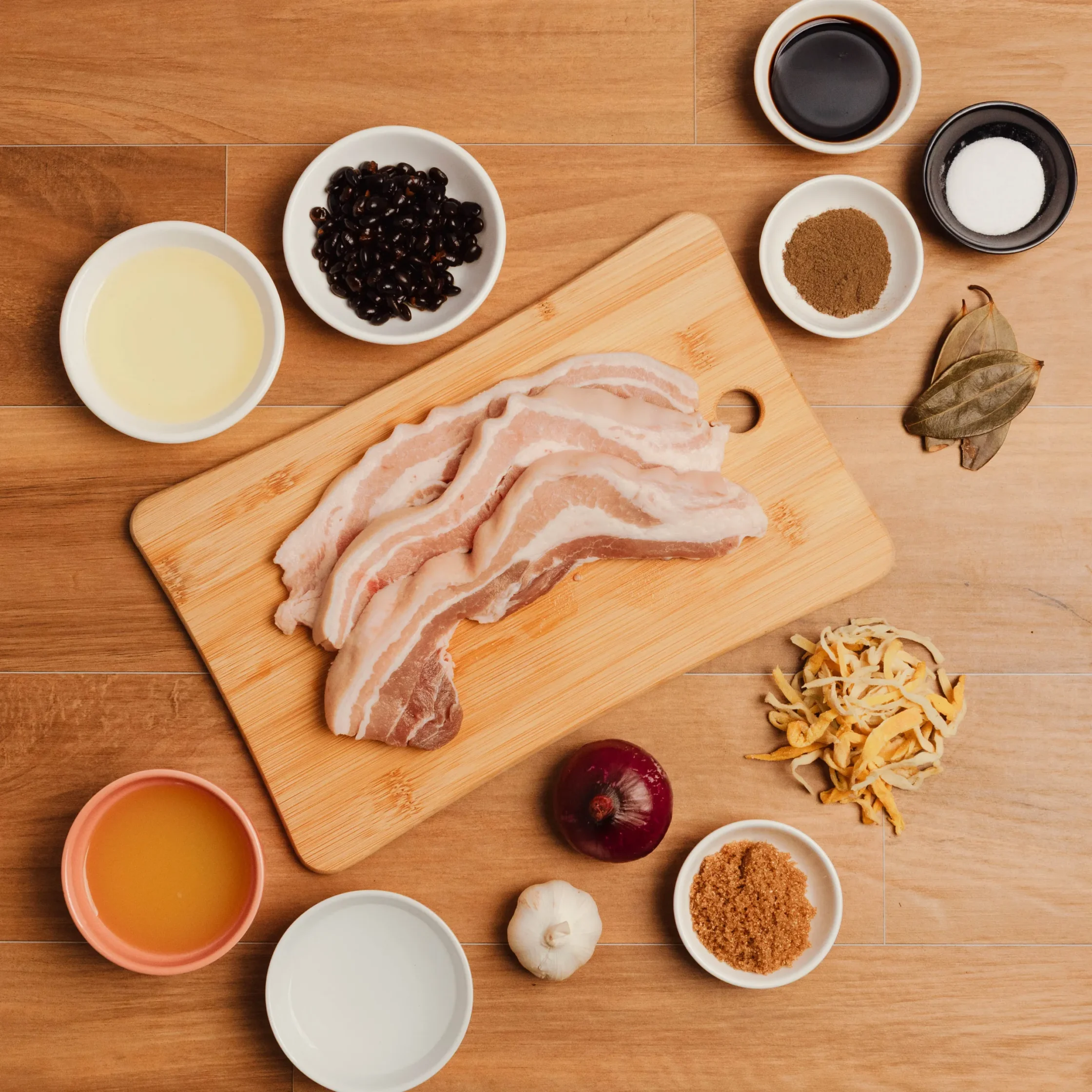
The recipe below uses your ingredient list as the foundation, with a longer, more detailed cooking method designed to help you understand not just what to do, but why each step matters.
A Little History of Humba
Humba, also spelled hombà or humbà, is traditionally associated with the Visayas. Its history is often connected to Chinese-Filipino culinary exchange, particularly the Hokkien tradition of red-braised pork. Sources commonly link it to dishes such as hong ba or hong shao rou, which involve pork slowly braised with savory seasonings and sugar. Over time, Filipino cooks adapted the concept using ingredients and flavors familiar in the local pantry.
This Chinese influence is particularly interesting because of tausi. Fermented black beans contribute a concentrated salty, fermented, almost earthy umami that distinguishes humba from an ordinary pork adobo. Filipino versions also developed their own balance of vinegar, sugar, pineapple, and local ingredients such as banana blossoms.
It is therefore useful to think of humba not simply as “sweet adobo.” While the two dishes share cooking principles and ingredients, humba has its own culinary identity. The combination of pork belly, sugar, pineapple, tausi, and banana blossoms gives it a particularly rich sweet-salty character.
And, like many traditional Filipino dishes, there isn’t necessarily one single recipe that every household follows. Families and communities adjust the sweetness, sourness, amount of soy sauce, type of pork, and additional ingredients according to taste and availability.
How to Prepare the Banana Blossoms
If you are using dried banana blossoms, don’t put them straight into the pot.
Place the dried puso ng saging in a bowl and cover with warm water. Let them soak until they soften, usually around 15–20 minutes. Drain them thoroughly and gently squeeze out excess water.
If the blossoms are particularly salty or have a strong preserved flavor, rinse them once more before draining.
Fresh banana blossoms can also be used. Remove the tougher outer layers, slice the tender portion, and prepare it according to your preferred method before adding it to the humba.
The banana blossoms aren’t merely decoration. They absorb the braising sauce and provide a pleasantly fibrous texture that contrasts with the soft pork.
What Makes Humba Taste So Good?
Humba is essentially a balancing act between sweet, salty, sour, savory, and fatty flavors.
The pork belly brings richness.
The soy sauce contributes salt and umami.
The tausi brings another layer of intense fermented savoriness.
The vinegar provides acidity that prevents the dish from tasting excessively rich.
Pineapple juice contributes sweetness and fruity acidity.
Brown sugar rounds everything out and helps produce the characteristic dark, glossy sauce.
Garlic, onion, peppercorns, and bay leaves provide the aromatic foundation.
This balance is why humba can taste incredibly rich without being simply “sweet pork.”
Ingredient Knowledge and Substitutions
Pork belly
Best choice: Skin-on pork belly or liempo. The fat gives humba its luxurious texture, while the skin becomes soft and gelatinous during braising.
Substitutions
You can use:
- Pork shoulder
- Pork hock
- Pork leg
- Pork ribs
These won’t have exactly the same texture as belly, but they can produce excellent results. Pork shoulder is particularly useful if you want a somewhat leaner version.
Tausi
Tausi is fermented black beans, also known as Chinese fermented black beans or douchi. This is one of the ingredients that gives humba its distinctive identity. It is salty, fermented, earthy, and intensely savory. If you have access to an Asian grocery store, look for fermented black beans in the Chinese condiment section.
Can regular black beans replace tausi?
Not really. Canned black beans used in Mexican or Latin American cooking are completely different from fermented black beans. They won’t provide the same fermented, salty flavor. If you absolutely cannot find tausi, you can make the dish without it, but it will taste more like a sweet pork adobo than classic humba.
Pineapple juice
Pineapple juice brings a pleasant combination of natural sweetness and gentle tang to humba, helping create the dish’s signature balance of rich, savory, and slightly sweet flavors. If you have a choice, go with regular pineapple juice instead of the syrup from canned pineapple, since syrup contains more concentrated sugar and can make the sauce overly sweet as it cooks down. For an extra fruity touch, you can also toss in a few pineapple chunks during the later part of cooking. They become tender and soak up the flavorful sauce, adding a bright contrast to the rich pork.
Brown sugar
Brown sugar gives humba its characteristic sweetness while adding a subtle molasses-like depth.
You can substitute:
- Muscovado sugar
- Palm sugar
- Panutsa
- White sugar
Muscovado is particularly good if you want a darker, deeper flavor. If using very sweet pineapple juice, start with less sugar and adjust toward the end.
Vinegar
Cane vinegar is a wonderful choice for Filipino humba.
You can substitute:
- Coconut vinegar
- Apple cider vinegar
- Rice vinegar
Apple cider vinegar can work well when Filipino cane vinegar isn’t available, although the final flavor will be somewhat different. Avoid adding too much vinegar at once. The acidity becomes more pronounced if the sauce hasn’t had enough time to simmer.
Banana blossoms
Dried banana blossoms are traditional in many versions and provide a distinctive texture.
Possible alternatives include:
- Fresh banana blossoms
- Canned banana blossoms
- Pineapple chunks
- Young jackfruit
The final dish won’t be exactly the same, but these alternatives can still complement the pork beautifully.
Recipe Tips for Better Humba
1. Don’t rush the braising
High heat may cook the pork faster, but it won’t necessarily make it more tender. A gentle simmer gives the connective tissues time to soften.
2. Brown the pork properly
Don’t simply turn the pork gray and call it seared. Allow the surfaces to develop a good golden-brown color. This gives the finished dish much more depth.
3. Don’t overdo the sugar
Remember that pineapple juice already contains sweetness. The sauce will also become sweeter as it reduces. Start conservatively and add more sugar later if necessary.
4. Rinse very salty tausi
Fermented black beans can be intensely salty. A quick rinse and thorough draining can help you control the saltiness of the finished dish.
5. Don’t drown the pork
Humba is a braise, not a soup. You want enough liquid to cook the pork and create sauce, but not necessarily enough to completely cover every piece.
6. Let the sauce reduce
The final sauce should cling to the pork rather than run like a thin broth. This reduction is an important part of the dish.
7. Taste at the end
Don’t judge the final flavor halfway through cooking. The sauce changes considerably as the water evaporates and the ingredients concentrate.
Health Benefits and Nutritional Considerations
Humba is undeniably a rich dish, particularly when prepared with pork belly, so it is best enjoyed as part of a balanced meal rather than treated as a low-fat food. That said, its individual ingredients offer some nutritional value.
Pork
Pork provides high-quality protein as well as nutrients such as vitamin B12, zinc, selenium, and other B vitamins.
The downside is that pork belly is also relatively high in fat, including saturated fat.
If you’re watching your fat intake, pork shoulder or a leaner pork cut can be used instead.
Garlic
Garlic contributes flavor without requiring large amounts of additional fat or salt.
It also contains sulfur-containing compounds that have been studied for their potential antioxidant and cardiovascular effects.
The amount used in one serving of humba, however, shouldn’t be viewed as a medicinal dose.
Onion
Onions provide fiber and plant compounds such as quercetin.
They also add substantial flavor, allowing you to build complexity without relying entirely on additional salt.
Pineapple
Pineapple contributes vitamin C and naturally occurring plant compounds, along with sweetness and acidity.
Because canned pineapple juice can contain added sugar depending on the product, check the label if you’re trying to reduce added sugar.
Banana blossoms
Banana blossoms are a plant-based ingredient that can contribute dietary fiber and micronutrients while adding bulk and texture to the dish.
They are especially useful because they make a rich pork dish feel more substantial without adding another large portion of meat.
Tausi
Fermented black beans contribute strong flavor and some protein and minerals, but they can also be very high in sodium.
This is one reason rinsing the beans and being cautious with the amount of soy sauce can be helpful.
A healthier way to enjoy humba
You can make the meal more balanced by serving a moderate portion of humba with:
- Plenty of vegetables
- Fresh fruit
- A reasonable serving of steamed rice
- Additional banana blossoms or other vegetables
- Water or an unsweetened beverage
The nutritional profile ultimately depends on portion size and the exact ingredients used.
How to Serve Humba
The classic companion is steamed white rice.
The rice is almost essential from a practical standpoint because it absorbs the thick, salty-sweet sauce.
For a more complete Filipino-style meal, serve humba alongside vegetables such as:
- Blanched pechay
- Steamed kangkong
- Stir-fried vegetables
- Atchara
- Fresh tomatoes
- Cucumber salad
The fresh or lightly cooked vegetables provide a refreshing contrast to the richness of the pork.
The Character of a Good Humba
A successful humba should have pork that is very tender but not completely falling apart. The sauce should be dark, glossy, and thick enough to coat the meat.
The flavor should unfold in layers.
First comes the sweetness from pineapple and sugar. Then the saltiness of soy sauce and tausi. Garlic and onion provide warmth, while vinegar cuts through the richness of the pork. Peppercorns and bay leaves quietly add aromatic depth.
The banana blossoms absorb the sauce and become little pockets of savory flavor.
And then there is the rice.
A spoonful of steaming rice mixed with the dark humba sauce is arguably one of the best parts of the entire meal.
Final Words
Humba is more than just another Filipino pork recipe. It is an example of how Filipino cuisine has continually absorbed outside influences and transformed them into something distinctly local.
Its connection to Chinese red-braised pork helps explain ingredients such as fermented black beans, while the Filipino treatment of vinegar, sugar, pineapple, garlic, and banana blossoms gives the dish its own character. Its resemblance to adobo is undeniable, but humba has a sweeter, deeper, more fermented personality.
Most importantly, humba is the kind of food that invites personal interpretation. One family might prefer it sweeter. Another might add pineapple chunks or eggs. Someone else might use pork hock, saba bananas, or extra banana blossoms. These differences don’t necessarily make one version more authentic than another—they reflect the way Filipino home cooking evolves from one kitchen to the next.
So don’t be afraid to taste and adjust as you cook.
Give the pork enough time to become tender. Let the sauce slowly reduce. Balance the vinegar, sugar, soy sauce, and tausi until they complement one another rather than compete.
Then serve the humba hot over plenty of steamed rice, preferably with something fresh and green on the side.
That is when this humble pot of braised pork becomes what it is meant to be: deeply savory, sweet, tangy, tender, comforting, and unmistakably Filipino.