

When to add oil to the pan is one of the greatest little debates in cooking. Does it go in right away so it can heat with the pan? Or do you let the pan preheat first so you can gauge the heat by how the oil flows across the bottom of the pan when you pour it in?
Like many culinary conundrums, there’s no firm answer here that can be applied to every situation. But there are best practices that you can follow, depending on the type of pan you’re using. Here’s everything you need to know about when to add the oil immediately—and when it’s okay to wait.
Non-stick
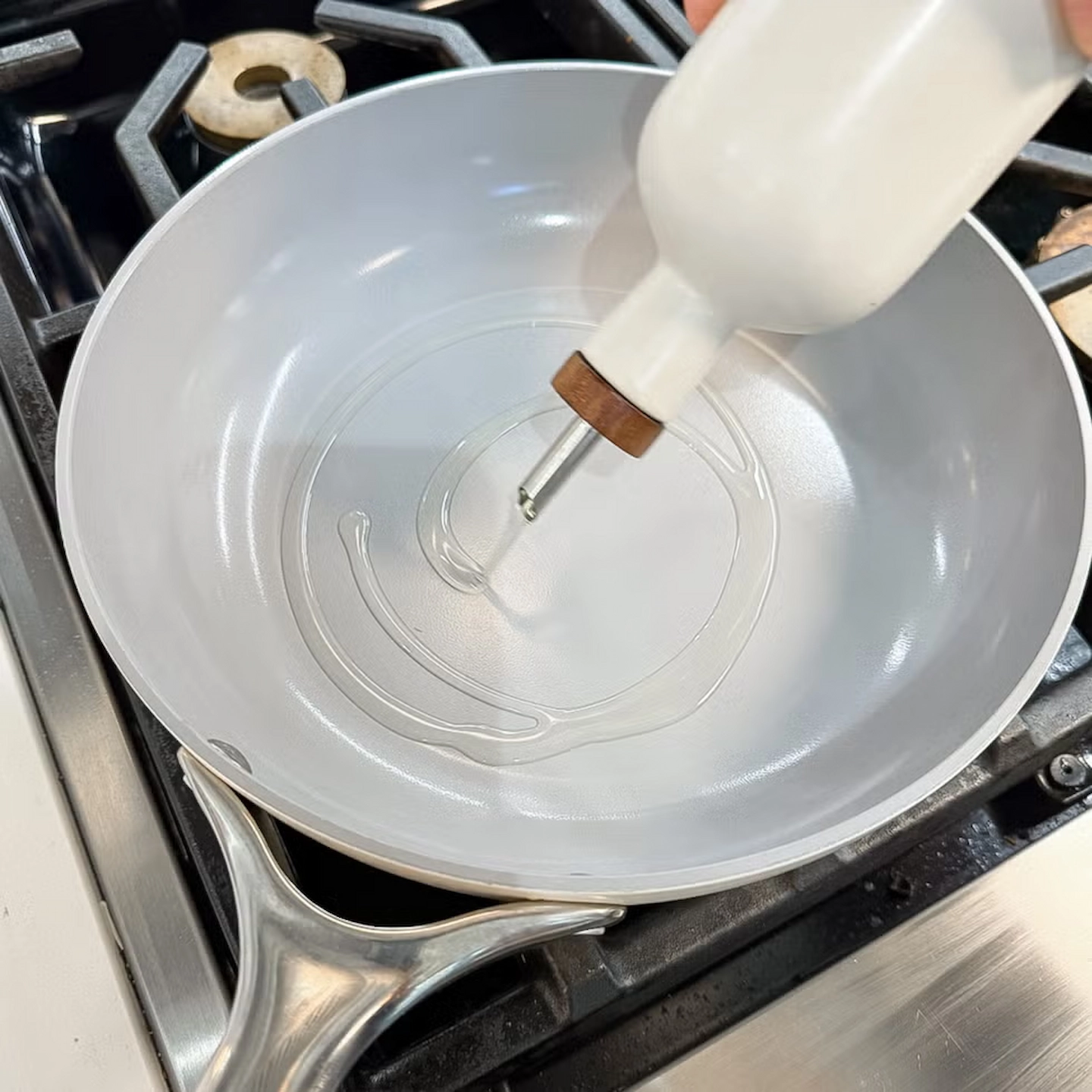
Unless the prospect of hazardous chemicals in the air excites you, you’ll want to add oil or another cooking fat to a nonstick pan before turning on the heat. Heating an empty nonstick pan can cause the coating to release toxins into the air, which is obviously not ideal. Also, warming the fat or the oil in the pan as it preheats can also help double down on the pan’s nonstick properties, which is a big bonus.
Enameled Cast Iron
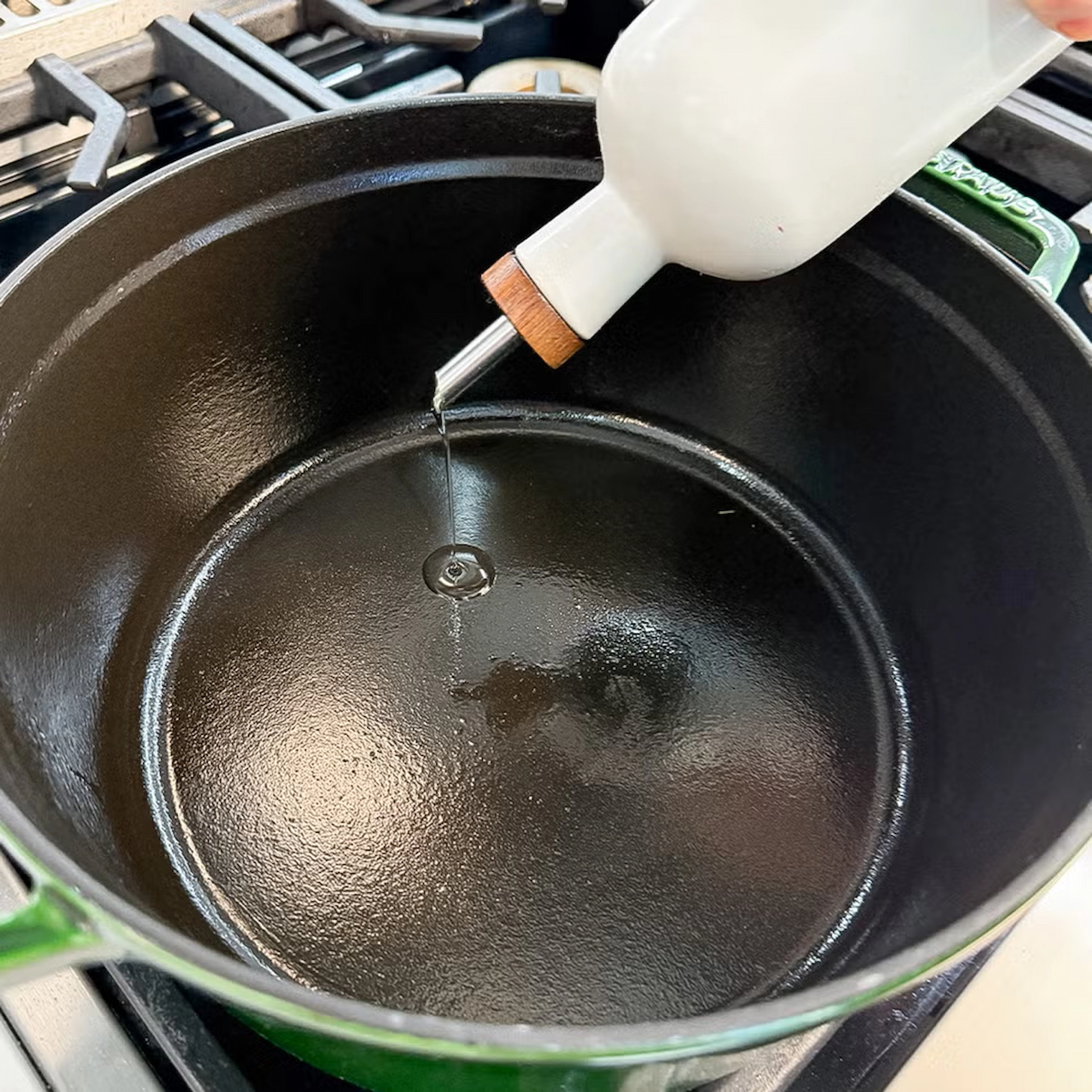
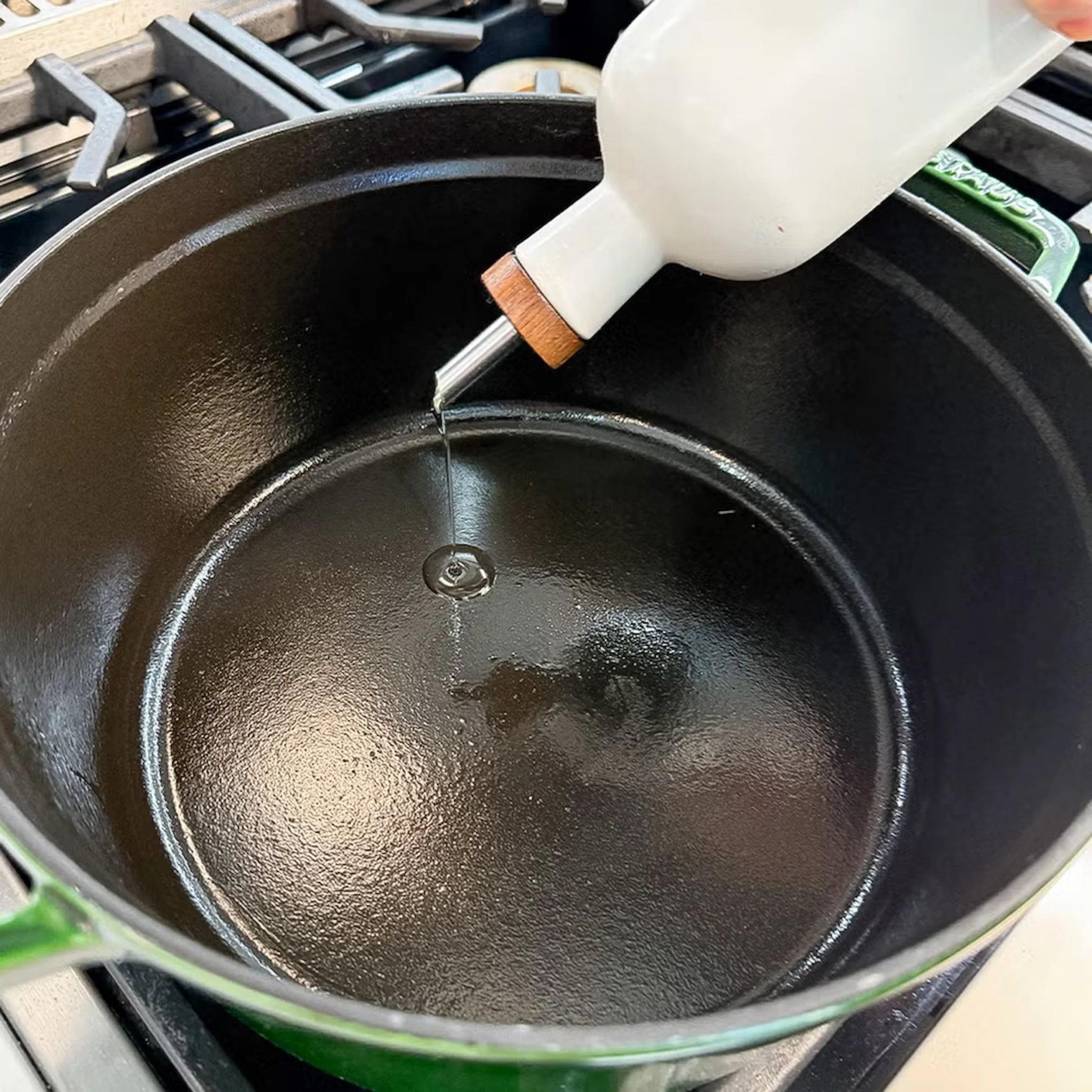
You should also never heat an enameled cast iron vessel empty—but for a completely different reason. When an enameled cast iron pot or pan is heated over direct heat (such as on a stove top burner) without anything inside it to disperse the heat, the unevenly applied direct heat may cause the enamel coating to chip and crack, or even split apart completely. This happens because the cast iron expands faster than the layer of enamel coating.
Adding something to the pan, whether that’s oil or another fat helps to disperse the heat evenly around the pan, preventing uneven heating. The bottom line? If you want your expensive (and super heavy!) Dutch oven to last that proverbial lifetime, make sure there’s always something in it when you set it on the heat.
Cast Iron
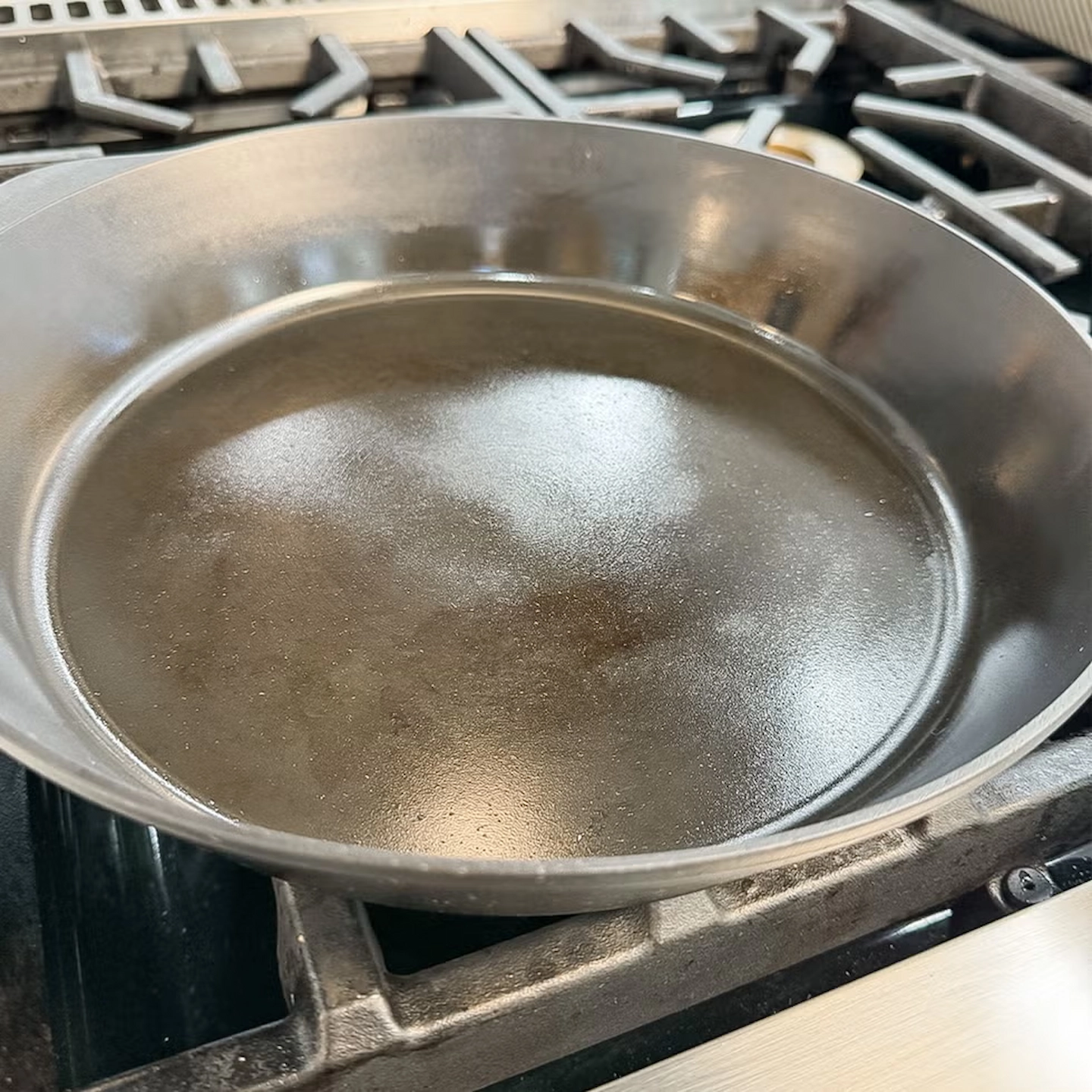
Plain cast iron? Completely different situation. If there’s no enamel coating, free to heat these pans with nothing at all inside.
Keep in mind, though, that excessive high heat might dry out the cast iron surface over time if you don’t moisturize the pan between uses. If you’re in the habit of using your pan often for dry heat cooking, such as toasting spices or charring whole veggies, it might be wise to rub it down with a little oil as it’s cooling.
Stainless Steel
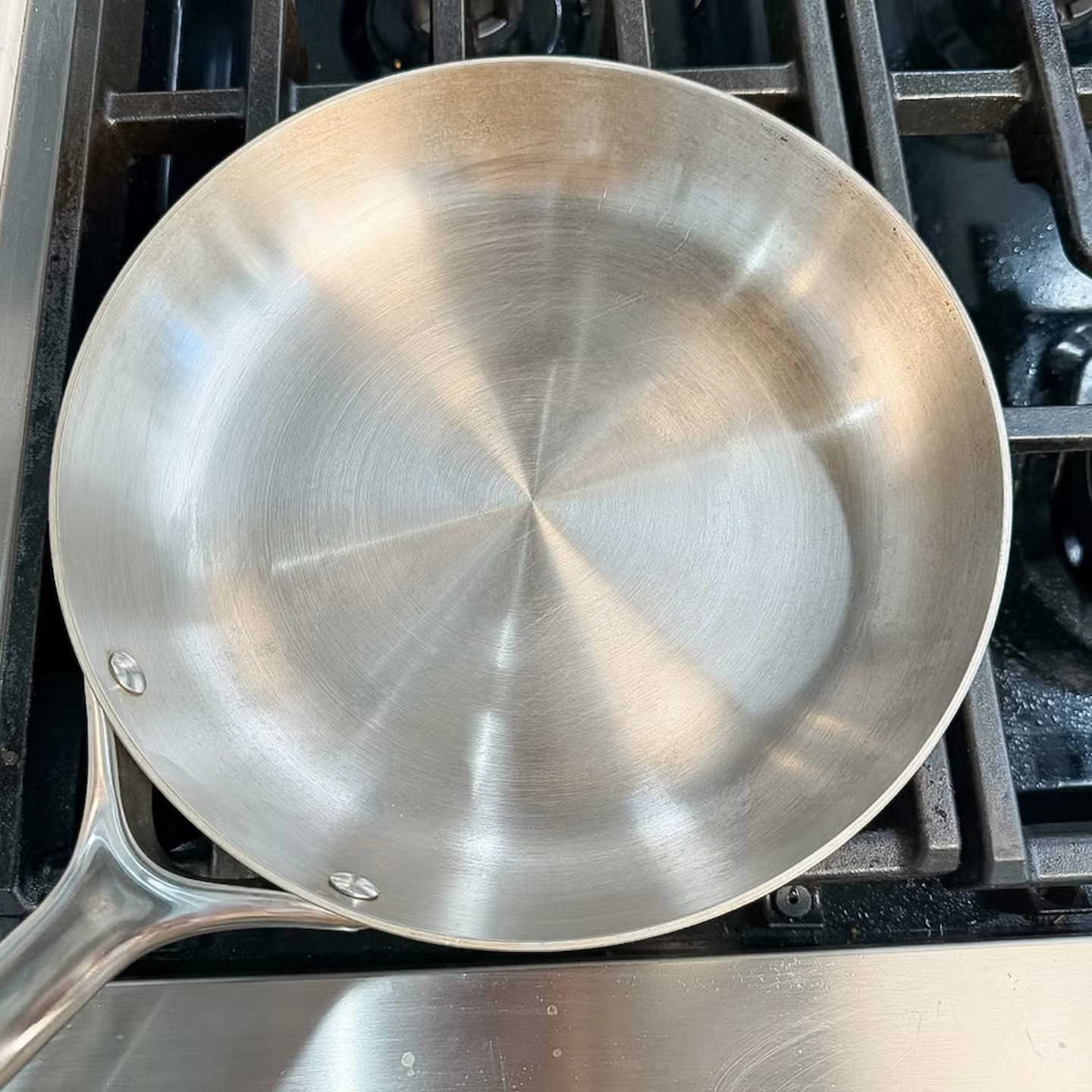
This one is the biggest source of debate, and you’ll find culinary professionals on both sides of the subject. The bottom line? As long as you’re heating on medium heat just until the pan is hot, you don’t need to have any oil or other fat inside the pan. If you’re unsure of how hot the pan is and don’t want to add oil blindly, try flicking a little water onto the pan’s dry surface. (Do NOT do this if there’s any fat at all in the pan). If the water droplet dances, the pan is ready for the cooking oil. If it spits or sizzles aggressively, the pan might actually be too hot, in which case, I’d recommend pulling it off the heat until it cools down a little.
What’s your favorite type of pan to cook with? Let us know in the comments below!
This article was originally published in Delish US.

Frequently Asked Questions
No, you should always add oil or fat to a non-stick pan before turning on the heat. Heating an empty non-stick pan can cause the coating to degrade and release hazardous toxins into the air. Additionally, heating the fat along with the pan helps enhance its non-stick properties.
Heating enameled cast iron empty can cause the enamel coating to chip, crack, or split. This happens because the cast iron core expands at a faster rate than the enamel layer when exposed to direct heat. Adding oil first helps disperse the heat evenly and protects your cookware’s longevity.
Yes. Unlike enameled versions, plain cast iron can be heated empty. However, if you frequently use it for dry tasks like toasting spices or charring vegetables, the surface may dry out. It is recommended to moisturize the pan with a light rub of oil while it is cooling down to maintain its seasoning.
You can use the water droplet test. Flick a tiny bit of water onto the dry, preheating pan (only if it is completely dry). If the water “dances” across the surface, the pan is ready for oil. If the water sizzles aggressively or disappears instantly, the pan is likely too hot and should be cooled slightly before adding fat.
Yes, it depends entirely on the material. For non-stick and enameled cast iron, you add oil to a cold pan. For stainless steel and plain cast iron, it is perfectly fine (and often preferred) to preheat the pan before adding the oil to gauge the temperature more accurately.