


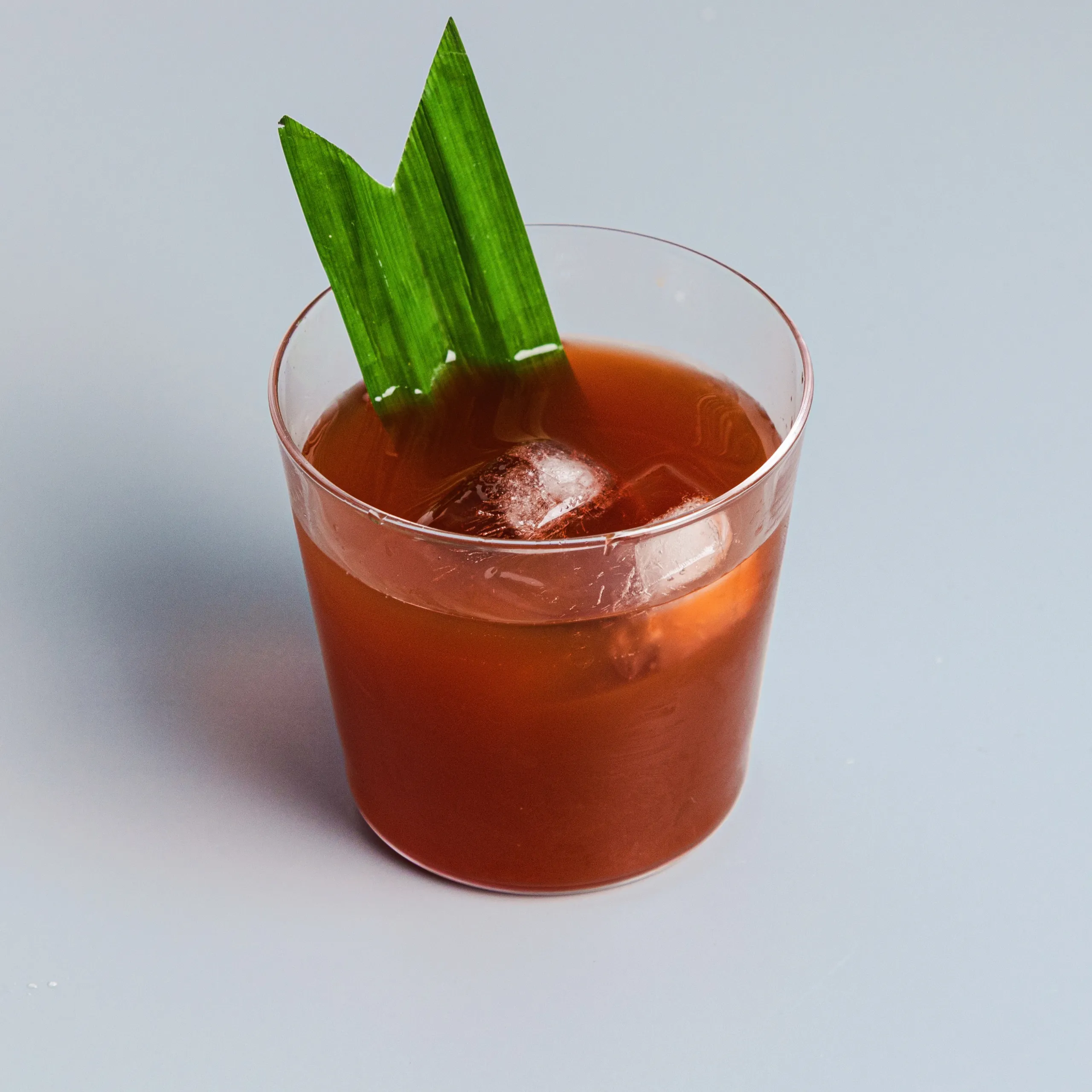
There are certain aromas that can instantly make a place feel like home, and for many Filipinos, pandan is one of them. The moment fresh pandan leaves are added to a pot of rice, tucked into a dessert, or simmered into syrup, their sweet, grassy fragrance begins to fill the kitchen. It is a familiar aroma found in many Filipino homes and Southeast Asian kitchens, often associated with comforting desserts, festive dishes, and everyday cooking.
Pandan is sometimes called the “vanilla of Southeast Asia” because of the way its aroma can add a soft, sweet, almost floral character to food and drinks. But pandan has a personality of its own. It is not simply a substitute for vanilla. Its fragrance is greener, more herbal, and distinctly tropical.
The Pandan Negroni takes that familiar aroma and introduces it to a classic cocktail.
A traditional Negroni is known for its bold combination of gin, Campari, and sweet vermouth. It is bitter, aromatic, slightly sweet, and unapologetically spirit-forward. Adding pandan syrup changes the personality of the drink without completely taking away its classic character.
The pandan brings a gentle sweetness and a fragrant, almost creamy aroma that works surprisingly well with the botanical notes of gin and the bitterness of Campari. Sweet vermouth helps tie everything together, creating a cocktail that is sophisticated but still carries a distinctly Southeast Asian and Filipino-inspired identity.
This is the kind of drink that can be enjoyed slowly. It is not necessarily designed to be gulped down on a hot afternoon. Instead, it invites you to notice the aroma, the bitterness, the sweetness, and the herbal notes as they develop from the first sip to the last.
For anyone who enjoys experimenting with Filipino flavors, the Pandan Negroni is an especially fun recipe because it takes an ingredient normally associated with desserts and gives it an unexpected place behind the bar.
A Brief History of the Negroni
The Negroni is a classic cocktail traditionally made with gin, Campari, and sweet vermouth.
Its history is commonly associated with early 20th-century Italy and the story of Count Camillo Negroni, who is said to have requested gin in place of soda water in an Americano cocktail.
As with many famous food and drink origin stories, some details have been debated by historians and cocktail enthusiasts. Nevertheless, the Negroni became firmly established as a classic and has remained popular for generations.
Part of its appeal comes from its simplicity. There are only a few ingredients, but each one plays an important role.
Gin provides botanical complexity. Campari contributes bitterness and citrus-herbal notes. Sweet vermouth adds sweetness, spice, and depth.
Over time, bartenders began creating variations by changing the proportions, substituting spirits, adding fruits and herbs, or introducing syrups and other flavorings.
The Pandan Negroni is part of this larger tradition of adapting classic cocktails to different ingredients and culinary cultures.
Rather than replacing the identity of the Negroni, pandan gives it a new aromatic dimension.
Getting to Know Pandan
Pandan refers to fragrant leaves from plants in the Pandanus genus. The leaves are widely used in Southeast Asian cooking, including Filipino cuisine.
In the Philippines, pandan is especially familiar in desserts and rice dishes. Its fragrance is often associated with rice cakes, puddings, sweet soups, cakes, and rice cooked with aromatic leaves.
Pandan leaves are long, narrow, green, and fibrous. They are generally not eaten directly because of their tough texture. Instead, they are used to infuse their aroma into food and liquids.
The leaves can be bruised, tied into knots, chopped, blended, or simmered depending on the preparation.
For cocktails, one of the easiest ways to capture pandan’s aroma is through a syrup.
Understanding the Ingredients
Gin
Gin forms the botanical backbone of this cocktail.
Its juniper character and other botanicals can complement pandan’s grassy and aromatic qualities.
A classic dry gin is a good starting point because it allows the pandan to remain noticeable without making the drink overly sweet or perfumed.
A citrus-forward gin can create a brighter interpretation, while a more floral gin can emphasize pandan’s fragrant side.
Campari
Campari provides the bitterness that defines the Negroni.
The bitter character is particularly important in this version because pandan syrup introduces additional sweetness.
Without the bitterness of Campari, the cocktail could easily become too dessert-like.
Sweet Vermouth
Sweet vermouth contributes sweetness, herbal notes, spice, and complexity.
It also helps connect the gin and Campari while providing a richer foundation for the pandan syrup.
Since vermouth is a significant part of the drink, use one that you enjoy drinking on its own.
Pandan Syrup
Pandan syrup provides the cocktail’s signature flavor.
The syrup combines sugar, water, and pandan leaves to extract their aroma.
Because the syrup is concentrated, only 15 ml is needed.
The goal is not to make the cocktail taste like a sweet pandan dessert. Instead, the syrup should contribute fragrance and a subtle sweetness that works with the bitterness of Campari.
Ice
Ice chills the drink and provides controlled dilution.
This is particularly important in a spirit-forward cocktail.
As the ice melts during stirring, a small amount of water softens the alcohol and helps the ingredients blend together.
How to Make Pandan Syrup
A good pandan syrup is the foundation of this cocktail.
For a simple homemade version, combine equal parts water and sugar in a small saucepan.
Add several clean pandan leaves.
Before adding them, rinse the leaves thoroughly. You can cut them into smaller pieces or tie them into knots to help release their aroma.
Warm the mixture gently over low to medium heat.
Stir until the sugar dissolves completely.
Avoid boiling the syrup aggressively for a long period. Excessive heat can change the freshness of the pandan aroma.
Once the sugar has dissolved and the syrup is fragrant, remove it from the heat.
Allow the pandan leaves to steep in the warm syrup for several minutes.
The longer the leaves steep, the stronger the pandan aroma can become, but prolonged heating isn’t always necessary.
Strain out the leaves and allow the syrup to cool completely.
Transfer the finished syrup to a clean, airtight container and refrigerate.
For the cocktail, measure 15 ml of the cooled syrup.
Recipe Tips for a Better Pandan Negroni
Use Fresh Pandan
Fresh pandan leaves generally provide a more recognizable and vibrant aroma than old or dried leaves.
Look for leaves that are green, fragrant, and free from excessive browning.
Don’t Overcook the Syrup
Pandan is valued for its fragrance.
Aggressive boiling can produce a less fresh aroma, so gentle heating is preferable.
Taste Your Syrup
Not every homemade pandan syrup will have the same strength.
If your syrup is very concentrated, 15 ml may provide plenty of pandan flavor.
If it is mild, you may need a little more.
Make small adjustments rather than dramatically increasing the quantity.
Keep the Cocktail Balanced
The classic Negroni is intentionally bitter.
Pandan syrup should complement that bitterness rather than completely cover it.
If the cocktail starts tasting like sweet pandan juice, you have probably added too much syrup.
Stir With Plenty of Ice
Don’t try to save ice when preparing a spirit-forward cocktail.
You want enough ice to chill the drink efficiently and provide controlled dilution.
Use Fresh Serving Ice
After stirring, strain the cocktail over fresh ice.
The ice used for stirring will already have begun melting and may not provide the same presentation or controlled dilution when used for serving.
Ingredient Substitutions
Fresh Pandan
If fresh pandan isn’t available, frozen pandan leaves can be used.
Thaw them before preparing the syrup.
Dried pandan may also work, but the aroma can be different and usually requires experimentation with the amount.
Pandan Syrup
A commercially prepared pandan syrup can be used for convenience.
Check the label because some commercial syrups are considerably sweeter or more concentrated than homemade versions.
You may need to adjust the amount accordingly.
Gin
A classic dry gin is the easiest choice.
If you want a softer botanical character, a less juniper-forward gin can be used.
Vodka can technically replace gin, but it will create a much more neutral cocktail and remove some of the botanical complexity that makes the original combination interesting.
Sweet Vermouth
Another sweet vermouth can be substituted, although each brand will produce a different balance of sweetness and herbal flavor.
Campari
Another bitter red aperitif can be experimented with if Campari isn’t available.
However, this will change the cocktail’s flavor significantly, so the resulting drink should be considered a variation rather than an exact substitute.
Ways to Customize the Pandan Negroni
More Pandan Aroma
Add a small amount of pandan tincture or use a slightly stronger syrup rather than simply adding large quantities of syrup.
This can increase aroma without making the cocktail excessively sweet.
Citrus-Pandan Version
Add a small expression of orange or calamansi peel over the cocktail.
Citrus oils can brighten the pandan aroma and complement the bitter orange character of Campari.
Coconut-Pandan Variation
A small amount of coconut-inspired flavor can be incorporated into the drink for a more tropical profile.
Be careful not to add too much, as coconut can quickly dominate the botanical character of the Negroni.
Lighter Pandan Cocktail
Add a small amount of chilled soda water after stirring.
This creates a lighter, longer drink while maintaining the major flavors.
Knowledge About Pandan and Its Culinary Role
Pandan is one of those ingredients that can be difficult to describe until you smell it.
Its aroma is sweet, green, grassy, floral, and somewhat nutty, with a quality that is especially recognizable in Southeast Asian cooking.
It is frequently used as an aromatic rather than as a primary ingredient.
For example, pandan leaves can be placed in rice while it cooks, simmered in coconut milk, infused into syrups, or incorporated into desserts.
The leaves themselves are fibrous and usually removed before eating.
Pandan also has an interesting relationship with sweetness. Its aroma can make sweet foods seem more complex without requiring a large amount of additional sugar.
That quality makes it particularly suitable for cocktails.
In this recipe, the pandan syrup isn’t simply providing sugar. It is also contributing aroma and helping shape the cocktail’s overall personality.
Health Benefits and Nutrition Notes
Pandan leaves have a long history of culinary and traditional use, but the Pandan Negroni should not be considered a health beverage.
Pandan itself contains various plant compounds and is used as a food ingredient in relatively small quantities. However, the cocktail also contains alcohol and added sugar.
The nutritional contribution of 15 ml of pandan syrup is small compared with the overall beverage, while the alcohol content remains an important consideration.
For people who avoid alcohol, pandan can easily be used in alcohol-free beverages such as iced tea, lemonade, mocktails, smoothies, or flavored sparkling water.
As with any alcoholic beverage, responsible and moderate consumption is important.
How to Store the Ingredients Properly
Fresh Pandan Leaves
Wrap fresh pandan leaves loosely in a clean, slightly damp paper towel and place them inside a sealed or partially ventilated bag or container.
Refrigeration can help preserve their freshness.
Avoid allowing the leaves to become excessively wet because trapped moisture can encourage spoilage.
Pandan Syrup
Once cooled, transfer the syrup to a clean, airtight container.
Keep it refrigerated.
Always use clean utensils when removing syrup from the container.
Because homemade syrups don’t contain the same preservatives as some commercial products, make small batches and use them promptly.
If you notice an unusual smell, visible mold, fermentation, or other signs of spoilage, discard the syrup.
Gin
Store the bottle tightly closed in a cool, dark place away from direct sunlight and excessive heat.
Campari
Keep the bottle sealed and follow the storage recommendations provided by the manufacturer.
Sweet Vermouth
Sweet vermouth is wine-based, so it is more sensitive to oxidation than distilled spirits.
After opening, refrigeration is generally recommended to help preserve its flavor and freshness. Follow the storage instructions for the specific bottle you have.
Can You Make the Pandan Negroni Ahead?
You can prepare the pandan syrup well in advance.
This is actually one of the best ways to make the recipe convenient for entertaining.
Prepare the syrup, cool it completely, and refrigerate it.
When guests arrive, the remaining cocktail preparation is quick: measure the gin, Campari, vermouth, and pandan syrup, stir with ice, strain, and garnish.
For the best texture and temperature, prepare and dilute the finished cocktail shortly before serving rather than leaving it mixed at room temperature
Common Mistakes to Avoid
- Boiling pandan leaves aggressively for too long
- Making the syrup excessively sweet
- Using too much pandan syrup
- Using stale sweet vermouth
- Failing to chill the drink properly
- Stirring with insufficient ice
- Using the same melting ice for stirring and serving
- Choosing a garnish that is too large or difficult to handle
- Assuming every pandan syrup has the same concentration
- Letting homemade syrup sit refrigerated indefinitely
Final Words
The Pandan Negroni is a beautiful example of how a familiar Filipino ingredient can completely change the personality of a classic cocktail without erasing its original character.
The gin keeps the drink botanical and sophisticated. Campari supplies its unmistakable bitterness. Sweet vermouth adds richness and balance. Then pandan enters with its distinctive fragrance, bringing a little bit of the Filipino kitchen into every sip.
What makes pandan especially fascinating is that it doesn’t need to be used in large quantities to make an impression. Its aroma is powerful enough to transform a recipe with just a small amount of syrup.
For anyone familiar with pandan from Filipino desserts and rice dishes, tasting it in a Negroni can be an unexpected experience. It is familiar, but presented in a completely different way.
And that is ultimately what makes this cocktail worth trying.
It takes something that feels like home and gives it a new setting.
Serve it cold, garnish it simply, take your time with it, and let the bittersweet flavors and fragrant pandan aroma unfold slowly. The Pandan Negroni isn’t just a cocktail with a Filipino ingredient—it is a small example of how traditional flavors can continue to evolve while still reminding us where they came from.