Advertisement

The Simple Difference between a Blender and a Food Processor

Figuring out which one deserves a spot in your kitchen is all about what you will need them for.

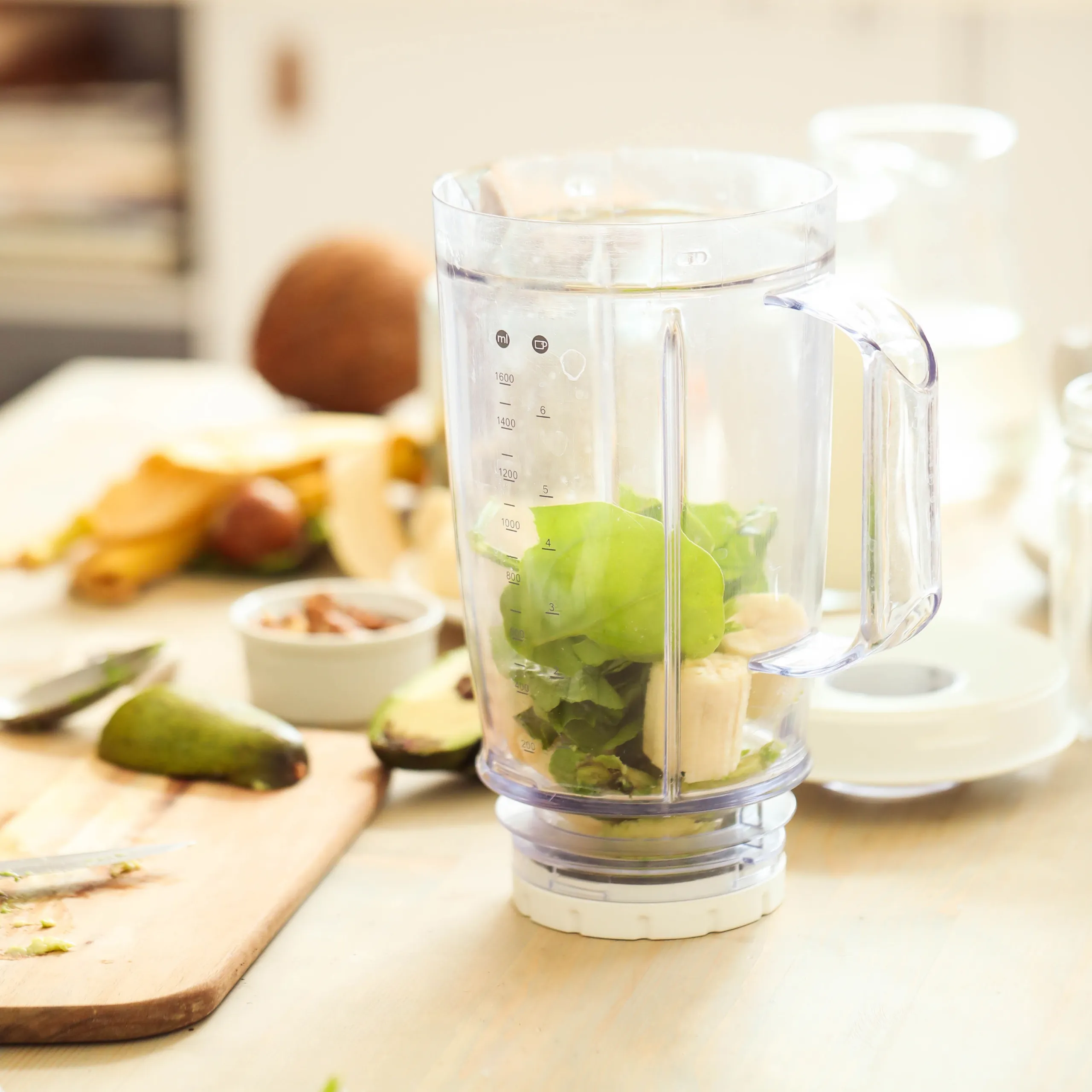
Blender jar filled with green apples, banana, leafy greens, and almonds sits on a kitchen counter beside chopped fruit, suggesting a fresh smoothie.
A blender and a food processor are two different kitchen appliances and cannot be interchangeable!

You’re at the hypermarket. In front of you are rows and rows of slightly different microwaves, stacks of non-stick pots and pans, and every shade of brown that wooden spoons can come in. You’ve come here because you’re faced with a dilemma that could dictate how you cook in your own kitchen for as long as the warranty covers it: should you get a blender or a food processor?

There are some major factors the home cook needs to consider before choosing whether to buy a blender or a food processor. This is more than just about how much space you can allocate for it in your shelf or cabinet. It’s about what they need it for and how they will be using it in their day-to-day cooking. Here’s how you can find out which one of the two you will utilize better in your kitchen. 

Why do people confuse the two?

To properly differentiate the two, it would be good to briefly discuss what makes them seem similar to those who have never used or needed to use them before. 

First, they both have blades. Second, they both involve mixing and breaking down solid foods and liquids. And third, they both help save time with meal prep or certain food preparations. But beyond these, they are two different kitchen appliances. 

So what truly makes them different? It all comes down to how each one’s blades are designed that inform the user how they are used respectively. 

A blender is meant to handle anything liquid-y or any preparation that involves making something incredibly smooth. On the other hand, a food processor can be used to chop, slice, and grate ingredients. Of course, this depends on the specific food processor you end up choosing to buy and if they do come with any blade options you can switch between. 
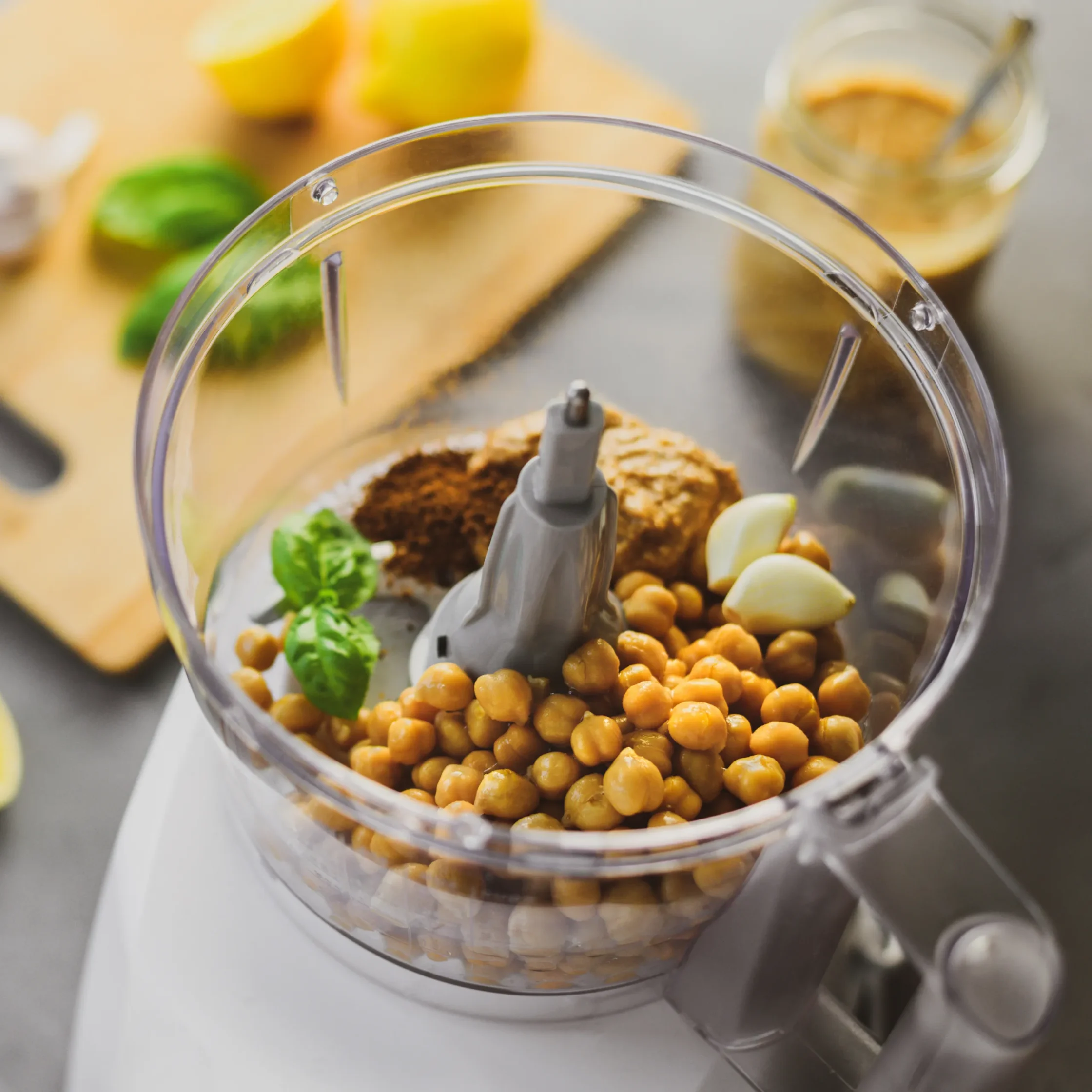
Overhead view of a food processor bowl filled with chunky green salsa, surrounded by tomatoes, cucumber, avocado, parsley, lime, and peppers.
While a blender is best for liquids, a food processor is better of drier and thicker ingredients.

When do you use a blender?

If you are planning to make a lot of purées, smoothies, soups, dressings, dips, and sauces from scratch, the blender is your best bet. It’s suited primarily for liquids or just any preparation that needs to have that silky and smooth texture. 

Growing up, we used our blender the most whenever we made cold mango smoothies during the summer or if we needed to crush ice to make homemade halo-halo. You can also use it to grind soaked rice or to make batter for kakanin from scratch. Even in savory cooking, you can use it to blend up ingredients to make sauces for kare-kare or lechon.

But if I’ve learned anything from watching Hell’s Kitchen, it’s that the one thing you shouldn’t put in a blender is potatoes. Potato purée made using a blender will end up more gummy, sticky, and closer to the consistency of glue rather than a smooth and creamy purée. 
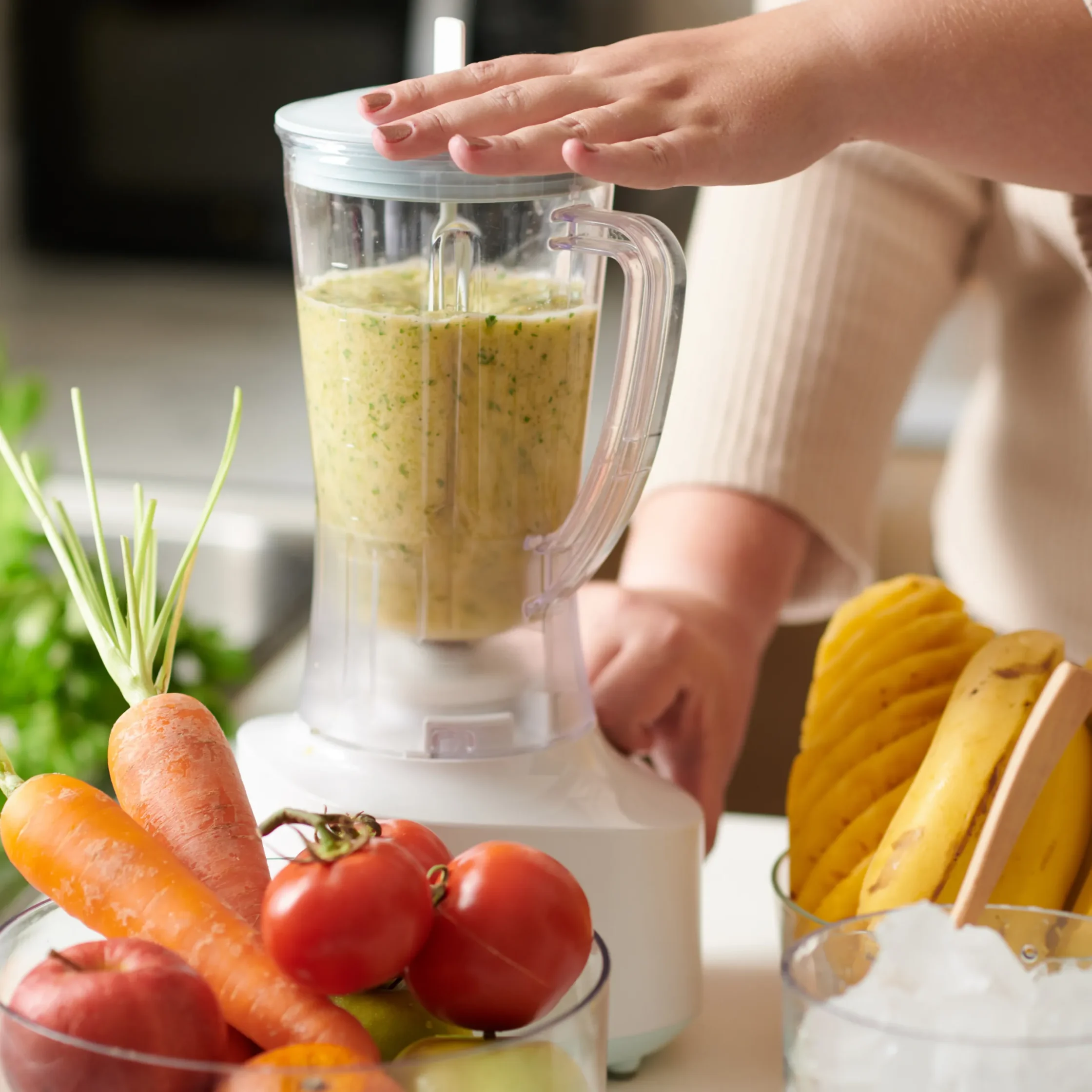
Person blends a green-flecked smoothie in a kitchen blender, surrounded by carrots, tomatoes, bananas, mango, and ice; fresh, healthy mood.
If you’re thinking of making purées, smoothies, soups, or sauces, using the blender is best.

When do you use a food processor?

Admittedly, a food processor will take up much more storage space in your shelf or cabinet and a lot more time to clean properly, What you will gain, however, is a faster way to accomplish food prep tasks  in place of using a chef’s knife and cutting board, mortar and pestle, and a box grater. Generally speaking, it’s better at breaking down drier and thicker ingredients. 

If you’re making lumpia, you can use a food processor to very quickly grind up what you want to put as the filling. You can also use it to further mince meat if a recipe needs, for example, giniling, bola-bola, or embutido. Even just needing to chop up aromatics can be done much quicker with a food processor. 

You can even bring it out if you are baking anything that requires breaking down cold butter, grinding add-ons like crumbs, nuts, and fruits, making pastry dough that you would have otherwise reached for a handheld pastry cutter. Just make sure to read the recipe carefully as not all doughs do well when mixed in a food processor.
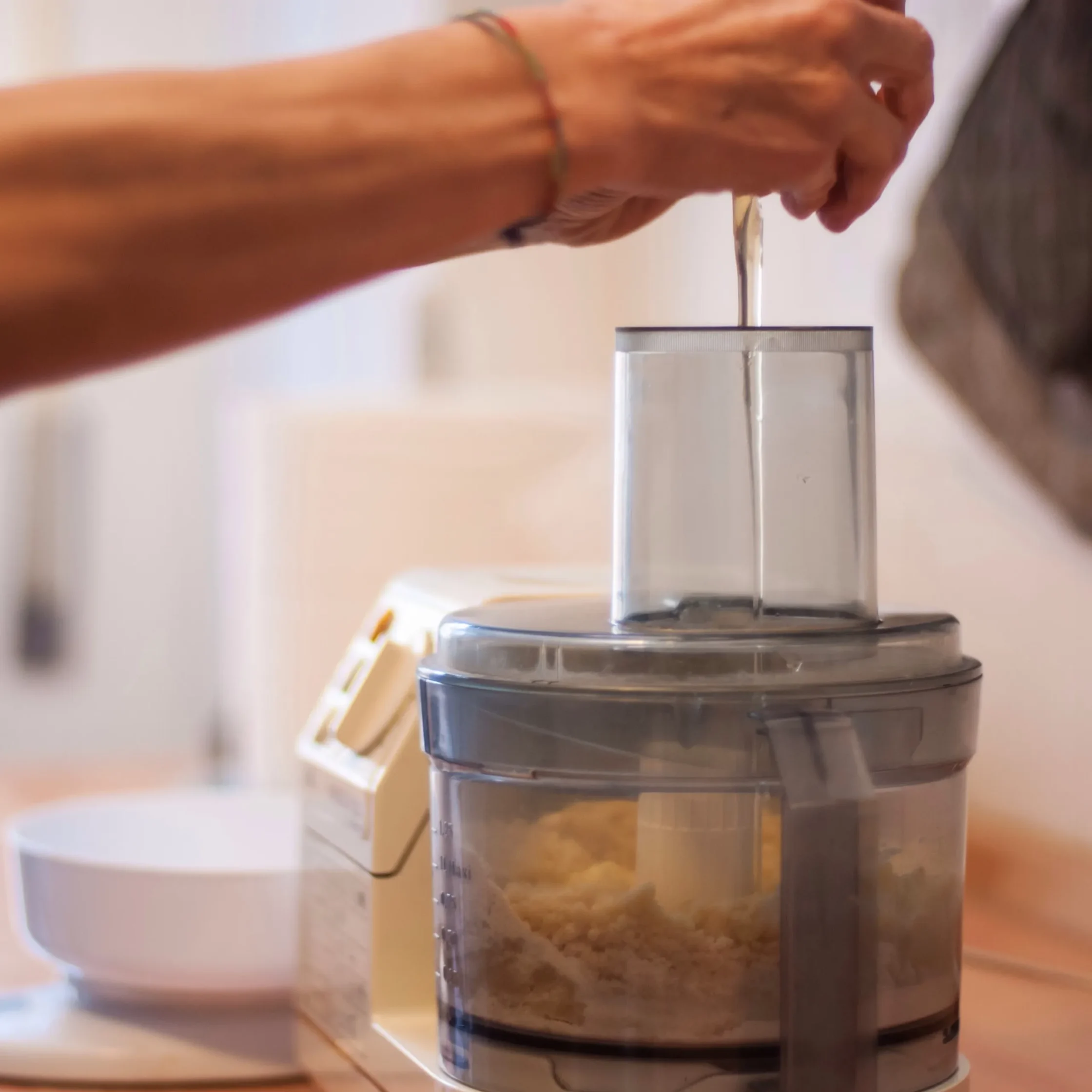
Person adds an ingredient through a food processor’s feed tube as dough mixes inside; a bowl and kitchen counter sit nearby
There are many uses for a food processor in both cooking and baking.

Obviously, it would be great to have the best of both worlds. They are both very versatile kitchen equipment in their own right. It’s subtle, but they can level your home cooking skills, like being able to use them to finally try that more complicated recipe you’ve saved on your phone or from your favorite cook book. 

But the reality for most Filipino kitchens is that you may only afford and house one over the other. Having a more solid understanding of when it’s best to use each one and how they are used differently will come in handy when it all comes down to which one you pick up and bring to the checkout counter. 

You are in charge of your destiny in your own kitchen. So, which one will it be? 

author avatar
Laura Mendoza Writer
Laura admits that she is a slow eater. She prefers to take her time with the food she likes to eat and the stories she wishes to write. Having graduated with a Creative Writing degree, she comes from a background in writing fiction and poetry. Because of this, she has set herself on a creative mission to explore and delve into what other modes and channels exist for stories and narratives to be told, expressed, and shared with others. For Laura, food as a medium is an exciting proposition. Behind every dish, every ingredient, and every cooking technique, there lies a history worth discussing, a human being worth listening to, a lived experience worth gleaning from. As a means to satiate her appetite for learning about and understanding new and known things, she aims to be the kind of food writer who is approachable, reliable, and personable to readers.

Frequently Asked Questions

Besides the fact that both involve blades and both mix and break down solid and liquid foods, they are two separate kitchen appliances. What makes them different is how each one’s blades are designed that inform the user how they are used respectively.

author avatar
Laura Mendoza Writer
Laura admits that she is a slow eater. She prefers to take her time with the food she likes to eat and the stories she wishes to write. Having graduated with a Creative Writing degree, she comes from a background in writing fiction and poetry. Because of this, she has set herself on a creative mission to explore and delve into what other modes and channels exist for stories and narratives to be told, expressed, and shared with others. For Laura, food as a medium is an exciting proposition. Behind every dish, every ingredient, and every cooking technique, there lies a history worth discussing, a human being worth listening to, a lived experience worth gleaning from. As a means to satiate her appetite for learning about and understanding new and known things, she aims to be the kind of food writer who is approachable, reliable, and personable to readers.

Go for a blender if you are handling anything liquidy or anything that needs to have a silky smooth consistency. Think purées, smoothies, soups, dressings, dips, and sauces.

author avatar
Laura Mendoza Writer
Laura admits that she is a slow eater. She prefers to take her time with the food she likes to eat and the stories she wishes to write. Having graduated with a Creative Writing degree, she comes from a background in writing fiction and poetry. Because of this, she has set herself on a creative mission to explore and delve into what other modes and channels exist for stories and narratives to be told, expressed, and shared with others. For Laura, food as a medium is an exciting proposition. Behind every dish, every ingredient, and every cooking technique, there lies a history worth discussing, a human being worth listening to, a lived experience worth gleaning from. As a means to satiate her appetite for learning about and understanding new and known things, she aims to be the kind of food writer who is approachable, reliable, and personable to readers.

A food processor can be used for drier and thicker ingredients. In savory cooking, anything that needs a chef’s knife and cutting board, mortar and pestle, or a box grater to break down, a food processor can do it much faster. Even in baking, you can use it to grind add-ons or toppings (crumbs, nuts, and fruits) or fast-track certain dough recipes.

author avatar
Laura Mendoza Writer
Laura admits that she is a slow eater. She prefers to take her time with the food she likes to eat and the stories she wishes to write. Having graduated with a Creative Writing degree, she comes from a background in writing fiction and poetry. Because of this, she has set herself on a creative mission to explore and delve into what other modes and channels exist for stories and narratives to be told, expressed, and shared with others. For Laura, food as a medium is an exciting proposition. Behind every dish, every ingredient, and every cooking technique, there lies a history worth discussing, a human being worth listening to, a lived experience worth gleaning from. As a means to satiate her appetite for learning about and understanding new and known things, she aims to be the kind of food writer who is approachable, reliable, and personable to readers.

A food processor is well-suited to Filipino dishes that require finely ground or minced ingredients, including lumpia filling, giniling, bola-bola, and embutido. It also speeds up chopping aromatics compared to a chef’s knife and cutting board.

author avatar
Laura Mendoza Writer
Laura admits that she is a slow eater. She prefers to take her time with the food she likes to eat and the stories she wishes to write. Having graduated with a Creative Writing degree, she comes from a background in writing fiction and poetry. Because of this, she has set herself on a creative mission to explore and delve into what other modes and channels exist for stories and narratives to be told, expressed, and shared with others. For Laura, food as a medium is an exciting proposition. Behind every dish, every ingredient, and every cooking technique, there lies a history worth discussing, a human being worth listening to, a lived experience worth gleaning from. As a means to satiate her appetite for learning about and understanding new and known things, she aims to be the kind of food writer who is approachable, reliable, and personable to readers.

Owning both offers maximum versatility, since each tool handles tasks the other cannot do well. For kitchens with limited space or budget, the better choice depends on which preparations come up more often in daily cooking.

author avatar
Laura Mendoza Writer
Laura admits that she is a slow eater. She prefers to take her time with the food she likes to eat and the stories she wishes to write. Having graduated with a Creative Writing degree, she comes from a background in writing fiction and poetry. Because of this, she has set herself on a creative mission to explore and delve into what other modes and channels exist for stories and narratives to be told, expressed, and shared with others. For Laura, food as a medium is an exciting proposition. Behind every dish, every ingredient, and every cooking technique, there lies a history worth discussing, a human being worth listening to, a lived experience worth gleaning from. As a means to satiate her appetite for learning about and understanding new and known things, she aims to be the kind of food writer who is approachable, reliable, and personable to readers.
Smiling woman with glasses tilted at an angle, wearing a blue top, against a light background.

Laura Mendoza

Writer

Laura admits that she is a slow eater. She prefers to take her time with the food she likes to eat and the stories she wishes to write. Having graduated with a Creative Writing degree, she comes from a background in writing fiction and poetry. Because of this, she has set herself on a creative mission to explore and delve into what other modes and channels exist for stories and narratives to be told, expressed, and shared with others. For Laura, food as a medium is an exciting proposition. Behind every dish, every ingredient, and every cooking technique, there lies a history worth discussing, a human being worth listening to, a lived experience worth gleaning from. As a means to satiate her appetite for learning about and understanding new and known things, she aims to be the kind of food writer who is approachable, reliable, and personable to readers.

0 0 votes
Total of Ratings
guest
Rating
Ratings for Article
0 Comments
Oldest
Newest Most Voted

To provide a customized ad experience, we need to know if you are of legal age in your region.

By making a selection, you agree to our Terms & Conditions.