Advertisement

No Tables at Dong Bei—Just Amazing Dumplings

This low-key take-out spot on Yuchengco Street serves fragrant dumplings that have become a favorite among locals, tourists, and food crawlers.

DONG BEI DUMPLING IN BINONDO
Dong Bei is surprisingly lowkey for a Binondo classic! [PHOTO: Paolo Elwick]

I could smell the kuchay even before I opened the flimsy styrofoam container.

That was probably the best introduction I could have gotten to Dong Bei Dumpling, a small take-out-only shop tucked along the length of Yuchengco Street in Binondo. While the dusty, red tarpaulin that serves as their signage is easy to overlook, the aroma coming from a container of their famous dumplings is considerably harder to miss.

And by the time I sat down on the curb to eat, I was already convinced that I had picked the right thing to order.

Finding Dong Bei in Binondo

Dong Bei is one of those places you might easily walk past if you aren’t specifically looking for it, so keep your eyes peeled because it doesn’t exactly have any prominent landmarks. 

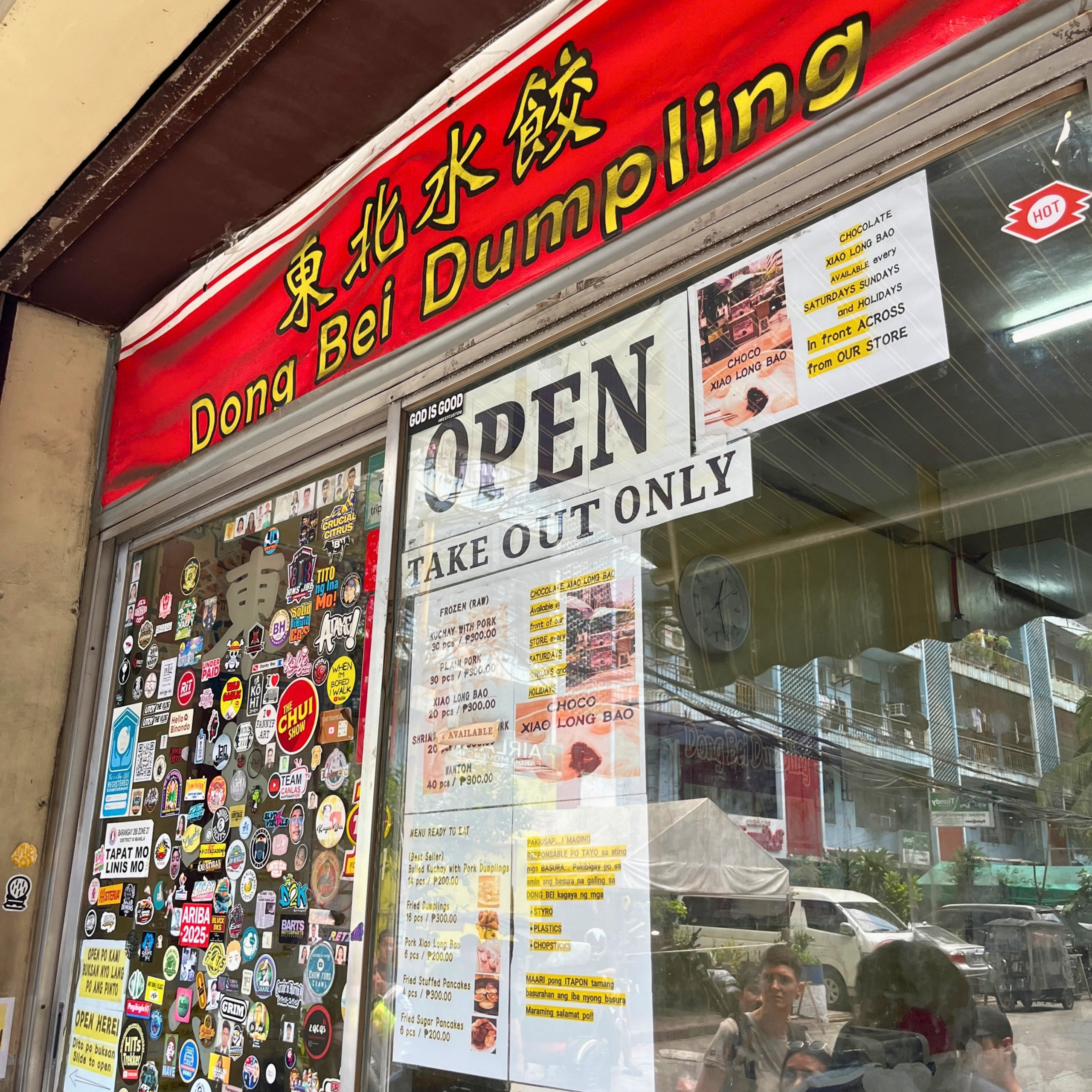
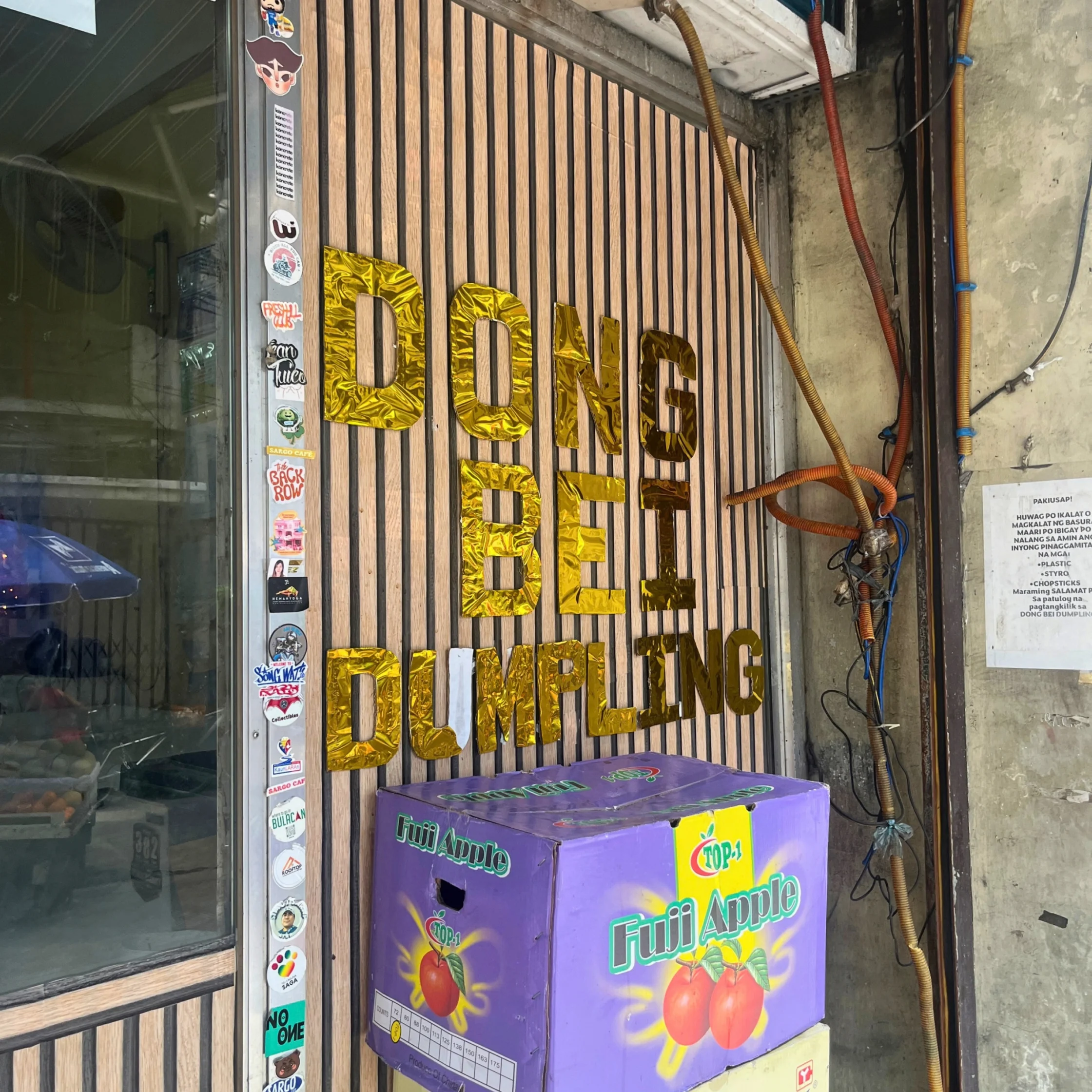
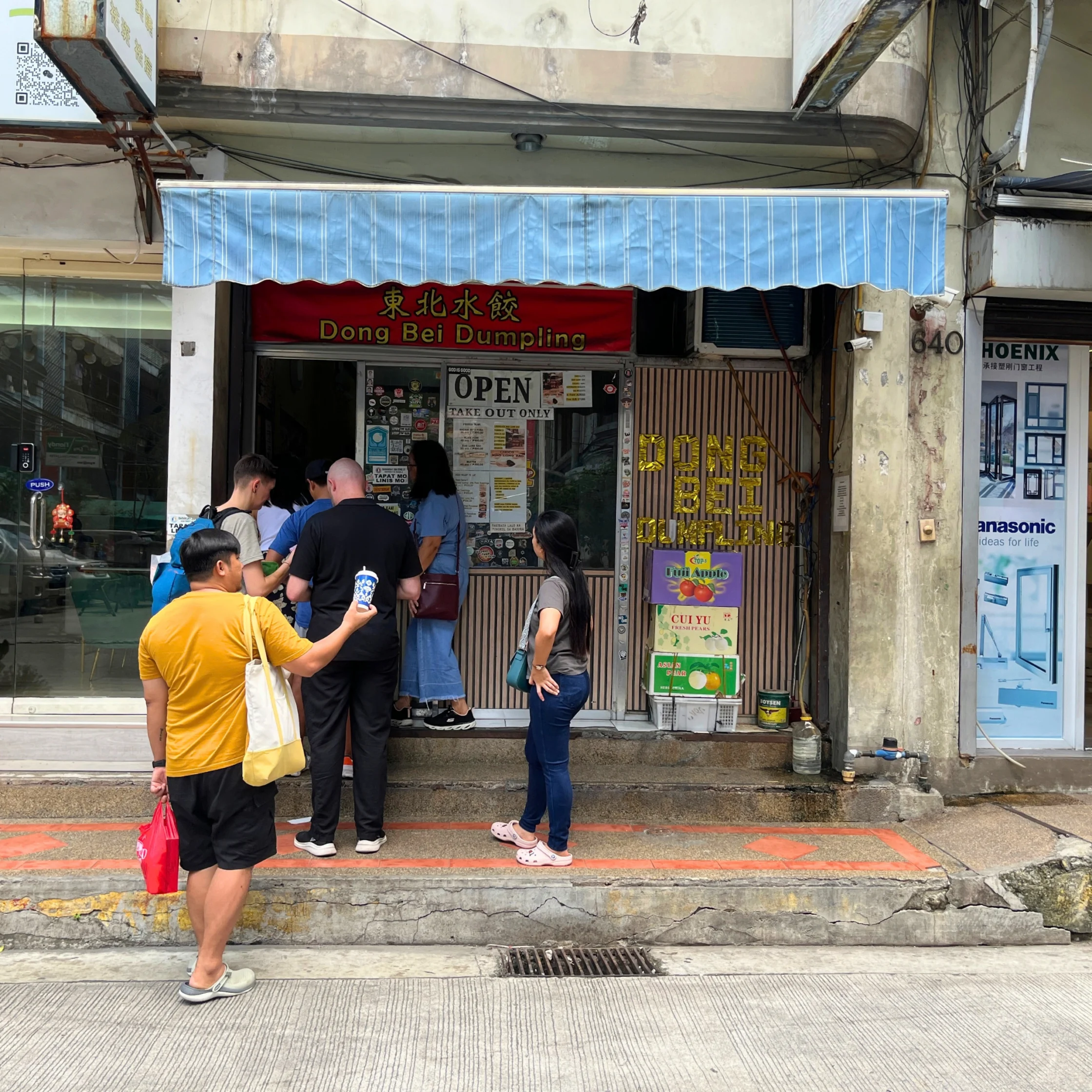
What you’ll find, though, is a no-nonsense dumpling shop hidden behind a glass sliding door plastered with stickers. Unfortunately, that’s as far as you can go because Dong Bei currently operates as a take-out-only establishment—so there are no tables, chairs, or any chance at a proper sit-down meal.
DONG BEI DUMPLING IN BINONDO
Besides the red tarpaulin, they also have a spell-out sign made from what seems to be gold foil. [PHOTO: Paolo Elwick]

Apparently, it wasn’t always like this as diners could eat inside and watch their dumplings be prepared before the pandemic. Today, though, your only options are to order them cooked and ready to eat, or to get them uncooked to bring home.

For a busy Binondo food crawl, the cooked ones make perfect sense. Pick up a container, find a spot outside, and eat—which is exactly what I did.

Dong Bei’s Kuchay Dumplings Are the Must-Try

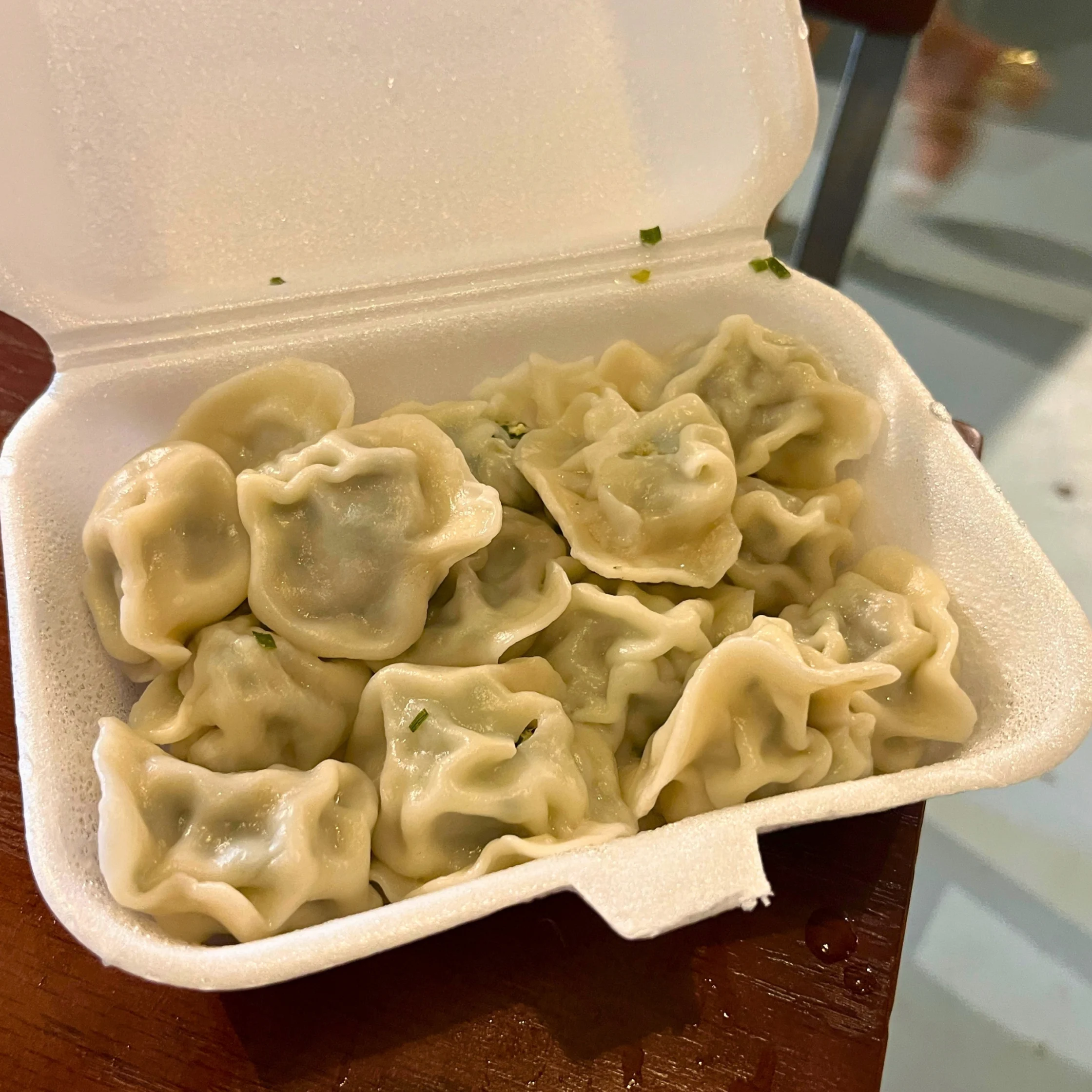
The unsurprising star of my visit was their kuchay dumpling, a Chinese-style dumpling filled with ground pork and kuchay, or Chinese garlic chives.

The kuchay is what really sets these apart. Even before I opened the grainy, white clamshell container, its fragrant aroma was already coming through. Once I lifted the lid, there was that familiar savory and garlicky aroma from the chives, mixed with the smell of the pork filling—a surprisingly effective way to build anticipation for a dumpling.
DONG BEI DUMPLING IN BINONDO KUCHAY DUMPLINGS
Dong Bei’s Kuchay Dumplings [PHOTO: Paolo Elwick]

The wrapper itself is slightly chewy, but not at all tough. It has enough bounce to give you a satisfying bite without really stealing the spotlight from the filling inside. And that filling is really the dumpling’s call to fame. With ground pork and the aforementioned kuchay, it brings a distinctly savory and aromatic flavor that regular pork dumplings don’t have. When dipped in a mixture of soy sauce and chili garlic, you’re hit with a powerful punch of umami and heat.

And since it comes in a bite-sized package, it’s pretty much perfect as a quick, street-side snack. You don’t need a table, elaborate plating, or even much else alongside it. Just grab one, take a bite, and keep your Binondo food crawl going.
DONG BEI DUMPLING IN BINONDO
Dong Bei seems to be a favorite for both locals and tourists! [PHOTO: Paolo Elwick]

Apparently, plenty of other people feel the same way.

While I was there, I saw a Binondo tour guide bring a group of tourists over specifically to try Dong Bei’s famous kuchay dumplings. Seeing them being introduced to the shop made for a pretty good reminder that Dong Bei isn’t simply a random dumpling stop you happen to discover while wandering around. 

Dong Bei Is Also Known for Xiao Long Bao

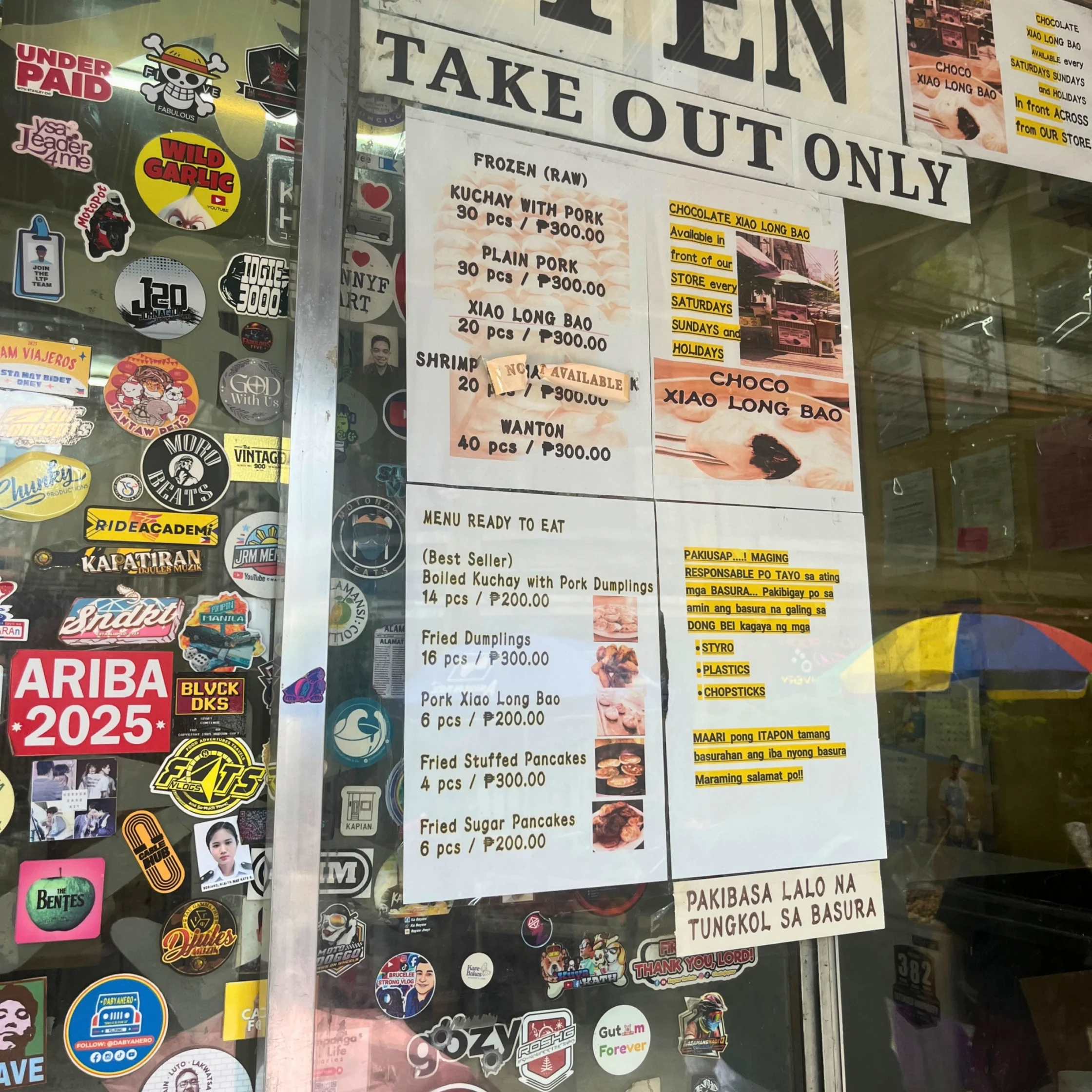
The kuchay dumplings may have been the highlight, but Dong Bei is also known for another popular Chinese dumpling in the xiao long bao.

I didn’t get to try it during my visit, so I’ll leave the tasting notes to those who have. But it’s worth knowing about if you’re planning a trip here, especially if you want to order more than one kind of dumpling. 
DONG BEI DUMPLING IN BINONDO
Besides their kuchay-filled dumplings, Dong Bei has other offerings like the xiao long bao. [PHOTO: Paolo Elwick]

And Dong Bei apparently has a sweeter surprise for weekend visitors too, because the shop also sells chocolate-filled xiao long baos on the weekends—which is about as far from the savory pork-and-kuchay combination as you can get. 

So, if you’re already making the trip, it might be worth checking if they’re available during your visit.

A Take-Out Stop Worth Adding to Your Binondo Crawl

Dong Bei doesn’t require too much. You don’t need to dress up, book a table, or set aside an entire afternoon for a meal. In fact, part of the charm is how casual the whole experience can be. 

For me, that meant sitting on the curb with a clamshell container filled with fragrant kuchay dumplings, surrounded by the familiar bustle of Binondo. It wasn’t exactly a traditional sit-down meal, but somehow, it felt right for a meal in one of Manila’s most historic neighborhoods.

And if a Binondo tour guide is bringing tourists over to try them, that’s probably a good sign that you’ve found one of Chinatown’s must-visit food stops.

Dong Bei may be easy to miss on Yuchengco Street, but the smell and flavor of their dumplings definitely aren’t.

Dong Bei Dumpling is located at 642 Yuchengco St, Binondo, Manila.
author avatar
Paolo Elwick
Paolo is a food writer and storyteller exploring the intersections of food, culture, and identity through thoughtful, people-centered storytelling. He believes that, second only to language, food is one of humanity's most powerful expressions of culture—a medium for preserving history, expressing identity, and coming to understand ourselves and connect with others. Drawn to the histories, traditions, and personal experiences behind every dish, his writing combines curiosity with emotional honesty, highlighting diverse voices and celebrating the communities that shape our food landscape. Influenced by writers and artists who embrace vulnerability and introspection, Paolo uses a reflective, metaphor-rich approach to uncover the deeper meanings found in everyday meals and shared tables. He is passionate about creating stories that foster empathy, preserve cultural narratives, and invite readers to see food as more than sustenance—as memory, identity, and belonging. Through his work, Paolo hopes to amplify underrepresented perspectives and spark meaningful conversations that extend far beyond the plate.

Frequently Asked Questions

Yes. Dong Bei Dumpling currently operates as a take-out-only shop on Yuchengco Street in Binondo, with no tables or chairs. Before the pandemic, diners could eat inside and watch dumplings being prepared. Today, customers can order dumplings cooked and ready to eat or uncooked to bring home.

author avatar
Paolo Elwick
Paolo is a food writer and storyteller exploring the intersections of food, culture, and identity through thoughtful, people-centered storytelling. He believes that, second only to language, food is one of humanity's most powerful expressions of culture—a medium for preserving history, expressing identity, and coming to understand ourselves and connect with others. Drawn to the histories, traditions, and personal experiences behind every dish, his writing combines curiosity with emotional honesty, highlighting diverse voices and celebrating the communities that shape our food landscape. Influenced by writers and artists who embrace vulnerability and introspection, Paolo uses a reflective, metaphor-rich approach to uncover the deeper meanings found in everyday meals and shared tables. He is passionate about creating stories that foster empathy, preserve cultural narratives, and invite readers to see food as more than sustenance—as memory, identity, and belonging. Through his work, Paolo hopes to amplify underrepresented perspectives and spark meaningful conversations that extend far beyond the plate.

Kuchay is the term used for Chinese garlic chives in the Philippines. Dong Bei’s kuchay dumpling is a Chinese-style dumpling filled with ground pork and kuchay, giving it a savory, garlicky flavor that regular pork dumplings lack. It can be dipped in soy sauce and chili garlic.

author avatar
Paolo Elwick
Paolo is a food writer and storyteller exploring the intersections of food, culture, and identity through thoughtful, people-centered storytelling. He believes that, second only to language, food is one of humanity's most powerful expressions of culture—a medium for preserving history, expressing identity, and coming to understand ourselves and connect with others. Drawn to the histories, traditions, and personal experiences behind every dish, his writing combines curiosity with emotional honesty, highlighting diverse voices and celebrating the communities that shape our food landscape. Influenced by writers and artists who embrace vulnerability and introspection, Paolo uses a reflective, metaphor-rich approach to uncover the deeper meanings found in everyday meals and shared tables. He is passionate about creating stories that foster empathy, preserve cultural narratives, and invite readers to see food as more than sustenance—as memory, identity, and belonging. Through his work, Paolo hopes to amplify underrepresented perspectives and spark meaningful conversations that extend far beyond the plate.

Yes. Dong Bei Dumpling is also known for xiao long bao, a popular Chinese dumpling. On weekends, the shop sells a chocolate-filled version of the xiao long bao, a sweet counterpart to its savory pork-and-kuchay dumplings. Availability may vary, so checking on the day of the visit is advisable.

author avatar
Paolo Elwick
Paolo is a food writer and storyteller exploring the intersections of food, culture, and identity through thoughtful, people-centered storytelling. He believes that, second only to language, food is one of humanity's most powerful expressions of culture—a medium for preserving history, expressing identity, and coming to understand ourselves and connect with others. Drawn to the histories, traditions, and personal experiences behind every dish, his writing combines curiosity with emotional honesty, highlighting diverse voices and celebrating the communities that shape our food landscape. Influenced by writers and artists who embrace vulnerability and introspection, Paolo uses a reflective, metaphor-rich approach to uncover the deeper meanings found in everyday meals and shared tables. He is passionate about creating stories that foster empathy, preserve cultural narratives, and invite readers to see food as more than sustenance—as memory, identity, and belonging. Through his work, Paolo hopes to amplify underrepresented perspectives and spark meaningful conversations that extend far beyond the plate.

Dong Bei Dumpling is located at 642 Yuchengco St. in Binondo, Manila. The shop is easy to miss: its signage is a dusty red tarpaulin, and the storefront is a glass sliding door covered in stickers, with no prominent landmarks nearby to help locate it.

author avatar
Paolo Elwick
Paolo is a food writer and storyteller exploring the intersections of food, culture, and identity through thoughtful, people-centered storytelling. He believes that, second only to language, food is one of humanity's most powerful expressions of culture—a medium for preserving history, expressing identity, and coming to understand ourselves and connect with others. Drawn to the histories, traditions, and personal experiences behind every dish, his writing combines curiosity with emotional honesty, highlighting diverse voices and celebrating the communities that shape our food landscape. Influenced by writers and artists who embrace vulnerability and introspection, Paolo uses a reflective, metaphor-rich approach to uncover the deeper meanings found in everyday meals and shared tables. He is passionate about creating stories that foster empathy, preserve cultural narratives, and invite readers to see food as more than sustenance—as memory, identity, and belonging. Through his work, Paolo hopes to amplify underrepresented perspectives and spark meaningful conversations that extend far beyond the plate.

Dong Bei suits a Binondo food crawl because its dumplings come cooked in a take-out container and can be eaten right outside, such as on the curb, with no table or booking required. A Binondo tour guide was seen bringing tourists there specifically for the kuchay dumplings.
author avatar
Paolo Elwick
Paolo is a food writer and storyteller exploring the intersections of food, culture, and identity through thoughtful, people-centered storytelling. He believes that, second only to language, food is one of humanity's most powerful expressions of culture—a medium for preserving history, expressing identity, and coming to understand ourselves and connect with others. Drawn to the histories, traditions, and personal experiences behind every dish, his writing combines curiosity with emotional honesty, highlighting diverse voices and celebrating the communities that shape our food landscape. Influenced by writers and artists who embrace vulnerability and introspection, Paolo uses a reflective, metaphor-rich approach to uncover the deeper meanings found in everyday meals and shared tables. He is passionate about creating stories that foster empathy, preserve cultural narratives, and invite readers to see food as more than sustenance—as memory, identity, and belonging. Through his work, Paolo hopes to amplify underrepresented perspectives and spark meaningful conversations that extend far beyond the plate.
paolo elwick delish ph food writer

Paolo Elwick

Writer

Paolo is a food writer and storyteller exploring the intersections of food, culture, and identity through thoughtful, people-centered storytelling. He believes that, second only to language, food is one of humanity's most powerful expressions of culture—a medium for preserving history, expressing identity, and coming to understand ourselves and connect with others. Drawn to the histories, traditions, and personal experiences behind every dish, his writing combines curiosity with emotional honesty, highlighting diverse voices and celebrating the communities that shape our food landscape. Influenced by writers and artists who embrace vulnerability and introspection, Paolo uses a reflective, metaphor-rich approach to uncover the deeper meanings found in everyday meals and shared tables. He is passionate about creating stories that foster empathy, preserve cultural narratives, and invite readers to see food as more than sustenance—as memory, identity, and belonging. Through his work, Paolo hopes to amplify underrepresented perspectives and spark meaningful conversations that extend far beyond the plate.

0 0 votes
Total of Ratings
guest
Rating
Ratings for Article
0 Comments
Oldest
Newest Most Voted

To provide a customized ad experience, we need to know if you are of legal age in your region.

By making a selection, you agree to our Terms & Conditions.