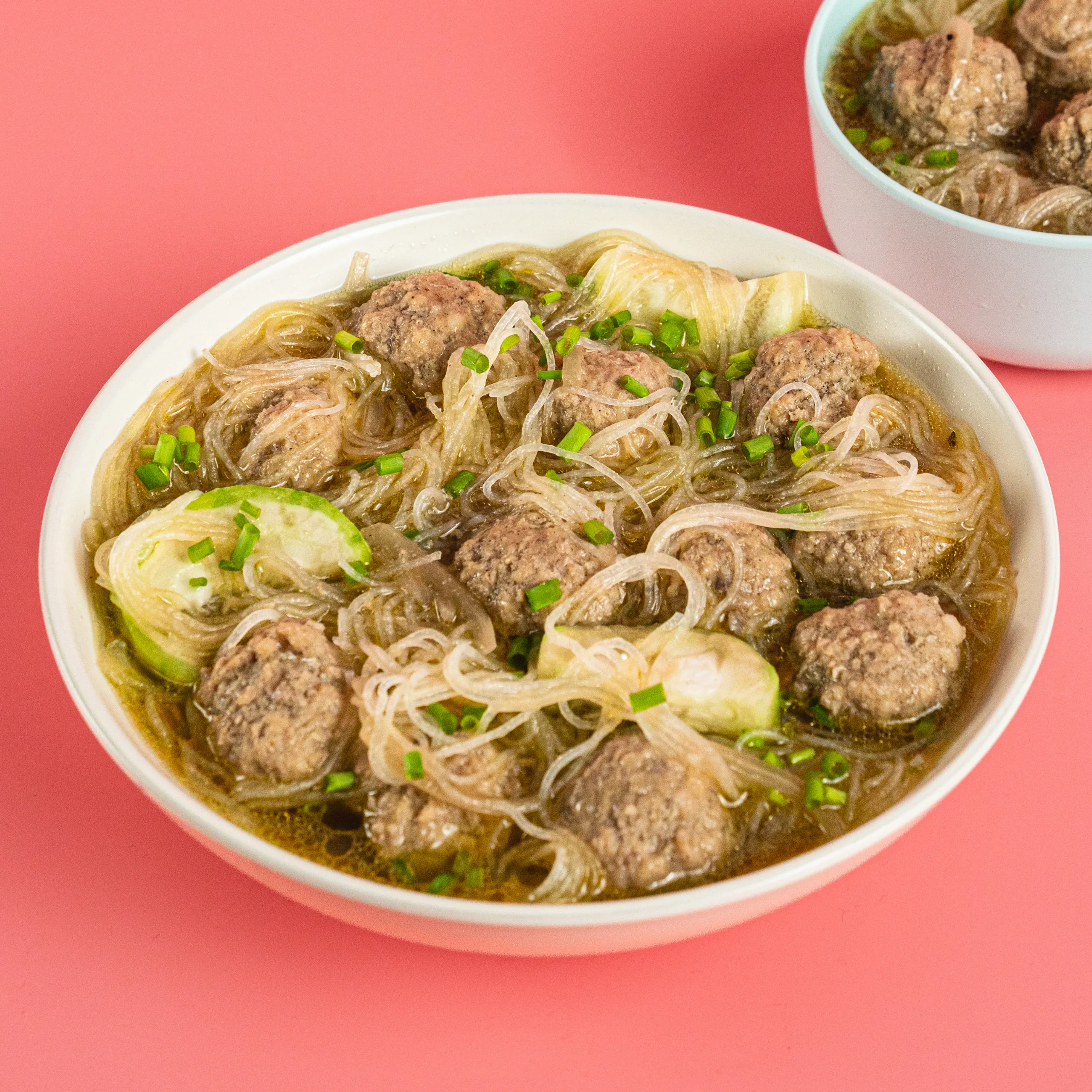


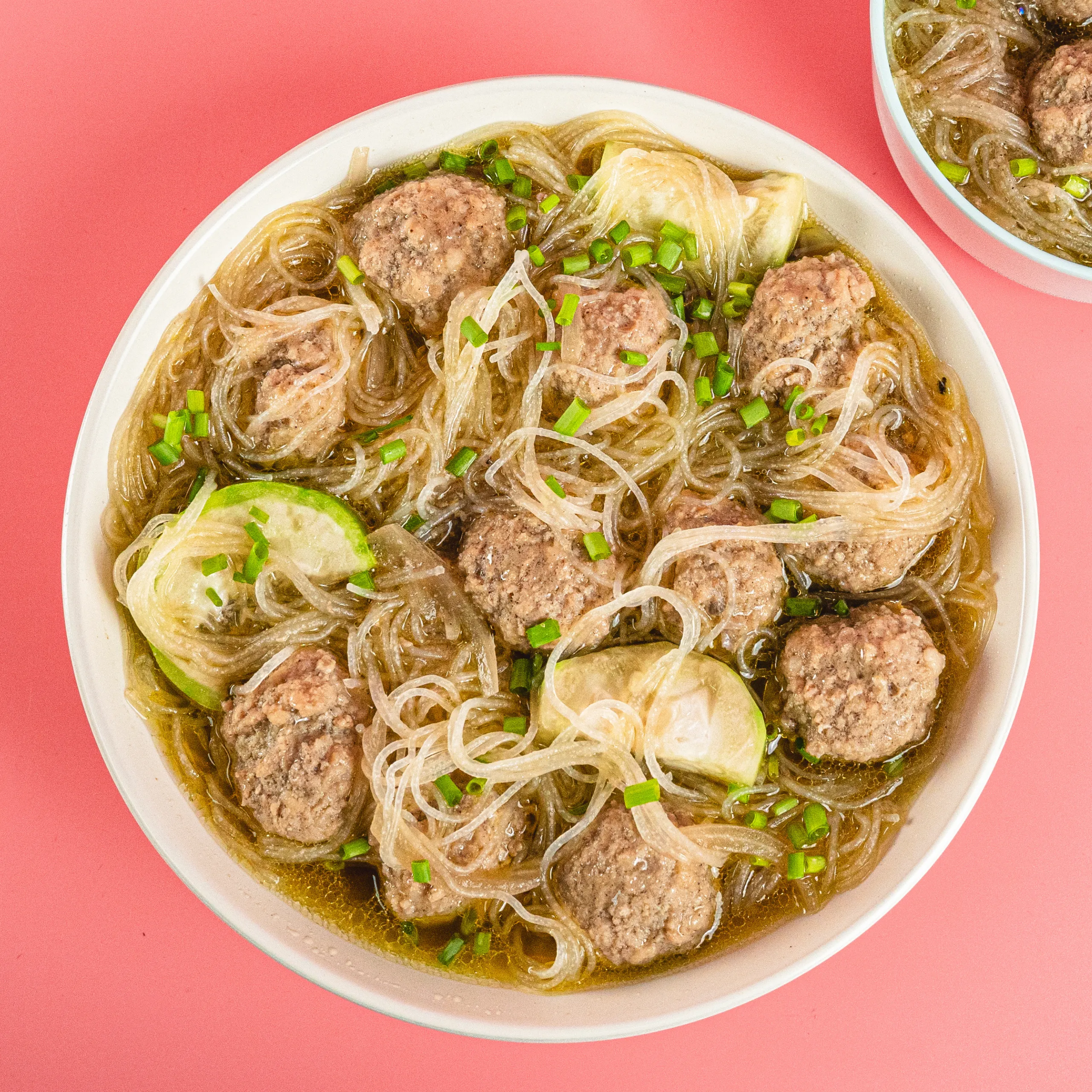
There is something comforting about a warm bowl of soup, especially when the weather is rainy, the evening is cool, or the family is gathered around the dining table after a long day. In many Filipino households, soup is more than just a dish served before the main meal. It is a simple expression of care, a way to stretch ingredients into a satisfying family meal, and a reminder of the comfort that home-cooked food can bring. One dish that captures this feeling beautifully is Almondigas.
Almondigas is a Filipino-style meatball soup commonly prepared with seasoned ground pork, sotanghon noodles, and vegetables simmered in a flavorful broth. The meatballs are tender and savory, the noodles absorb the taste of the soup, and the patola adds a mild sweetness and soft texture that balances the richness of the pork. A little garlic, onion, fish sauce, and oyster sauce brings everything together into a delicious and satisfying dish.
For many people, Almondigas brings back memories of meals prepared by parents or grandparents, especially during rainy afternoons or evenings when everyone wants something warm and filling. It is also a practical dish for home cooks because the ingredients are generally easy to find in Filipino markets and grocery stores. Ground pork can be shaped into meatballs, sotanghon provides a satisfying noodle texture, and patola adds vegetables and freshness to the broth.
Another wonderful thing about Almondigas is its flexibility. Some families prefer a clear, light broth, while others enjoy a richer soup made with pork stock. Some add extra vegetables, while others focus on the traditional combination of meatballs, noodles, and patola. Every household can adjust the seasoning and ingredients according to its own taste.
Whether you are preparing Almondigas for the first time, learning to cook Filipino dishes, or simply looking for an affordable meal to share with your family, this recipe is an excellent choice. With a few simple ingredients, careful preparation, and the right cooking techniques, you can make a delicious bowl of Almondigas that is nourishing, comforting, and full of familiar Filipino flavors.
History and Origin of Almondigas
Almondigas is part of the diverse tradition of Filipino soups that combine meat, vegetables, noodles, and broth into one hearty meal. It is commonly associated with albondigas, a Spanish-language term for meatballs. The name reflects the historical influence of Spanish language and food traditions on Filipino cuisine.
During the Spanish colonial period, many foreign culinary influences became part of the Philippines’ developing food culture. However, Filipino cooks did not simply copy foreign recipes. They adapted cooking techniques and ingredients to suit local tastes, available produce, household budgets, and established food traditions.
Meatballs are found in many cuisines around the world, but Filipino Almondigas has developed its own familiar identity. Rather than being served only as meatballs with a sauce, the Filipino version is commonly prepared as a soup, often featuring sotanghon noodles and vegetables such as patola.
The use of sotanghon is particularly suitable for a broth-based dish. These thin, translucent noodles are commonly made from mung bean starch or other starch blends, depending on the product. They soften in hot liquid and readily absorb the flavors of the soup. Patola, a vegetable widely used in Filipino cooking, contributes a mild taste and tender texture when simmered.
The exact history of the modern Filipino Almondigas recipe is difficult to trace to one specific person or date. Like many household dishes, it has likely evolved through generations of home cooking, with families adjusting the meatball mixture, broth, noodles, and seasonings according to what they had available.
In some households, Almondigas is prepared with a clear broth, while others use a more strongly seasoned stock. Some cooks add toasted garlic, while others prefer to sauté the garlic and onion in oil before adding the liquid. Ground pork is common, but chicken, beef, or a mixture of meats may also be used.
Today, Almondigas remains a familiar comfort food in Filipino homes. It is enjoyed as a weekday lunch or dinner, especially when a warm and satisfying meal is needed. Its lasting appeal comes from its simple ingredients, comforting flavor, and ability to feed several people without requiring an elaborate cooking process.
Each ingredient contributes something important to the finished dish
Ground pork provides the main protein and gives the meatballs their savory flavor. Pork with a moderate amount of fat usually produces juicier meatballs than very lean pork.
Sotanghon noodles provide a soft, slippery texture and make the soup more filling. Because noodles absorb liquid as they cook, their timing is important.
Patola adds vegetables, moisture, and a mild, slightly sweet flavor. It becomes tender during simmering and complements the pork meatballs.
Water or pork broth forms the base of the soup. Water produces a lighter flavor, while unsalted or lightly salted pork broth gives the soup more depth.
Onion and garlic create the aromatic foundation of the dish. Sautéing them before adding the broth helps release their flavor.
Oyster sauce and fish sauce contribute savory, umami-rich notes. Because both can contain considerable sodium, their quantities should be balanced with the salt.
Breadcrumbs help bind the meatballs and retain moisture, reducing the likelihood that they will become dense or fall apart.
Salt and black pepper season the meatballs and soup, while spring onions provide a fresh, colorful finish.
One important adjustment to the ingredient list is that the salt should be added gradually. The oyster sauce and fish sauce already contribute saltiness, so the full teaspoon may not be necessary for every brand or broth.
Kitchen Equipment Needed
You do not need expensive equipment to prepare Almondigas. A few everyday kitchen tools are enough.
- A large mixing bowl for preparing the meatballs.
- A chopping board and sharp knife.
- A measuring cup and measuring spoons.
- A large pot with a lid.
- A wooden spoon or heat-resistant spatula.
- A slotted spoon for handling meatballs if necessary.
- A small plate or tray for arranging the shaped meatballs.
- A ladle for serving the soup.
- Airtight containers for storing leftovers.
A large pot is especially useful because it gives the meatballs enough room to cook without being crowded. It also makes it easier to add the noodles and patola without spilling the broth.
Recipe Tips for Better Almondigas
A few practical techniques can help you achieve a more flavorful soup and meatballs that remain tender.
Do not overmix the pork
Mix the meatball ingredients just until combined. Excessive mixing can make the meatballs compact and chewy instead of tender.
Keep the meatballs similar in size
Uniform meatballs cook more evenly. If some are very large and others very small, the smaller ones may overcook before the larger ones are ready.
Use breadcrumbs carefully
Breadcrumbs help bind the pork and retain moisture, but too much can make the meatballs soft or bready. Begin with the recommended two tablespoons and adjust only if the mixture needs it.
Simmer instead of boiling aggressively
A gentle simmer is preferable to a vigorous boil. Strong boiling can break apart delicate meatballs and make the broth cloudy.
Season gradually
Fish sauce, oyster sauce, broth, and salt all contribute seasoning. Taste the soup near the end rather than adding all the salt at the beginning.
Add the patola at the right time
Patola cooks relatively quickly. Adding it after the meatballs have begun cooking helps it remain tender without becoming excessively soft.
Add sotanghon near the end
Sotanghon absorbs broth rapidly. Adding it too early can make the noodles overly soft and leave you with less liquid than expected.
Adjust the broth according to your preference
If you prefer a clear, light soup, use water or a mild broth. If you enjoy a richer flavor, use pork broth and allow the garlic and onion to simmer in it.
Serve immediately when possible
Almondigas is often at its best shortly after cooking, when the meatballs are tender and the noodles still have some structure. If you expect leftovers, consider cooking the noodles separately and adding them to individual bowls before serving.
Ingredient Substitutions and Variations
Almondigas is flexible, so you can adapt it to your budget, available ingredients, and dietary preferences while preserving the comforting character of the dish.
Ground pork: Ground chicken, ground turkey, or ground beef can replace pork. Chicken and turkey are generally leaner, so the meatballs may need careful handling to prevent them from becoming dry. Ground beef produces a stronger flavor.
Breadcrumbs: Plain crushed crackers, panko breadcrumbs, or a small amount of finely ground oats can help bind the meatballs. The texture may vary slightly depending on the substitute.
Sotanghon noodles: Rice vermicelli or other thin noodles can be used if sotanghon is unavailable. They may absorb liquid differently and have a different texture, so adjust the cooking time according to the package directions.
Patola: Sayote, upo, or zucchini can be used in place of patola. Sayote has a mild flavor and firm texture, while upo is another traditional Filipino soup vegetable. Zucchini cooks relatively quickly, so add it near the end.
Pork broth: Water works perfectly well and produces a lighter soup. Chicken broth or unsalted vegetable broth can also be used, although each will change the flavor slightly.
Oyster sauce: If you do not have oyster sauce, you can omit it and adjust the fish sauce and other seasonings to taste. A suitable vegetarian mushroom sauce can provide a similar savory quality, although the flavor will differ.
Fish sauce: A small amount of soy sauce can be used instead, but it will change the flavor and color of the broth. Add it gradually to avoid excessive saltiness.
Spring onions: Chopped cilantro or a little toasted garlic can be used as a garnish if spring onions are unavailable.
Extra vegetables: Carrots, cabbage, pechay, or leafy greens can be added to increase the vegetable variety. Add firm vegetables earlier and leafy vegetables near the end so they retain their texture.
A richer meatball mixture: A small amount of finely chopped onion can add moisture and flavor to the pork mixture. Avoid adding too much liquid because the meatballs may become difficult to shape.
These substitutions allow you to prepare Almondigas even when you cannot find every ingredient. For the most familiar Filipino flavor, however, the combination of pork meatballs, sotanghon, patola, garlic, onion, fish sauce, and a warm broth remains an excellent starting point.
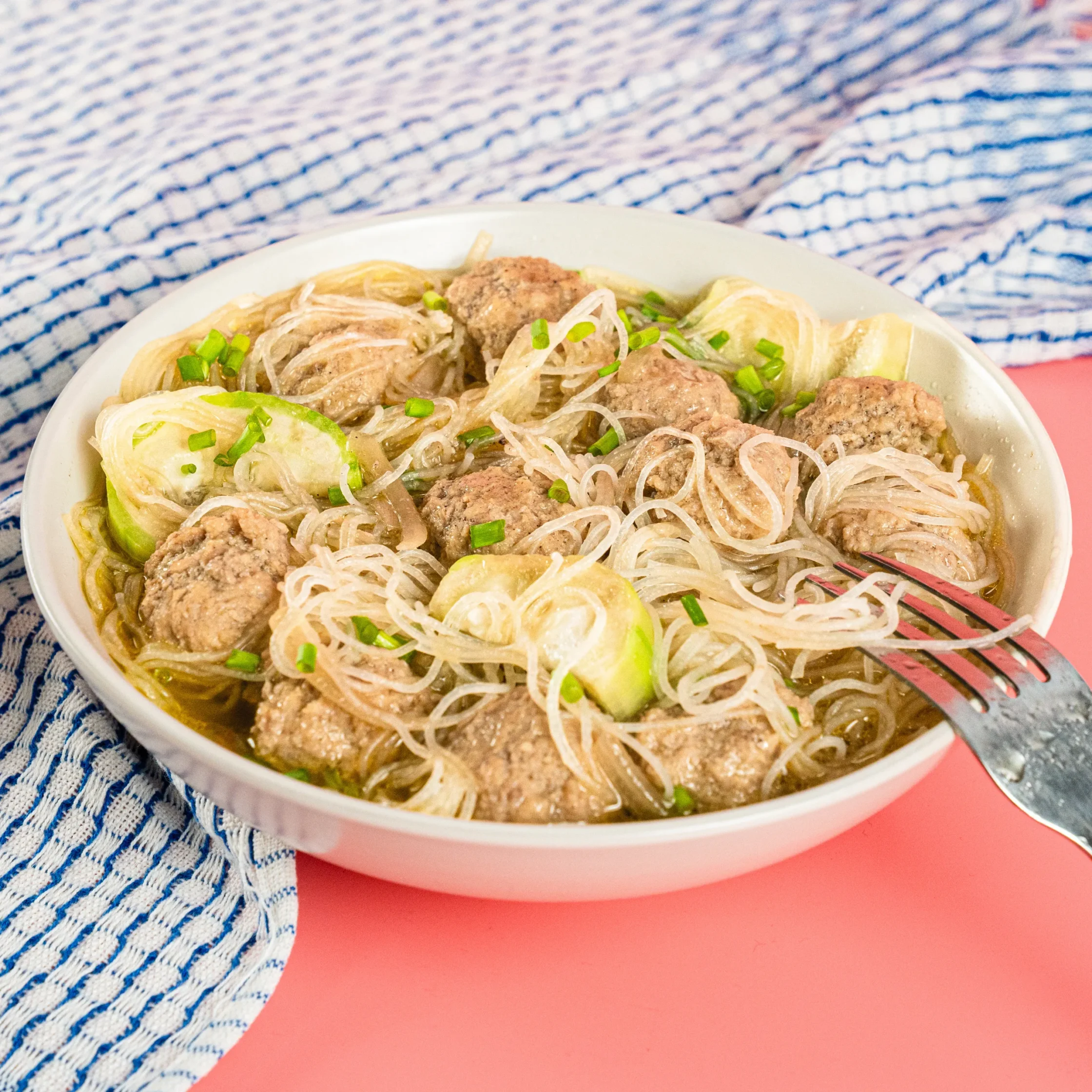
Understanding the Food: What Makes Almondigas Special?
Almondigas is a good example of how a few everyday ingredients can work together to produce a satisfying and balanced flavor.
The role of meatballs
The meatballs provide the main source of protein and contribute savory flavor to the broth. As they cook, some of their juices and seasonings enter the liquid, helping develop the overall taste of the soup.
Breadcrumbs absorb some moisture and help the meatballs maintain their shape. The right balance of meat, seasoning, and breadcrumbs creates a tender texture without making the mixture fall apart.
The role of sotanghon
Sotanghon is a thin, translucent noodle commonly made from mung bean starch or other starch blends, depending on the product.
When cooked, the noodles soften and become slippery and delicate. They also absorb some of the broth, making the soup more filling.
Because sotanghon continues absorbing liquid as it sits, the consistency of Almondigas may change after cooking. A soup that initially has plenty of broth may become thicker after several minutes.
The role of patola
Patola is a type of edible gourd widely used in Filipino cooking. Its mild flavor allows it to complement stronger ingredients without dominating the dish.
When simmered, patola becomes tender and releases moisture into the broth. It contributes a pleasant vegetable texture and helps make the soup more varied than a simple meatball-and-noodle dish.
The importance of garlic and onion
Garlic and onion form the aromatic base of many Filipino soups. Sautéing them before adding liquid releases their flavors and creates a more developed broth.
This simple step makes a noticeable difference, even when the recipe uses only a small number of ingredients.
Why broth matters
Water produces a clean, light soup, while pork broth can contribute a deeper, meatier flavor. The choice depends on the desired result and the amount of time available.
A good broth does not need to be complicated. Even water becomes flavorful when simmered with seasoned meatballs, garlic, onion, and the right amount of fish sauce.
Why cooking order matters
Each ingredient cooks at a different rate. Meatballs need enough time to cook safely, patola becomes tender relatively quickly, and sotanghon can soften in just a few minutes.
Adding ingredients in stages helps preserve their texture and prevents the noodles and vegetables from becoming mushy before the meatballs are ready.
Health Benefits and Nutritional Considerations
Almondigas can provide a variety of nutrients because it combines meat, vegetables, and noodles in one dish. Its nutritional value depends on the ingredients, portion size, and amount of seasoning used.
Protein for growth and repair
Ground pork provides protein, which supplies amino acids needed for tissue repair, muscle maintenance, and many essential body functions.
The protein content will vary according to the fat content of the pork and the size of each serving.
Vitamins and minerals from pork
Pork provides several B vitamins, including thiamine, niacin, vitamin B6, and vitamin B12. It also contributes minerals such as zinc, phosphorus, and selenium.
These nutrients support normal energy metabolism, immune function, and other important processes in the body.
Vegetables for variety and fiber
Patola adds moisture and contributes small amounts of vitamins, minerals, and dietary fiber. Including vegetables in soup is a convenient way to increase variety in an everyday meal.
Adding other vegetables, such as carrots, pechay, or cabbage, can further increase the variety of nutrients and fiber.
Carbohydrates from sotanghon
Sotanghon provides carbohydrates that the body uses as an energy source. Its starch content makes the soup more filling, especially when served with rice.
However, noodles are primarily a source of carbohydrates, so their nutritional contribution depends on the specific product and serving size.
Hydration from the broth
The broth contributes fluid to the meal. A warm soup can be particularly enjoyable when you want something easy to eat and drink.
However, the amount of sodium in the broth matters, especially if the recipe uses salty broth, fish sauce, oyster sauce, and additional salt.
Ways to make Almondigas more balanced
- Choose ground pork with a moderate amount of fat or use leaner ground meat.
- Reduce the added salt and adjust the fish sauce carefully.
- Use unsalted or reduced-sodium broth when available.
- Add extra vegetables such as carrots, cabbage, pechay, or leafy greens.
- Adjust the amount of sotanghon according to your appetite and nutritional needs.
Almondigas can be part of a balanced diet, but it is not automatically low in sodium or fat. People who need to monitor sodium intake should pay particular attention to the fish sauce, oyster sauce, and broth.
Exact nutritional values cannot be determined from the ingredient list alone because they depend on the type of pork, noodle brand, seasoning products, and portion size.
How to Store Almondigas Properly
Because Almondigas contains cooked meat, noodles, and vegetables, proper storage is essential for maintaining quality and preventing foodborne illness.
Storing leftovers in the refrigerator
After serving, transfer leftover Almondigas into clean, shallow containers. Allow the food to stop steaming heavily, but do not leave it on the counter for an extended period while waiting for it to cool completely.
- Refrigerate leftovers within two hours of cooking, or within one hour if the surrounding temperature exceeds 32°C (90°F).
- Keep the refrigerator at 4°C (40°F) or below.
- Consume refrigerated leftovers within 3–4 days.
- Use airtight containers to protect the soup from contamination and prevent it from absorbing other odors.
- Store the broth, meatballs, and vegetables together if they will be eaten soon.
If you expect to store the soup for more than a short period, keeping the sotanghon separate can help preserve its texture.
Freezing Almondigas
Almondigas can be frozen, although the texture of the patola and sotanghon may change after thawing.
- Divide the soup into meal-sized portions.
- Place the portions in freezer-safe containers, leaving a little room for expansion.
- Label each container with the date.
- Freeze at −18°C (0°F) or below.
- For best quality, consume the frozen soup within approximately 2–3 months.
For better results, freeze the broth and meatballs separately from the noodles and add freshly cooked sotanghon when serving.
Patola may become softer after freezing and thawing, but the soup can still be enjoyable.
Reheating Almondigas
For safe reheating, thaw frozen portions in the refrigerator or use a microwave if you will reheat them immediately.
Transfer the soup to a pot and heat until it reaches 74°C (165°F) throughout. Stir gently to distribute the heat evenly.
If the broth has become too thick because the noodles absorbed liquid, add a little water or unsalted broth. Taste the soup again because adding liquid may dilute the seasoning.
When using a microwave, cover the container with a microwave-safe lid, stir the soup during heating, and make sure the center reaches the recommended temperature.
Reheat only the portion you intend to eat rather than repeatedly heating and cooling the entire batch.
How to tell if Almondigas has spoiled
Discard the soup if you notice an unusual sour odor, mold, a slimy texture, or other unexpected changes. However, food may be unsafe even when it looks and smells normal, so follow the recommended storage times.
Do not taste questionable food to determine whether it is safe.
Storing the raw ingredients
Ground pork: Keep raw ground pork refrigerated at 4°C (40°F) or below and use it within 1–2 days, or freeze it if you will not cook it in time. Store it on the lowest refrigerator shelf in a leakproof container.
Sotanghon: Keep dried noodles in a cool, dry place in a sealed package or airtight container. Protect them from moisture and insects.
Patola: Store whole patola in the refrigerator and use it while fresh. Once sliced, refrigerate it in a clean covered container and use it promptly.
Garlic and onion: Store whole garlic and onions in a cool, dry, well-ventilated place. Refrigerate chopped portions in a sealed container and use them promptly.
Fish sauce and oyster sauce: Follow the product labels for storage instructions, particularly after opening.
Breadcrumbs and seasonings: Keep them in sealed containers away from moisture, heat, and direct sunlight.
Good storage practices help preserve the freshness of the ingredients and make the preparation of Almondigas safer and more convenient.
Best Ways to Serve Almondigas
Almondigas is satisfying on its own, but it can also be paired with other dishes to create a complete Filipino meal.
Steamed white rice: A small serving of rice is a classic accompaniment, especially for people who enjoy extra broth with their meal.
Garlic rice: Toasted garlic rice adds aroma and a stronger savory flavor. It pairs particularly well with the pork meatballs.
Fried fish: A small serving of fried fish can complement the warm soup when serving a larger family meal.
Fresh tomatoes: Sliced tomatoes add freshness and a slightly tangy flavor that balances the savory broth.
Steamed vegetables: Pechay, cabbage, or other leafy vegetables add color and variety without overpowering the soup.
Calamansi: A little calamansi juice can brighten the broth. Add it to individual bowls according to taste rather than pouring it into the entire pot.
Toasted garlic: A small sprinkle of toasted garlic adds crunch and aroma just before serving.
For a simple everyday meal, Almondigas with rice and fresh vegetables is already a satisfying combination.
Final Words About Almondigas
Almondigas is a wonderful example of how simple ingredients can create a meal that is comforting, flavorful, and satisfying. With seasoned pork meatballs, tender sotanghon noodles, patola, garlic, onion, and a savory broth, it offers the warmth and familiarity that make Filipino home cooking so special.
Its appeal lies in its simplicity and flexibility. It can be prepared for a regular family lunch, served as a comforting dinner on a rainy evening, or shared with relatives during a casual gathering. It is also practical for home cooks because the ingredients are widely available and the recipe can be adjusted according to budget, taste, and dietary needs.
Beyond its flavor, Almondigas reflects the way Filipino cooking brings together different culinary influences and local ingredients. The meatballs connect the dish to a broader culinary tradition, while sotanghon, patola, and familiar Filipino seasonings give it a character that feels at home in Filipino kitchens.
When preparing Almondigas, remember to handle the meat safely, mix the meatballs gently, simmer the broth carefully, and add the vegetables and noodles at the appropriate time. Taste the soup before serving, adjust the saltiness gradually, and store leftovers properly so that you can enjoy them later.
Serve it hot with rice, a little calamansi, or your favorite side dish, and you have a meal that is both practical and comforting.
Ultimately, Almondigas is more than a bowl of meatball soup. It is a reminder that delicious home-cooked food does not need to be complicated or expensive. Sometimes, a pot of warm broth, a few tender meatballs, and simple ingredien