Advertisement

What Should Never Go in a Blender?

Don’t waste your precious (and expensive) blender by avoiding putting these nine things.

There are foods you should and should not put in the blender.

Whether it’s making purées or your morning smoothie, the blender is one of the hardest-working appliances in any kitchen. 

Not only does this connote its value in the kitchen, but it also illustrates what happens when you don’t take proper care of it. Tossing the wrong ingredient into the pitcher can result in ruined food and dulled blades to shattered glass and painful kitchen burns.

To keep your trusty (not to mention pricey) appliance running safely and efficiently, avoid putting these nine items inside your blender.

1. Non-Food Utensils (While Plugged In)

This may sound obvious to some, but it’s worth stating for safety reasons. 

Avoid using a spatula or spoon to push ingredients down toward the blades while the blender is running or even while it is still plugged in. This is a leading cause of severe hand injuries and destroyed utensils. Even a momentary slip can pull a utensil straight into the spinning blades.

The safest way is to always turn the blender completely off and unplug it before inserting a spatula to scrape down the sides.
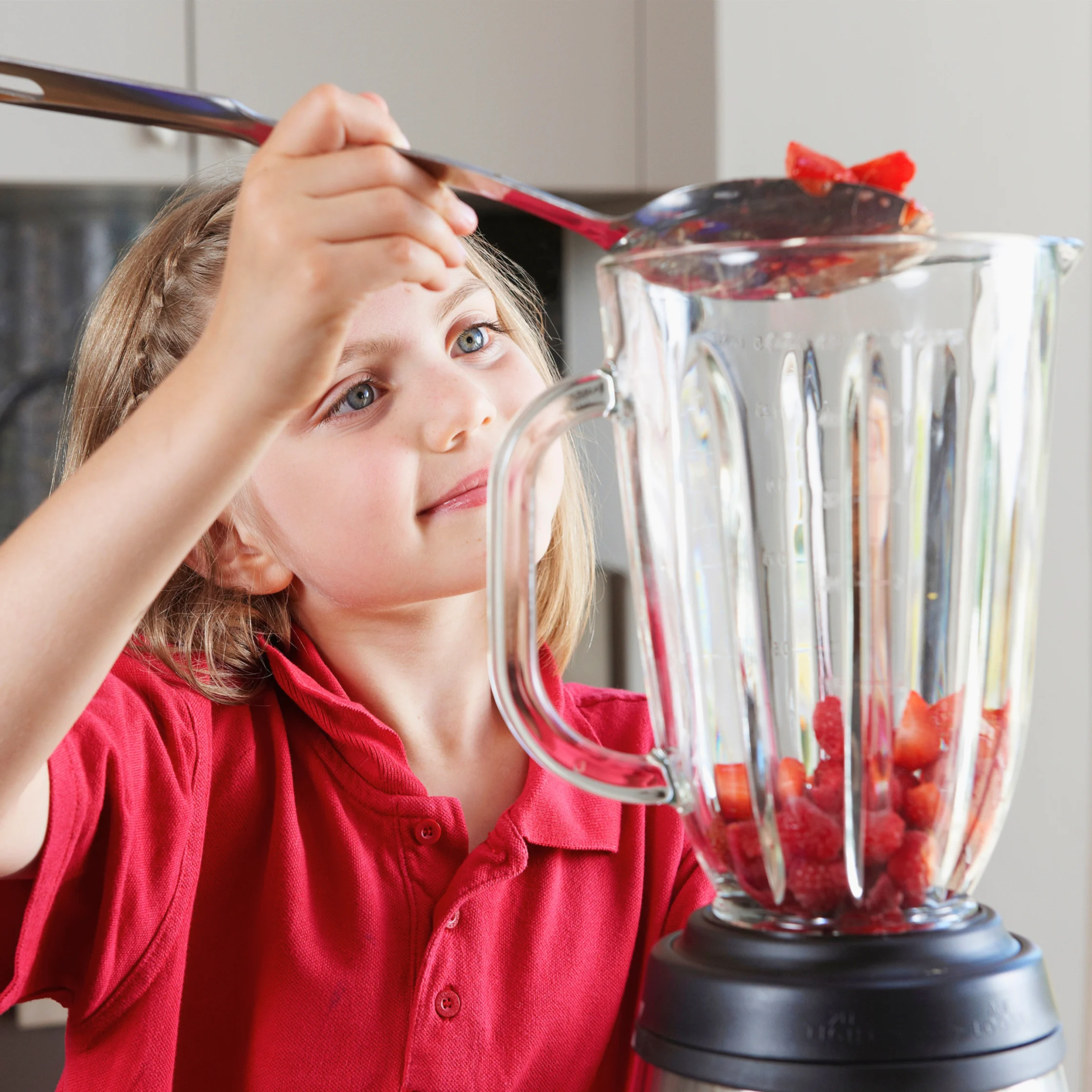
A focused young girl in a red shirt adds strawberries with a spoon to a glass blender, preparing a smoothie in a bright kitchen.
Don’t push down ingredients while the blender is running.

2. Potatoes and Starchy Vegetables

If I’ve learned anything from watching season after season of Hell’s Kitchen, it’s that you should never make potato purée using a blender. This rule can extend to any and all starchy vegetables. 

It might seem like a clever shortcut to whip up mashed potatoes in a blender, but the high-speed blades are far too aggressive for starchy vegetables. Overworking potatoes releases excessive amounts of starch, transforming what should be light and fluffy into an unpleasant gummy consistency.

It’s best to ditch the blender entirely and switch to a traditional hand masher, a potato ricer, or a stand mixer on low speed for mashed potatoes.
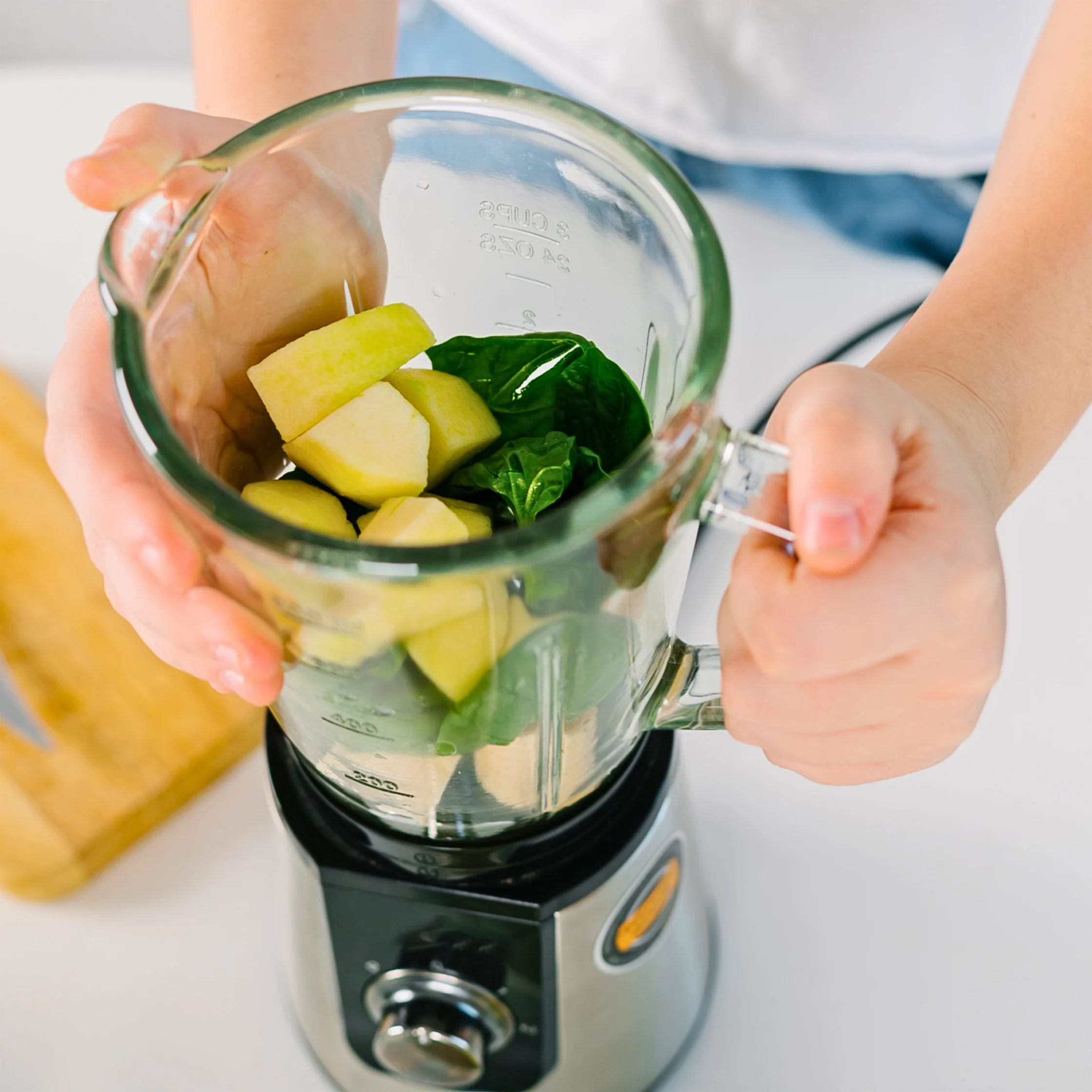
Hands hold a blender jar filled with chopped green apple and leafy greens, ready to blend a fresh smoothie; bright, clean kitchen scene conveys healthy cooking.
Blending starchy veggies will make a gummy purée.

3. Fibrous and Stringy Vegetables

It’s not advisable to put vegetables like raw celery, okra, string beans as is into your blender. Because they are packed with stringy fibers, they end up wrapping tightly around the base of the blender blades. Once tangled, these fibers prevent the blades from spinning properly and can strain or overheat the motor.

You can avoid this by chopping them first into small, half-inch pieces across the grain. This helps shorten the fibers before you add them to the pitcher as well as remove the tough stems from the leafy greens. 
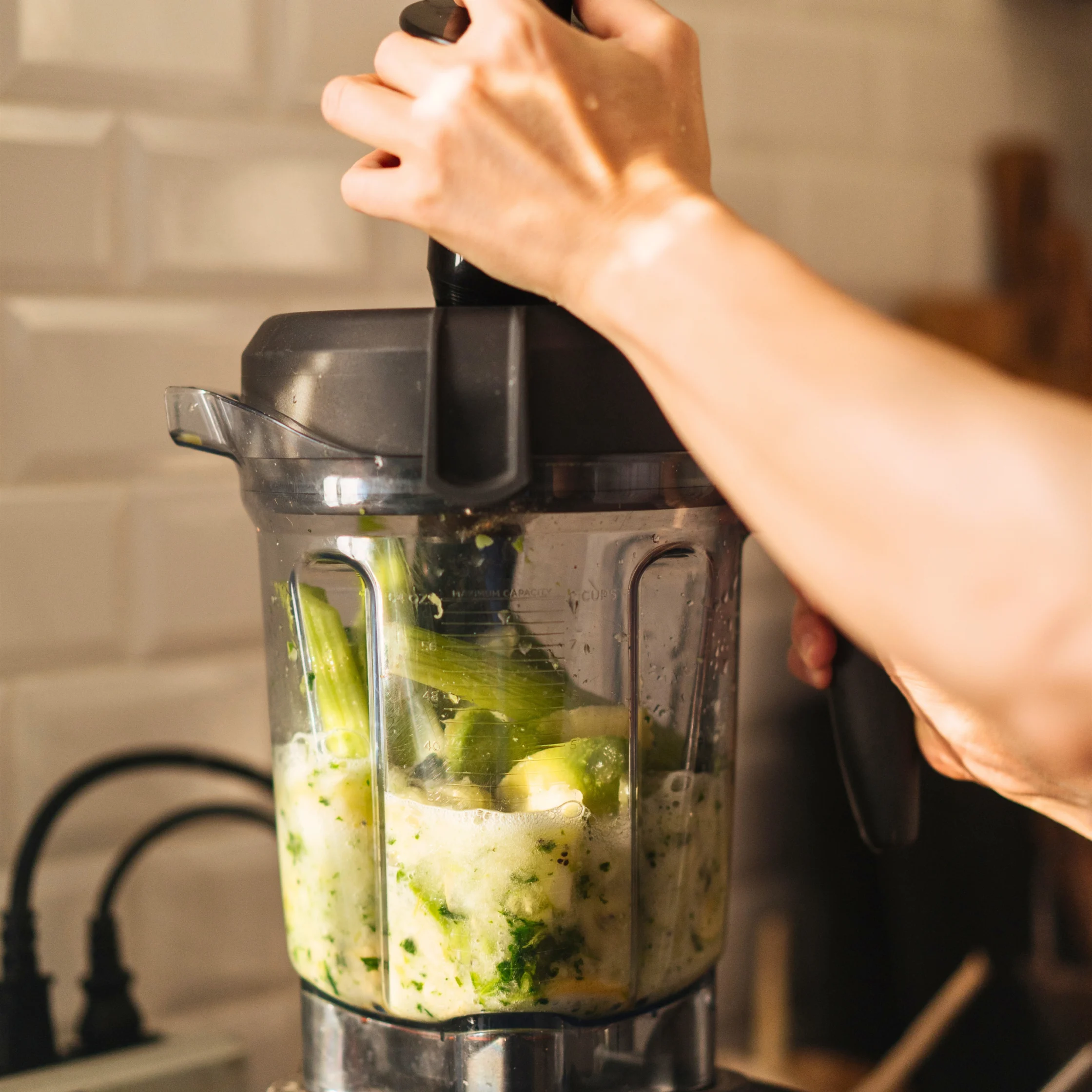
A hand firmly presses the lid of a countertop blender filled with green vegetables and creamy ingredients, suggesting focused home cooking in a warm kitchen.
Chop up stringy veggies before blending them.

4. Ice Cubes (Unless Your Blender Is Built for It)

Not all blenders are created equal. 

Standard or budget blenders often have lower-wattage motors and thinner blades that cannot handle the shock of pulverizing solid ice. Trying to crush ice in an underpowered machine can chip the blades, crack the plastic pitcher, or burn out the motor.

If you still have it, consult the manual to confirm if your blender can handle crushing ice. If it isn’t, you can either soften the ice cubes a bit before pulsing them or get your crushed ice somewhere else.
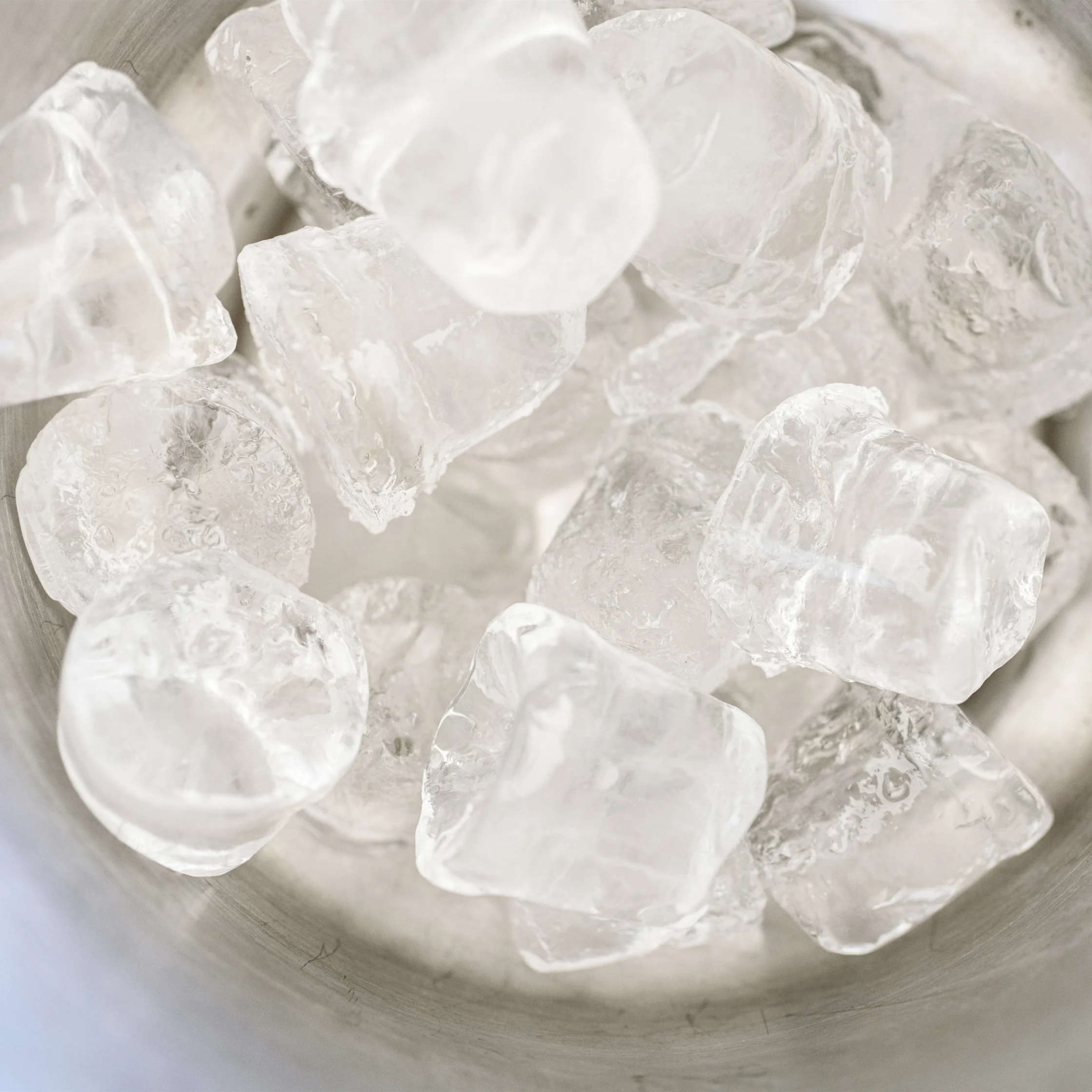
Close-up of clear, irregular ice cubes piled in a metal bowl, their frosty edges catching soft light. The cool, clean image feels crisp and refreshing.
Unless it’s built for it, don’t put ice in your blender.

5. Frozen-Solid Fruit

Much like ice cubes, fruit straight from the deep freezer acts like tiny rocks against blender blades. Large chunks of frozen mango, pineapple, or bananas can jam the blade assembly, strain the motor, and leave you with uneven, icy chunks instead of a creamy smoothie.

Let the frozen fruit thaw first before blending. Leaving them on the counter for 5 to 10 minutes or running them under warm water for a few seconds should do the trick. 

Another tip for making smoothies is to add your liquid base to the pitcher first. This helps create a vortex that pulls the fruit down smoothly. 
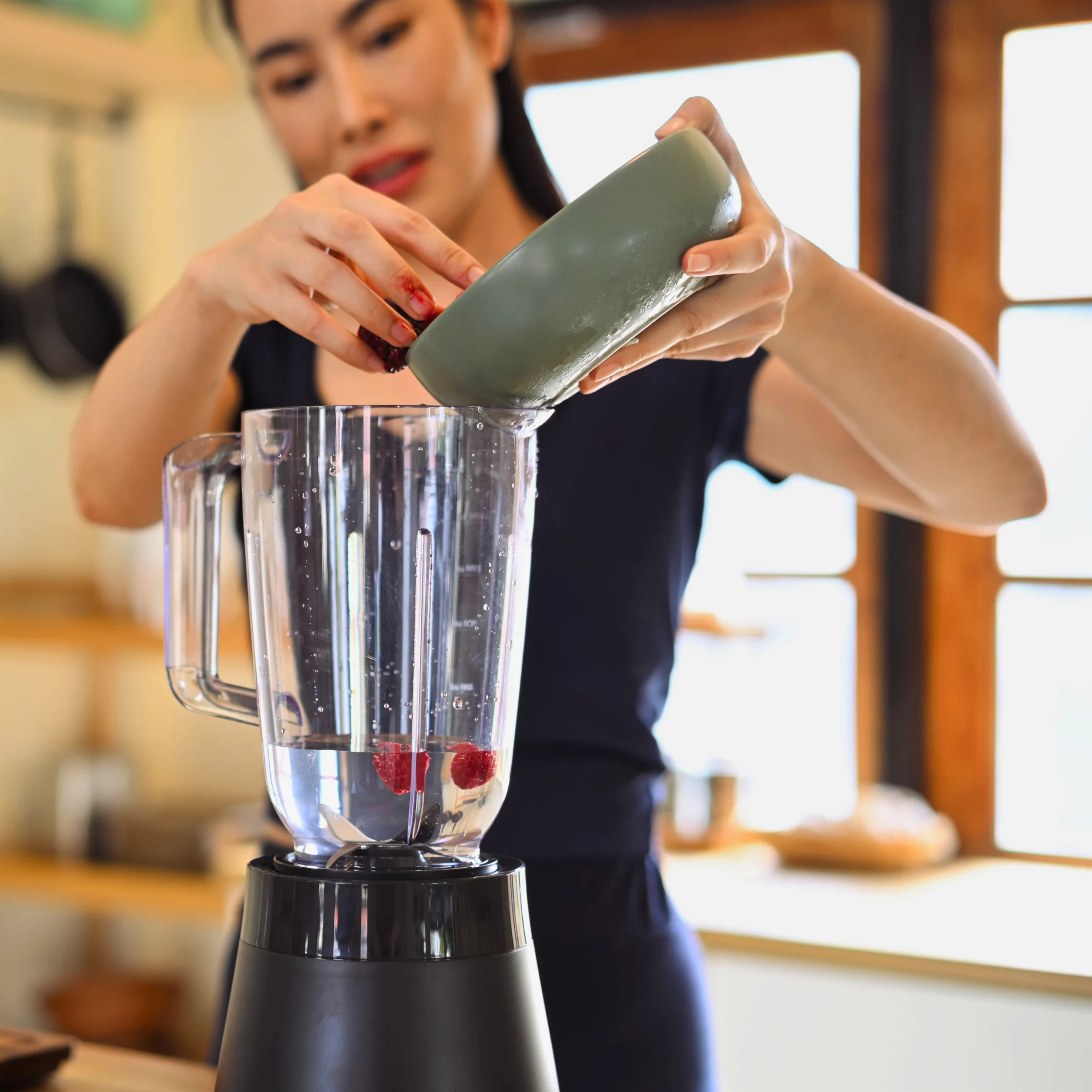
A woman pours red berries from a green bowl into a clear blender jar in a bright kitchen, focused on preparing a fresh smoothie.
When making fruit smoothies, add the liquid base first.

6. Whole Spices and Coffee Beans

While high-end blenders can sometimes handle dry grinding, most standard blenders are not designed to grind whole cinnamon sticks, cloves, or coffee beans. Hard, dry ingredients dull standard blades quickly, scratch the pitchers, and often just bounce around the blades without actually grinding them evenly.

If you really want to grind your dry spices and beans, just use a dedicated spice grinder, coffee grinder, or a mortar and pestle.
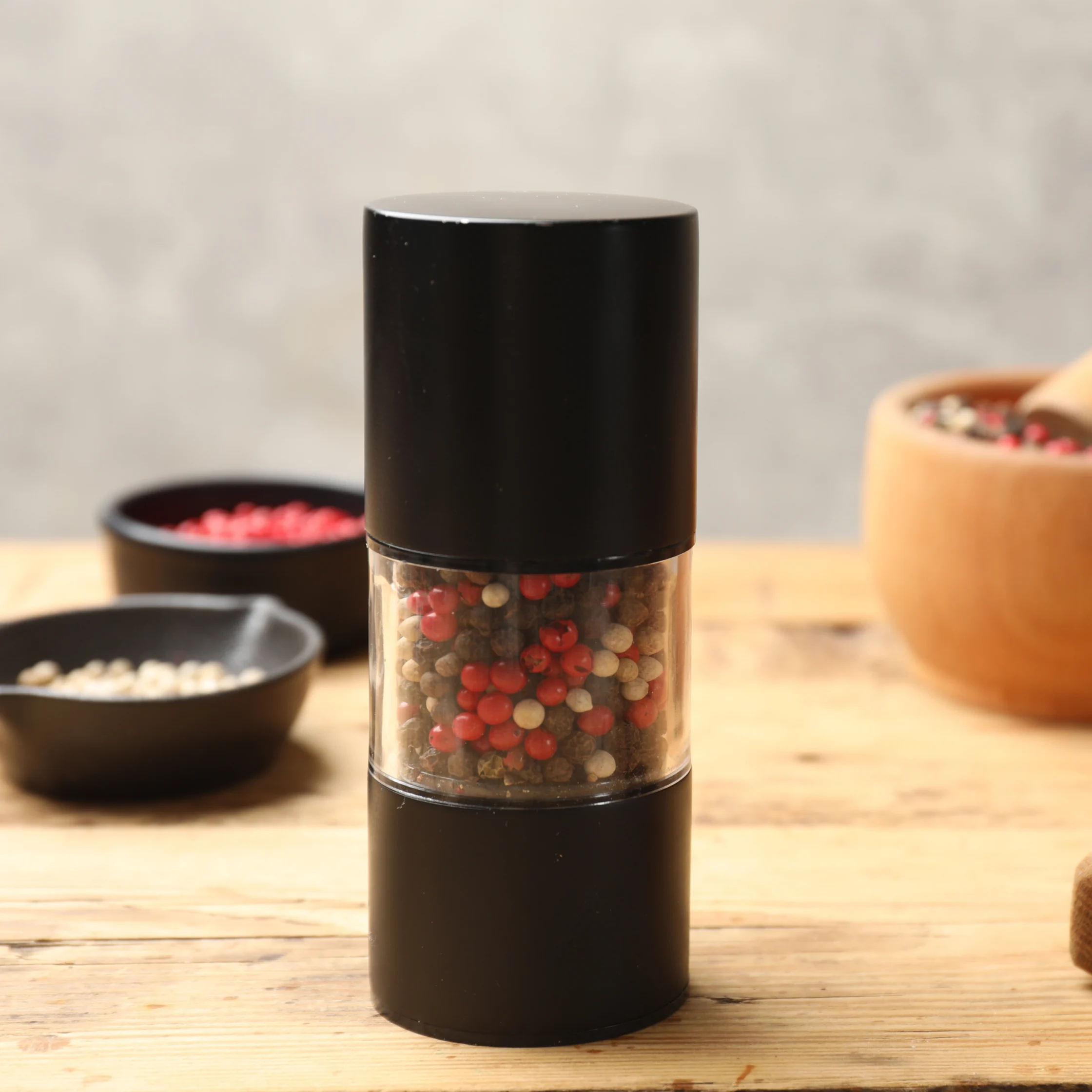
A black-and-clear pepper grinder filled with colorful peppercorns stands on a sunlit wooden table, with bowls of spices behind it; warm, rustic kitchen mood.
Blending dry ingredients can ruin your blender.

7. Piping Hot Liquids

Blending boiling soup, hot coffee, or freshly cooked sauce is one of the most dangerous kitchen mistakes you can make. 

When you blend hot liquids at high speeds, the rapid agitation generates intense steam. In a sealed blender pitcher, that trapped steam creates sudden pressure that can blow the lid straight off, spraying scalding liquid across your kitchen and skin.

The solution to this is simple: have patience. Let hot liquids cool for at least 10 to 15 minutes before adding them into the pitcher. 

If for whatever reason you have to blend while warm, fill the pitcher no more than halfway, remove the center cap from the lid to let steam escape, and drape a folded kitchen towel firmly over the top while holding it down.
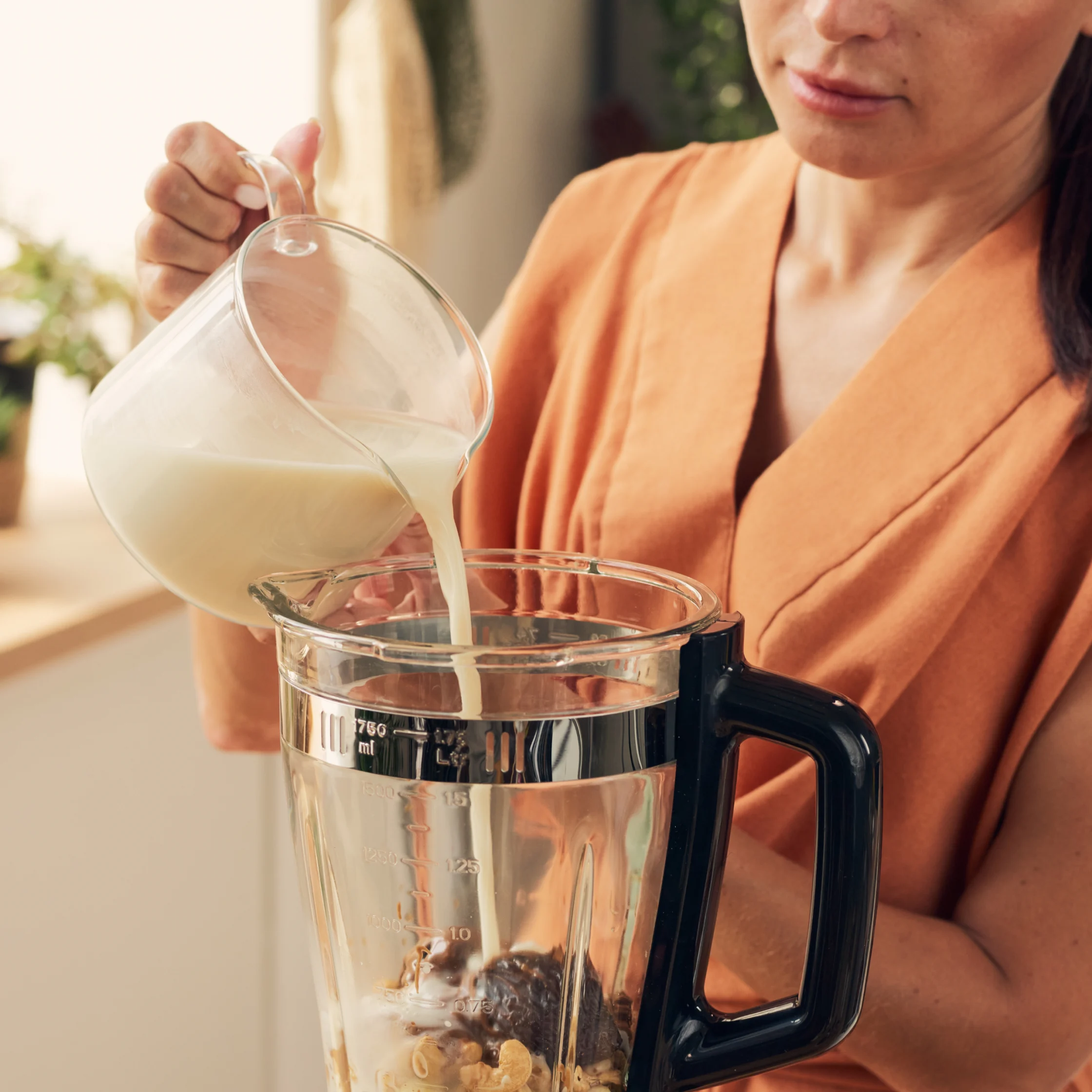
A person in an orange robe pours milk from a glass pitcher into a blender containing fruit and other ingredients, creating a calm kitchen scene.
Let hot liquids cool down before adding them to the blender.

8. Carbonated Liquids

Pouring soda, sparkling water, beer, or champagne into a blender triggers the same pressure issue as hot liquids. 

Agitating carbonated drinks releases dissolved carbon dioxide rapidly, causing foam and pressure to build up inside the sealed container until the lid pops off violently.

The best way to do this is to blend your non-carbonated ingredients first, pour the mixture into a glass, and stir in the sparkling liquid by hand afterward.

Amber soda pours into a glass of ice, fizzing with bubbles and foam against a cool, blurred background; the close-up feels refreshing and lively.
Avoid pouring carbonated drinks into the blender.

9. Bone-In Meats and Hard Rinds

Blenders are meant for pureeing, not heavy-duty meat processing. 

Small bones, tough cartilage, and hard cheese rinds like aged Parmesan will instantly nick, bend, or snap blender blades. Even raw boneless meat tends to wrap around the blade shaft rather than mincing cleanly.

A food processor and a dedicated meat grinder are far more appropriate appliances for grinding any meat or hard cheeses.
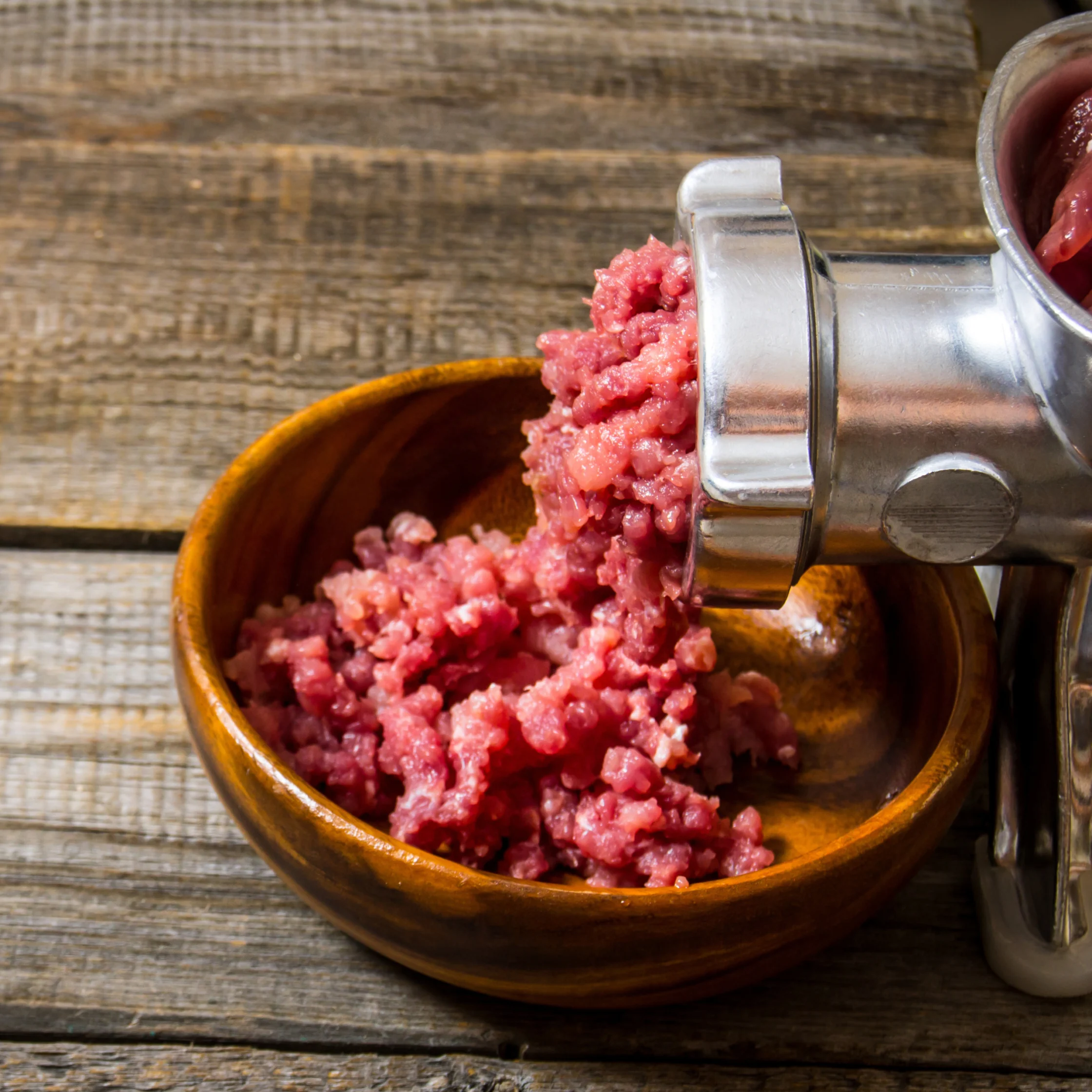
Fresh ground beef pours from a metal meat grinder into a brown wooden bowl on a rustic table, capturing a hands-on food preparation scene.
Blenders are not built for processing meat.
author avatar
Laura Mendoza Writer
Laura admits that she is a slow eater. She prefers to take her time with the food she likes to eat and the stories she wishes to write. Having graduated with a Creative Writing degree, she comes from a background in writing fiction and poetry. Because of this, she has set herself on a creative mission to explore and delve into what other modes and channels exist for stories and narratives to be told, expressed, and shared with others. For Laura, food as a medium is an exciting proposition. Behind every dish, every ingredient, and every cooking technique, there lies a history worth discussing, a human being worth listening to, a lived experience worth gleaning from. As a means to satiate her appetite for learning about and understanding new and known things, she aims to be the kind of food writer who is approachable, reliable, and personable to readers.

Frequently Asked Questions

Only if the blender is specifically to. If not, it can potentially ruin the blades, crack the pitcher, and burn the motor.

author avatar
Laura Mendoza Writer
Laura admits that she is a slow eater. She prefers to take her time with the food she likes to eat and the stories she wishes to write. Having graduated with a Creative Writing degree, she comes from a background in writing fiction and poetry. Because of this, she has set herself on a creative mission to explore and delve into what other modes and channels exist for stories and narratives to be told, expressed, and shared with others. For Laura, food as a medium is an exciting proposition. Behind every dish, every ingredient, and every cooking technique, there lies a history worth discussing, a human being worth listening to, a lived experience worth gleaning from. As a means to satiate her appetite for learning about and understanding new and known things, she aims to be the kind of food writer who is approachable, reliable, and personable to readers.

It’s best to add the liquid base first. This will create a vortex that will pull the fruit and other ingredients down smoothly.

author avatar
Laura Mendoza Writer
Laura admits that she is a slow eater. She prefers to take her time with the food she likes to eat and the stories she wishes to write. Having graduated with a Creative Writing degree, she comes from a background in writing fiction and poetry. Because of this, she has set herself on a creative mission to explore and delve into what other modes and channels exist for stories and narratives to be told, expressed, and shared with others. For Laura, food as a medium is an exciting proposition. Behind every dish, every ingredient, and every cooking technique, there lies a history worth discussing, a human being worth listening to, a lived experience worth gleaning from. As a means to satiate her appetite for learning about and understanding new and known things, she aims to be the kind of food writer who is approachable, reliable, and personable to readers.

Always turn the blender completely off and unplug it before inserting a spatula to scrape down the sides.

author avatar
Laura Mendoza Writer
Laura admits that she is a slow eater. She prefers to take her time with the food she likes to eat and the stories she wishes to write. Having graduated with a Creative Writing degree, she comes from a background in writing fiction and poetry. Because of this, she has set herself on a creative mission to explore and delve into what other modes and channels exist for stories and narratives to be told, expressed, and shared with others. For Laura, food as a medium is an exciting proposition. Behind every dish, every ingredient, and every cooking technique, there lies a history worth discussing, a human being worth listening to, a lived experience worth gleaning from. As a means to satiate her appetite for learning about and understanding new and known things, she aims to be the kind of food writer who is approachable, reliable, and personable to readers.

When you blend potatoes and just about any starchy vegetables using a blender, it becomes very gummy instead of light and fluffy.

author avatar
Laura Mendoza Writer
Laura admits that she is a slow eater. She prefers to take her time with the food she likes to eat and the stories she wishes to write. Having graduated with a Creative Writing degree, she comes from a background in writing fiction and poetry. Because of this, she has set herself on a creative mission to explore and delve into what other modes and channels exist for stories and narratives to be told, expressed, and shared with others. For Laura, food as a medium is an exciting proposition. Behind every dish, every ingredient, and every cooking technique, there lies a history worth discussing, a human being worth listening to, a lived experience worth gleaning from. As a means to satiate her appetite for learning about and understanding new and known things, she aims to be the kind of food writer who is approachable, reliable, and personable to readers.

It would not be advised.

The rapid agitation generates intense steam. In a sealed blender pitcher, that trapped steam creates sudden pressure that can blow the lid straight off, causing potential injuries.

It would be best to let the hot foods or liquids cool down first before adding them into the pitcher.

author avatar
Laura Mendoza Writer
Laura admits that she is a slow eater. She prefers to take her time with the food she likes to eat and the stories she wishes to write. Having graduated with a Creative Writing degree, she comes from a background in writing fiction and poetry. Because of this, she has set herself on a creative mission to explore and delve into what other modes and channels exist for stories and narratives to be told, expressed, and shared with others. For Laura, food as a medium is an exciting proposition. Behind every dish, every ingredient, and every cooking technique, there lies a history worth discussing, a human being worth listening to, a lived experience worth gleaning from. As a means to satiate her appetite for learning about and understanding new and known things, she aims to be the kind of food writer who is approachable, reliable, and personable to readers.
Smiling woman with glasses tilted at an angle, wearing a blue top, against a light background.

Laura Mendoza

Writer

Laura admits that she is a slow eater. She prefers to take her time with the food she likes to eat and the stories she wishes to write. Having graduated with a Creative Writing degree, she comes from a background in writing fiction and poetry. Because of this, she has set herself on a creative mission to explore and delve into what other modes and channels exist for stories and narratives to be told, expressed, and shared with others. For Laura, food as a medium is an exciting proposition. Behind every dish, every ingredient, and every cooking technique, there lies a history worth discussing, a human being worth listening to, a lived experience worth gleaning from. As a means to satiate her appetite for learning about and understanding new and known things, she aims to be the kind of food writer who is approachable, reliable, and personable to readers.

0 0 votes
Total of Ratings
guest
Rating
Ratings for Article
0 Comments
Oldest
Newest Most Voted

To provide a customized ad experience, we need to know if you are of legal age in your region.

By making a selection, you agree to our Terms & Conditions.