


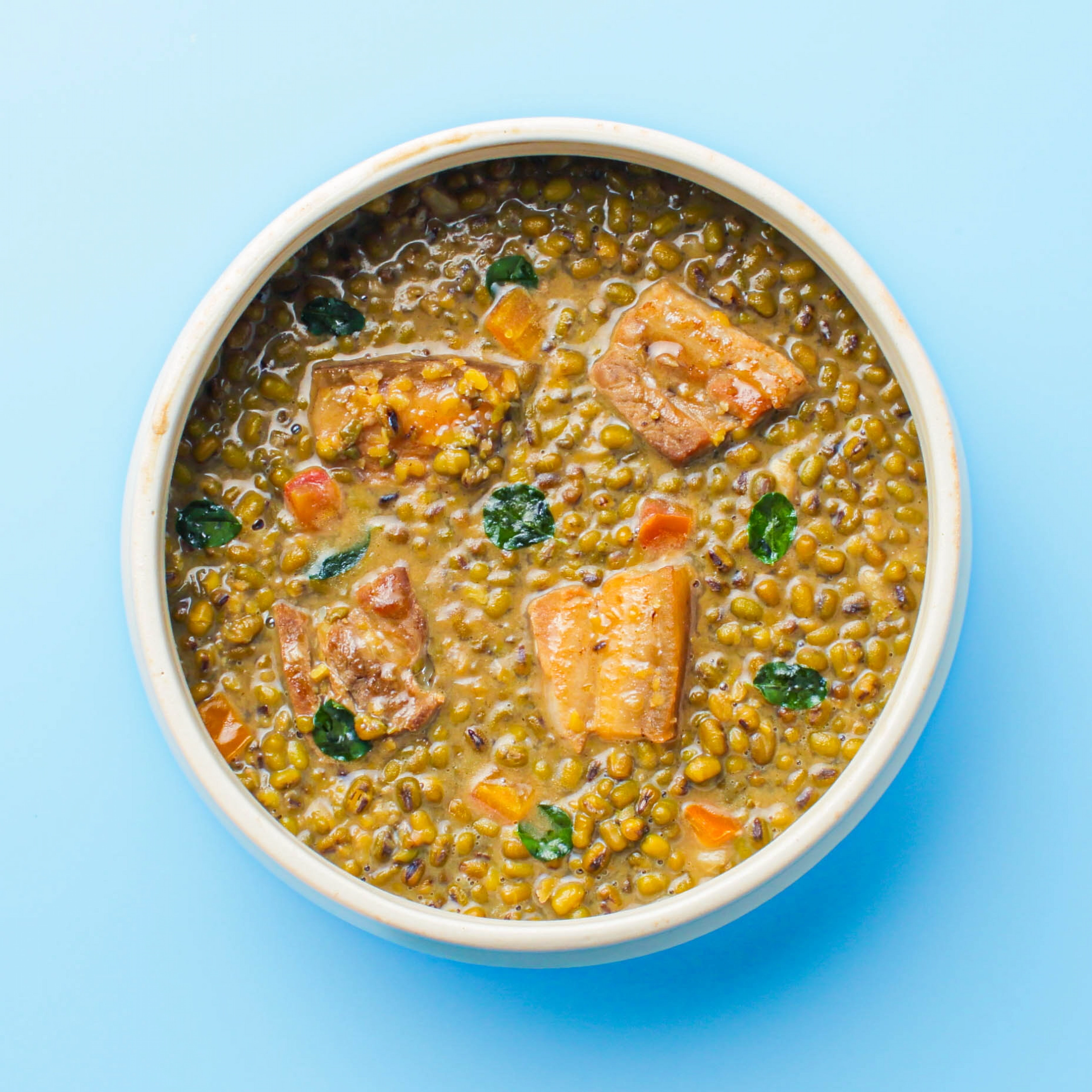
There are some Filipino dishes that feel special not because they are complicated, but because they remind you of home. Ginisang monggo is one of those dishes. It is humble, comforting, affordable, and filling—the kind of food that can turn a few simple ingredients into something the whole family can enjoy.
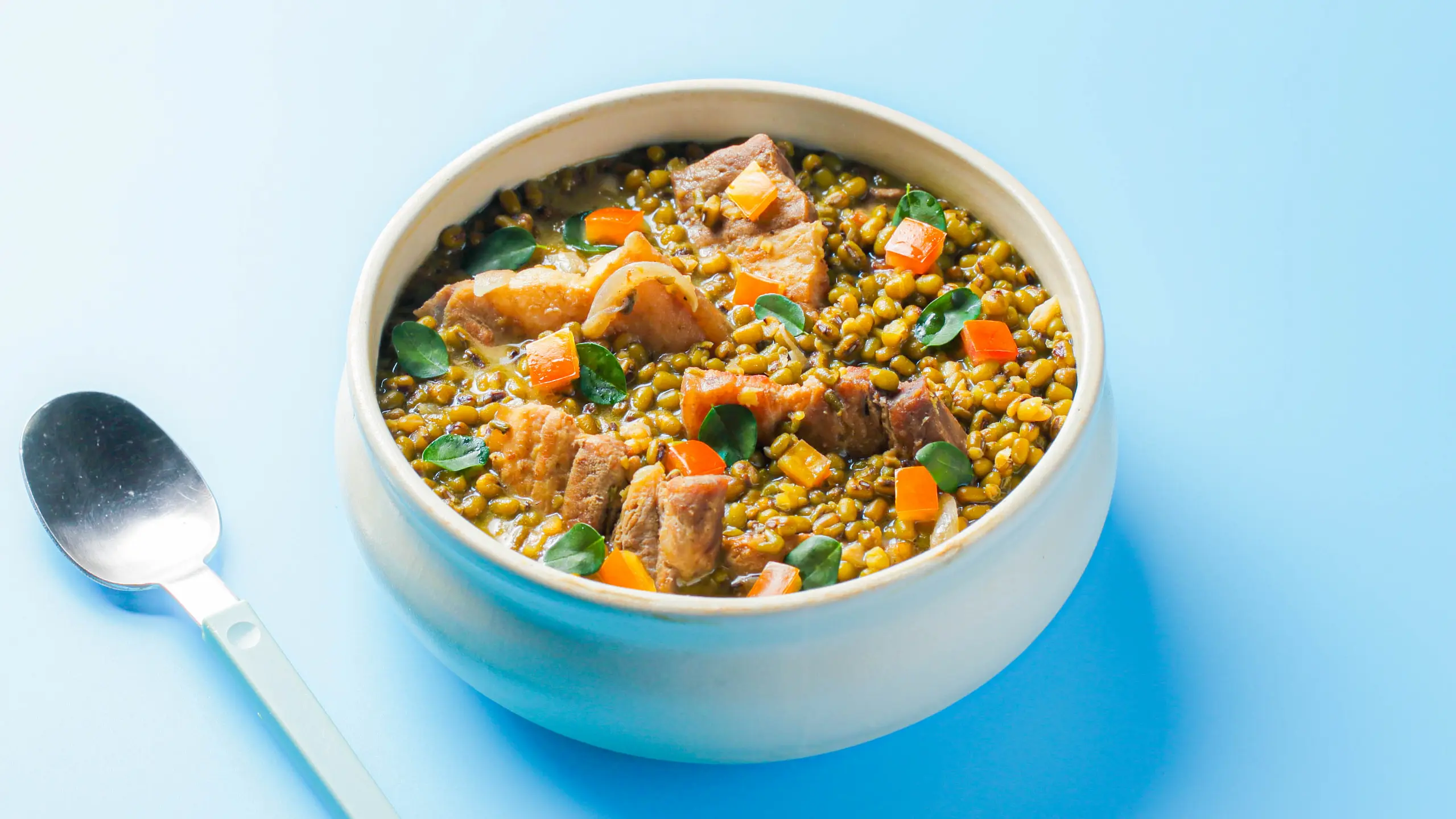
Also called ginisang munggo or monggo guisado, this dish is essentially mung beans cooked until tender, then combined with sautéed garlic, onion, tomatoes, meat or seafood, and seasonings. Despite the word ginisa, which means sautéed, the finished dish is more like a thick, savory stew or soup.
This version uses pork, giving the monggo a rich and savory flavor, while the tomatoes add a little acidity and freshness. Served hot with steamed rice, it is the kind of meal that is simple enough for an ordinary weekday but satisfying enough to bring everyone back for seconds.
A Little History and Tradition Behind Ginisang Monggo
Mung beans, locally called monggo or munggo, have long been a practical ingredient in Filipino home cooking. They are inexpensive, store well in dried form, and become tender and hearty when simmered. Because of this, mung beans have found their way into many Filipino dishes, both savory and sweet.
Ginisang monggo is particularly associated with Fridays, especially during Lent. The tradition is connected to the Catholic practice of abstaining from meat on certain Fridays. Traditionally, versions without pork might use shrimp, smoked fish (tinapa), dried fish, or simply vegetables and leafy greens instead.
That tradition also explains why there isn’t just one “correct” ginisang monggo recipe. Filipino families have their own versions. Some add pork, while others prefer shrimp or tinapa. Some add malunggay, ampalaya leaves, spinach, or chili leaves. Others like to finish the dish with crispy chicharon for extra richness and texture.
In other words, ginisang monggo is very much a home-style dish. The recipe often changes depending on what is available in the kitchen.
Recipe Tips for Better Ginisang Monggo
Don’t rush the beans
The most important part of the recipe is making sure the mung beans are completely tender. Undercooked monggo can remain firm and unpleasantly chewy.
If your beans are old, they may take considerably longer to soften. Just keep adding water and simmering until they reach the texture you like.
Control the consistency
Some people like ginisang monggo almost as thick as a porridge, while others prefer it soupy.
For a thicker monggo, allow it to simmer longer and let some of the beans break down.
For a soupy monggo, add additional water or broth.
Remember that the dish will continue to thicken slightly as it sits.
Don’t burn the garlic
Garlic is one of the defining flavors of the dish, but burnt garlic can overpower everything else.
Sauté it over medium heat and add the onion soon after.
Cook the tomato until soft
Don’t simply toss the tomato in and immediately add the beans. Let it cook until soft and juicy.
This gives the tomato time to become part of the savory base rather than remaining as separate pieces.
Taste before adding more salt
Because the recipe uses fish sauce, you should always taste the dish before adding additional salt.
It’s much easier to add seasoning than to fix an overly salty pot of monggo.
Let it rest briefly
If you have the patience, let the finished dish sit for about 5–10 minutes before serving.
The flavors have a chance to settle, and the beans continue absorbing the savory broth.
Ingredient Substitutions
One of the best things about ginisang monggo is how flexible it is.
Pork
The pork can be replaced with:
- Shrimp
- Tinapa flakes
- Dried shrimp (hibe)
- Fried fish
- Chicken
- Ground pork
- No meat at all
Shrimp and smoked fish are particularly traditional alternatives.
Fish sauce
If you don’t have fish sauce, you can use:
- Soy sauce
- Salt
- A little shrimp paste (bagoong)
- Mushroom seasoning for a vegetarian version
The flavor will change, however. Fish sauce provides a distinctive salty, fermented depth that is difficult to reproduce exactly.
Tomatoes
Fresh tomatoes are ideal, but canned diced tomatoes can work when fresh tomatoes aren’t available.
You can also use a small amount of tomato sauce, although the finished dish will have a slightly different flavor.
Leafy vegetables
Malunggay is wonderful in monggo, but you can substitute:
- Spinach
- Alugbati
- Ampalaya leaves
- Chili leaves
- Kale
Adding greens is especially useful when you want the dish to contain more vegetables. Filipino versions commonly incorporate greens such as malunggay, bitter melon leaves, or spinach.
Oil
Regular vegetable oil works perfectly. You can also use canola, sunflower, corn, or another neutral cooking oil.
What Makes Mung Beans Special?
Mung beans are small green legumes belonging to the Vigna radiata species. In the Philippines, they are commonly called monggo or munggo.
They’re interesting because the same bean can be used in many different ways.
Mung beans can be:
- Cooked into savory stews
- Sprouted into togue
- Used in desserts
- Ground into pastes
- Used in various Asian pancakes and pastries
In Filipino cuisine, mung bean sprouts are known as togue and are used in dishes such as lumpia.
So when you’re eating a bowl of ginisang monggo, you’re enjoying an ingredient that has a much wider culinary life than just this one stew.
Health Benefits of Ginisang Monggo
Mung beans are one of the nutritional highlights of this dish.
They provide plant-based protein, carbohydrates, and dietary fiber, making them filling and useful as part of a balanced meal. Filipino versions of monggo that include leafy vegetables can also contribute additional vitamins and minerals.
1. Good source of plant protein
Mung beans contain plant protein, which helps make the dish satisfying.
When combined with pork, shrimp, fish, or another protein source, ginisang monggo can become an especially filling main dish.
2. Rich in dietary fiber
The beans provide dietary fiber, which supports normal digestive health and can contribute to a feeling of fullness.
This is one reason monggo can be surprisingly satisfying even though the basic ingredients are inexpensive.
3. Provides important micronutrients
Mung beans contribute nutrients such as folate, iron, potassium, and phosphorus, while vegetables added to the dish can provide additional vitamins and minerals.
4. Naturally filling
The combination of beans, protein, and fiber makes monggo a hearty food.
You don’t necessarily need a huge serving of meat to make the dish satisfying—the beans themselves provide much of the substance.
5. Easy to make more vegetable-rich
Adding malunggay, spinach, ampalaya leaves, alugbati, tomatoes, or other vegetables can make the meal more varied and nutrient-dense.
For a lighter version, simply increase the vegetables and reduce the amount of pork.
A small note: the overall nutrition of ginisang monggo depends heavily on the recipe. Pork, oil, fish sauce, and toppings such as chicharon can substantially increase its fat and sodium content. If you’re watching sodium or saturated fat, use less fish sauce and pork and add more vegetables and beans.
How to Make a Healthier Version
You don’t have to completely change the character of the dish to make it lighter.
Try these adjustments:
- Use lean pork instead of fatty cuts.
- Reduce the cooking oil slightly.
- Add more leafy vegetables.
- Increase the amount of tomato.
- Use shrimp or fish instead of pork.
- Skip the chicharon.
- Reduce fish sauce and adjust with herbs, garlic, pepper, or other seasonings.
- Serve with a reasonable portion of rice.
You can even make a completely meatless version. The mung beans themselves provide plenty of substance, while vegetables contribute flavor, color, and texture.
Flavor Variations You Can Try
Ginisang Monggo with Malunggay
Add plenty of fresh malunggay leaves near the end of cooking. The mild, leafy flavor works beautifully with the creamy beans.
Ginisang Monggo with Ampalaya
For a slightly bitter and more distinctly Filipino character, add ampalaya leaves or thinly sliced bitter melon.
Ginisang Monggo with Shrimp
Replace the pork with shrimp. Add the shrimp near the end so it doesn’t become overcooked.
Ginisang Monggo with Tinapa
Flaked smoked fish adds a wonderful smoky, salty flavor. This is especially good when you’re looking for a meat-free version.
Ginisang Monggo with Chicharon
For a richer treat, sprinkle crushed crispy chicharon over the finished monggo just before serving. The contrast between creamy beans and crunchy pork cracklings is hard to resist.
Ginisang Monggo sa Gata
For a richer variation, coconut milk can be incorporated into the dish. This creates a creamier and more indulgent version with a distinctly different flavor profile. Ginisang munggo sa gata is recognized as a variation of the savory dish.
What to Serve with Ginisang Monggo
Ginisang monggo is practically made for steamed rice.
The thick, savory broth mixes beautifully with warm rice, making every spoonful satisfying.
You can also serve it with:
- Fried bangus
- Fried galunggong
- Fried tilapia
- Crispy pork
- Grilled fish
- Fried egg
- Salted egg and tomatoes
- Extra steamed vegetables
For a traditional-feeling Filipino meal, a bowl of monggo alongside crispy fried fish is an especially good combination.
Final Words
Ginisang monggo is a great example of what makes Filipino home cooking so comforting. It doesn’t rely on expensive ingredients or complicated techniques. A bag of humble mung beans, some garlic, onion, tomato, a little pork, and a few basic seasonings can become a rich, hearty meal that feeds an entire family.
And perhaps that’s why the dish has remained so beloved. Monggo is practical food, but it never feels boring. The beans become creamy as they cook, the pork adds savory richness, the tomatoes bring brightness, and the garlic and onion create that familiar aroma that makes the kitchen smell like home.
It is also a dish that invites you to make it your own. Add malunggay because that’s what your backyard has. Use shrimp because that’s what you bought at the market. Add tinapa because you want a smoky flavor. Leave out the meat because it’s Friday. Throw in some spinach because you have some in the refrigerator.
There is room for all of those versions.
At its heart, ginisang monggo is simple Filipino comfort food—affordable, nourishing, adaptable, and deeply connected to everyday family cooking. Serve it with hot rice, perhaps some crispy fried fish on the side, and you have a meal that may be humble in appearance but incredibly satisfying at the table.

Favorite ❤️