

The lack in interest and demand for the artisanal “dinosaur egg” salt may have ceased its production in the early 2000s. But the noble intent to give it new life, supported by an online video that was seen over three million times by people the world over, are reviving the lifeline of the humble asin tibuok.
What makes asin tibuok so difficult to produce?
There are many factors that endanger the craft from being extinct, including climate change. The ASIN law, and the absence of succession given the younger generation’s lack of interest. Apart from that, asin tibuok takes long months to produce and is, in itself, very laborious, requiring long consecutive nights of work and concentration, consequently making it even less appealing to continue.
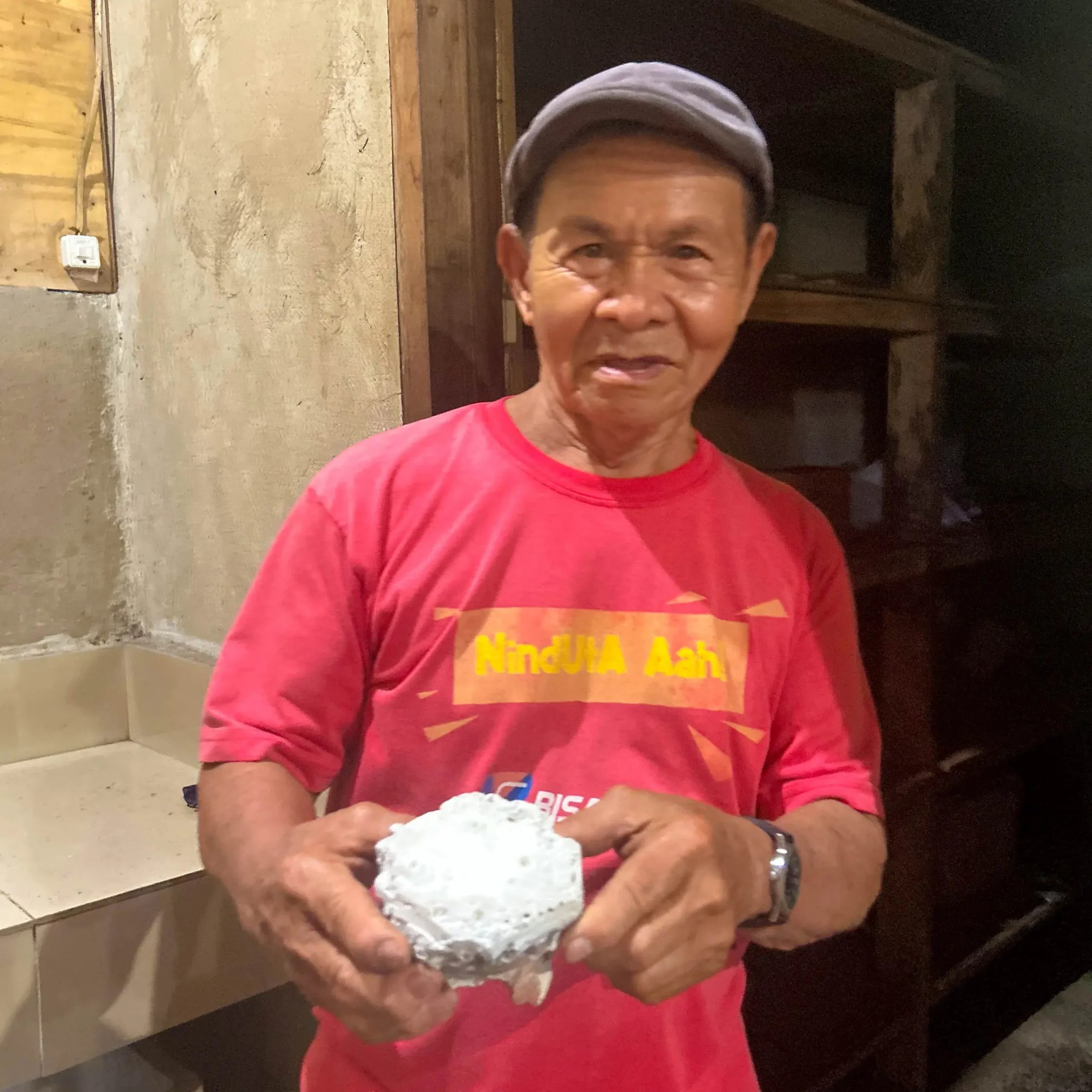
But none of that has stopped 76-year-old Nestor Manongas from Albuquerque, Bohol from continuing the legacy his grandfather Tan Inong aka Mang Tino left behind. Aided by family members, namely youngest sibling Veronica and brother Msngr. Crisologo, Nestor supervises the whole production process.
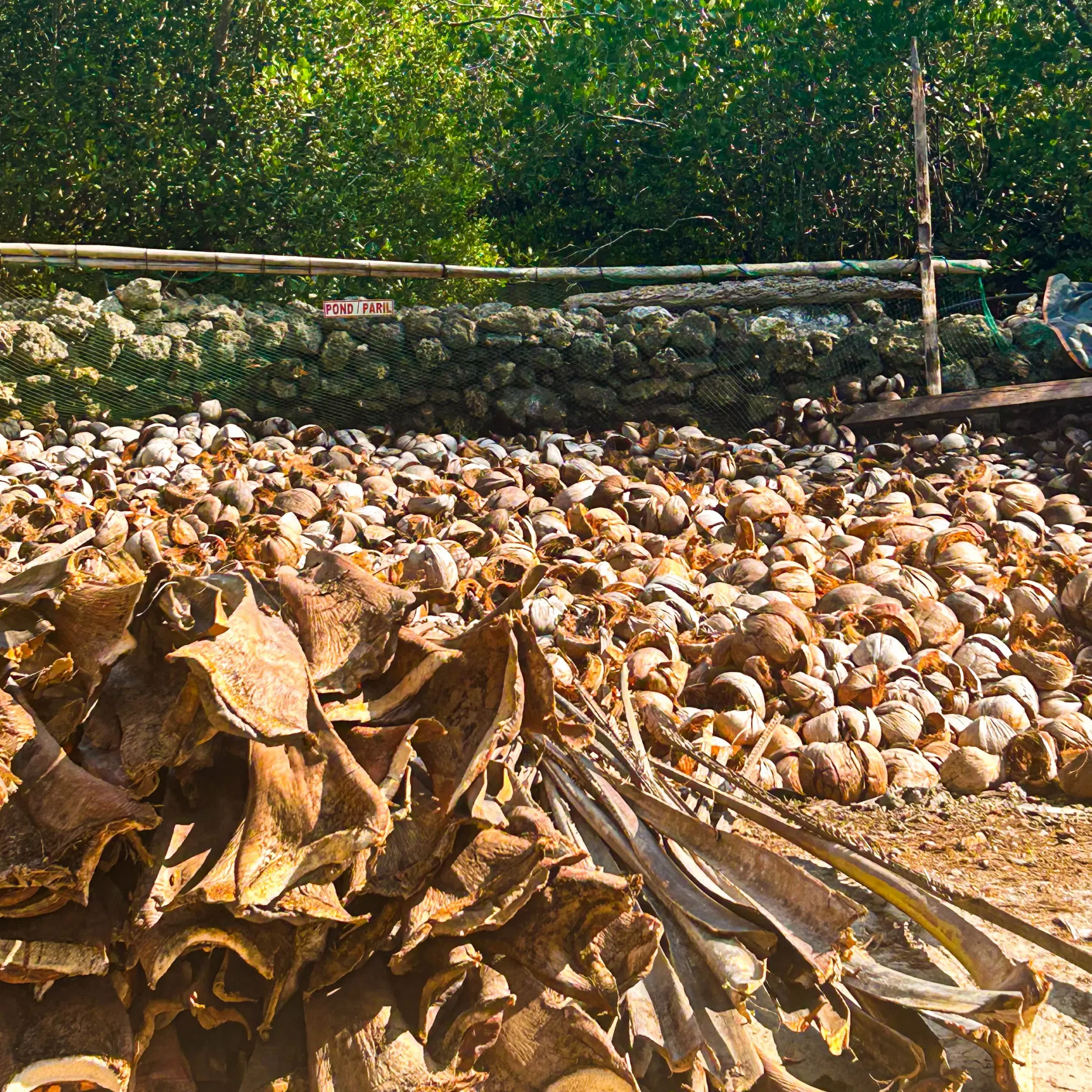
First, coconuts are dehulled and the husks are thrown into a large basin called paril. When high tide comes, sea water naturally gets into the pond, soaking the bunot, absorbing the liquid like a sponge. Typically, sea water only has 3.5% salinity and so the salt farmers need to increase it to approximately 80% sodium chloride for it to become authentic asin tibuok.
After soaking, the husks are chopped into pieces then spread out on a platform to bathe in the sun for a day, before turning them into ashes called gasang. This is a painstaking process as the people need to watch over the burning wood fire 24/7, making sure its at the right temperature. It shouldn’t be blazing, just smoking.
While aflame, Nestor sprinkles more salt water over the husks to add to the salinity. Back in the day, his ancestors needed to walk back and forth, getting water from the sea using a bamboo implement called sag-ob. These days, they use a hose for convenience.
After one week of non-stop burning, they end up with hardened ash, which they then transfer to the filtration area. They are placed in a funnel-shaped bamboo strainer lined with leaves called sagsag. Sea water is poured even more on the ashes to produce tasik, which is a highly concentrated brine. To test its salinity, they get a piece of wood and test if it floats.
Using Nestor’s fancy nautilus shell, the tasik is poured on clay pots (Albuquerque is also home to a lot of pottery makers) placed over live fire for seven to eight hours. During this stage, women wearing fancy jewelry or have their period are asked not visit the workplace as folklore says that having them around would fracture the pots even before the salt forms.
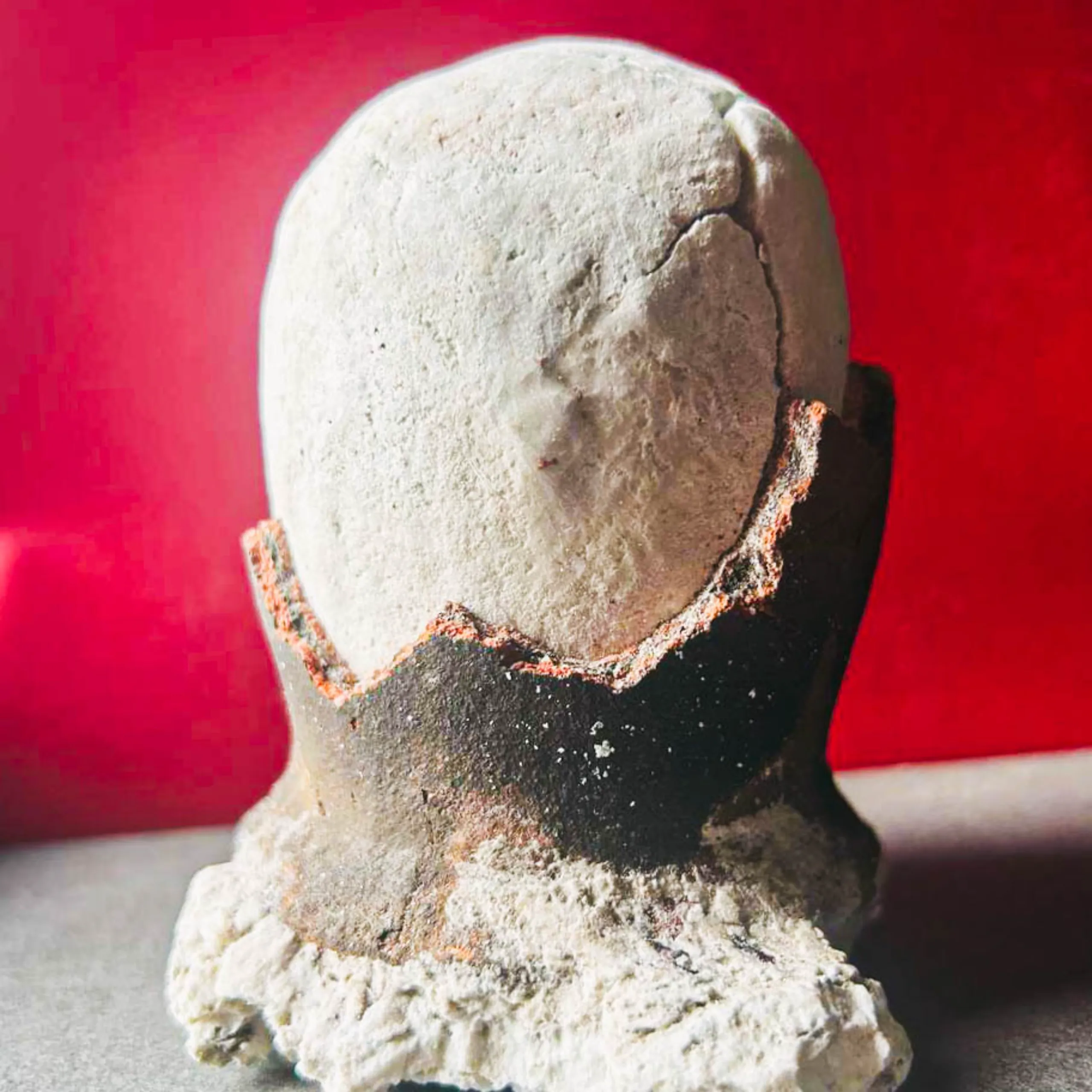
More tasik is added soon as the brine evaporates, and the solidified salt builds up. Eventually, the pot cracks to reveal an egg-shaped mass.
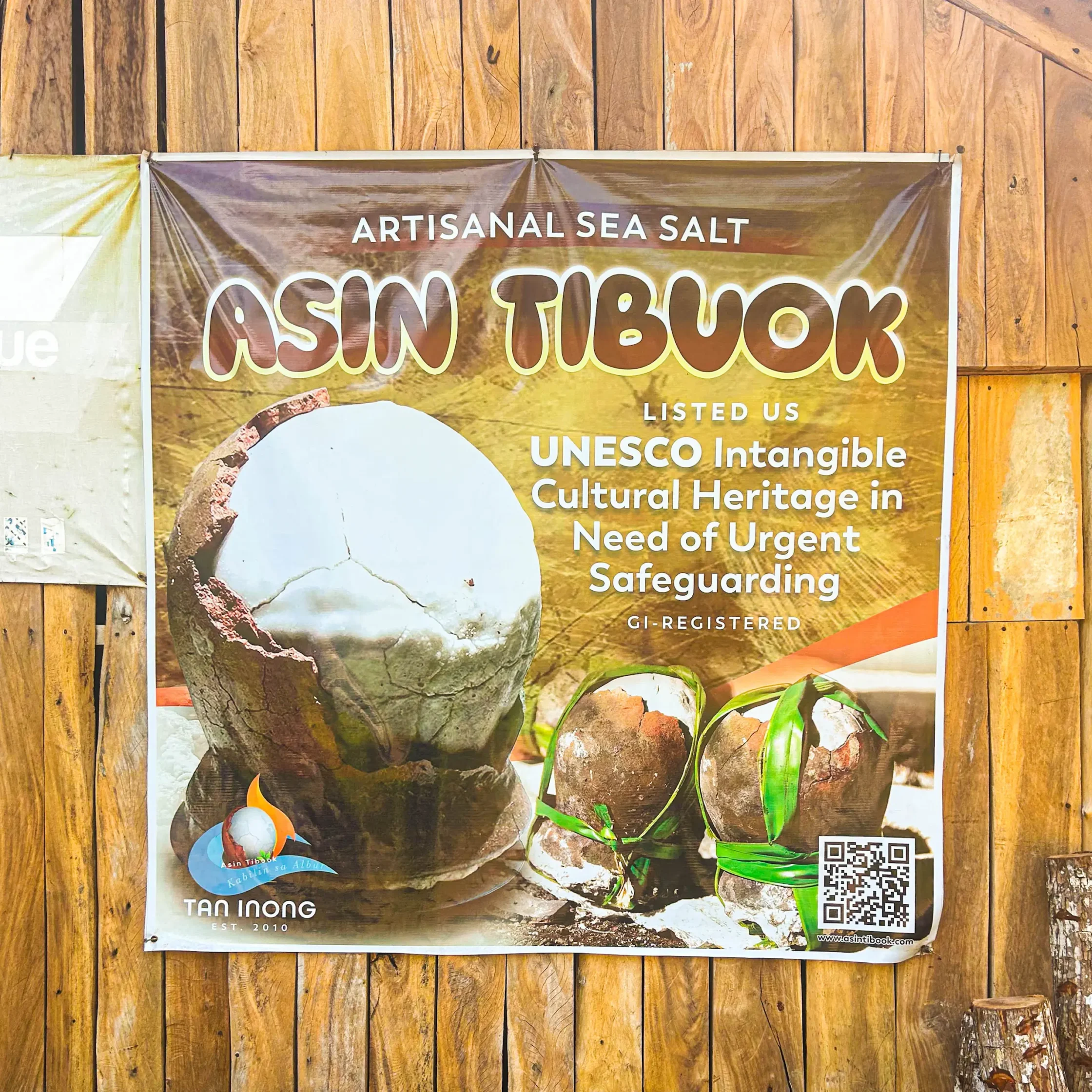
It’s a very arduous and time-consuming practice. And the UNESCO recognizes the tradition by including it in the List of Intangible Cultural Heritage in Need Of Urgent Safeguarding in December 2025. It’s very first traditional Filipino food-making method to be part of the elusive list.
How is asin tibuok used in Filipino cooking?
Whereas before, Mang Nestor would barter with neighboring farmers for grains of upland rice in exchange for his salt (before, carabaos were made to lick salt to supply their bodies with minerals), now, he exports them to the US via a single distributor that drops 2500-unit orders.
For PhP 800 a pop, that shall yield his team over a million sales, glaring enough to have other Boholanons following suit. Currently, there are five families producing this salt.
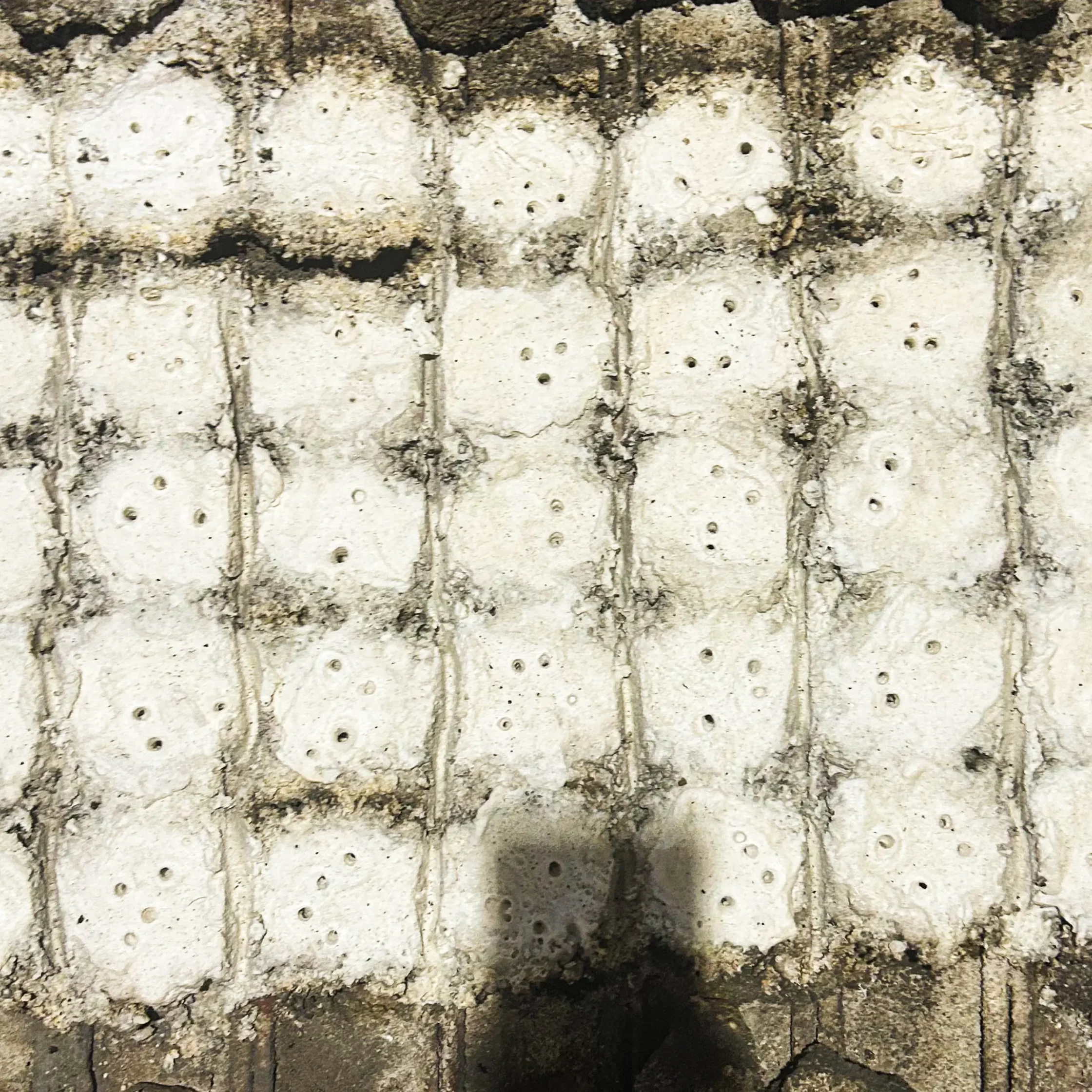
To enjoy the artisanal salt, the locals would dab their rice with it while some break off a chunk then dip it in lugaw to season. They would wash the tip and wipe it dry, ready for the next use. In Manila, chefs would grate it using a microplane, over desserts such as cassava cake and ice cream, adding that most welcome note of coconut saltiness to balance the sweet.
Bohol’s Asin Tibuok has had such a storied life—from running close to extinction to being a treasured heritage that’s currently enjoying global appreciation. This is only made possible by the inspiring drive of Nestor and his family who has revived it to life.

Frequently Asked Questions
Asin tibuok is a rare artisanal Filipino salt from Bohol made using traditional methods involving seawater, coconut husks, ash filtration, and clay pot cooking.
It gets the nickname because the finished salt forms into a large hardened egg-like shape after the clay pot cracks open.
The process involves soaking coconut husks in seawater, drying and burning them into ash, filtering concentrated brine through the ash, then boiling the liquid in clay pots until the salt solidifies.
The salt is labor-intensive and takes months to produce using traditional handmade methods passed down through generations.
It has a smoky, mineral-rich, slightly coconut-like salinity that differs from regular table salt.
Locals traditionally dab it into rice or lugaw, while chefs often grate it over savory dishes and desserts like cassava cake or ice cream.
Asin tibuok originates from Bohol in the Philippines.
Yes. In 2025, the tradition behind asin tibuok production was added to UNESCO’s List of Intangible Cultural Heritage in Need of Urgent Safeguarding.