

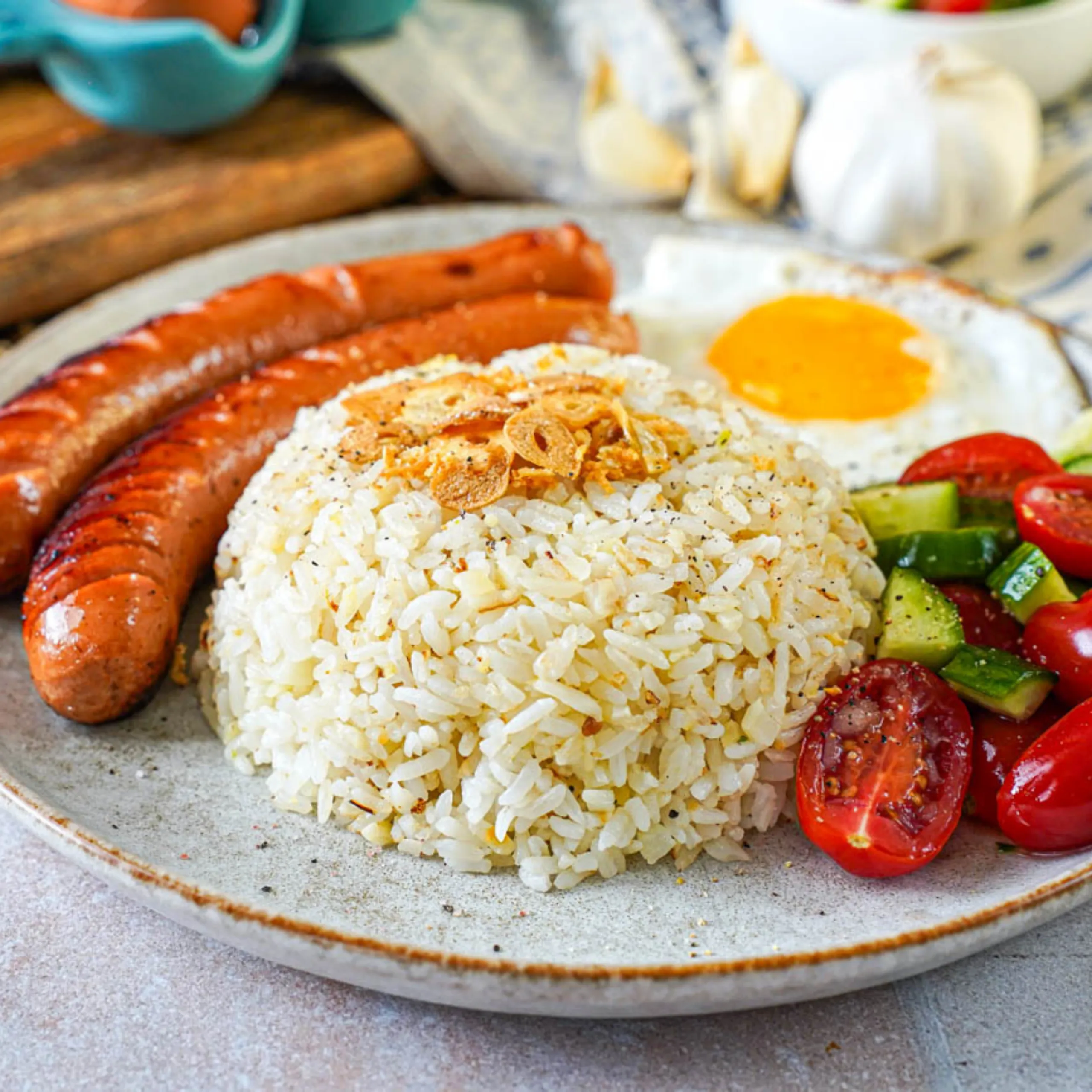
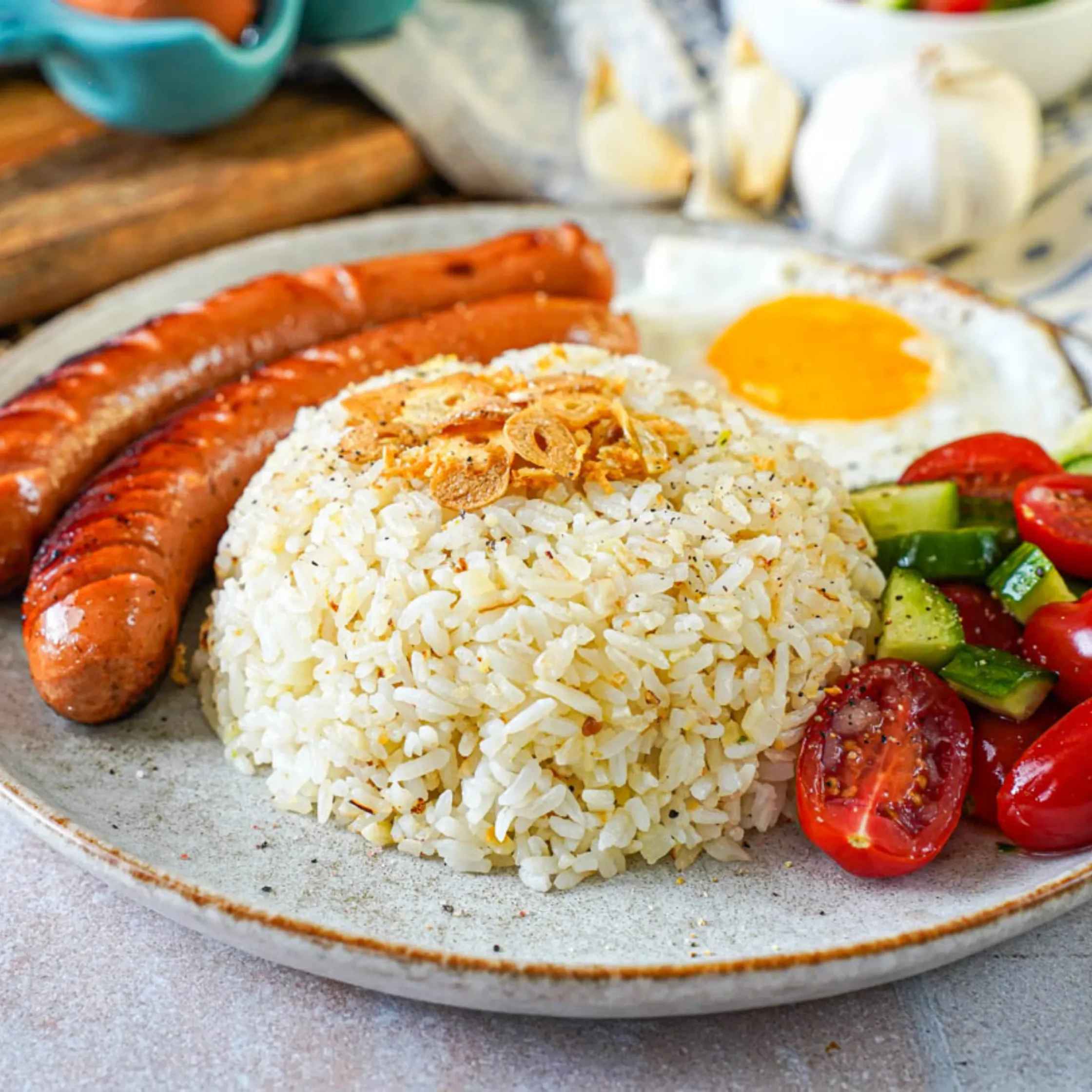
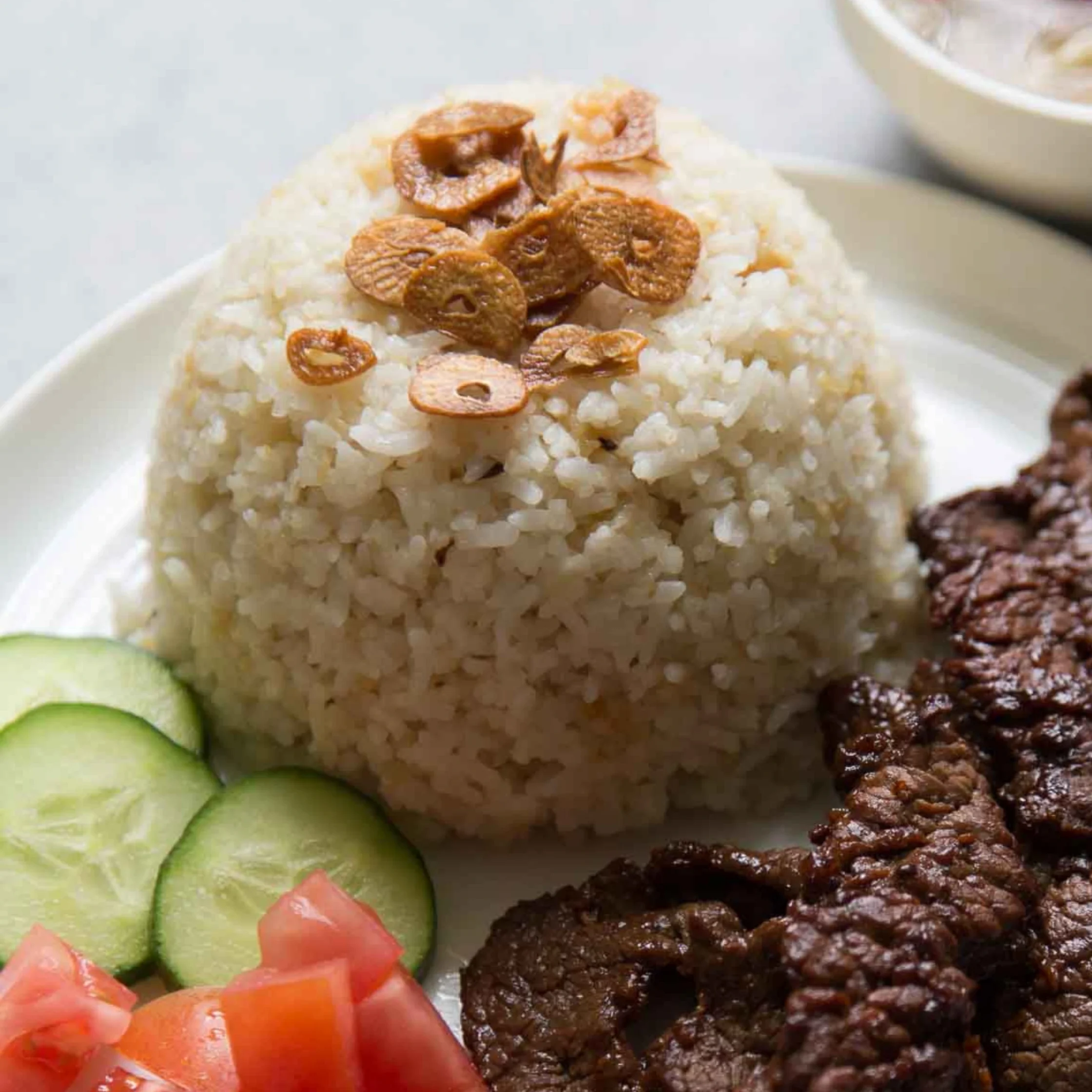
Sinangag is a must-have side dish on any Filipino breakfast plate. It perfectly complements everything you eat with it.
I didn’t realize I was spoiled with good sinangag for breakfast until I tried making it for myself for the first time and it didn’t taste how I thought it should have. The sinangag that I, and many others, know should be fried garlic aroma, enhanced by the crisp of the fried grains of rice. And despite what some kitchen hack videos may try to tell you, using day-old rice is THE best way to make good sinangag.
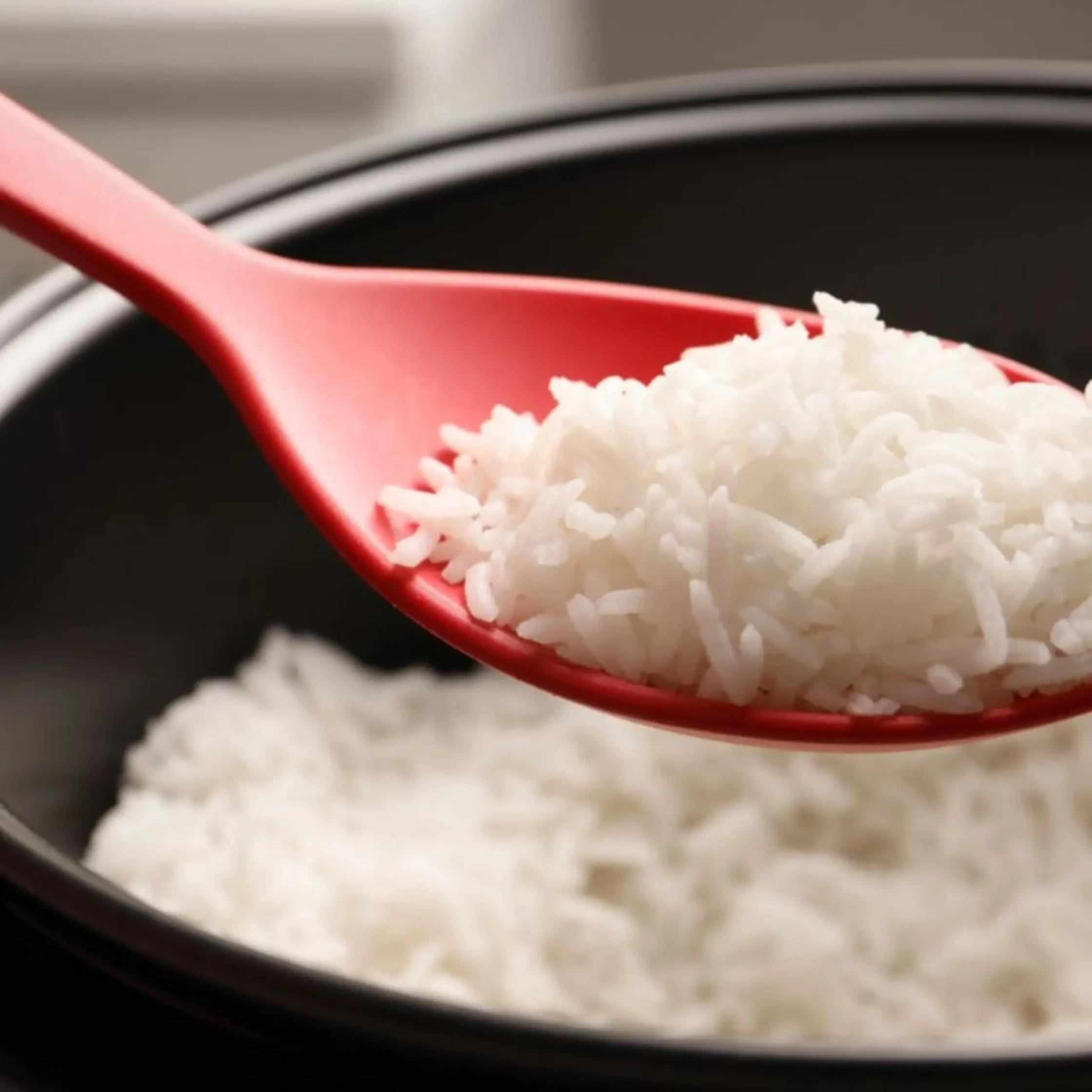
Fresh Rice is Too Wet
The desire to make sinangag without having day-old rice is a heartbreaking, but relatable situation. But do not be tempted to take the shortcut by using freshly cooked rice. The softness and higher moisture content of the rice will only lead to the downfall of your sinangag. Instead of frying it, you’d essentially be steaming it with small chunks of garlic. But having it sit out for a day allows the water to dry out, prevents them from clumping together, and makes the grains just firm enough to stir fry and absorb flavor.
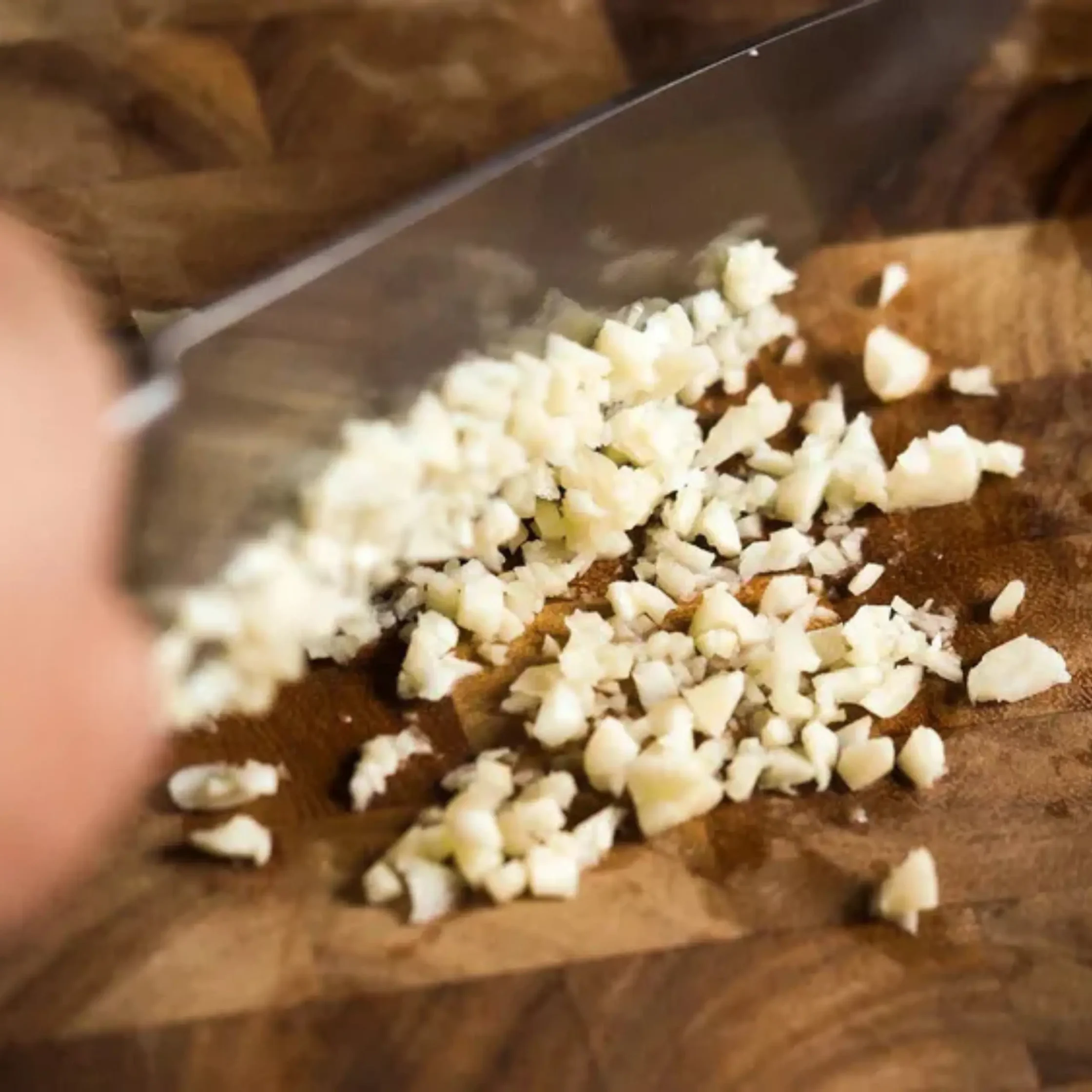
Don’t Underestimate the Amount of Garlic You Need
The biggest blunder in my first attempt at making sinangag was not adding enough garlic. There is nothing more jarring than eating sinangag that completely lacks the punch of garlic in your mouth. The best way to prepare garlic for sinangag is by mincing it up into smaller pieces. The amount of garlic will depend on how much rice you have, but around 4-5 big cloves or one whole head of native garlic should do. After adding oil to your pan and heating it up, add your garlic and fry until it browns. Avoid burning the garlic as it will be tough and leave an unwanted bitter taste. If done right, you’ll be left with these little dark brown nuggets of fragrant, nutty goodness.
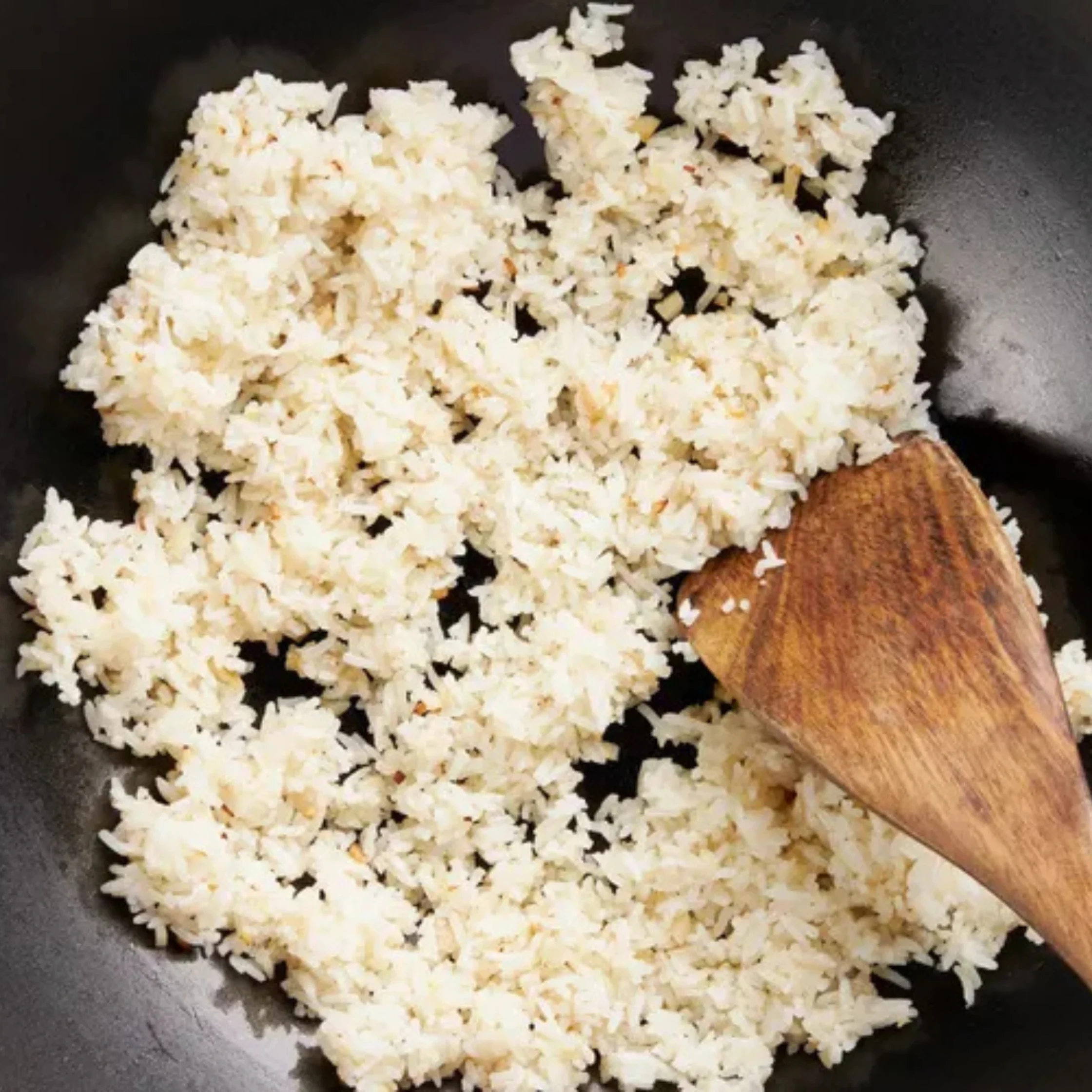
The Crispier, The Better!
Every bite of sinangag is incomplete without the crunch of lightly browned. What you do after you add the day-old rice into the pan can make or break your sinangag. You must stir fry your rice, mixing it with the heated oil and browned garlic. The point isn’t to just heat up the rice or coat it in oil but to crisp up the individual grains for a hot and toasty finish.
Season to Your Liking
Before serving, you can add a pinch of salt, pepper, or any other seasonings according to your taste. This only elevates the strong savory notes of your sinangag. One thing to consider is what ulamUlamThe main dish eaten with rice, whether meat, fish, or vegetables, and the centerpiece of a Filipino meal. From adobo to sinigang, an ulam is designed to pair with rice,Go to Ulam Glossary you will be eating the sinangag with. For example, you can add little to none if you are eating it with something on the saltier side like tuyo or corned beef. But if you’re eating something sweet like longganisa or tocino, adding a pinch or two of salt can go a long way.

Frequently Asked Questions
Sinangag is Filipino garlic fried rice commonly eaten during breakfast. It is a perfect way to use leftover or day-old rice.
All you need a fat (either butter or any neutral oil), leftover or day-old rice, salt and/or pepper to taste, and as much minced garlic as you like.
Have patience! Using old rice is highly recommended as it is best in becoming crispy and absorbing the garlic flavor.
I promise, it’s worth the wait.
Ideally, sinangag should be consumed within 1-2 hours max after making it if left in room temperature.

![The Ongpin South Bridge arch [PHOTO COURTESY OF The Urban Roamer Official Website]](https://assets.delish.ph/wp-content/uploads/2026/10/The-Ongpin-South-Bridge-arch-PHOTO-COURTESY-OF-The-Urban-Roamer-Official-Website-960x960.webp)