

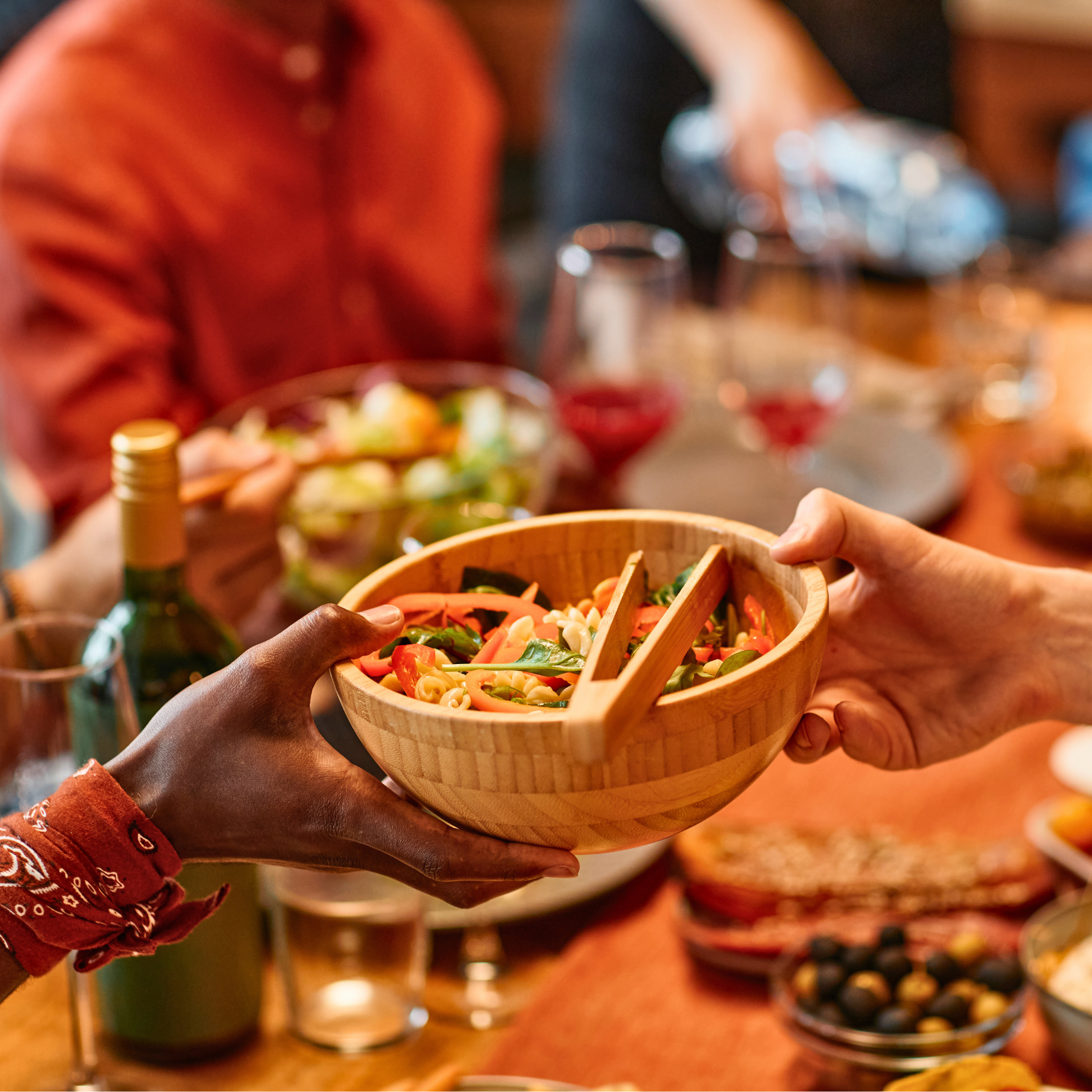
Whether it’s a full-on fiesta, a family get-together, a high school reunion, or an office Christmas party, gatherings in the Philippines will almost always involve a handaan—a hearty spread of viands to be shared among guests.
But beyond all the merriment, these handaans aren’t just about eating. Equally important is a question directed toward the gathering’s guests: “what am I going to contribute?”
In many cases, particularly for gatherings done at Filipino homes, the host or homeowner takes charge of the primary menu. But guests will often take the initiative to bring their own putahe to the table—their ambag, so to speak. Other gatherings can be done entirely potluck-style, with most if not all guests bringing a dish or drink for sharing among other guests during the party. (There are exceptions of course, like more formal catered events that are outside the scope of this article)
Why Bringing Food to Gatherings Goes Deep for Many Filipinos
The concepts of bringing food to share and shared feasts aren’t exclusive to the Philippines by any means. Regardless, they’re deeply ingrained in the local psyche, right in line with the collectivistic nature of Filipino society, which puts importance on the needs and values of the community over the individual.
That Filipinos willingly bring food to share at gatherings is consistent with the cultural value called bayanihan, which is akin to a sense of cooperation, solidarity, harmony, and mutual aid with the community. We’re all familiar with the tradition of neighbors helping families relocate by carrying the bahay kubo as a group to its new location; but this community-focused spirit also extends to the way Filipinos eat.
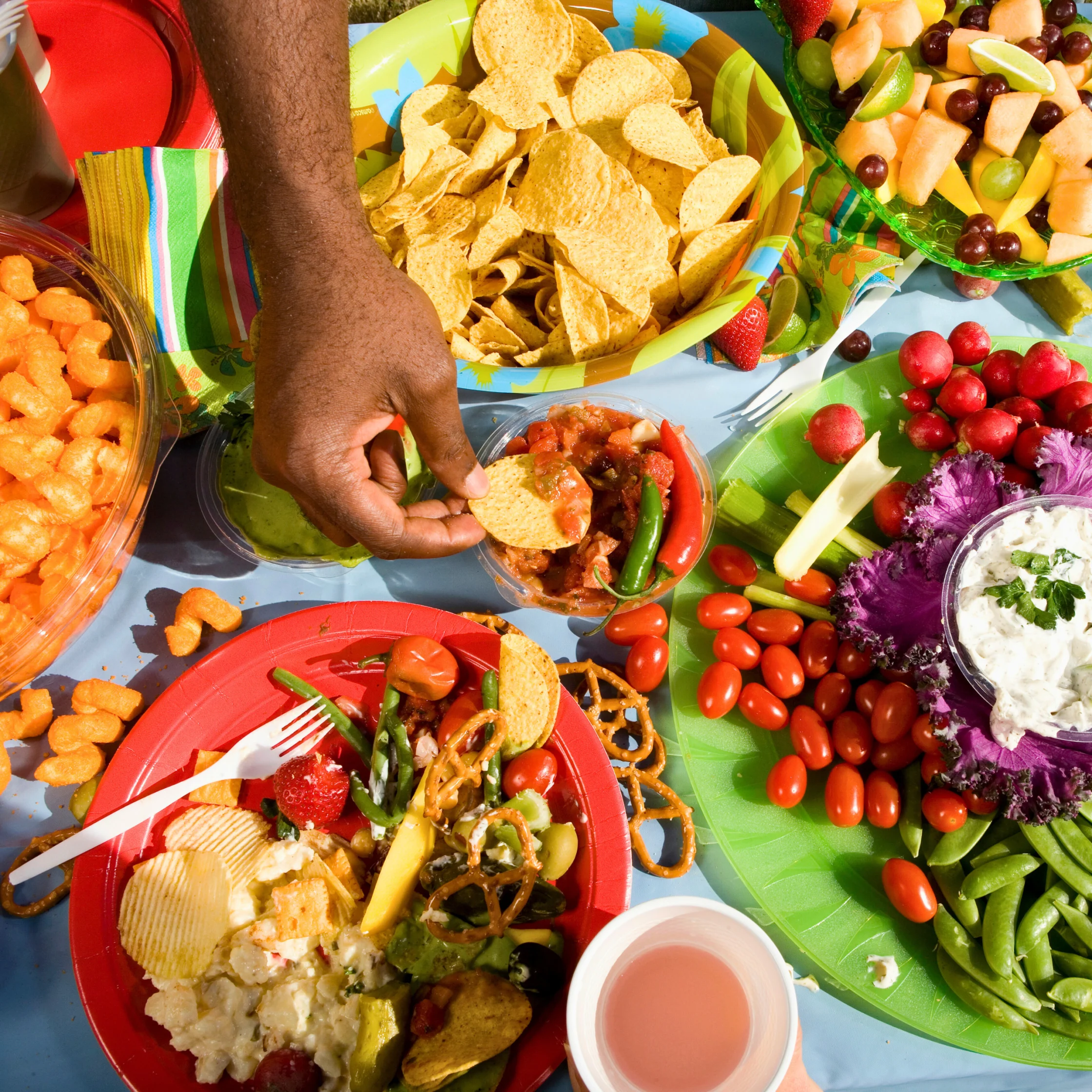
Food has a relational function in these parts. Food and cooking are a love language, as anyone who grew up with meals lovingly prepared by their grandparents, parents, or other familiar or parental figures would attest to. Meals are often communal, shared with those closest to us to express appreciation. And come fiestas and holidays in the province, it’s a common practice for families to prepare food not only for the household, but for neighbors, extended family, and other visitors who are free to drop by for a meal (and make chika with the host families while they’re at it).
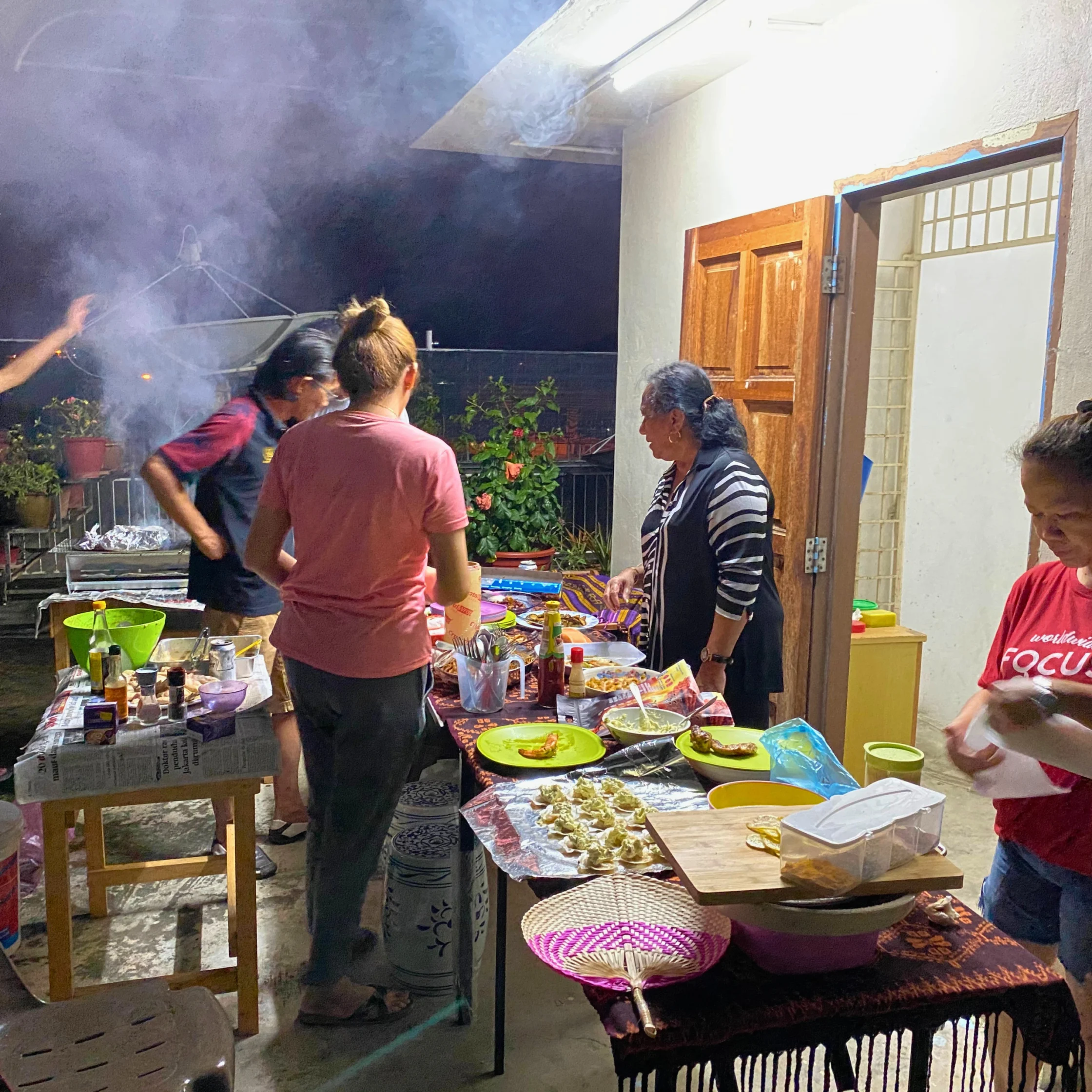
We see this same notion of food-as-relationship builder at play in gatherings of all scales—whether you’re cooking your own arroz Valenciana entirely from scratch for the post-prusisyon handa; picking up a bilao from the neighborhood pansitan for your grandparents’ anniversary; or just grabbing a gallon or two of ice cream from the grocery for your work besties to bond over at your upcoming team building.
What Bringing Food to Gatherings Means for Many Filipinos
Well, a lot of things. It’s a way of giving back to the host, for starters, who has taken the time and energy to welcome guests into their abode and/or take charge of organizing the celebration. In this sense, it reflects the valuation of reciprocity that’s integral to Filipino bayanihan.
Bringing food to gatherings is a form of providing mutual aid too, with multiple participants contributing their share of things to eat to the table, there’s more food to go around while costs are more evenly spread across guests.
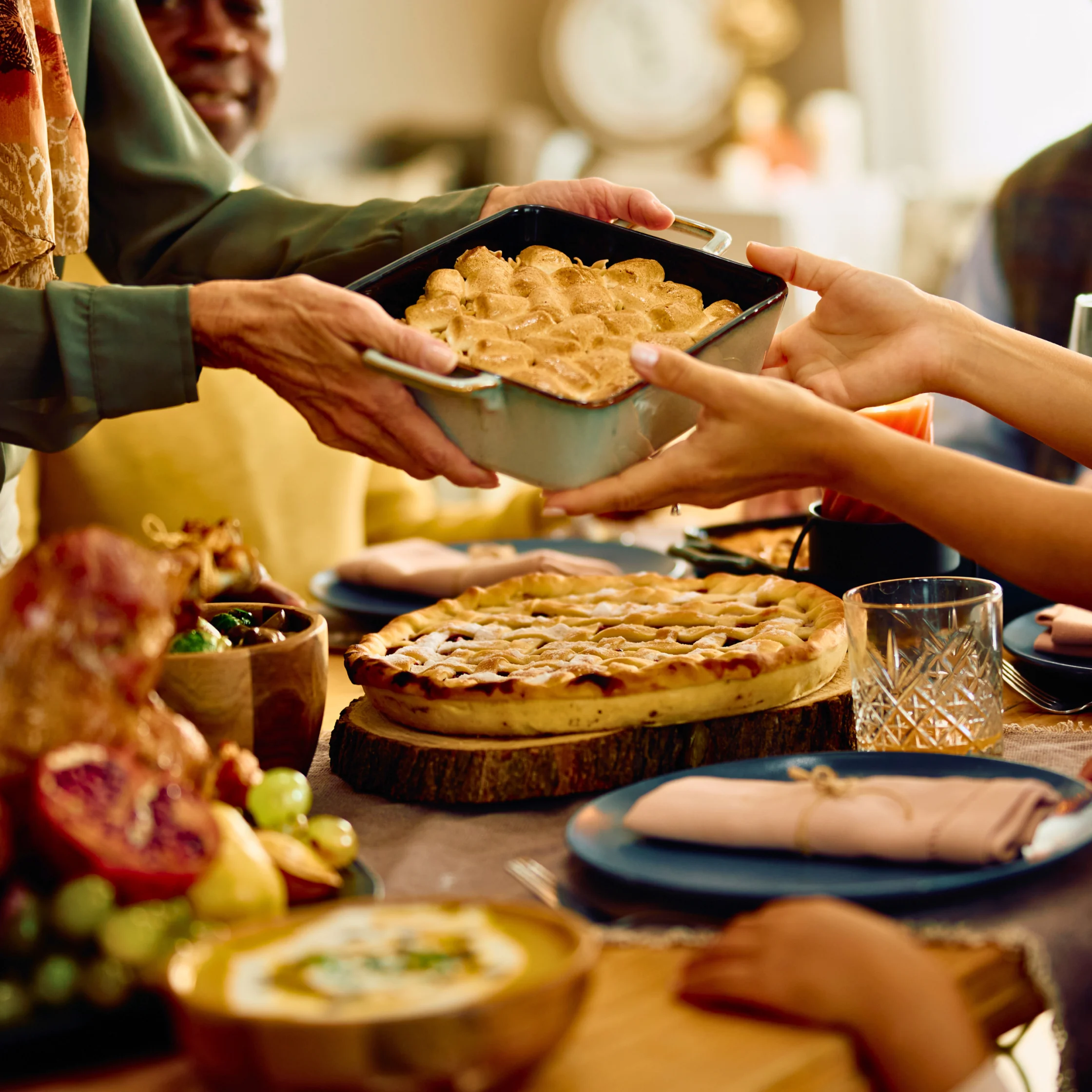
And while the Filipino handaanHandaanA gathering or feast prepared for family and guests, such as a birthday, reunion, or holiday. A proper handaan means generous, abundant tables, with signature dishes like pancit for longGo to Handaan Glossary is notoriously prone to excess food, the act of sharing extends to the inevitable leftovers, with hosts often encouraging guests to take home what they can in their own containers. Not only does this minimize possible waste on the part of hosts; it also gives guests their own share of food that can then be shared with their own households.
As the great Doreen Fernandez has pointed out, food for Filipinos isn’t just about sustenance or flavor; it also reflects the Filipino culture and life. Through this lens, the custom of bringing food to gatherings can be thought of as a way for Filipinos to nourish not just stomachs, but also ties with the community at large.

Frequently Asked Questions
Ambag generally means a contribution. In the context of gatherings, it often refers to the food, drinks, money, or other items a guest contributes to the celebration.
Ambag generally means a contribution. In the context of gatherings, it often refers to the food, drinks, money, or other items a guest contributes to the celebration.
Ambag generally means a contribution. In the context of gatherings, it often refers to the food, drinks, money, or other items a guest contributes to the celebration.
Sharing food is common across many cultures, but bringing a contribution to communal Filipino gatherings is closely connected to local traditions of hospitality, reciprocity, and community.
Filipino society is often described as collectivistic because it prioritizes community needs over individual ones, a value reflected in communal eating and the practice of bringing food to share. Meals function relationally, expressing appreciation and reinforcing ties between family, neighbors, and community members.

![The Ongpin South Bridge arch [PHOTO COURTESY OF The Urban Roamer Official Website]](https://assets.delish.ph/wp-content/uploads/2026/10/The-Ongpin-South-Bridge-arch-PHOTO-COURTESY-OF-The-Urban-Roamer-Official-Website-960x960.webp)