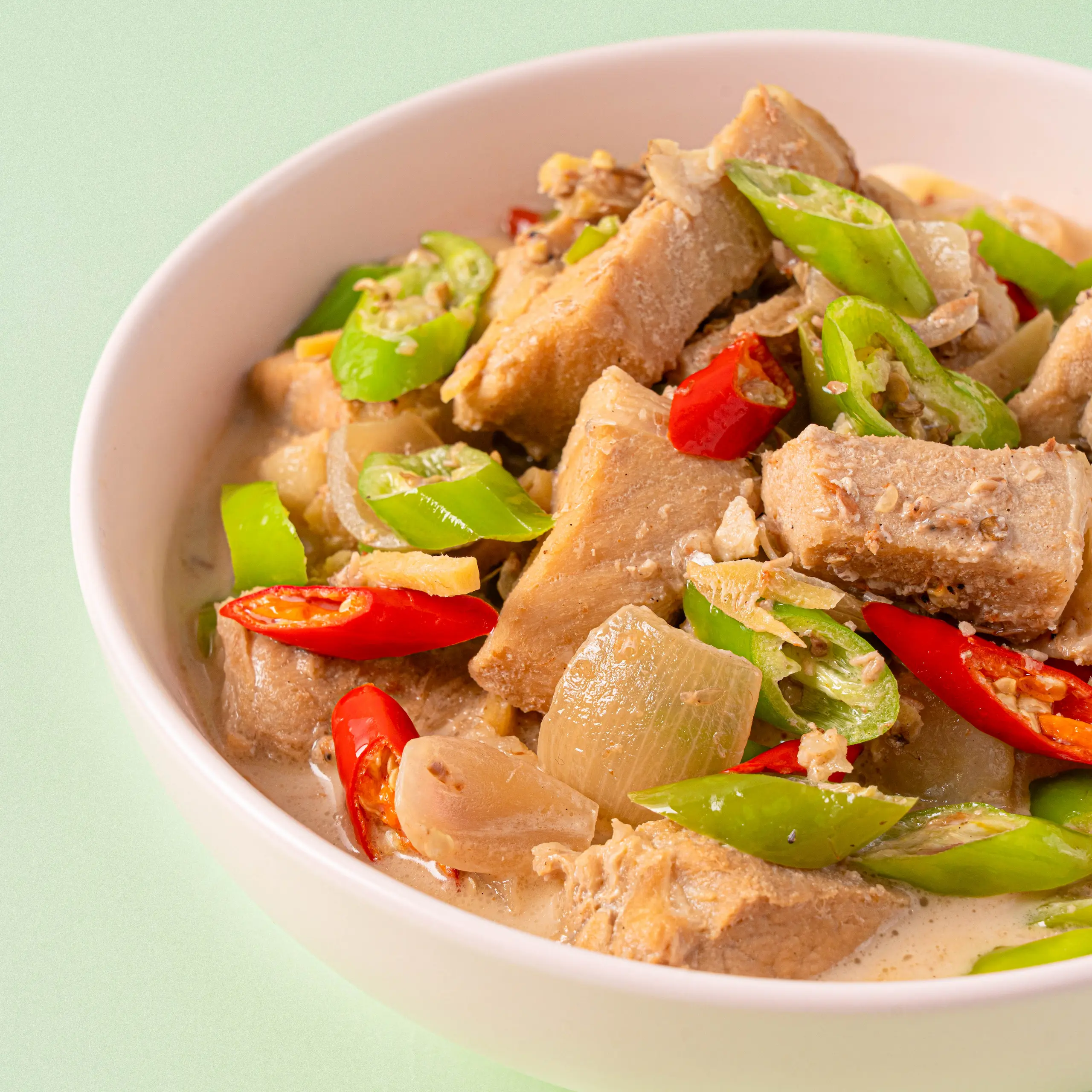


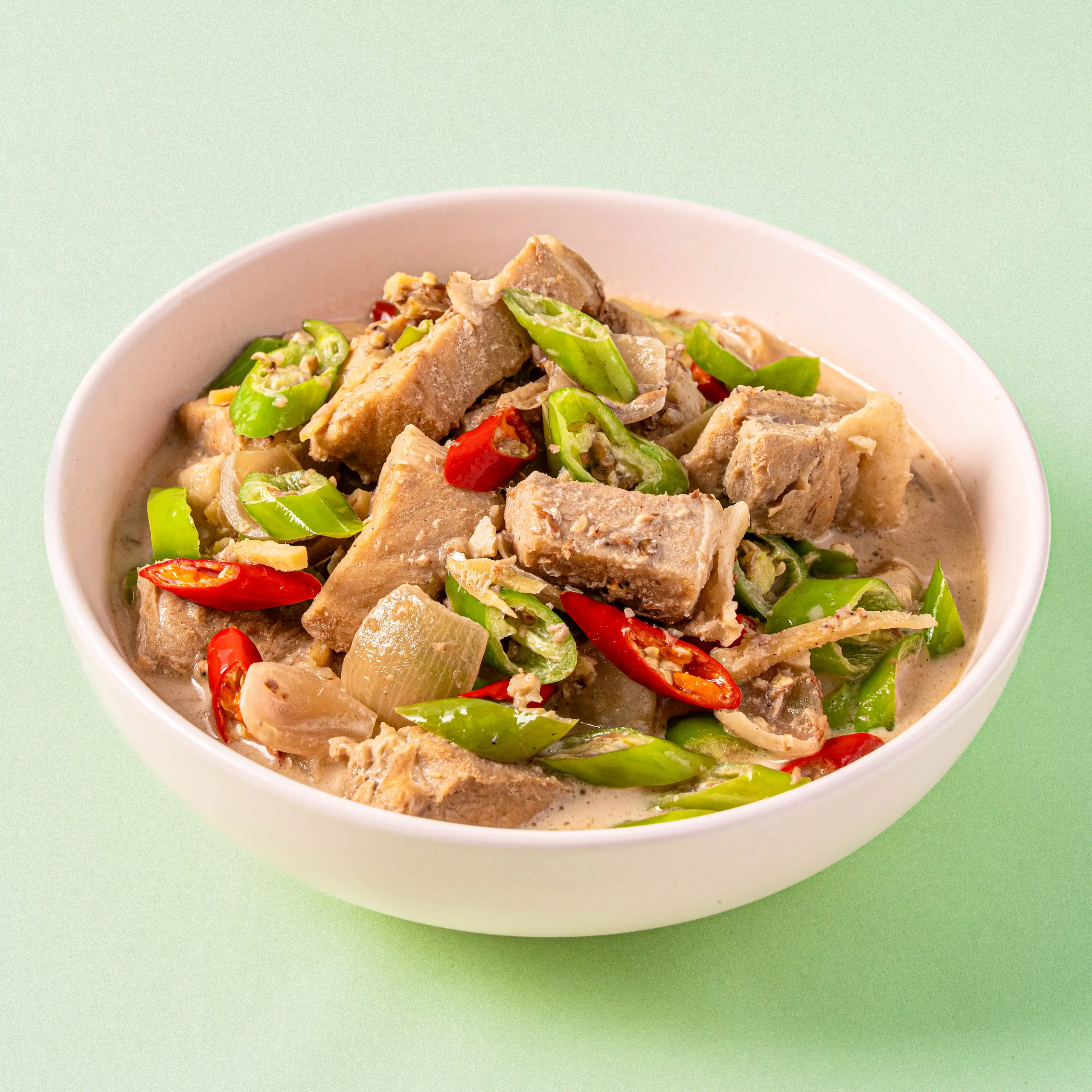
There are Filipino dishes that quietly sit on the table, and then there are dishes that announce themselves the moment they reach the kitchen. Bicol Express belongs to the second group. The aroma of pork, garlic, ginger, chilies, shrimp paste, and coconut milk simmering together is enough to make anyone hungry.
Bicol Express is rich, creamy, salty, savory, and spicy all at once. The coconut milk softens the heat of the chilies without completely hiding it, while the shrimp paste gives the sauce that deep fermented flavor that makes it unmistakably Filipino. The pork absorbs all of those flavors as it simmers, becoming tender and wonderfully rich.
And despite its bold personality, Bicol Express is not a complicated dish. It is built from ingredients that have long been familiar in Filipino kitchens. You don’t need complicated techniques—just patience, good ingredients, and enough rice to go with it.
This version uses 500 grams of pork, coconut milk, shrimp paste, ginger, garlic, onion, red and green chilies, and fish sauce. The result is a thick, flavorful dish that is perfect for serving with freshly steamed rice.
What Is Bicol Express?
Bicol Express is a Filipino pork dish cooked in coconut milk, shrimp paste, and chilies. It is famous for its rich, creamy sauce and spicy flavor.
The dish is strongly associated with the Bicol Region, an area of the Philippines known for its love of coconut milk and chili peppers.
What makes Bicol Express particularly interesting is the combination of ingredients that may seem intense on their own:
- Pork provides richness.
- Coconut milk provides creaminess.
- Shrimp paste provides salty fermented umami.
- Chilies provide heat.
- Ginger adds warmth and freshness.
- Garlic and onion create the aromatic foundation.
- Fish sauce deepens the savory flavor.
Together, they create a sauce that is much more complex than its relatively short ingredient list suggests.
A Little History of Bicol Express
Bicol Express is named after the Bicol Express railway service, which connects Manila with the Bicol region. However, the history of the dish itself is more complicated than the name might suggest.
The dish is strongly associated with Bicolano cuisine because of its use of coconut milk and chilies, two ingredients that are particularly important in Bicol cooking. However, food historians and culinary writers have debated whether the dish in its modern form actually originated in Bicol or was developed in Manila by cooks with Bicolano roots.
One commonly repeated account credits Cely Kalaw, a restaurateur from Bicol, with popularizing or creating the dish in Manila in the 1960s. According to this story, she named it after the train traveling toward Bicol. Other accounts suggest that similar coconut-and-chili pork preparations existed in Bicol before the dish became known by the name Bicol Express.
Regardless of which version is closest to the truth, the dish has become firmly established as one of the best-known representatives of Bicolano-inspired Filipino cooking.
Its popularity makes sense. Bicol cuisine is famous for combining coconut milk and chili, creating food that is simultaneously rich and fiery.
Choosing the Pork
The pork you choose will have a major effect on the finished dish.
For a rich and traditional-feeling Bicol Express, pork belly is an excellent option because its fat becomes part of the sauce.
You can also use:
- Pork shoulder
- Pork butt
- Pork loin
- Pork leg
- A combination of lean meat and fatty pork
If you’re using very lean pork, be careful not to overcook it because it can become dry.
If you prefer a richer version, pork belly works beautifully with coconut milk.
For this recipe, cut the pork into relatively small cubes so that the meat cooks evenly and absorbs the sauce.
How Spicy Should Bicol Express Be?
This is one of the most personal aspects of the dish.
Some versions are quite mild, with the chilies providing more aroma than heat.
Others are intensely spicy.
For a mild Bicol Express, remove the seeds from most of the chilies and reduce the number of red chilies.
For a medium-spicy version, use the recipe as written but remove some seeds.
For a very spicy version, leave the seeds intact and add extra red chilies.
You can also use Thai chilies if you really want to turn up the heat.
However, don’t assume that more chili automatically means a better Bicol Express.
The goal is for the heat to work together with the coconut milk and savory pork rather than completely overpower them.
Recipe Tips for Better Bicol Express
Use good coconut milk
Coconut milk is one of the main flavors in the dish.
If possible, use full-fat coconut milk for a richer sauce.
Freshly squeezed coconut milk can produce an especially fragrant result, although good-quality canned coconut milk is perfectly practical.
Fry the bagoong
Don’t simply add the shrimp paste to the coconut milk and walk away.
Allow it to cook with the pork and aromatics first.
This develops a deeper flavor.
Don’t rush the pork
If you’re using pork belly or shoulder, give it enough time to become tender.
A few extra minutes of gentle cooking can make a big difference.
Add coconut milk after the pork has softened
Cooking the pork in water first allows it to tenderize while giving the coconut milk less time to break down under prolonged high heat.
Reduce the sauce properly
A watery Bicol Express doesn’t have the same concentrated flavor as a thick, creamy version.
Allow the sauce to reduce until it coats the pork.
Taste before seasoning
Because bagoong and fish sauce are both salty, always taste before adding extra salt.
Ingredient Substitutions
Pork
You can use:
- Pork belly
- Pork shoulder
- Pork loin
- Chicken
- Shrimp
- Firm tofu
- Mushrooms
Chicken can produce a lighter version, while tofu and mushrooms work well for a meatless variation.
Shrimp Paste
If bagoong isn’t available, you can use:
- Fish sauce
- Anchovy paste
- Soy sauce
- Mushroom seasoning for a vegetarian version
You can use:
However, the distinctive fermented flavor of shrimp paste is an important part of traditional Bicol Express, so substitutions will change the character of the dish.
Coconut Milk
- Full-fat canned coconut milk
- Fresh coconut milk
- Light coconut milk
For a richer version, you can replace part of the coconut milk with coconut cream.
Chilies
You can substitute different peppers depending on availability.
Try:
- Thai chili
- Jalapeño
- Serrano
- Long green chili
- Finger chili
- Red pepper flakes
For a milder dish, use fewer hot chilies and rely more on long green peppers.
Ginger
Fresh ginger is preferable, but in a pinch you can use a small amount of dried ground ginger.
The flavor won’t be quite as fresh or aromatic.
Understanding the Main Ingredients
Coconut Milk
Coconut milk is central to Bicolano cooking.
It provides the creamy texture that makes Bicol Express so satisfying.
It also performs an important balancing role.
Chili peppers provide heat, while coconut milk provides richness and softness, allowing the dish to be spicy without tasting harsh.
Chili
Chili is not simply a garnish in Bicol Express.
It is part of the dish’s identity.
The combination of rich coconut milk and hot peppers is a hallmark of Bicolano cuisine.
The heat also helps cut through the richness of the pork and coconut.
Bagoong
Shrimp paste contributes a powerful fermented umami flavor.
It brings saltiness and depth that can’t be fully reproduced by ordinary table salt.
A relatively small amount can transform the entire sauce.
Ginger
Ginger adds warmth and freshness.
It is particularly useful in rich dishes because its aromatic sharpness prevents the flavors from becoming too heavy.
Pork
Pork provides richness and protein.
Fatty pork works especially well because its rendered fat combines with the coconut milk and creates an incredibly flavorful sauce.
Is Bicol Express Healthy?
Bicol Express contains several nutritious ingredients, particularly pork, aromatics, chilies, and coconut.
However, it is also a relatively rich dish.
Pork provides protein, iron, zinc, and vitamin B12.
Chilies provide vitamin C and plant compounds such as capsaicin.
Garlic and onion contribute various beneficial plant compounds.
Ginger contains naturally occurring compounds such as gingerols.
Coconut milk provides energy and fats, but it is relatively high in saturated fat.
Shrimp paste and fish sauce can also make the dish high in sodium.
So Bicol Express can absolutely fit into a balanced diet, but portion size and the amount of pork, coconut milk, and salty seasonings matter.
Health Benefits of the Ingredients
Pork
Pork provides complete protein and nutrients including vitamin B12, zinc, selenium, and iron.
Leaner cuts can reduce the amount of saturated fat.
Coconut Milk
Coconut milk provides energy and fat and contributes a range of minor nutrients.
Its richness is one of the defining culinary characteristics of the dish, although it is best enjoyed in moderation if you’re watching saturated fat intake.
Chilies
Chili peppers contain capsaicin, the compound responsible for their heat.
They can also contribute vitamin C and other antioxidants.
Garlic
Garlic contains sulfur-containing compounds and adds considerable flavor without requiring large quantities.
Onion
Onions contribute fiber and various plant compounds while adding natural sweetness to the dish.
Ginger
Ginger contains naturally occurring bioactive compounds and adds a fresh, warming flavor.
How to Make a Lighter Bicol Express
You can make a lighter version without completely sacrificing the dish’s identity.
Try using:
- Leaner pork
- Less coconut milk
- More chilies and aromatics
- Less shrimp paste
- Less fish sauce
- More vegetables
- Mushrooms or eggplant alongside the pork
You can also reduce the amount of pork and add vegetables such as eggplant, green beans, or mushrooms.
The resulting dish will be less traditional in composition, but the coconut-chili flavor profile will remain.
What to Serve with Bicol Express
Bicol Express practically demands steamed rice.
The rice provides a mild, neutral base for the rich and spicy sauce.
A spoonful of Bicol Express over hot rice lets you experience all of the flavors together without the heat becoming overwhelming.
You can also serve it with:
- Atchara
- Fresh tomato salad
- Cucumber salad
- Steamed vegetables
- Blanched kangkong
- Grilled fish
- Crispy tofu
Something fresh or lightly acidic on the side is particularly good because it helps balance the richness.
Bicol Express and Other Coconut-Based Filipino Dishes
Bicol Express belongs to a broader family of Filipino dishes that use coconut milk.
One close relative is Gising-gising, which commonly combines vegetables, pork, bagoong, chili, and coconut milk.
The two dishes share many ingredients, but their focus differs.
Gising-gising traditionally highlights vegetables such as winged beans, while Bicol Express is primarily centered around pork.
Other Filipino dishes such as Laing also showcase the combination of coconut milk and chili, although taro leaves are the main ingredient in that dish.
Together, these foods demonstrate how important coconut milk is to Filipino regional cooking.
Common Mistakes to Avoid
Adding too much bagoong
Shrimp paste is powerful.
Start conservatively and add more if needed.
Making the dish too salty
Remember that both bagoong and fish sauce contain sodium.
Taste before adding salt.
Using too much coconut milk without reducing it
A large amount of liquid can leave you with a thin sauce.
Give it enough time to reduce.
Burning the garlic or ginger
These aromatics should become fragrant, not dark and bitter.
Overcooking lean pork
Lean pork can become dry if simmered too aggressively for too long.
Making the dish unbearably spicy
Heat should complement the other flavors.
If the chili overwhelms everything else, you lose the complexity of the coconut milk, pork, and bagoong.
A Simple Way to Understand the Flavor
Bicol Express works because every major ingredient contributes something different.
Pork gives richness.
Coconut milk gives creaminess.
Bagoong gives fermented umami and saltiness.
Chili gives heat.
Ginger gives warmth.
Garlic and onion provide sweetness and aroma.
Fish sauce reinforces the savory flavor.
The magic happens when these flavors are allowed to simmer together until the sauce becomes thick and concentrated.
Final Words
Bicol Express is a dish with a personality all its own.
It is rich without being bland, spicy without needing to be painfully hot, and creamy without relying on dairy. The combination of pork, coconut milk, bagoong, garlic, ginger, and chilies creates a sauce that is so flavorful that plain rice becomes the perfect partner.
What makes it even more interesting is the story behind it. Whether you focus on its Bicolano culinary influences, its association with the railway that inspired its name, or the many family recipes that have evolved over the years, Bicol Express represents something important about Filipino food: recipes are often shaped by place, available ingredients, family traditions, and personal taste.
You can make it fiery or relatively mild. You can use pork belly for an indulgent version or leaner pork for something lighter. You can add vegetables, adjust the bagoong, or change the chili depending on who’s eating.
But the heart of the dish remains the same: rich coconut milk, savory pork, fermented shrimp paste, and the unmistakable warmth of chili.
Serve it with freshly steamed rice, perhaps with something fresh and crunchy on the side to balance the richness. Take a spoonful of the sauce with the pork and let it soak into the rice.
That is when Bicol Express really makes sense.
It isn’t just a spicy pork dish. It is a celebration of the bold, creamy, savory flavors that make Filipino regional cooking so memorable. And when a pot of Bicol Express is simmering in the kitchen, you may find that nobody needs to be called to the table twice.