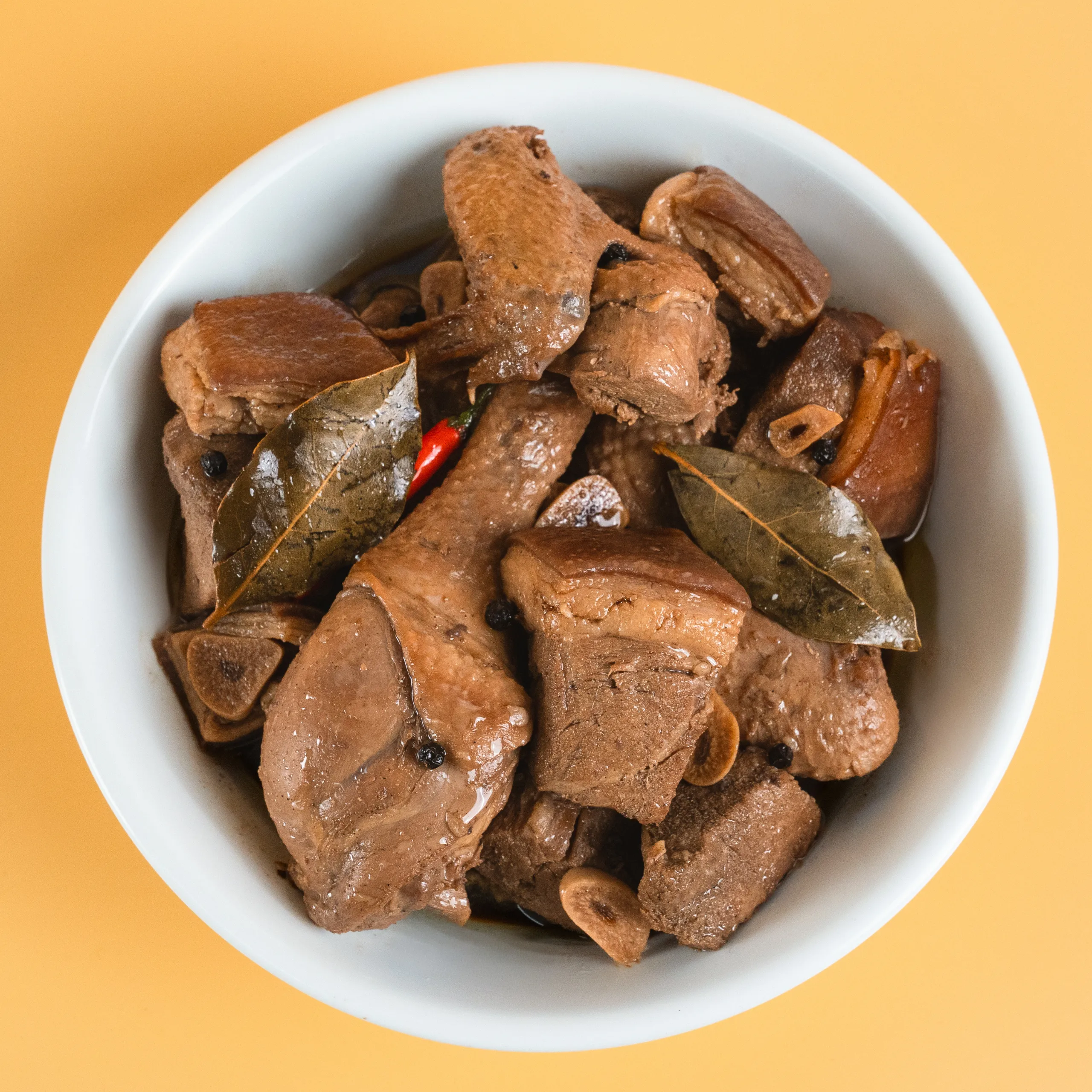


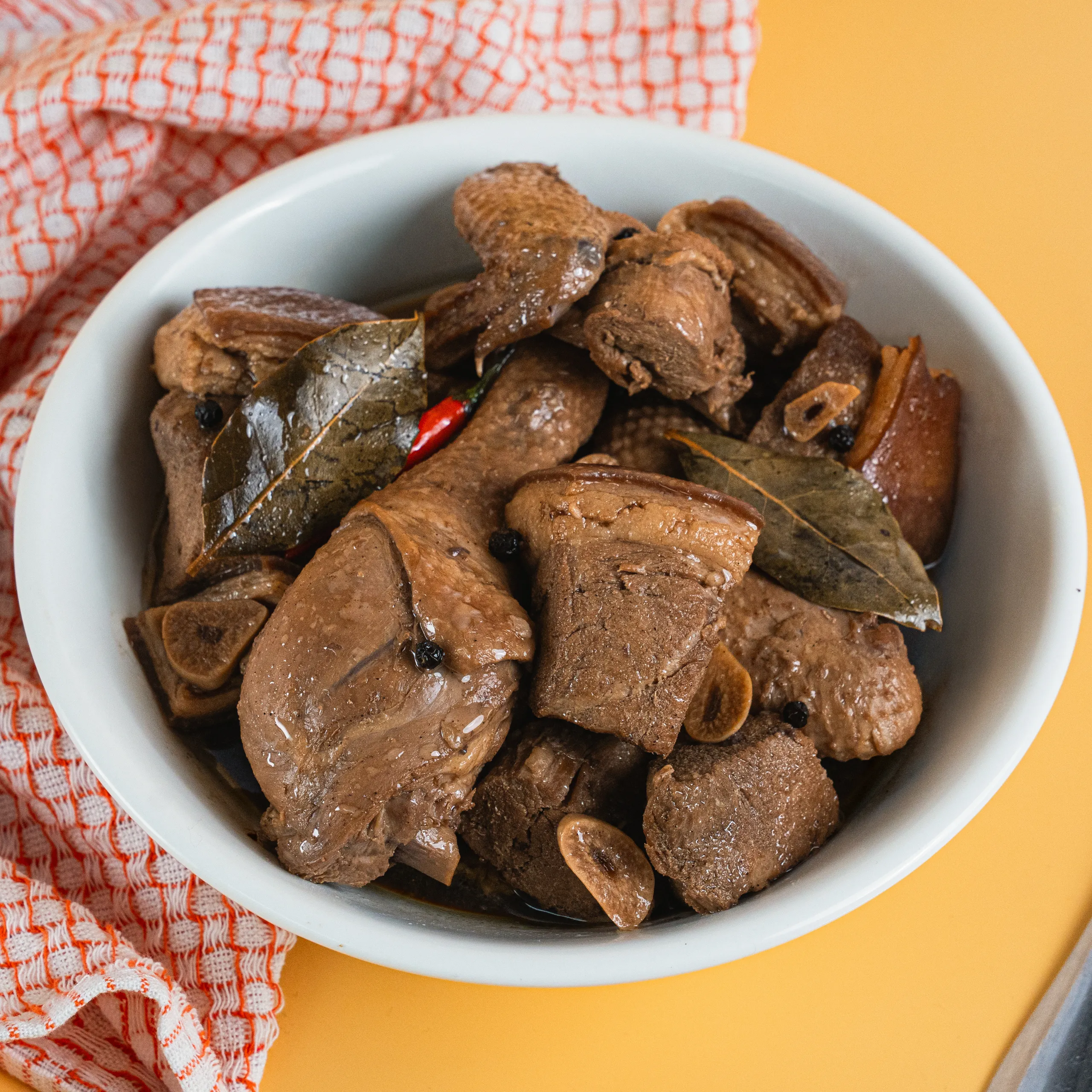
Chicken Pork Adobo is one of the most beloved dishes in Filipino cuisine. For many Filipino families, the smell of garlic, soy sauce, vinegar, and tender meat simmering together brings back memories of home-cooked meals, family gatherings, and sharing food around the dining table. It is a dish that does not need expensive ingredients or complicated cooking techniques to taste delicious. With a few simple ingredients and enough time for the flavors to develop, anyone can prepare a satisfying meal for the family.
This dish combines two popular meats: chicken and pork belly. The chicken absorbs the savory and tangy sauce, while the pork belly adds richness and tenderness. Together, they create a delicious balance of salty, sour, garlicky, and slightly sweet flavors. The sauce is usually served over steamed white rice, making every bite flavorful and comforting.
One of the reasons Chicken Pork Adobo remains popular is its versatility. Some people prefer their adobo with plenty of sauce, while others enjoy a thicker, darker, and more concentrated version. Some add sugar to balance the acidity of the vinegar, while others prefer the traditional savory and tangy taste without sweetness. These differences make adobo special because every household can prepare it according to its own preferences.
Whether you are a beginner learning to cook or someone who enjoys preparing traditional Filipino dishes, Chicken Pork Adobo is an excellent recipe to learn. It is practical for everyday meals, easy to customize, and satisfying when served with rice and vegetables.
History and Origin of Chicken Pork Adobo
Adobo has a long history in the Philippines and is widely recognized as one of the country’s signature dishes. Its origins are closely connected to traditional Filipino cooking methods, local ingredients, and the need to prepare food that could be stored safely in a warm climate.
Before refrigerators became common, Filipino households relied on practical ways to prepare and preserve meat. Vinegar was a valuable ingredient because its acidity could help slow the growth of certain microorganisms under appropriate conditions. Cooking meat with vinegar, salt, garlic, and other seasonings also created a distinctive flavor that made the dish enjoyable even with a simple combination of ingredients.
The word adobo is commonly linked to the Spanish word adobar, which means to marinate or season. During the Spanish colonial period, the term was used to describe a method of preparing food with seasonings and acidic ingredients. However, the practice of cooking meat with vinegar existed in the Philippines before Spanish colonization. The name became associated with a local cooking tradition that had already developed over generations.
As Filipino cuisine evolved, adobo developed into many regional and household variations. Some families use chicken, others use pork, and many combine both meats. There are also versions prepared with seafood, vegetables, coconut milk, or additional spices. Some cooks simmer the meat until the sauce becomes thick, while others leave enough liquid to spoon over rice.
Chicken Pork Adobo is a practical combination of two familiar ingredients. Chicken provides tender meat that absorbs the sauce well, while pork belly contributes fat and a richer flavor. The result is a hearty dish that can be served during ordinary family meals, celebrations, and special occasions.
Today, adobo continues to represent the creativity and resourcefulness of Filipino cooking. Although the ingredients and techniques may vary from one household to another, the familiar combination of vinegar, garlic, and savory seasonings remains at the heart of this much-loved dish.
Kitchen Equipment Needed
Preparing Chicken Pork Adobo does not require special cooking equipment. Most of the tools needed are already available in a typical household kitchen.
You will need a large pot or deep skillet with a lid, a chopping board, a sharp knife, measuring cups and spoons, a wooden spoon or heat-resistant spatula, and tongs for turning the meat. You will also need a serving dish and airtight containers for storing leftovers.
A heavy-bottomed pot is especially useful because it distributes heat evenly and reduces the chance of the sauce burning as it thickens.
Tips for Making Delicious Chicken Pork Adobo
A few simple techniques can make a noticeable difference in the flavor and texture of your adobo.
Brown the meat before simmering. Browning develops deeper flavor and gives the finished dish a richer taste.
Use fresh garlic. Garlic is one of the most important ingredients in adobo. Crushing it shortly before cooking helps release its aroma.
Balance the soy sauce and vinegar. Too much soy sauce can make the dish overly salty, while excessive vinegar can make it too sharp. Adjust the proportions according to your taste.
Cook over low heat. Gentle simmering allows the meat to become tender while helping the sauce develop flavor.
Give the pork enough time. Pork belly may require longer cooking than chicken, particularly when the pieces are large.
Do not add too much sugar. A small amount can soften the acidity, but adobo does not need to be sweet to taste delicious.
Taste the sauce before serving. The flavor changes as the liquid reduces, so make the final seasoning adjustments near the end.
Let the dish rest briefly. Allowing the adobo to rest for about 5–10 minutes before serving helps the flavors settle.
Prepare it ahead when convenient. Properly refrigerated adobo often tastes even more developed the following day because the flavors have had time to blend.
Understanding the Flavor of Chicken Pork Adobo
Chicken Pork Adobo is an excellent example of how a few simple ingredients can create a complex and satisfying flavor.
The role of vinegar
Vinegar gives adobo its recognizable tanginess. Its acidity balances the richness of pork belly and the saltiness of soy sauce.
Vinegar has also been used traditionally in food preservation, but it does not make cooked meat safe to leave at room temperature indefinitely. Proper refrigeration is still necessary.
The role of soy sauce
Soy sauce contributes saltiness, color, and umami, which is the savory taste associated with foods such as mushrooms and fermented products.
As the sauce simmers, the soy sauce combines with the meat juices and other seasonings to create a concentrated flavor.
The importance of garlic
Garlic gives adobo its familiar aroma. When crushed and heated, it releases compounds that contribute to its distinctive flavor. Gently sautéing the garlic helps develop its aroma without making it bitter.
Why pork belly makes the sauce rich
Pork belly contains more fat than many lean cuts of meat. As it cooks, some of this fat renders into the sauce, creating a fuller mouthfeel and carrying the flavors of the garlic and seasonings.
However, this richness also means that pork belly generally contributes more calories and saturated fat than leaner cuts.
Why simmering improves tenderness
Slow simmering allows connective tissue in suitable cuts of meat to soften over time. This is particularly helpful for pork cuts that contain more connective tissue.
Chicken also becomes tender during simmering, although lean pieces can become dry if cooked excessively.
Why the sauce becomes thicker
As water evaporates, the remaining sauce becomes more concentrated. The flavors intensify, and the sauce may become darker and glossier.
This is why it is important to monitor the pot while reducing the sauce. Too much evaporation can make the dish excessively salty.
Health Benefits and Nutritional Considerations
Chicken Pork Adobo provides important nutrients, but its overall nutritional value depends on the meat cuts, portion size, amount of soy sauce, and quantity of fat retained in the finished dish.
Protein for growth and repair
Chicken and pork provide complete protein, which supplies the amino acids needed for tissue growth and repair, muscle maintenance, and many normal body functions.
Protein also helps promote satiety, making a meal more satisfying.
Vitamins and minerals
Chicken and pork contain B vitamins, including vitamin B12, niacin, and vitamin B6. Pork is also a useful source of thiamine, while both meats provide minerals such as zinc and phosphorus.
These nutrients support normal energy metabolism, nervous system function, and other important processes in the body.
Garlic and beneficial compounds
Garlic contains sulfur-containing compounds that have been studied for their potential biological effects. However, the amount used in a serving of adobo should not be considered a medical treatment or a guarantee of a particular health benefit.
Energy and fullness
The combination of protein and fat makes Chicken Pork Adobo a filling meal. When served with rice and vegetables, it can be part of a satisfying everyday diet.
However, pork belly contains substantial fat, so portion size is important for people who are monitoring their calorie or saturated fat intake.
Ways to make the dish more balanced
- Use leaner pork or replace some of the pork belly with chicken.
- Choose reduced-sodium soy sauce or use a smaller quantity.
- Leave out the optional brown sugar if you prefer.
- Serve the adobo with vegetables such as kangkong, pechay, cabbage, or green beans.
- Enjoy a moderate portion of meat alongside rice and vegetables.
The exact calories, protein, fat, and sodium content cannot be determined from the ingredient list alone. The values depend on the specific meat cuts, cooking method, soy sauce brand, and serving size.
Proper Storage and Food Safety
Storing Chicken Pork Adobo properly helps maintain its flavor and quality while reducing the risk of foodborne illness.
Storing leftovers in the refrigerator
Allow the dish to stop steaming heavily, then divide it into clean, shallow, airtight containers. Refrigerate promptly rather than leaving the entire pot on the counter for several hours.
- Keep the refrigerator at 4°C (40°F) or below.
- Refrigerate cooked leftovers within two hours, or within one hour if the surrounding temperature is above 32°C (90°F).
- Consume refrigerated leftovers within 3–4 days.
- Keep the meat and sauce together to help maintain moisture and flavor.
- Use clean utensils when removing portions.
Shallow containers help the food cool more quickly and evenly than a large, deep pot.
Freezing Chicken Pork Adobo
Freezing is a good option if you want to keep the dish for a longer period.
- Divide the adobo into meal-sized portions.
- Place each portion in an airtight, freezer-safe container or sealed freezer bag.
- Label each container with the date.
- Freeze at −18°C (0°F) or below.
- For best quality, use the frozen leftovers within approximately 2–3 months.
Food kept continuously frozen at the recommended temperature can remain safe for longer, but its flavor and texture may gradually deteriorate.
Reheating leftovers
When reheating Chicken Pork Adobo, thaw frozen portions in the refrigerator or use a microwave if reheating immediately.
Add a small amount of water if the sauce has become too thick. Heat the dish thoroughly until it reaches 74°C (165°F) throughout, stirring occasionally to ensure even heating.
Reheat only the portion you plan to eat instead of repeatedly cooling and reheating the entire batch.
Recognizing possible spoilage
Discard the adobo if you notice mold, an unusual foul odor, a slimy texture, or other clear signs of spoilage. However, food can be unsafe even when it looks and smells normal, so always follow recommended storage times.
Never taste questionable food to determine whether it is safe.
Storing the ingredients before cooking
Raw chicken and pork should be refrigerated at 4°C (40°F) or below. Store them on a tray on the lowest refrigerator shelf to prevent their juices from dripping onto other foods.
Use raw chicken within 1–2 days and fresh pork within 3–5 days, or freeze them if you do not plan to cook them in time.
Keep whole garlic bulbs in a cool, dry, well-ventilated place. Store soy sauce and vinegar according to their package instructions, and keep bay leaves and peppercorns in airtight containers away from moisture, heat, and direct sunlight.
These simple storage practices help preserve ingredient quality and make cooking safer.
Best Ways to Serve Chicken Pork Adobo
Chicken Pork Adobo pairs well with a variety of side dishes, making it suitable for everyday meals and family gatherings.
Steamed white rice: This is the classic accompaniment because the rice absorbs the savory sauce and balances the strong flavors of the meat.
Garlic rice: Garlic rice adds another layer of aroma and makes the meal more filling.
Steamed or sautéed vegetables: Kangkong, pechay, green beans, cabbage, and broccoli add color, fiber, and nutritional variety.
Fresh tomatoes and cucumber: These provide a refreshing contrast to the rich and salty sauce.
Atchara: Filipino pickled green papaya adds sweetness and acidity that complement the pork belly.
Fried egg: Serving adobo with rice and a fried egg creates a hearty meal for breakfast, lunch, or dinner.
Adobo flakes: Leftover meat can be shredded, checked carefully for bones, and pan-fried until crisp. Adobo flakes are an excellent way to transform leftovers into a different meal.
Final Words About Chicken Pork Adobo
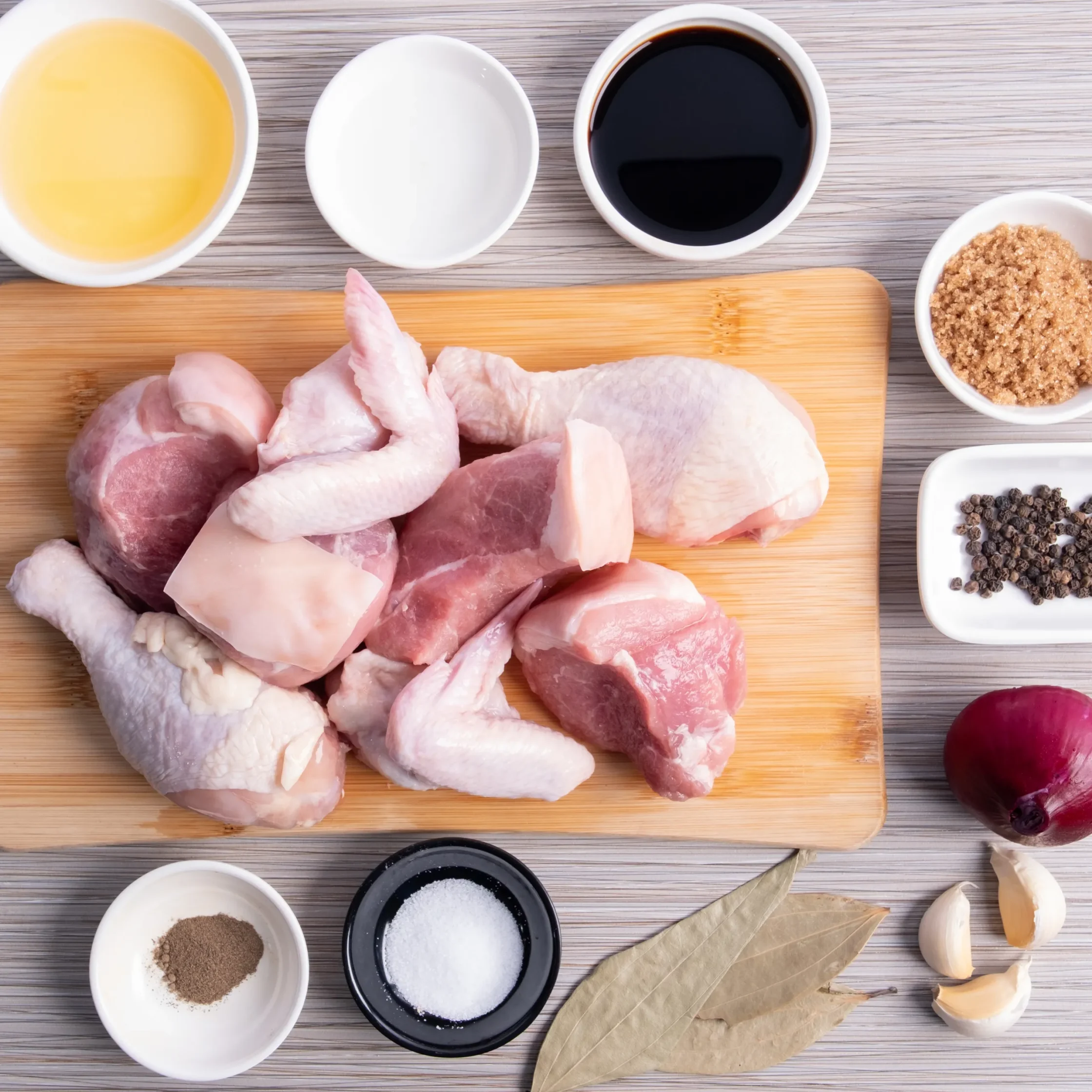
Chicken Pork Adobo is a wonderful example of how simple ingredients can create a memorable and satisfying meal. With chicken, pork belly, soy sauce, vinegar, garlic, bay leaves, peppercorns, and a little patience, you can prepare a dish that is rich in flavor and deeply connected to Filipino food traditions.
Its appeal comes from its simplicity, versatility, and comforting taste. It can be prepared for an ordinary family lunch, served during gatherings with relatives, or cooked ahead for convenient meals throughout the week. It also allows home cooks to express their own preferences, whether they enjoy an extra tangy sauce, a slightly sweet flavor, leaner meat, or a thicker and more concentrated finish.
Beyond its flavor, Chicken Pork Adobo represents the resourcefulness of Filipino cooking. It shows how traditional ingredients, practical cooking methods, and family knowledge can be passed from one generation to another. Every household may have its own way of preparing adobo, and these small differences are part of what makes the dish special.
When preparing this recipe, remember to use fresh ingredients, brown the meat carefully, simmer it until tender, balance the sauce, and store leftovers safely. Serve it with warm rice and vegetables, and you have a comforting meal that can be enjoyed by family and friends.
Ultimately, Chicken Pork Adobo is more than chicken and pork cooked in a flavorful sauce. It is a dish that brings together history, culture, nourishment, and the simple pleasure of sharing homemade food.
Whether you are cooking it for the first time or preparing a familiar family favorite, may every pot of Chicken Pork Adobo remind you that delicious food does not have to be complicated. Sometimes, the most meaningful meals begin with simple ingredients, a little time in the kitchen, and the warmth of sharing something homemade.