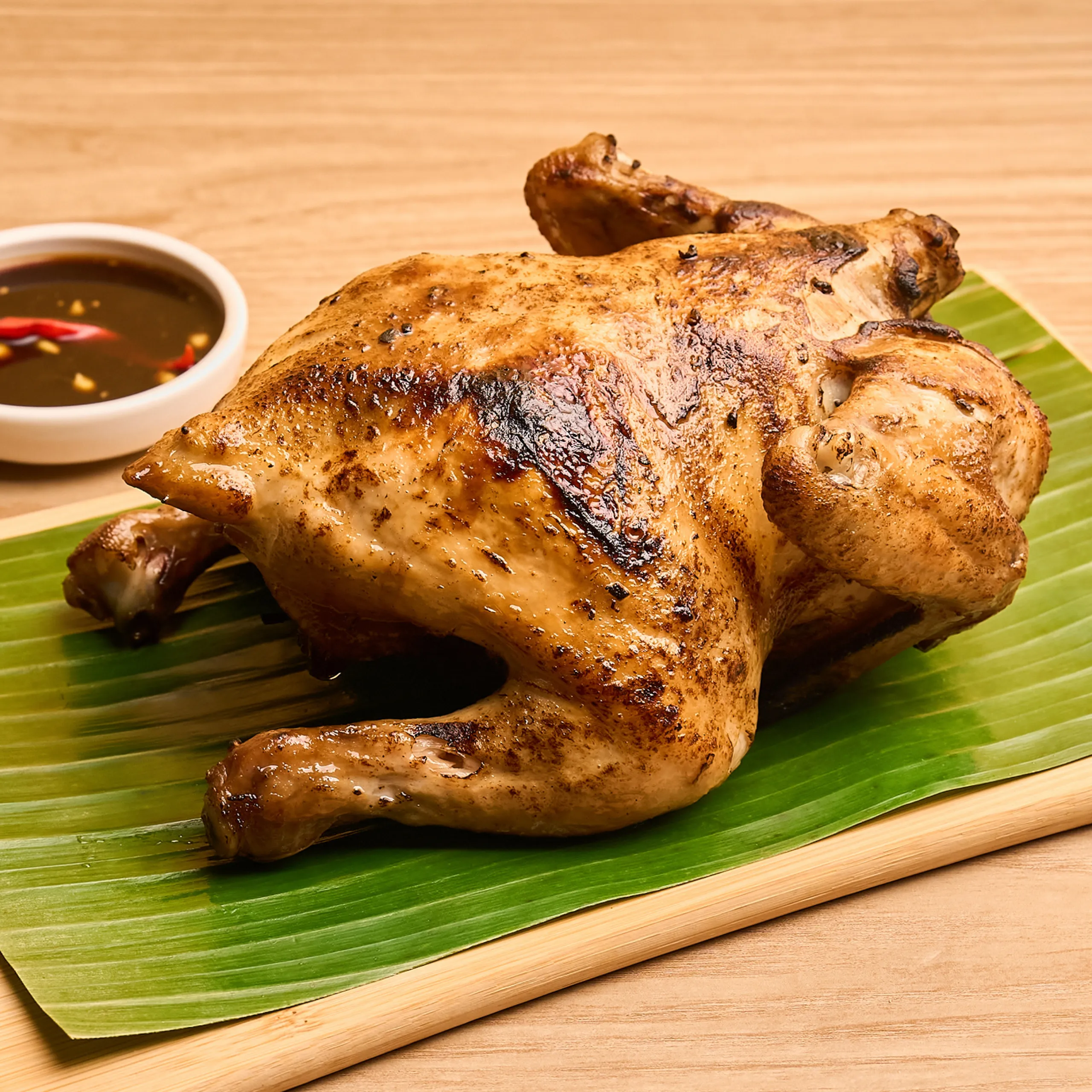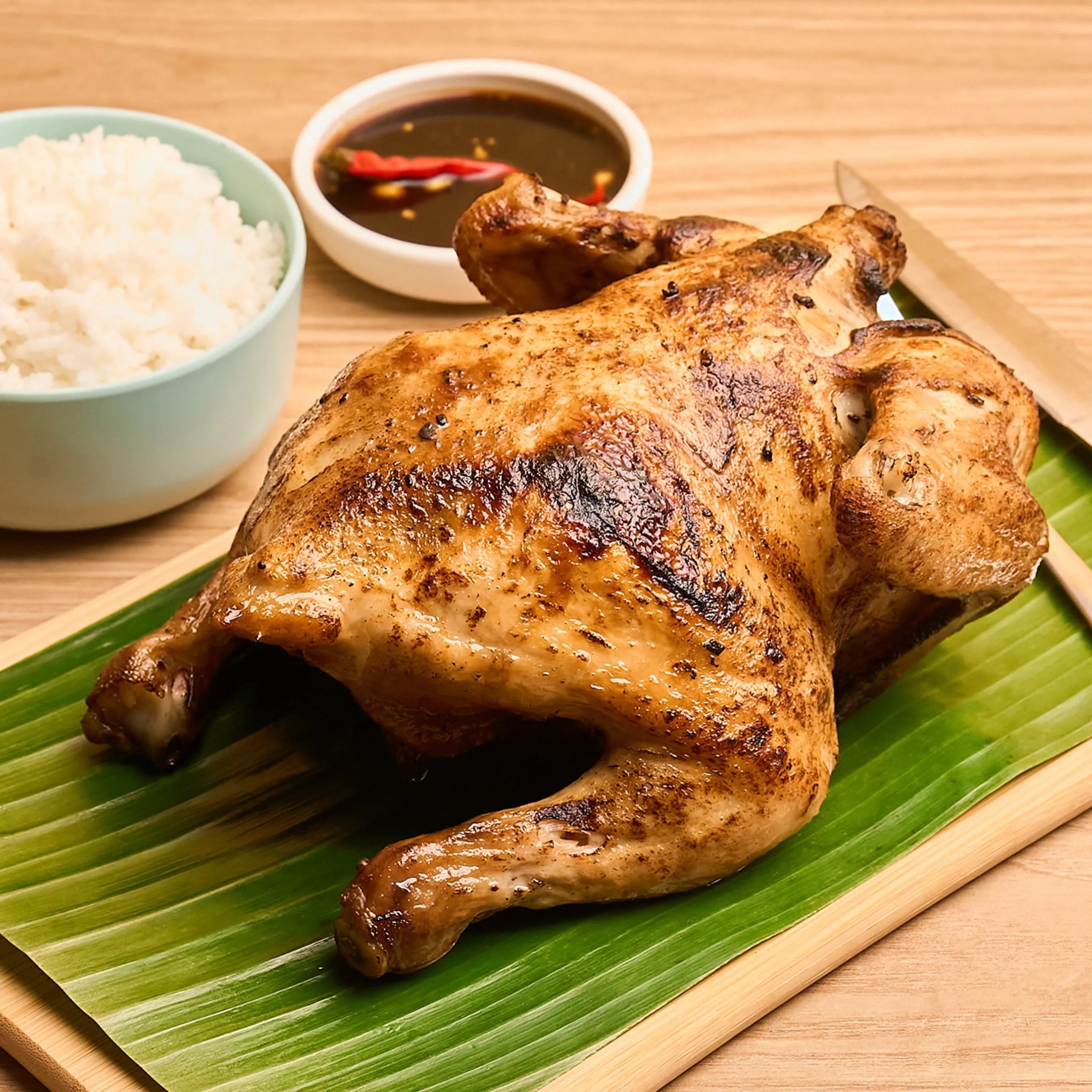
There are some Filipino dishes that immediately make you think of gatherings, celebrations, and the smell of food cooking somewhere nearby. Lechon Manok is one of them.
For many Filipinos, the sight of a whole chicken slowly roasting over charcoal or turning on a rotisserie brings back familiar memories. You may have seen rows of golden-brown chickens hanging outside a neighborhood food stall, smelled the smoky aroma while walking home, or watched someone carefully slice a freshly roasted chicken for the family dinner table.
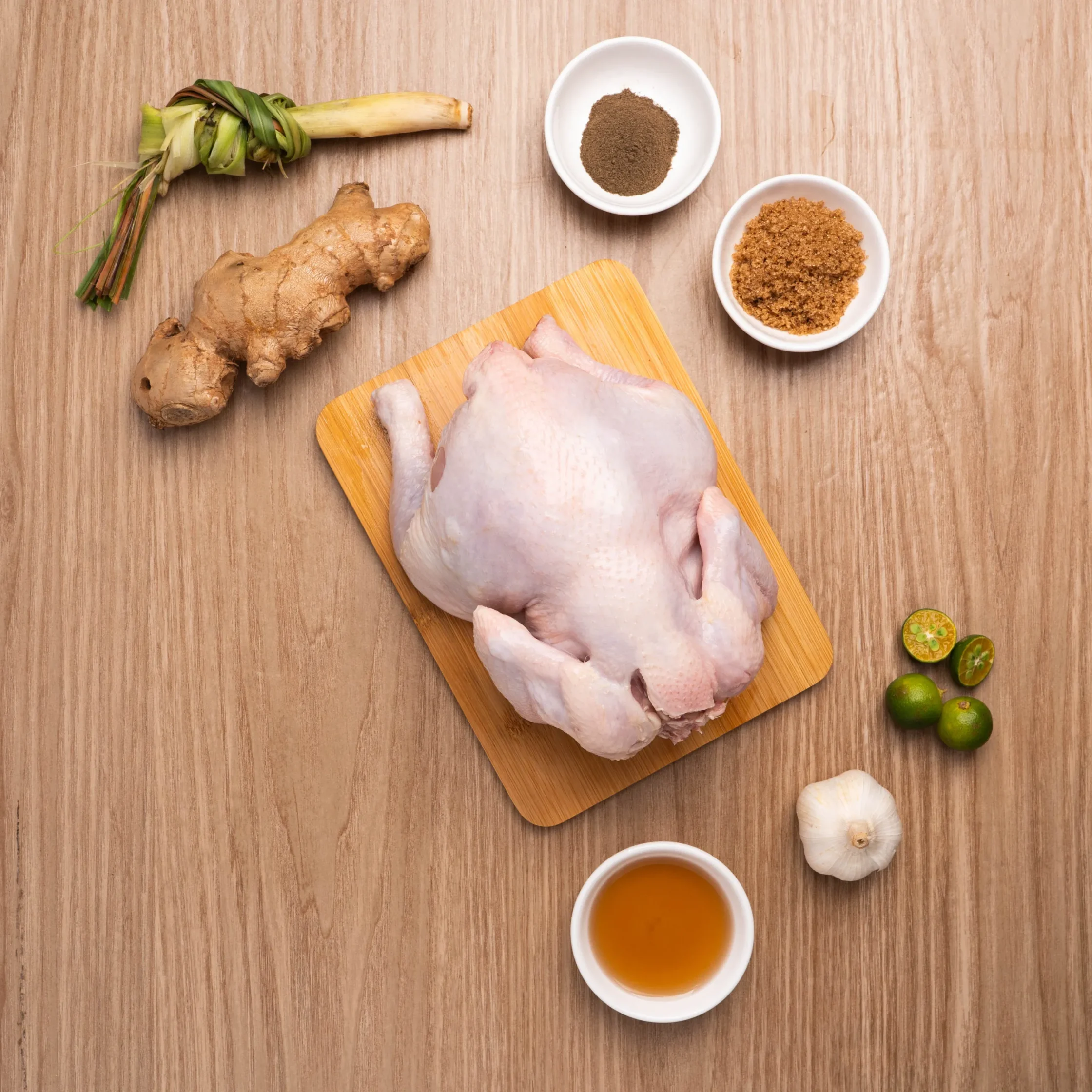
Lechon Manok is the chicken version of the Filipino love affair with roasted and grilled food. The chicken is marinated with a flavorful mixture of garlic, ginger, fish sauce, soy sauce, brown sugar, calamansi, and black pepper. It is then roasted until the skin becomes beautifully browned and the meat is cooked through and juicy.
The combination of sweet, salty, sour, savory, and aromatic flavors makes Lechon Manok incredibly satisfying. The brown sugar encourages the skin to caramelize, while the calamansi adds brightness and helps balance the richness of the chicken. Garlic and ginger provide an aromatic base, while fish sauce and soy sauce contribute deep umami.
And then there is the dipping sauce.
A simple combination of vinegar, soy sauce, calamansi, and red chili may look humble, but it adds a sharp, spicy, salty contrast to the rich roasted chicken. Every bite becomes more interesting when dipped into the sauce.
Lechon Manok is delicious enough for celebrations but simple enough to make for an ordinary family meal. It can be served with steaming rice, atchara, ensaladang talong, grilled vegetables, or a fresh tomato and onion salad.
A Brief History of Lechon Manok
The Filipino word lechon is generally associated with whole animals roasted over fire, most famously whole roasted pig. The term comes from Spanish influence on Philippine food culture, particularly during the centuries of Spanish colonial rule.
As Filipino cooks adapted roasting techniques to different ingredients, chicken became another popular choice for whole roasting. This eventually developed into the Lechon Manok enjoyed throughout the Philippines today.
Unlike whole lechon, which is typically associated with major celebrations, Lechon Manok became an accessible everyday food. The rise of roadside and neighborhood rotisserie stalls helped make it especially popular.
In many communities, roasted chickens are displayed where customers can see them turning slowly over the heat. The golden skin and smoky aroma are part of the appeal. Customers can often choose a whole chicken to take home, making it an easy and affordable meal for a family.
There are many versions of Lechon Manok. Some marinades include coconut milk, Sprite or other soft drinks, lemongrass, banana ketchup, or different combinations of spices and seasonings. Others keep the recipe simple, relying on garlic, ginger, soy sauce, fish sauce, and calamansi.
The recipe in this guide uses a combination of sweet, salty, sour, and aromatic ingredients to create a flavorful chicken with beautifully browned skin.
Understanding the Ingredients
Whole Chicken
Using a whole chicken makes this dish visually impressive and allows the meat to cook together with the bones, which can contribute to a richer flavor.
Choose a chicken that is fresh and relatively uniform in size. A chicken that is too large may require considerably more cooking time, while a smaller one may cook more quickly.
If possible, allow the chicken to come close to room temperature before roasting, but do not leave raw poultry sitting out for an extended period. Keep it refrigerated until you are ready to cook.
Garlic
Garlic is one of the foundations of Filipino cooking. It gives the marinade a strong, savory aroma and becomes especially fragrant as the chicken roasts.
Finely minced garlic distributes more evenly over the chicken and allows its flavor to penetrate the surface.
Ginger
Ginger adds warmth, freshness, and a slightly spicy aroma. It is particularly good with poultry because it helps balance the richness of roasted chicken.
Fish Sauce
Fish sauce contributes saltiness and deep umami. Although its aroma can be strong when tasted by itself, it becomes much more subtle and rounded after being mixed with the other marinade ingredients and cooked.
It is an important ingredient in many Filipino marinades and sauces.
Brown Sugar
Brown sugar contributes sweetness and helps the chicken develop a beautiful golden-brown exterior.
Because sugar can burn under high heat, however, the chicken should be monitored carefully during roasting.
Soy Sauce
Soy sauce adds savory flavor, saltiness, and umami. It also contributes to the dark golden color of the finished chicken.
Since soy sauce and fish sauce are both salty, additional salt may not be necessary.
Calamansi
Calamansi provides the bright acidity that helps balance the richness of the chicken.
Its citrus flavor is an important part of what makes the marinade taste distinctly Filipino.
Black Pepper
Coarsely ground black pepper provides warmth and a mild spicy character. Freshly cracked pepper can be used for a stronger aroma.
Recipe Tips for Better Lechon Manok
Marinate Under the Skin
One of the best ways to increase flavor is to gently loosen the chicken skin and place some marinade underneath it.
Be careful not to tear the skin.
Dry the Skin Before Roasting
A dry surface browns better than a wet one. Patting the chicken dry before cooking helps create more attractive and flavorful skin.
Don’t Overcrowd the Oven
If you’re cooking more than one chicken, make sure there is enough space for hot air to circulate.
Crowding can cause steaming rather than proper roasting.
Rotate if Necessary
If your oven has hot spots, rotate the chicken during cooking so it browns more evenly.
For rotisserie cooking, make sure the chicken is securely balanced.
Watch Sugary Marinades
Brown sugar helps create beautiful caramelization, but it can also burn.
If the chicken becomes dark too quickly, lower the heat or protect the skin with foil.
Use a Thermometer
A meat thermometer is one of the most useful tools when cooking a whole chicken. It takes the guesswork out of determining whether the thickest parts have reached a safe temperature.
Let It Rest
Don’t skip the resting period. Even though the aroma may make you want to carve the chicken immediately, a few minutes of rest can make a noticeable difference in juiciness.
Ingredient Substitutions
Calamansi
If calamansi isn’t available, use lime juice. Lemon juice can also work, although the flavor will be somewhat different.
Fish Sauce
If you don’t have fish sauce, you can use additional soy sauce. The finished chicken will have a slightly different umami character.
For a seafood-free version, soy sauce or another savory seasoning can replace the fish sauce.
Brown Sugar
White sugar, coconut sugar, or honey can be used instead.
If using honey, monitor the chicken closely because honey can brown and burn quickly.
Soy Sauce
Reduced-sodium soy sauce can be used if you want to reduce the saltiness.
For a gluten-free alternative, use a suitable gluten-free soy sauce or tamari.
Fresh Ginger
If fresh ginger isn’t available, a small amount of ground ginger can be used, although fresh ginger provides a brighter and more aromatic flavor.
Whole Chicken
You can use chicken thighs, drumsticks, or leg quarters instead. The cooking time will need to be adjusted according to the size of the pieces.
Optional Ingredients for More Flavor
There are many ways to customize Lechon Manok.
You can add:
- Lemongrass
- Banana ketchup
- Coconut milk
- Garlic powder
- Onion
- Paprika
- Chili
- A small amount of pineapple juice
- Additional black pepper
Lemongrass is especially popular in some versions because it adds a fresh citrus-herbal aroma that works beautifully with roasted chicken.
Food Knowledge: Why Does Lechon Manok Have Such Flavorful Skin?
The skin of roasted chicken contains fat, and as the chicken cooks, that fat gradually renders.
At the same time, the surface loses moisture and begins to brown. The combination of heat, fat, seasoning, and caramelization creates the deeply savory roasted flavor people love.
The brown sugar in this marinade contributes additional browning and caramelization.
The result is a contrast between flavorful, browned skin and tender chicken underneath.
That contrast is one of the reasons whole roasted chicken is so satisfying.
Why Is Resting Chicken Important?
When chicken cooks, its internal juices move toward the center and become redistributed by heat.
Allowing the chicken to rest after cooking gives those juices time to settle back into the meat.
If you carve it immediately, some of the liquid can escape onto the cutting board.
Resting doesn’t magically add moisture to the chicken, but it can help you retain more of the juices that are already there.
Health Benefits of the Ingredients
Lechon Manok is a protein-rich dish, although the nutritional profile depends on the portion size and how much skin and sauce you consume.
Chicken
Chicken is an excellent source of protein and provides nutrients such as vitamin B6, selenium, phosphorus, and niacin.
Chicken breast generally contains less fat than darker meat and skin, while thighs and legs tend to be richer and more flavorful.
Garlic
Garlic contains sulfur-containing compounds and various antioxidants. It adds considerable flavor without needing large amounts.
Ginger
Ginger contains naturally occurring plant compounds such as gingerols and provides a strong aromatic flavor.
It is commonly used in many cuisines and can make dishes taste brighter and more complex.
Calamansi
Calamansi contributes vitamin C and plant compounds with antioxidant properties.
Its acidity also helps brighten rich foods such as roasted chicken.
Black Pepper
Black pepper provides flavor and contains piperine, a naturally occurring compound.
Using spices such as pepper can add flavor without significantly increasing calories.
Soy Sauce and Fish Sauce
Both provide umami, making it possible to build a deeply savory dish without relying solely on additional fat.
However, they can also contribute substantial sodium, so they should be used thoughtfully.
Brown Sugar
Brown sugar provides sweetness and energy but should be considered an added sugar rather than a major nutritional ingredient.
Making Lechon Manok Part of a Balanced Meal
A balanced serving can include:
- A moderate portion of chicken
- Steamed rice
- Fresh vegetables
- Atchara or another vegetable side
- A modest amount of dipping sauce
Adding vegetables can provide fiber, vitamins, minerals, and freshness that balance the richness of the roasted chicken.
How to Store Lechon Manok Properly
Because Lechon Manok contains cooked poultry, proper storage is essential.
Refrigerating Leftovers
After serving, place leftover chicken in clean, shallow, airtight containers.
Refrigerate it promptly rather than leaving it at room temperature for an extended period.
Cooked poultry should generally be refrigerated within about 2 hours, or sooner if the surrounding temperature is very warm.
How Long Does Lechon Manok Last in the Refrigerator?
Properly refrigerated cooked chicken is generally best consumed within 3 to 4 days.
If the chicken develops an unusual smell, slimy texture, unusual appearance, or other signs of spoilage, discard it rather than tasting it.
Freezing Lechon Manok
Yes, Lechon Manok can be frozen.
Remove the meat from the bones if you want convenient portions, then place it in airtight freezer-safe packaging.
Removing as much air as practical helps reduce freezer burn.
Label the package with the date so you know how long it has been stored.
For the best quality, use frozen cooked chicken within a few months.
Reheating Leftovers
Reheat chicken thoroughly before serving.
An oven or air fryer can help restore some of the texture of the roasted skin. A covered skillet can work well for reheating meat without drying it excessively.
If using a microwave, cover the chicken loosely and heat it in intervals so it doesn’t become excessively dry.
Storing the Dipping Sauce
Keep leftover dipping sauce in a clean, covered container in the refrigerator.
Because it contains fresh calamansi and chili, it is best used within a few days for freshness and quality.
Never reuse sauce that has been in contact with raw chicken.
Final Words
Lechon Manok is one of those dishes that proves you don’t need complicated ingredients to make something memorable.
A whole chicken, some garlic and ginger, soy sauce, fish sauce, calamansi, brown sugar, and black pepper can be transformed into a beautifully roasted dish with layers of Filipino flavor.
What makes Lechon Manok especially meaningful is its connection to everyday Filipino life. It can be bought from a neighborhood rotisserie shop on the way home, served during a family gathering, prepared for Sunday lunch, or made from scratch when you want to recreate that familiar roasted-chicken experience in your own kitchen.
The golden skin, smoky aroma, juicy meat, and sharp vinegar-calamansi dipping sauce all work together to create a dish that is both comforting and exciting.
And like many beloved Filipino dishes, Lechon Manok is flexible. You can make it sweeter, more garlicky, more citrusy, or spicier depending on your family’s taste. You can cook it over charcoal for a smoky flavor, roast it in the oven for convenience, or adapt it for other cooking equipment.
At its heart, though, Lechon Manok is about bringing people to the table.
Serve it with hot rice, a bowl of dipping sauce, and perhaps a few simple vegetable sides, and you have a meal that feels generous and familiar.
Lechon Manok isn’t just roasted chicken. It is a taste of Filipino comfort, celebration, neighborhood food culture, and the simple joy of sharing a good meal with people you love.