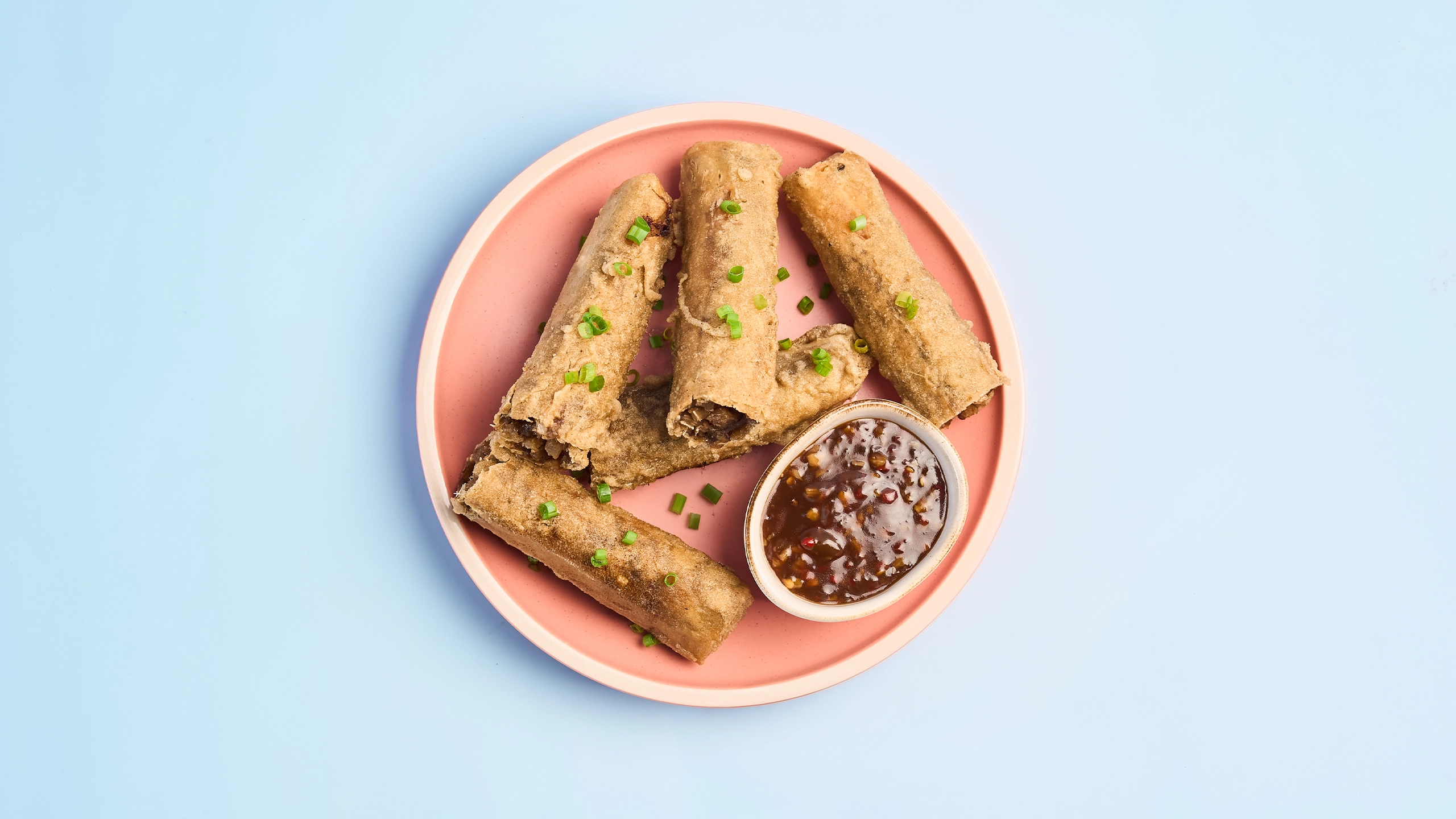


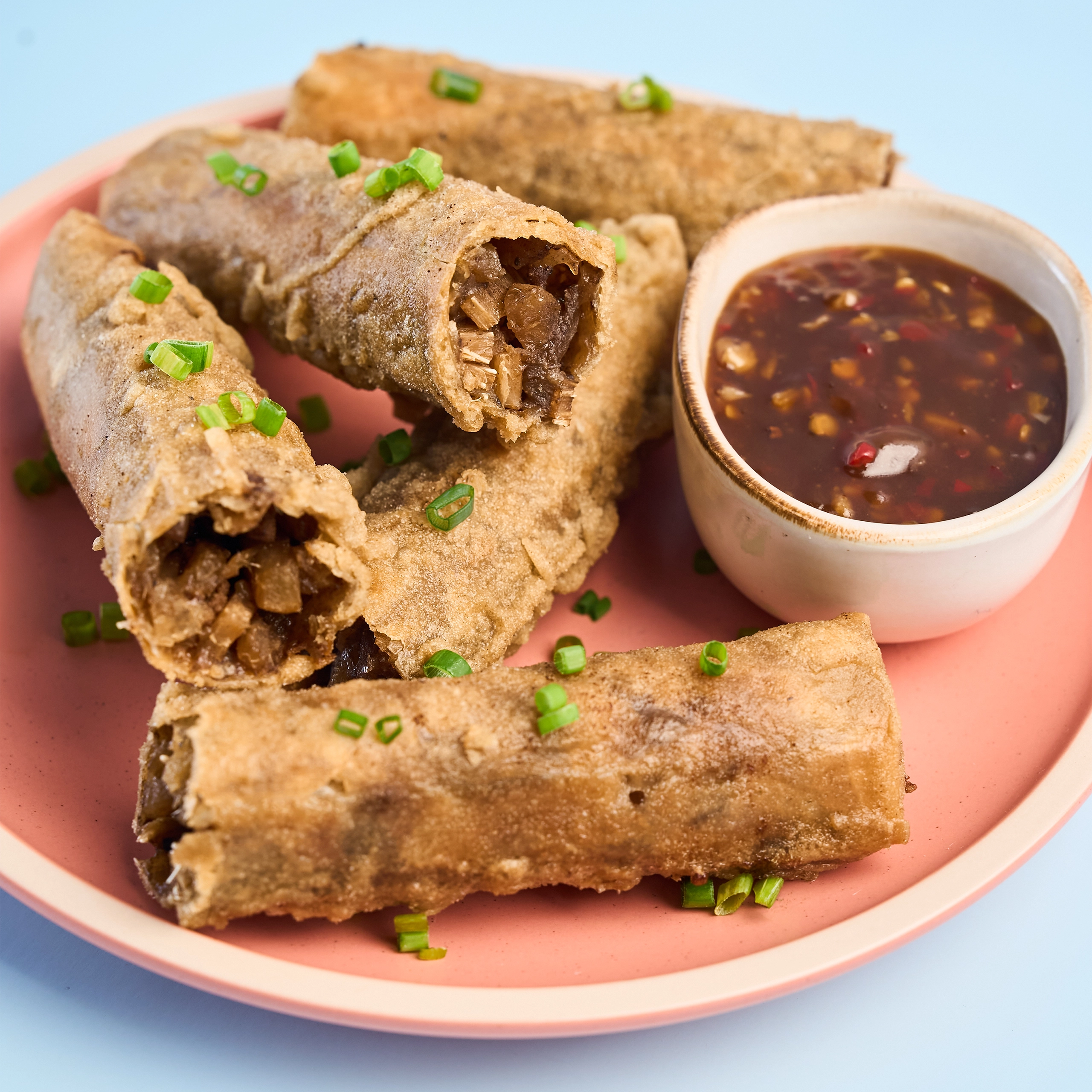
There are some Filipino foods that feel like home the moment you smell them cooking. Ngohiong is one of those dishes. Crispy on the outside, savory and aromatic inside, and usually enjoyed with a sweet-spicy dipping sauce, ngohiong is especially associated with Cebu, where it has become a beloved street food and merienda favorite.
If you have spent time in Cebu, you may have encountered ngohiong in small eateries, carinderias, school-area food stalls, and neighborhood shops. It is inexpensive, filling, flavorful, and wonderfully satisfying—the kind of snack that can easily turn into a full meal once you start eating one piece after another.
What makes Cebuano ngohiong different from an ordinary lumpia is its distinctive five-spice flavor. The filling combines vegetables, ground pork, garlic, onion, soy sauce, and oyster sauce, while the finished rolls are coated in a seasoned batter before being fried until beautifully crisp. The result is a crunchy snack with a fragrant, slightly sweet, savory, and warm spice profile.
This homemade version is a great way to bring a little taste of Cebu into your own kitchen.
A Little History of Ngohiong
Ngohiong has a particularly interesting place in Cebu’s food culture because its name and flavor profile are connected to Chinese culinary influence in the Philippines.
The dish is commonly associated with Chinese-style spring rolls, particularly the use of five-spice powder, which gives ngohiong its characteristic aroma. Over time, Filipino cooks adapted the idea to local ingredients and tastes. The result isn’t simply a Chinese spring roll—it became something distinctly Cebuano.
The word “ngohiong” is commonly linked to the Hokkien Chinese culinary tradition and is related to the use of five-spice seasoning. Chinese migration and trade played an important role in shaping Filipino cuisine, particularly in places such as Cebu, where Chinese-Filipino communities have had a longstanding presence.
Like many Filipino dishes, ngohiong demonstrates how food changes as cultures meet. A familiar cooking idea can be adapted with local ingredients, cooking methods, and Filipino preferences until it becomes part of the local food identity.
And that’s one of the most wonderful things about ngohiong: it is both a reminder of culinary heritage and a very Cebuano comfort food.
What Is Ngohiong?
Ngohiong is essentially a seasoned fried roll filled with vegetables and meat, but calling it simply a “lumpia” doesn’t quite capture what makes it special.
The filling traditionally centers around vegetables such as ubod, or palm heart, combined with ground meat and plenty of aromatic seasoning. In this recipe, jicama or singkamas can also be used as an alternative to ubod.
The filling is wrapped in lumpia wrappers, sealed, dipped into a heavily seasoned batter containing flour, cornstarch, and five-spice powder, and then fried.
The batter is important. It creates a thicker, crunchy coating that gives Cebuano ngohiong its characteristic texture. When freshly fried, the outside should be crisp and golden while the filling remains moist and savory.
The sauce adds another layer of flavor. It combines garlic, chili, oyster sauce, soy sauce, brown sugar, and cornstarch to create a sweet, salty, garlicky, slightly spicy dipping sauce.
Ingredient Substitutions
One of the nice things about ngohiong is that you can adapt it depending on what is available.
Ubod → Singkamas
If fresh palm heart is difficult to find, singkamas (jicama) is an excellent substitute. It provides a pleasant crunch and mild sweetness.
Ground pork → Ground chicken
Ground chicken can be used if you prefer a lighter meat option. Because chicken can be leaner than pork, take care not to overcook it.
Ground pork → Ground beef
Ground beef will give the filling a deeper, richer flavor. It won’t be exactly the traditional profile, but it works well.
Meat → Mushrooms or tofu
For a meatless version, finely chopped mushrooms or crumbled firm tofu can replace the pork. Mushrooms are particularly useful because they provide a savory, umami-rich quality.
Oyster sauce → Vegetarian oyster sauce
If you are avoiding seafood, vegetarian oyster sauce made from mushrooms can be used.
Lumpia wrappers → Spring-roll wrappers
Depending on what’s available in your area, spring-roll wrappers can work, provided they’re suitable for frying.
Five-spice powder
This ingredient is difficult to replace because it is one of the defining flavors of ngohiong. If you don’t have a premade blend, you can create a homemade five-spice-style mixture using spices such as star anise, cinnamon, cloves, fennel, and Sichuan peppercorn.
However, homemade blends can vary considerably, so add them gradually and taste as you go.
Understanding the Five-Spice Flavor
Five-spice powder deserves special attention because it is what makes ngohiong taste different from ordinary fried lumpia.
Chinese five-spice blends commonly contain aromatic spices representing sweet, warm, savory, and slightly pungent flavors. The exact formulation can vary.
In ngohiong, the seasoning gives the filling and batter a distinctive fragrance that immediately separates it from more conventional Filipino spring rolls.
Because five-spice is powerful, however, more isn’t always better. If you’re unfamiliar with the ingredient, start conservatively and adjust according to your preference.
The amount in this recipe gives the dish a particularly pronounced five-spice character, so cooks who prefer a gentler flavor may want to reduce it.
The Food Science Behind Crispy Ngohiong
There’s a little kitchen science happening when you fry ngohiong.
The cornstarch in the batter helps produce a crisp texture. Flour contributes structure, while the combination creates a coating that becomes crunchy when exposed to hot oil.
The egg helps bind the batter and contributes to its structure and browning.
Meanwhile, the water inside the batter turns into steam during frying. As moisture escapes, the coating becomes increasingly dry and crisp.
This is why controlling the frying temperature matters so much. You want the moisture to escape while the outside develops a golden, crunchy coating.
Health Benefits of the Ingredients
Ngohiong is primarily a fried comfort food, so it is best enjoyed as part of a balanced diet rather than considered a health food. Still, several of its individual ingredients provide useful nutrients.
Garlic
Garlic contains sulfur-containing compounds and plant compounds that have been studied for their potential cardiovascular and antioxidant effects. It also provides flavor without requiring large amounts of additional seasoning.
Onion
Onions contain antioxidants and plant compounds such as quercetin. They also provide small amounts of vitamin C and other nutrients.
Jicama
Jicama is naturally crunchy and relatively low in calories. It contains vitamin C and fiber, particularly when eaten in its less-processed form.
Palm heart
Palm heart can provide fiber and minerals while adding a mild, delicate vegetable flavor to the filling.
Pork
Ground pork provides protein as well as nutrients such as vitamin B12, zinc, selenium, and iron. The nutritional profile depends heavily on the cut and fat content used.
Black pepper
Black pepper contains piperine and various plant compounds. It is mainly used in this recipe for flavor rather than as a significant nutritional source.
Chili flakes
Chili peppers contain capsaicin, the compound responsible for their heat. Peppers can also provide antioxidant compounds, although the amount consumed in a serving of sauce is relatively small.
Important note
Because ngohiong is battered and deep-fried, its overall calorie and fat content can be considerably higher than the individual vegetables might suggest. Portion size and how much oil the rolls absorb make a significant difference.
How to Store Ngohiong
If you are preparing ngohiong ahead of time, it is usually best to store the filling and uncooked rolls separately from the batter.
For cooked ngohiong, allow the pieces to cool before placing them in an airtight container.
Don’t seal piping-hot food in a container immediately, because trapped steam can make the crispy coating soggy.
For better texture, place parchment paper between layers if you’re stacking them.
Refrigerator
Cooked ngohiong is best refrigerated promptly in an airtight container and consumed within 3–4 days for food-quality and safety purposes.
When you’re ready to eat them, reheating in an oven, toaster oven, or air fryer is preferable to microwaving if you want to restore some crispness.
Freezer
Ngohiong can also be prepared ahead and frozen.
For the best texture, freeze the assembled but uncooked rolls before frying. Arrange them in a single layer on a tray and freeze until firm. Once frozen, transfer them to a freezer-safe container or bag.
Separating them before freezing prevents the wrappers from sticking together.
When ready to cook, they can generally be fried from frozen, although you may need to adjust the cooking time and take extra care because frozen food can cause hot oil to splatter.
Shelf Life
For the best quality:
- Cooked ngohiong: refrigerate and use within about 3–4 days.
- Prepared filling: refrigerate and use within about 3–4 days.
- Uncooked assembled ngohiong: preferably fry within 1–2 days if refrigerated, or freeze for longer storage.
- Frozen uncooked ngohiong: best quality is generally maintained for roughly 1–2 months when properly packaged, although food kept continuously frozen at 0°F / −18°C remains safe longer; quality gradually declines.
- Dipping sauce: refrigerate in an airtight container and use within several days, checking for changes in smell, appearance, or texture.
When in doubt, throw it out. Don’t taste food to determine whether it is safe if it has been stored improperly or left at room temperature for an extended period.
How to Reheat Ngohiong
The microwave is convenient, but it tends to soften the wrapper.
For crispy leftovers, try:
Air fryer: Reheat at around 180°C (350°F) until heated through and crisp.
Oven/toaster oven: Heat at around 180°C (350°F) until hot and crunchy.
Pan: Reheat over medium heat with little or no additional oil, turning occasionally.
The goal is to drive off some of the moisture that accumulated during refrigeration.
How to Make Ngohiong Ahead of Time
Ngohiong is actually a good make-ahead food.
You can prepare the filling earlier in the day, let it cool completely, and refrigerate it. Later, wrap the rolls and fry them when you’re ready to serve.
For parties, you can even assemble the rolls ahead of time and freeze them.
The sauce can also be prepared in advance and gently reheated before serving. If it becomes too thick after refrigeration, add a small splash of water and stir while reheating.
What to Serve with Ngohiong
Ngohiong is commonly enjoyed as a snack or merienda, but it can also be served as part of a larger Filipino meal.
Try serving it with:
- Steamed white rice
- Atchara
- Fresh cucumber
- Tomato and onion salad
- Extra chili sauce
- Soy-vinegar dipping sauce
- Garlic rice
- A simple vegetable side dish
For a classic snack experience, though, hot ngohiong with its sweet-savory-spicy sauce is hard to beat.
Common Problems and How to Fix Them
“My ngohiong absorbed too much oil.”
The oil may not have been hot enough, or the pan may have been overcrowded. Allow the oil to return to temperature between batches.
“The wrapper opened while frying.”
The rolls may not have been sealed tightly enough, or they may have been overfilled. Use a firm flour-and-water seal and avoid packing in too much filling.
“The outside is dark but the inside isn’t hot.”
The oil may be too hot. Lower the temperature slightly and allow the ngohiong to cook more gradually.
“The ngohiong isn’t crispy.”
Make sure the batter isn’t excessively thin and that the oil is hot enough. Also avoid covering freshly fried ngohiong immediately, since trapped steam softens the coating.
“The five-spice flavor is too strong.”
Five-spice is very aromatic. Reduce the amount in your next batch and balance it with the other seasonings.
Final Thoughts
Cebuano ngohiong is a wonderful example of how Filipino food tells stories.
It carries the influence of Chinese culinary traditions, but through generations of adaptation, it became something deeply connected to Cebu. The combination of crunchy wrapper, savory filling, fragrant five-spice seasoning, and sweet-spicy sauce gives it a personality all its own.
What makes homemade ngohiong particularly rewarding is that you get to experience all those layers yourself. You hear the sizzle as the rolls hit the hot oil, smell the garlic and five-spice filling, watch the batter turn golden, and finally take that first crisp bite with a little sauce.
It’s the kind of food that doesn’t need to be fancy to be memorable.
Whether you’re making it for merienda, a family gathering, a weekend snack, or simply because you’re craving a taste of Cebu, this ngohiong recipe is a delicious project to bring into your kitchen.
Serve it hot, make plenty of sauce, and don’t be surprised if one piece turns into three.