

Right next to Toyo Eatery sits Inatô, a celebrated restaurant that, interestingly enough, began without a clear identity.
When sisters Charisse (principal architect) and Coleen Ong (principal interior designer) of project management firm Studio Ong were first approached by Jordy Navarra and the rest of the Toyo team, the brief was very abstract: to create a space beside Toyo that felt somewhat connected to it but distinct enough that people would never guess the two shared the same kitchen. Nothing more beyond that.
“We asked them if it was going to be Asian fusion, if they were serving seafood, and they kept saying they weren’t sure yet,” recalls Coleen. “So we really had to come up with something out of nowhere.”
With hardly any fixed cuisine or clear design board to base their ideas upon, the designers had to turn to something else for inspiration—their culture in the restaurant and the people behind it. What they ended up was not a concept built around tangible appearances, but around feeling.
The two spent months observing—and experiencing firsthand—how chef Jordy and general manager May Navarra, along with the rest of their formidable team, worked the kitchen and the floor, how they treated their staff, and how they welcomed and treated their guests. Through weekly visits and talks, the designers eventually translated those intangibles into design and architecture: one that’s warm, raw and deeply Filipino.
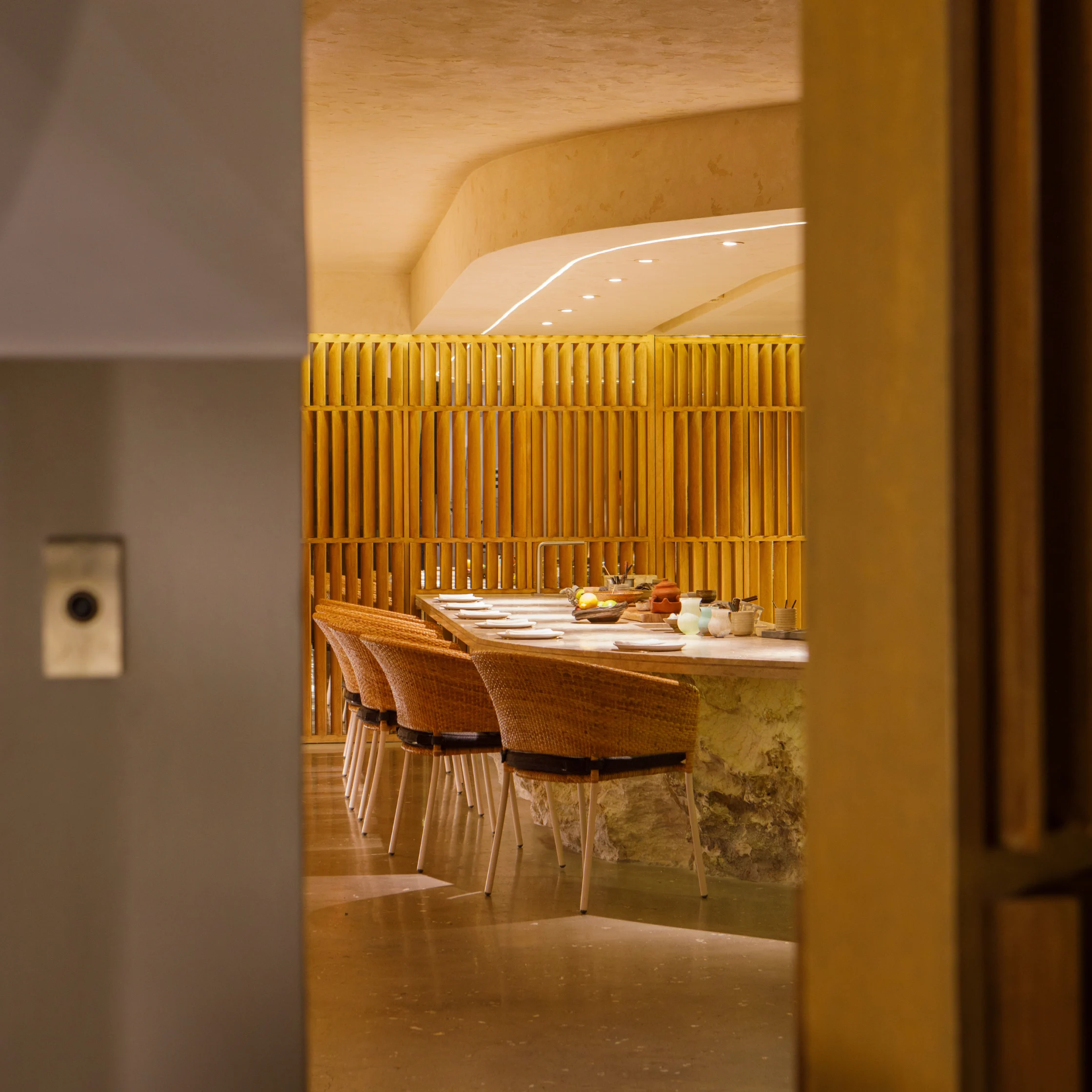
How Inatô was Designed Through an Organic Design Process
“There was never a pressure to make it look good,” the duo says. “What you see now was really just a consequence of all those meetings.” With both parties being open to possibilities, the process became unusually organic.
The floor plan underwent several changes—at one point even considering to have the dining room upstairs. Even unique features such as the curved bar evolved intuitively. Originally planned to be a straight counter, it eventually transformed and softened into its current shape after the team realized the restaurant needed more seating and better flow. One thing just led to another.
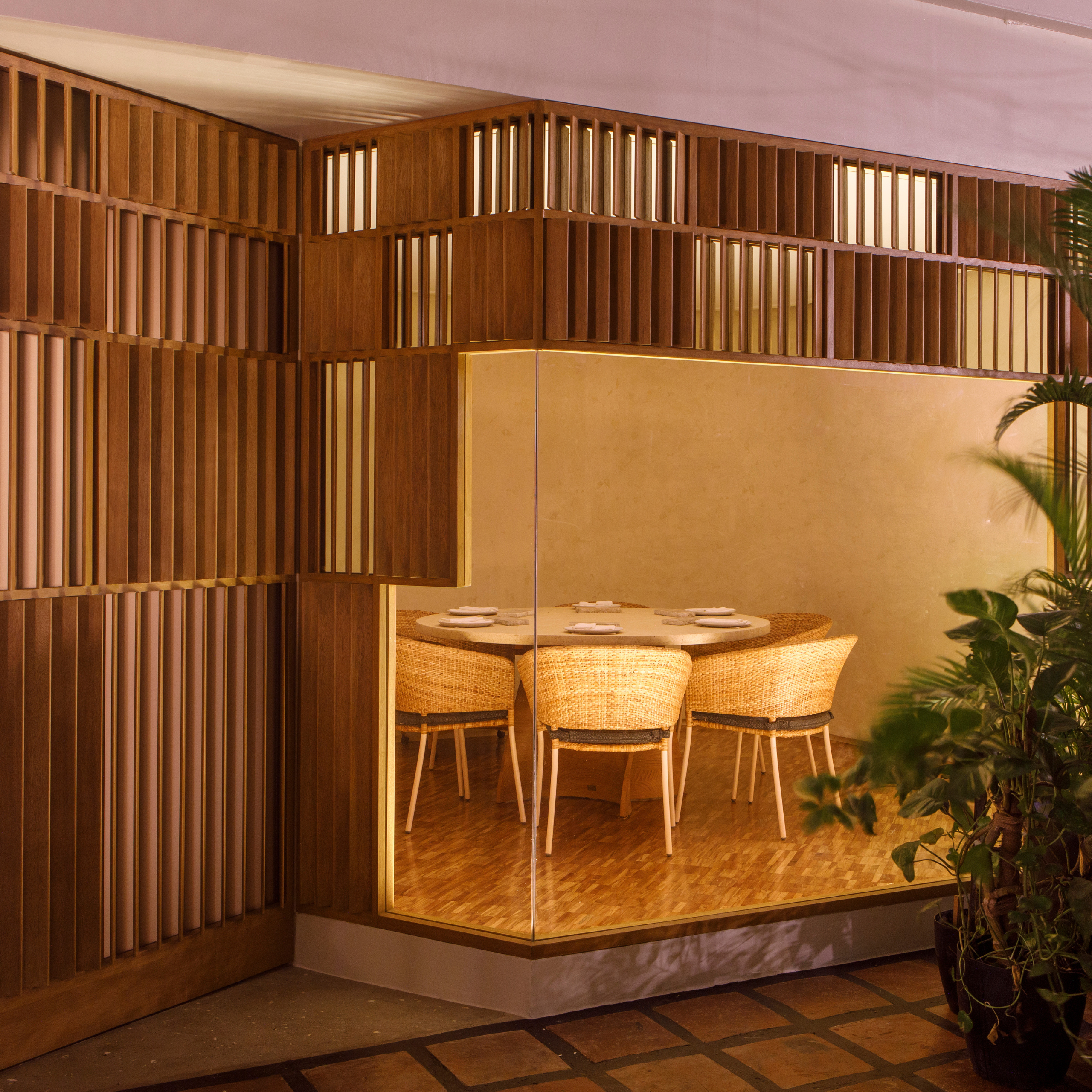
As a contrast to Toyo’s more concrete-heavy identity, beige tones were consciously chosen to be splashed across the walls, while the private dining room was positioned at the front to make it easier for chef Jordy’s parents to access without climbing a flight of stairs. Though partly enclosed in glass, it was still intended to feel intimate and private once inside. Other details followed suit and had the same natural evolution, like the now-signature banana peel element, which happened accidentally, mainly due to functional limitations.
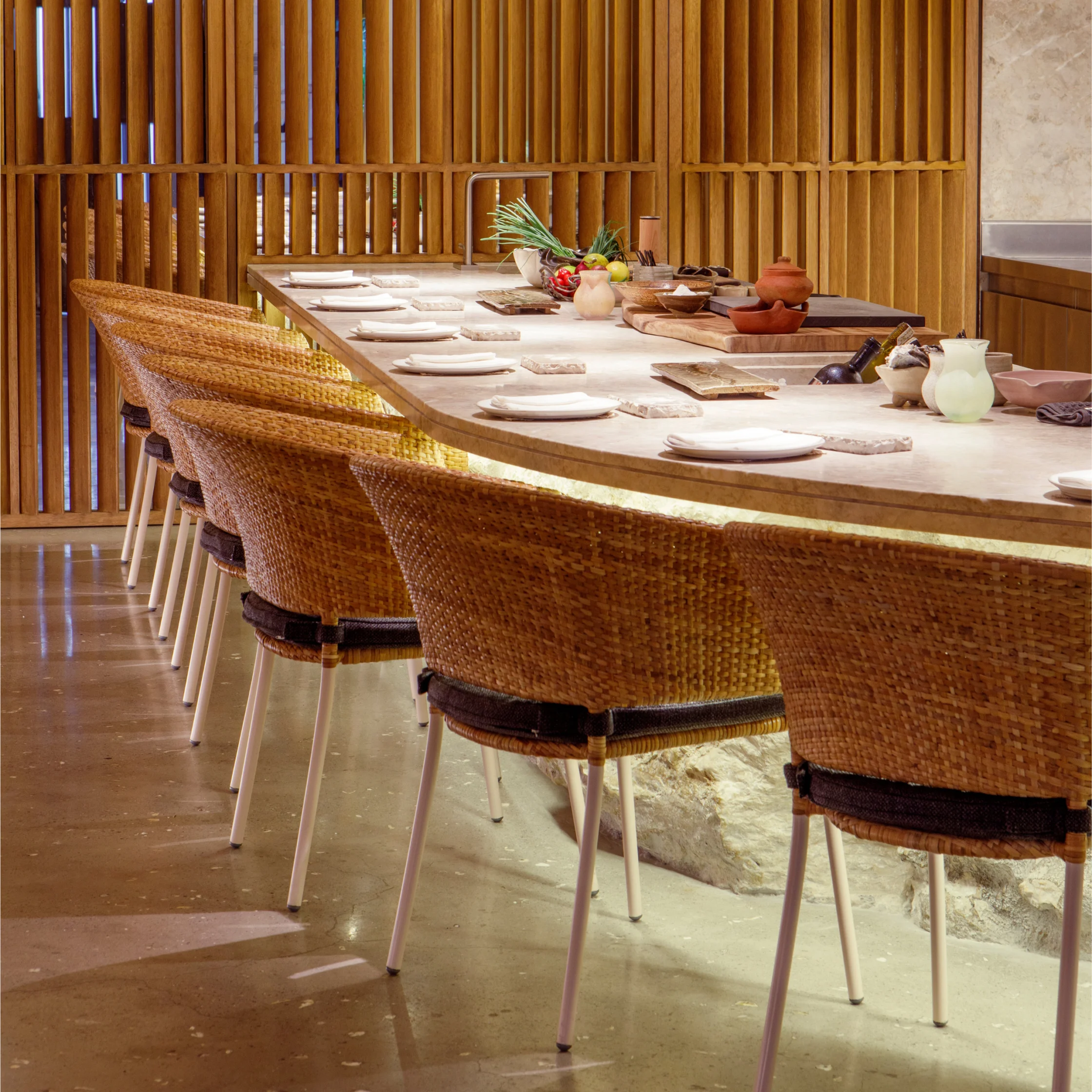
How Inatô Celebrates Filipino Craftsmanship Through Custom Design
The project also became an opportunity to champion local craftsmanship. Instead of relying on ready-made materials, the team pushed to create custom tiles and flooring. Doing so may have taken more time and demanded more thought, but it was one the client and the ladies from Studio One both embraced.
Compared to other restaurants, which were shaped by rigid design and direction, this one naturally unfolded over time, revealed through trust, intuition and conversation.
Interestingly enough, the name Inatô, a Cebuano term associated with making people feel at home, came up only toward then end of construction. It captured what the restaurant had already become long before it officially got a name.
Inatô is located at 2316 Chino Roces Avenue Extension, Makati.

Frequently Asked Questions
Inato was designed by Studio Ong, led by sisters Charisse Ong (principal architect) and Coleen Ong (principal interior designer).
Rather than following a fixed visual concept, the design was inspired by the personalities, hospitality, and culture of Chef Jordy Navarra, May Navarra, and the Toyo team.
Although the two restaurants share a kitchen, Inato was intentionally designed to have its own identity while still feeling connected to Toyo.
The restaurant features custom-made local materials, handcrafted details, warm neutral tones, and a layout that evolved organically throughout the design process.
“Inato” is a Cebuano term associated with making people feel at home—a fitting name for a restaurant whose entire design was built around warmth and hospitality.