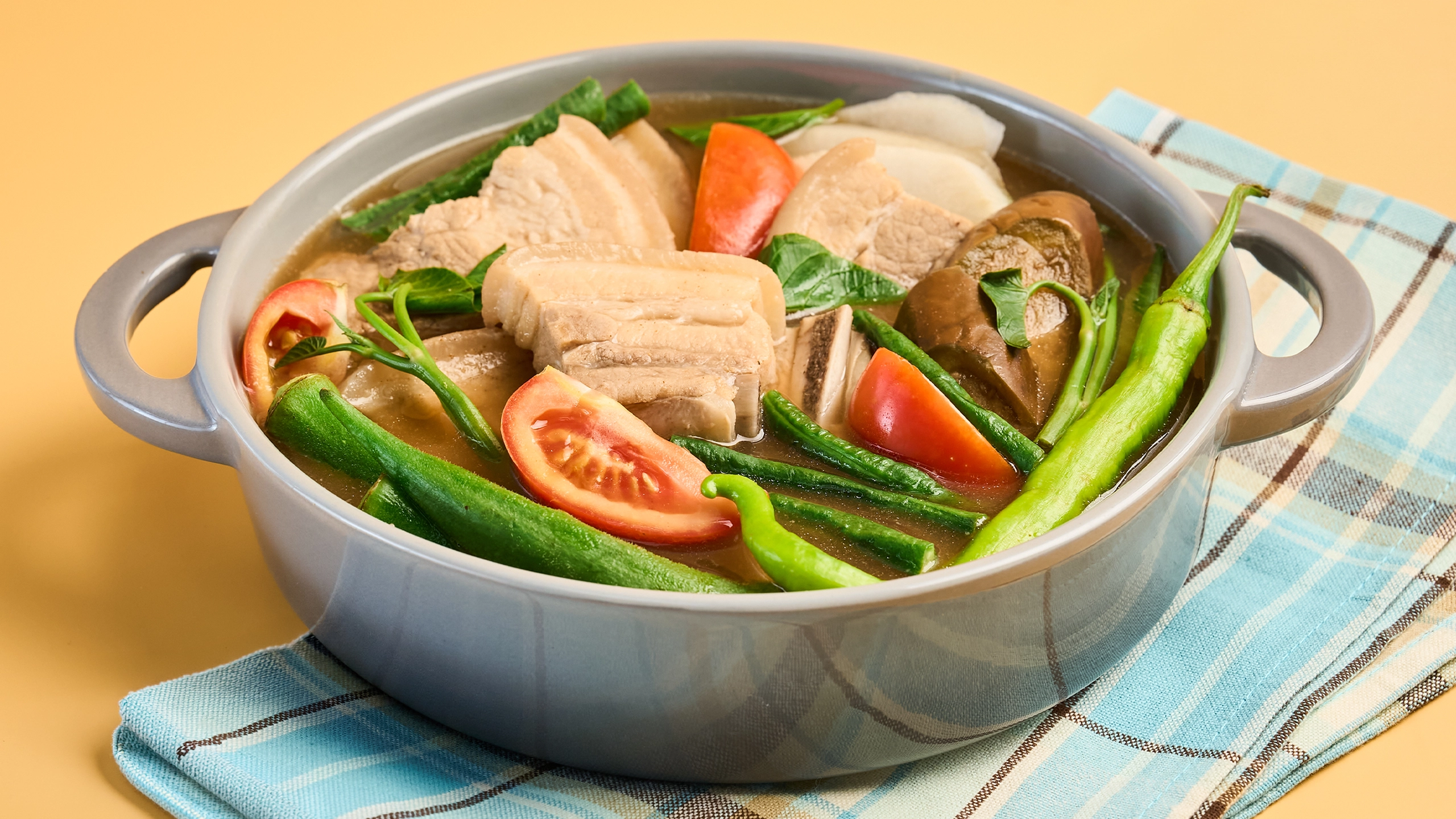


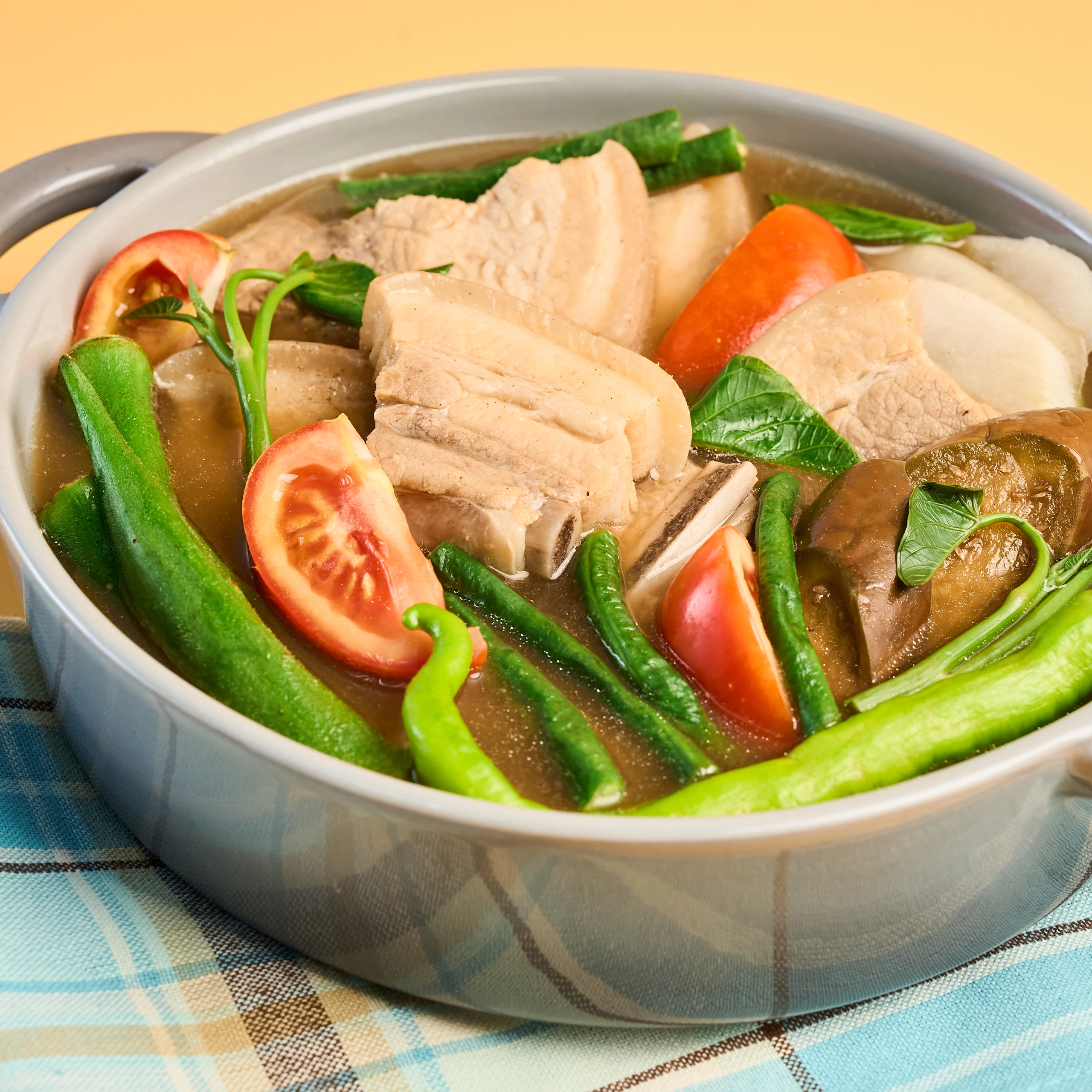
There are Filipino dishes that don’t need an elaborate introduction because the first spoonful already tells a story. Sinigang na baboy is one of them. The moment you smell the pork simmering with tomatoes, onions, vegetables, and sour tamarind broth, it has a way of making an ordinary meal feel comforting and familiar.
For many Filipinos, sinigang is more than just soup. It is the kind of food people look forward to after a long day, especially when served with steaming rice. Its defining characteristic is its pleasantly sour broth, which can be bright and refreshing while still being deeply savory from the pork and fish sauce.
What makes sinigang particularly wonderful is that there is no single way to make it. Some families like it intensely sour, while others prefer a gentler tang. Some use pork belly, others use ribs or shoulder. Vegetables can change depending on what’s available at the market. One household might insist on tamarind, while another might reach for a convenient souring mix.
This version uses pork ribs, fresh unripe tamarind, radish, string beans, okra, eggplant, kangkong, tomatoes, onion, and long green chilies. It is a hearty, vegetable-filled soup with a naturally sour tamarind broth—the kind of dish that tastes even better when everyone gathers around the table.
What Is Sinigang?
Sinigang is a Filipino sour soup or stew characterized by its tart broth and the vegetables and protein cooked in it.
The word sinigang is associated with the Filipino cooking process of simmering ingredients in a sour broth. While pork is one of the most popular versions, sinigang can also be made with:
- Shrimp (sinigang na hipon)
- Fish (sinigang na isda)
- Beef
- Chicken
- Mixed seafood
- Various vegetables
The souring ingredient can also vary.
Tamarind (sampalok) is perhaps the best-known choice, but Filipino cooks also use ingredients such as:
- Calamansi
- Green mango
- Kamias
- Guava
- Santol
- Vinegar
- Other naturally sour fruits
That flexibility is one of the reasons sinigang has remained such an important part of Filipino cooking.
A Little History of Sinigang
Sinigang is deeply rooted in Filipino culinary culture, although its exact origin is difficult to trace to a single place or historical moment.
The concept of cooking meat, fish, or vegetables in a sour broth fits naturally into the tropical environment of the Philippines, where sour fruits and other acidic ingredients have long been available.
Tamarind, in particular, became an important souring ingredient in Filipino cuisine. Its pulp produces a distinctive combination of sharp acidity and subtle fruitiness that works beautifully with rich pork.
Sinigang also reflects an important characteristic of traditional Filipino home cooking: using what is available.
The basic idea stays recognizable, but the protein, vegetables, and souring ingredient can change according to location, season, family preference, or what happens to be available at the market.
That means your grandmother’s sinigang may taste completely different from a neighbor’s—and both can still be perfectly authentic expressions of Filipino cooking.
Why Is Sinigang So Popular?
One reason is its balance.
Pork provides richness and savory flavor. Tamarind cuts through that richness with acidity. Tomatoes add another layer of brightness, while onions give sweetness and aroma.
Then there are the vegetables.
Radish absorbs the sour broth. Eggplant becomes tender and silky. Okra adds a little body. String beans remain pleasantly crisp. Kangkong adds freshness.
The result is a dish that is rich but refreshing, sour but savory, hearty but vegetable-filled.
That balance is a big part of what makes sinigang so satisfying.
Recipe Tips for a Better Sinigang
1. Don’t rush the pork
Tender pork is one of the pleasures of sinigang.
Give the meat enough time to simmer slowly.
If you’re using particularly tough pork ribs, shoulder, or other collagen-rich cuts, they may require additional cooking time.
2. Skim the broth
Removing the foam during the early stages of cooking can result in a cleaner broth.
You can also skim some excess fat later if you prefer a lighter soup.
3. Add vegetables according to cooking time
Don’t throw everything into the pot simultaneously.
Harder vegetables should go in first.
Leafy vegetables should go in last.
This preserves the different textures.
4. Don’t overcook the kangkong
Kangkong cooks quickly.
Add it near the end and simmer only until tender.
5. Add sourness gradually
Fresh tamarind can vary considerably in sourness.
Some batches are incredibly tart, while others are milder.
Add the tamarind liquid gradually and taste as you go.
6. Use tomatoes for depth
Tomatoes aren’t responsible for the primary sourness, but they contribute acidity, sweetness, and savory depth.
Allow them to soften naturally in the broth.
7. Don’t make the broth too salty
Remember that the soup will be served with rice.
A broth that tastes slightly intense on its own may become perfectly balanced when eaten with plain steamed rice.
Ingredient Substitutions
One of the best things about sinigang is that substitutions are easy.
Pork Ribs
You can replace pork ribs with:
- Pork belly
- Pork shoulder
- Pork neck bones
- Pork hock
- Pork chops
Pork belly gives a richer and fattier soup, while leaner cuts create a lighter broth.
Tamarind
If fresh tamarind isn’t available, you can use:
- Tamarind paste
- Tamarind concentrate
- Frozen tamarind pulp
- Commercial sinigang mix
Commercial mixes are convenient and consistent, but fresh tamarind provides a more natural fruity sourness.
Radish
You can replace radish with:
- Turnip
- Daikon
- Additional green beans
- Chayote
Daikon is particularly close in texture and flavor.
String Beans
Possible substitutes include:
- Snow peas
- Green beans
- Yardlong beans
- Chayote
Kangkong
If water spinach isn’t available, try:
- Spinach
- Bok choy
- Pechay
- Mustard greens
The flavor won’t be identical, but the soup will still work beautifully.
Eggplant
You can use:
- Japanese eggplant
- Chinese eggplant
- Regular globe eggplant
Japanese and Chinese varieties tend to cook quickly and become particularly tender.
Okra
If you’re not a fan of okra, you can simply leave it out.
Alternatively, use another vegetable such as chayote or additional string beans.
Understanding the Main Ingredients
Pork Ribs
Pork ribs are an excellent choice for sinigang because they contain both meat and connective tissue.
Slow simmering allows the connective tissue to soften, creating tender meat and a flavorful broth.
The natural richness of pork is also beautifully balanced by tamarind’s acidity.
Tamarind
Tamarind is the defining ingredient of this version of sinigang.
The fruit has a brown pod and a sticky, tangy pulp surrounding its seeds.
Unripe tamarind is particularly useful for savory cooking because of its intense sourness.
The flavor isn’t simply “sour.” It has a fruity, complex acidity that gives sinigang its distinctive character.
Tomatoes
Tomatoes provide:
- Mild acidity
- Natural sweetness
- Umami
- Color
- Aroma
They help round out the sharpness of the tamarind.
Radish
Radish is one of the vegetables that absorbs the flavor of the broth particularly well.
After simmering, it becomes tender and carries the sour, savory soup into every bite.
Kangkong
Kangkong, also known as water spinach, is a popular leafy vegetable in Southeast Asian cuisine.
Its hollow stems and tender leaves cook quickly and work especially well in soups and stews.
Okra
Okra has a distinctive texture because it releases a naturally thickening substance when cooked.
In sinigang, this can add a little body to the broth.
Some people love the texture, while others prefer to leave it out.
Siling Haba
Long green chili is commonly used in Filipino cooking.
Despite the word “chili,” it doesn’t necessarily make a dish extremely spicy.
It can contribute aroma, freshness, and a gentle heat.
For a hotter sinigang, you can add additional chili or use a hotter pepper variety.
Health Benefits of Sinigang
Sinigang can be a nutrient-rich meal because it combines protein, vegetables, and a flavorful broth in one dish.
1. Provides protein
Pork provides protein, which is important for maintaining and repairing body tissues.
Choosing leaner pork can make the dish lighter while still providing a substantial protein source.
2. Contains a variety of vegetables
One of the biggest nutritional strengths of sinigang is its vegetable variety.
A single bowl can contain:
- Radish
- Eggplant
- String beans
- Okra
- Kangkong
- Tomatoes
- Onion
- Chili
This gives the meal a broad range of vitamins, minerals, fiber, and plant compounds.
3. Vegetables provide dietary fiber
The vegetables contribute dietary fiber, which supports normal digestive health and can help promote fullness.
Eating the vegetables along with the pork and rice creates a more balanced meal than simply eating meat and rice alone.
4. Tamarind contributes plant compounds
Tamarind contains various plant compounds and provides some vitamins and minerals.
Its greatest culinary contribution, however, is its acidity, which lets the dish achieve a vibrant flavor without requiring a large amount of added fat.
5. Tomatoes provide antioxidants
Tomatoes contain lycopene, a carotenoid antioxidant, as well as vitamin C and other nutrients.
Cooking tomatoes can make lycopene more available, although the exact nutritional effects depend on preparation.
6. Kangkong contributes vitamins and minerals
Leafy vegetables such as kangkong can provide nutrients including vitamins A and C, folate, iron, and other minerals.
Adding leafy greens toward the end of cooking helps preserve their fresh flavor.
Making Sinigang Healthier
Sinigang is already vegetable-rich, but you can make a few adjustments if you want a lighter version.
Choose leaner pork
Pork shoulder or lean pork cuts can reduce the amount of fat compared with very fatty cuts.
Skim the broth
After cooking, allow the soup to rest briefly and skim excess fat from the surface.
Increase the vegetables
There’s no reason you can’t add more radish, kangkong, string beans, or other vegetables.
Control the fish sauce
Fish sauce provides wonderful flavor, but it is high in sodium.
Use enough for savory depth without making the broth excessively salty.
Use plenty of sourness
A flavorful sour broth can make the dish satisfying without relying on heavy sauces or excessive fat.
Watch the rice portion
Sinigang is commonly eaten with plenty of rice, which is delicious but can significantly increase the total carbohydrate and calorie content of the meal.
Different Types of Sinigang
Sinigang is not limited to pork.
Sinigang na Hipon
Shrimp is simmered in the sour broth.
Because shrimp cooks quickly, it is added much later than pork.
Sinigang na Isda
Fish can be used for a lighter version.
The fish should generally be added toward the end to prevent it from breaking apart.
Sinigang na Baboy
The pork version is one of the most popular and satisfying varieties.
Pork ribs, belly, shoulder, and other cuts can all work.
Sinigang na Baka
Beef can create a deeper, richer broth and often benefits from a longer cooking time.
Different Souring Ingredients
Tamarind isn’t the only way to make sinigang sour.
Green Mango
Unripe mango can provide a sharp, fruity acidity.
Kamias
Kamias, also called bilimbi, can create an intensely sour broth.
Guava
Guava produces a more fragrant, fruity style of sinigang.
Calamansi
Calamansi can be used to add brightness, although it is often more useful as a finishing souring ingredient.
Santol
Santol can also be used to provide sourness and a distinctive fruit character.
This variety of souring ingredients is one of the reasons Filipino sour soups can taste dramatically different from household to household.
What to Serve with Sinigang na Baboy
The classic partner is steamed white rice.
Rice provides a neutral foundation that allows the sour, savory broth to shine.
You can also serve sinigang with:
- Salted egg
- Fried fish
- Grilled fish
- Atchara
- Fresh tomatoes
- Fried tofu
- Crispy pork
Some people also enjoy a small dipping sauce made from fish sauce and chili on the side.
How to Store Leftover Sinigang
Sinigang often tastes even better the next day because the ingredients have more time to absorb the flavors of the broth.
Allow leftovers to cool and refrigerate them promptly in a covered container.
When reheating, warm only the portion you plan to eat.
If possible, avoid repeatedly reheating the entire pot.
The vegetables can become very soft after multiple reheatings, so if you’re intentionally making sinigang for leftovers, you can slightly undercook the vegetables during the initial preparation.
Common Mistakes to Avoid
Making it too sour too quickly
Tamarind strength varies. Add it gradually.
Overcooking the vegetables
Different vegetables require different cooking times.
Adding kangkong too early
It cooks quickly and can become overly soft.
Using too much fish sauce
The sour broth should remain balanced, not simply salty.
Cooking pork too quickly
Low and steady simmering helps produce tender meat and a flavorful broth.
Adding all the vegetables at once
This often results in some vegetables being mushy while others are still undercooked.
A Simple Way to Think About the Flavor
A good sinigang has several layers:
Sourness — from tamarind
Savory depth — from pork and fish sauce
Sweetness and aroma — from onion and tomatoes
Freshness — from vegetables
Gentle heat — from green chili
Richness — from the pork
When those elements are balanced, the soup doesn’t taste simply “sour.”
It tastes complex, bright, comforting, and deeply savory.
Final Words
Sinigang na baboy is one of those Filipino dishes that can make you feel at home with just one spoonful.
It is humble food, but there is something remarkably satisfying about it. A pot of pork simmered slowly with onions and tomatoes, followed by fresh tamarind and colorful vegetables, becomes much more than a soup. It becomes a meal with warmth, character, and a sense of tradition.
The sourness is what makes sinigang memorable, but balance is what makes it delicious. The tamarind shouldn’t completely overpower the pork. The fish sauce should enhance rather than dominate. The vegetables should be tender but still recognizable. And the broth should be bold enough to stand on its own while becoming even better when poured over hot rice.
Perhaps that’s why every family can have its own favorite version.
Maybe yours is extra sour. Maybe you like fatty pork ribs. Maybe you add more kangkong and radish. Maybe you prefer shrimp instead of pork. Maybe you grew up eating sinigang made with a different sour fruit altogether.
All of those variations are part of what makes Filipino cooking so enjoyable.
Sinigang is adaptable, comforting, practical, and unmistakably Filipino. It brings together the richness of pork, the brightness of tamarind, and the freshness of vegetables in one wonderfully satisfying bowl.
Serve it piping hot with steamed rice, gather everyone around the table, and let the sour broth do what it has done for generations: wake up the appetite, warm the body, and make an ordinary Filipino meal feel like home.