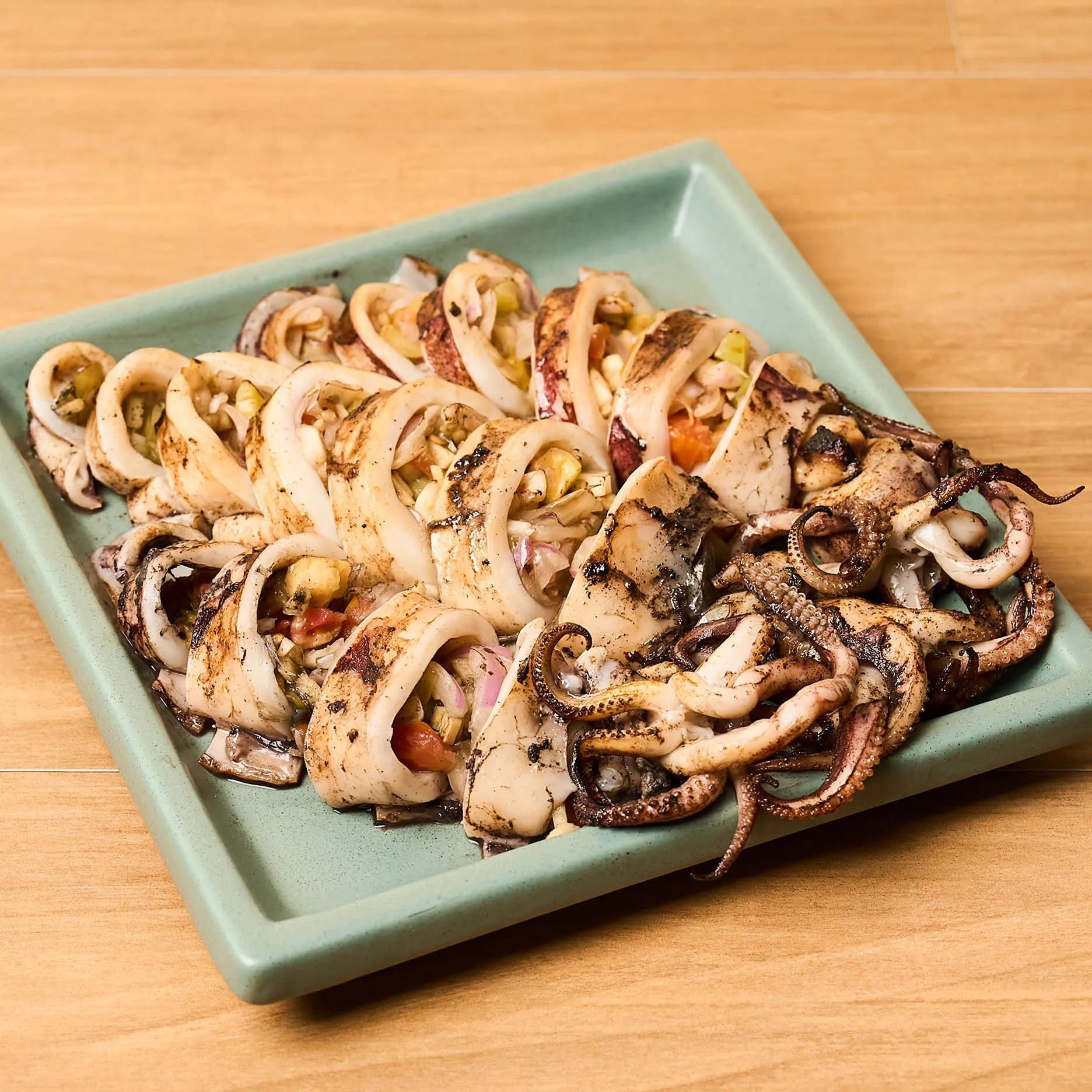


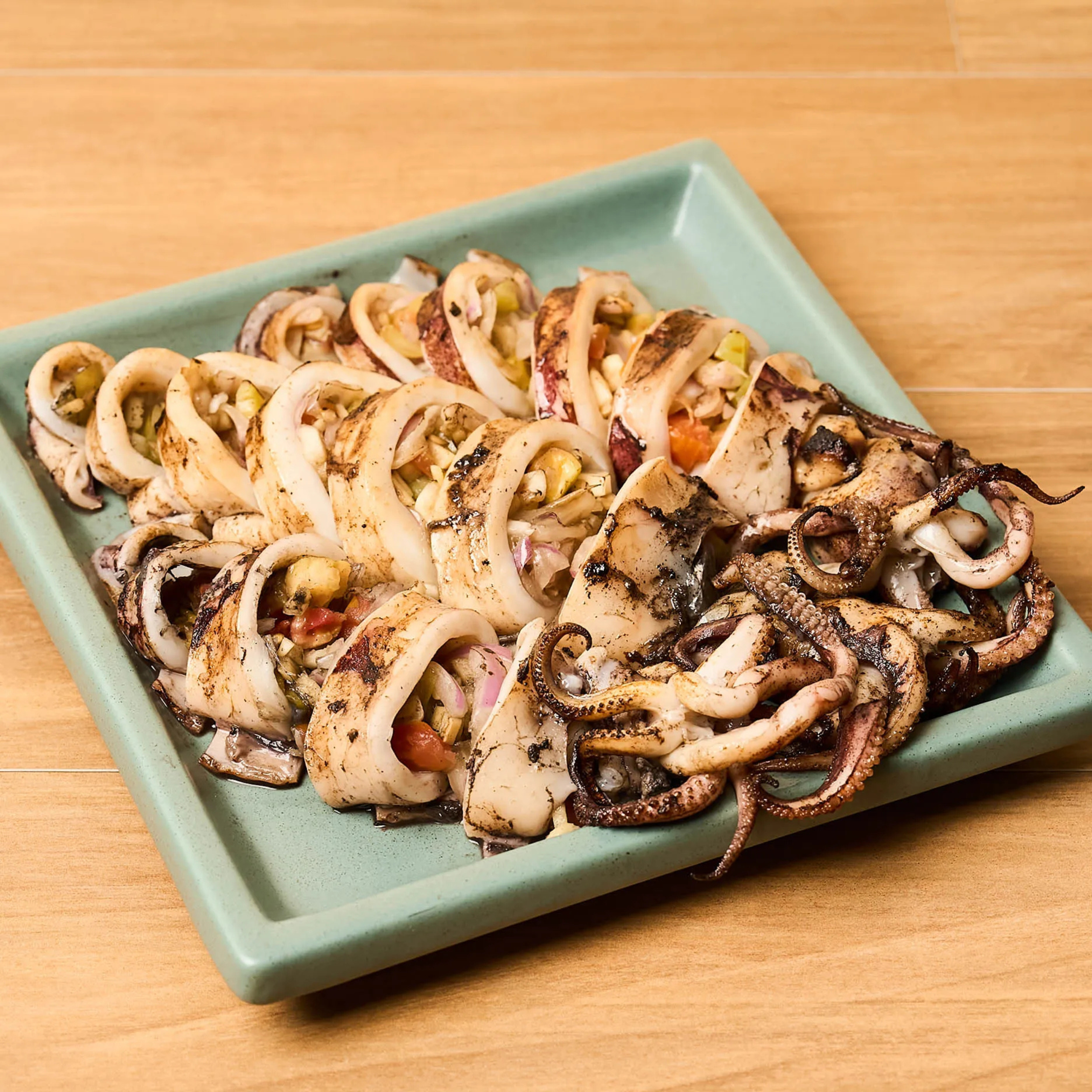
Inihaw na Pusit is a classic Filipino seafood dish that showcases how a few fresh ingredients can create something truly memorable. Whole squid is carefully cleaned, lightly seasoned, stuffed with a flavorful mixture of tomatoes, onions, garlic, ginger, and spring onions, then marinated before being grilled until lightly charred and smoky. The result is tender, juicy squid filled with a refreshing, savory stuffing that perfectly complements its naturally sweet flavor.
One of the things that makes Inihaw na Pusit so special is its balance of flavors and textures. The smoky aroma from the grill, the citrusy brightness of calamansi, the savory notes of soy sauce, and the fresh vegetables tucked inside the squid all come together in every bite. Unlike heavily seasoned seafood dishes, this recipe highlights the natural taste of fresh squid while enhancing it with simple yet vibrant ingredients.
In the Philippines, Inihaw na Pusit is commonly enjoyed during family gatherings, beach outings, backyard barbecues, and festive celebrations. It’s equally satisfying as the centerpiece of a meal or as part of a larger spread of grilled favorites. Served with steamed rice and a dipping sauce of spiced vinegar or toyomansi, this dish captures the comforting flavors of Filipino outdoor cooking and the joy of sharing freshly grilled food with family and friends.
Although grilling squid may seem intimidating at first, it’s actually a quick and rewarding recipe. With proper preparation and careful cooking, you can enjoy tender, flavorful squid that’s every bit as delicious as those served in seafood restaurants and seaside eateries.
A Brief History of Inihaw na Pusit
Grilling seafood has long been a cherished cooking tradition in the Philippines, an archipelago blessed with abundant coastlines and rich marine resources. For generations, fishing communities have relied on fresh catches of squid, fish, shrimp, and shellfish as an important part of their daily meals. Cooking seafood over hot charcoal became one of the simplest and most effective ways to preserve its natural flavor while adding the irresistible smoky aroma that Filipinos love.
The word “inihaw” comes from the Filipino verb meaning “to grill” or “to roast over live coals.” Before modern kitchens became common, many families prepared meals using charcoal grills or wood-fired stoves, making grilled dishes an everyday part of Filipino cuisine. Among these, grilled squid quickly became a favorite because of its naturally sweet flavor and quick cooking time.
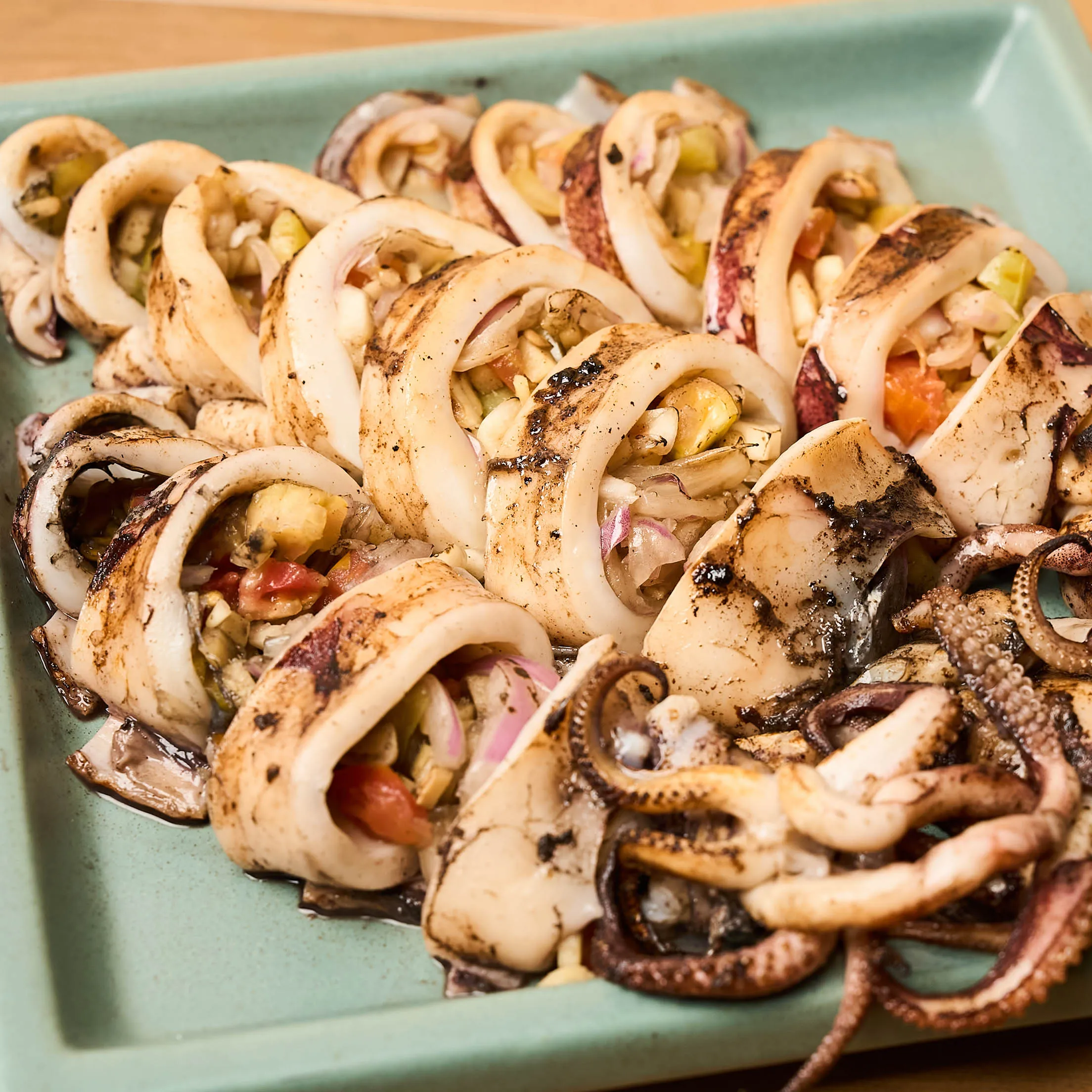
Over the years, cooks began enhancing grilled squid by stuffing it with chopped tomatoes, onions, garlic, ginger, and herbs before grilling. The stuffing not only added flavor but also helped keep the squid moist while cooking. Marinades made with soy sauce and calamansi further enriched the dish, giving it the tangy, savory profile that has become its signature.
Today, Inihaw na Pusit is a staple at seafood restaurants, roadside barbecue stalls, beach resorts, and family celebrations throughout the Philippines. While every region and household may have its own variation, the heart of the dish remains the same: fresh squid, simple ingredients, careful grilling, and the unmistakable smoky flavor that brings people together around the table.
Why You’ll Love This Recipe
- Tender, juicy squid with a delicious smoky flavor.
- Fresh vegetable stuffing adds brightness and texture.
- Simple ingredients highlight the natural sweetness of the seafood.
- Quick to prepare and cook.
- Perfect for barbecues, family dinners, or seafood feasts.
- Easy to customize with herbs, spices, or different dipping sauces.
- Restaurant-quality results made at home.
- Pairs beautifully with steamed rice and classic Filipino condiments.
Recipe Tips
- Choose fresh squid with bright, clear eyes and a clean ocean smell.
- Medium-sized squid cook more evenly and stay tender.
- Pat the squid dry before marinating to help the flavors adhere.
- Avoid overstuffing to prevent the filling from spilling during grilling.
- Grill over medium-high heat for quick cooking and a lightly charred exterior.
- Do not overcook—squid cooks very quickly and becomes rubbery if left on the grill too long.
- Brush with marinade while grilling for extra flavor and moisture.
- Let the squid rest briefly before slicing to keep the juices inside.
- If using wooden toothpicks, soak them in water for 15–20 minutes beforehand to help prevent burning.
Ingredient Substitutions
This recipe is flexible and can easily be adapted using ingredients you already have.
Squid
If whole squid is unavailable, you may use:
- Large squid tubes
- Cuttlefish
- Baby squid (reduce cooking time)
Calamansi Juice
Replace with:
- Fresh lemon juice
- Fresh lime juice
- A combination of lemon and orange juice for a milder citrus flavor
Soy Sauce
Substitute with:
- Low-sodium soy sauce
- Tamari (for a gluten-free option)
- Coconut aminos for a slightly sweeter flavor
Brown Sugar
Use:
- White sugar
- Honey
- Coconut sugar
- Palm sugar
Tomatoes
Replace with:
- Cherry tomatoes, chopped
- Roma tomatoes
- Seeded plum tomatoes
Spring Onions
Substitute with:
- Chives
- Finely chopped green onions
- Fresh cilantro for a different flavor profile
Ginger
If unavailable, simply omit it or replace it with a small amount of grated galangal for a similar aromatic note.
Dipping Sauce
Instead of toyomansi or spiced vinegar, try:
- Garlic vinegar
- Sweet chili sauce
- Chili garlic sauce
- Soy sauce with sliced chilies and calamansi
Serving Suggestions
Inihaw na Pusit is best enjoyed fresh off the grill while it’s still warm and tender. Serve it with steaming white rice, a generous squeeze of fresh calamansi, and a side of spiced vinegar or toyomansi for dipping. To round out the meal, pair it with grilled vegetables, ensaladang talong, tomato and cucumber salad, or other grilled seafood favorites. Garnishing the platter with chopped spring onions, extra tomato slices, and calamansi halves adds both freshness and vibrant presentation.
Final Thoughts
Inihaw na Pusit is a wonderful example of Filipino cooking at its finest—simple ingredients, fresh seafood, and straightforward techniques coming together to create a dish full of flavor and character. The smoky aroma from the grill, the juicy vegetable stuffing, and the bright tang of calamansi all work together to highlight the squid’s natural sweetness without overpowering it. It’s a recipe that feels equally at home at a casual family dinner, a festive backyard barbecue, or a seaside gathering with friends.
Beyond its delicious taste, this dish reflects the Filipino love for sharing meals prepared with care and enjoyed together. Every household may season or stuff the squid a little differently, making each version a personal expression of family tradition. Once you’ve mastered the basics, you can easily adapt the recipe by experimenting with herbs, spices, or different dipping sauces while preserving its classic appeal. Whether you’re serving it for a special occasion or simply craving the comforting flavors of grilled seafood, Inihaw na Pusit is a timeless favorite that’s sure to bring warmth, conversation, and satisfaction to every meal.