We all eat out for the food, but one would be remiss to disregard the role of architecture in shaping the dining experience.
While interior design focuses on the aesthetics of the inner space, architecture covers facets like the restaurant’s visual foundations and spatial hierarchy, which sets the stage for everything that follows. This not only directs the look of the restaurant exterior, but also interior aspects that include lighting, spatial flow, material, even acoustics—all of which work together to influence how the diner feels, moves about, and ultimately enjoys the time they spend in a dining space.
These are some of the restaurants in Manila where thoughtful, well-designed architecture translates to a memorable experience across different touchpoints—from the time you’re gazing at the facade to when you’re stepping out to exit.
1. Asador Alfonso
Asador Alfonso elicits oohs and ahhs from its guests the moment they arrive. Its picturesque entrance flaunts straight lines, sharp corners, and angles that catch the eye whichever angle it’s viewed from—be it from above, if you’re flying in via helicopter, or from across, if you’re being dropped off via vehicle.
Across the 9.4-hectare development (dubbed the “Lava Rock” by owner and architect Carlo Calma) are different structures, including a cell-like welcoming lounge, a 25-meter long pool with a sunken lounge toward the end, and the main Asador Alfonso building with the degustation area on the second level and the roasting room below. Each is an architectural marvel in its own right, juxtaposed against its terrain—the clear blue sky and lush outdoor greenery.
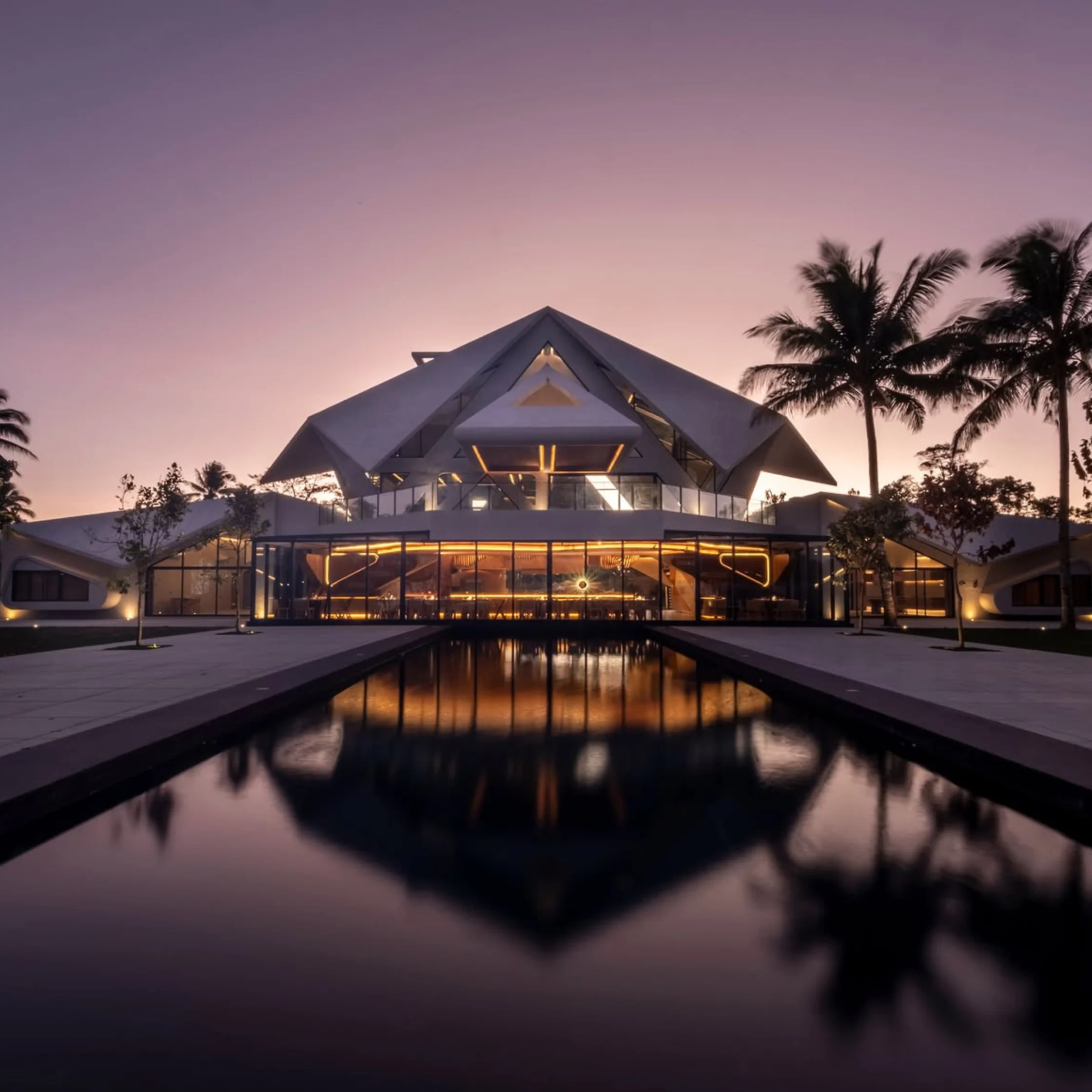
Calma’s technical skill shines through in their successful execution of concrete cantilevered folds reminiscent of origami in the main Asador Alfonso structure. Set shoulder-to-shoulder with its terrain, it is also a tribute to the Taal Volcano. Alluding to lava flowing down the volcano are the ends of the origami-like roof that seem to spill over down the ground. Elsewhere, undulating silhouettes evoke the topography of the area.
Asador Alfonso is located at Lot-3308 Barangay Road, Esperanza Ilaya, Alfonso, Cavite.
2. Casa Buenas
The resident Filipino restaurant within Newport World Resorts in Pasay City, Casa Buenas goes melodramatic when it comes to their design, brought our way by HBA Manila’s Norman Agleron. Their design inspiration is the bahay na bato—the heritage-era Philippine residences that typified affluence, with roots in the Spanish colonial period. With its high ceilings, use of arches, intricate woodwork, capiz fixtures, and Machuca tiles alongside dazzling chandeliers, the 135-seater dining space successfully translates the core of the Filipino ancestral home for the present day.
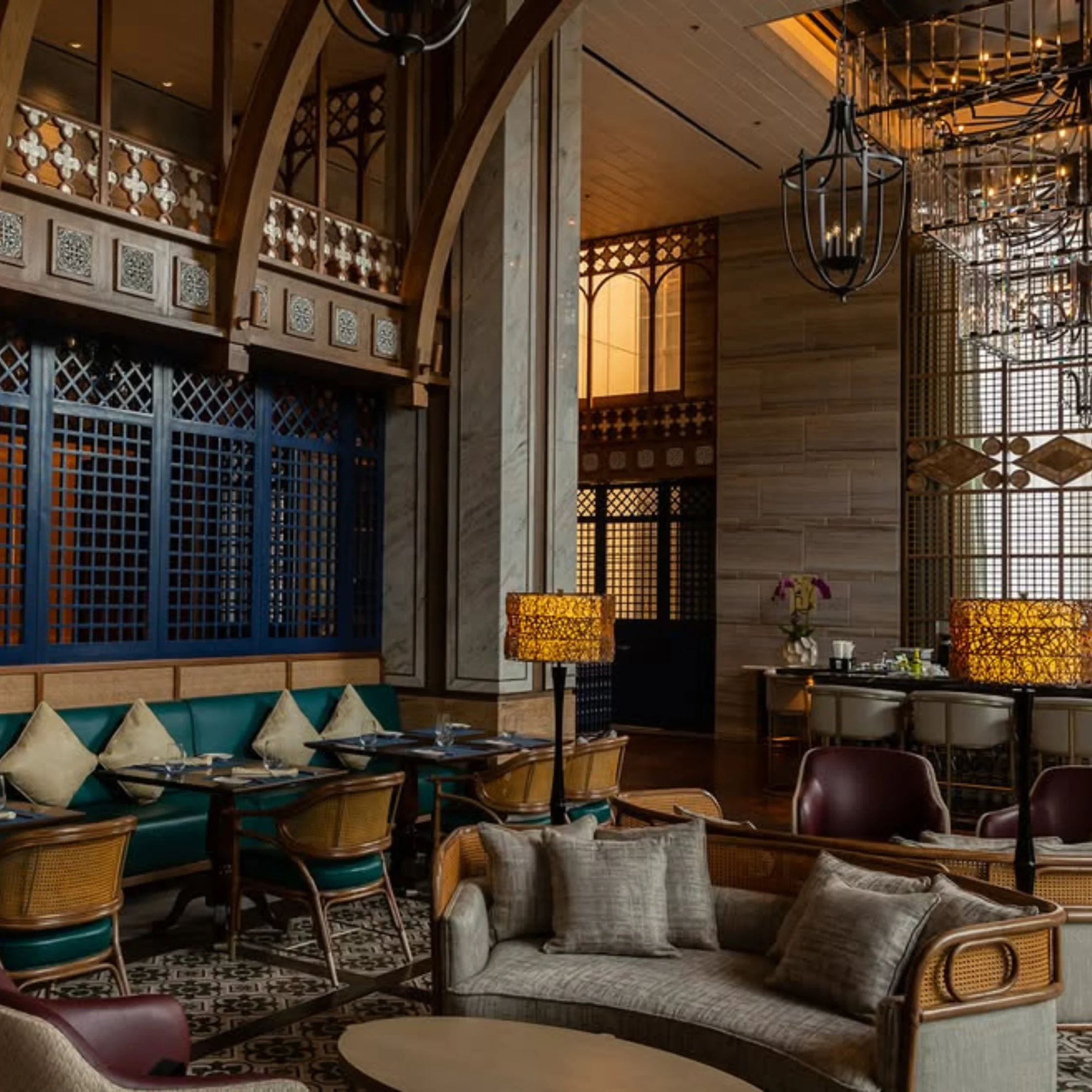
Casa Buenas is located on the Ground Floor, Newport Grand Wing, Newport World Resorts, Newport Boulevard, Pasay.
3. Blackbird at the Nielson Tower
Previously an airport—the Philippines’ very first, built by Laurie Nielson and dating all the way back to 1937—Blackbird maintains aspects of its past life all the way to its current design. What used to be the departure area is now a bar and lounge; what used to be the passenger terminal is now the main dining hall; and what used to be the tarmac is now the al-fresco dining area. A visually striking spiral staircase in the dining area serves as both the focal point and pathway taking visitors up to the “The Cabin”—the former control room turned private dining area overlooking the Ayala Triangle Gardens.
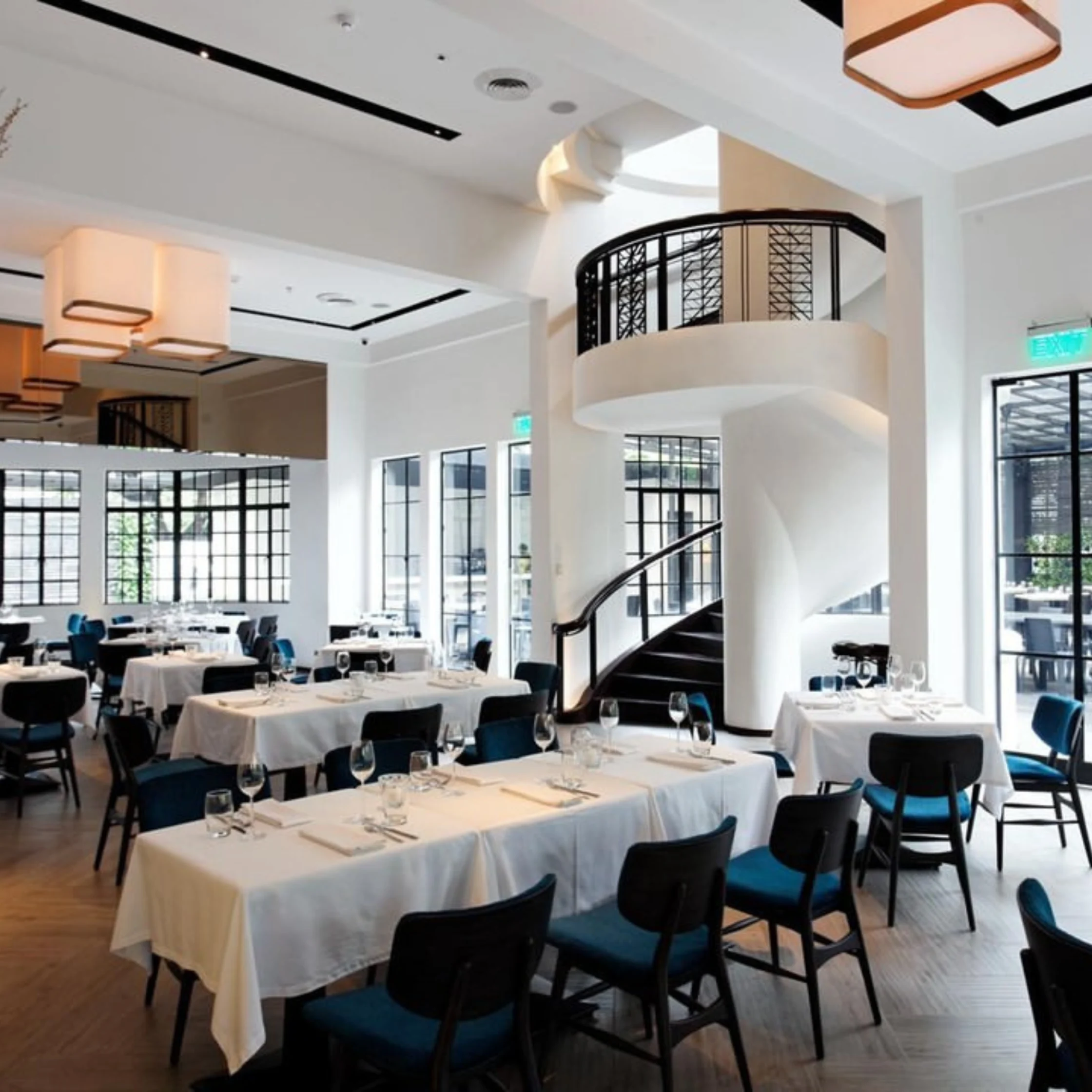
1930s art deco architecture is the name of the game here. Geometric shapes and sharp lines are featured heavily in its architecture and interior design, with rounded corners evoking Art Deco’s transition into Streamline Moderne in the latter part of the 1930s. Stainless steel, marble, and brass elements adorn different parts of the restaurant, giving a sleek but timeless feeling to the space.
Blackbird is located at the Nielson Tower, 6752 Makati Avenue, Ayala Triangle, Makati.
4. Incanta Cave Bar & Restaurant
It’s in the name: this jaw-dropping spot in Quezon City pays homage to caves, simulating their rippled, rocky, beautifully uneven walls in that of the restaurant. The design was conceptualized by founders Sarah Genove-Yu and Cristine Melad, who got the idea for the theme after visiting The Cave restaurant in Bali; and brought to life by Jeng Diaz as well as Arch. Angelo Blay of NUVION, earning the firm the Best Luxury Internal Architecture & Design award from Luxury Lifestyle Awards.
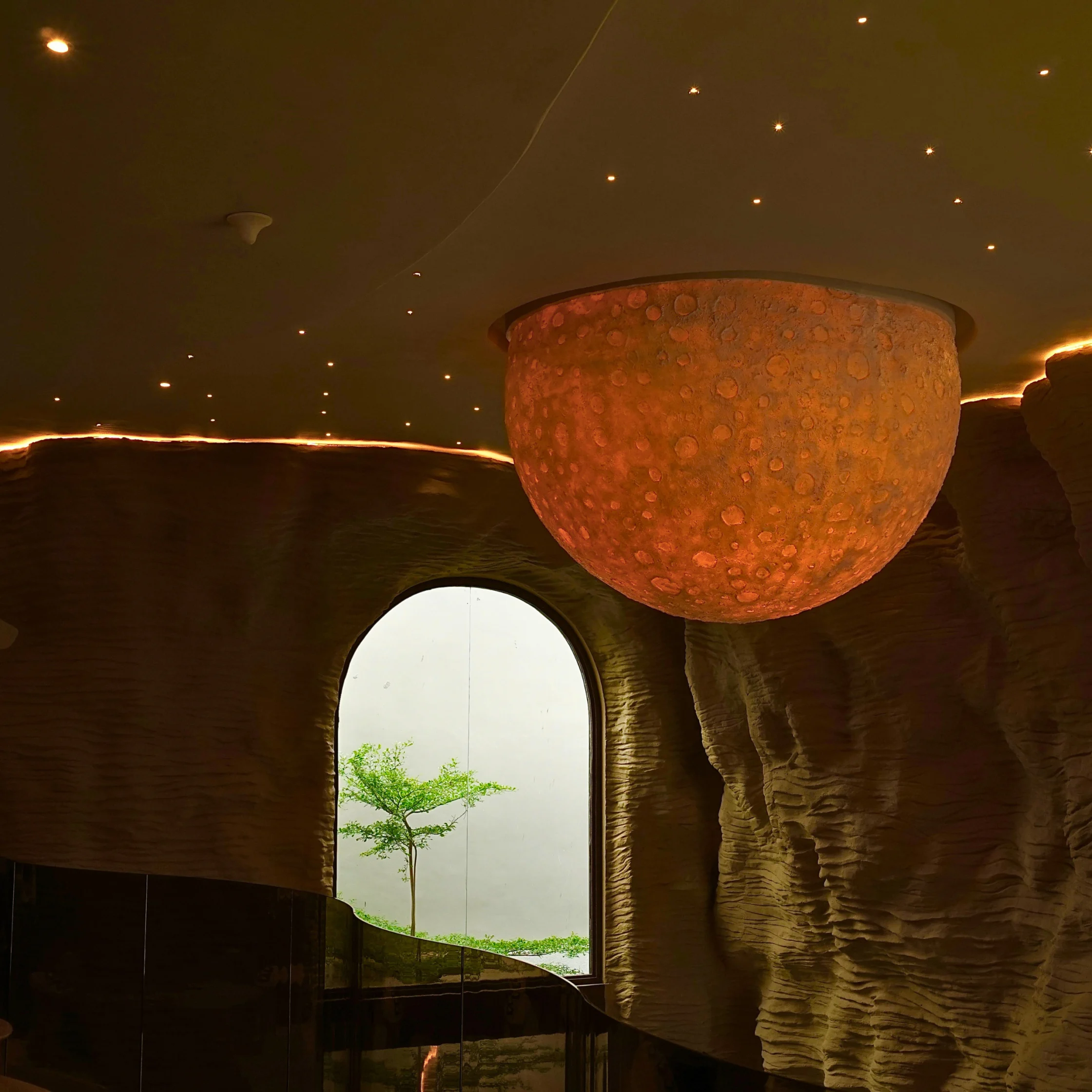
Amazingly, the cave formations and ridges were sculpted by hand, as is the glowing “moon” feature embedded in the sky-like ceiling with dots of LED light scattered about, mimicking the stars. The rest of the dining establishment makes use of neutral tones like creams and taupes, with natural stone like travertine bringing a natural feel to their tables and countertops.
Incanta Cave Bar and Restaurant is located at 70 Scout Limbaga, Tomas Morato Avenue, Diliman, Quezon City.
5. KFC along EDSA, Greenhills
There are hundreds of KFC branches in the Philippines, but one in particular has caught the eye of the design-inclined. The branch at the Pacific Office Machines Building is nicknamed “Brutalist KFC” for its, well, brutalist design, as expressed in its massive concrete forms and sloping lines on its facade. The Pacific Office Machines company whom the building (designed by the renowned Antonio Heredia) was originally built for was a distributor of office machinery—hence the interlocking design that seems to take after the typewriters once stacked in the shop.
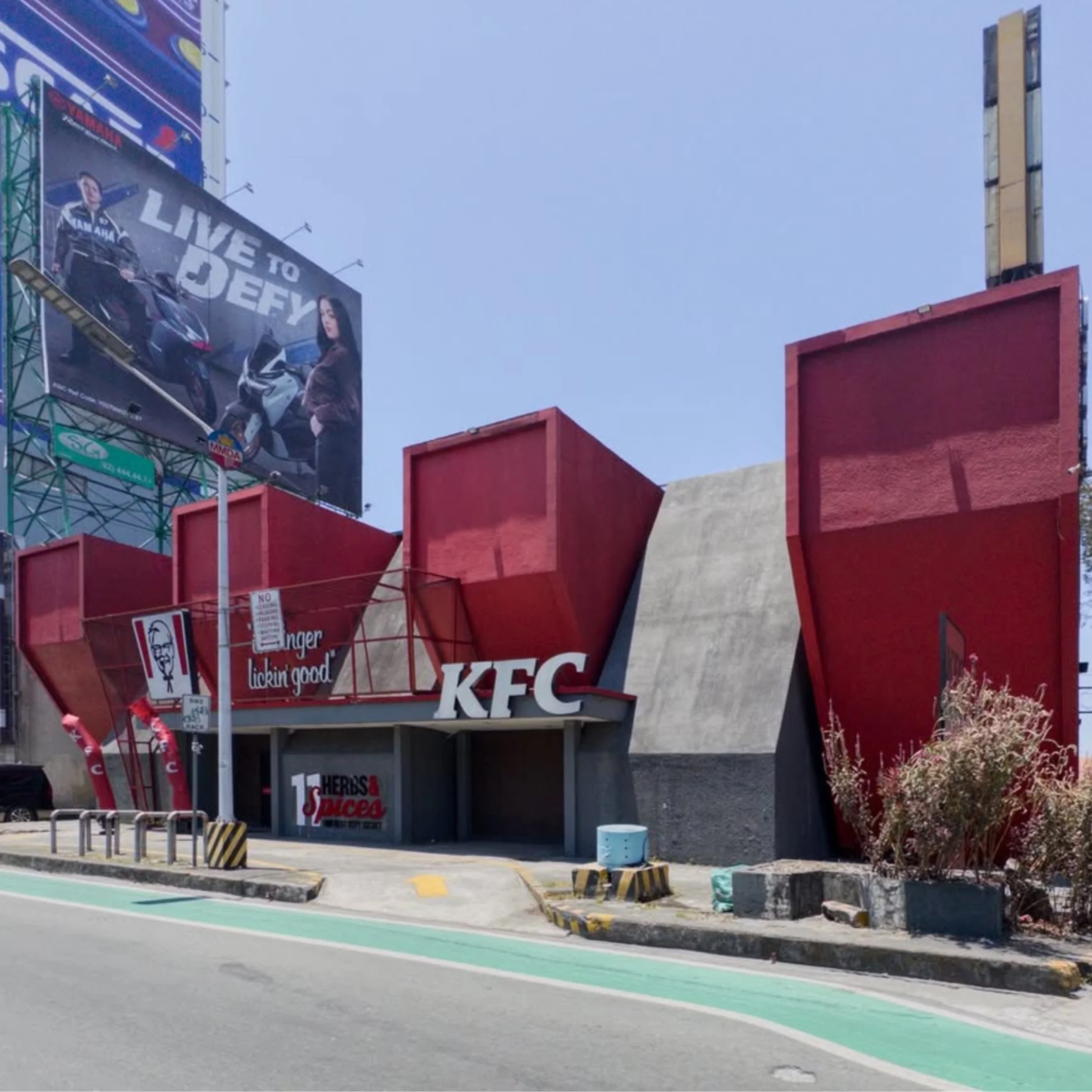
KFC EDSA Greenhills is located at the Pacific Machines Building, 28 Epifanio de los Santos Avenue (EDSA), Greenhills, San Juan.
6. Medusa
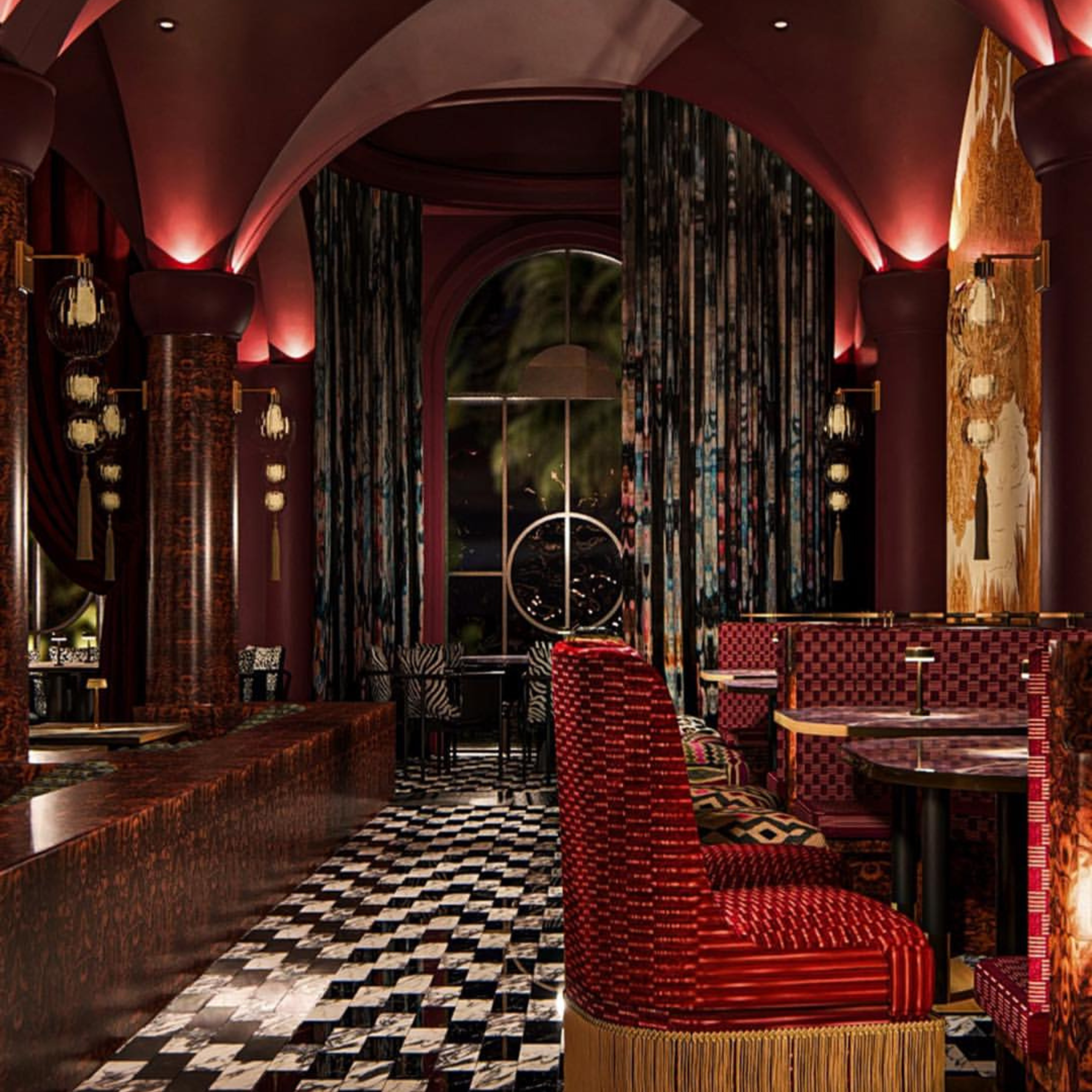
Medusa in BGC immerses its visitors into a space that typifies opulence and drama, thanks in no small part to the maximalist design by Pauline and John Sac of 50/53 Architects. Much of the place is dim, yet the use of Synca indirect uplighting blankets the room in a soft glow while directing the eye towards the trompe l’oeil imagery of the sky on the ceiling.
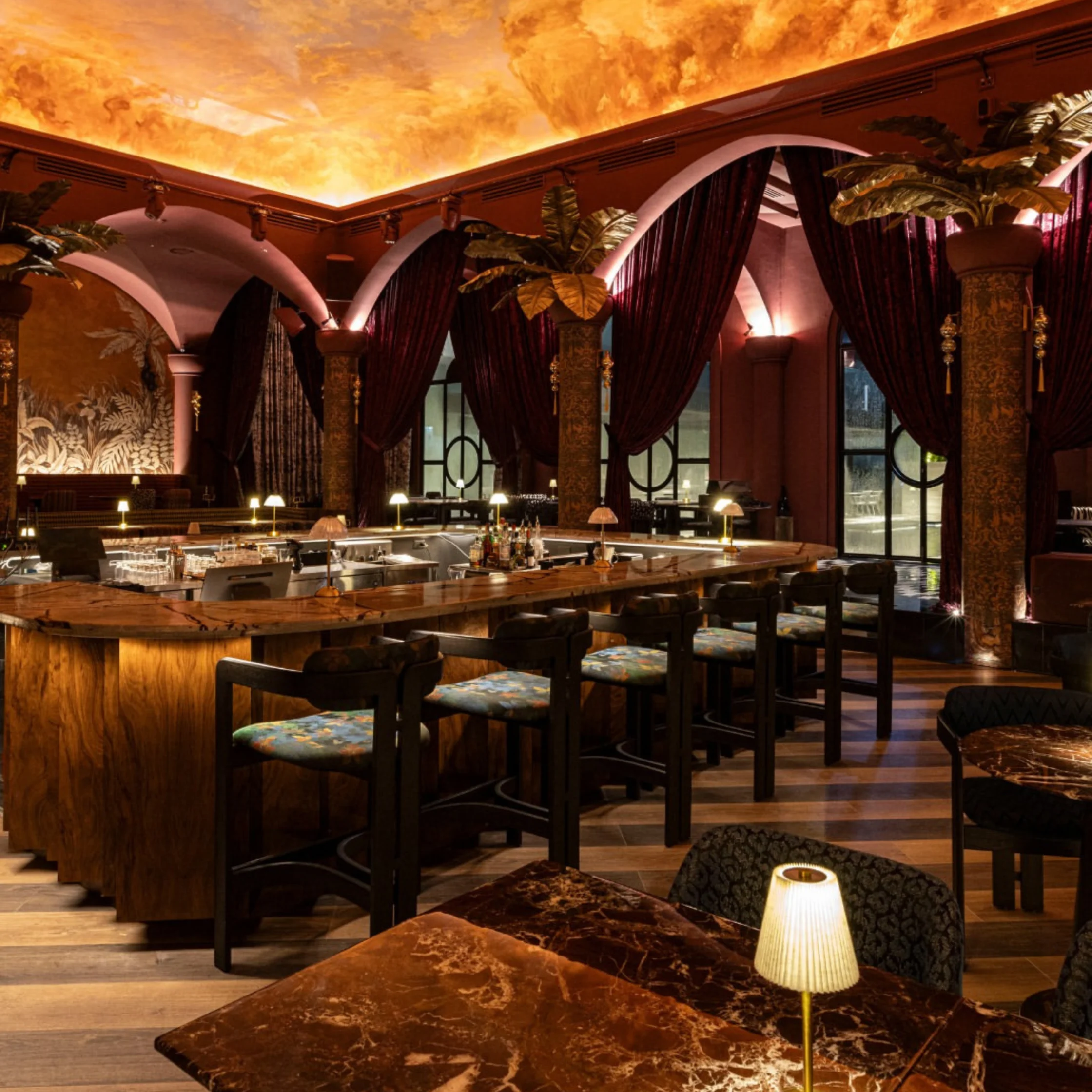
An array of design elements are used to evoke different moods all throughout the sections of the supper club, with a central bar in the main dining room that is akin to the all-seeing eye in a panopticon. The place channels Art Deco through its use of curvilinear lines and bold patterns. Further emphasizing the opulence of the space are its other design features—vaulted ceilings, arches and columns framing some of its windows and openings, velvet lounge seating, lacquered surfaces, and hand-painted murals.
Medusa is located at Uptown Parade, 9th Avenue corner 38th Street, Uptown Bonifacio, Bonifacio Global City, Taguig.
7. Oak & Smoke
This Michelin-recognized restaurant gives the idea of the steakhouse a chic, contemporary reimagination not only in their food, but also in their design, which was done by Headroom CDV Co’s Andrew Trinidad. The space stretches longitudinally, its most attention-grabbing feature being the slanted glass roof that allows natural light in while offering a peek into their al-fresco area. The interior is largely polished, dominated by blues and greys along with warm wood furnishing. Luxe gold accents and their famed chandelier (whose form is inspired by a vortex of smoke) glisten as the restaurant goes more dim and moody in the evening. A tip: the bar on the back end gives a panoramic view of the restaurant interiors—consider it a treat for the eyes while you sip on their stellar cocktails.
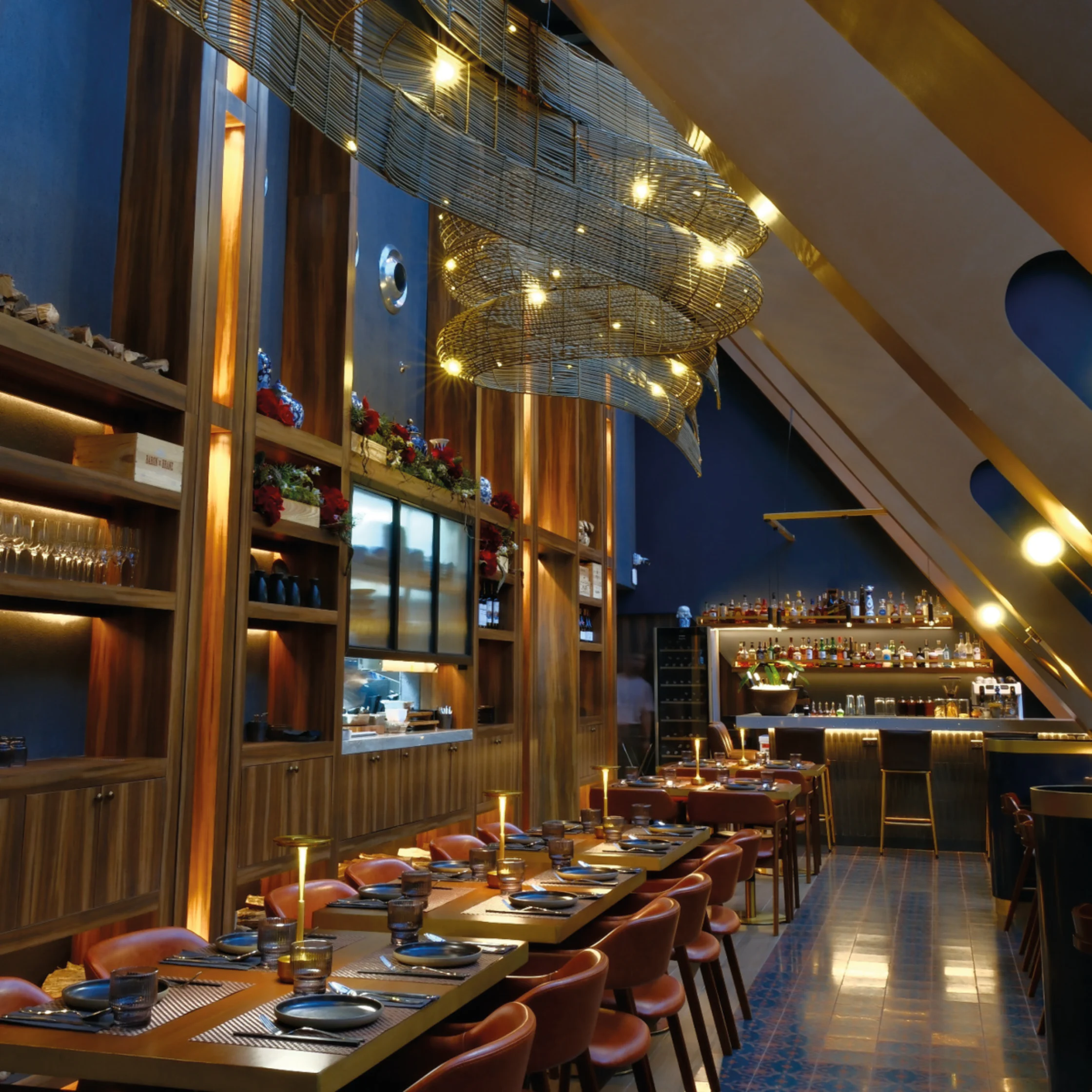
Oak and Smoke is located at the Ground Floor, Pacquiao Mansion, 324 HV Dela Costa Street, Salcedo Village, Bel-Air, Makati.
8. Inato
Inato’s menu brings fresh interpretations to Filipino cuisine using global and contemporary ingredients. Consequently, the restaurant design by Studio Ong goes a similar direction, albeit in reverse, with Filipino materials and themes incorporated into a minimalistic design well suited for the modern day. Tanguile louvers inspired by Filipino louvered windows make up the front door and exterior wall; banana peels were used as geometric inspiration for the main wall in the dining area; crushed oyster shells lend an iridescent look to the flooring; marble from Rizal makes for a rustic but refined dining counter. Although the central counter with an open kitchen at the back might bring to mind that of Japan’s omakase spots, the inspiration is actually derived from the communal counters at small eateries in the Philippines—think pares spots.
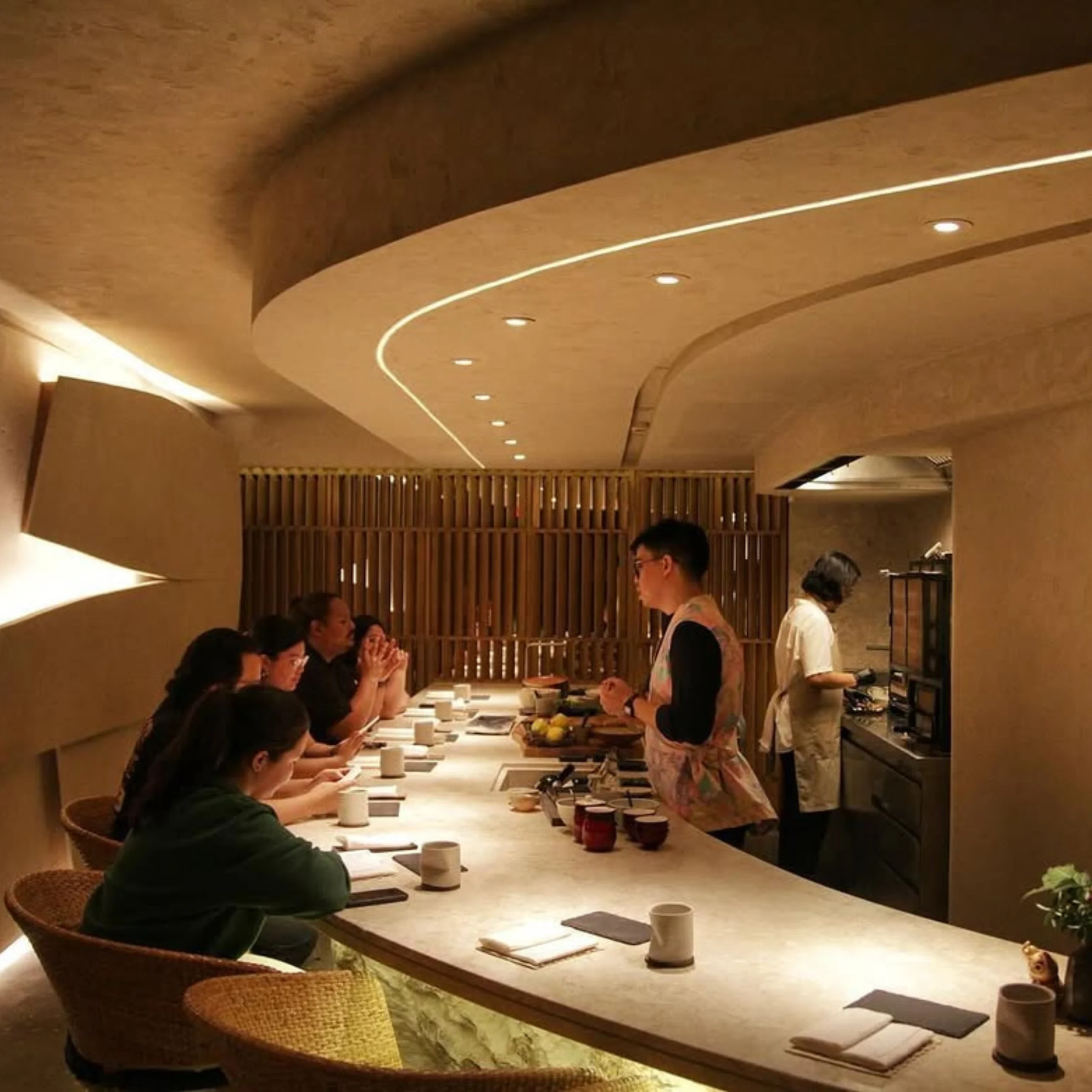
Inato is located at The Alley at Karrivin, Karrivin Plaza, 2316 Chino Roces Avenue Extension, Makati.

Frequently Asked Questions
Restaurant architecture influences how diners experience a space through elements such as spatial flow, lighting, materials, acoustics, and the relationship between the building and its surroundings.
The restaurants featured are Asador Alfonso, Casa Buenas, Blackbird at the Nielson Tower, Incanta Cave Bar & Restaurant, KFC EDSA Greenhills, Medusa, Oak & Smoke, and Inato.
Asador Alfonso is known for its sculptural concrete forms, origami-like cantilevered folds, and architecture inspired in part by the terrain and Taal Volcano.
Casa Buenas draws inspiration from the Filipino bahay na bato, incorporating elements such as arches, woodwork, capiz, Machuca tiles, and high ceilings.
Blackbird occupies the historic Nielson Tower, a former airport built in 1937. The restaurant retains elements of the building’s aviation history while incorporating 1930s Art Deco design.
The branch is nicknamed “Brutalist KFC” because of the Pacific Office Machines Building’s massive concrete forms and sloping facade.
Incanta takes inspiration from caves, with hand-sculpted walls and ridges, a glowing moon feature, and a ceiling designed to resemble a starry sky.
Medusa incorporates elements associated with Art Deco, including curvilinear lines and bold patterns, alongside dramatic arches, vaulted ceilings, and maximalist details.
Inato incorporates Filipino materials and references, including tanguile louvers, banana-peel-inspired geometry, crushed oyster shells, Rizal marble, and a communal counter inspired by local pares eateries.
Oak & Smoke combines a slanted glass roof, warm wood, blue and grey tones, gold accents, and a smoke-inspired chandelier to create a polished and increasingly moody atmosphere as the evening progresses.

![The Ongpin South Bridge arch [PHOTO COURTESY OF The Urban Roamer Official Website]](https://assets.delish.ph/wp-content/uploads/2026/10/The-Ongpin-South-Bridge-arch-PHOTO-COURTESY-OF-The-Urban-Roamer-Official-Website-960x960.webp)