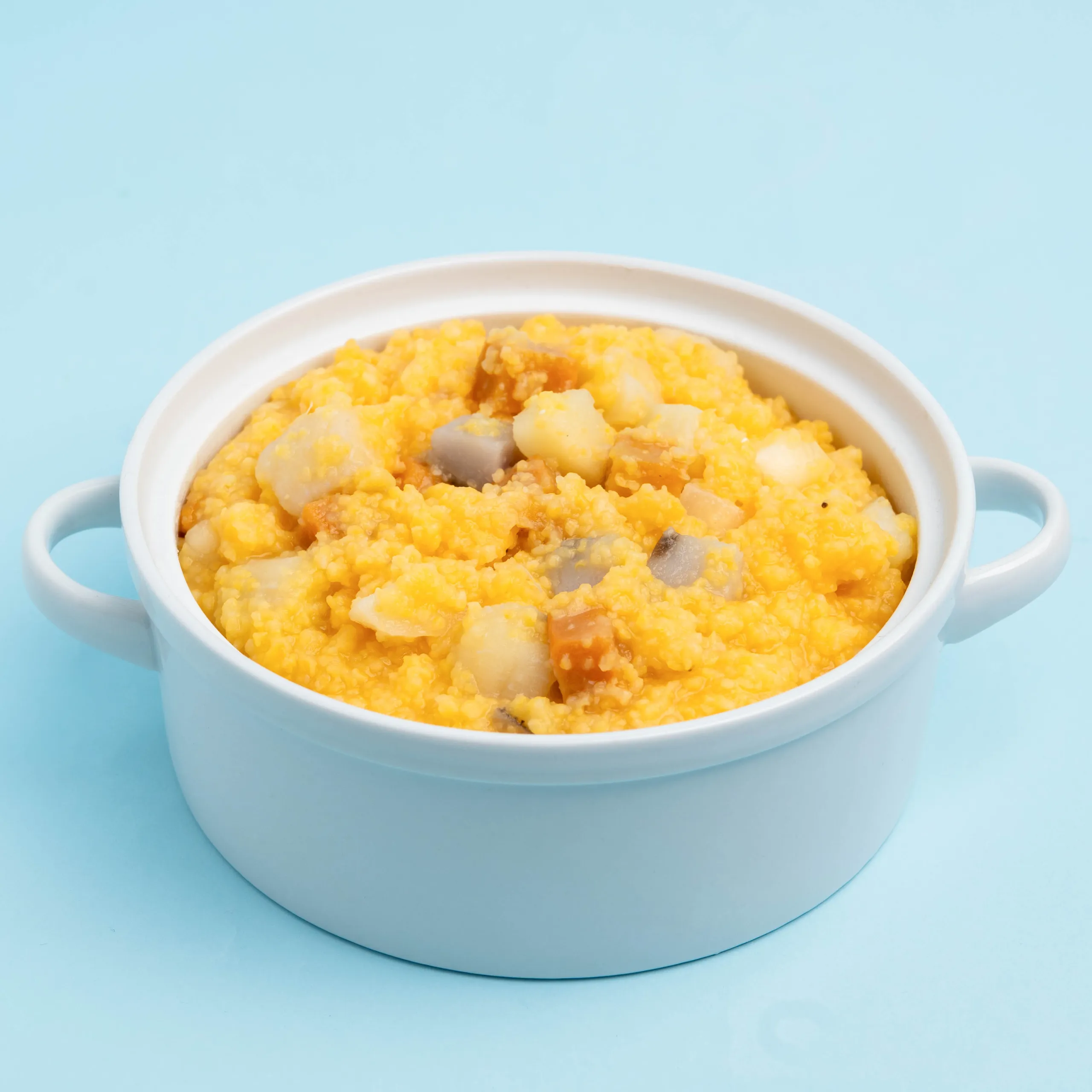


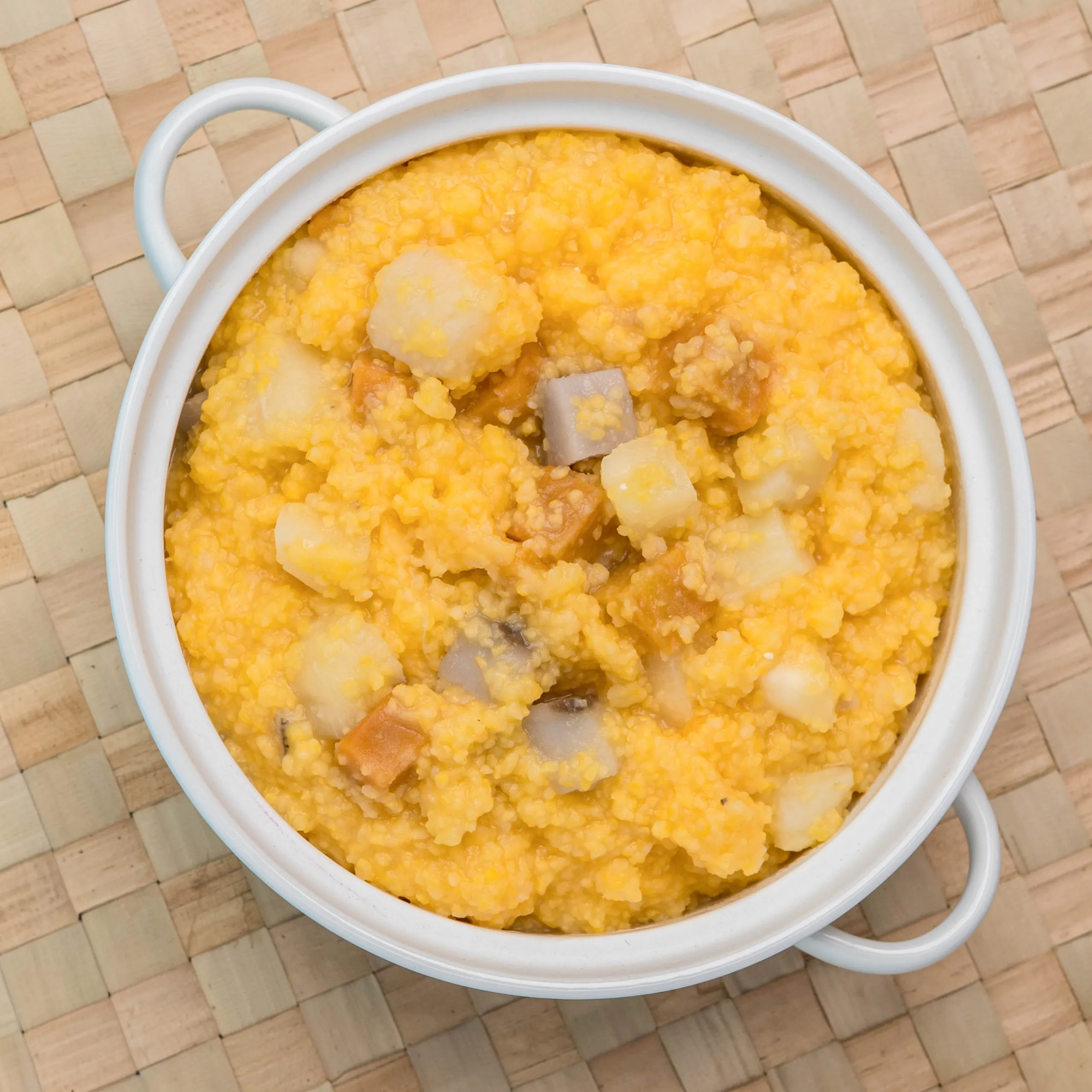
Sinaksakan is a humble and comforting traditional food from the Visayas that celebrates ingredients many Filipino families have long known and valued: corn, sweet potato, saba banana, and cassava. Unlike dishes that rely on meat, rich sauces, or elaborate seasonings to create flavor, sinaksakan gets its character from the natural sweetness and earthy qualities of its ingredients. It is a simple dish, but that simplicity is exactly what makes it special.
At its heart, sinaksakan is a celebration of locally available crops. Corn grits, locally known as bigas mais, provide the hearty base, while sweet potato and cassava contribute starchiness and a pleasantly earthy sweetness. Saba banana adds another layer of natural sweetness and a soft, almost creamy texture once cooked. A little salt brings all these flavors together without overpowering them.
For many people, dishes like sinaksakan may not immediately seem as elaborate as well-known Filipino dishes such as adobo, sinigang, or lechon. However, traditional food does not always have to be complicated to be meaningful. Some of the most memorable foods come from ordinary ingredients prepared in ways that families have relied on for generations. Sinaksakan is a good example of that kind of cooking—simple, filling, practical, and closely connected to the agricultural ingredients available in the community.
History and Cultural Background
Sinaksakan belongs to a broader tradition of Filipino food that makes use of grains, root crops, and fruits as substantial sources of nourishment. Throughout the Philippines, particularly in rural communities, corn, cassava, sweet potatoes, bananas, and other crops have historically played an important role in everyday diets.
Corn has a particularly interesting history in the Philippines. Although maize originated in the Americas and arrived in the Philippines through historical trade and colonial-era exchanges, it eventually became an important crop in many parts of the country. In areas where rice was less abundant or more expensive, corn became an important staple and was prepared in various forms.
The term bigas mais, literally referring to corn prepared in a rice-like form, reflects this culinary adaptation. Instead of treating corn only as a vegetable or snack, communities developed ways of processing and cooking it as a grain that could serve as the foundation of a meal.
Root crops such as cassava and sweet potato have similarly been important in Philippine foodways. They grow in tropical conditions and can provide substantial amounts of carbohydrates and energy. Saba bananas are also particularly useful in Filipino cooking because they are firmer and starchier than many dessert bananas and can be boiled, steamed, fried, or incorporated into savory and sweet dishes.
The precise history of sinaksakan itself may be difficult to trace to a single inventor or historical event. Like many traditional Filipino foods, it is better understood as part of a living food tradition that developed through local agriculture and household cooking. Recipes like this were often passed down through observation and practice rather than written cookbooks. One household may use more corn, another may add more cassava, and another may prefer the dish softer or saltier.
That flexibility is part of what makes traditional food fascinating. Sinaksakan is not simply a formula of ingredients; it reflects the practical knowledge of cooks who understood how to combine available crops into a filling and satisfying dish.
Understanding the Ingredients
Corn grits or bigas mais
Corn grits are the main foundation of sinaksakan. They are essentially processed corn kernels that have been prepared into a form suitable for cooking like a grain.
They provide the dish with its hearty texture and mild corn flavor. When cooked with water, the grits gradually soften and release some of their starch, producing a porridge-like consistency depending on the exact type of corn grits used and the amount of water absorbed.
The texture of corn grits can vary, so the cooking time may not always be exactly the same. Some varieties soften relatively quickly, while others require considerably longer cooking.
Sweet potato
Sweet potato provides natural sweetness, color, fiber, and a soft texture. Depending on the variety, it may be white, yellow, orange, or purple inside.
For this dish, a less watery and moderately starchy sweet potato works particularly well because it holds its shape while cooking but becomes tender enough to blend naturally with the corn.
Saba banana
Saba is one of the most useful cooking bananas in Filipino cuisine. Unlike very soft dessert bananas, saba remains relatively firm when cooked and has a pleasantly starchy texture.
As it cooks in sinaksakan, the banana softens and releases some of its natural sweetness into the mixture. It provides a subtle contrast to the earthy cassava and corn.
Cassava
Cassava is an important tropical root crop and a valuable source of carbohydrates. It has a mild, earthy flavor and becomes soft and pleasantly chewy or starchy when cooked properly.
Cassava requires particular attention during preparation because raw cassava contains naturally occurring compounds that can be harmful if improperly prepared. Proper peeling and thorough cooking are essential.
Salt
Salt may seem like a minor ingredient, but it plays an important role in a dish this simple. Since there are no strong spices or sauces, a carefully measured amount of salt helps bring out the natural flavors of the corn, root crops, and saba.
It is best to add it gradually rather than using a large amount at once.
Recipe Tips
- Use good-quality corn grits. The texture of the finished dish depends heavily on the type and size of the grits.
- Wash the corn twice. This helps remove loose particles and excess surface starch before cooking.
- Cut the ingredients evenly. Similar-sized pieces generally cook more consistently.
- Add the harder ingredients first. Cassava usually needs more cooking time than saba, so the order in which ingredients are added matters.
- Add saba later. This helps keep the banana pieces recognizable instead of allowing them to dissolve completely.
- Keep the heat moderate. Gentle simmering helps the corn and root crops cook evenly without scorching the bottom.
- Stir regularly but gently. Corn grits can settle at the bottom of the pot, but excessive stirring can cause the softer ingredients to break apart.
- Keep extra hot water nearby. Corn and root crops can absorb a surprising amount of liquid, so you may need more than the initial 4 cups.
- Season gradually. The natural sweetness of the ingredients is an important part of the dish, and too much salt can easily overpower it.
- Let it thicken naturally. Corn releases starch during cooking, so the dish may become considerably thicker as it stands.
- Do not rush the cassava. Make sure it is fully tender before serving.
- Serve it warm. Sinaksakan is especially comforting when freshly cooked and still soft and fragrant.
Ingredient Substitutions
Corn grits
If traditional bigas mais is unavailable, you can use another type of coarse cornmeal or hominy-like corn product, depending on what is accessible. However, the cooking time and texture may change significantly.
Avoid very fine cornmeal if you want the traditional grain-like texture because it can turn into a smooth porridge much more quickly.
Sweet potato
Sweet potato can be replaced with other starchy root crops such as purple sweet potato or yam. Each variety will change the color, sweetness, and texture slightly.
Saba banana
Saba is the best choice because it holds its shape well when cooked. If unavailable, plantain can be used as an alternative.
Very soft dessert bananas are generally less suitable because they can disintegrate quickly during cooking.
Cassava
If cassava is unavailable, you can use another starchy root crop such as taro or yam. However, each root crop cooks differently, so adjust the cooking order accordingly.
Salt
If you want a slightly more savory version, you can experiment with a small amount of other seasonings, but a traditional-style preparation is best kept simple so that the natural flavors remain the focus.
Knowledge About Sinaksakan and Visayan Food
Sinaksakan offers a glimpse into an important part of Philippine food culture: the use of crops as more than side dishes. Corn, cassava, sweet potato, and cooking bananas can all provide substantial amounts of carbohydrates and can become the main substance of a meal.
This is particularly meaningful in agricultural communities where food traditions naturally develop around what can be grown locally. A dish such as sinaksakan does not require expensive imported ingredients. Instead, it relies on crops that can be cultivated in tropical environments and stored or prepared in practical ways.
Corn itself has played different roles in Filipino food traditions. In some communities it has served as an important staple alongside or in place of rice. Processing corn into grits gives it a texture and cooking behavior that makes it possible to prepare in a manner similar to rice or porridge.
Cassava and sweet potato also demonstrate the importance of root crops in tropical food systems. They are hardy plants that can provide significant amounts of energy. Saba, meanwhile, is one of the Philippines’ most versatile cooking bananas and appears in everything from snacks and desserts to savory dishes.
Another interesting characteristic of sinaksakan is its limited seasoning. Instead of using numerous spices, the dish depends on the natural interaction between sweet, earthy, starchy, and mildly savory flavors. This is an important reminder that traditional cooking is not always about adding more ingredients. Sometimes the skill lies in knowing when enough is enough.
Health Benefits and Nutritional Information
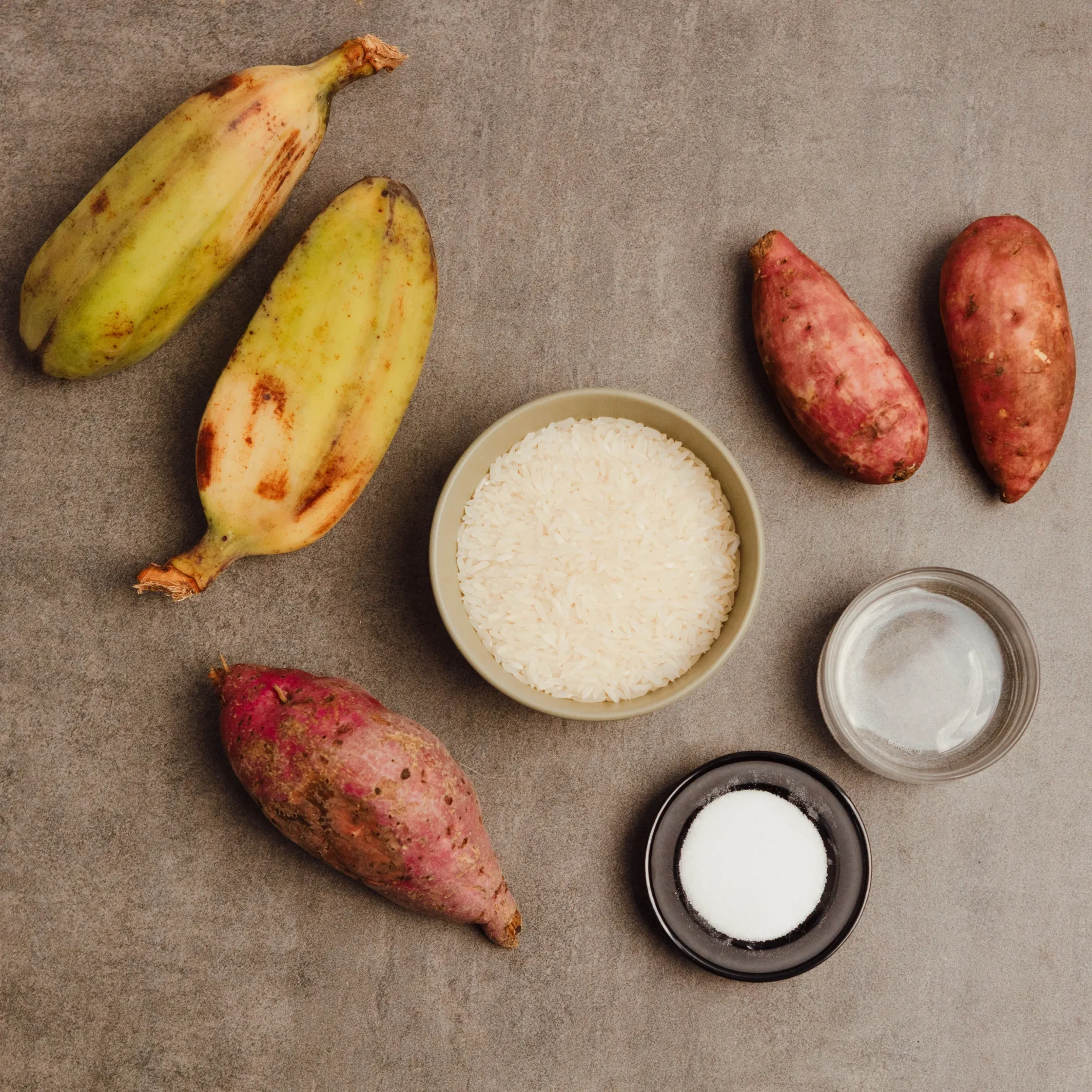
Sinaksakan can provide a range of nutrients because it combines a whole grain-like corn ingredient with several plant foods. Its nutritional value will depend on the specific varieties and portion sizes, but the ingredients generally contribute carbohydrates, fiber, vitamins, minerals, and naturally occurring plant compounds.
Corn
Corn provides carbohydrates that the body can use as an energy source. Depending on the type and processing of the corn grits, it can also contribute fiber, B vitamins, magnesium, phosphorus, and other nutrients.
Because corn is the primary grain component of the dish, it provides much of the meal’s energy and helps make sinaksakan filling.
Sweet potato
Sweet potatoes provide carbohydrates and fiber along with vitamins and minerals. Orange-fleshed varieties are particularly rich in beta-carotene, which the body can convert into vitamin A.
Sweet potatoes also contribute natural sweetness, meaning the dish does not need added sugar to taste pleasant.
Saba banana
Saba provides carbohydrates, potassium, and other nutrients. Its starchiness makes it more substantial than many ordinary dessert bananas.
As it ripens, some of its starch converts into sugars, which is why a ripe saba contributes noticeable sweetness to sinaksakan.
Cassava
Cassava is primarily an energy-rich starchy root. It can contribute vitamin C and other nutrients, although its nutritional profile differs from that of sweet potatoes.
One important point is that cassava must be properly prepared and thoroughly cooked because raw or inadequately processed cassava can contain cyanogenic compounds.
Fiber and satiety
The combination of corn and root crops can provide dietary fiber, particularly when less-refined forms are used. Fiber contributes to digestive health and can help make a meal more satisfying.
A naturally simple ingredient list
One of the advantages of this dish is that it contains no need for large amounts of added sugar, oil, or heavily processed sauces. The natural sweetness of the crops provides much of the flavor.
However, because the dish is largely carbohydrate-based, it can be paired with a protein-rich food and additional vegetables if you want to turn it into a more nutritionally balanced complete meal.
Final Words
Sinaksakan may be one of those dishes that initially looks almost too simple to be remarkable, but that simplicity is precisely where its charm lies. There is no need for a long list of spices or complicated sauces. The corn brings heartiness, cassava contributes earthy starchiness, sweet potato adds color and natural sweetness, and saba gives the dish a soft, pleasantly sweet finish.
More importantly, sinaksakan tells a story about the relationship between food and agriculture in the Visayas. Its ingredients are not exotic or difficult to understand; they are crops that have long been familiar in Filipino communities. Preparing them together demonstrates how traditional cooks could create satisfying food from what was available in the garden, farm, or local market.
The recipe also teaches an important lesson about traditional cooking: simplicity requires attention. The ingredients need to be added at the right time, the corn needs enough liquid, the cassava needs to be thoroughly cooked, and the softer saba should be handled gently. There may only be a few ingredients, but each one has a role to play.
For anyone interested in Filipino regional cuisine, sinaksakan is worth appreciating not because it is extravagant, but because it represents the everyday side of food heritage—the kind of cooking built around crops, practicality, nourishment, and familiarity. Served warm and shared with family, it becomes more than a mixture of corn and root crops. It becomes a small but meaningful example of how generations of Filipino cooks have turned humble ingredients into food that is comforting, useful, and deeply connected to home.