


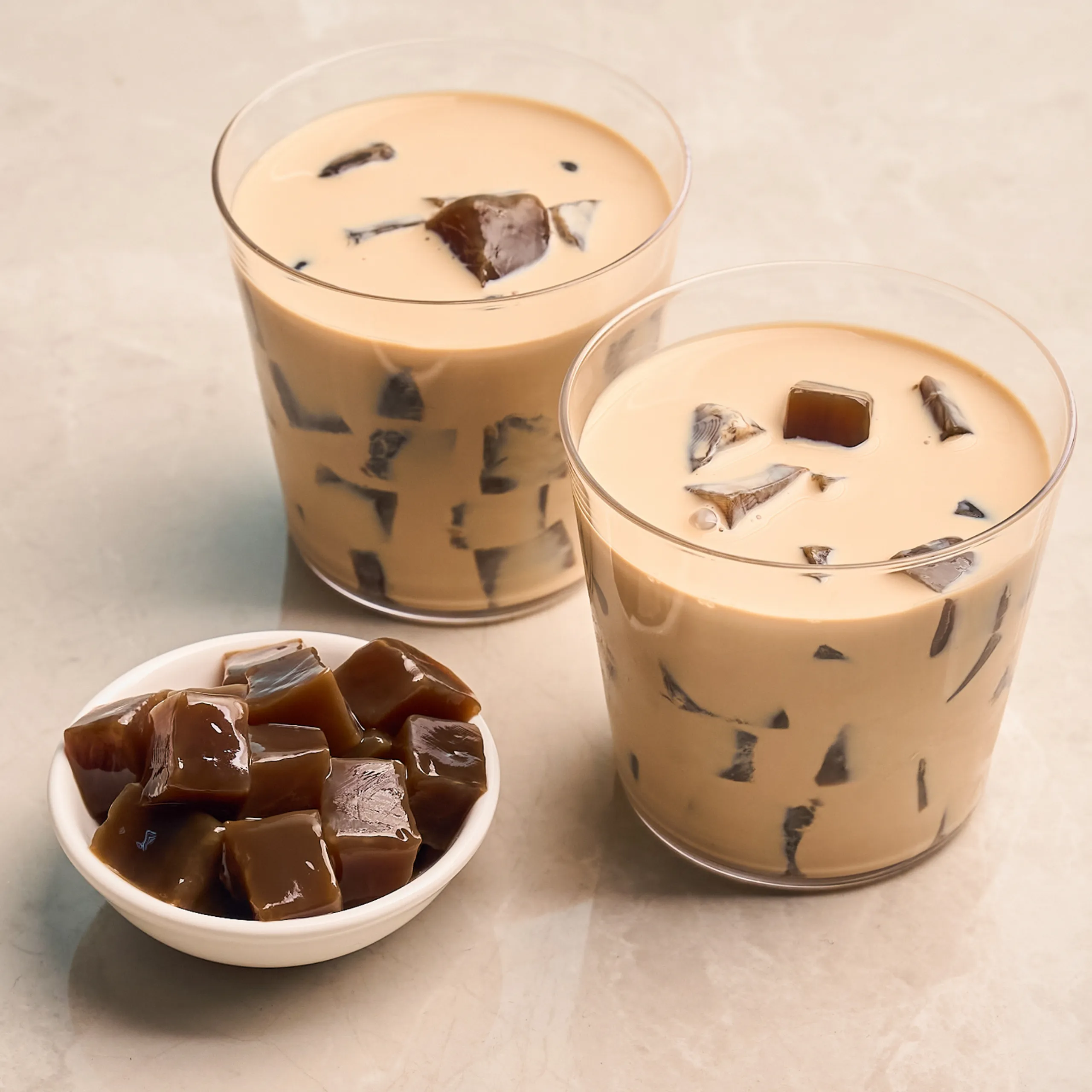
There is something comforting about coffee that makes it more than just a morning drink. For many people, the aroma of freshly brewed coffee is connected to quiet mornings, conversations with family, afternoon breaks, and those little moments when we simply want to slow down. Coffee Jelly takes that familiar comfort and turns it into a fun, refreshing dessert.
Imagine taking a cup of freshly brewed coffee and transforming it into soft, wobbly cubes with a delicate jelly-like texture. Add creamy evaporated milk and sweetened condensed milk, and suddenly an ordinary coffee becomes a cool dessert that is both familiar and surprisingly different.
Coffee Jelly is especially enjoyable on warm days because it is served chilled. The slight bitterness of coffee works beautifully with the sweetness and creaminess of the milk. Every spoonful gives you a combination of bouncy coffee jelly and smooth, creamy milk.
What makes this dessert even more appealing is how easy it is to prepare. You do not need an oven, complicated pastry techniques, or expensive ingredients. With brewed coffee, coffee-flavored gulaman powder, condensed milk, and evaporated milk, you can create a dessert that looks attractive enough for parties but is simple enough to make for an ordinary afternoon at home.
This recipe is also easy to adjust. You can make the coffee stronger or milder, change the sweetness according to your preference, or experiment with different milk combinations. Once you understand the basic method, Coffee Jelly can become one of those dependable desserts you can prepare whenever you are craving something cold, creamy, and coffee-flavored.
The History of Coffee Jelly
Coffee Jelly has an interesting history because it sits at the meeting point of coffee culture, jelly desserts, and modern Asian cuisine.
Coffee jelly is particularly associated with Japan, where coffee jelly became popular as a dessert during the twentieth century. The idea is wonderfully simple: coffee is turned into a firm jelly and served chilled, often with cream, milk, or sweeteners.
Over time, coffee jelly became associated with cafés, restaurants, convenience foods, and home desserts. Its appeal comes partly from its contrast in textures. Coffee is normally something we drink, but turning it into a jelly allows people to experience its flavor in an entirely new way.
The dessert has also traveled beyond Japan and has been adapted in different countries.
In the Philippines, Coffee Jelly has become a familiar homemade dessert and party favorite. Filipino versions often emphasize a creamy and sweet combination, using ingredients such as evaporated milk and sweetened condensed milk. The use of gulaman is also very natural within Filipino dessert-making traditions.
This Filipino-style adaptation demonstrates something interesting about food culture: recipes do not always stay exactly the same when they travel. People adjust them according to local ingredients, tastes, traditions, and preferences.
That is part of what makes Coffee Jelly so enjoyable. While its history has connections to Japanese coffee jelly, the creamy, sweet version enjoyed by many Filipino families has developed its own character.
Recipe Tips for Better Coffee Jelly
Use Good Coffee
Coffee is the star of this dessert, so the flavor of your brewed coffee matters.
If you use very weak coffee, the finished jelly may taste mostly sweet and milky.
A moderately strong coffee generally works well because the milk and condensed milk will soften its bitterness.
Don’t Make It Too Sweet
It is easy to underestimate how sweet condensed milk can be.
Add it gradually and taste the milk mixture before pouring it over the jelly.
You can always add more sweetness, but it is much harder to correct a dessert that has already become excessively sweet.
Follow Your Gulaman Package
Different gulaman products can have different instructions, quantities, and setting characteristics.
Always check the packet you are using and adjust the liquid and cooking method according to its instructions.
Let the Jelly Set Completely
Cutting the jelly too early can result in messy or uneven cubes.
Give it enough time to become firm before cutting.
Make the Cubes Bite-Sized
Coffee Jelly is more enjoyable when the pieces are easy to scoop and chew.
Very large cubes can be difficult to eat, particularly when served in small glasses.
Chill Everything
Cold Coffee Jelly is generally more refreshing than one served only slightly chilled.
For an especially enjoyable dessert, chill the jelly, milk mixture, and serving glasses beforehand.
Don’t Stir Too Aggressively
Once the jelly cubes have been cut, handle them gently.
Too much stirring can break the cubes and turn the dessert into a less attractive mixture.
Ingredient Substitutions
One of the advantages of Coffee Jelly is that the basic recipe is flexible.
Freshly Brewed Coffee
If you do not have a coffee maker, you can use instant coffee prepared with hot water.
Choose a coffee strength that is strong enough to remain noticeable after adding milk.
Cold brew coffee can also be used, although you will need to follow the gulaman’s preparation requirements when heating the mixture.
Evaporated Milk
Evaporated milk can be replaced with regular full-cream milk.
However, evaporated milk has a richer, slightly more concentrated flavor, so the finished dessert may taste less creamy when using regular milk.
You can also use a plant-based milk such as oat milk, soy milk, or coconut milk if desired.
Sweetened Condensed Milk
If you want to control the sweetness more precisely, you can use regular sugar instead.
Another option is to use a sugar-free or reduced-sugar condensed milk alternative, depending on your dietary needs.
Keep in mind that changing the sweetener can change both the flavor and consistency of the milk mixture.
Coffee-Flavored Gulaman
If coffee-flavored gulaman is unavailable, plain gulaman or gelatin can potentially be used together with brewed coffee.
However, the setting strength and preparation method may differ, so follow the instructions for the specific product you purchase.
What Makes Coffee Jelly Unique?
Coffee Jelly is interesting because it completely changes how we experience coffee.
Normally, coffee is consumed as a liquid. With Coffee Jelly, the same familiar flavor becomes something you can scoop with a spoon, bite into, and combine with creamy milk.
The dessert also highlights the importance of texture in food.
The jelly is soft and bouncy, while the milk is smooth and creamy. The coffee contributes a slightly bitter, roasted flavor, while the condensed milk provides sweetness.
These contrasts are what make the dessert enjoyable.
Another interesting characteristic is its adaptability. Coffee Jelly can be served casually in a large bowl for the family or presented in individual dessert glasses for birthdays, celebrations, buffets, and special dinners.
It is also an excellent dessert for people who enjoy coffee but want something different from drinking another cup.
Understanding the Role of Coffee
Coffee contains naturally occurring compounds that contribute to its aroma, bitterness, acidity, and roasted flavor.
The brewing method can influence these characteristics.
A darker roast often produces deeper roasted and bittersweet notes, while lighter roasts may have more noticeable acidity and fruity or floral characteristics.
For Coffee Jelly, you do not necessarily need an expensive specialty coffee. A pleasant, flavorful everyday coffee can work very well.
The important thing is to choose a coffee flavor you already enjoy.
If you like your coffee with milk, you will probably enjoy a creamy Coffee Jelly. If you prefer strong black coffee, consider making the jelly more intense and reducing the amount of condensed milk.
Health and Nutrition Considerations
Coffee Jelly can be an enjoyable dessert, but it is best considered a treat rather than a health food.
Coffee naturally contains caffeine and antioxidant compounds. Depending on the amount and type of coffee used, the jelly can retain some caffeine.
For people who are sensitive to caffeine, it may be better to use decaffeinated coffee, particularly when eating the dessert later in the day.
The milk contributes nutrients such as protein, calcium, and other vitamins and minerals, depending on the type of milk used.
However, sweetened condensed milk contains a considerable amount of added sugar. The amount used can significantly affect the overall sugar and calorie content of the dessert.
If you want a lighter version, reduce the condensed milk, use a lower-sugar alternative, choose lighter milk, or make smaller servings.
Another benefit of making Coffee Jelly at home is that you have control over the ingredients and portion sizes.
How to Store Coffee Jelly Properly
Because Coffee Jelly contains dairy once the milk mixture has been added, proper refrigeration is important.
Store the Jelly Separately
If possible, keep the coffee jelly and milk mixture separate until you are ready to serve.
This can help preserve the texture of the jelly and gives you more flexibility when serving.
Place the coffee jelly in a clean, airtight container and refrigerate it.
Store the Milk Mixture Separately
Keep the evaporated milk and condensed milk mixture in a clean, covered container in the refrigerator.
Do not leave the dairy mixture sitting at room temperature for an extended period.
Storing the Finished Dessert
If the jelly and milk have already been combined, transfer the dessert to a covered container and refrigerate it promptly.
For the best quality, enjoy it within a few days.
Check for changes in smell, appearance, taste, or texture before eating leftovers. When in doubt, discard the food.
Can Coffee Jelly Be Frozen?
Freezing is generally not recommended if you want to maintain the original jelly texture.
Freezing and thawing can change the texture of gelatin- or gulaman-based desserts, making them watery, crumbly, or otherwise different from freshly prepared jelly.
Refrigeration is the better choice.
Serving Ideas
Coffee Jelly can be served in many different ways.
For a simple family dessert, place everything in a large serving bowl and allow everyone to scoop their own portion.
For parties, spoon the jelly into individual clear cups and pour the creamy milk mixture over the top.
For a more elegant presentation, use small dessert glasses and top each serving with a little whipped cream and a few coffee beans for decoration.
You can also create layers by alternating coffee jelly and the creamy milk mixture.
If you enjoy stronger coffee flavors, drizzle a small amount of coffee over the finished dessert before serving.
For chocolate lovers, a little chocolate syrup or cocoa powder can create a mocha-inspired version.
Final Words
Coffee Jelly is a wonderful reminder that a great dessert does not have to be complicated.
With just a few basic ingredients, you can transform everyday coffee into something completely different—a cool, creamy, bouncy dessert that is refreshing, comforting, and fun to eat.
Perhaps what makes it especially appealing is the contrast. The coffee jelly has a gentle bitterness and chewy texture, while the condensed and evaporated milk create a smooth, sweet creaminess. Together, they create the coffee stronger if you love a bold flavor. Add more milk if you prefer something mellow. Reduce the condensed milk if you do, prepared for a celebration, or enjoyed straight from the refrigerator on a warm afternoon, Coffee Jelly has a simple charm that is a dessert that feels both familiar and unexpected.
It is also the kind of recipe that can become your own. Make the coffee stronger if you love a bold flavor. Add more milk if you prefer something mellow. Reduce the condensed milk if you do not enjoy very sweet desserts. Add cream, chocolate, or caramel when you want something more indulgent.
Whether served after a family meal, prepared for a celebration, or enjoyed straight from the refrigerator on a warm afternoon, Coffee Jelly has a simple charm that is hard to resist.
Sometimes, the best desserts are not the ones that require the most work. They are the ones that take ingredients we already know and love and recipe card, prep/cook time, servings, difficulty level, SEO title, meta description, keywords, and a short social-media caption. give them a new personality.
Coffee Jelly does exactly that—turning a comforting cup of coffee into a cool, creamy dessert that is meant to be shared and enjoyed one spoonful at a time.