Advertisement

Poaching An Egg Has Never Been This Easy!

You too can master the art of the poached egg using these 6 easy tips!

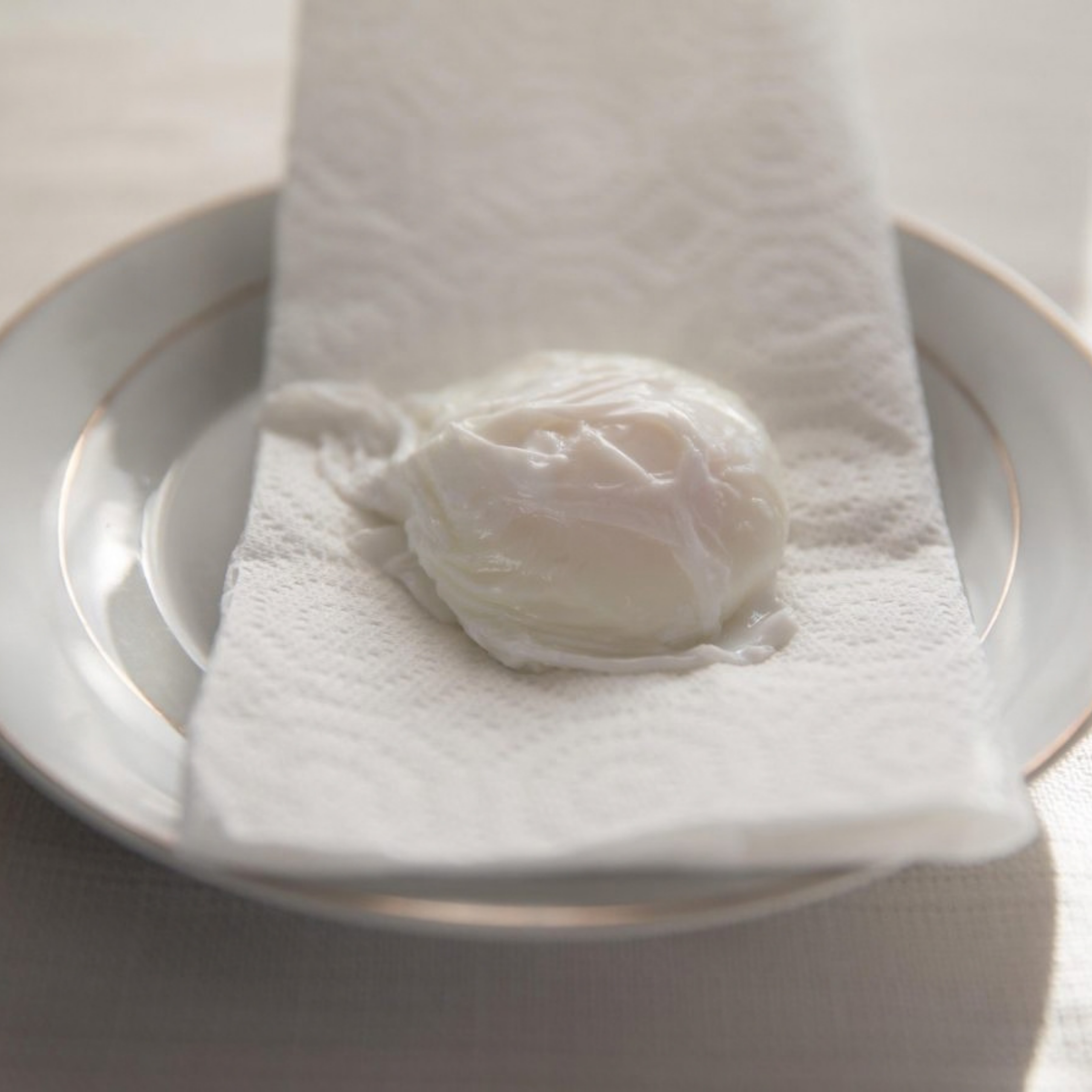
A soft-poached egg rests on a textured white paper towel atop a clear glass plate, lit by gentle natural light for a quiet, minimal kitchen scene.
Poaching an egg isn’t as hard as you think! [PHOTO COURTESY OF Don’t Go Bacon My Heart]

Every home cook has that one recipe or technique they have always wanted to try but just have never had the ingredients readily available or didn’t have the courage to try and make the obvious mistakes. 

For me, that dish is an Eggs Benedict. I’m a sucker for pairing bread with something savory, especially something as quietly luxurious as a perfectly runny poached egg. 

But contrary to public perception, poaching an egg isn’t as hard to cook as people make it out to be. While it does take a very specific technique, said technique isn’t as inaccessible or complicated once you follow these easy steps!

1. Use Cold Eggs

While most recipes say that you should let your ingredients coming from your fridge thaw first, you can go ahead and skip this step when poaching eggs! This is because using them while they’re cold will help your eggs stay firm and hold its shape better compared to if you use room temperature eggs. As soon as the cold eggs make contact with the hot water, it being chilled helps the egg whites hold itself together instantly rather than rapidly spreading apart. 

Another helpful tip is to crack the egg in advance into a smaller bowl or ramekin. Not only will directly cracking the egg into the water not be as effective, but you also might hurt yourself by going too close to the boiling water. 
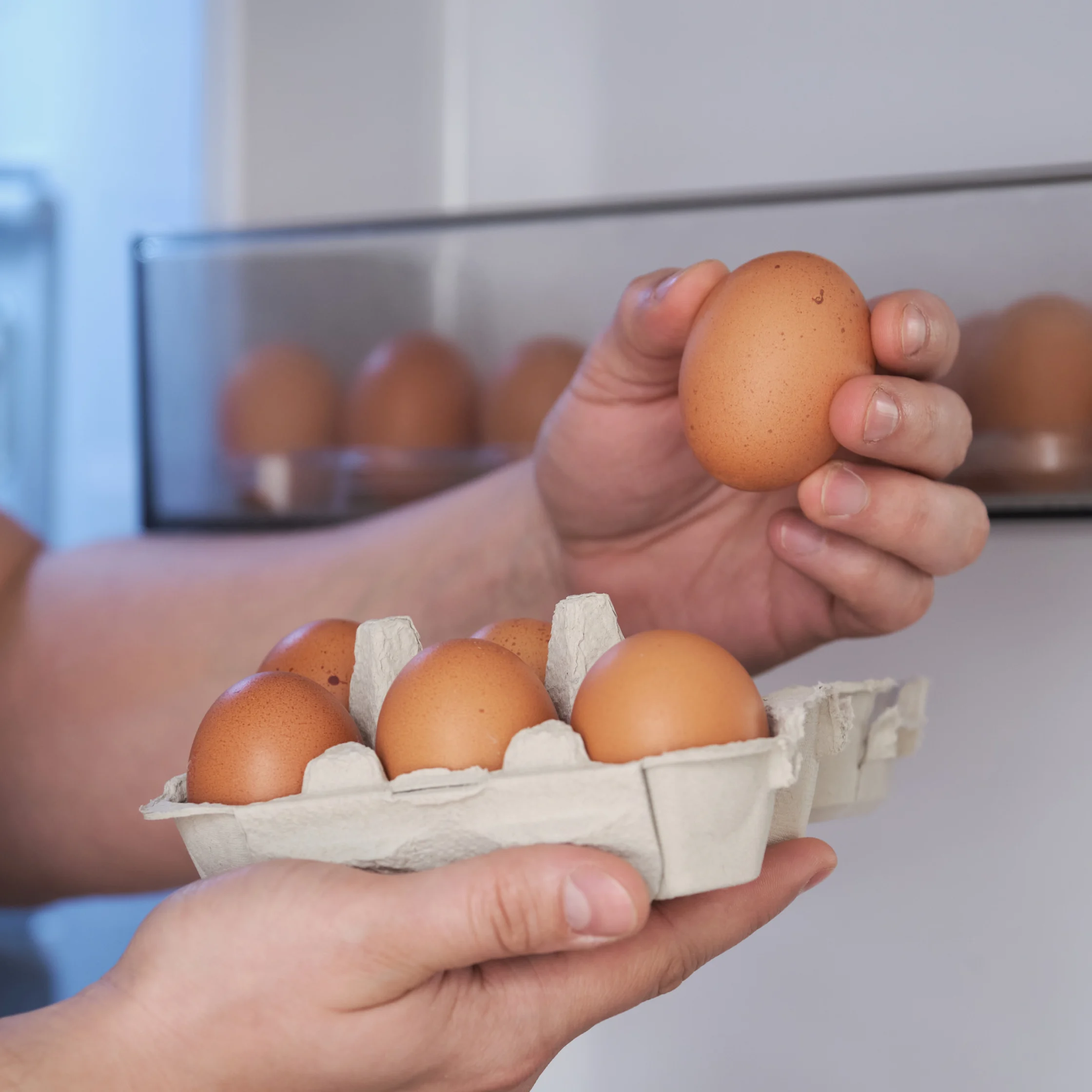
Hands hold a carton of brown eggs while one egg is lifted for inspection, with a refrigerator in the background; a calm, everyday kitchen scene.
Eggs that are cold will hold their shape better when poached.

2. Fully Submerge Egg in Water

Another common pitfall is using too little water. If the water level is too shallow, you risk the egg touching the bottom of your pot or leaving a portion of it partially exposed. Unless you are poaching multiple eggs as a time, this doesn’t mean you need an enormous amount of water—a more difficult feat I would suggest you attempt for another day. 

You just need a deep enough pot to hold just enough water that allows the egg to fully submerge and gently float as it cooks. Around 2 to 4 inches deep should be enough.
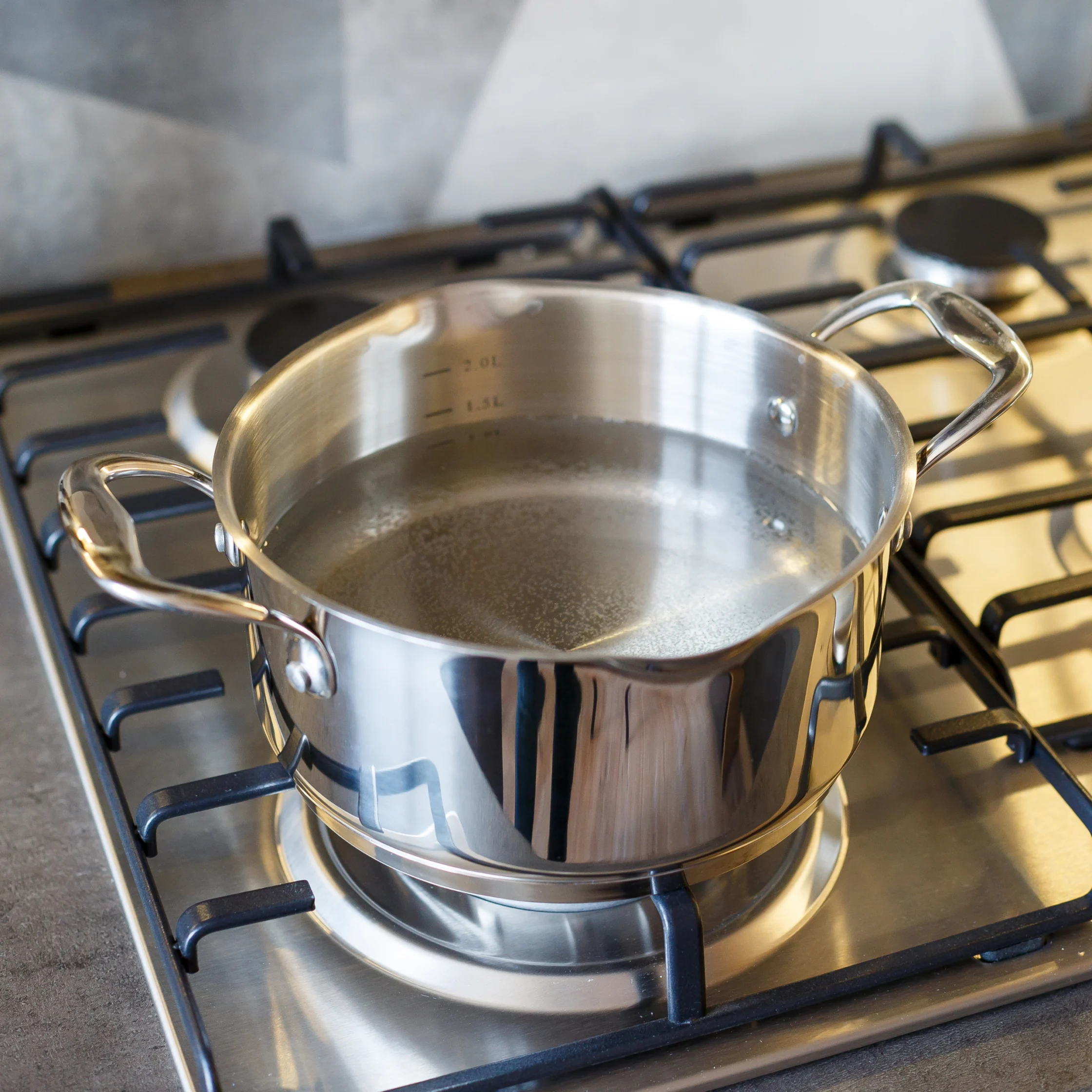
A shiny stainless-steel pot filled with water rests on a gas stovetop, reflecting a clean kitchen with a bold gray-and-white geometric backsplash.
You need just enough water to fully submerge the egg.

3. The Water Can’t Be Too Hot Or Too Cold

Even the temperature of the water can make or break the success of your poached egg. 

The first thing is to make sure your water isn’t too cold. Dropping an egg in water that is too cold prevents it from congealing, causing the egg whites to drift apart as strands and the yolk to spill into the water. 

Conversely, if your water is boiling hot, the bubbles will tear the egg apart and start overcooking it from the outside.
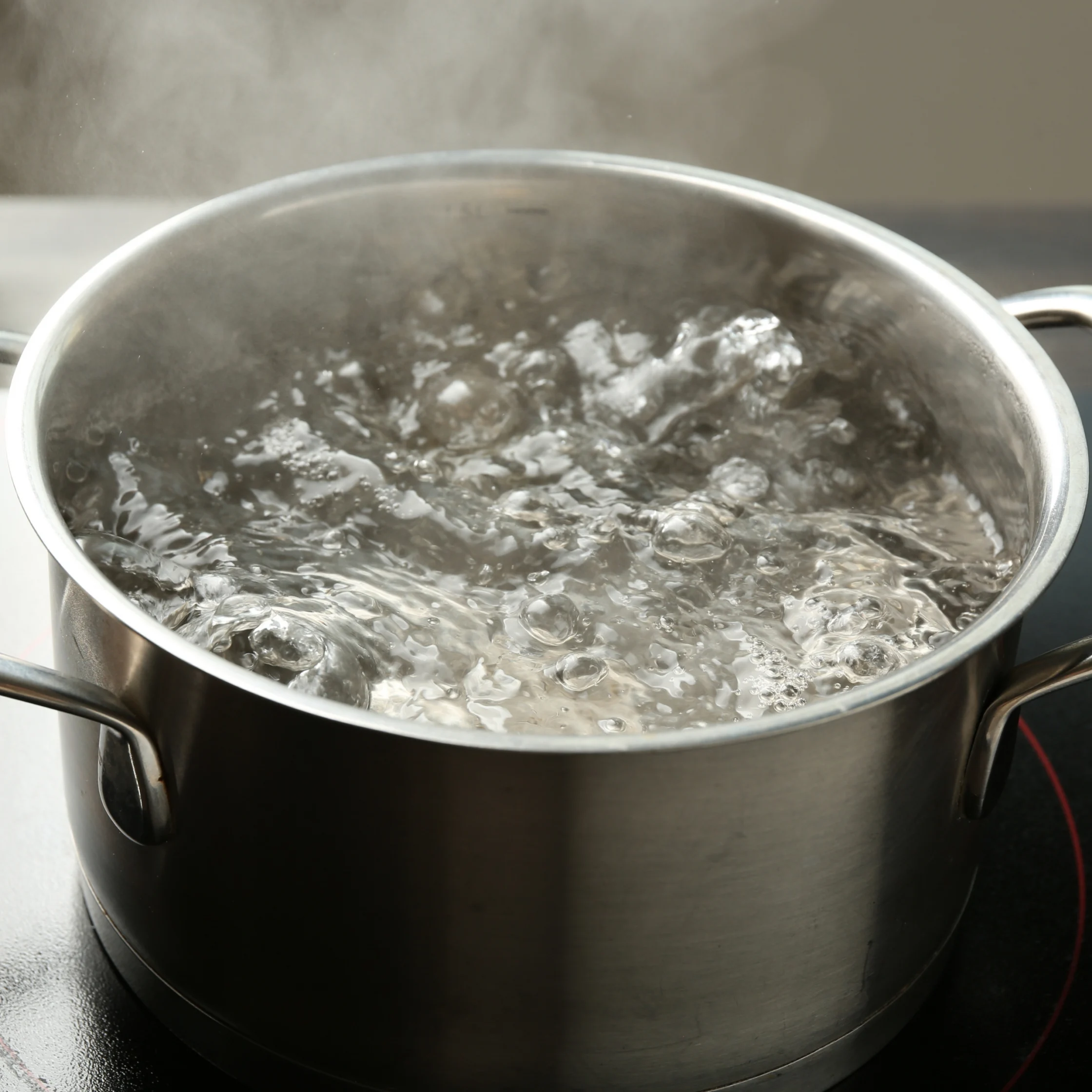
A stainless-steel pot of water boils vigorously on a black electric cooktop, sending up steam; oil and salt shakers sit nearby in a kitchen.
After boiling, bring the water to a more gentle simmer.

4. Does Vinegar Actually Do Anything?

If you’re like me, you’ve probably seen countless recipes call for a splash of vinegar in the poaching water and are probably confused if it actually makes a difference or not. 

The short answer is yes, but not for the reason many people think. Adding vinegar to your water doesn’t magically guarantee you will successfully poach your egg. Instead, vinegar acidifies the water, which accelerates the coagulation of egg proteins. When the egg hits the acidic water, the outer layer of the white sets faster, minimizing trailing wisps and keeping the package neat.

But I’ve personally chatted with people who have poached their eggs in vinegar-less water and they turned out just fine. 

So if you do decide to add some vinegar, stick to a modest amount. About a tablespoon per pot of water should be enough. Adding too much vinegar could unintentionally leave a sharp, sour taste to your egg.
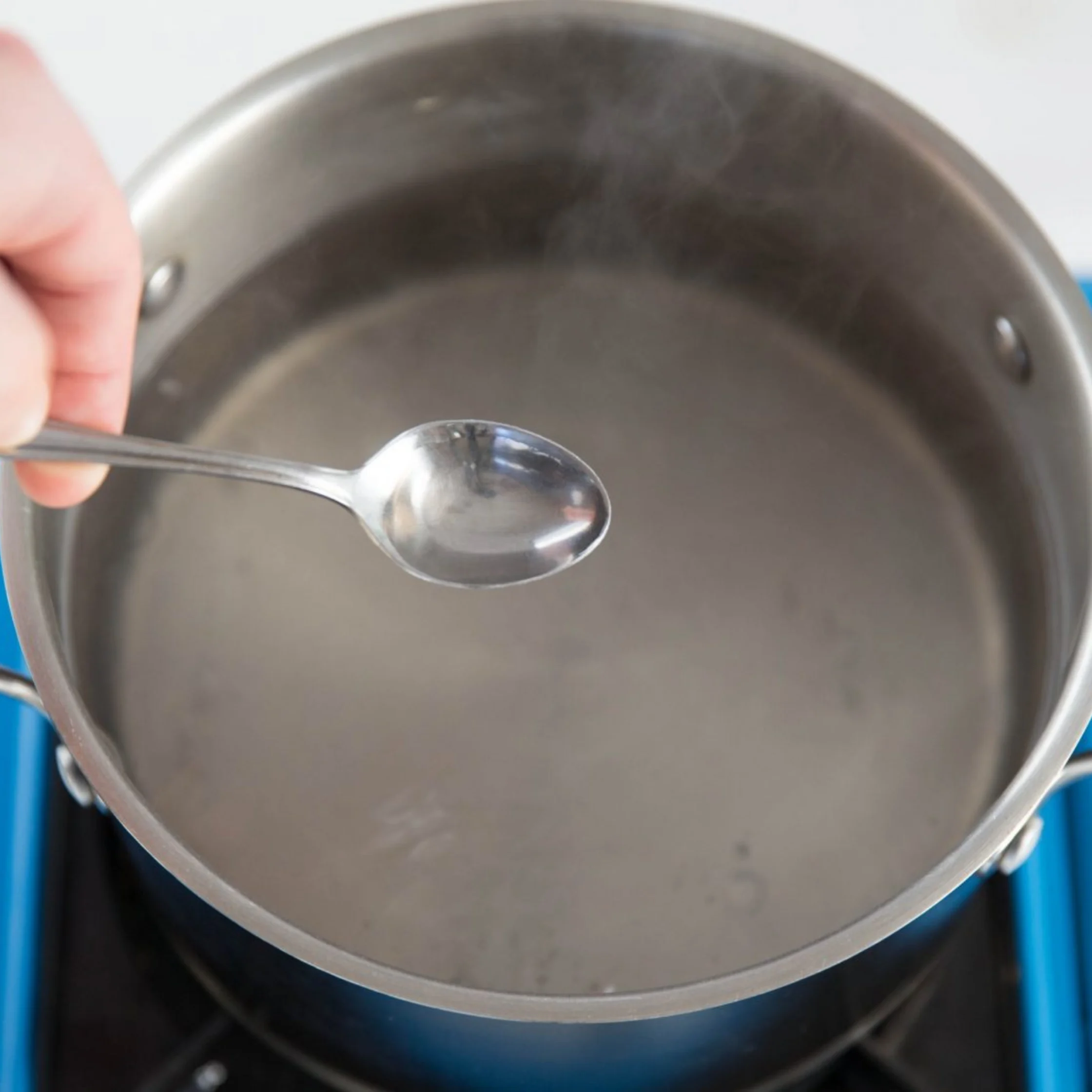
A hand holds a metal spoon over a large stainless-steel pot of clear water on a blue stovetop, suggesting a calm moment of cooking or checking the water.
A little vinegar can help with coagulation, ensuring your egg stays whole! [PHOTO COURTESY OF Don’t Go Bacon My Heart]

5. Vortex of Water or Fine Mesh Strainer?

When it comes to controlling stray egg whites, home cooks are often divided between two popular methods: the whirlpool method or the fine-mesh strainer trick. 

The whirlpool method is the first one I was familiar with. It was MasterChef USA Season 5 elimination skill test, which was probably what caused my perception of it being a hard cooking technique in the first place. After letting your water get to a gentle simmer, start swirling the water with a spoon to create a gentle whirlpool before dropping the egg into the center uses centrifugal force to wrap the loose whites around the yolk. While it works well, it requires precise timing and a gentle hand so you don’t break the yolk.

If this seems a bit to intimidating for you, there is another way and all you need a small fine mesh strainer. This is actually a more foolproof method as compared to the whirlpool one. Instead cracking the egg into a separate container, crack your egg into a small fine-mesh sieve or strainer over the sink to allow the watery, loose outer white (the part that causes those annoying wispy threads in the water) to drain away completely. What remains in the strainer is only the dense, cohesive main white and the yolk. Gently slide this pre-strained egg directly into your water, and you will get an immaculately clean shape with zero effort.
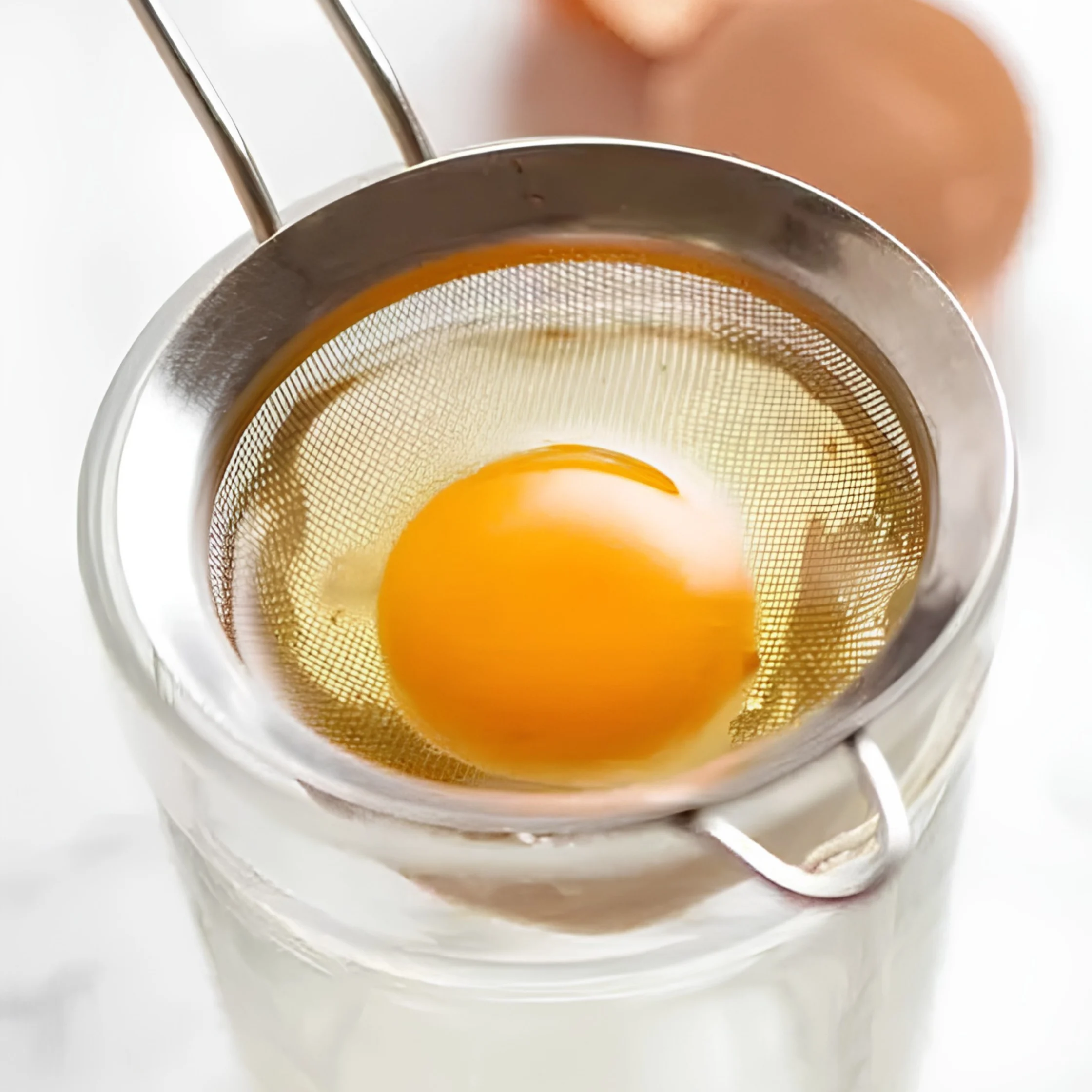
A two-panel kitchen scene shows an egg in a mesh strainer over a glass, with clear egg white draining through and the bright yolk left behind.
Vortex or strainer, either works just as well! [PHOTO COURTESY OF RecipeTin Eats]

6. Use a Slotted Spoon to Scoop the Poached Egg Out

Timing is everything—usually around 3 to 3.5 minutes for a runny yolk—but getting the egg out of the pot safely is just as important as cooking it.

Never use standard dining spoons, which can trap water or accidentally puncture the delicate cooked white. Instead, use a slotted spoon. A slotted spoon allows the cooking water to drain away completely as you lift the egg, ensuring you don’t transfer excess liquid onto your toast or plate.

Before plating, gently rest the bottom of the slotted spoon against a clean paper towel for a second to blot away any remaining surface moisture.
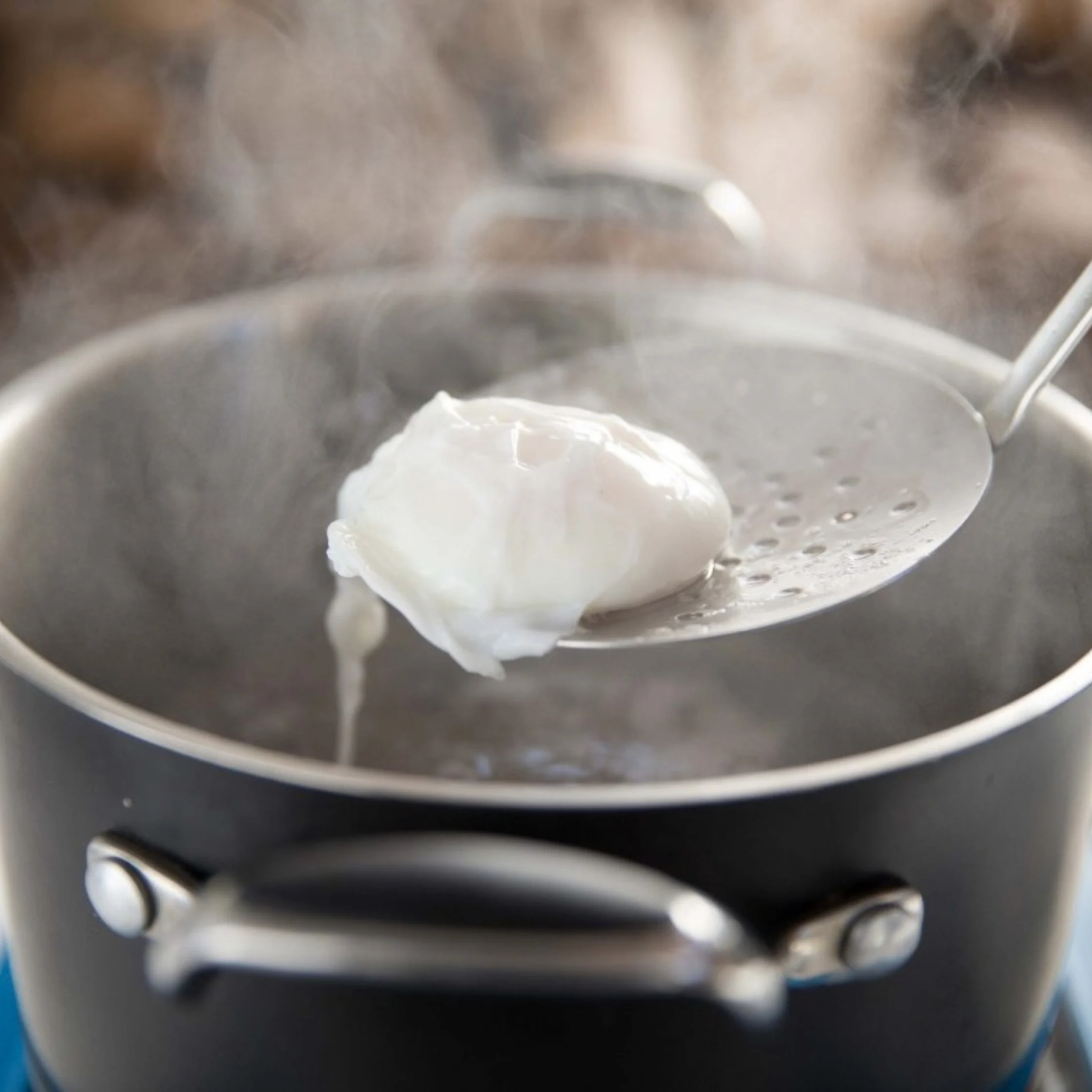
A slotted spoon lifts a soft poached egg from a steaming pot of water on a stovetop, creating a warm, calm kitchen atmosphere.
Gently scoop your newly poached egg using a slotted spoon. [PHOTO COURTESY OF Don’t Go Bacon My Heart]

By combining cold eggs, a deep pot of water, smart straining, and careful extraction, you can say goodbye to messy egg strands and hello to restaurant-quality poached eggs right in your own kitchen!

author avatar
Laura Mendoza Writer
Laura admits that she is a slow eater. She prefers to take her time with the food she likes to eat and the stories she wishes to write. Having graduated with a Creative Writing degree, she comes from a background in writing fiction and poetry. Because of this, she has set herself on a creative mission to explore and delve into what other modes and channels exist for stories and narratives to be told, expressed, and shared with others. For Laura, food as a medium is an exciting proposition. Behind every dish, every ingredient, and every cooking technique, there lies a history worth discussing, a human being worth listening to, a lived experience worth gleaning from. As a means to satiate her appetite for learning about and understanding new and known things, she aims to be the kind of food writer who is approachable, reliable, and personable to readers.

Frequently Asked Questions

Yes, but it requires a slightly different approach! The whirlpool method only works for one egg at a time, so if you are cooking for a crowd, skip the swirling. Instead, use a wide, shallow pan filled with 3 to 4 inches of water and use the fine-mesh strainer method for each egg. Lower the eggs into the gently simmering water one by one, keeping them spaced apart. Make sure not to crowd the pan, as adding too many cold eggs at once will drop the water temperature and cause them to cook unevenly.

author avatar
Laura Mendoza Writer
Laura admits that she is a slow eater. She prefers to take her time with the food she likes to eat and the stories she wishes to write. Having graduated with a Creative Writing degree, she comes from a background in writing fiction and poetry. Because of this, she has set herself on a creative mission to explore and delve into what other modes and channels exist for stories and narratives to be told, expressed, and shared with others. For Laura, food as a medium is an exciting proposition. Behind every dish, every ingredient, and every cooking technique, there lies a history worth discussing, a human being worth listening to, a lived experience worth gleaning from. As a means to satiate her appetite for learning about and understanding new and known things, she aims to be the kind of food writer who is approachable, reliable, and personable to readers.

Don’t rely solely on the timer. You can use the “nudge test.” Lift the egg slightly out of the water with your slotted spoon and give it a gentle nudge with the back of a teaspoon or your finger. The egg white should feel completely set and firm to the touch, while the center or the yolk should still have a soft, cushiony bounce. If the white feels squishy or translucent, lower it back into the water for another 30 to 40 seconds.

author avatar
Laura Mendoza Writer
Laura admits that she is a slow eater. She prefers to take her time with the food she likes to eat and the stories she wishes to write. Having graduated with a Creative Writing degree, she comes from a background in writing fiction and poetry. Because of this, she has set herself on a creative mission to explore and delve into what other modes and channels exist for stories and narratives to be told, expressed, and shared with others. For Laura, food as a medium is an exciting proposition. Behind every dish, every ingredient, and every cooking technique, there lies a history worth discussing, a human being worth listening to, a lived experience worth gleaning from. As a means to satiate her appetite for learning about and understanding new and known things, she aims to be the kind of food writer who is approachable, reliable, and personable to readers.

Sticking usually happens for two reasons: the water wasn’t deep enough, or it wasn’t quite hot enough when the egg dropped in. If the water isn’t at a gentle simmer, the egg proteins won’t set fast enough on contact, allowing the wet white to adhere to the hot metal bottom. To prevent this, ensure you have at least 3 inches of water, maintain a steady simmer, and use a silicone or non-stick pot if sticking continues to be an issue.

author avatar
Laura Mendoza Writer
Laura admits that she is a slow eater. She prefers to take her time with the food she likes to eat and the stories she wishes to write. Having graduated with a Creative Writing degree, she comes from a background in writing fiction and poetry. Because of this, she has set herself on a creative mission to explore and delve into what other modes and channels exist for stories and narratives to be told, expressed, and shared with others. For Laura, food as a medium is an exciting proposition. Behind every dish, every ingredient, and every cooking technique, there lies a history worth discussing, a human being worth listening to, a lived experience worth gleaning from. As a means to satiate her appetite for learning about and understanding new and known things, she aims to be the kind of food writer who is approachable, reliable, and personable to readers.

When making poached eggs, using them while they’re cold will help your eggs stay firm and hold its shape better compared to if you used room temperature eggs.

author avatar
Laura Mendoza Writer
Laura admits that she is a slow eater. She prefers to take her time with the food she likes to eat and the stories she wishes to write. Having graduated with a Creative Writing degree, she comes from a background in writing fiction and poetry. Because of this, she has set herself on a creative mission to explore and delve into what other modes and channels exist for stories and narratives to be told, expressed, and shared with others. For Laura, food as a medium is an exciting proposition. Behind every dish, every ingredient, and every cooking technique, there lies a history worth discussing, a human being worth listening to, a lived experience worth gleaning from. As a means to satiate her appetite for learning about and understanding new and known things, she aims to be the kind of food writer who is approachable, reliable, and personable to readers.

There is such a thing as too hot or to cold when it comes to poaching eggs.

What’s important is to bring the water to a boil, and then lowering the temperature back to a gentle simmer.

author avatar
Laura Mendoza Writer
Laura admits that she is a slow eater. She prefers to take her time with the food she likes to eat and the stories she wishes to write. Having graduated with a Creative Writing degree, she comes from a background in writing fiction and poetry. Because of this, she has set herself on a creative mission to explore and delve into what other modes and channels exist for stories and narratives to be told, expressed, and shared with others. For Laura, food as a medium is an exciting proposition. Behind every dish, every ingredient, and every cooking technique, there lies a history worth discussing, a human being worth listening to, a lived experience worth gleaning from. As a means to satiate her appetite for learning about and understanding new and known things, she aims to be the kind of food writer who is approachable, reliable, and personable to readers.
Smiling woman with glasses tilted at an angle, wearing a blue top, against a light background.

Laura Mendoza

Writer

Laura admits that she is a slow eater. She prefers to take her time with the food she likes to eat and the stories she wishes to write. Having graduated with a Creative Writing degree, she comes from a background in writing fiction and poetry. Because of this, she has set herself on a creative mission to explore and delve into what other modes and channels exist for stories and narratives to be told, expressed, and shared with others. For Laura, food as a medium is an exciting proposition. Behind every dish, every ingredient, and every cooking technique, there lies a history worth discussing, a human being worth listening to, a lived experience worth gleaning from. As a means to satiate her appetite for learning about and understanding new and known things, she aims to be the kind of food writer who is approachable, reliable, and personable to readers.

0 0 votes
Total of Ratings
guest
Rating
Ratings for Article
0 Comments
Oldest
Newest Most Voted

To provide a customized ad experience, we need to know if you are of legal age in your region.

By making a selection, you agree to our Terms & Conditions.