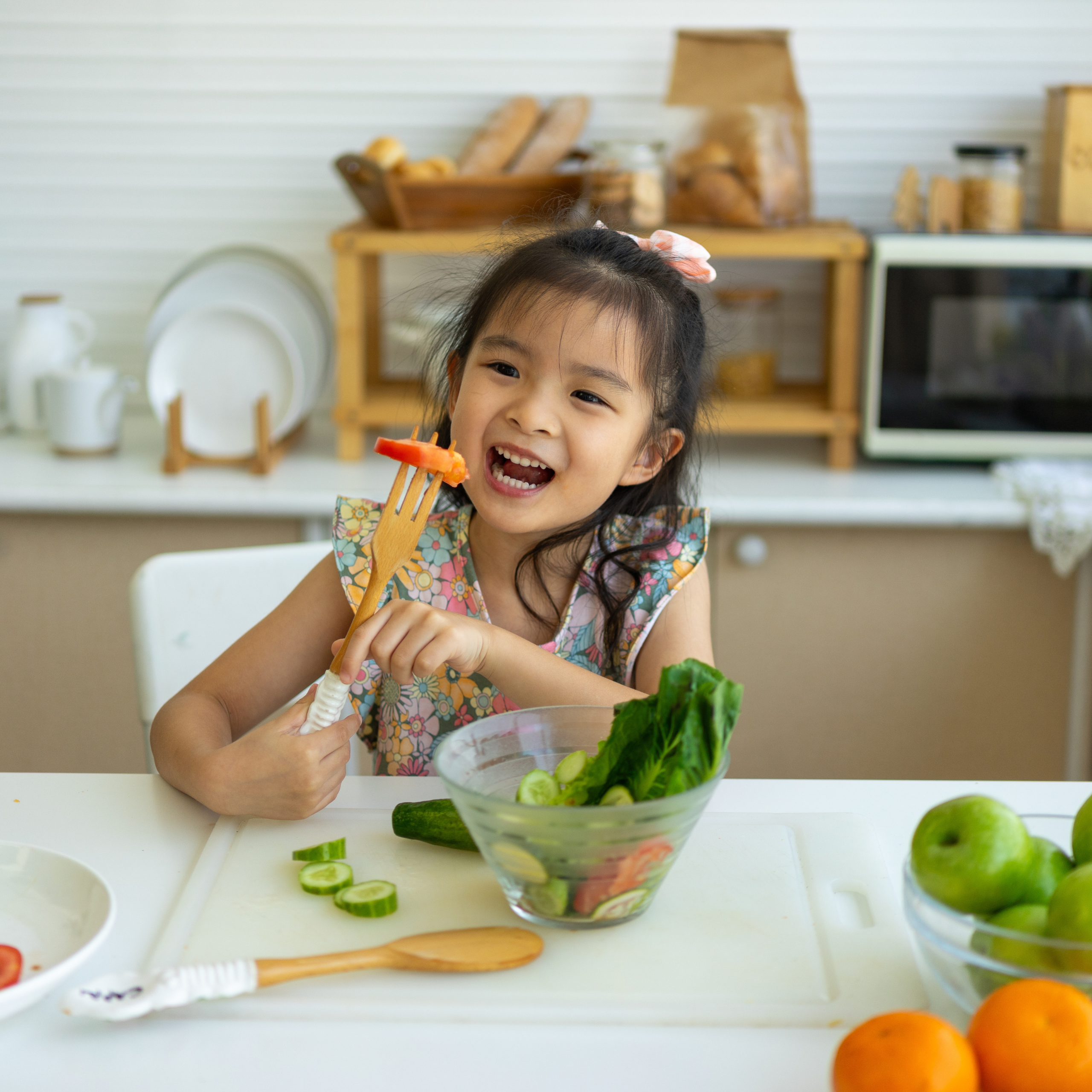
Do you remember how your parents got you to eat vegetables for the first time?
Whether it was a moment of sheer curiosity or a dinner-table battle they had won, you can probably concede it was for your own good in the long run.
Perhaps the reason why those mealtime struggles happen in the first place is because we expect kids to understand a concept that goes way beyond a clean plate.
To talk on this topic in more detail, I was able to chat with licensed nutritionist-dietitian Ros Baylon, who also serves as Head of Nutrition and Wellness at One World Deli. From her 14 years of clinical practice and experience, she was the best person to talk about how nutrition is fundamentally an education and developmental issue.
As noted in the EDCOM II Year One Report, the impact of nutrition on a child’s cognitive, physical, and social-emotional development is deeply tied to their readiness to learn and build positive relationships.
So, how do you actually get kids interested in healthy eating?
For parents and caregivers looking to cut through the noise and build lasting healthy habits at home, Baylon shares science-backed, practical strategies to make real food exciting for kids.
1. Balancing Hiding and Exposing Vegetables
Blending carrots into apple juice, slipping spinach into lumpiang Shanghai, or mixing malunggayMalunggayMalunggay is the Filipino name for moringa, a tree whose small, tender leaves are added to soups and stews such as tinola. Mild, tender, and slightly earthy, the leaves areGo to Malunggay Glossary into a chocolate drink are popular hacks. While there are existing studies that confirm that adding pureed vegetables to familiar dishes successfully boosts nutrient intake, Baylon cautions parents against relying solely on this approach.

She advocates for gradual weaning or unti-unti. If kids never see or taste the real vegetable, their palates never learn to accept it. Sure, you can start by hiding blended up malunggayMalunggayMalunggay is the Filipino name for moringa, a tree whose small, tender leaves are added to soups and stews such as tinola. Mild, tender, and slightly earthy, the leaves areGo to Malunggay Glossary into their sikwate in the morning. But maybe during lunch or dinner, make tinola served with visible malunggay so they connect the flavor with the real ingredient.
Baylon also brought up research that showed how children often need 8 to 15 separate taste exposures before accepting a new food. Most parents give up after two or three rejections, so patience and slow, consistent reintroduction over months matter far more than a single meal.
2. Turn Meal Prep into Sensory Play
Kids are naturally curious about how things feel, smell, and taste come together. In early childhood development, letting your kids wash the lettuce, tear the malunggay stems, feel the bumpy skin of ampalaya, and even letting them eat with their hands are all great avenues for sensory play. At the end of the day, stimulating their nerve endings and brain curiosity deepen their appreciation of food textures.
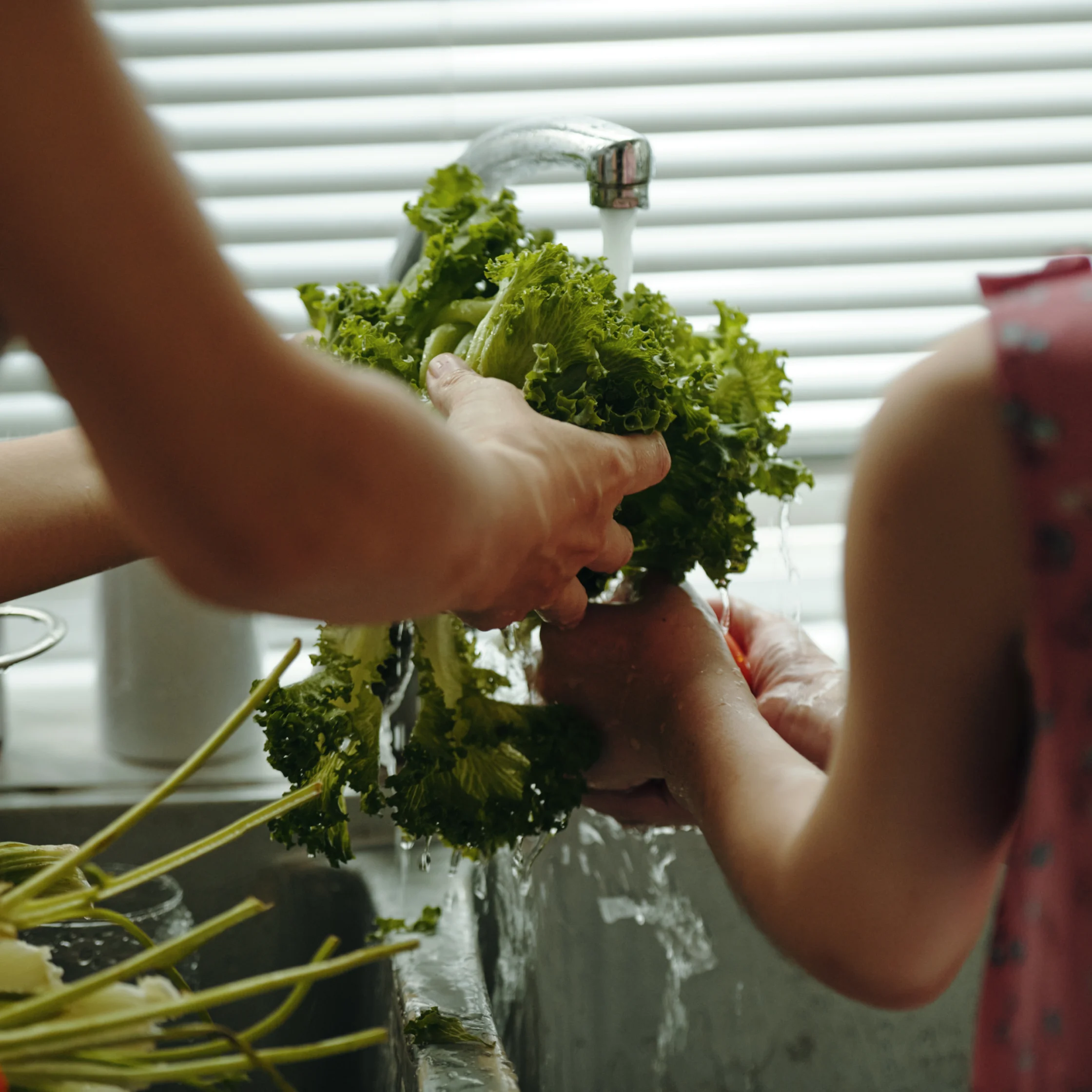
Take your kids to the palengke or bring them grocery shopping with you so that they can see the vegetables in their raw, whole forms before they hit the pan.
You can also give them more ownership in the kitchen by letting them use kid-safe knives or assigning simple prep tasks to build a sense of pride. Fun fact: children are significantly more willing to eat a dish they helped make.
Even outside of mealtimes, exposing them to kids’ books or picture books that feature Filipino produce normalizes local ingredients and sparks curiosity about food. A lot of kids’ books under Adarna House immediately come to mind from “Paano Kumain ng Kulay?” to the second edition of “What Kids Should Know About Filipino Food.”
3. Quit The Dessert Bribes and Start Leading By Example
Children mirror the adults around them. When kids see parents genuinely enjoying pinakbet or starting their meal with vegetables (especially when everyone is at their hungriest), they are much more likely to imitate the habit. Conversely, if a parent makes a face at ampalaya, the child learns to reject it too.
Baylon also advises against using dessert as a reward for finishing vegetables. Research indicates that bribing children with sweets teaches them to view vegetables as a chore and actually decreases their liking for the healthy food over time.
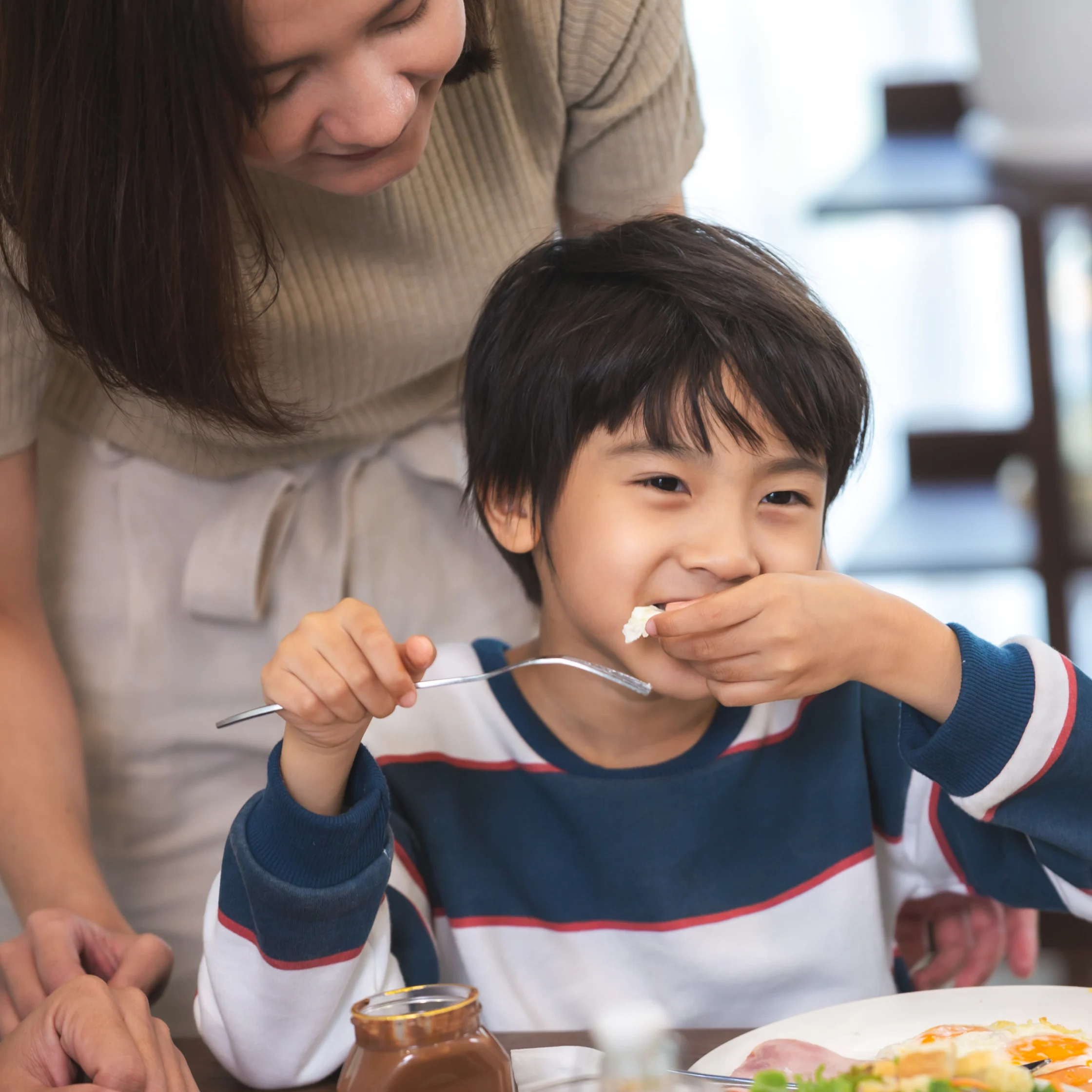
4. Adopt A Division Of Responsibility
Perhaps the core challenge when trying to impart healthy eating habits is that kids often go along with them as a command rather than truly understanding the why behind them. Adults sometimes make healthy eating feel like a rigid requirement enforced only while the child is under their roof. But what happens when they leave and misconstrue freedom in choosing what they eat, swinging toward heavily ultra-processed diets?
To prevent this, Baylon recommends an arrangement inspired by Ellyn Satter’s Division of Responsibility (sDOR). Basically, there is a clear and established division of responsibility between caregivers and children. Instead of a power struggle, both parties share a distinct role in how meals happen.
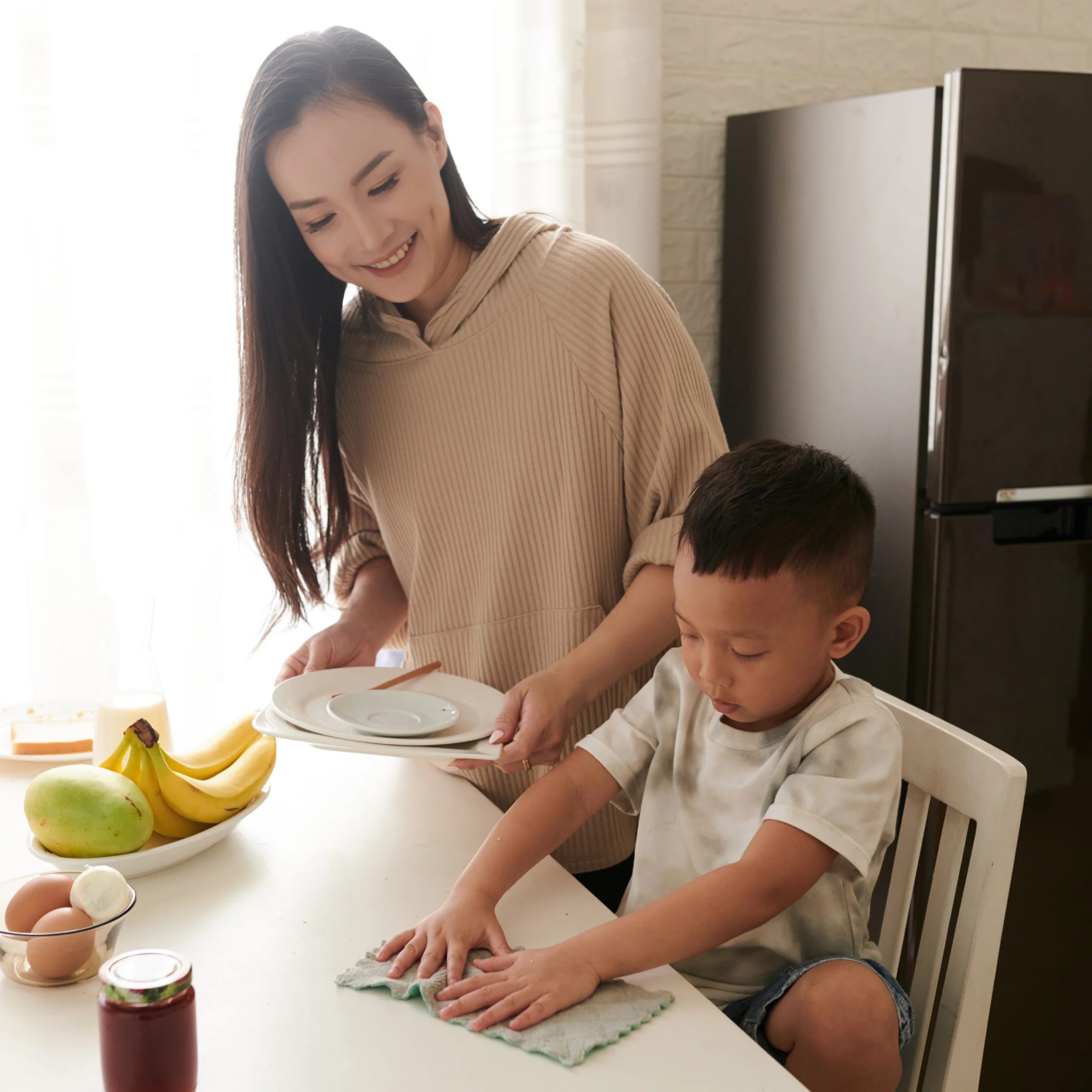
The parents get to decide what food is served, when meals happen, and where they are eaten. With this, it’s up to the parents to enforce that they start eating lunch at 12:00 PM or that you have to eat together as a family on the table rather than in front of the TV.
On the other hand, the kids get to decide whether to eat and how much to eat. When a child says they are full, forcing extra bites creates negative associations. Baylon explained how we should move away from labeling or shaming a child for being picky as it is actually a fairly normal developmental phase rather than a permanent trait.
5. Protect Their Gut Microbiome From The Start
“Children are not small adults,” Baylon emphasizes.
Per kilogram of body weight, they require higher concentrations of energy, protein, zinc, iron, and DHA/omega-3s, all while working with much smaller stomachs. Because every bite has to count, nutrient density is key.
According to Baylon, one of the most critical yet overlooked topics in children’s health is the gut microbiome. This community of beneficial bacteria in the digestive tract acts as our “second brain” and immune system.
Because a child’s microbiome is still developing, its health dictates how well their body absorbs nutrients for growth, brain development, and lifelong immunity. After all, what is the point of a healthy meal if the body cannot even absorb the nutrients properly?
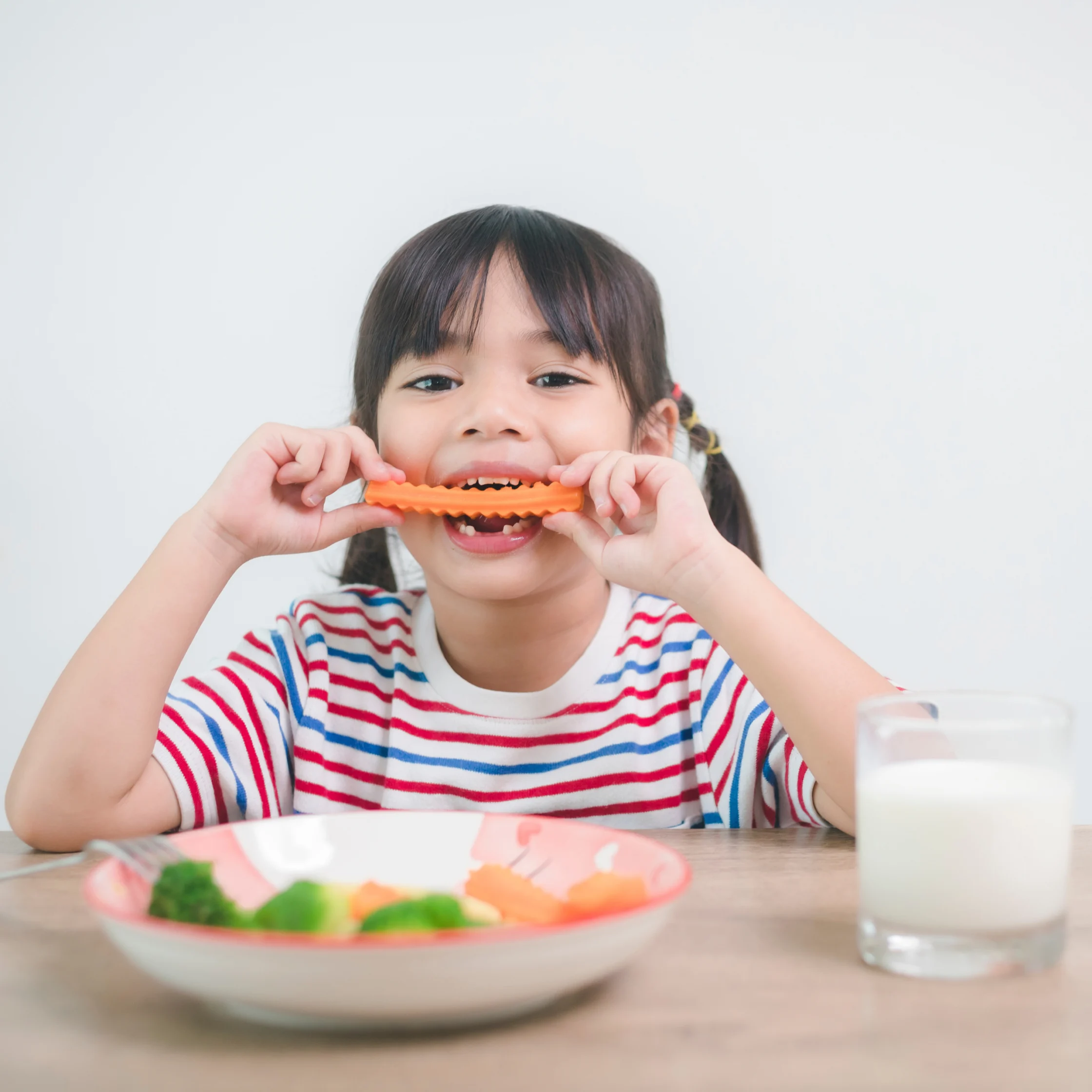
To protect and build this foundation, Baylon did give some recommendations. First, load up on dietary fiber from whole vegetables and fruits to fuel beneficial gut microbes. Second, cut back any ultra-processed foods that will damage the gut lining and effectively “melt” away good bacteria. Lastly, stick to whole-food foundations rather than supplements like growth milks and vitamins. Those are meant to supplement your diet, not replace the real, nutrient-dense food.
What Is The State Of Children’s Health In The Philippines?
What determines a child’s health goes beyond their body mass index score.
In the Philippines, systemic hurdles make the issue of nutrition even more urgent than it already is on its own.
Data from the DOST-FNRI Expanded National Nutrition Survey shows food insecurity climbed to 25.3% in 2025, reversing a decade-long downward trend, while underweight rates among school-aged children remain above 24% in regions like BARMM, Zamboanga Peninsula, MIMAROPA, and Bicol.
At the same time, families face a “double burden of malnutrition”—where undernutrition and rising childhood obesity coexist, often within the same households—compounded by the aggressive marketing of ultra-processed snacks and misleading “low-GI” or “low-sugar” labels packed with artificial additives. Not to mention the simple fact that many families struggle to afford a diverse diet.

When confronted with all of this, health can feel like an impossible, unrealistic task. Facing these macro-level challenges definitely feels daunting, that’s because it’s supposed to be. But shifting the culture of children’s nutrition doesn’t require a complete overhaul overnight. Sometimes, the changes only need to start inside your household.
Baylon reassures that there are a lot of small, but substantial steps parents and caregivers can take to get their kids more interested in healthy eating. Beyond individual home habits, other community efforts are working to address similar challenges, such as the Del Monte Tomatoes Once A Week Habit campaign and One World Deli’s new everyday wellness initiatives.
At the end of the day, helping kids fall in love with real food isn’t just about cleaning their plates. It is about giving them the biological and emotional tools they need to learn, grow, and thrive for a lifetime.

Frequently Asked Questions
Nutrition is deeply tied to a child’s cognitive, physical, and social-emotional development.
According to the EDCOM II Year One Report and nutritionist Ros Baylon, a hungry or nutrient-deficient child lacks the biological readiness to pay attention, regulate emotions, and learn in school, no matter how good the teacher or curriculum is.
Not entirely. Studies show that pureed vegetables in familiar dishes or drinks successfully boost nutrient intake.
However, Baylon cautions against making stealth the only strategy, as kids never learn to accept the actual vegetable if they never see or taste it. She recommends combining hidden purees with gradual, visible reintroductions like serving tinola with a few visible malunggay leaves.
Research shows that children often require 8 to 15 separate taste exposures before accepting a new food. Because many parents give up after a few rejections, patience and consistent reintroduction over months are key.
A child’s gut microbiome acts as their “second brain” and immune system. Because it is still developing in their early years, its health dictates how well their body absorbs nutrients for growth, brain development, and lifelong immunity. Damaging it with ultra-processed foods or antibiotics means even healthy meals won’t be properly absorbed.
No. Bribing children with sweets teaches them to view vegetables as an unpleasant chore, which actually decreases their preference for healthy food over time.
Beyond individual home habits, Philippine families face rising food insecurity, regional inequalities with high underweight rates in areas like BARMM and Bicol, a “double burden of malnutrition” where undernutrition and childhood obesity coexist, and aggressive marketing of misleading “low-sugar” ultra-processed products.