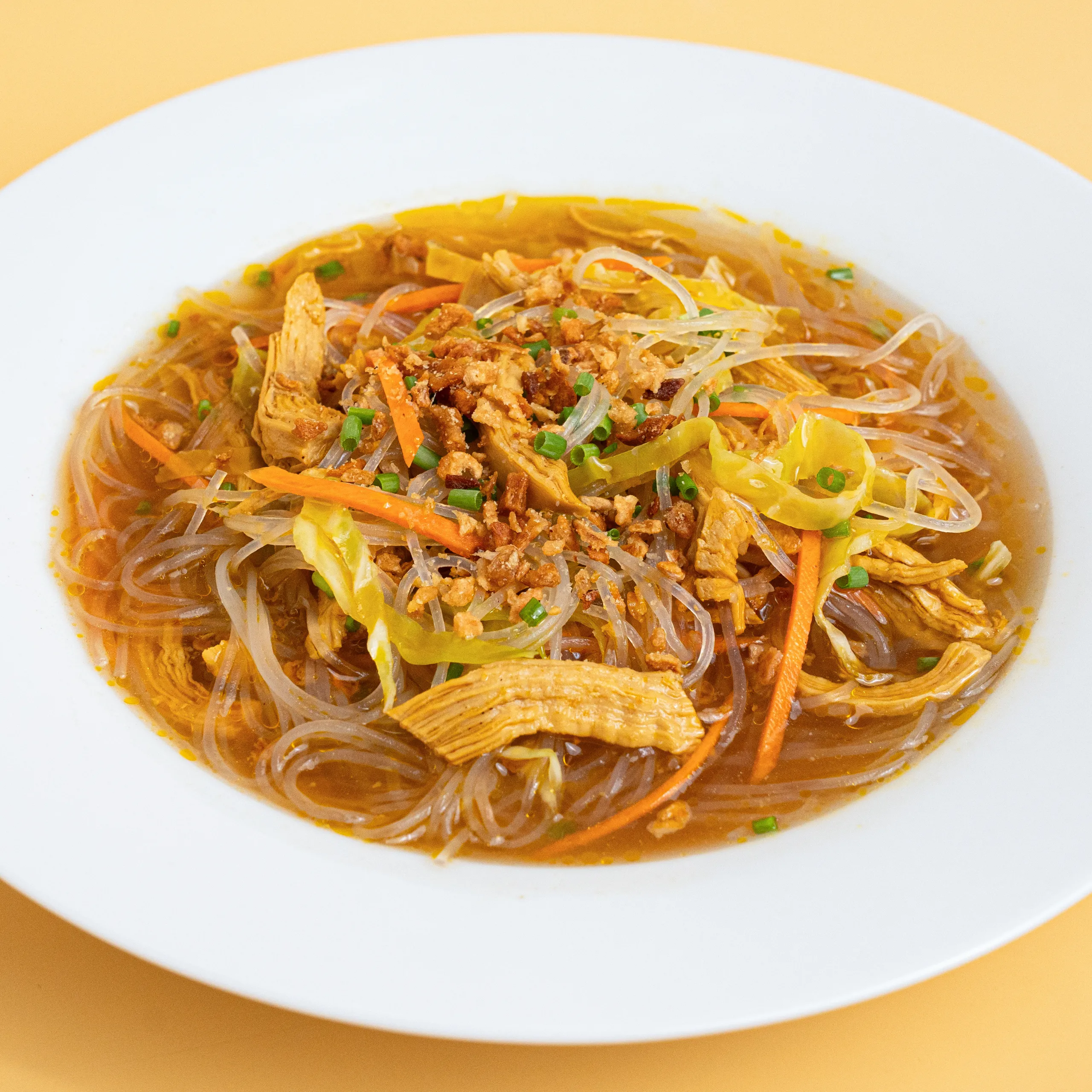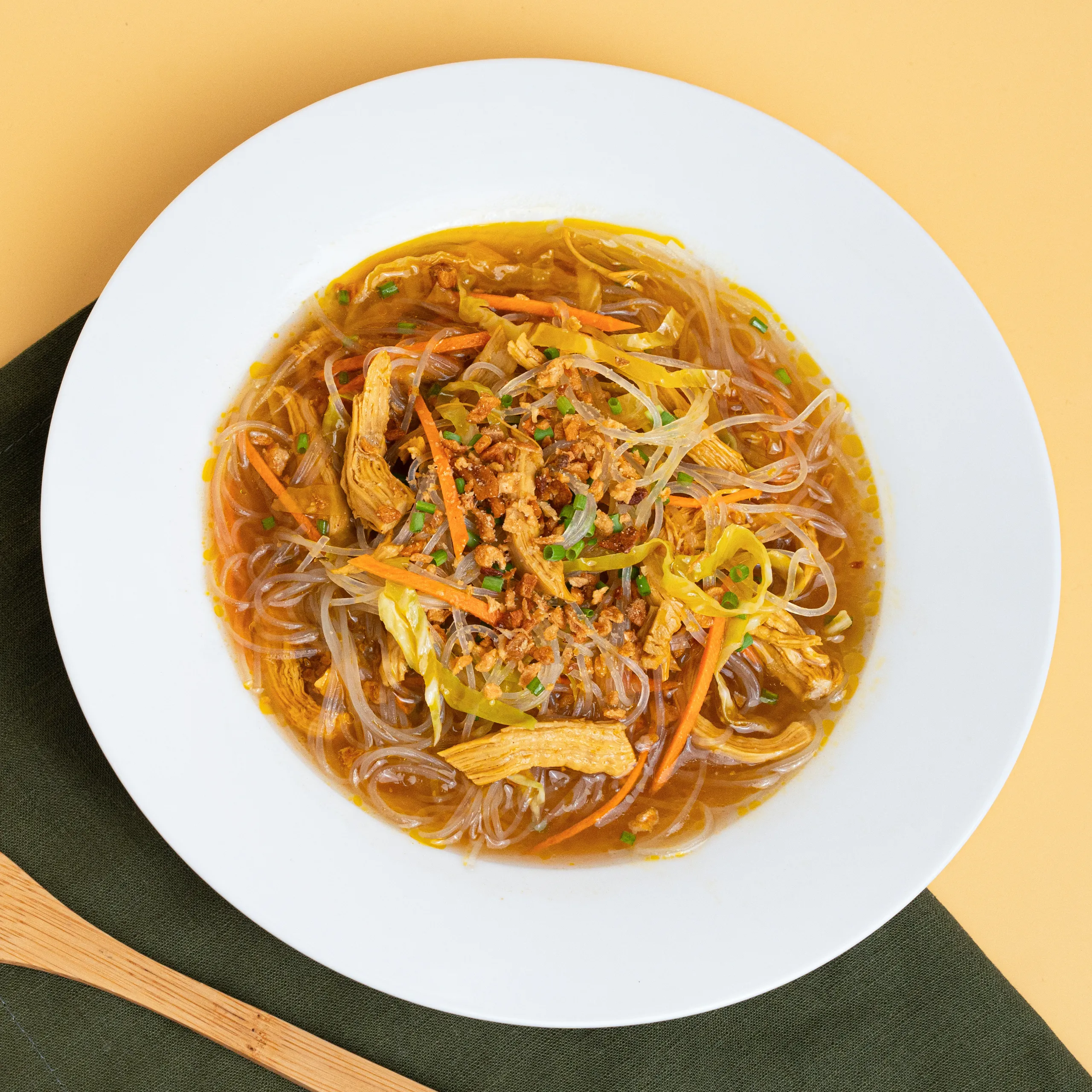
There are some foods that do not need to be complicated to feel special. A warm bowl of soup, a few simple vegetables, tender chicken, and noodles can be enough to make an ordinary day feel a little better. Sotanghon Soup is one of those dishes.
For many Filipinos, a bowl of hot sotanghon soup is associated with comfort. It is the kind of food that can be served during a family meal, prepared when someone is feeling under the weather, or enjoyed on a rainy afternoon when all you want is something warm and satisfying.
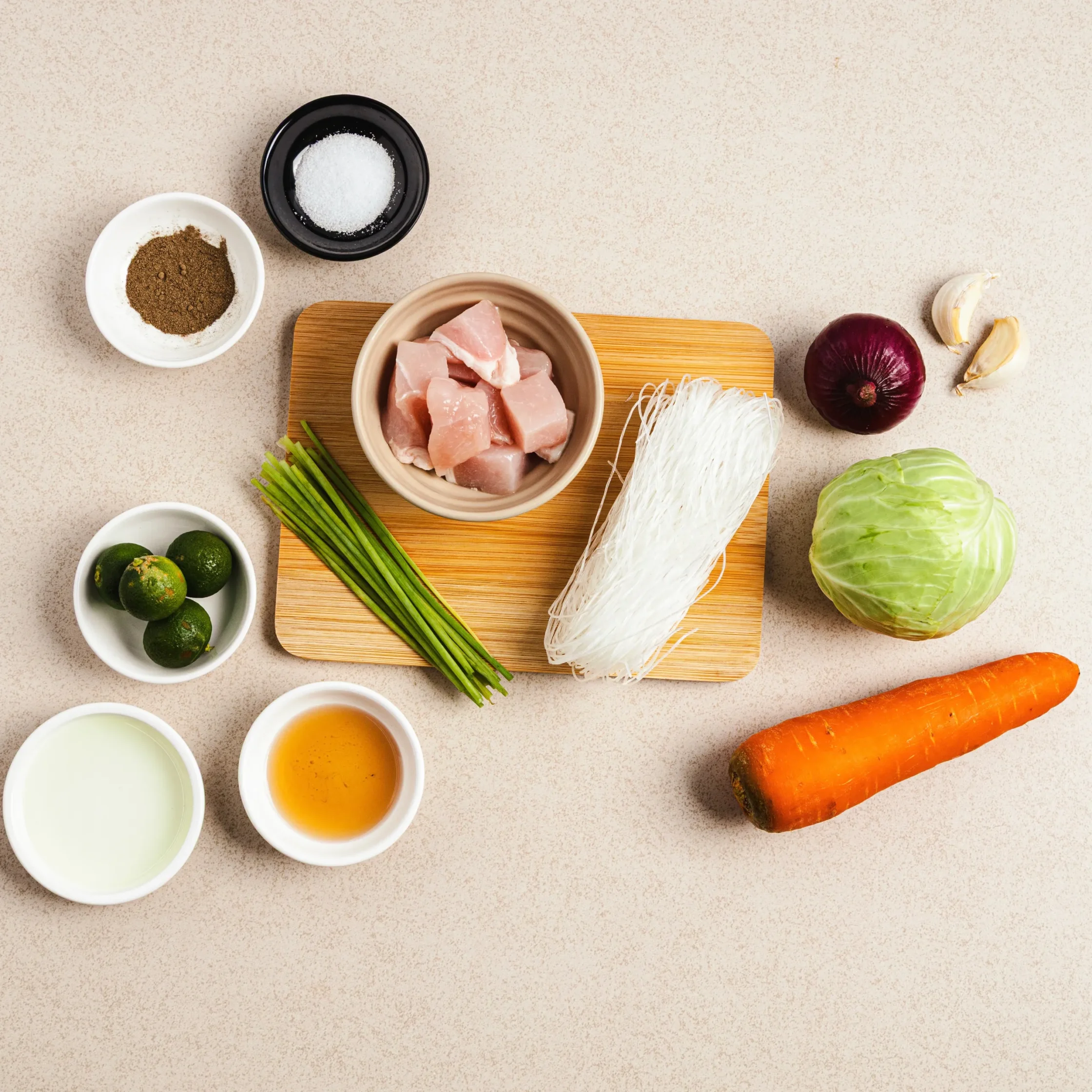
The beauty of this soup is in its simplicity. It combines delicate sotanghon noodles with chicken, vegetables, garlic, onion, fish sauce, and a lightly seasoned broth. Annatto powder gives the soup its characteristic golden-orange color, while toasted garlic and spring onions provide a fragrant finishing touch.
The noodles are soft and slippery, the chicken adds substance, and the vegetables provide color and texture. The broth brings everything together into a light but flavorful soup.
Sotanghon Soup is also the kind of recipe that can easily become a family recipe. You might add more vegetables, use chicken thighs instead of breast, add mushrooms, or adjust the fish sauce depending on your preference. Some people enjoy it with calamansi, while others like it with chili or a little soy sauce on the side.
It is not a dish that demands perfection.
Instead, it rewards patience, good ingredients, and a willingness to taste as you cook.
A Brief History of Sotanghon Soup
Sotanghon is a type of translucent noodle commonly used in Filipino cooking. The noodles are often associated with mung bean starch, although different products may use other starches or combinations.
The word sotanghon is commonly used in the Philippines for these thin, glass-like noodles.
Sotanghon dishes have become an important part of Filipino food culture, appearing in soups, noodle dishes, celebrations, and everyday meals.
One of the best-known preparations is sotanghon soup, sometimes called chicken sotanghon soup.
Like many Filipino dishes, its history reflects the Philippines’ long history of cultural exchange. Noodles have been an important part of Asian food traditions for centuries, and Filipino cuisine has incorporated different noodle types into local cooking.
Over time, Filipino cooks developed their own ways of preparing noodle dishes using ingredients that were readily available at home.
Chicken, garlic, onion, fish sauce, vegetables, and annatto are all familiar ingredients in Filipino cooking, making sotanghon soup feel distinctly at home on the Filipino table.
The use of annatto is particularly recognizable. Instead of producing a completely clear broth, Filipino versions of sotanghon soup often have a warm yellow or orange tint, giving the dish an inviting appearance.
The recipe may vary from household to household. Some versions are very simple, while others include mushrooms, boiled eggs, celery, shrimp, or additional vegetables.
This version keeps things straightforward, focusing on chicken, vegetables, noodles, and a flavorful broth.
Understanding the Ingredients
Sotanghon Noodles
Sotanghon is a thin, translucent noodle that becomes soft and slippery when cooked.
It is excellent for soup because it absorbs the flavor of the broth while maintaining a pleasant noodle texture when cooked properly.
One important thing to remember is that sotanghon absorbs liquid quickly. This is why it is usually best added toward the later part of the cooking process.
Chicken
Chicken provides protein and makes the soup more filling.
Chicken breast is lean and cooks relatively quickly, while chicken thigh has more fat and tends to remain moist and flavorful during simmering.
Either works well.
Chicken Broth
Chicken broth provides the foundation of the soup.
Using homemade broth can create a deeper flavor, but good-quality prepared broth can also make the recipe convenient for everyday cooking.
Water can also be used, especially when the chicken and seasonings are allowed to develop enough flavor during cooking.
Carrot
Carrots provide sweetness, color, and a slight crunch.
Julienning them into thin strips allows them to cook relatively quickly while keeping some texture.
Cabbage
Cabbage adds volume, mild sweetness, and texture.
It also makes the soup feel more substantial without requiring a large amount of meat.
Onion
Onion provides sweetness and aroma.
It forms part of the flavor base along with garlic.
Garlic
Garlic is one of the most important aromatic ingredients in Filipino cooking.
It gives the broth warmth and fragrance and becomes even more flavorful when toasted for the topping.
Fish Sauce
Fish sauce, or patis, provides saltiness and umami.
It has a strong aroma when used in large quantities, but when balanced properly, it gives the soup a deep savory flavor.
Annatto Powder
Annatto powder gives the soup its characteristic warm golden-orange color.
It also contributes a subtle earthy flavor.
Black Pepper
Black pepper adds gentle warmth and helps balance the savory broth.
Spring Onions
Spring onions add freshness and color when used as a garnish.
Toasted Garlic
Toasted garlic provides a crunchy texture and concentrated garlic flavor.
It is one of the best parts of the finished soup because it contrasts with the soft noodles and tender chicken.
Recipe Tips for the Best Sotanghon Soup
Don’t Overcook the Noodles
This is probably the most important tip.
Sotanghon continues absorbing liquid after it has been cooked.
If you cook it too long, the noodles can become overly soft and the soup can turn much thicker than intended.
Add the Noodles Near the End
Cooking the chicken and vegetables first allows the broth to develop flavor.
Adding the noodles later helps protect their texture.
Taste Before Adding More Fish Sauce
Fish sauce can vary greatly between brands.
Your chicken broth may also already contain salt.
Taste the soup before adding additional seasoning.
Use Chicken Thigh for More Flavor
If you prefer a richer soup, chicken thigh is an excellent option.
It generally stays juicier than chicken breast.
Use Chicken Breast for a Leaner Version
Chicken breast is a good choice if you prefer a leaner protein.
Just avoid overcooking it.
Keep Some Vegetable Texture
Carrots and cabbage are more enjoyable when they still have a little bite.
Do not simmer them unnecessarily long.
Make the Garlic Fresh
Freshly toasted garlic is much more aromatic than garlic that has been sitting for a long time.
Add it just before serving.
Keep Extra Broth Available
Sotanghon absorbs liquid quickly.
Having some hot water or extra broth nearby allows you to adjust the consistency easily.
Ingredient Substitutions
Sotanghon soup is flexible and can easily be adjusted depending on what you have available.
Chicken
You can use:
- Chicken breast
- Chicken thigh
- Leftover cooked chicken
- Shredded roasted chicken
If using already cooked chicken, add it later so it does not become dry.
Sotanghon
If sotanghon is unavailable, you can use:
- Rice vermicelli
- Other thin rice noodles
- Another glass noodle variety
The texture will vary depending on the noodle used.
Chicken Broth
Homemade chicken broth can be replaced with:
- Store-bought chicken broth
- Chicken stock
- Water with chicken bouillon
If using bouillon or prepared broth, adjust the fish sauce carefully because these products can already be salty.
Fish Sauce
If you do not have fish sauce, soy sauce can provide saltiness and umami.
However, the flavor will be different.
For a vegetarian version, use mushroom seasoning or another plant-based umami seasoning.
Annatto Powder
If annatto powder is unavailable, annatto oil can be used.
You can also leave it out, although the soup will not have its characteristic golden-orange color.
Cabbage
You can substitute:
- Napa cabbage
- Pechay
- Bok choy
Carrot
Other vegetables such as celery, corn, or bell pepper can be added depending on preference.
Food Knowledge: What Is Sotanghon?
Sotanghon is a type of thin, translucent noodle commonly used in Filipino cuisine.
It is often associated with mung bean starch, although commercial varieties can differ in their ingredients.
When cooked, sotanghon becomes soft, slippery, and translucent.
Its ability to absorb the flavors of surrounding sauces and broths makes it useful in many Filipino dishes.
Sotanghon can be found in both dry and soup preparations.
It is commonly used in dishes such as sotanghon guisado and various chicken or seafood soups.
Food Knowledge: Why Does Sotanghon Absorb So Much Broth?
Sotanghon is made primarily from starch.
When the noodles are exposed to hot liquid, they absorb some of that liquid and soften.
This is why a soup that looks perfectly brothy immediately after cooking can become much thicker after sitting for several minutes.
This also explains why leftovers may contain less broth than the original dish.
When reheating, a little additional broth or water can restore the consistency.
Food Knowledge: Why Is Annatto Used?
Annatto is commonly used in Filipino cooking as a natural coloring ingredient.
Its warm orange-red color can make dishes more visually appealing.
In sotanghon soup, it gives the broth a characteristic golden color.
Annatto also has a mild earthy flavor, but its main purpose in many Filipino recipes is visual.
It is found in various Filipino dishes, including noodle dishes, stews, and sauces.
Food Knowledge: Why Is Toasted Garlic So Important?
Toasted garlic may look like a simple garnish, but it contributes a lot to the final eating experience.
The soup itself is soft and liquid, while the noodles and vegetables are tender.
Toasted garlic introduces:
- Crunch
- Aroma
- Rich garlic flavor
- A slight nuttiness
Adding it just before eating creates a contrast between the soft soup and crispy topping.
This is a good example of how texture can be just as important as flavor.
Health Benefits and Nutritional Considerations
Sotanghon soup can be a comforting and relatively balanced meal because it combines protein, vegetables, carbohydrates, and liquid.
Protein From Chicken
Chicken provides protein, which is important for maintaining and repairing body tissues.
Chicken breast is generally leaner, while chicken thigh contains more fat and tends to be richer in flavor.
Vegetables
Carrots provide beta-carotene and other nutrients.
Cabbage contributes fiber, vitamin C, vitamin K, and other nutrients.
Adding more vegetables can increase the nutritional variety of the soup.
Carbohydrates
Sotanghon provides carbohydrates that serve as an important source of energy.
Because noodles are concentrated in carbohydrates, portion size can be adjusted according to individual dietary needs.
Garlic and Onion
Garlic and onion provide flavor along with naturally occurring plant compounds.
They also allow the soup to develop a rich taste without relying entirely on heavy sauces.
Sodium
The main nutritional consideration is sodium.
Fish sauce can be quite salty, and prepared chicken broth may also contain significant sodium.
If you need to reduce sodium, use low-sodium broth and less fish sauce.
Making It More Nutritious
For a more nutrient-dense version, you can:
- Add more cabbage.
- Increase the amount of carrots.
- Add mushrooms.
- Include leafy vegetables.
- Use skinless chicken.
- Reduce the amount of fish sauce.
- Use a low-sodium broth.
How to Store Sotanghon Soup Properly
Because the soup contains cooked chicken and noodles, proper storage is important.
Do not leave the soup at room temperature for an extended period.
Once the soup has cooled enough to handle safely, transfer it into clean, shallow, airtight containers and refrigerate it promptly.
Refrigerator Storage
Store the soup in the refrigerator and consume it within approximately 3–4 days for best quality and food safety.
The noodles will continue absorbing broth as they sit.
This means the soup may become thicker the following day.
Freezer Storage
Sotanghon soup can be frozen, but the noodles may become softer after thawing.
For better results, if you know you will freeze portions, consider storing the broth, chicken, and vegetables separately from the noodles.
Add freshly prepared sotanghon when reheating if possible.
If freezing the complete soup, divide it into individual portions and use freezer-safe containers.
For best quality, consume frozen portions within approximately 2–3 months.
Reheating
Reheat the soup gently on the stovetop.
Add a little water or chicken broth if the noodles have absorbed too much liquid.
Heat until the soup is thoroughly hot.
Avoid repeatedly reheating the entire batch.
Instead, heat only the amount you intend to eat.
Storing the Toasted Garlic
Keep toasted garlic in a clean, dry, airtight container.
Do not mix it into the soup before storage.
Keeping it separate allows it to remain crunchy.
Add it only when serving.
Serving Suggestions
Sotanghon soup is delicious on its own, but it can also be served as part of a larger Filipino meal.
Serve it in individual bowls while hot.
Top generously with chopped spring onions and toasted garlic.
For extra flavor, you can serve calamansi wedges on the side.
A little calamansi adds acidity that cuts through the savory broth and makes the soup taste brighter.
Sotanghon soup can be enjoyed as a light lunch, dinner, merienda, or comforting meal on a rainy day.
It also works well as a starter for a larger family meal.
Final Words
Sotanghon Soup is proof that comfort food does not have to be complicated.
With a handful of simple ingredients—chicken, noodles, vegetables, garlic, onion, fish sauce, and broth—you can create a warm bowl of food that feels nourishing and familiar.
The soup has a little bit of everything.
The chicken provides substance and protein. The sotanghon gives the dish its satisfying noodle texture. Carrots and cabbage bring color, freshness, and nutrients. Garlic and onion build the aroma, while fish sauce gives the broth its savory Filipino character.
Then there is the annatto, which gives the soup its beautiful golden color, and the toasted garlic, which adds the final crunchy and aromatic touch.
Perhaps the most special thing about sotanghon soup is how adaptable it is.
You can make it with chicken breast or thigh. You can add more vegetables. You can make the broth stronger or lighter. You can make it spicy, add calamansi, or adjust the fish sauce to suit your family.
That flexibility is what makes it such a practical home-cooked dish.
It can be a simple weekday meal, a comforting soup when someone is not feeling well, or something warm to share with family during a rainy evening.
At the end of the day, Sotanghon Soup is not just about noodles floating in broth. It is about warmth, comfort, and the familiar feeling of eating something prepared with care.
A steaming bowl of sotanghon soup may look simple, but sometimes the simplest food is the kind that stays with us the longest.