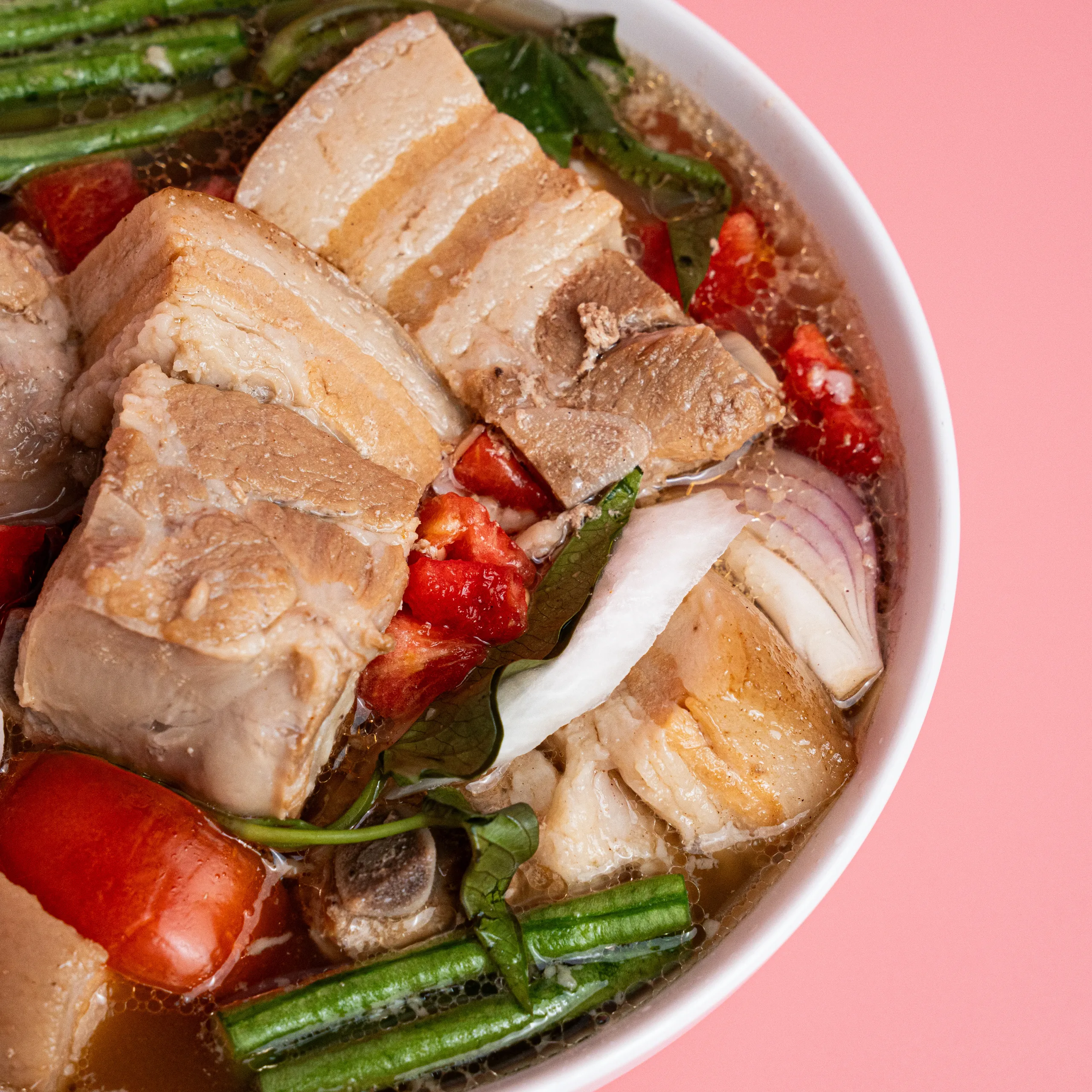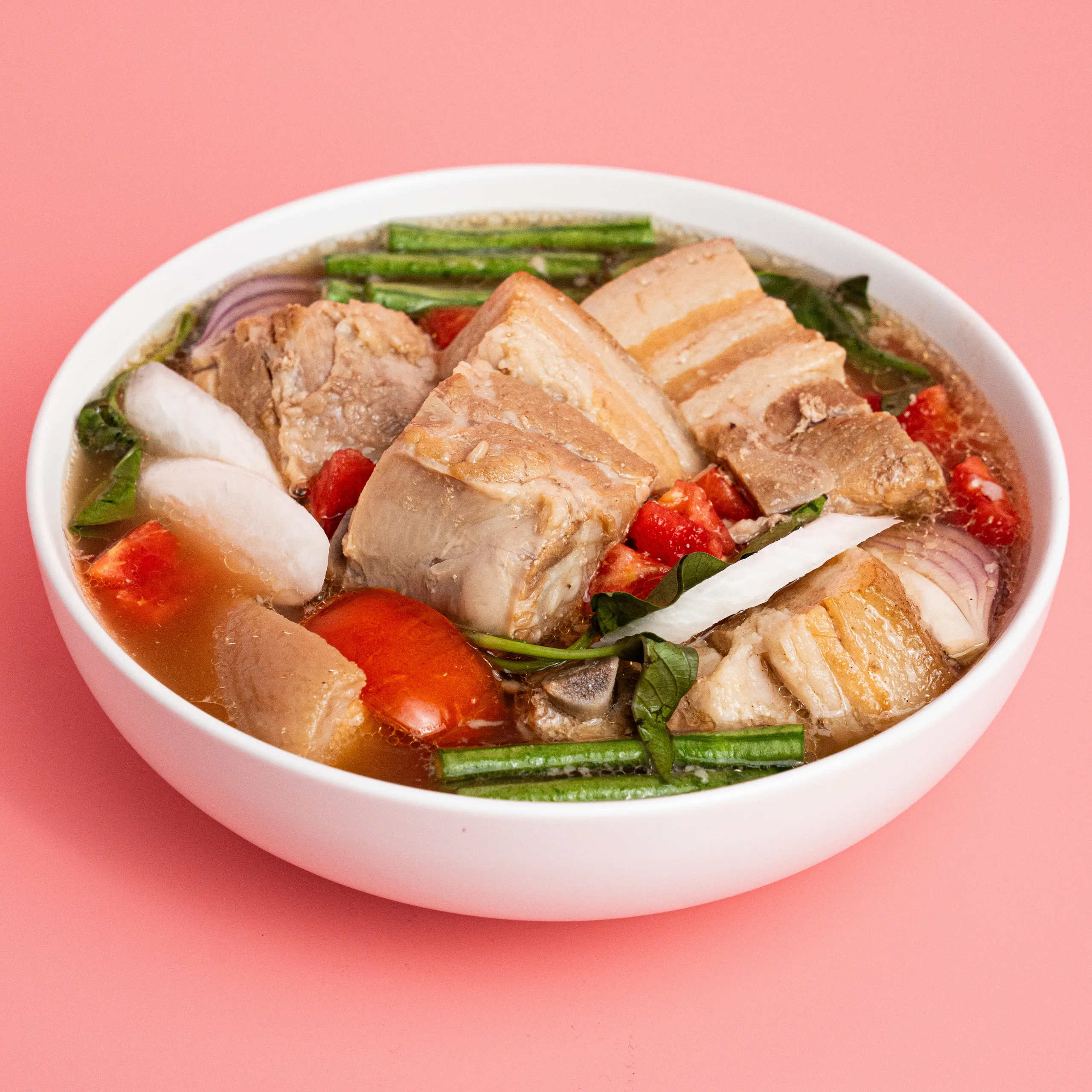
There is something deeply comforting about a bowl of Filipino sinigang. The combination of a warm, savory broth, tender meat, fresh vegetables, and a distinctly sour flavor makes it one of those dishes that can instantly feel like home.
But Filipino cooking is also about creativity. We have a wonderful habit of looking at familiar ingredients and asking, “What if we tried this instead?” That is where Sinigang sa Pakwan comes in.
Instead of relying entirely on tamarind for its characteristic sourness, this version introduces watermelon, or pakwan, into the dish. Watermelon may seem like an unusual ingredient for a savory soup at first, but it can add a subtle fruity sweetness and freshness that complements the salty, savory broth.
The result is a sinigang that still feels familiar while offering something different. The pork provides richness, the vegetables contribute texture and freshness, and the watermelon gives the broth a gentle sweetness and a unique fruity character.
It is especially enjoyable when served hot with freshly cooked rice. The contrast between the warm sour soup and the natural sweetness of watermelon makes each spoonful interesting.
This recipe is also a great example of how Filipino cuisine continues to evolve. Traditional dishes can have recognizable foundations while still leaving room for regional ingredients, family preferences, experimentation, and modern interpretations.
A Brief History of Sinigang
Sinigang is one of the most well-known sour soups in Filipino cuisine.
Unlike dishes that have one universally fixed recipe, sinigang exists in many forms. The meat, seafood, vegetables, and souring ingredient can all change depending on the region, season, and what is available in the kitchen.
The word sinigang is associated with a Filipino cooking method in which meat, seafood, or vegetables are simmered in a sour broth.
Tamarind is probably the souring ingredient most commonly associated with sinigang today, but it is not the only one that has been used in Filipino cooking.
Other souring ingredients can include:
- Kamias
- Green mango
- Guava
- Calamansi
- Santol
- Tomatoes
- Other naturally sour fruits
This variety is an important part of understanding Filipino cuisine.
Filipino cooking has historically relied heavily on seasonal and locally available ingredients. Rather than depending on one fixed ingredient, cooks often worked with what was available and developed different versions of familiar dishes.
Sinigang sa Pakwan fits into this broader tradition of experimenting with sour and fruity ingredients.
Watermelon is not the traditional souring agent of classic sinigang, so this recipe is best understood as a creative variation rather than a replacement for every traditional style of sinigang.
The watermelon adds a mild fruity sweetness rather than providing the strong acidity normally associated with tamarind.
For that reason, this recipe can use a little tamarind soup base as an optional ingredient. It helps preserve the recognizable sour character of sinigang while allowing the watermelon to contribute its own flavor.
Understanding the Ingredients
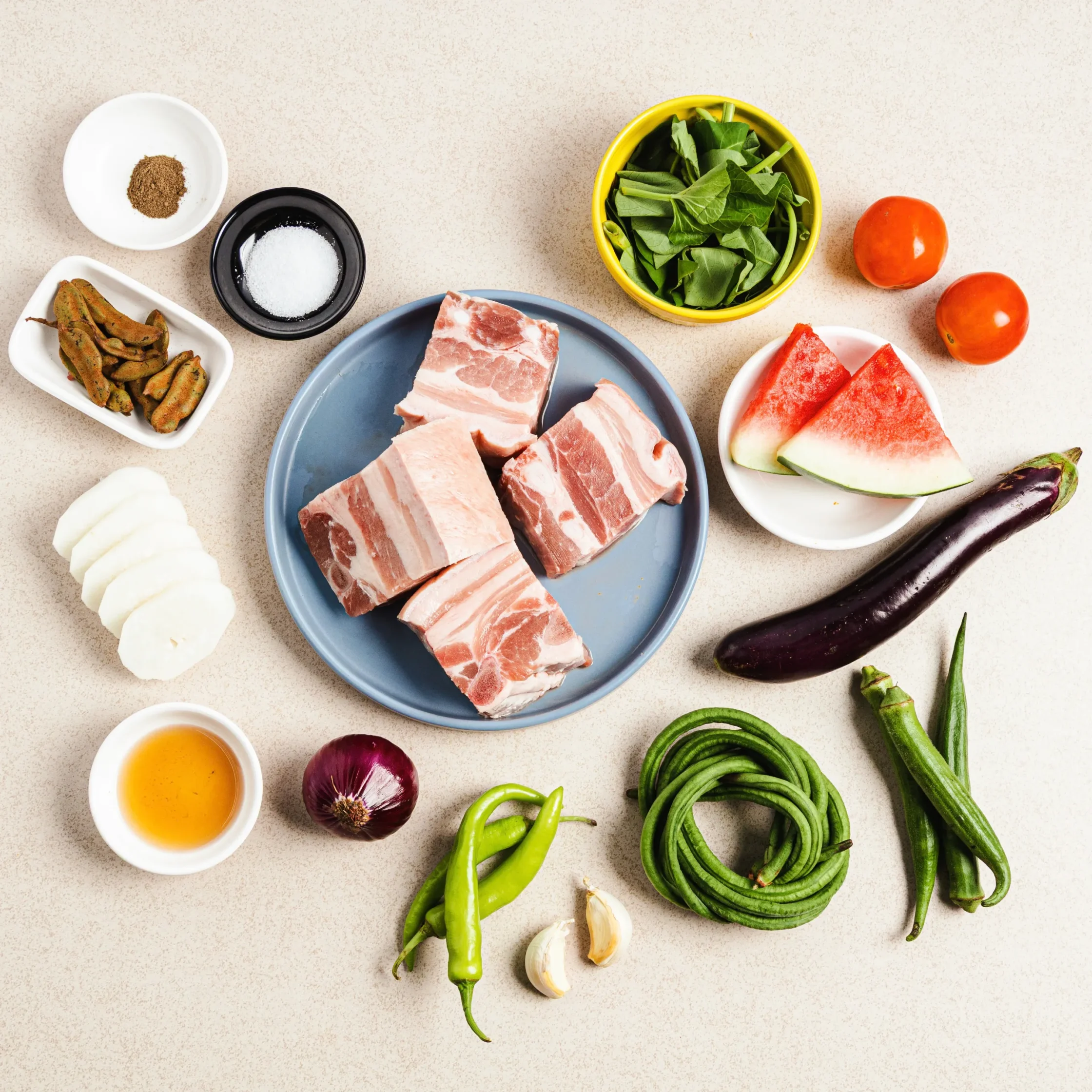
Pork Belly or Pork Ribs
Pork is a popular choice for sinigang because its richness works beautifully with a sour broth.
Pork belly produces a richer and more indulgent soup because it contains more fat.
Pork ribs can provide a flavorful broth while still giving you tender pieces of meat.
If you prefer a lighter soup, leaner pork cuts can also be used.
Watermelon
Watermelon is the ingredient that makes this sinigang unique.
It contributes water, natural sweetness, and a subtle fruity flavor.
Because watermelon is naturally sweet rather than strongly sour, it does not completely replace the role of tamarind in creating a classic sinigang-like acidity.
That is why the optional tamarind soup base can be useful.
Onion
Onion provides sweetness and depth to the broth.
Quartering the onion into large pieces makes it easy to cook while allowing its flavor to spread through the soup.
Tomatoes
Tomatoes are an important part of many Filipino sinigang recipes.
They add acidity, sweetness, and body to the broth.
As they simmer, they soften and release their juices.
Green Chili
Green chili adds a gentle heat and aroma.
You can leave the chilies whole for a milder result or slice them if you want more heat throughout the soup.
Radish
Radish adds a mild peppery flavor and a satisfying texture.
It also absorbs some of the savory and sour broth while cooking.
Kangkong
Kangkong, or water spinach, is one of the vegetables commonly associated with Filipino sinigang.
Its leafy texture works particularly well in a hot broth.
String Beans
String beans add freshness, texture, and a mild sweetness.
They also make the soup more substantial.
Fish Sauce
Fish sauce, or patis, adds saltiness and umami.
It helps give the broth its distinctly Filipino savory character.
Tamarind Soup Base
Tamarind soup base is optional in this recipe.
It can be added when you want a stronger and more recognizable sinigang sourness.
Because different soup bases vary in saltiness and acidity, add it gradually and taste as you go.
Recipe Tips for Better Sinigang sa Pakwan
Choose a Ripe but Firm Watermelon
A watermelon that is sweet and juicy can provide a pleasant fruity contrast to the savory broth.
However, extremely soft watermelon can break down quickly.
Choose pieces that are ripe but still firm.
Add Watermelon Near the End
Watermelon does not need prolonged cooking.
Adding it later helps preserve some of its fresh flavor.
Don’t Depend Entirely on Watermelon for Sourness
Watermelon is naturally sweet.
If you want the recognizable sourness of sinigang, use tamarind soup base or another souring ingredient.
The watermelon should complement the sour broth rather than completely replace it.
Taste as You Go
Sinigang is one of those dishes where tasting is especially important.
The sweetness of the watermelon, acidity of the tomatoes, saltiness of the fish sauce, and strength of the tamarind can all vary.
Adjust gradually.
Don’t Overcook the Vegetables
Different vegetables require different cooking times.
Add the firmer vegetables first and leafy vegetables toward the end.
This keeps the soup more colorful and gives each ingredient a better texture.
Use Bone-In Pork for More Flavor
If using pork ribs, the bones can contribute richness and depth to the broth.
Remove Excess Fat if Desired
Pork belly can produce a rich broth.
If you prefer a lighter soup, allow the broth to sit briefly and skim off some excess fat from the surface.
Ingredient Substitutions
Pork
You can substitute the pork with:
- Pork shoulder
- Pork ribs
- Chicken
- Shrimp
- Fish
- Beef
The cooking time will change depending on the protein.
Watermelon
If you do not have watermelon, you can make a more traditional sinigang using other souring ingredients such as:
- Tamarind
- Green mango
- Guava
- Kamias
- Calamansi
These will create a different flavor because watermelon provides sweetness rather than strong acidity.
Kangkong
You can replace kangkong with:
- Pechay
- Mustard greens
- Spinach
- Bok choy
String Beans
You can substitute:
- Okra
- Eggplant
- Sitaw alternatives such as other green beans
Radish
If radish is unavailable, you can use:
- Turnip
- Daikon
- Additional eggplant or other vegetables
Fish Sauce
Soy sauce can be used if fish sauce is unavailable, although the flavor will be noticeably different.
For a vegetarian version, use a plant-based umami seasoning.
Tamarind Soup Base
You can use natural tamarind pulp or another souring ingredient.
Fresh tamarind generally provides a more natural flavor, while packaged soup bases are convenient and consistent.
What Makes Sinigang Different From Other Soups?
Sinigang is defined less by one specific ingredient and more by the combination of a savory broth and a pronounced sour flavor.
This sourness creates a refreshing sensation that can make a rich ingredient such as pork feel lighter.
The vegetables also absorb the broth, making them flavorful rather than simply tasting like boiled vegetables.
This is one reason sinigang is so satisfying.
You get several contrasting experiences in one bowl:
- Rich pork
- Sour broth
- Sweet watermelon
- Soft vegetables
- Leafy greens
- Mild chili heat
The contrast keeps the dish interesting from the first spoonful to the last.
The Role of Watermelon in This Recipe
Watermelon is mostly water, which makes it naturally refreshing.
When added to a savory soup, its mild sweetness can soften strong salty and sour flavors.
It is important to understand that watermelon does not behave like tamarind.
Tamarind provides a strong acidity.
Watermelon provides sweetness and freshness.
That difference is actually what makes this variation interesting.
Instead of creating a sharply sour soup alone, watermelon introduces another layer of flavor.
The optional tamarind soup base then provides the acidity needed to bring the dish closer to the familiar character of sinigang.
The Importance of Balance in Sinigang
A good sinigang should not simply taste sour.
It should have balance.
The pork contributes richness.
The fish sauce contributes saltiness and umami.
The tomatoes contribute acidity and sweetness.
The watermelon contributes natural sweetness and freshness.
The tamarind contributes sourness.
The chili adds warmth.
The vegetables provide texture and freshness.
If the soup is too sour, the watermelon and a little additional water can help soften it.
If it is too sweet, a little more tamarind or another souring ingredient can restore balance.
If it is too salty, adding water and more unsalted ingredients can help.
Learning to balance these flavors is one of the most useful skills when making sinigang.
Health Benefits and Nutritional Considerations
Sinigang sa Pakwan can be a nutritious meal because it combines protein, vegetables, fruit, and broth.
However, its nutritional value depends on the ingredients and portion sizes.
Protein From Pork
Pork provides protein, which is important for maintaining muscle and repairing body tissues.
Pork ribs and belly can also contain a considerable amount of fat, so the cut you choose affects the overall richness of the dish.
Watermelon
Watermelon provides water and nutrients such as vitamin C and vitamin A precursors.
It also contributes natural sweetness without needing added sugar.
Tomatoes
Tomatoes contain vitamin C and various plant compounds.
Cooking tomatoes also changes their texture and flavor, allowing them to blend naturally into the broth.
Radish
Radish provides fiber and vitamin C while adding relatively few calories.
Kangkong
Kangkong contributes vitamins, minerals, and plant-based nutrients.
Adding leafy vegetables is a simple way to increase the nutritional variety of the meal.
String Beans
String beans provide fiber and various vitamins and minerals.
Sodium
Fish sauce and tamarind soup bases can be high in sodium.
If you are watching your sodium intake, use smaller amounts and taste the soup carefully.
You can also use a lower-sodium fish sauce or reduce the amount of packaged soup base.
Fat
Pork belly can make the broth quite rich.
If you want a lighter version, use leaner pork or trim some visible fat before cooking.
How to Store Sinigang sa Pakwan Properly
Sinigang contains cooked meat and vegetables, so proper storage is important.
Do not leave the soup sitting at room temperature for a prolonged period.
Transfer leftovers into clean, shallow, airtight containers and refrigerate promptly.
Refrigerator
Store the soup in the refrigerator and consume it within approximately 3–4 days for best quality and food safety.
The flavors may become more developed after resting overnight.
Freezer
Sinigang can be frozen, although the texture of some vegetables may change after thawing.
If you plan to freeze it, consider freezing the pork and broth separately from delicate leafy vegetables.
For best quality, use frozen portions within approximately 2–3 months.
Reheating
Reheat the soup gently on the stovetop until thoroughly hot.
If the broth has become too concentrated, add a little water.
Avoid repeatedly reheating and cooling the entire batch.
Instead, heat only the amount you plan to eat.
Watermelon Consideration
Because watermelon is delicate, its texture may become softer after refrigeration or freezing.
If you want the freshest watermelon texture, add some fresh watermelon to individual servings rather than storing large quantities of watermelon in the soup.
Serving Suggestions
Serve Sinigang sa Pakwan piping hot in a large serving bowl.
Make sure each portion contains a little bit of everything: tender pork, radish, string beans, kangkong, tomato, chili, and watermelon.
Serve it with freshly steamed white rice.
You can also provide extra fish sauce and chili on the side for people who want to adjust the flavor themselves.
For a brighter finish, calamansi can be served on the side.
The contrast between the hot soup, sour broth, fresh vegetables, and warm rice makes the meal especially satisfying.
Final Words
Sinigang sa Pakwan is a reminder that Filipino cooking has always had room for creativity.
At first, watermelon might seem like an unexpected ingredient for a savory soup. But once you think about what makes sinigang enjoyable—the balance of sour, savory, rich, fresh, and sometimes spicy flavors—the combination begins to make sense.
The pork provides richness.
The vegetables provide texture and nutrients.
The tomatoes contribute acidity and depth.
The watermelon adds natural sweetness and freshness.
The tamarind brings the familiar sour character of sinigang.
And the fish sauce ties everything together with savory umami.
What makes this dish particularly interesting is that it does not try to completely replace traditional sinigang. Instead, it takes a familiar Filipino idea and gives it a different personality.
It is a dish that invites experimentation.
You can make it richer with pork belly, lighter with lean pork or chicken, more sour with tamarind, more spicy with chili, or more vegetable-forward by adding extra greens.
Most importantly, it is a dish meant to be enjoyed around the table.
A large pot of sinigang has a way of making a meal feel communal. Everyone can choose their favorite vegetables, spoon broth over their rice, and adjust the seasoning to their own taste.
Sinigang sa Pakwan may be a creative twist on a beloved Filipino classic, but its heart remains the same: a comforting bowl of food built around balance, freshness, and the simple pleasure of sharing a good meal.