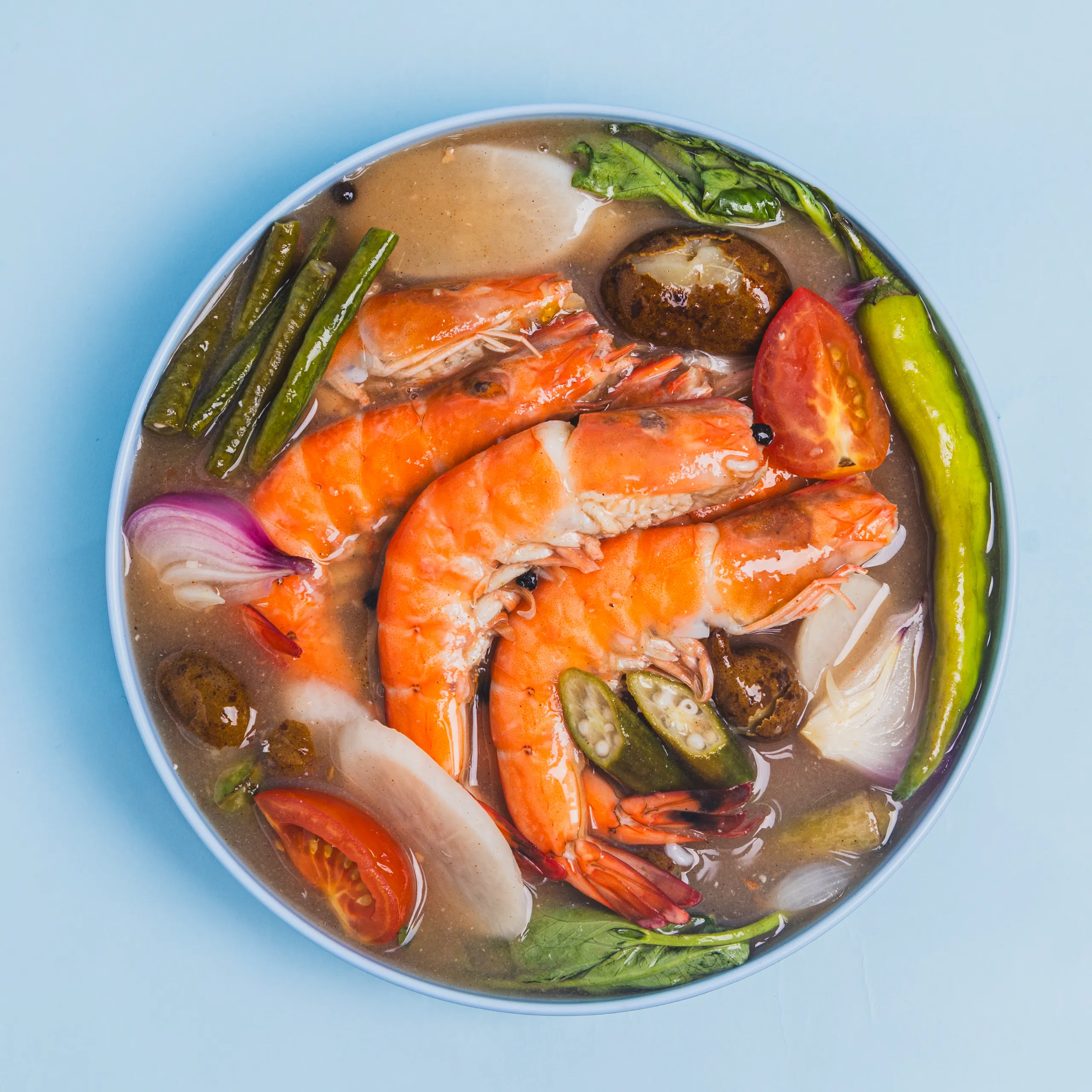
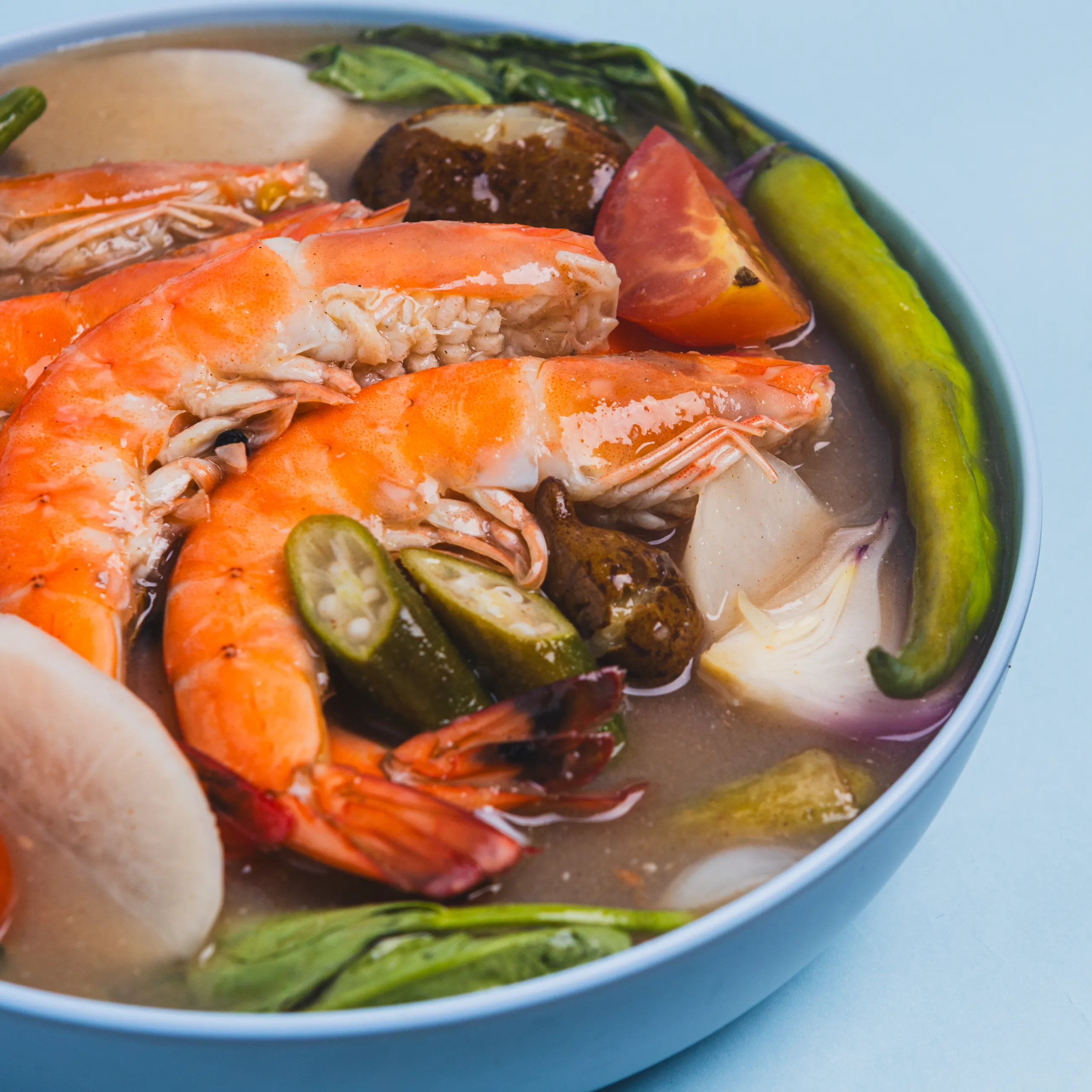
There are Filipino dishes that are remembered not only because they taste good, but because they bring back a feeling. Sinigang na Hipon is one of those dishes. The moment the sour, savory aroma of tamarind broth fills the kitchen, it can make an ordinary meal feel familiar and comforting. It is the kind of food many people associate with home, family lunches, rainy afternoons, and a pot placed right in the middle of the dining table for everyone to share.
What makes Sinigang na Hipon so special is its unmistakable sourness. Unlike many soups that focus primarily on richness or saltiness, sinigang allows sourness to become the star of the dish. The natural acidity of tamarind gives the broth a refreshing character, while tomatoes, onions, green chilies, and vegetables build layers of flavor around it.
The shrimp adds a naturally sweet and delicate seafood flavor that works beautifully with the tangy broth. Okra, radish, string beans, and kangkong make the soup colorful and satisfying, while fish sauce adds the savory depth that helps balance the sourness.
For many Filipino families, sinigang is also a very personal dish. One household may prefer it intensely sour, while another may want a gentler broth. Some families add more vegetables, while others focus on the shrimp. Some enjoy eating it with plenty of rice and a little fish sauce or chili on the side.
That flexibility is part of the beauty of Filipino cooking. A recipe provides a foundation, but the final dish often reflects the taste of the people preparing it.
History of Sinigang na Hipon
Sinigang is one of the most recognizable traditional Filipino sour soups. Rather than being tied to a single recipe, sinigang represents a broader Filipino cooking style in which meat or seafood is simmered in a sour broth together with vegetables and aromatics.
The word sinigang is associated with a Filipino method of cooking ingredients in a souring broth. Tamarind, locally known as sampalok, is perhaps the most familiar souring ingredient used for sinigang, although Filipino cooks have historically used other sour fruits and ingredients depending on what was available in their region.
This adaptability is an important part of the dish’s history. Before commercially prepared soup mixes became common, cooks could obtain sourness from ingredients growing locally or available seasonally. Tamarind became particularly valued because it produces a distinctive, strong sour flavor that works exceptionally well in broth.
Over generations, different versions of sinigang developed. There is Sinigang na Baboy, made with pork; Sinigang na Isda, made with fish; Sinigang na Baka, made with beef; and seafood versions such as Sinigang na Hipon.
Sinigang na Hipon highlights the natural flavor of shrimp rather than hiding it beneath heavy sauces or spices. The shrimp is cooked in the sour broth along with vegetables, allowing its subtle sweetness to mingle with the tangy tamarind.
The dish also reflects the Filipino appreciation for rice-centered meals. Sinigang is technically a soup, but it is rarely treated as merely an appetizer. Served with steaming rice, it becomes a complete and deeply satisfying meal.
Recipe Tips for a Delicious Sinigang
The first important tip is to control the sourness gradually. Fresh tamarind can vary considerably in acidity, so it is better to add the tamarind broth little by little rather than making the soup extremely sour from the beginning.
If you are preparing the tamarind yourself, make sure to strain the pulp carefully. Small pieces of tamarind seed or tough fibers can make the soup unpleasant to eat.
Another important point is to avoid overcooking the shrimp. Shrimp can go from tender to rubbery surprisingly quickly. Once the shrimp has changed color and become opaque, it is generally close to being done.
The vegetables should also be added according to how long they take to cook. Radish and string beans can handle a longer simmer, while kangkong cooks very quickly. Adding everything at the same time can result in some vegetables becoming mushy while others remain undercooked.
Do not be afraid to taste your broth several times. Sinigang is a dish where seasoning is very personal. You are looking for a balance between sour, salty, savory, and naturally sweet flavors.
For a more flavorful broth, allow the tomatoes and onions enough time to soften. They may look like simple ingredients, but they contribute significantly to the soup’s overall character.
If you want the shrimp flavor to be especially prominent, choose fresh shrimp and avoid drowning the broth in too many strong seasonings.
Ingredients Substitutions
One of the advantages of sinigang is that it can adapt to the ingredients available in your kitchen.
Tamarind:
Fresh sampalok gives the most traditional experience, but it is not always easy to find. Tamarind pulp, tamarind paste, or prepared sinigang mixes can be used as alternatives. When using a prepared product, add it gradually because its sourness and salt content may already be quite strong.
Shrimp:
You can replace shrimp with fish, squid, mussels, or other seafood. Each option will give the broth a slightly different flavor. If using fish, choose firm-fleshed varieties that can withstand simmering.
Kangkong:
If water spinach is unavailable, spinach, bok choy, or other tender leafy greens can be used. They will not taste exactly the same, but they can provide a similar fresh element.
String beans:
Green beans can be used as an alternative. You can also use other vegetables that hold up well in soup.
White radish:
Daikon is an excellent substitute for Filipino white radish. If unavailable, turnip can work, although the flavor will be somewhat different.
Okra:
If you do not enjoy okra, you can leave it out or replace it with another vegetable. Eggplant is commonly used in other versions of sinigang and can make a good addition.
Fish sauce:
Fish sauce provides a distinctly Filipino savory flavor, but salt can be used if necessary. Soy sauce is another possible substitute, although it will darken the broth and change its flavor.
Understanding the Food
The most important characteristic of Sinigang na Hipon is its sour broth. This is what separates it from many other Filipino soups.
Tamarind contains naturally occurring acids that give it its characteristic tartness. When cooked and strained, the resulting liquid becomes the foundation of the soup.
The sourness is not meant to overwhelm every other flavor. Instead, it creates a bright foundation that allows the sweetness of the shrimp and vegetables to become more noticeable.
Shrimp is particularly well suited to sinigang because it cooks quickly and has a naturally sweet, delicate flavor. The tangy broth provides a strong contrast to that sweetness.
Tomatoes add mild acidity and natural sweetness, while onions contribute sweetness and aroma as they soften in the broth.
Green chilies provide a gentle peppery character. Filipino long green chilies are usually much milder than many hot chili varieties, so they can add fragrance and a little heat without taking over the dish.
Okra contributes a distinctive texture and can naturally thicken the broth slightly because of its mucilage. Some people love this quality, while others prefer to leave okra out.
White radish absorbs the flavor of the broth beautifully. It becomes tender and juicy while retaining a mild peppery freshness.
String beans provide a pleasant crunch and make the soup more substantial.
Finally, kangkong adds a fresh, leafy component. Because it cooks quickly, it is traditionally added near the end.
Together, these ingredients create the characteristic experience of sinigang: a hot, sour, savory broth filled with vegetables and tender seafood.
Health Benefits of the Ingredients
Sinigang na Hipon can be a nutrient-rich meal because it combines seafood with several vegetables in a broth.
Shrimp is an excellent source of protein and provides nutrients such as selenium, vitamin B12, and other minerals. It is also relatively low in calories compared with many fattier meat choices. Shrimp does contain dietary cholesterol, but cholesterol levels in food are only one part of overall cardiovascular health.
Tamarind contains plant compounds and provides small amounts of vitamins and minerals. Its most important contribution to sinigang, however, is its natural acidity and distinctive flavor.
Tomatoes provide vitamin C, potassium, and the antioxidant lycopene. Cooking tomatoes can make lycopene more available to the body, particularly when consumed with some dietary fat.
Onions contain fiber and various plant compounds, including antioxidant compounds associated with the allium family.
White radish is relatively low in calories and provides vitamin C, water, and some fiber. Because it contains a lot of water, it can add volume to a meal without making it particularly heavy.
Okra provides fiber, vitamin C, vitamin K, folate, and other nutrients. Its fiber content also contributes to digestive health.
String beans provide fiber and various vitamins and minerals. They also add texture and bulk to the meal.
Kangkong is a leafy green that contributes vitamins, minerals, and plant compounds while adding very few calories to the dish.
Green chilies contain vitamin C and naturally occurring plant compounds. Their contribution depends on the variety and how much is eaten.
The main ingredient to watch from a health perspective is fish sauce and added salt, because they can significantly increase the sodium content of the dish. If you are watching your sodium intake, use less fish sauce and season gradually.
Making Sinigang Healthier
Sinigang is already a vegetable-rich dish, so making it healthier does not require changing its identity.
You can increase the amount of vegetables while keeping the shrimp portion moderate. This gives the meal more fiber, vitamins, minerals, and volume.
You can also reduce the fish sauce and salt. Tamarind, tomatoes, onions, chilies, and pepper provide plenty of natural flavor, so you may not need as much sodium as you initially think.
Choosing fresh shrimp rather than heavily processed or pre-seasoned seafood can also give you greater control over the ingredients.
When serving the dish with rice, portion size matters as well. A generous amount of vegetables and shrimp with a moderate serving of rice can make a balanced and satisfying meal.
Of course, sinigang is not required to be a “health food” to be worth enjoying. Food is also about culture, comfort, and sharing. The goal is simply to enjoy it in a way that fits your nutritional needs.
How to Get the Perfect Balance of Flavor
A good Sinigang na Hipon should have a noticeable sourness, but it should not taste like pure tamarind water.
Start with the souring ingredient and then gradually build the seasoning.
If the soup tastes too sour, add a little more water and adjust the fish sauce. A tiny amount of sugar can also soften an overly sharp sourness.
If it tastes too salty, add more water or unsalted vegetables. Avoid adding more tamarind simply because the soup lacks balance.
If it tastes too bland, it may need more fish sauce, salt, or tamarind. Add these in small amounts rather than making a large adjustment all at once.
If the broth tastes too heavy, additional water and vegetables can help make the flavors feel fresher.
The goal is not to make the broth overwhelmingly sour or salty. The best sinigang has layers, with the sourness immediately noticeable but followed by the savory taste of the broth and the natural sweetness of the shrimp and vegetables.
Serving Suggestions
Sinigang na Hipon is traditionally enjoyed with steamed white rice. The rice provides a neutral base that allows the sour and savory broth to shine.
Some people like to prepare a small dipping sauce using fish sauce and chili. Others prefer to pour plenty of broth over their rice.
It is also best served immediately while the shrimp and vegetables are still at their ideal texture. Because shrimp continues cooking in hot broth, avoid leaving it simmering unnecessarily after it has reached doneness.
For a family meal, serve the sinigang in a large communal bowl and allow everyone to choose their favorite vegetables and shrimp pieces. That simple style of serving is part of what makes the dish feel so homey.
Final Words
Sinigang na Hipon is a dish that captures something essential about Filipino cooking: the ability to create comfort and complexity from simple, familiar ingredients.
Tamarind gives the broth its unmistakable sour character. Shrimp adds sweetness and delicate seafood flavor. Tomatoes and onions build the aromatic base, while radish, okra, string beans, and kangkong bring color, texture, and nutrition to the bowl.
But beyond its ingredients, sinigang carries a sense of familiarity. It is the soup that can make a rainy afternoon feel warmer. It is something that can bring everyone to the table because there is always something to look forward to—the shrimp, the vegetables, the sour broth, and, of course, the rice soaking up every last bit of flavor.
There is also something wonderful about how personal sinigang can be. One person may say, “It needs to be more sour,” while another prefers it mild. Someone may want extra kangkong, while someone else goes straight for the shrimp and radish. These little preferences are part of what makes home cooking memorable.
In the end, Sinigang na Hipon is more than a sour soup. It is a comforting expression of Filipino food culture—fresh, flavorful, adaptable, and meant to be shared. Whether prepared for an ordinary family lunch or a special gathering, a steaming bowl of sinigang has a way of making a meal feel complete.