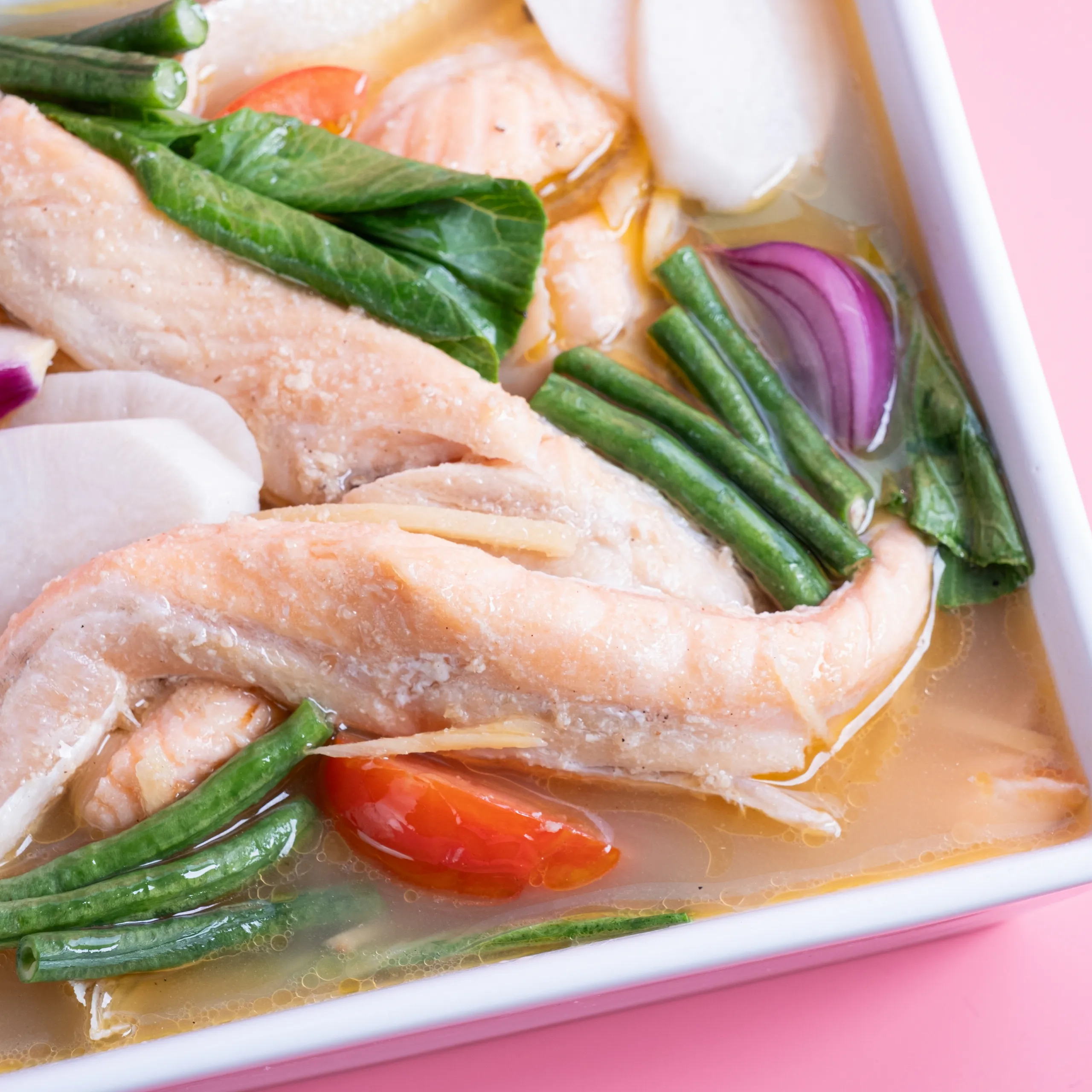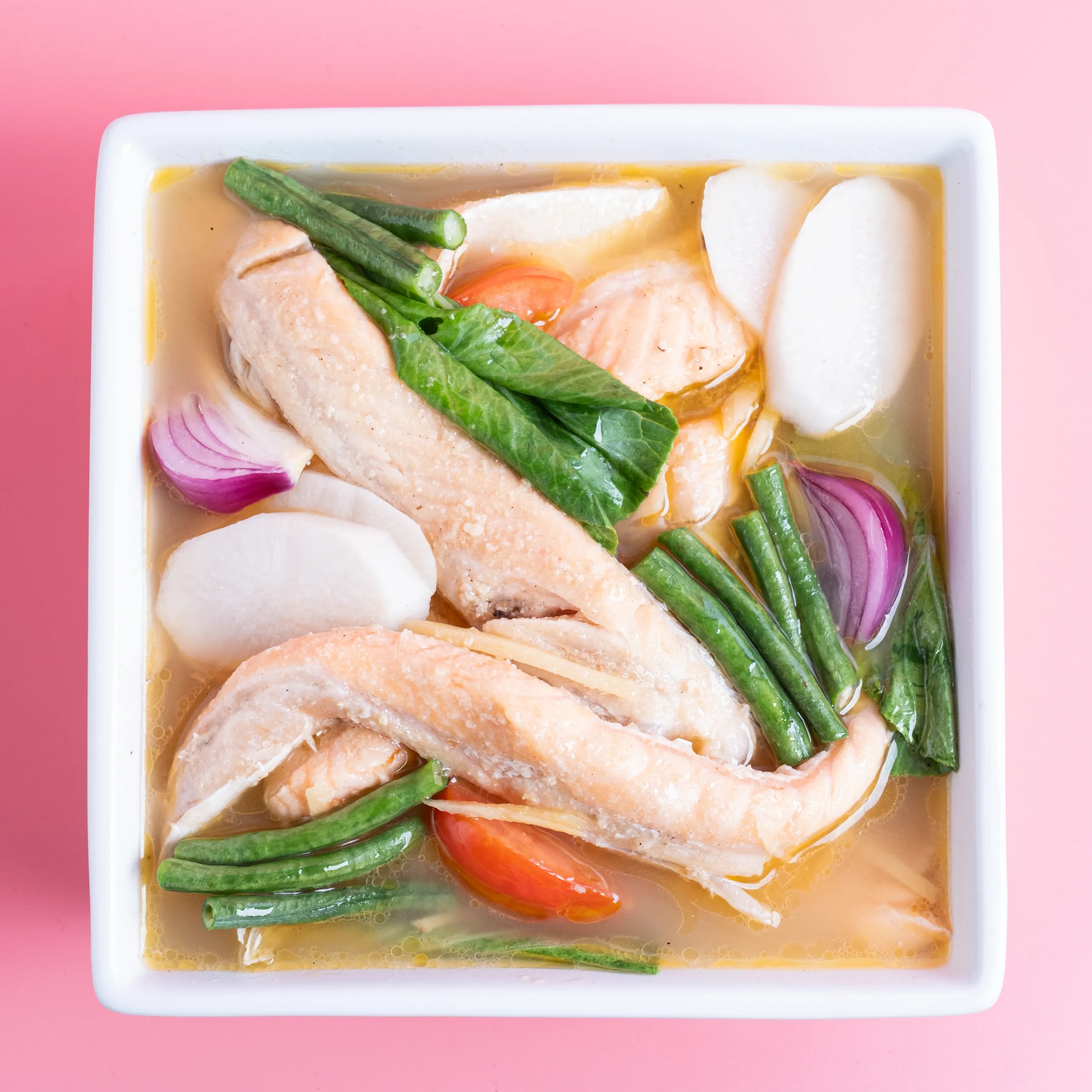
Sinigang has long been part of Filipino food culture. It is generally associated with the country’s tradition of preparing sour soups using locally available ingredients. Tamarind is one of the best-known souring agents, although other ingredients, such as kamias, guava, santol, and calamansi, can also be used in different regional and household preparations.
The exact origins of sinigang are difficult to trace to one particular person, place, or date. Instead, the dish reflects generations of Filipino home cooking, where families learned to combine fish, meat, vegetables, and sour fruits into nourishing meals.
Because the Philippines has a long coastline, fish and seafood naturally became important ingredients in many regional variations of sinigang. The availability of fresh produce and souring ingredients also encouraged cooks to adapt the soup according to their location and personal preferences.
How miso became part of the dish
Miso is a fermented paste traditionally made from soybeans, salt, and a fermentation culture, sometimes with grains such as rice or barley. It is widely used in Japanese cooking, particularly in miso soup.
The use of miso in Filipino cooking reflects the broader exchange of food traditions across Asia and the creativity of Filipino cooks in adapting ingredients to local tastes. However, the precise historical path of Sinigang sa Miso is not firmly documented, so it is best understood as a Filipino culinary adaptation rather than a dish with one established origin story.
In this version of sinigang, miso adds a deep, savory flavor known as umami. When combined with tamarind, it gives the broth a fuller taste than a simple sour soup.
Why salmon belly is a wonderful choice
Although several kinds of fish can be used for Sinigang sa Miso, salmon belly is especially appealing because of its rich flavor and soft texture.
Its natural fat helps create a satisfying broth, while the fish itself remains tender when cooked carefully. The richness of salmon also complements the sharp, fruity sourness of tamarind and the fermented savoriness of miso.
This makes Sinigang sa Miso a wonderful choice for people who enjoy traditional Filipino flavors with a slightly richer, more contemporary touch.
Understanding the Main Ingredients
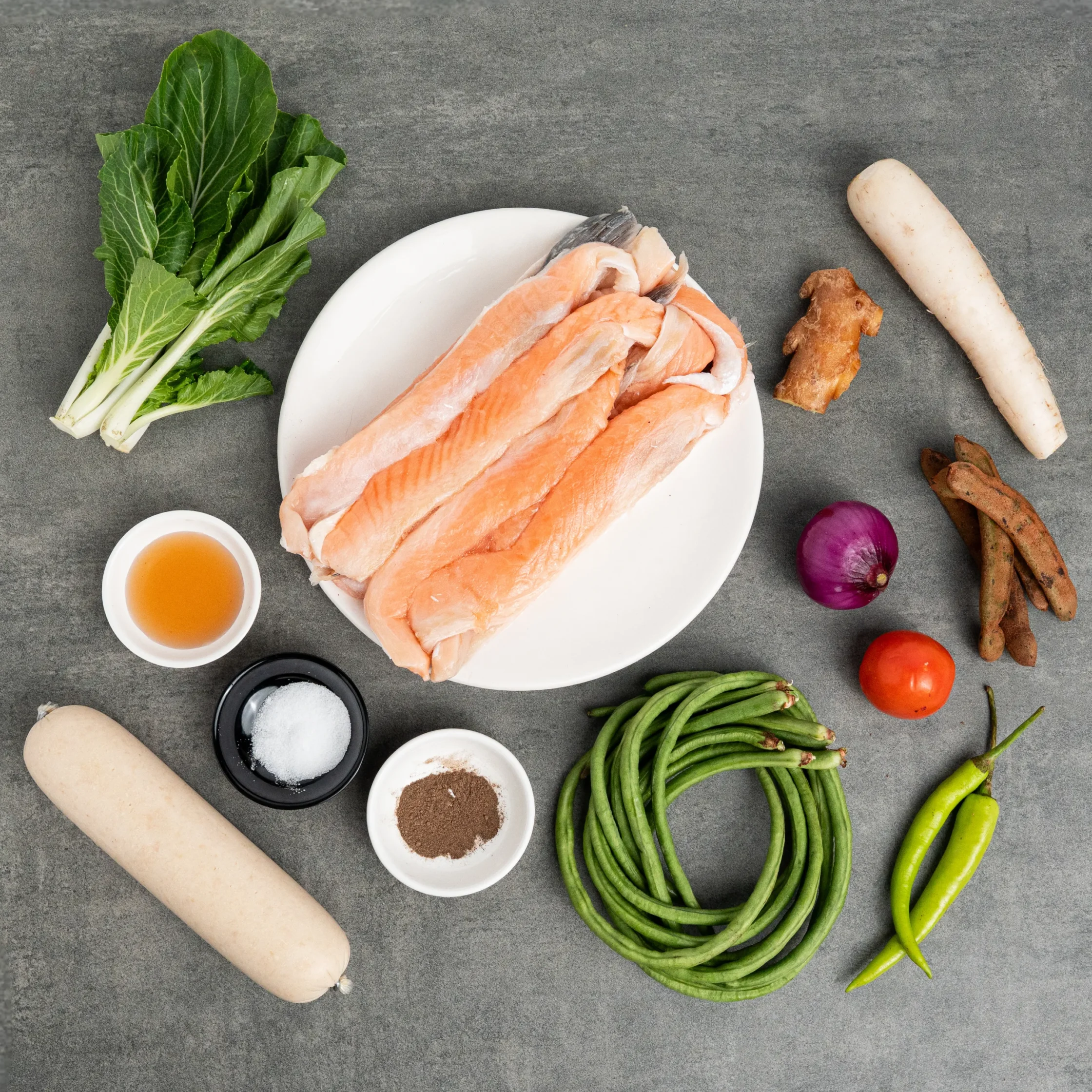
Salmon belly
Salmon belly is prized for its tender texture and relatively high fat content. During cooking, some of its natural fat enriches the soup, helping the broth feel fuller without the need for cream or other thickeners.
Choose salmon with a fresh, mild smell, moist flesh, and no unusual discoloration. Keep it refrigerated until you are ready to cook.
Miso paste
Miso is the ingredient that distinguishes this variation from many other sinigang recipes. Its fermented flavor adds complexity and balances the sharpness of tamarind.
Dissolving miso in a little warm broth before adding it to the pot helps prevent lumps and distributes its flavor evenly.
Tamarind
Tamarind gives sinigang its familiar sour taste. Fresh tamarind produces a fruity, rounded acidity, while commercial tamarind soup mixes offer convenience and a more standardized flavor.
The strength of fresh tamarind varies, so add the strained extract gradually and taste as you go.
Vegetables and aromatics
Radish absorbs the broth, sitaw provides a pleasant bite, and leafy greens brighten the soup. Tomatoes and onions build the base, while ginger adds fragrance that complements the salmon.
Adding vegetables in stages helps each ingredient reach the right texture without becoming overcooked.
Expert Recipe Tips for Better Sinigang sa Miso
1. Control the sourness gradually
Not all tamarind is equally sour. Start with a portion of the prepared extract, taste the broth, and add more until you reach your preferred level of acidity. A good sinigang should taste pleasantly sour without overwhelming the fish or miso.
2. Choose the right miso
White miso gives a milder, slightly sweet flavor, while yellow miso provides a deeper savory taste. If you are new to cooking with miso, start with 2–3 tablespoons, taste the broth, and increase the amount if needed.
3. Do not overcook the salmon
Salmon belly contains delicate flesh that can break apart if boiled too aggressively. Maintain a gentle simmer and avoid repeatedly stirring the pot after adding the fish.
4. Add fish sauce near the end
Fish sauce is best used as a final seasoning adjustment. Since both fish sauce and miso contain salt, adding all the seasoning at the beginning may result in a broth that is too salty.
5. Keep the vegetables fresh
Radish and sitaw can withstand longer cooking than leafy greens. Add ingredients according to their cooking times to preserve their individual textures.
6. Give the broth time to develop
Simmering the tomatoes, onion, and ginger before adding the fish allows their flavors to blend. This creates a more satisfying broth without requiring additional seasoning powders.
7. Balance richness with acidity
Salmon belly is naturally rich. If the soup feels too oily or heavy, a little extra tamarind extract can brighten it. Add only a small amount at a time to avoid making the broth excessively sour.
Ingredient Substitutions and Variations
One of the best things about Filipino home cooking is its flexibility. You can adjust Sinigang sa Miso according to the ingredients available in your kitchen without losing the dish’s essential character.
If you do not have fresh tamarind
Use tamarind paste or a commercial sinigang mix. Follow the package instructions and adjust the amount according to taste. Some mixes already contain salt and flavor enhancers, so reduce the fish sauce until you have tasted the finished broth.
If you do not eat salmon
Bangus, maya-maya, or other fish suitable for simmering can work well. Choose pieces that can hold their shape in hot broth. Leaner fish may produce a lighter soup, while fattier fish will create a richer one.
If you want a less oily soup
Use salmon fillet or a leaner fish instead of salmon belly. You can also skim some excess oil from the surface before serving.
If you want a spicier version
Add another green chili or slice one lengthwise to release more heat. Add it gradually, because chilies differ considerably in spiciness.
If you want a more vegetable-rich version
Add kangkong, okra, eggplant, or green papaya. Adjust the cooking order according to how quickly each vegetable softens.
Nutritional Knowledge and Health Benefits
Sinigang sa Miso can be part of a balanced diet because it combines fish, vegetables, and a broth-based cooking method. Its nutritional value depends on the specific fish, miso, seasoning, portion size, and quantity of vegetables used.
Salmon: Protein and omega-3 fats
Salmon provides high-quality protein needed for muscle maintenance and tissue repair. It is also a source of omega-3 fatty acids, particularly EPA and DHA, which support normal cardiovascular and brain function.
Vegetables: Fiber, vitamins, and minerals
Radish, sitaw, tomatoes, and leafy greens contribute dietary fiber and various vitamins and minerals. Tomatoes provide vitamin C and carotenoids, while leafy greens can contribute folate, vitamin K, and other micronutrients.
Miso: Fermented flavor and plant-based nutrients
Miso contains fermented soybean ingredients and can contribute some protein and minerals. Its live microorganisms may be reduced by cooking, so the finished soup should not automatically be considered a probiotic food.
Broth: Hydration and satisfying flavor
The water-based broth contributes fluid to the meal, while the sour and savory flavors make the soup satisfying. The overall nutritional benefit depends on the amount of salt, miso, and fish sauce added.
Potential health benefits
Important nutritional considerations
- Supports muscle maintenance: Salmon supplies complete protein containing essential amino acids.
- Provides heart-supportive nutrients: Salmon’s omega-3 fats can contribute to a heart-healthy eating pattern.
- Helps increase vegetable intake: The mixture of greens, radish, tomatoes, and sitaw provides different micronutrients and fiber.
- Can fit into a balanced meal: A moderate portion of fish, plenty of vegetables, and a reasonable amount of broth can make a satisfying main dish.
- Provides dietary variety: Using different vegetables and protein sources throughout the week helps broaden the range of nutrients in your diet.
Sinigang sa Miso is not automatically low in sodium. Miso and fish sauce can both contribute substantial amounts of salt, so people who need to limit sodium should use reduced-sodium products when available, add seasoning gradually, and avoid making the broth excessively salty.
The salmon belly also contains more fat than many lean fish cuts. This is not inherently bad, but those monitoring their overall fat or calorie intake may prefer salmon fillet.
These benefits are general nutritional considerations rather than guarantees that the dish will prevent or treat a medical condition.
How to Store Sinigang sa Miso Properly
Because this recipe contains cooked fish, proper storage is especially important for food safety and maintaining the quality of the salmon.
At room temperature
Do not leave cooked Sinigang sa Miso at room temperature for more than 2 hours, or more than 1 hour if the surrounding temperature exceeds 32°C (90°F).
In a warm Philippine kitchen, refrigerating the soup promptly is particularly important.
In the refrigerator
- Transfer the soup to clean, shallow, airtight containers.
- Refrigerate within 2 hours of cooking.
- Keep the refrigerator at 4°C (40°F) or below.
- Consume within 3–4 days.
- Reheat only the portion you intend to eat whenever possible.
The salmon may become softer after storage, and the vegetables may lose some of their texture. These changes are normal, but discard the soup if it develops an unusual odor, appearance, or other signs of spoilage. Do not taste questionable leftovers to determine whether they are safe.
In the freezer
If you want to store the soup for longer, freeze it in airtight, freezer-safe containers.
- Cool and refrigerate the soup promptly before freezing; do not leave it out to cool for hours.
- Divide it into meal-sized portions.
- Label each container with the dish name and date.
- For best quality, use within approximately 2–3 months.
The soup may remain safe longer when continuously frozen at 0°F (-18°C) or below, but flavor and texture can deteriorate. Salmon and leafy vegetables may become softer after thawing.
How to reheat leftovers
- Thaw frozen soup in the refrigerator, or use a microwave defrost setting if you will reheat it immediately.
- Place the soup in a saucepan and heat it until it reaches 74°C (165°F).
- Stir gently so the broth heats evenly without breaking apart the salmon.
- Add a small amount of water if the broth has become too concentrated.
- Avoid repeatedly cooling and reheating the same batch.
For the best texture, cook the leafy greens separately or add fresh greens when reheating if you anticipate having leftovers.
Common Mistakes to Avoid
Even an uncomplicated soup can benefit from a little attention to detail. Avoiding these common mistakes can make your Sinigang sa Miso more flavorful and enjoyable.
- Adding too much miso at once: This may overpower the tamarind and make the broth too salty. Start with less if you are unfamiliar with your miso brand.
- Boiling the salmon aggressively: A hard boil can break the fish apart and produce a less attractive soup.
- Cooking the greens too early: Leafy vegetables cook quickly and may become dull in color and mushy in texture.
- Adding too much fish sauce before tasting: The broth may already contain enough salt from the miso.
- Using too little broth for the ingredients: The soup can become overly concentrated and may not provide enough liquid for serving.
- Leaving leftovers unrefrigerated: Fish soup should be cooled and stored promptly to reduce food-safety risks.
- Expecting every batch of tamarind to taste the same: Fresh souring ingredients vary, so taste the broth and adjust gradually.
Final Words: A Filipino Classic with a Savory Twist
Sinigang sa Miso with salmon belly is a beautiful combination of traditional Filipino sour soup and the rich, fermented flavor of miso. It offers the comforting qualities of familiar home cooking while introducing a deeper savory taste that complements the natural richness of salmon.
What makes this dish truly special is its balance. The tamarind provides brightness, the miso adds complexity, the ginger and tomatoes create an aromatic foundation, and the vegetables bring freshness and texture. The salmon belly ties everything together with its tender flesh and satisfying richness.
It is also a flexible recipe. You can use white or yellow miso, adjust the sourness to your liking, substitute other fish, and choose whichever vegetables are freshest at the market. With a little attention to cooking time and seasoning, even a simple pot of soup can become a memorable family meal.
Most importantly, Sinigang sa Miso reminds us that good food does not always require complicated techniques or expensive ingredients. Sometimes, the best meals come from a pot of simmering broth, fresh vegetables, carefully cooked fish, and flavors that feel familiar and comforting.
Whether served on a rainy afternoon, shared during a family gathering, or prepared for an ordinary weekday dinner, Sinigang sa Miso is more than just a soup—it is a celebration of Filipino resourcefulness, culinary creativity, and the warmth of eating together.
Cook it patiently, season it thoughtfully, and serve it with plenty of hot rice. The result is a nourishing, flavorful dish that can easily earn a place among your favorite Filipino home-cooked meals.