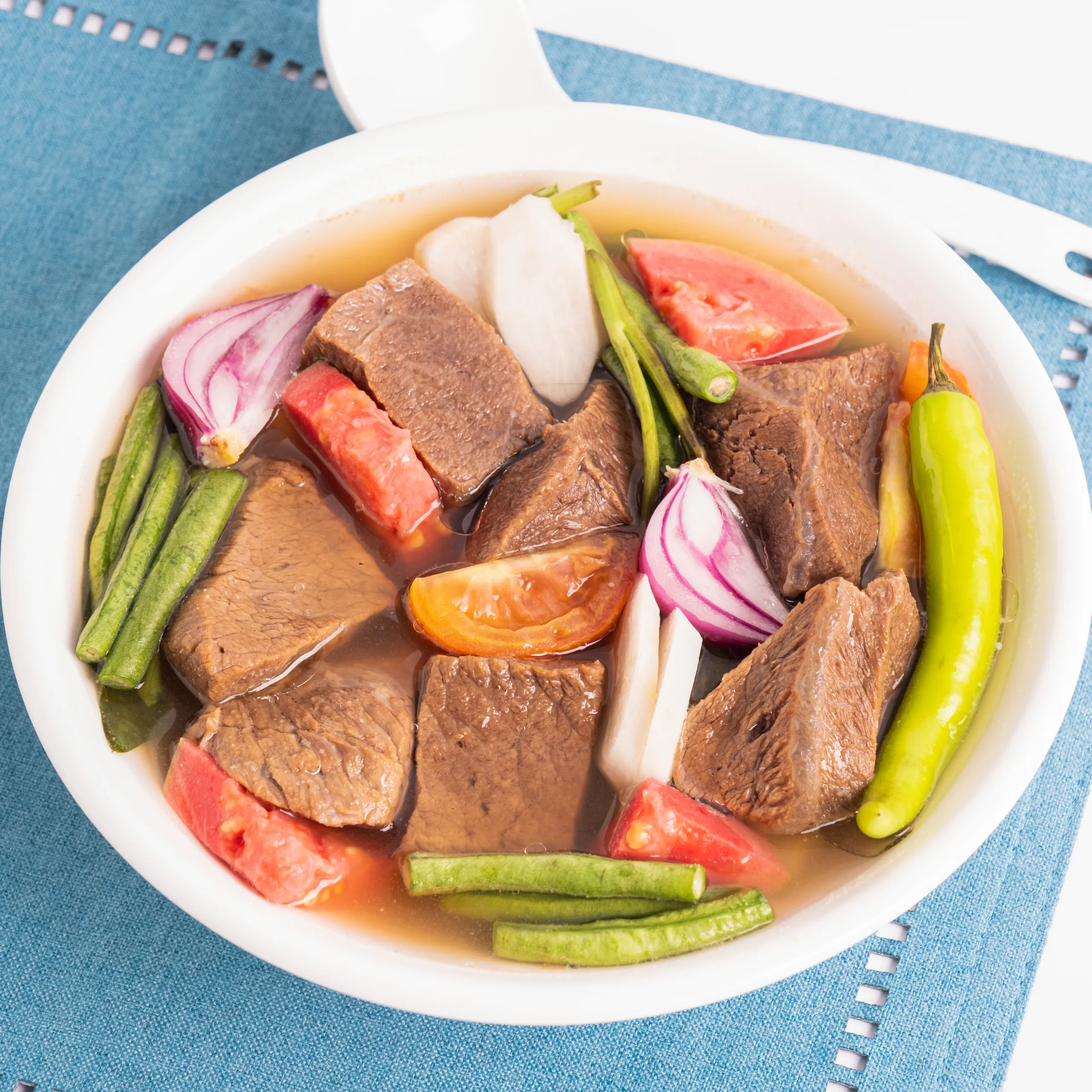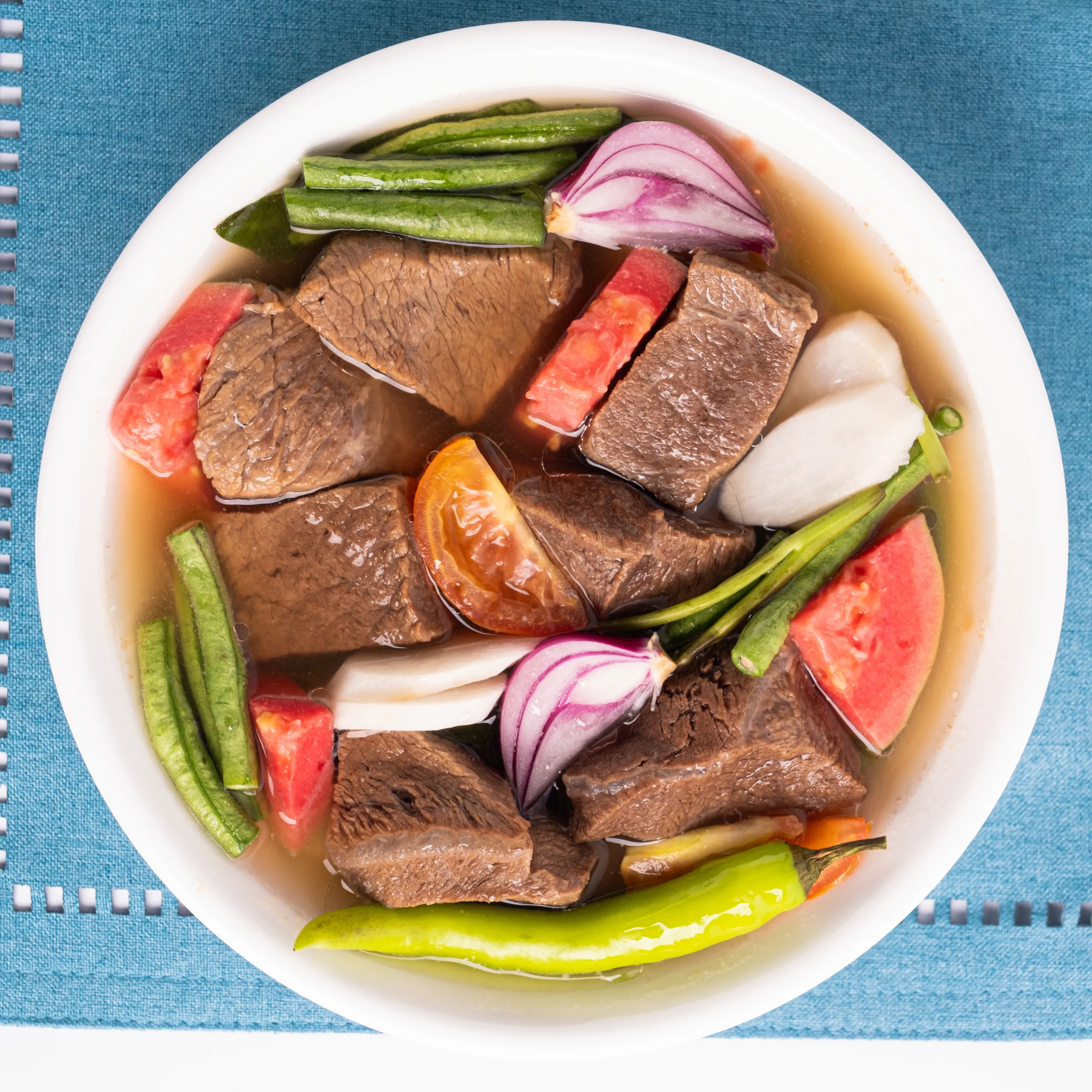
There is something comforting about a warm bowl of sinigang, especially when the weather is rainy, the day has been tiring, or the family is gathered around the dining table. For many Filipinos, sinigang is more than just a soup. It is a familiar home-cooked meal that brings together tender meat, fresh vegetables, and a flavorful broth that makes an ordinary meal feel special.
While sinigang is often associated with its signature sour taste from tamarind, there are other Filipino versions that use different fruits to create their own unique flavors. One of these is Beef Sinigang sa Bayabas, a traditional-style Filipino soup that uses ripe guavas to give the broth a gentle fruity sweetness, a pleasant aroma, and a naturally rich character.
Unlike the sharper sourness of tamarind-based sinigang, guava-based sinigang has a softer, more rounded flavor. Ripe guavas contribute sweetness and fragrance, while the beef slowly releases its savory juices into the broth. Onions and tomatoes add depth, radish provides a refreshing bite, sitaw brings a mild sweetness and crisp texture, and kangkong adds a fresh, leafy finish.
The result is a comforting soup that balances savory beef, tender vegetables, and the distinctive flavor of guava. Fish sauce adds the familiar salty, umami taste found in many Filipino soups, while green chilies provide a little warmth if you prefer a slightly spicy broth.
What makes this recipe especially appealing is that it uses simple ingredients that are commonly available in Filipino markets. You do not need a complicated cooking process or expensive seasonings to make a delicious pot of Beef Sinigang sa Bayabas. The key is allowing the beef enough time to become tender, using ripe but still firm guavas, and adding the vegetables at the right moment so they retain their natural flavor and texture.
Whether you grew up eating sinigang sa bayabas or are trying it for the first time, this recipe offers a wonderful way to enjoy a different side of Filipino cooking. Serve it hot with steamed rice, a little fish sauce on the side, and perhaps a few pieces of green chili for extra flavor. It is the kind of home-cooked dish that reminds us how satisfying simple, thoughtfully prepared food can be.
History and Background of Beef Sinigang sa Bayabas
The origins of sinigang in Filipino cuisine
Sinigang is one of the Philippines’ best-known traditional soups. It is recognized for its distinctive sour or pleasantly tangy broth, which is commonly prepared using tamarind, although other souring ingredients may also be used.
The exact origins of sinigang are difficult to trace to one particular person, place, or date. Instead, the dish reflects generations of Filipino home cooking, in which families made use of locally available vegetables, seafood, meat, and fruits to prepare nourishing meals.
Before commercially prepared soup mixes became common, home cooks relied on ingredients found in their gardens, farms, and local markets. Depending on the region and season, they used fruits such as tamarind, guava, kamias, or other souring ingredients to give soups their characteristic flavor.
Sinigang also demonstrates the Filipino preference for balancing different tastes. Sourness is often combined with the savory flavor of meat or seafood, the sweetness of vegetables, and the saltiness of fish sauce or other seasonings. This balance gives the dish its familiar yet adaptable character.
Over time, different households and regions developed their own versions. Some prefer pork sinigang, others prepare it with shrimp or fish, and many enjoy beef sinigang for its richer broth and hearty texture.
What makes sinigang sa bayabas different?
Sinigang sa bayabas uses guava instead of relying primarily on tamarind for its distinctive broth.
Guava is a tropical fruit widely grown in the Philippines. It is enjoyed fresh, used in beverages and preserves, and incorporated into various home-cooked dishes. Depending on the variety and ripeness, guava can have a sweet, mildly tart, fragrant, or slightly earthy flavor.
When simmered in soup, ripe guavas soften and release their flavor into the cooking liquid. Their pulp can also give the broth a slightly thicker or cloudier appearance, especially if the fruit is mashed or strained.
Unlike a strongly sour tamarind broth, a guava-based soup can have a gentler, fruitier taste. The flavor depends on the guava variety, how ripe the fruit is, and how much is used.
For this reason, sinigang sa bayabas is a good option for people who enjoy the comforting qualities of sinigang but want to explore a different flavor profile.
Why use beef in sinigang sa bayabas?
Pork, fish, and shrimp are common choices for sinigang, but beef offers a satisfying alternative.
Beef chuck is especially suitable because it contains connective tissue and some fat. When simmered slowly, the connective tissue gradually softens, helping the meat become tender and contributing body to the broth.
The beef’s savory flavor also complements the fruity aroma of guava. Instead of overpowering the fruit, a slow-cooked beef broth gives the soup a deeper taste that works well with radish, sitaw, kangkong, and tomatoes.
Although there is no single standardized recipe for Beef Sinigang sa Bayabas, this combination is a practical and flavorful way to prepare the dish at home.
What Is Beef Sinigang sa Bayabas?
Beef Sinigang sa Bayabas is a Filipino soup made by simmering beef with ripe guavas, onion, tomato, and vegetables until the meat is tender and the broth develops a balanced savory and fruity flavor.
The recipe combines three important elements:
- A hearty beef broth: Beef chuck provides savory flavor and a satisfying texture.
- A naturally fruity base: Ripe guavas contribute fragrance, gentle sweetness, and a mild tartness that varies with the fruit.
- Fresh vegetables: Radish, sitaw, and kangkong provide different textures, flavors, and nutrients.
Green chilies are optional and can add mild heat. Fish sauce brings out the savory character of the broth, while salt and pepper allow you to adjust the final seasoning.
This dish is commonly served as a main meal with steamed rice. The rice absorbs the flavorful broth, making each serving filling and comforting.
One important detail is that guava does not always provide enough acidity to produce the distinctly sour flavor some people expect from sinigang. If you prefer a tangier soup, you can add a small amount of tamarind or another suitable souring ingredient near the end of cooking.
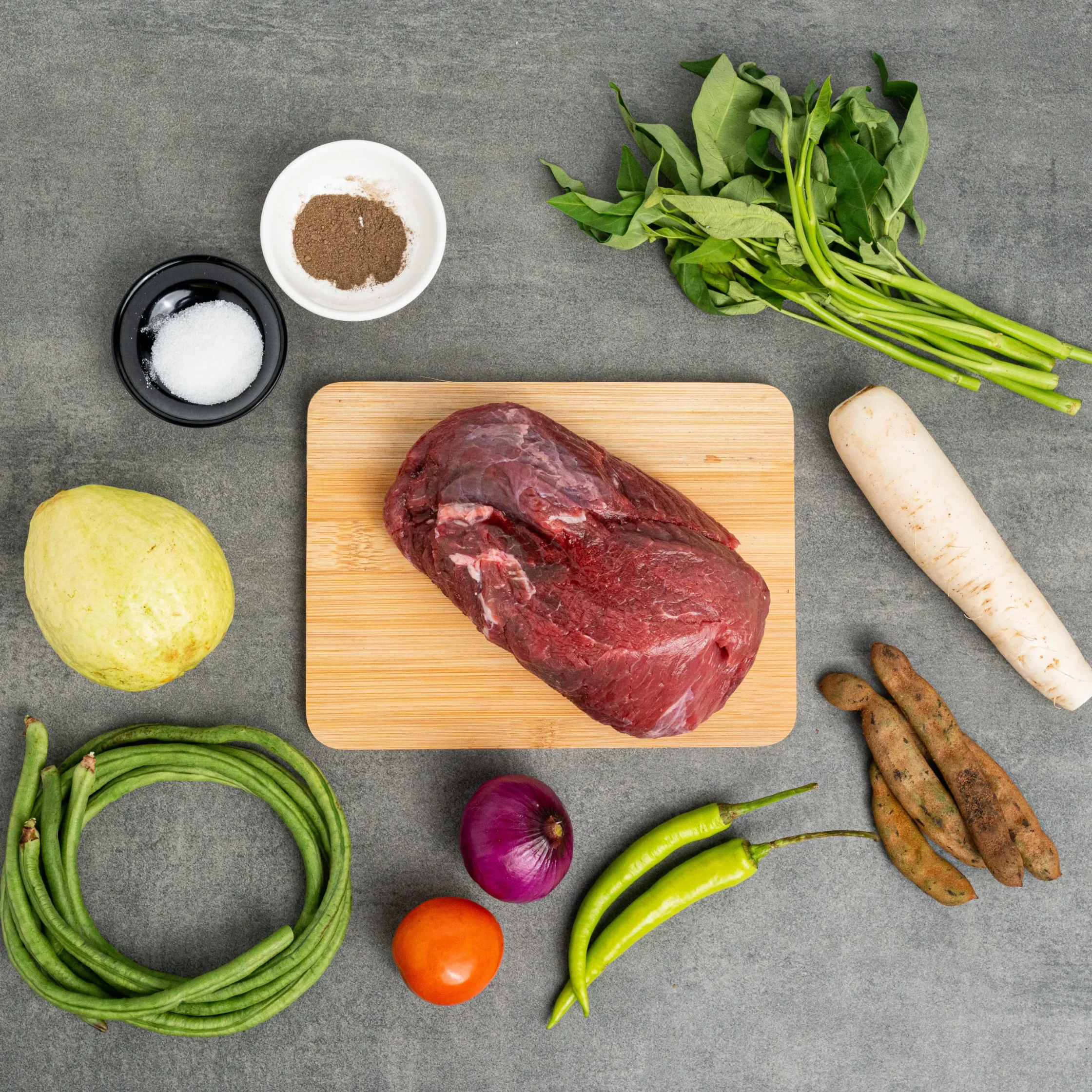
Understanding the ingredients
Beef chuck: This cut is flavorful and well suited to slow cooking. Its connective tissue softens over time, making the meat tender and giving the broth a fuller body.
Water: Water forms the base of the soup. Four cups provide a starting point, but you may need additional water because beef requires time to simmer and some liquid will evaporate.
Ripe guavas: Guavas give the dish its distinctive fragrance and mild fruity flavor. Choose fruit that is fragrant and ripe but still firm enough to handle without falling apart immediately.
Onion: Onion adds sweetness and depth to the broth as it softens during simmering.
Tomato: Tomato contributes a gentle acidity, color, and savory flavor that complements the guava.
Radish: Radish absorbs the broth while retaining a pleasant texture when cooked properly. It also provides a refreshing contrast to the rich beef.
Sitaw: Also known as yardlong beans, sitaw adds a mild vegetable sweetness and a slightly firm texture.
Green chilies: These are optional. They provide warmth without necessarily making the entire soup very spicy, depending on the variety used.
Kangkong: Water spinach adds a fresh, leafy taste. It cooks quickly, so it should be added near the end.
Fish sauce: Fish sauce contributes saltiness and umami. Different brands vary in strength, so it is best to add it gradually.
Salt and pepper: These seasonings help balance the broth and should be adjusted after the other ingredients have simmered together.
Recipe Tips for Better Beef Sinigang sa Bayabas
Even a simple soup can taste noticeably better when you pay attention to ingredient quality, cooking time, and seasoning.
1. Choose the right cut of beef
Beef chuck is a good choice because it contains connective tissue that gradually softens during slow cooking. Beef brisket or shank can also work, although each cut has a different texture and may require a different cooking time.
Lean cuts that are intended for quick cooking may become dry or remain tough if handled in the same way as a slow-cooking cut.
2. Do not rush the beef
Tender beef is one of the most important features of this recipe. If the meat remains chewy, continue simmering it rather than turning up the heat excessively.
A steady, gentle simmer helps break down connective tissue without reducing the broth too quickly.
3. Choose guavas according to the flavor you want
Ripe guavas provide a more fragrant, sweeter flavor, while less-ripe guavas may taste more tart or astringent.
For this recipe, choose fragrant fruit that gives slightly when pressed but is not mushy or spoiled. The variety of guava also affects how sweet or acidic the broth becomes.
4. Remove guava seeds if you prefer a smoother soup
Guava seeds are generally hard and can make the soup less pleasant to eat. Straining the softened pulp is a useful option if you want the guava flavor without the seeds.
You do not need to strain the entire broth. Simply mash and strain the cooked guava separately, then return the pulp to the pot.
5. Add vegetables in stages
Different vegetables have different cooking times. Radish needs more time than kangkong leaves, while sitaw generally takes only a few minutes to become tender.
Adding vegetables in stages helps prevent them from turning mushy while the beef finishes cooking.
6. Adjust the broth according to the fruit
Guava varies in sweetness and acidity. Taste the broth after the fruit has simmered rather than assuming every batch will produce the same flavor.
If the broth is very sweet, add a little souring ingredient. If it is already pleasantly tart, additional souring may not be necessary.
7. Use fish sauce carefully
Fish sauce contributes a distinctive savory flavor, but too much can make the broth overly salty. Start with one tablespoon, taste, and add more only if needed.
If you use a particularly salty brand, you may not need the full two tablespoons.
8. Keep the vegetables colorful and fresh
Avoid simmering the kangkong for too long. Adding it near the end helps preserve its texture and color.
Similarly, add the sitaw late enough that it remains pleasantly firm instead of becoming overly soft.
9. Use enough water for slow cooking
Four cups of water is a starting point. Because beef chuck takes time to soften, you may need more liquid during cooking.
Add hot water as necessary to maintain the amount of broth you want. Adding hot water also avoids unnecessarily cooling the pot and slowing the cooking process.
10. Let the soup rest briefly before serving
Allowing the soup to rest for a few minutes after cooking can help the temperature settle and make serving easier. However, do not leave it at room temperature for an extended period.
Ingredient Substitutions and Variations
One of the pleasures of Filipino home cooking is that recipes can be adapted to suit the ingredients available in the market. If you cannot find every ingredient listed, the following substitutions can help.
Can I use pork instead of beef?
Yes. Pork ribs, pork shoulder, or other cuts suitable for simmering can be used with guava. Pork generally cooks faster than some beef chuck preparations, so check the tenderness and adjust the cooking time.
The finished soup will have a different flavor, but the guava and vegetables will still work well.
Can I use chicken?
Chicken can also be used, although it will produce a lighter broth and usually requires less cooking time than beef chuck. Use pieces appropriate for soup and ensure the chicken is fully cooked before serving.
What if I cannot find fresh guavas?
Unsweetened guava puree or pulp may work. Choose a product without added sugar if possible, because sweetened puree can make the broth taste more like a fruit soup than savory sinigang.
Start with a modest amount, taste the broth, and add more as needed. If the product contains seeds or thick pulp, strain it before adding it to the soup.
Can I use sinigang mix instead of guava?
You can, but the dish will become a different version of sinigang. Commercial sinigang mixes are usually designed to provide a pronounced sour flavor, while this recipe highlights the fragrance and sweetness of guava.
If you want to preserve the guava character while adding more acidity, use a small amount of souring mix rather than replacing all the guava.
Can I make the soup without fish sauce?
Yes. Add salt gradually, or use a little soy sauce if you do not mind a darker broth and a different flavor profile. The fish sauce contributes more than saltiness, so the result will not taste exactly the same.
For a vegetarian-friendly alternative, a small amount of suitable mushroom seasoning can provide some savory depth, but the beef would also need to be replaced to make the whole dish vegetarian.
Can I add more vegetables?
Absolutely. Eggplant, okra, pechay, or other vegetables can be included depending on your preferences.
However, consider the cooking time of each vegetable. Add firmer vegetables earlier and leafy vegetables near the end so that the finished soup retains a pleasant mixture of textures.
Understanding Guava and Its Role in the Dish
Guava is a tropical fruit that grows well in warm climates, including the Philippines. It is enjoyed fresh and used in juices, jams, desserts, and various cooked preparations.
Its flavor varies considerably depending on the variety and ripeness. Some guavas are sweet and fragrant, while others are more tart. The flesh may be white, pink, or reddish, and the seeds are typically small and hard.
In Beef Sinigang sa Bayabas, guava contributes several important qualities.
1. It provides a fruity aroma
As the guava simmers, its aromatic compounds are released into the broth. This gives the soup a different character from tamarind-based sinigang.
2. It contributes natural sweetness
Ripe guava contains natural sugars. These help balance the savory flavor of the beef and the salty seasoning, although the amount of sweetness depends on the fruit.
3. It can contribute mild acidity
Guava contains organic acids, but the level of acidity varies. Some fruits may provide a noticeable tang, while others produce a much sweeter broth.
For that reason, you should taste the soup before deciding whether it needs additional souring ingredients.
4. Its pulp can add body
Softened guava pulp can make the broth appear slightly cloudy or give it a fuller texture. Straining the fruit allows you to retain some of its flavor while removing the seeds and tougher pieces.
5. It connects the recipe to local ingredients
Using guava is a practical example of incorporating locally available fruit into everyday cooking. It allows home cooks to explore a traditional flavor combination without relying entirely on commercial seasoning mixes.
Health Benefits and Nutritional Value
Beef Sinigang sa Bayabas can provide a variety of nutrients because it combines beef, guava, and vegetables in one meal. However, the exact nutritional content depends on the cut of beef, the amount of fat, the size of each serving, and the amount of fish sauce and salt used.
1. Protein for body maintenance
Beef provides high-quality protein, which the body needs to build and repair tissues and maintain muscle. Protein also supports many normal body functions.
2. Iron and vitamin B12 from beef
Beef supplies iron, including heme iron, which is generally absorbed more readily than the non-heme iron found in many plant foods. It also provides vitamin B12, which is important for normal nerve function and red blood cell formation.
The amount of these nutrients varies with the cut of beef and the serving size.
3. Vitamin C from guava
Guava is known for its vitamin C content. Vitamin C supports normal immune function, collagen formation, wound healing, and the absorption of non-heme iron from plant foods.
Some vitamin C can be lost during prolonged heating, so the amount retained in the finished soup will depend on the cooking method and time.
4. Fiber and other nutrients from vegetables
Radish, sitaw, kangkong, tomato, and guava contribute varying amounts of dietary fiber and other nutrients.
Fiber supports digestive health and can help promote regular bowel movements. Vegetables also provide vitamins, minerals, and plant compounds that contribute to a varied diet.
5. Fluids from the broth
Soup contributes fluid to the diet, which supports hydration. The water content of the broth and vegetables can make this dish a satisfying part of a meal.
6. A balanced combination of food groups
When served with a reasonable portion of rice, Beef Sinigang sa Bayabas provides protein from beef, carbohydrates from rice, and a variety of nutrients from the vegetables and guava.
Adding a generous amount of vegetables can increase the fiber and variety of the meal.
Health considerations
Although this dish can be nutritious, a few factors are worth considering:
- Sodium: Fish sauce and added salt can make the broth high in sodium. Use less fish sauce if you need to limit sodium intake.
- Saturated fat: Beef chuck can contain a noticeable amount of fat. Trimming visible fat before cooking may reduce the fat content.
- Portion size: A balanced portion of beef with plenty of vegetables can help you enjoy the dish as part of a varied diet.
- Individual dietary needs: People following a prescribed diet for kidney disease, hypertension, or another health condition may need to adjust the ingredients and serving size according to professional advice.
It is important not to treat Beef Sinigang sa Bayabas as a cure or treatment for illness. Its benefits come from the nutrients it contributes as part of an overall balanced eating pattern.
How to Store Beef Sinigang sa Bayabas Properly
Because this recipe contains cooked beef and vegetables in broth, it should be handled carefully to keep it safe and maintain its quality.
Storing leftover soup in the refrigerator
- Allow the soup to stop steaming heavily, but do not leave it sitting out for a long time.
- Divide large quantities into shallow, clean containers so they cool more quickly.
- Refrigerate within two hours of cooking, or within one hour if the surrounding temperature is above 32°C (90°F).
- Keep the refrigerator at or below 4°C (40°F).
- Eat refrigerated leftovers within three to four days.
You do not need to wait until the soup reaches room temperature before refrigerating it. Placing a large, very hot pot directly in the refrigerator can cool it too slowly, so shallow containers are generally a better option.
Freezing Beef Sinigang sa Bayabas
If you have prepared more soup than you can eat within a few days, freezing is a practical option.
- Divide the soup into meal-sized portions.
- Use airtight, freezer-safe containers or suitable freezer bags.
- Leave a little space at the top of rigid containers because liquids expand when frozen.
- Label each container with the date.
- Freeze at −18°C (0°F) or below.
For best quality, aim to use frozen leftovers within about two to three months. Food that has been kept continuously frozen may remain safe longer, but its texture and flavor can deteriorate over time.
The beef generally freezes well, although the vegetables may soften after thawing. Kangkong in particular may lose some of its original texture.
How to reheat the soup
For refrigerator-stored leftovers, transfer the amount you plan to eat into a saucepan and heat until the soup reaches a full simmer and the beef is thoroughly hot.
For food safety, reheated leftovers should reach 74°C (165°F). Stir carefully to distribute the heat evenly, particularly if the soup contains large pieces of beef.
If the broth has become too concentrated during storage, add a little water while reheating and adjust the seasoning if necessary.
For frozen soup, thaw it in the refrigerator overnight or use a microwave’s defrost setting if you plan to reheat it immediately. Avoid thawing the soup on the counter.
Can I store the soup with all the vegetables?
Yes, but some vegetables will soften as they sit in the broth. If you are preparing the dish specifically for future meals, you may cook the vegetables slightly less than usual or add fresh leafy greens when reheating each portion.
Do not undercook the beef or other ingredients for storage. Prepare the soup safely, refrigerate it promptly, and adjust the vegetables for quality rather than compromising food safety.
Can I leave sinigang out overnight?
No. Beef Sinigang sa Bayabas should not be left at room temperature overnight. Bacteria can grow in cooked food held at unsafe temperatures, and reheating may not eliminate every hazard associated with improper storage.
If the soup has been left out beyond the recommended time limits, discard it rather than relying on smell, taste, or appearance to judge whether it is safe.
Final Words: Enjoying the Comfort of Beef Sinigang sa Bayabas
Beef Sinigang sa Bayabas is a reminder that Filipino cooking is full of variety, creativity, and comforting flavors. While many people immediately think of tamarind when they hear the word sinigang, guava offers another way to prepare this familiar soup. Its fragrance and gentle sweetness create a different kind of broth, one that pairs beautifully with tender beef and fresh vegetables.
What makes this recipe enjoyable is the way its ingredients work together. The beef provides richness, the guava brings a fruity character, the tomato and onion build flavor, and the radish, sitaw, and kangkong add texture and variety. With a little fish sauce and carefully adjusted seasoning, these simple ingredients become a satisfying meal that is suitable for an ordinary family lunch or dinner.
The recipe also leaves plenty of room for personal preference. You can make the broth sweeter or more sour, add green chilies for warmth, use a different cut of beef, or include additional vegetables from your local market. These small adjustments allow you to make the dish your own while keeping its essential character.
For the best results, remember to simmer the beef until tender, use good-quality guavas, add vegetables according to their cooking times, and taste the broth before making final seasoning adjustments. Store any leftovers safely so you can enjoy the soup again without compromising food safety.
Serve your Beef Sinigang sa Bayabas hot with steamed rice and share it with the people you love. Like many Filipino home-cooked dishes, its appeal lies not only in its flavor but also in the comfort of sitting down to a warm meal prepared with care.
In the end, Beef Sinigang sa Bayabas is more than a bowl of soup. It is a celebration of local ingredients, family cooking, and the beautiful variety of Filipino food. Whether it reminds you of meals from childhood or introduces you to a new version of sinigang, this recipe is an invitation to slow down, enjoy good food, and appreciate the simple pleasures of a homemade meal.