

Tucked between restaurants serving global cuisine, this matcha café in BGC is easy to miss—but its story runs deep.
Chotto Matcha, founded by sisters Sakura and Misaki Motohashi, the idea to open a matcha cafe came about after spending some time with family in Japan during the pandemic when “matcha wasn’t even a big thing yet in the Philippines.”
“Our grandparents are based in Shizuoka,” shares Sakura. “Many of their friends are tea farmers with fields near their home.” There, they met their grandmother’s friends and learned about tea farming. “That’s when we heard firsthand what was really happening,” she says. “Demand [for green tea] was going down, farmers were getting older, and there was no one to take over. Hearing it directly from someone we knew made it very real for us.”
Learning more about tea farming and meeting the people who put in time and effort into growing tea made them appreciate this part of their Japanese heritage. Growing up in the Philippines and spending a lot of time abroad opened their eyes. “We noticed that many Japanese things that were seen as ‘declining’ in Japan were actually being valued overseas,” says Sakura. “But the value wasn’t going back to the people who made it, especially the farmers. There was global demand, but they weren’t always connected to it.”
It was this disconnect that inspired the sisters to do something bigger. “We wanted to bring Japanese culture to the world in a way that also supports the people behind it.”
How Chotto Matcha Adapted Japanese Matcha for Filipino Palates
Coming out from a pandemic may not have been the ideal time to start a business.”We had to build the market from scratch,” says Sakura. “At the time, people didn’t really understand matcha, and drinking habits were very different. In the Philippines, people are more used to sweeter, more indulgent drinks like frappes rather than something like pure tea.”
The Motohashi sisters knew they had to localize the experience and present matcha in a more familiar and approachable way while upholding its identity and without compromising quality. “Balancing authenticity with what people actually enjoy was one of our biggest challenges,” they say.
Alongside the growing appreciation of matcha among their peers, they were also able to build their customer base. “As a younger generation, we feel like we can reintroduce these traditions in a way that connects with people today. Being able to connect culture, people, and global markets and give something new life is what drives us,” shares Sakura.
What’s on the Chotto Matcha Menu: Lattes, Dirty Matcha, and Mochi
Though seating was limited, two staff members behind the counter were busy attending to a steady stream of customers ordering drinks to-go. While one takes orders and payments, the other whisked bowl after bowl of matcha creations tailored to different tastes and preferences. It was a pleasant surprise to see the counter constantly active, yet no one had to wait too long for their drink. Much like the careful harvesting of tea leaves, our visit to Chotto Matcha that day felt like perfect timing.
Matcha is meant to be savored slowly. It invites the drinker to pause, breathe, and simply be.
In this Chotto Matcha branch, however, finding that little pocket of calm in the day can be a challenge. Located on the ground floor of Bellagio 2 beneath a busy tutorial center, the café sees a constant flow of students of all ages coming and going every few minutes.
The menu, designed almost like a mini magazine, spans several pages. It begins with classic matcha drinks before moving into more playful combinations featuring fruits and other flavors. Iced drinks come in two sizes, while hot drinks are served in single 8 oz. cup. There’s also an impressive dessert selection—from slices of cake, cookies, and French pastries to pastel-colored mochi that looked irresistibly pillow-soft.
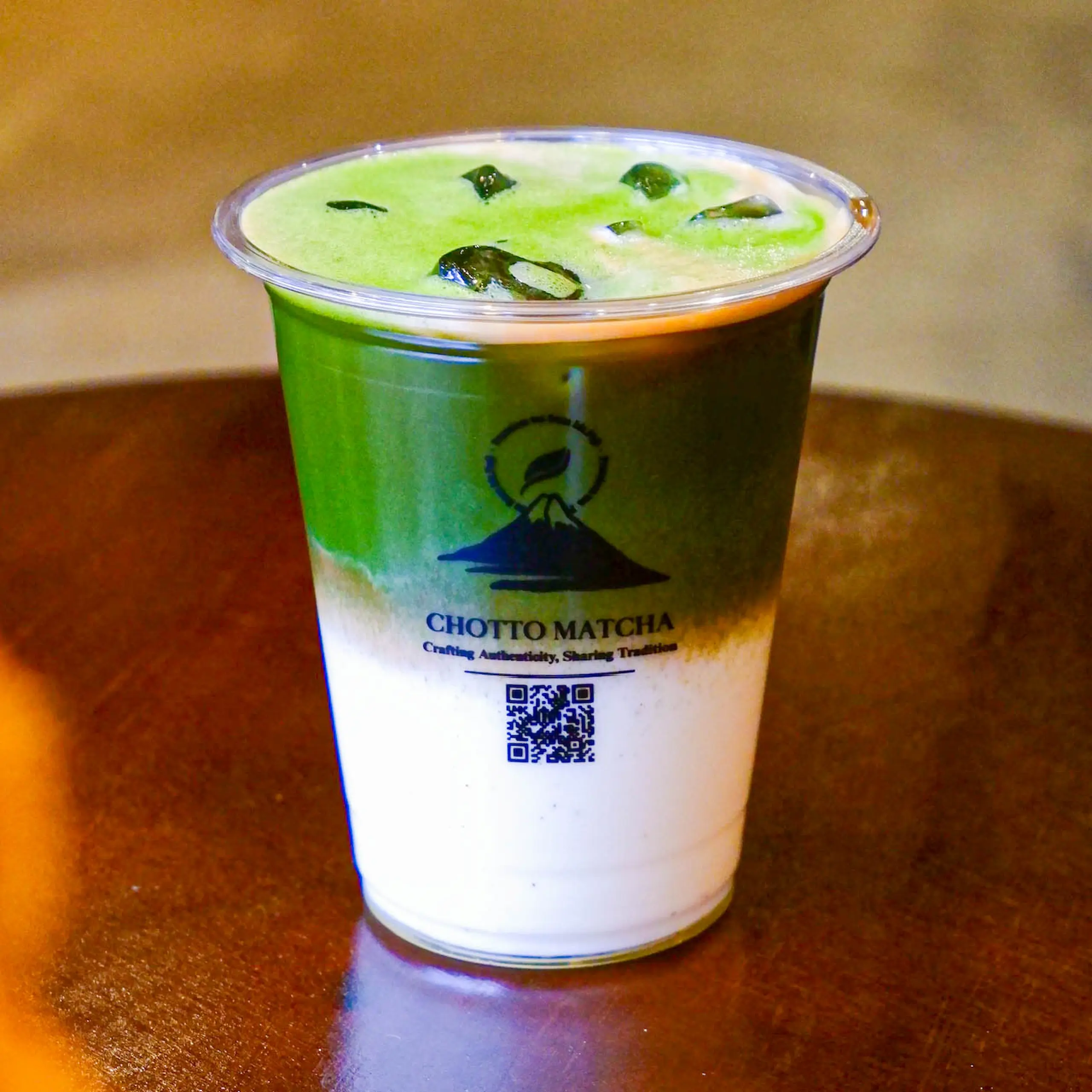
Initially undecided between coffee and matcha, I was delighted to find a Dirty Matcha Latte (₱ 240) on the menu. Naturally, I added an Iced Authentic Matcha Latte (₱ 205) as well—because why not?
If you’re new to matcha, the classic latte is a safe and satisfying place to start. The Iced Authentic Match Latte, on the other hand, delivered exactly what a good craving calls for: a satisfying, balanced matcha experience. The Dirty Matcha Latte, however, was harder to judge. There simply wasn’t enough of it in the cup to leave a lasting impression, so a second visit may be required.
The Chotto Matcha Ceremony Kit: Bringing Japanese Tea Ritual Home
“We want Chotto Matcha to be more than just a brand,” says Sakura. “We see it as a hub for Japanese culture.” And it seems that the Motohashi sisters are effectively doing just that even beyond the walls of their cafes.
Matcha enthusiasts nowadays go beyond simply ordering a cup to enjoy onsite. Many have embraced the ritual of preparing their own at home, savoring the full experience of making this special tea within the comfort of their space.
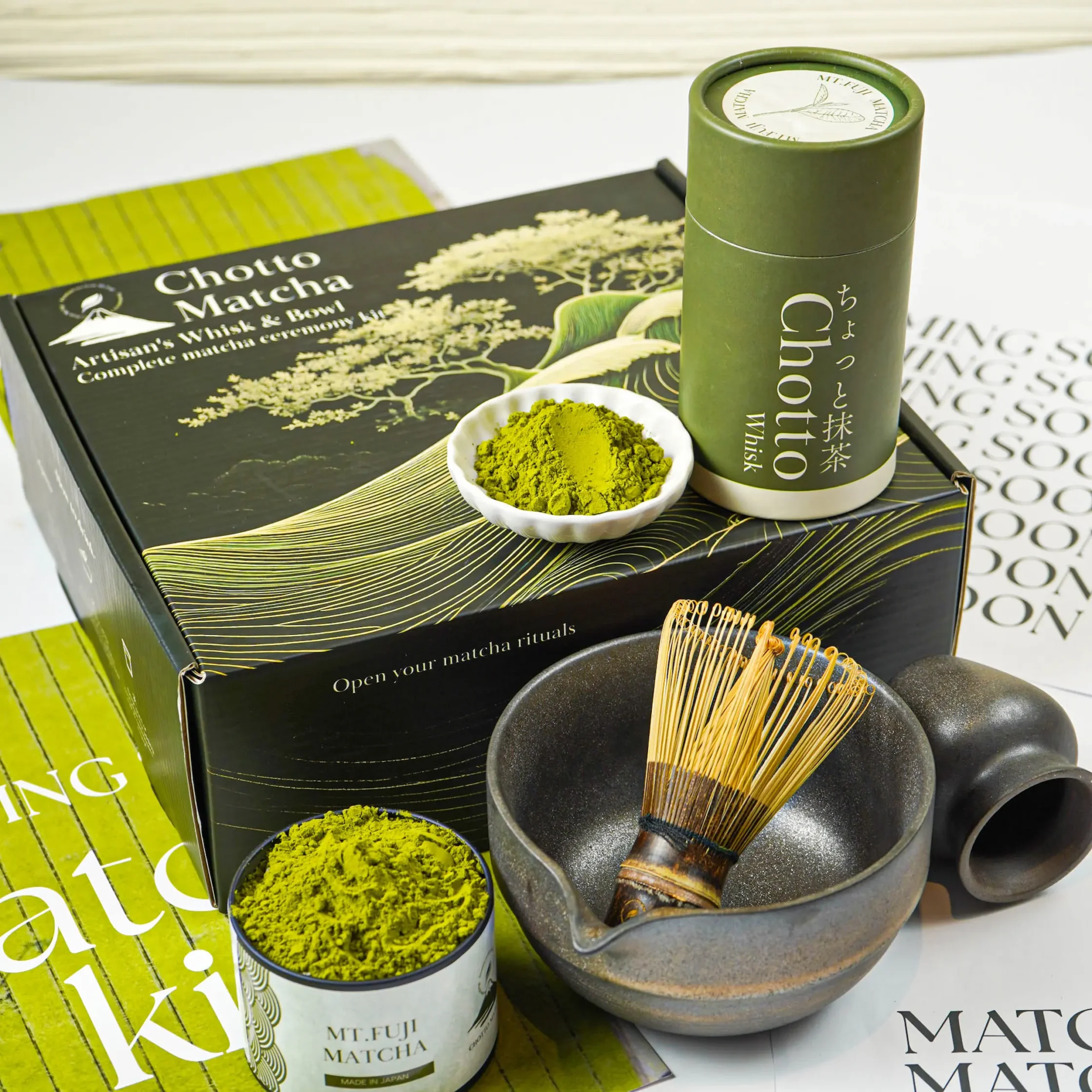
Chotto Matcha seems to have these tea purveyors in mind as well. Their Complete Matcha Ceremony Kit (₱4545.45) includes a 30g can of Mt. Fuji Matcha Powder—single-origin and hand-harvested from small farms at the base of Mt. Fuji—a traditional 100-prong bamboo chasen whisk, a matcha bowl perfectly shaped for whisking and sipping, and a whisk holder to keep the chasen in top shape for the next cup.
As the Chotto Matcha sisters intended, it gives the drinker the chance “to take part in something meaningful.” With every cup of matcha made, one is able to support these small tea farms and share their stories. In their own way, Sakura and Misaki are creating new ways for people around the world to connect with the tea farmers they met way back during the pandemic. “The goal is to build something sustainable where global appreciation turns into real support for these communities,” they share. By connecting Filipino consumers with Japanese tea farmers, the brand adds meaning to every cup—something that resonates with today’s more conscious, experience-driven audience.
Chotto Matcha is located at Bellagio 2, 2-3 Forbestown Road, Bonifacio Global City, Taguig and at Arcovia Parade, C-5 Pasig City.

Frequently Asked Questions
A great spot to explore in BGC is Chotto Matcha in Forbestown, Taguig. Known for matcha sourced from organic farms near Mt. Fuji, it offers signature drinks like the Dirty Matcha Latte, classic matcha lattes, desserts, and even a complete ceremony kit for home brewing.
An iced or hot matcha latte is the best starting point. It balances the earthy flavor of matcha with milk for a smoother taste. Popular picks at Chotto Matcha include the Iced Authentic Matcha Latter for a classic, balanced matcha experience. For those who enjoy coffee and tea in one cup, a popular pick is the Dirty Matcha Latte.
Yes, especially because the menu ranges from classic lattes to more creative fruit-based matcha drinks, making it easy for first-timers and seasoned matcha drinkers alike to find something suited to their taste.
Yes. Aside from drinks, the café also offers cakes, cookies, pastries, and mochi, along with a Complete Matcha Ceremony Kit for those who want to recreate the ritual at home.
Yes. Matcha has become increasingly popular in Metro Manila, with many cafés offering both traditional and modern matcha drinks.
Japanese matcha, especially from regions like Shizuoka, is known for its high quality, vibrant color, and umami-rich flavor due to traditional farming and processing methods.
Yes. You can use a matcha whisk (chasen), bowl, and high-quality powder to prepare matcha traditionally at home.