Advertisement

How to Reheat Pizza Without a Microwave (And Actually Make It Taste Fresh)

Bringing your leftover pizza back to its fresh-out-of-the-box glory isn’t as hard as it sounds!

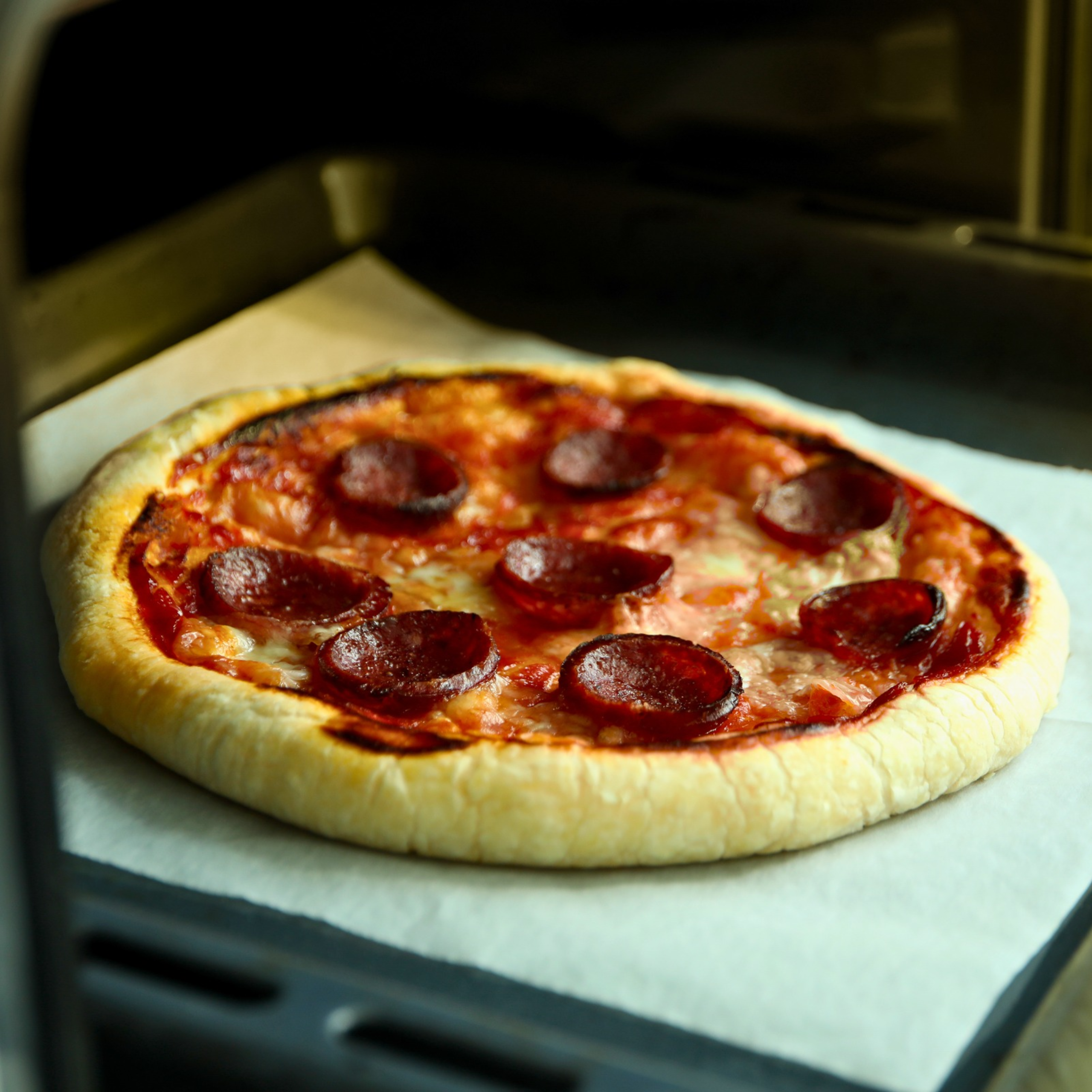
A freshly baked pepperoni pizza with a thick golden crust sits on parchment in an oven, its melted cheese and browned toppings warm and inviting.
Can leftover pizza ever truly taste fresh out of the oven again?

When you want a hot slice of leftover pizza with bubbly cheese and a crisp crust, the microwave is usually the worst tool for the job. 

Using your microwave to reheat your pizza ultimately leaves you with a rubbery, soggy slice.

You can skip the microwave entirely by using these three basic kitchen tools and appliances. Bring leftover slices back to life, sometimes tasting even better than when they first arrived in the box.

1. Oven or Oven Toaster

This is what personally first comes to mind at least for me. My household has been using a toaster oven ever since I can remember.

The logic of opting for an oven or toaster oven is if you are intending to reheat more than a single slice. It handles bulk reheating effortlessly.

Set your oven or toaster oven to 190°C. Place a baking sheet inside while it preheats. When you put cold pizza onto a hot surface, it jumpstarts the crisping process.

Bake for 8 to 10 minutes until the cheese is bubbling and the edges are crisp. 

For a toaster oven, keep a close eye on it around the 6-minute mark since the heating elements sit closer to the toppings.
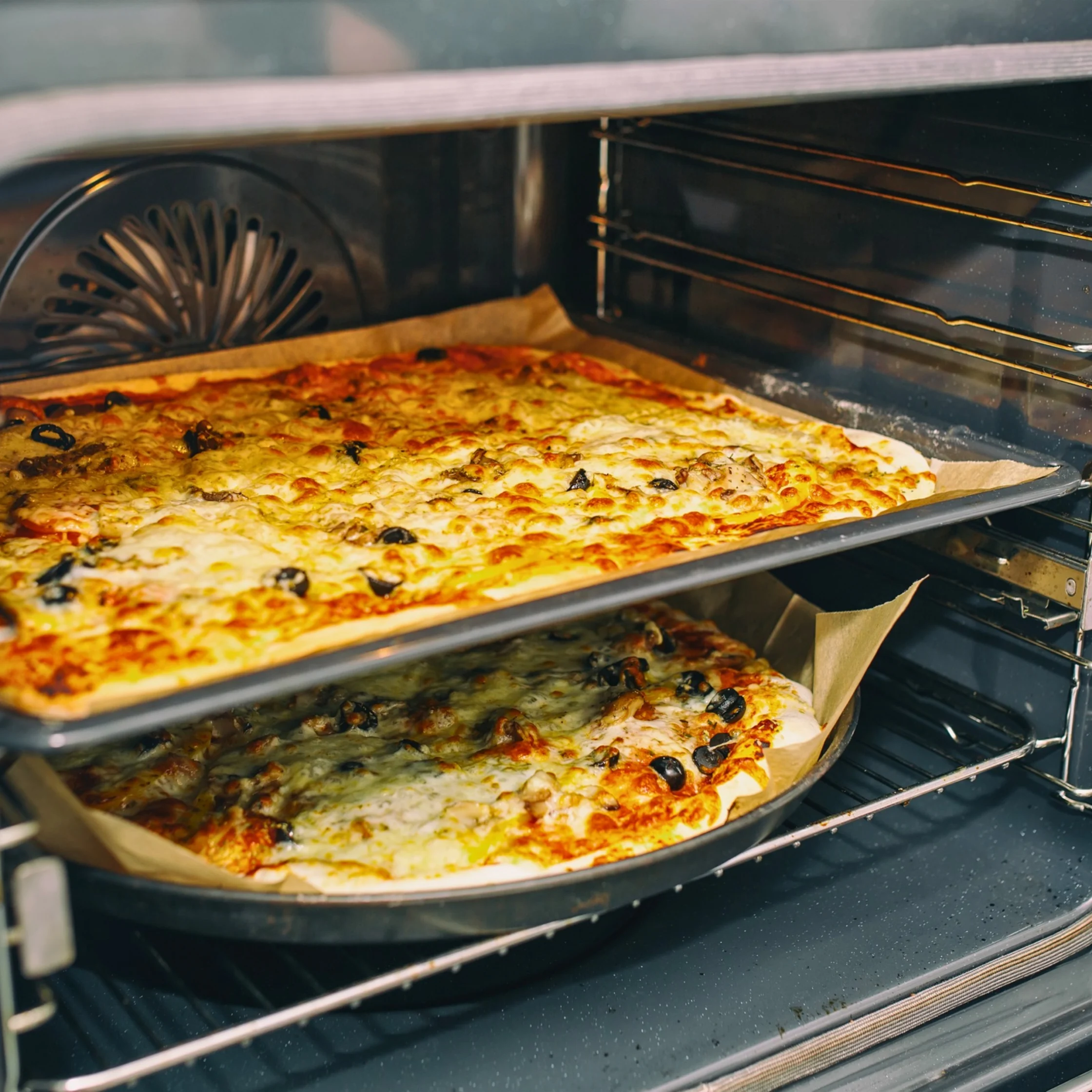
Oven or Oven Toaster
Use an oven or toaster oven for reheating in bulk.

2. Air Fryer

Out of the three, using an air fryer is the fastest method. It circulates intense, dry heat, making it ideal for reheating one or two slices in just a few minutes. Plus, it does this without turning the crust too hard and leather-like. 

Start by preheating your air fryer to 175°C. If your model doesn’t require preheating, just add an extra minute to the overall cooking time.

Place the slices in the basket. Avoid overlapping them so air can circulate evenly. Then, air fry them for 3 to 5 minutes. Make sure to check up on them on the 3-minute mark. Thin-crust slices take a little over 3 minutes, while thicker-crust or deep-dish slices need the full 5 minutes.
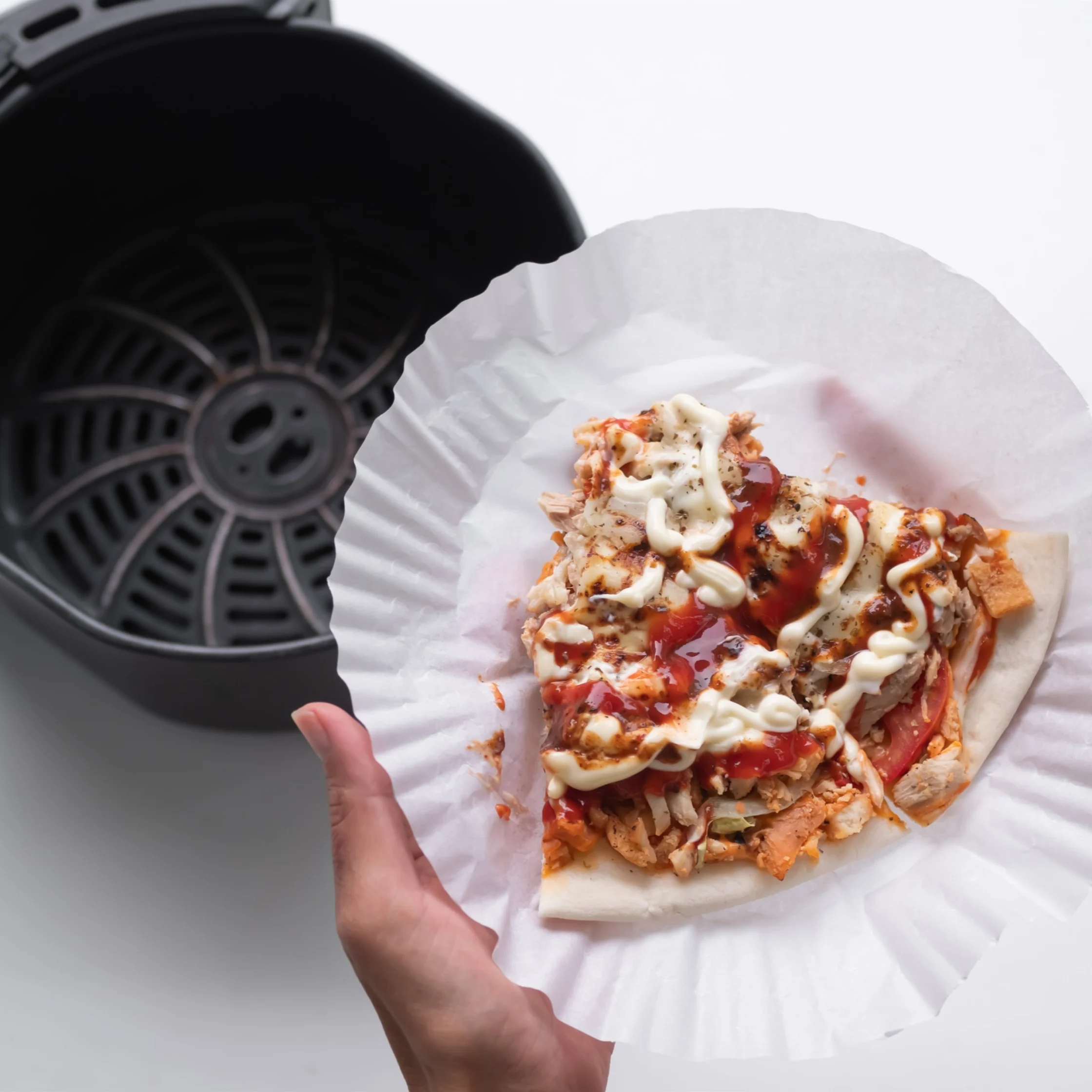
A hand holds a parchment-lined tray with a cheesy, sauced flatbread beside an open air fryer, suggesting a freshly cooked snack; the scene feels casual and appetizing.
If you want reheated pizza fast, go for the air fryer.

3. Frying Pan or Skillet

If you are in no rush but don’t want to fire up your full sized oven just for a few slices, the best way to achieve that crunchy bottom crust and melted, gooey cheese is to reheat on the stovetop frying pan or skillet.

Place your nonstick or cast-iron skillet over medium-low heat for about 2 minutes. You don’t need to add any oil or butter. The pizza crust already has enough fat to crisp up on its own.

Lay your slices flat in the dry pan and cook uncovered for 2 to 3 minutes until the bottom turns golden brown and crispy.

From there, add a few drops of water to the empty space in the pan away from the crust, then immediately cover with a tight-fitting lid, and lower the heat to low.

Let it steam for 1 to 2 minutes until the cheese is completely melted, transfer to a plate, and enjoy!
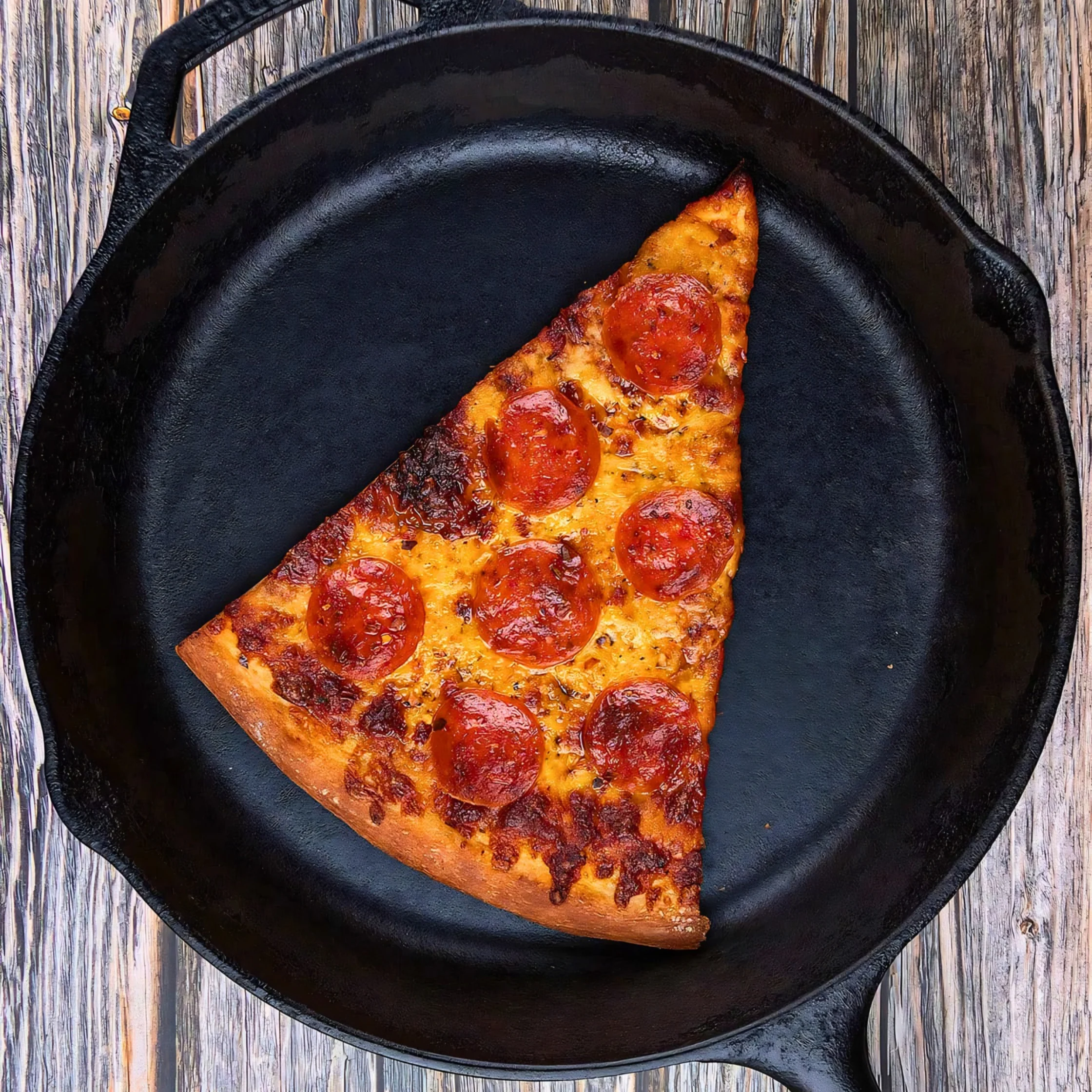
A triangular slice of pepperoni pizza with browned crust and melted cheese sits in a black cast-iron skillet on a weathered wooden surface.
Use a stovetop skillet for a crispy crust and melty cheese. [PHOTO COURTESY OF Clove & Cumin]

Not everyone is like me, willing to eat cold pizza straight out of the fridge. Sure, a chilled slice has its moments, save them for midnight emergencies. Bringing your leftovers back to a state where they taste fresh, or even better than when they first arrived, is completely possible.

Aside from using any of these three kitchen tools, avoid cranking the heat too high, as it can burn the bottom of the crust before the cold cheese on top has a chance to melt. Stick to medium-low on the stove and moderate temperatures in the oven.

Lastly, don’t reheat your pizza on a cold surface. Putting a cold slice onto an unheated baking sheet or pan lets moisture pool underneath the dough as it slowly warms up, guaranteeing a soggy bottom. Preheating your cooking surface solves this immediately.

author avatar
Laura Mendoza Writer
Laura admits that she is a slow eater. She prefers to take her time with the food she likes to eat and the stories she wishes to write. Having graduated with a Creative Writing degree, she comes from a background in writing fiction and poetry. Because of this, she has set herself on a creative mission to explore and delve into what other modes and channels exist for stories and narratives to be told, expressed, and shared with others. For Laura, food as a medium is an exciting proposition. Behind every dish, every ingredient, and every cooking technique, there lies a history worth discussing, a human being worth listening to, a lived experience worth gleaning from. As a means to satiate her appetite for learning about and understanding new and known things, she aims to be the kind of food writer who is approachable, reliable, and personable to readers.

Frequently Asked Questions

Using a microwave heats the water molecules inside the pizza, which steams the dough from the inside out and ultimately leaves you with a rubbery, soggy slice.

author avatar
Laura Mendoza Writer
Laura admits that she is a slow eater. She prefers to take her time with the food she likes to eat and the stories she wishes to write. Having graduated with a Creative Writing degree, she comes from a background in writing fiction and poetry. Because of this, she has set herself on a creative mission to explore and delve into what other modes and channels exist for stories and narratives to be told, expressed, and shared with others. For Laura, food as a medium is an exciting proposition. Behind every dish, every ingredient, and every cooking technique, there lies a history worth discussing, a human being worth listening to, a lived experience worth gleaning from. As a means to satiate her appetite for learning about and understanding new and known things, she aims to be the kind of food writer who is approachable, reliable, and personable to readers.

The air fryer is the fastest method, taking only about 3 to 5 minutes to circulate intense, dry heat for one or two slices without making the crust hard and leather-like.

author avatar
Laura Mendoza Writer
Laura admits that she is a slow eater. She prefers to take her time with the food she likes to eat and the stories she wishes to write. Having graduated with a Creative Writing degree, she comes from a background in writing fiction and poetry. Because of this, she has set herself on a creative mission to explore and delve into what other modes and channels exist for stories and narratives to be told, expressed, and shared with others. For Laura, food as a medium is an exciting proposition. Behind every dish, every ingredient, and every cooking technique, there lies a history worth discussing, a human being worth listening to, a lived experience worth gleaning from. As a means to satiate her appetite for learning about and understanding new and known things, she aims to be the kind of food writer who is approachable, reliable, and personable to readers.

No, you do not need any oil or butter because the pizza crust already contains enough natural fat to crisp up on its own in a dry, preheated pan.

author avatar
Laura Mendoza Writer
Laura admits that she is a slow eater. She prefers to take her time with the food she likes to eat and the stories she wishes to write. Having graduated with a Creative Writing degree, she comes from a background in writing fiction and poetry. Because of this, she has set herself on a creative mission to explore and delve into what other modes and channels exist for stories and narratives to be told, expressed, and shared with others. For Laura, food as a medium is an exciting proposition. Behind every dish, every ingredient, and every cooking technique, there lies a history worth discussing, a human being worth listening to, a lived experience worth gleaning from. As a means to satiate her appetite for learning about and understanding new and known things, she aims to be the kind of food writer who is approachable, reliable, and personable to readers.

After crisping the bottom of the slice for 2 to 3 minutes, add a few drops of water to an empty space in the pan away from the crust, immediately cover it with a tight-fitting lid, lower the heat, and let it steam for 1 to 2 minutes.

author avatar
Laura Mendoza Writer
Laura admits that she is a slow eater. She prefers to take her time with the food she likes to eat and the stories she wishes to write. Having graduated with a Creative Writing degree, she comes from a background in writing fiction and poetry. Because of this, she has set herself on a creative mission to explore and delve into what other modes and channels exist for stories and narratives to be told, expressed, and shared with others. For Laura, food as a medium is an exciting proposition. Behind every dish, every ingredient, and every cooking technique, there lies a history worth discussing, a human being worth listening to, a lived experience worth gleaning from. As a means to satiate her appetite for learning about and understanding new and known things, she aims to be the kind of food writer who is approachable, reliable, and personable to readers.

An oven or toaster oven is ideal for bulk reheating when you are warming up more than a single slice.


author avatar
Laura Mendoza Writer
Laura admits that she is a slow eater. She prefers to take her time with the food she likes to eat and the stories she wishes to write. Having graduated with a Creative Writing degree, she comes from a background in writing fiction and poetry. Because of this, she has set herself on a creative mission to explore and delve into what other modes and channels exist for stories and narratives to be told, expressed, and shared with others. For Laura, food as a medium is an exciting proposition. Behind every dish, every ingredient, and every cooking technique, there lies a history worth discussing, a human being worth listening to, a lived experience worth gleaning from. As a means to satiate her appetite for learning about and understanding new and known things, she aims to be the kind of food writer who is approachable, reliable, and personable to readers.
Smiling woman with glasses tilted at an angle, wearing a blue top, against a light background.

Laura Mendoza

Writer

Laura admits that she is a slow eater. She prefers to take her time with the food she likes to eat and the stories she wishes to write. Having graduated with a Creative Writing degree, she comes from a background in writing fiction and poetry. Because of this, she has set herself on a creative mission to explore and delve into what other modes and channels exist for stories and narratives to be told, expressed, and shared with others. For Laura, food as a medium is an exciting proposition. Behind every dish, every ingredient, and every cooking technique, there lies a history worth discussing, a human being worth listening to, a lived experience worth gleaning from. As a means to satiate her appetite for learning about and understanding new and known things, she aims to be the kind of food writer who is approachable, reliable, and personable to readers.

0 0 votes
Total of Ratings
guest
Rating
Ratings for Article
0 Comments
Oldest
Newest Most Voted

To provide a customized ad experience, we need to know if you are of legal age in your region.

By making a selection, you agree to our Terms & Conditions.