

If there’s one thing I noticed while watching Culinary Class Wars, it’s that cooking leaves zero room for using equipment that wasn’t theirs. Throughout the competition, chefs clung to their personal tools. They brought everything from their own chef’s knives to specialized machines and even entire ovens they use in their restaurants. They stuck to their guns, or kitchen gadgets in this case, trusting only the tools they knew best.
I’d make the argument that Filipino home cooks are no different.
Our kitchens have always been defined not just by passed-down recipes but also by trusted tools. While ancestral staples like the kalan and palayok have more or less been replaced by modern pans and induction stoves, you can still see certain kitchenware ever-present in the kitchens of today despite the waves of modern cooking technology.
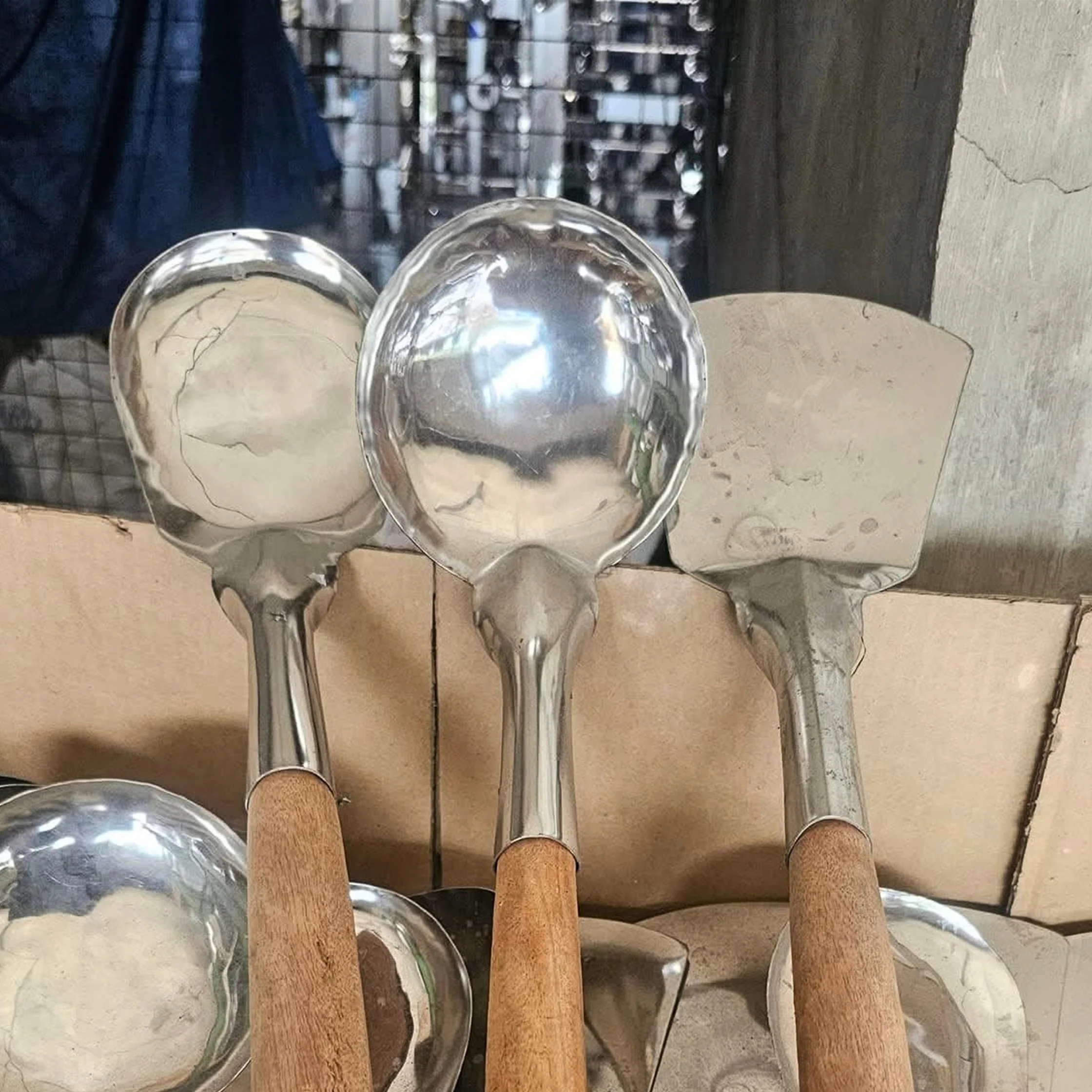
One such example is Filipino cooks’ avid use of the sandok and siyansi. This preference isn’t merely born of habit. Both kitchen tools have their own unique properties that make them fit perfectly into traditional Filipino cooking techniques.
1. Ergonomic Design
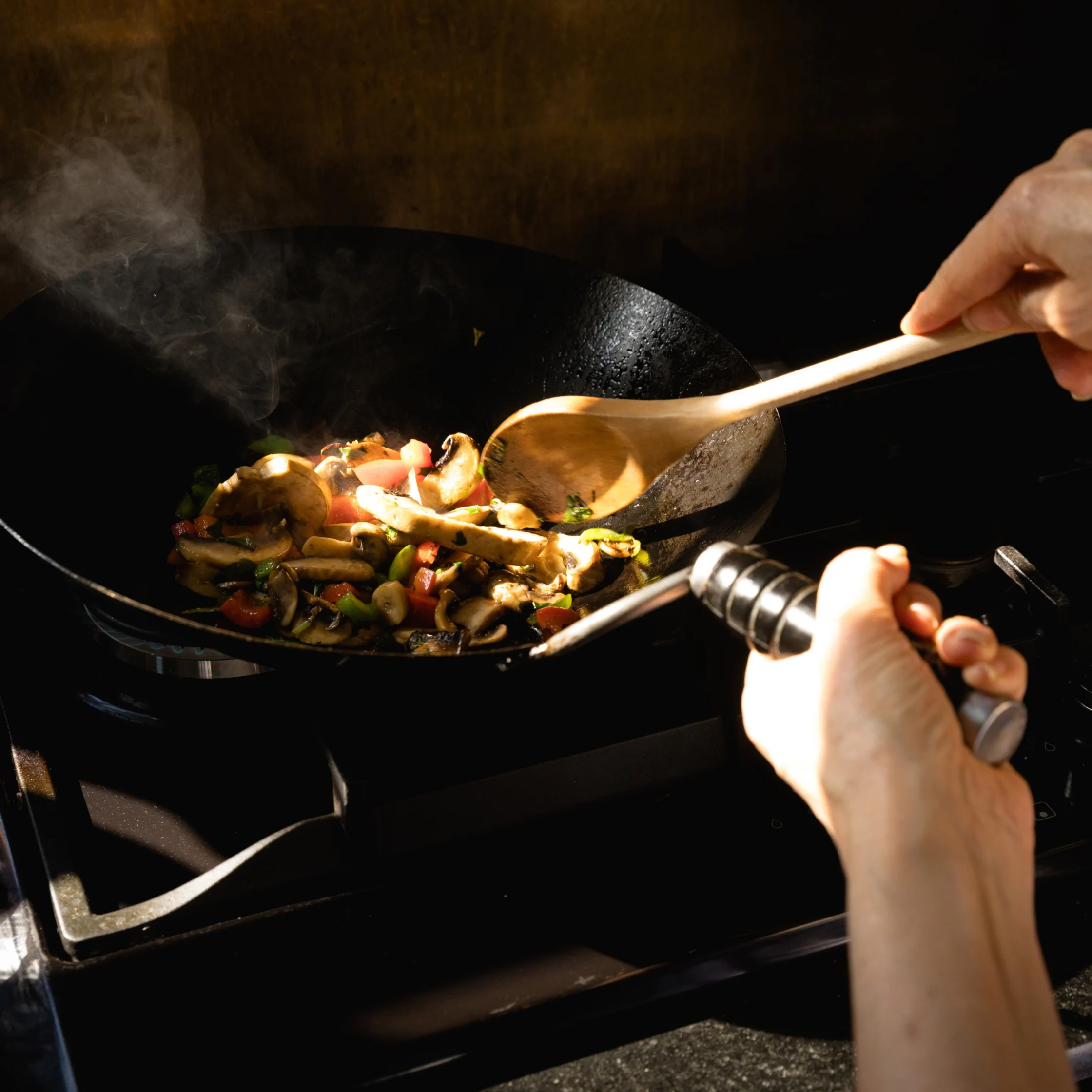
If you look at the majority of traditional Filipino dishes, they very much rely on high-heat cooking techniques like paggisa and pagprito. The overall designs of both the sandok and the siyansi are well-suited for handling ingredients under such intense conditions.
Because the sandok is designed with a rounded, shallow-ish bowl and long handle, it allows you to scoop up generous amounts of hot broth or thick sauces while keeping hands safely away from splattering oil or steam. In my household, we also bring out the sandok whenever we’re serving big batches of monggo, sopas, or any other hot soup.
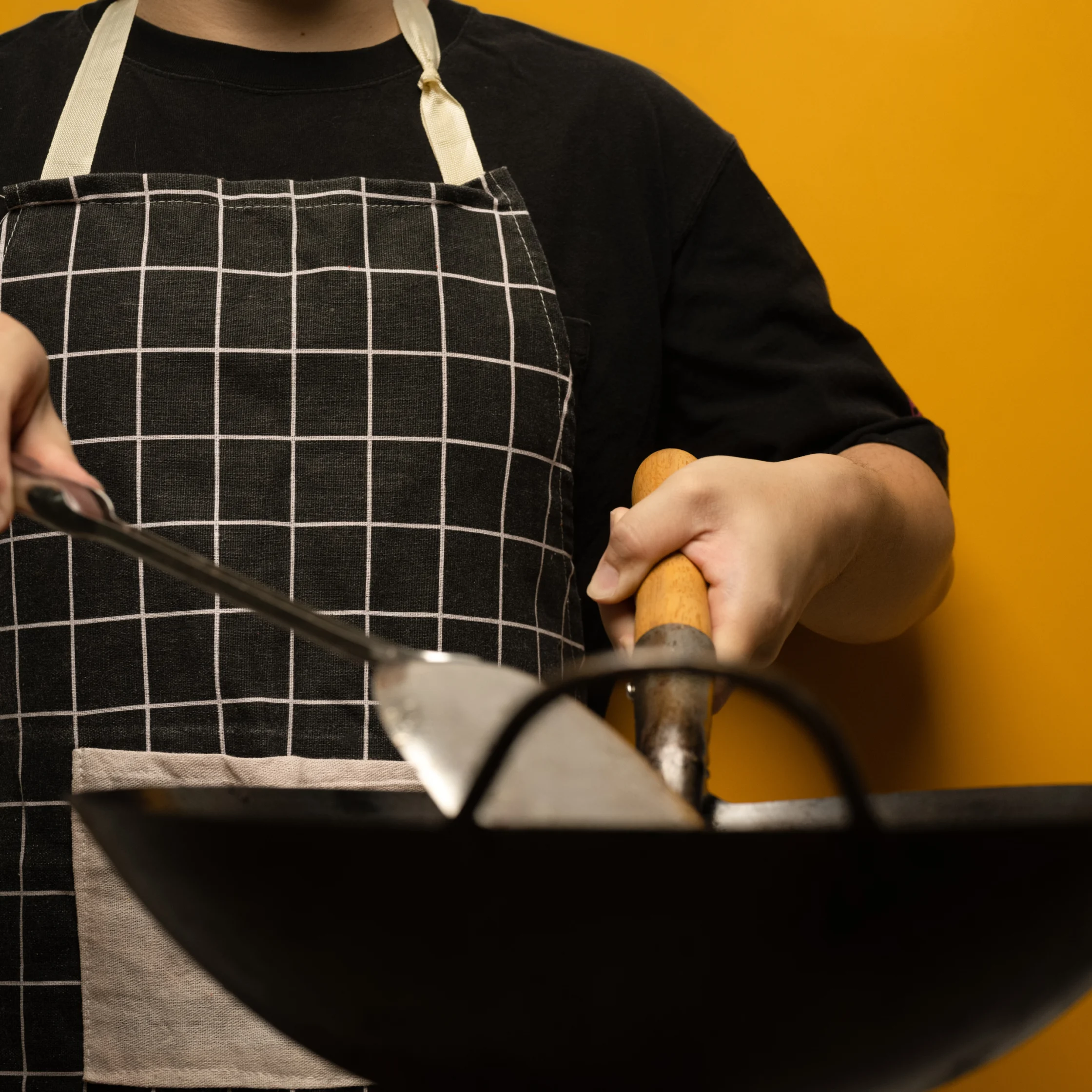
As for the siyansi, it has a sharp, thin, angled metal edge. Where it easily trumps its silicone and plastic counterparts is in its precision. It can glide smoothly under delicate fish skin or caramelized meat stuck to the bottom of a searing-hot pan without tearing it apart. If you are cooking with a kawali, the flat edge of the siyansi slides against the curved bottom of the wok without scraping your knuckles on its scorching-hot rim or dipping your hand any closer into the rising steam.
2. Better Durability
Ate Julie has been living with and cooking for my family since my eldest brother was born. Over the years, I can distinctly recall her requesting my mom to replace our silicone spatulas and spoons once they reached that frustrating point where an oily residue refused to come off, no matter how much dish soap we used. But when it comes to our sandok and siyansi, I don’t think I’ve ever seen Ate Julie use different ones from the same trusty set she’s always had.
Silicone and nylon spatulas may look sleek on a countertop, but high-heat Filipino cooking quickly reveals their limitations.
Over time, silicone has the tendency to warp, absorb oil, and soften when left too close to an extremely hot surface to the point of becoming unusable. Likewise, using nylon spatulas for extended periods of time runs the real risk of them melting during prolonged stir-frying or deep-frying.
Traditional stainless steel or brass sandok and siyansi, in comparison, are much more durable. It doesn’t matter if you lean them against the rim of a hot pan for a long time or repeatedly submerge them into a hot soup or bubbling sauce. They can withstand hours of intense cooking without ever compromising their structural integrity.
3. Easy to Use
While researching for this article, I stumbled upon a public Facebook post that talks about the final reason why I think the sandok and siyansi have earned their spots as mainstay kitchen tools.
It was posted by an American who had previously lived with a Filipino roommate. Her roommate introduced her to the metal sandok to her for the first time, and it instantly became her “favorite cooking spoon.” She praised it for being lightweight, comfortable to hold, good at scooping, and easy to clean. She grew so attached to it that when her roommate eventually moved out and brought the sandok along, she was saddened to discover they weren’t imported into the U.S. Fortunately, they remained close friends. When the former roommate’s aunt was coming to America from the Philippines, she received her very own sandok as a birthday present.
I love this story because it shows that even for someone who didn’t grow up with them or whose traditional cuisine uses entirely different tools, utensils like the sandok and siyansi are so intuitively designed that anyone can use them effortlessly.
But What About Non-stick Cookware?
If I had to make an argument against using the sandok and siyansi, it would be related to being unable to use other modern kitchenware.
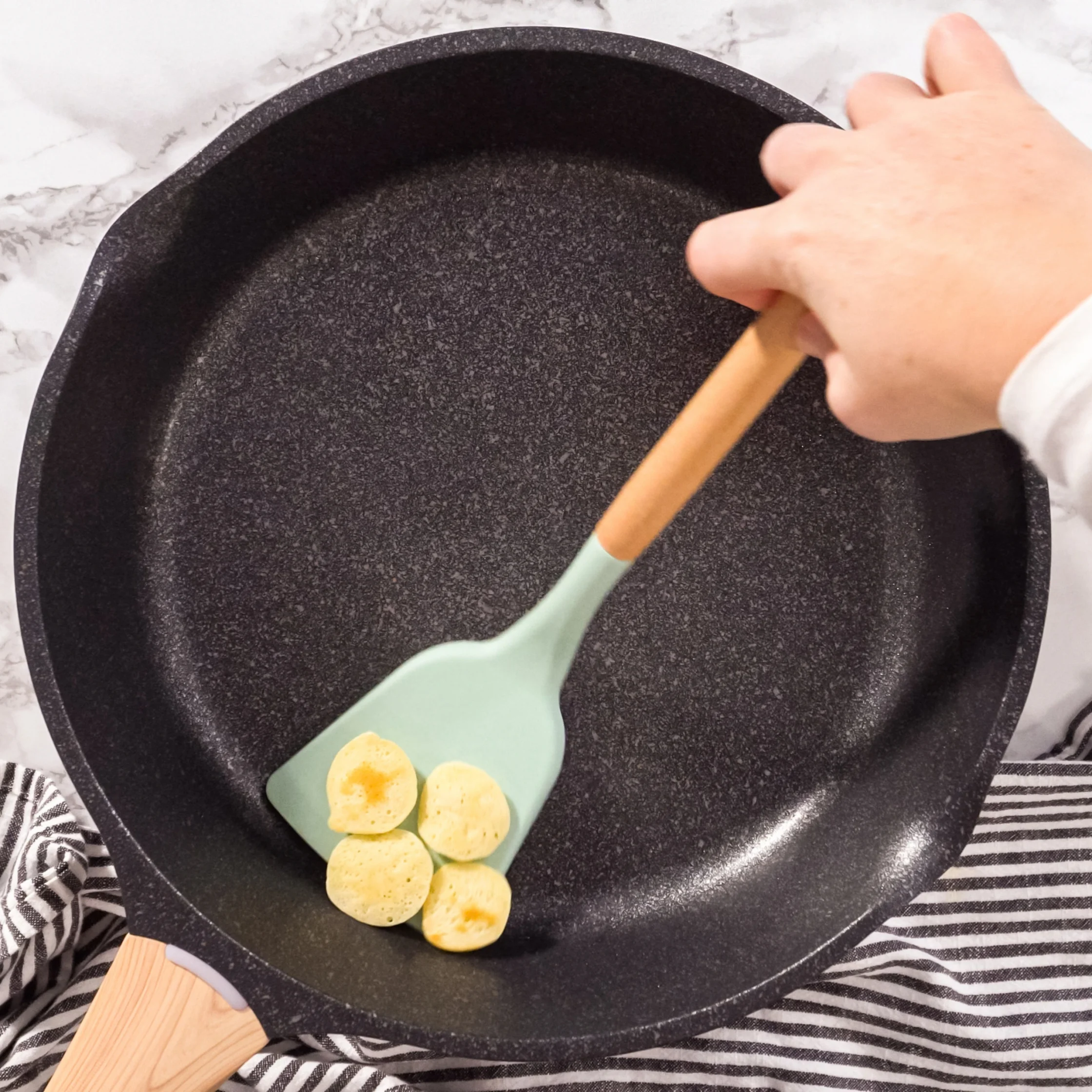
The main limitation of traditional metal tools like these is their incompatibility with delicate non-stick or Teflon cookware. The metal can easily scratch and completely ruin the synthetic coating that allows it to be non-stick to begin with.
However, if your kitchen uses cookware like heavy-duty cast iron, carbon steel kawali, and stainless steel pots, the control, durability, and scraping power of the sandok and siyansi remain unmatched and irreplaceable.

Frequently Asked Questions
A sandok is a traditional Filipino ladle or deep-bowled serving spoon, typically crafted from stainless steel, brass, or wood.
A siyansi is a traditional Filipino metal turner or spatula, characterized by its razor-thin leading edge, flat blade, and offset angled neck.
While both are traditional Filipino kitchen tools, they serve different primary functions.
A sandok is a bowled ladle with a long handle designed for scooping, serving, and stirring liquids.
A siyansi is a flat, thin-edged metal turner or spatula with an angled neck, specifically designed for flipping delicate proteins, caramelized bits or fond off the bottom of a pan, and stir-frying over high heat.
No, traditional metal sandok and siyansi should not be used on non-stick or Teflon-coated cookware. The sharp, unyielding metal edges will scratch and peel off the delicate synthetic coating, ruining the pan and potentially mixing non-stick particles into your food. These metal utensils are best paired with heavy-duty cookware like cast iron, carbon steel kawali, and stainless steel pots.
Stainless steel sandok and siyansi are low-maintenance and easily cleaned with standard dish soap and water. Unlike silicone, metal does not trap grease or retain food odors.
If your tools feature wooden handles, avoid soaking them in water for long periods or running them through a dishwasher to prevent the wood from cracking or loosening over time.