

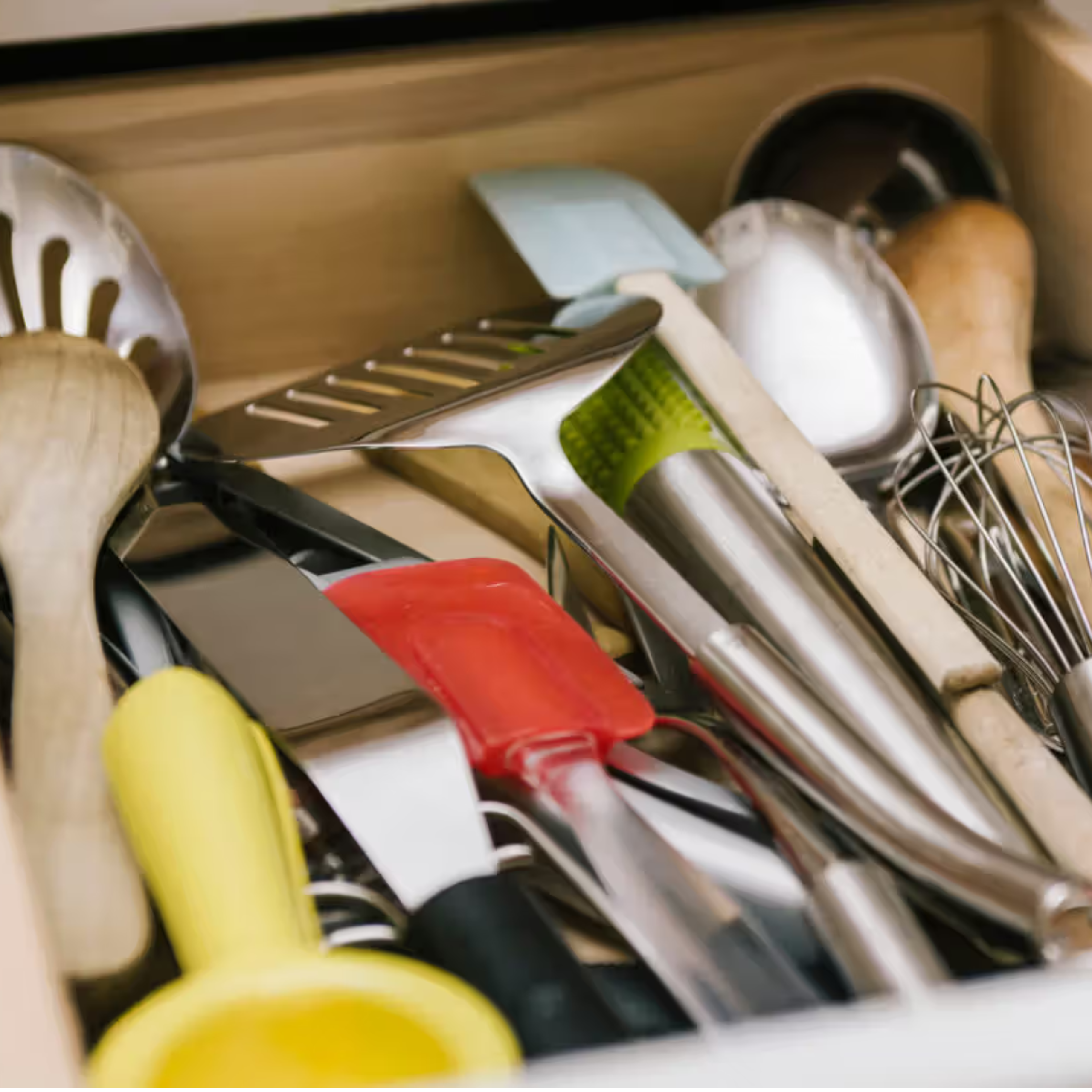
There are few kitchen drawers more chaotic than the utensil drawer. Somewhere between the whisks, tongs, mystery ladles, and that one wooden spoon you’ve had since college are three spatulas that, at first glance, seem to be doing exactly the same thing, but they’re not.
Wooden, silicone, and metal spatulas all have their strengths, and once you know what each one is good at, choosing can become pretty intuitive. You’re not really picking a favorite. You’re picking the right tool for the pan, the food, and what you need to do to it.
Let’s figure out what you should reach for.
Wooden Spatulas Are for Moving Things Around
They’re simple, they’re sturdy, and they can take a beating.
There’s a reason you see them in most kitchens. A wooden spatula is less about delicate flipping and more about stirring, scraping, and generally keeping things moving. It’s the one I’d grab for sautéing onions, stirring a sauce, breaking up ground meat, or scraping the bottom of a pan. Because it’s rigid, you can actually put some pressure behind it without the spatula folding over on itself.
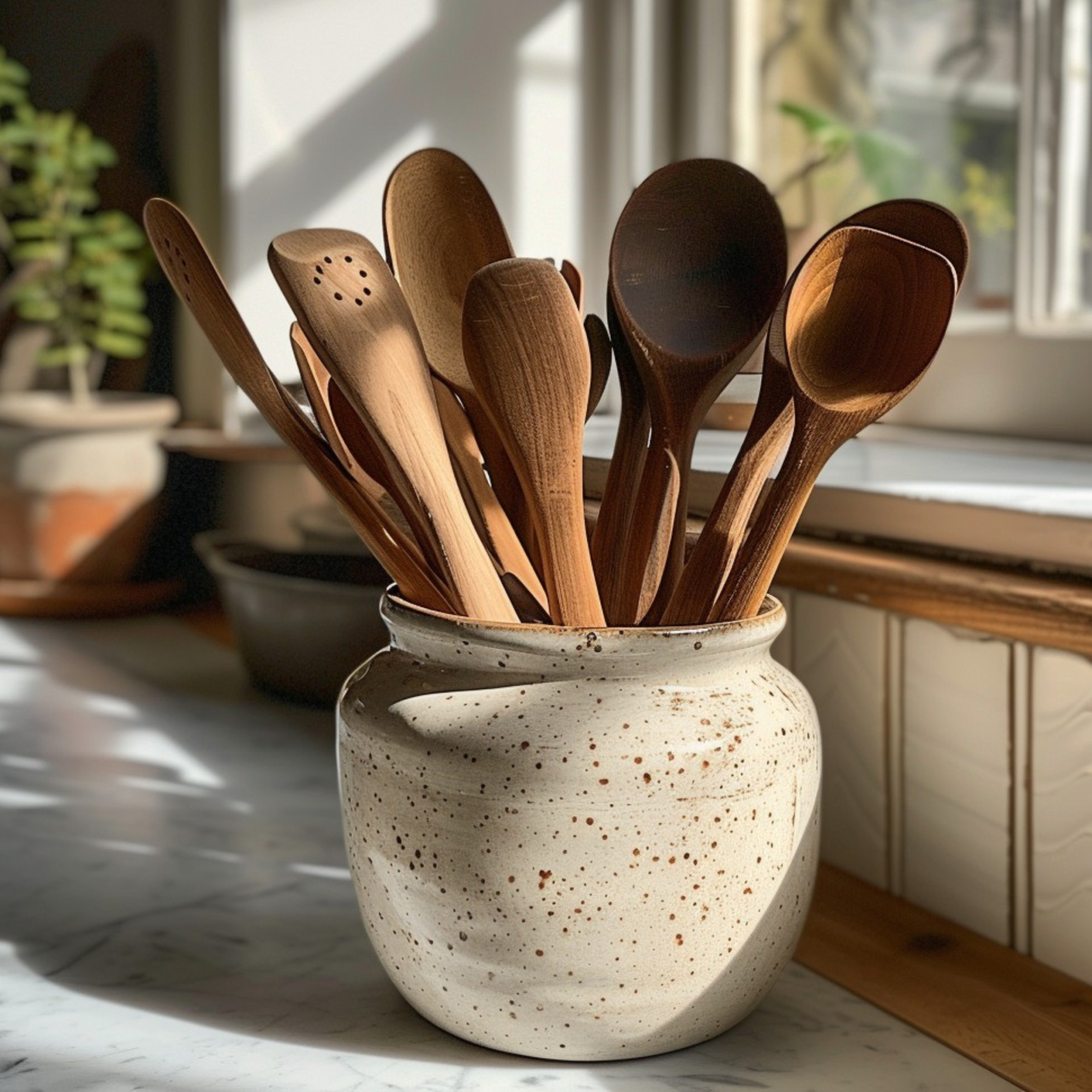
It’s also a good choice for cookware where you don’t want a hard edge scraping around. Wood is gentle enough for most surfaces and won’t leave you wincing every time you drag it across the bottom of the pan.
The one thing wood doesn’t love? Being left wet. Don’t leave it in the sink overnight, and ideally keep it out of the dishwasher. Make sure it stored somewhere it can air-dry completely.
Reach for wood when: you’re stirring, sautéing, scraping, or cooking something that needs a little muscle behind it.
Silicone Is Your Non-stick’s Best Friend
If your pan has a nonstick coating, silicone should be one of the first things you reach for.
It’s flexible, heat-resistant when properly made, and gentle on surfaces that can scratch. That flexibility is also exactly why silicone is so good at getting underneath soft foods without tearing them apart. Think scrambled eggs, pancakes, omelets, or anything else you’re cooking in a pan where you want to keep the surface intact.
And this is where silicone really pulls double duty: it’s just as useful outside the stove-top.
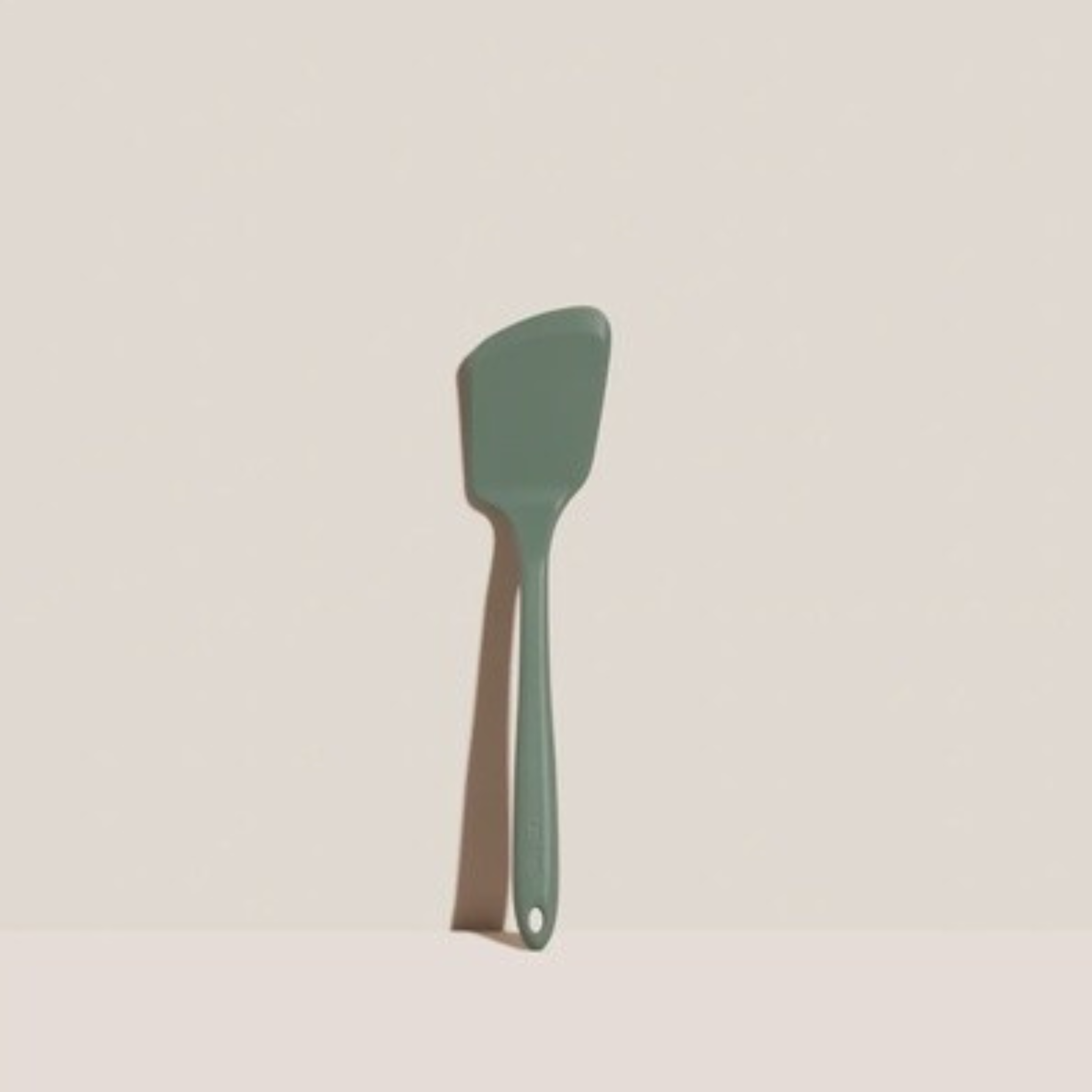
A silicone spatula is probably the tool you’re using when you’re scraping cake batter from a bowl, folding whipped cream into a mixture, or trying to get every last bit of peanut butter out of the jar. Its flexible edge follows the curve of any bowl in a way that a wooden spatula or most spoons simply can’t.
Just check that yours is rated for high heat before using it on the stove. And if the silicone head is separating from the handle or starting to look questionable, it’s probably time for a new one.
Reach for silicone when: you’re cooking with nonstick cookware, working with delicate food, or scraping a bowl clean.
Metal Is for Getting Under Things
A metal spatula is a different animal.
It’s thin, rigid, and excellent at getting underneath food which is exactly what you want when you’re trying to flip something without only taking half of it with you. Fried eggs. Fish. Burgers. Pancakes. Crispy potatoes. A good metal turner can slide underneath these things cleanly, especially when the edge is thin and slightly flexible.
And if you’re cooking with cast iron, carbon steel, or stainless steel, metal can be particularly useful. It’s sturdy enough to scrape up browned bits and loosen food that’s sitting on the bottom of the pan.
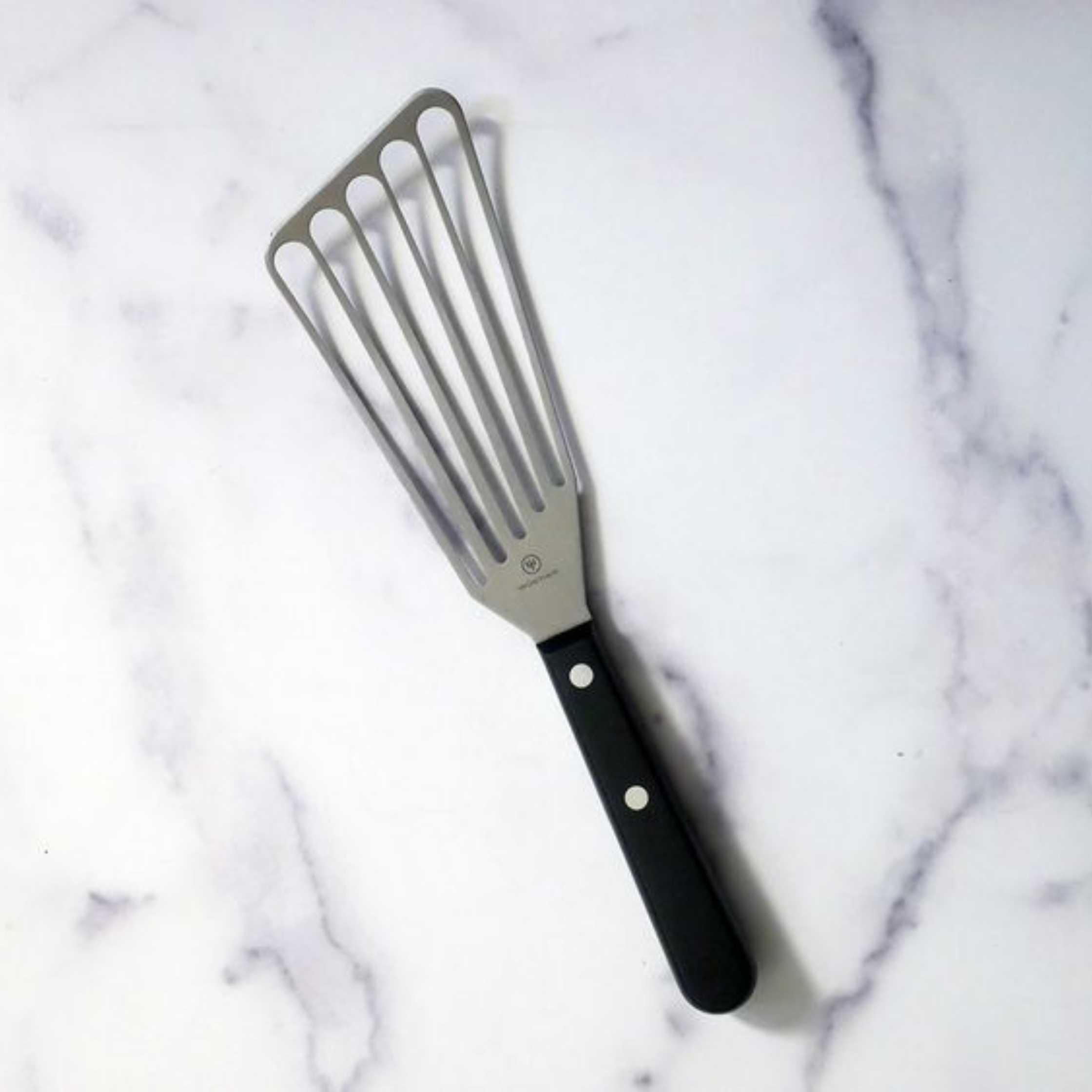
One of my favorite versions is the fish spatula, which is basically the kitchen equivalent of finding out that the thing you thought was highly specialized is actually useful for everything. It’s thin and flexible enough for delicate foods but sturdy enough for everyday cooking.
The exception is obvious but worth saying: don’t use metal on nonstick cookware. Your crispy potatoes are not worth sacrificing a pan over.
Reach for metal when: you’re flipping, lifting, scraping, or trying to get underneath something crisp.
So Which One Should You Buy?
You don’t really need a drawer full of every spatula ever manufactured, unless it’s a color thing then by all means, get all the pink spatulas you can find. I won’t judge.
I personally usually reach for this trusty silicone spatula that I’ve had for three years, and I have a metal one on standby for when I need to flip things over cleanly like pancakes and fish. But between the silicone and wood, you should be able to cover most everyday cooking and baking.
And if you’re already the person with six spatulas? It’s probably time to decide which ones actually spark joy and say goodbye to the rest. You’re gonna be better off trading those for a pair of cooking chopsticks, but that’s another category that we can table for later.
So the next time you reach into your utensil drawer, think of what you’re cooking first.
Your answer will usually tell you which one to grab.

Frequently Asked Questions
Yes. Wood is generally gentle enough for nonstick cookware, provided the utensil doesn’t have rough or splintered edges. Silicone is still a particularly convenient option because it can flex around the pan.
For nonstick cookware, yes. Silicone is flexible and won’t scratch the coating. For stainless steel or cast iron, a thin metal spatula can be excellent for fried eggs because it slides easily underneath them.
Yes. Metal utensils are generally fine on well-seasoned cast iron. A rigid metal spatula can actually be useful for loosening browned food and keeping the cooking surface clean.
In everyday cooking, the terms get used pretty interchangeably. But “turner” often refers to the flat utensil you use to flip food, while “spatula” can also refer to flexible tools used for scraping, stirring, and baking.
For an average home kitchen, I’d start with a silicone spatula and a wooden spatula. If you cook a lot of food that needs flipping or lifting, add a thin metal turner.

![The Ongpin South Bridge arch [PHOTO COURTESY OF The Urban Roamer Official Website]](https://assets.delish.ph/wp-content/uploads/2026/10/The-Ongpin-South-Bridge-arch-PHOTO-COURTESY-OF-The-Urban-Roamer-Official-Website-960x960.webp)