

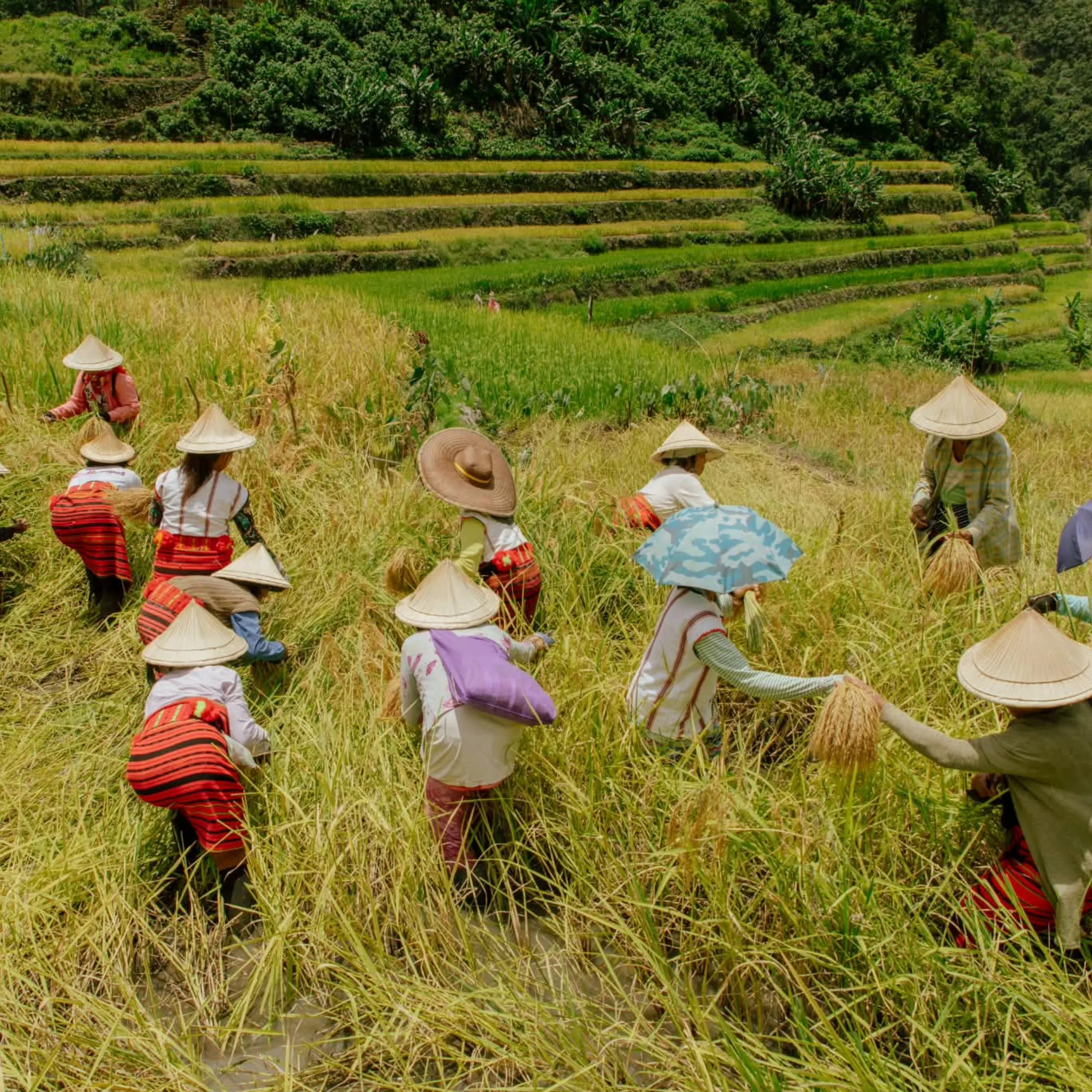
As the stifling heat of the Cordilleran summer gives way to the refreshing afternoon showers of May, the green rice terraces of this tiny village likewise transform into golden steps of ripeness. The scent of pinipig in the gentle breeze carries the promise of the coming harvest. It is the season of Igwang in Batad.
How Ifugao’s Rice Terraces Began Healing After Supertyphoon Uwan
This year’s harvest season carries the burden of loss and destruction. In early November 2025, just as the village was sprouting its first seedbeds, super typhoon Uwan swept through Northern Luzon. In its wake, people woke up to a large landslide that ripped right through the center of the main cluster. Rocks and mud clogged this central irrigation canal the night before. A father and his daughter also lost their lives, as another avalanche of soil swept away their house in the wee hours of the morning.
But the agricultural cycle cannot wait. The local farmers built small dikes along the eroded gully and proceeded to flood their fields and plant the rice seedlings, just as their ancestors had done so for centuries. Over the next few months, the gaping brown wound at the center of the terraces would slowly recover. Grass and other weeds would camouflage the collapsed soil, while the growing rice would draw one’s eyes away from the long rocky gash. Bayanihan efforts by locals and outside groups also helped rebuild some of the rock walls and restore the flow of the main irrigation ditch. By April 2026, the landslide seemed to have faded, like a scar trying its best to heal.
How an Ifugao Village Celebrates the Rice Harvest With Ancient Rituals
We wake up to a pink sunrise as our bus rolls into the town center of Banaue. Rubbing off the sleep from our eyes, we—a ragtag gang of artists, photographers, chefs, and wannabe adventurers from the city—board our flashy green jeepney. After a quick silog breakfast warmed by freshly brewed Ifugao robusta, we head on out to Batad. Most of us went topload on the jeep, in order to better enjoy the mountain views and cool air. We are coming to join the b’fotô (harvest) of the Mannods, the family who ritually adopted me twenty years ago with five shamans in attendance.
We arrive in Sitio Balihong as the men of the village were carrying the pig that was to be offered for the thanksgiving ritual. Appo B’fuy-a, the last ritualist (mumba’ih) of the village, was already waiting. The lipog rice wine had already been poured, as our hosts got impatient waiting for their late guests. Each one of us was welcomed with a shot, scooped up from the communal bowl with a sculpted coconut shell. It was strong and smoky, like another round of this morning’s coffee, but with an alcoholic kick.
The women were already harvesting, moving in unison following a V-formation as they glided across the paddy. The men began the preparations for the ba’ih, as Appo B’fuy-a and a couple of other elderly men started the chanting. They called the ancestors and the nature spirits to join the celebration, to eat and drink with us. The mestizo pig was presented to Appo B’fuy-a, and he signaled for the men to sacrifice the animal. After the ceremonious stab at its jugular, the pig was quickly opened up. Appo B’fuy-a inspected its liver, and found a good omen to proceed. The choice parts of the pig were chopped up and boiled in a large kawa for the community meal. Certain parts were given to relatives and neighbors, as dictated by custom.
The head was reserved for the concluding ritual the following morning. Nanay Tessie, the owner of the terraces, sits on her perch as she watches the women slice of the rice panicles one by one using a finger blade called gamulang. She is still recovering from a recent surgery, and is relying on her neighbors and relatives to do the harvesting for her. The guests crowd around the women, sometimes trying their hand at using the gamulang. The women finish as the afternoon rains fall on the village.
Why Ifugao’s Rice Harvest Is About More Than Food—It’s About Survival
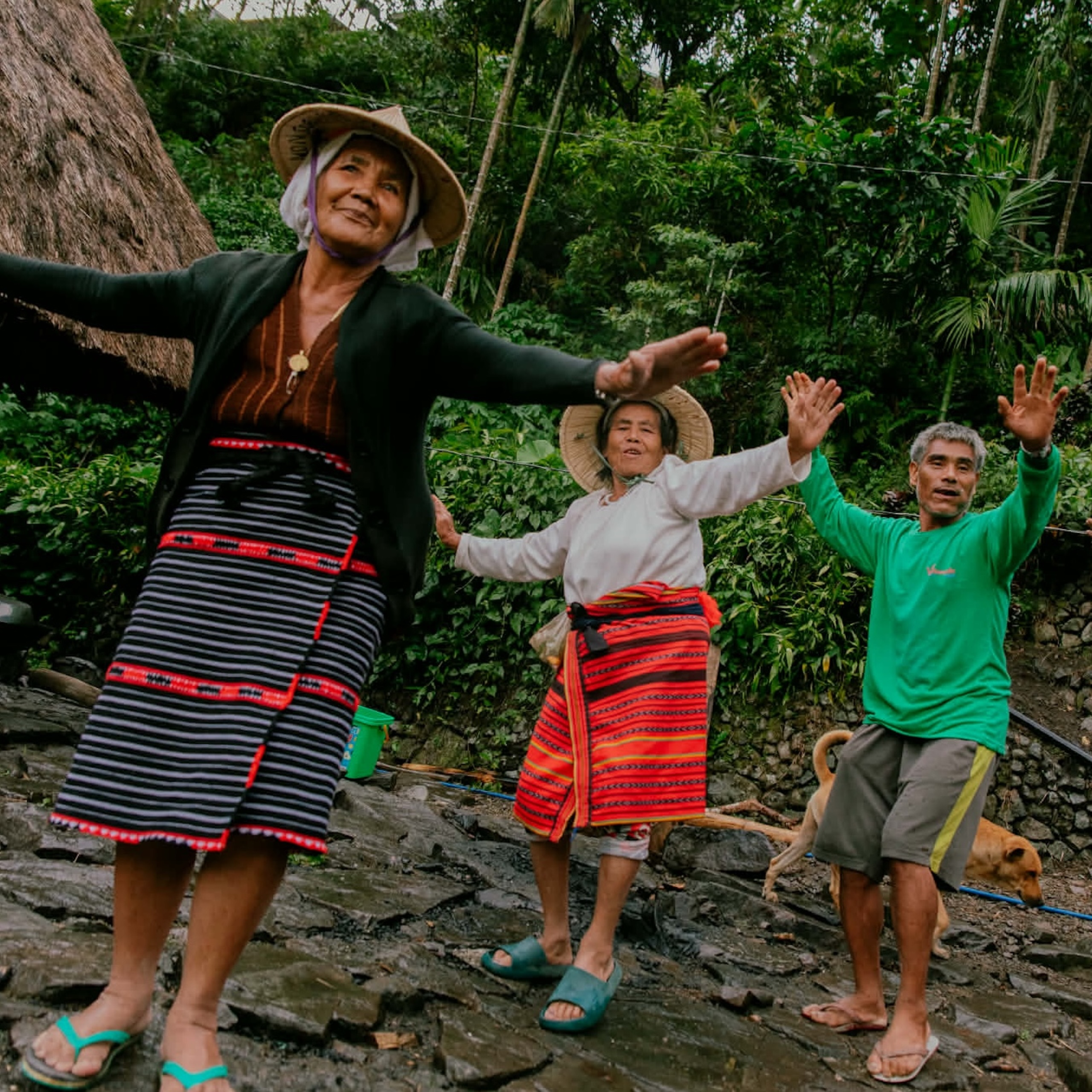
Our thanksgiving ritual concludes with eating, drinking, and dancing. Between sips of lipog, I glance at Nanay Tessie and the elderly ritualists, wondering sadly how long we can still go on with the b’fotô. There are fewer and fewer people willing to do the backbreaking work of farming the terraces, whilst more frequent extreme weather events continually damage this ancient landscape.
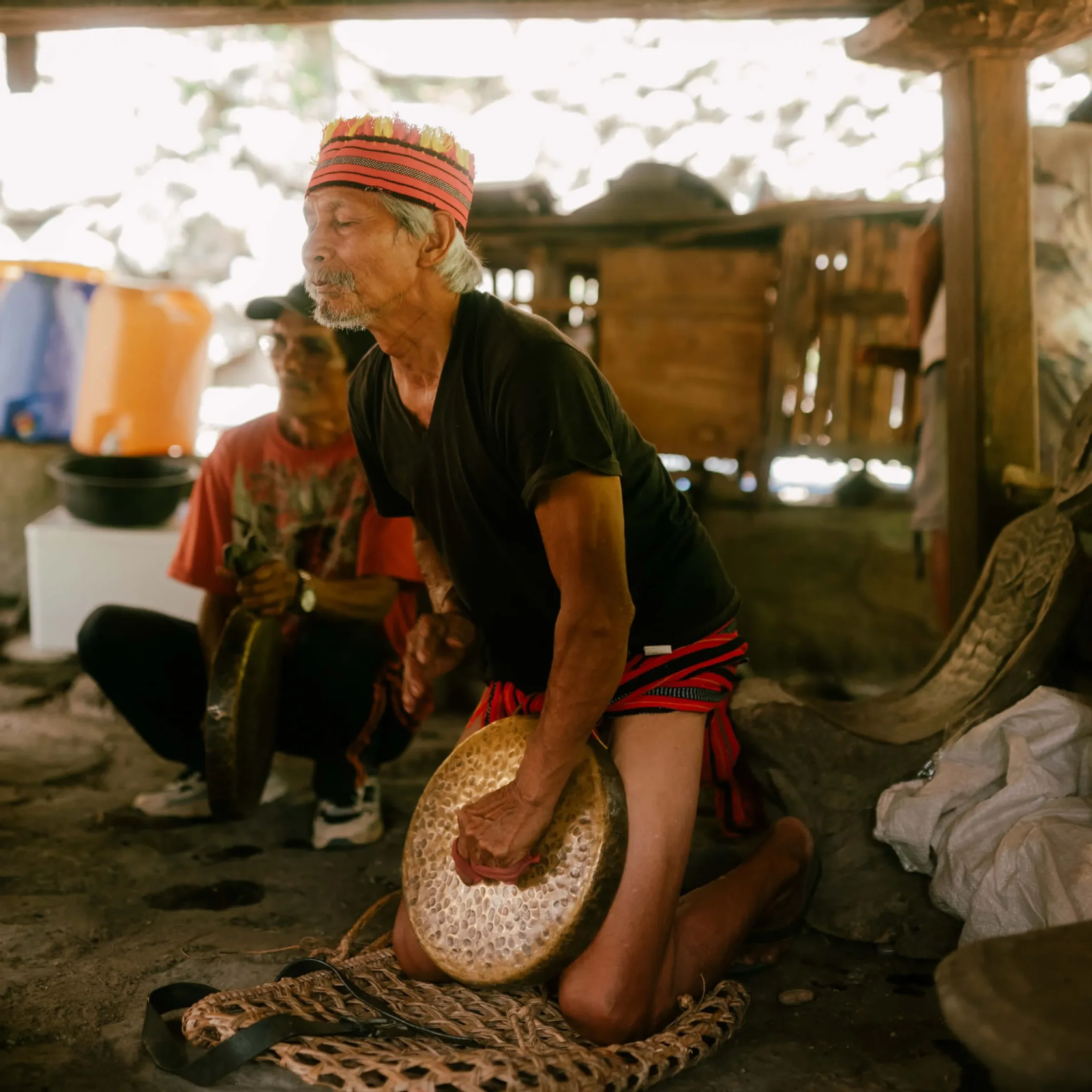
But for now, we revel in the bounty of the fields, beating the gongs for the golden bundles of this fragrant rice and thanking the ancestors for this most nourishing of heirlooms.

Frequently Asked Questions
The b’fotô is Ifugao’s rice harvest thanksgiving ritual, led by a mumba’ih who chants to ancestors and spirits, followed by a pig sacrifice and communal meal.
In November 2025, super typhoon Uwan triggered a landslide through Batad’s rice terraces, clogging the irrigation canal and killing two residents whose home was swept away.
Farmers built dikes along the eroded gully, replanted rice seedlings, and joined bayanihan efforts to rebuild rock walls and restore the irrigation canal by April 2026.
A mumba’ih is an Ifugao ritual specialist who leads harvest ceremonies, chanting to summon ancestors and nature spirits and inspecting a sacrificed pig’s liver for omens.
Fewer people are willing to do the demanding labor of terrace farming, while increasingly frequent extreme weather events like Supertyphoon Uwan continue damaging the ancient landscape.