


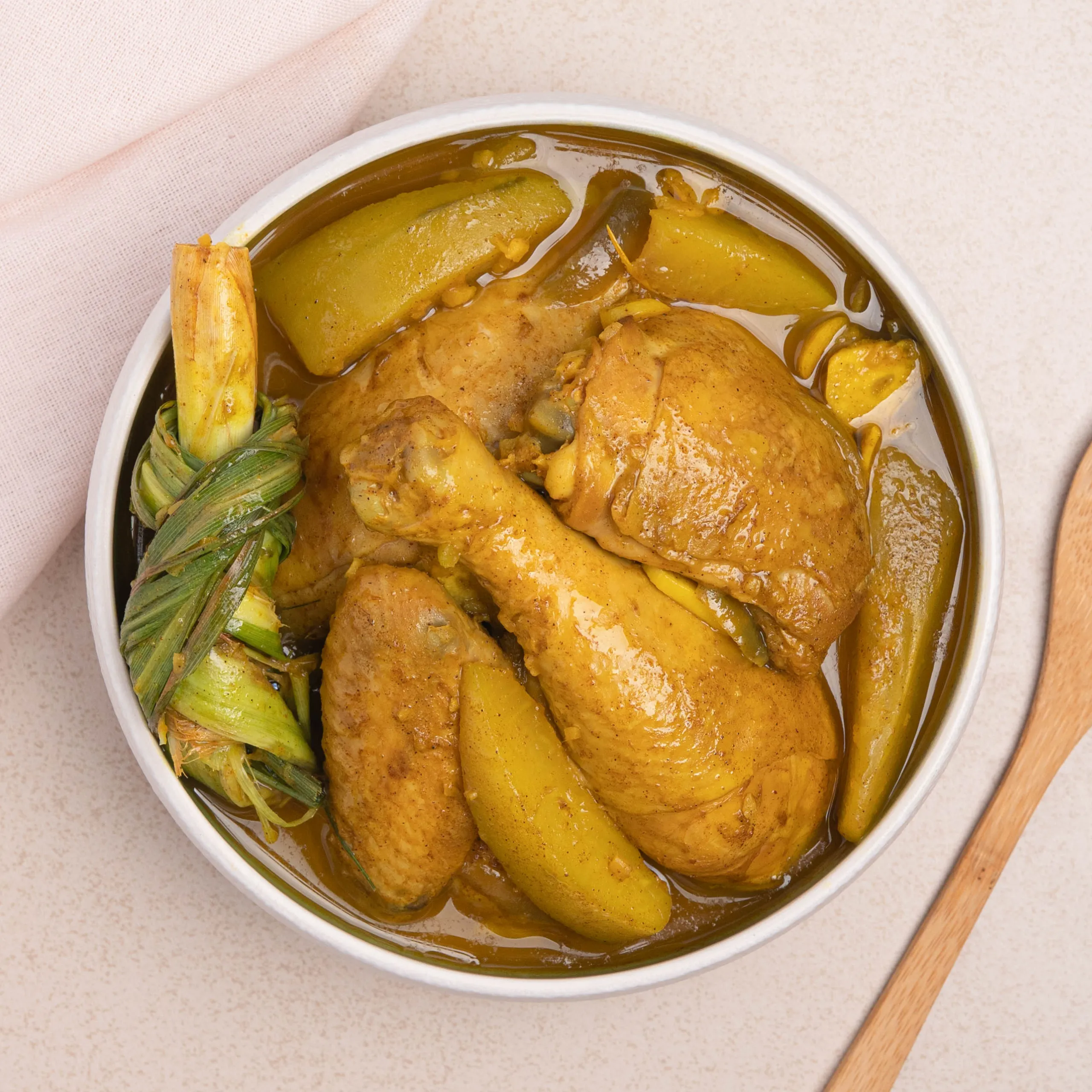
There are Filipino dishes that immediately feel like home, and Dinilawang Manok sa Gata is one of them. It is the kind of dish that doesn’t need a complicated ingredient list to make a meal feel special. The moment the garlic, onion, ginger, and lemongrass begin sizzling in the pan, the kitchen fills with an aroma that feels warm, familiar, and inviting.
What makes this dish particularly interesting is the combination of yellow ginger or turmeric, chicken, coconut milk, and green papaya. The turmeric gives the dish its beautiful golden-yellow color, while the gata creates a creamy and comforting sauce. Ginger and lemongrass keep the flavor bright and fragrant, while green papaya absorbs the savory coconut broth.
This Marinduque-inspired dish is wonderful for an everyday family lunch, but it can just as easily become the centerpiece of a weekend meal when you want to serve something distinctly Filipino.
A Brief History of Dinilawang Manok
Dinilawang Manok is associated with the culinary traditions of Southern Luzon, including Marinduque and Quezon. The word dinilaw refers to the yellow color of the dish, traditionally produced by luyang dilaw (turmeric).
Different communities and families have their own ways of preparing the dish. Some versions are cooked mainly with chicken, turmeric, and aromatics, while others incorporate coconut milk, vegetables, or chilies. A Quezon version, for example, has been described as native chicken cooked with coconut milk, yellow ginger, and lemongrass—ingredients that are very similar to those used in this recipe.
Marinduque’s connection to coconut-based cooking also makes Dinilawang Manok sa Gata a natural part of the region’s culinary story. Coconut milk is widely used in Southern Luzon cooking, where it can turn simple meat and vegetables into rich, flavorful dishes.
The traditional use of native chicken is also worth mentioning. Native chicken tends to have firmer meat and a more pronounced flavor than commercial broilers. It may take longer to become tender, but that extra cooking time can produce a deeply flavorful broth.
Of course, home cooks today often use readily available chicken pieces from the market. That doesn’t make the dish any less enjoyable. Filipino cuisine has always evolved according to what families have available.
Understanding the Ingredients
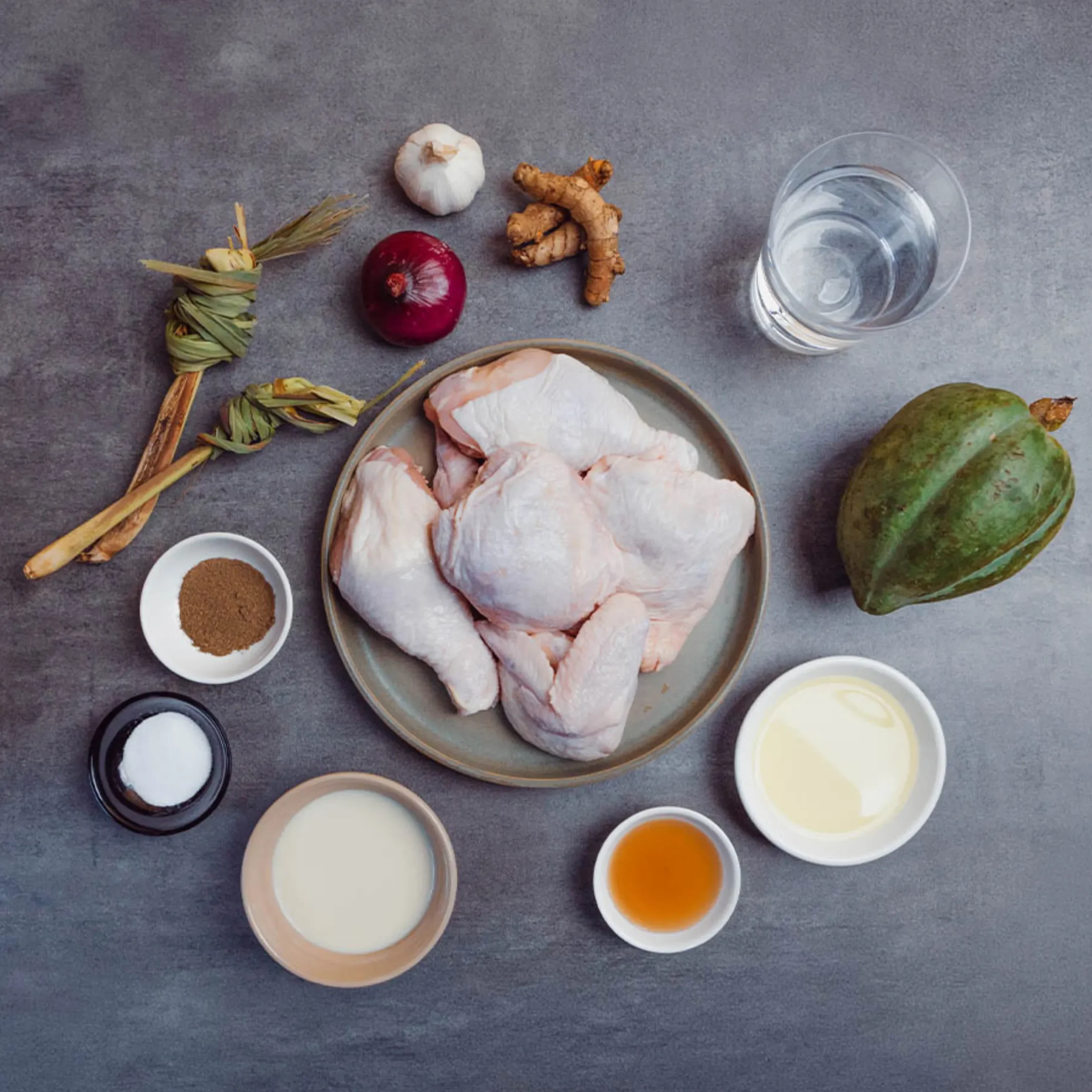
Chicken
Chicken provides the main protein and gives the dish its hearty character. You can use thighs, drumsticks, wings, breast meat, or a combination.
For the best texture, chicken thighs and drumsticks are particularly good because they remain tender during simmering.
If you’re using native chicken, give it additional cooking time. The meat is naturally firmer and can require considerably longer simmering than commercial chicken.
Garlic
Garlic forms one of the foundations of Filipino cooking. Four cloves provide enough flavor to make the dish fragrant without overpowering the turmeric, ginger, and coconut.
For a stronger garlic flavor, you can add another clove or two.
Onion
Onion adds sweetness and depth to the sauce. Cooking it slowly until translucent allows its natural sugars to develop.
Yellow Ginger or Turmeric
This is the ingredient that gives dinilawang manok its signature golden color.
If your ingredient is actually fresh turmeric (luyang dilaw), expect a stronger yellow-orange color. Regular ginger provides warmth and aroma but won’t create the same vivid yellow appearance.
Lemongrass
Lemongrass contributes a fresh, citrus-like fragrance.
The coconut milk makes the dish rich, so the lemongrass helps balance that richness with a lighter aroma.
Coconut Milk
Gata transforms this into a creamy, luxurious stew.
It provides richness and helps carry the flavors of the aromatics and turmeric throughout the sauce.
Green Papaya
Green papaya is one of the best vegetables for this kind of stew because it has a mild flavor and firm texture.
Instead of competing with the chicken and coconut milk, it absorbs the sauce, making every bite flavorful.
Fish Sauce
Fish sauce provides saltiness and umami.
It is one of the ingredients that gives the dish a distinctly Filipino savory character.
Recipe Tips for the Best Results
Brown the chicken
Don’t skip the browning step if you have time. It gives the chicken a more developed flavor.
Use fresh aromatics
Fresh garlic, ginger, and lemongrass make a significant difference in a simple dish like this.
Don’t rush the chicken
Especially when using native chicken, patience is important. A longer gentle simmer can produce much more tender meat.
Don’t boil the gata aggressively
Coconut milk can separate when subjected to very high heat. Keep the temperature moderate once it has been added.
Cut the papaya evenly
Try to make the pieces roughly the same size so they cook at approximately the same rate.
Season slowly
Start with the specified fish sauce, then taste before adding salt.
Give it time to rest
Even a short five-minute rest can help the sauce settle and the flavors become more harmonious.
Ingredient Substitutions
Chicken
You can substitute native chicken with:
- Chicken thighs
- Chicken drumsticks
- Chicken wings
- Bone-in chicken breast
- A combination of chicken pieces
Bone-in chicken generally gives the stew more flavor.
Green Papaya
If green papaya isn’t available, you can use:
- Sayote
- Chayote
- Young jackfruit
- Green squash
The flavor will change slightly, but these vegetables can work well with the coconut sauce.
Coconut Milk
Fresh coconut milk is excellent, but canned coconut milk is convenient and perfectly suitable for everyday cooking.
For a lighter sauce, dilute the coconut milk slightly with water.
Fish Sauce
If you don’t have fish sauce, you can use:
- Salt
- Light soy sauce
- A small amount of oyster sauce
However, fish sauce gives the most recognizable Filipino flavor.
Turmeric
Fresh turmeric can be replaced with ground turmeric.
If using powder, start with a small amount and increase gradually because too much turmeric can make the dish bitter.
Lemongrass
If lemongrass is unavailable, simply omit it rather than replacing it with a large quantity of another herb.
You can add a little calamansi juice toward the end to introduce some brightness.
What Does Dinilawang Manok Taste Like?
The flavor is best described as savory, creamy, aromatic, earthy, and gently sweet.
The chicken provides the savory base, while the fish sauce adds umami.
Ginger and turmeric give the stew warmth.
Lemongrass introduces a subtle citrus fragrance.
Coconut milk provides richness and a mild natural sweetness.
Green papaya is relatively neutral, which allows it to soak up the sauce.
If chili is added, the heat creates another layer of contrast.
It isn’t necessarily a spicy dish. Its character comes more from aromatics and coconut richness than from strong chili heat.
Nutritional and Health Benefits
Dinilawang Manok sa Gata can be part of a nutritious meal when eaten as part of a balanced diet.
Protein from chicken
Chicken is a good source of complete protein, which is important for maintaining and repairing body tissues.
Turmeric
Turmeric contains curcumin and other plant compounds with antioxidant properties. Turmeric has been extensively studied for its potential anti-inflammatory effects, although culinary quantities should not be considered a medical treatment.
Ginger
Ginger contains naturally occurring compounds such as gingerols and has traditionally been used to support digestive comfort.
Garlic
Garlic contains sulfur-containing compounds and adds substantial flavor without requiring large amounts of additional ingredients.
Green papaya
Green papaya contributes fiber and nutrients such as vitamin C while adding volume to the meal.
Coconut milk
Coconut milk provides fat and energy and helps make the dish satisfying. However, it is also relatively calorie-dense and contains considerable saturated fat, so portion size is worth considering.
Lemongrass
Lemongrass provides aromatic plant compounds and allows the dish to have a bright, fresh character without needing a large amount of added seasoning.
How to Make a Lighter Version
If you love gata but want a lighter meal, there are several easy changes.
- Use skinless chicken.
- Increase the amount of green papaya.
- Add leafy vegetables such as malunggay or sili leaves.
- Use a little less coconut milk.
- Dilute the gata with water or unsalted broth.
- Be careful with fish sauce and added salt.
- Serve with a moderate portion of rice.
- Add vegetables on the side.
You don’t have to remove coconut milk completely. The goal is simply to balance the richness with lean protein and vegetables.
Final Words
Dinilawang Manok sa Gata is a beautiful example of how Filipino cooking can turn simple ingredients into something deeply satisfying.
There is no need for an enormous spice list. Garlic, onion, ginger, turmeric, lemongrass, fish sauce, coconut milk, chicken, and green papaya are enough to create layers of flavor.
What makes the dish memorable is not just the golden color or creamy gata. It is the combination of familiar ingredients that each contribute something different: the warmth of ginger, the fragrance of lemongrass, the earthiness of turmeric, the richness of coconut milk, and the savory depth of chicken and fish sauce.
And perhaps that is what makes regional Filipino food so special. A recipe can tell us something about a place without needing to be complicated. The ingredients reflect what grows locally, what people traditionally cook, and what families enjoy sharing around the table.
So whether you prepare this with traditional native chicken or an ordinary pack of chicken thighs from the market, take your time with the aromatics, let the chicken simmer gently, treat the coconut milk with care, and serve the finished dish generously with rice.
At the end of the day, Dinilawang Manok sa Gata isn’t just a recipe—it is the kind of warm, fragrant, comforting food that invites everyone to sit down, eat together, and ask for a little more sauce.