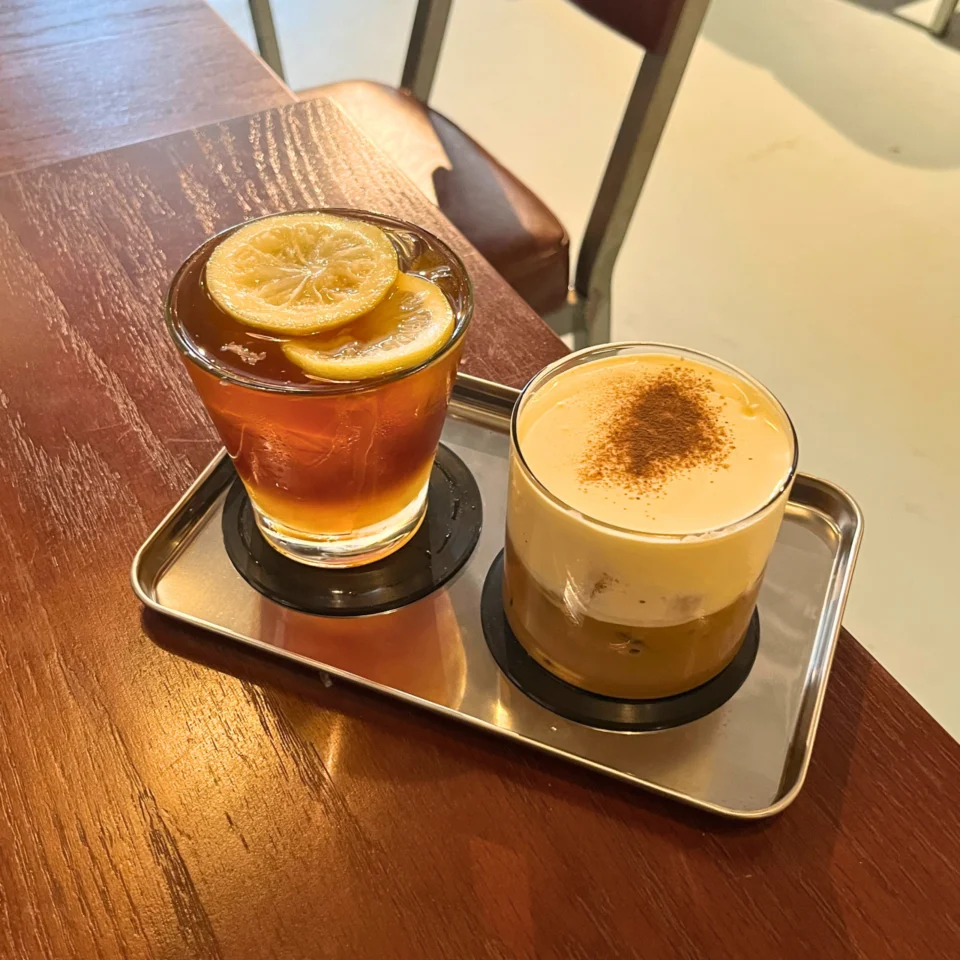


The premier resort I stayed at on Panglao Island, Bohol, had enough reasons for me to remain within its expansive compound. Apart from the cozy room equipped with its own private pool, a beach decked with powdery sand, and two dining establishments with more than enough dishes to get me through three days, the moody weather had me loosely restrained.
But after a random stranger I casually chatted with at the Bohol–Panglao International Airport dropped Six Sisters as a carinderia he would recommend for traditional Filipino home-cooked food, the idea of escaping for an order of balbacua had haunted me ever since.
It didn’t take much for me to give in. All it took was a quick scroll online. Once I saw enough positive reinforcement in the form of opinionated posts, I picked up the phone and asked the concierge to book me a tricycle.
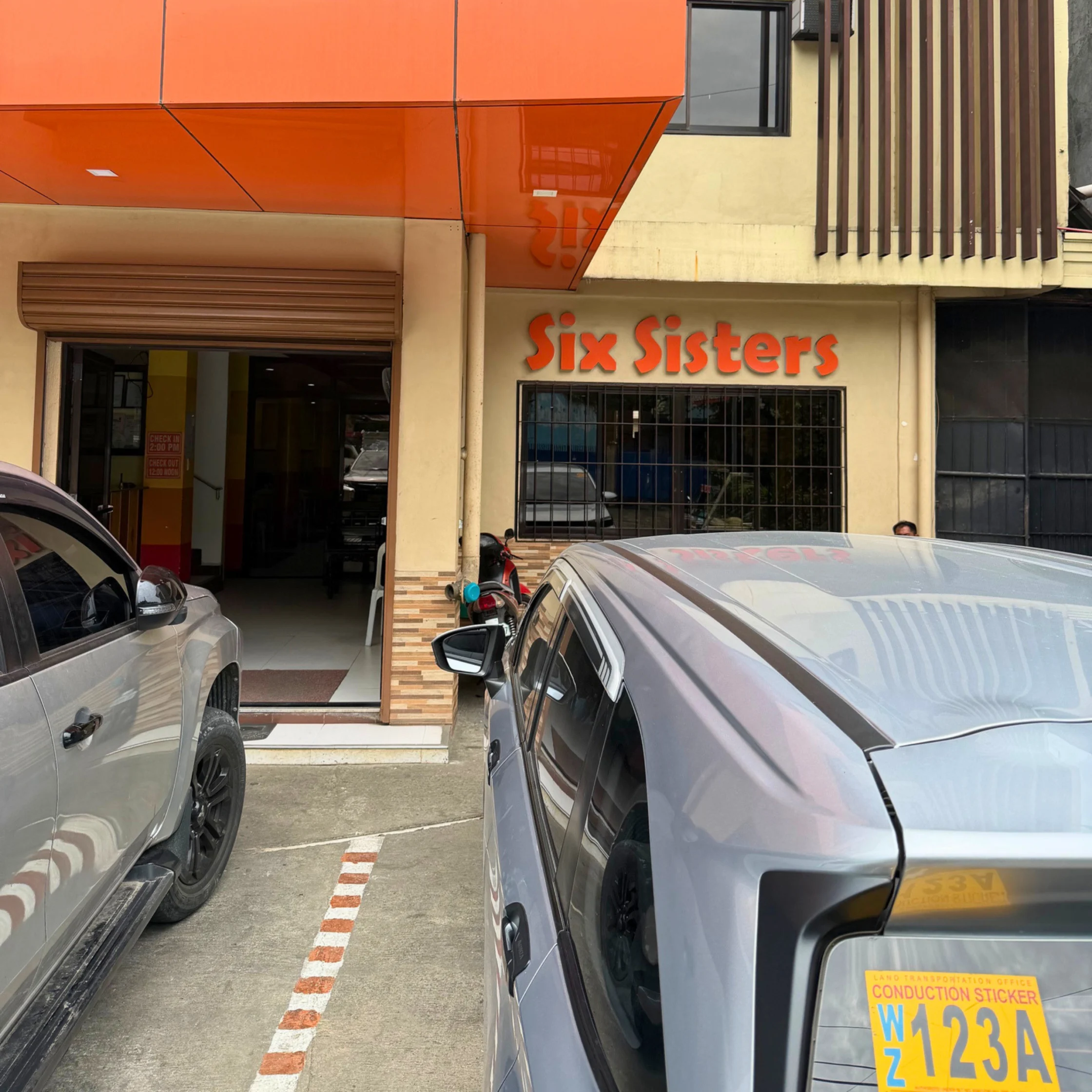
Six Sisters Feels Like the School Canteen You Grew Up With
Located on the ground floor of a low-rise building, the family-run Six Sisters felt a lot more clinical than I expected. Photos on the web showed that it had previously been housed in a concrete structure, with a rusty metal grill dividing ate from the customers. The lady manning the cash register confirmed that this was their former location, just a few meters down the road from where they are now.
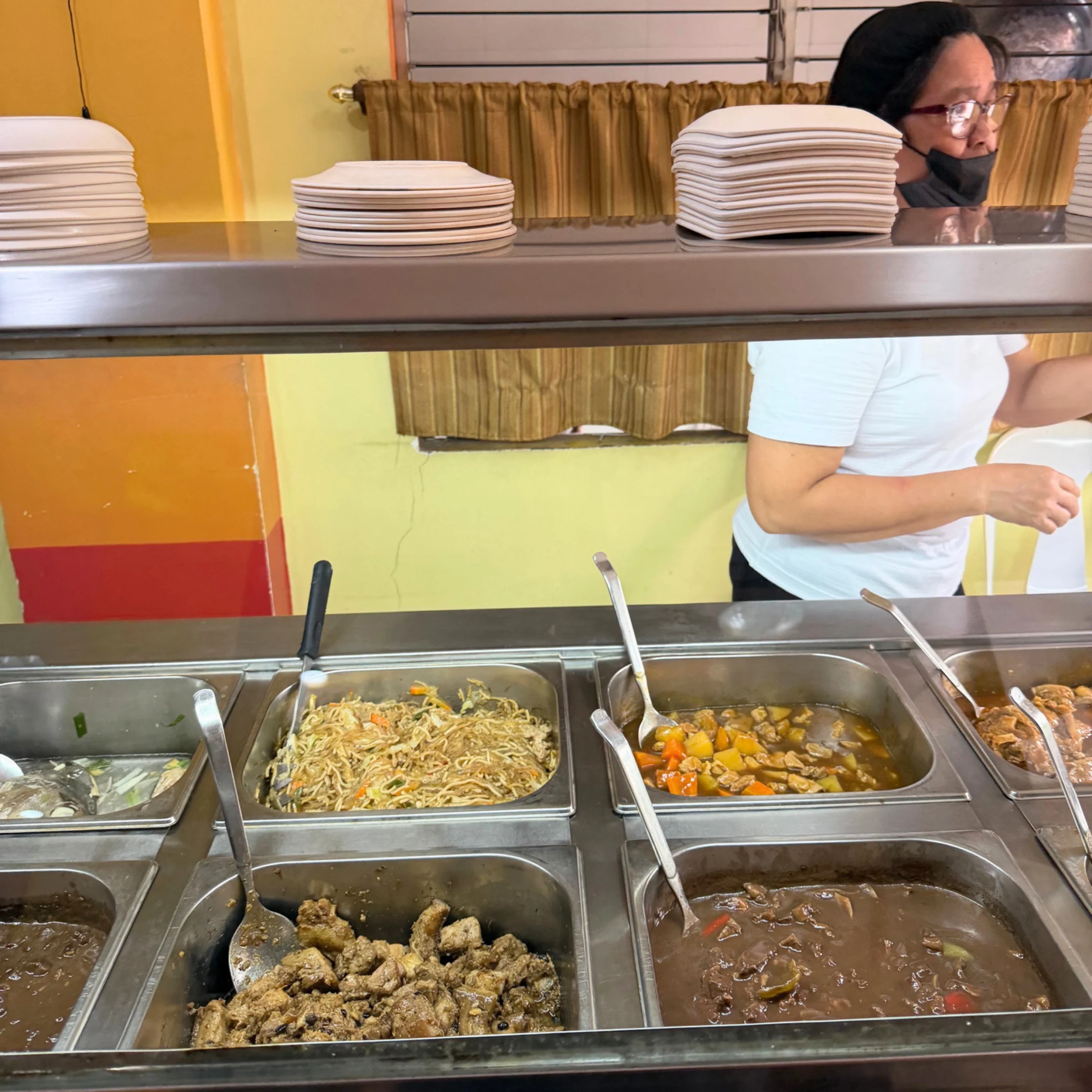
Their present space is definitely more expansive, reminding me of the school canteens of my time—especially when it comes to spatial design. The service counter is lined with savory dishes in stainless steel trays, ready for judgment. There’s a designated one-way path from the entrance to prevent bottlenecks during peak hours. At the end is the cashier, situated just before the food pickup station, where candies in transparent canisters and mangoes marked in ink with their prices beg for last-minute purchases. On the floor are tables surrounded by white monobloc chairs, each accessorized with condiments and a napkin holder. Wide gaps between them allow for ease of movement.
I think I came at the right time—just minutes before the clock hit 11—as moments later, groups of locals, varying in number, started arriving. Most of them wasted no time and left with bags of food, perhaps rushing home to make it in time for lunch. Two couples stayed behind and joined me, though from a distance.
Come for the Balbacua, Stay for Six Sisters’ Fried Native Chicken
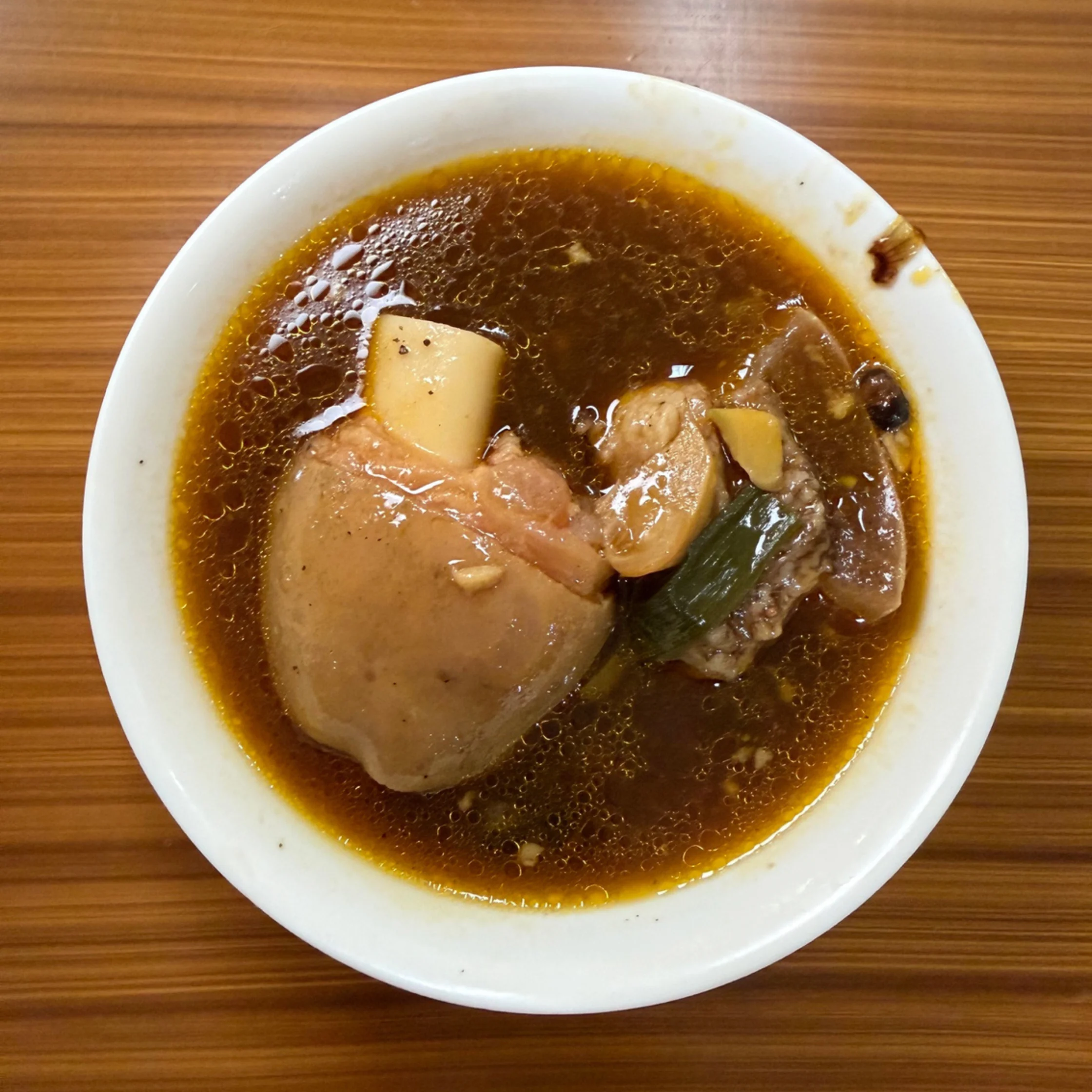
Perhaps the long-running eatery’s most popular dish of which practically everyone placed an order of—the balbacua lacked the colorful vegetables I’m used to seeing it with. Other versions come with pineapple, black beans, red bell pepper, and some chopped green garnish. Six Sisters’ was simply pork and sauce. Though one-note in flavor, the pork hock achieved a texture that was just shy of fall-off-the-bone. The meat was tender but still required a soft chew—and that’s not a bad thing, as some structural contrast is always welcome.
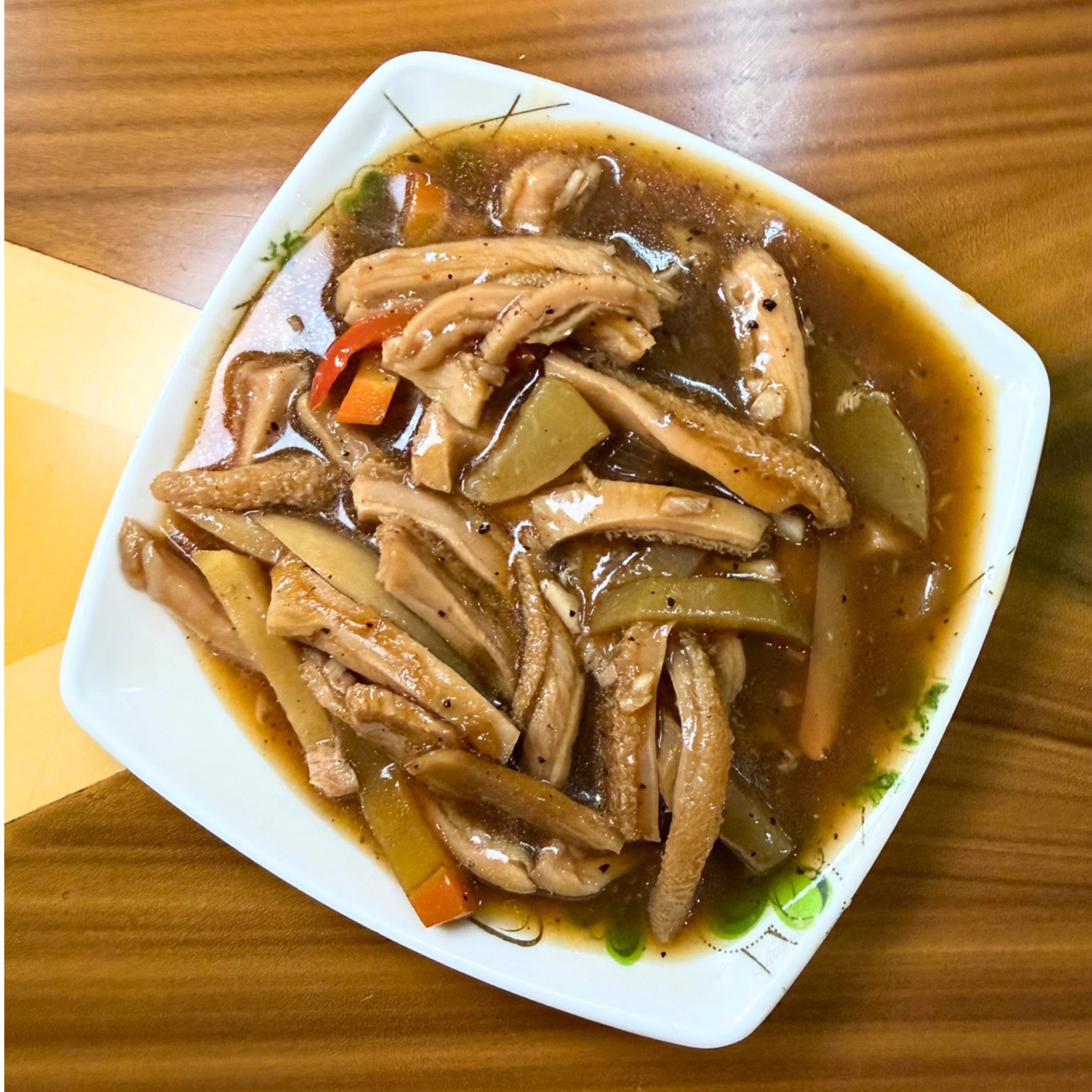
The usual suspects were in attendance—kinilawKinilawA Filipino dish of raw fish or seafood cured in vinegar and citrus, mixed with ginger, onions, and chilies. Often compared to ceviche, kinilaw predates Spanish colonization and is prizedGo to Kinilaw Glossary na isda, nilarang (a spicy and sour seafood stew with tausi), and adobo—but amid an array of familiar home-cooked dishes stood one that piqued my curiosity. Paklay is a Visayas-Mindanao dish that marries innards with julienned vegetables and bamboo shoots. Their iteration had plenty of beef tripe strips, far outweighing the vegetables, and a flavorful sauce that went well with rice. Like the hock, it wasn’t melt-in-the-mouth tender, but I still finished a serving that could have easily fed two people.
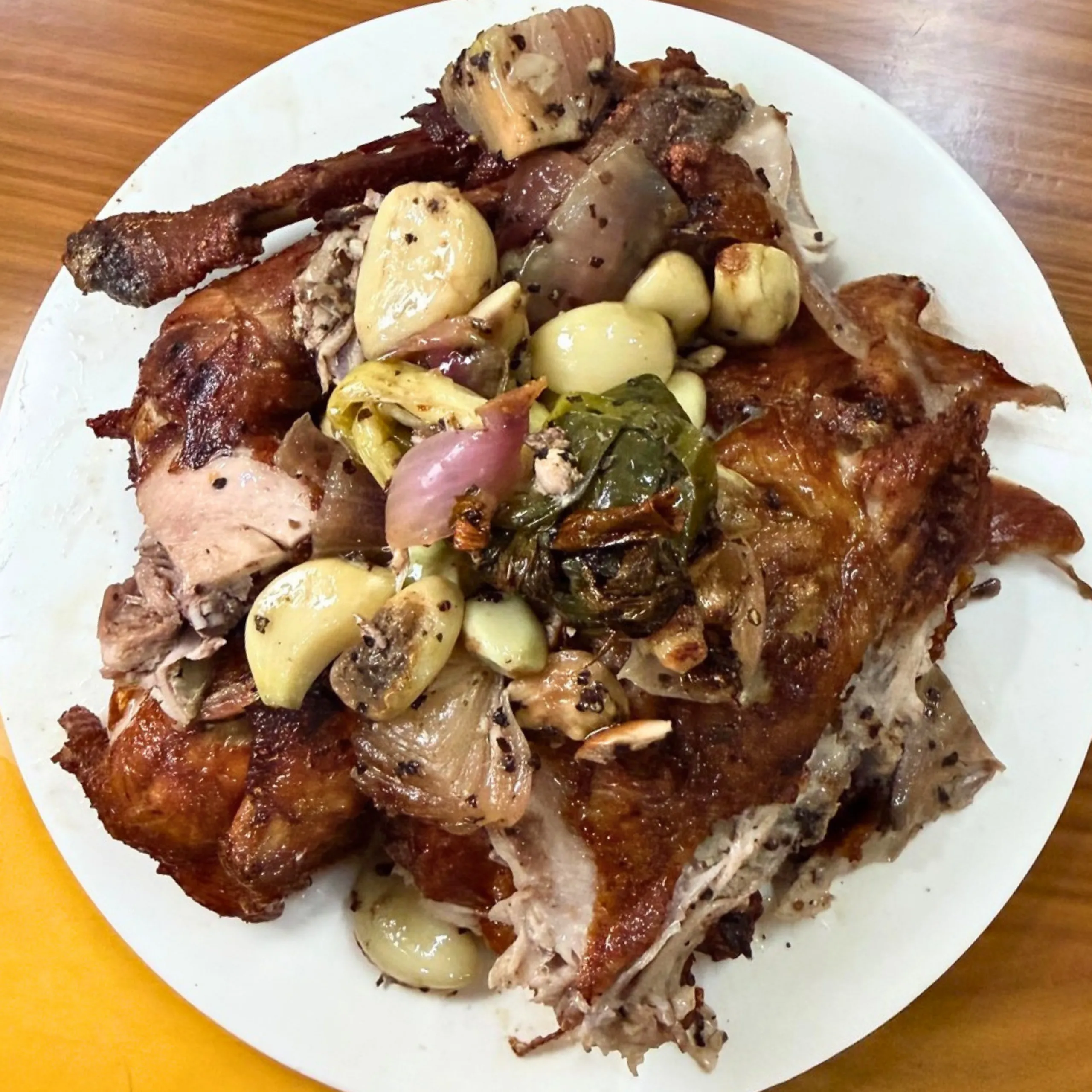
Another Six Sisters bestseller is the fried native chicken. It wasn’t on display, but the female server described it in a way that got me intrigued. It came chopped and glistening from its oil bath, and the burnished skin instantly made my mouth water—even more so when I saw what it was seasoned with: whole cloves of garlic, lemongrass, chopped red onions, and ground black pepper.
It was about as tender as native chicken could get. And while I didn’t mind the texture, the savory flavor had me forgetting the flimsy utensils (and my manners) and gorging on the meat like a savage, befitting an ad promoting “sarap to the bones.”
My private pool in the luxury suite would still be waiting when I returned. But for a delicious hour, island paradise looked a lot like balbacua, paklay, and fried native chicken eaten with bare hands.
Six Sisters is located at Torralba Street (Upper Tamblot area), Cogon District, Tagbilaran City, Bohol.

Frequently Asked Questions
Six Sisters is located along Torralba Street in the Upper Tamblot area of Cogon District, Tagbilaran City, Bohol.
Six Sisters is a family-run carinderia serving Filipino home cooking, including dishes such as balbacua, paklay, kinilaw na isda, nilarang, adobo, and fried native chicken.
Balbacua is a Filipino stew traditionally made with beef or pork parts, particularly collagen-rich cuts, slowly cooked until tender in a savory sauce.
Paklay is a Visayas-Mindanao dish that combines innards with julienned vegetables and bamboo shoots, typically served with rice.
Six Sisters is in Tagbilaran City, Bohol, rather than directly on Panglao Island. It is accessible from the Panglao resort area by road.